Greco di Tufo: The Mineral White of Campania

By the Sommy Team — AI-assisted, human-edited.
Updated Apr 29, 2026
Contents (12)
- What Is Greco di Tufo
- What Greco di Tufo Is, in 100 Words
- A Greek Grape in Italian Soil
- The DOCG Zone: Tufo and Its Eight Communes
- Volcanic Tufa: Where the Wine Gets Its Soul
- What Greco di Tufo Tastes Like
- Greco vs Fiano vs Vermentino
- Food Pairings: A Seafood Wine, First and Foremost
- Drink Young — But Know the Aging Exception
- How to Buy and Serve
- Tasting Tips: A Structured First Encounter
- The Bottom Line
TL;DR
Greco di Tufo is a Campanian white made from the ancient Greco grape, brought by Greek settlers around 800 BC. Grown on volcanic tufa soils near Tufo village, it shows pale lemon-gold color, high acidity, citrus, green apple, saline minerality, and a bitter-almond finish. DOCG since 2003. Top examples age five to seven years.
What Is Greco di Tufo
Greco di Tufo wine is a dry white made from the Greco grape, grown in a small DOCG zone around the village of Tufo in Campania, southern Italy. It is one of southern Italy's most distinctive whites — high in acidity, saline on the finish, and capable of aging for up to a decade in the best vintages. The name combines the grape (Greco, meaning "Greek") with the village (Tufo), and the wine carries the geological character of both: ancient Mediterranean lineage and volcanic stone.
What sets greco wine apart from other Italian whites is the soil. Tufo is named after the porous volcanic stone — tufa in English, tufo in Italian — that defines the local geology. The same stone shows up in the wine as a stony, mineral, almost flinty character that no other Campanian white quite matches.
If you have explored Italian whites through Pinot Grigio or Soave but want something more austere and structured, Greco di Tufo is the next step. It rewards what you know about acidity and minerality from our italian wine guide, and adds a southern, sun-baked dimension you will not find in northern Italy.
What Greco di Tufo Is, in 100 Words
Greco di Tufo equals an ancient Greek-origin white grape, likely brought to Italy around 800 BC by Greek settlers and now grown around the village of Tufo in Campania. The "Tufo" refers to volcanic tufa stone soils that define the DOCG zone. Profile: pale lemon-green to deep gold color, high acid, citrus and green apple fruit, saline mineral edge, chamomile florals, and a slight bitter-almond finish. Alcohol sits at 12.5 to 13.5 percent. Distinct from neighboring Fiano (more aromatic and honeyed) — Greco is firmer, more mineral, more austere. DOCG status since 2003. Top examples age five to seven years.

Quick check
One question on what you just read
Next to its neighbor Fiano, how does Greco di Tufo usually taste?
Tap an answer to see how you did.
A Greek Grape in Italian Soil
Greco's story starts long before the modern wine map of Italy. The grape was almost certainly brought south by Greek colonists who founded settlements across what they called Magna Graecia — the Greek-speaking region of southern Italy that thrived from around 800 BC. Campania was the heart of that world, and Greek-origin grape varieties took root in volcanic soils that reminded the colonists of home in the Aegean.
The name itself records this lineage. Greco means "Greek" in Italian, and the grape's earliest documented presence in Campania dates to ancient writings from Roman authors who described local wines as descended from Greek imports. Whether the modern Greco grape is genetically identical to those original imports is debated — DNA evidence suggests several distinct varieties have shared the "Greco" name over the centuries — but the historical thread is unbroken.
By the medieval period, Greco di Tufo was already known as a wine of distinction, mentioned in Vatican records and shipped to courts across Italy. Through phylloxera, two world wars, and the 20th-century shift toward international varieties, Greco survived because Campanian growers refused to replant volcanic vineyards with Chardonnay or Sauvignon Blanc. The DOCG recognition in 2003 sealed its modern reputation.
The DOCG Zone: Tufo and Its Eight Communes
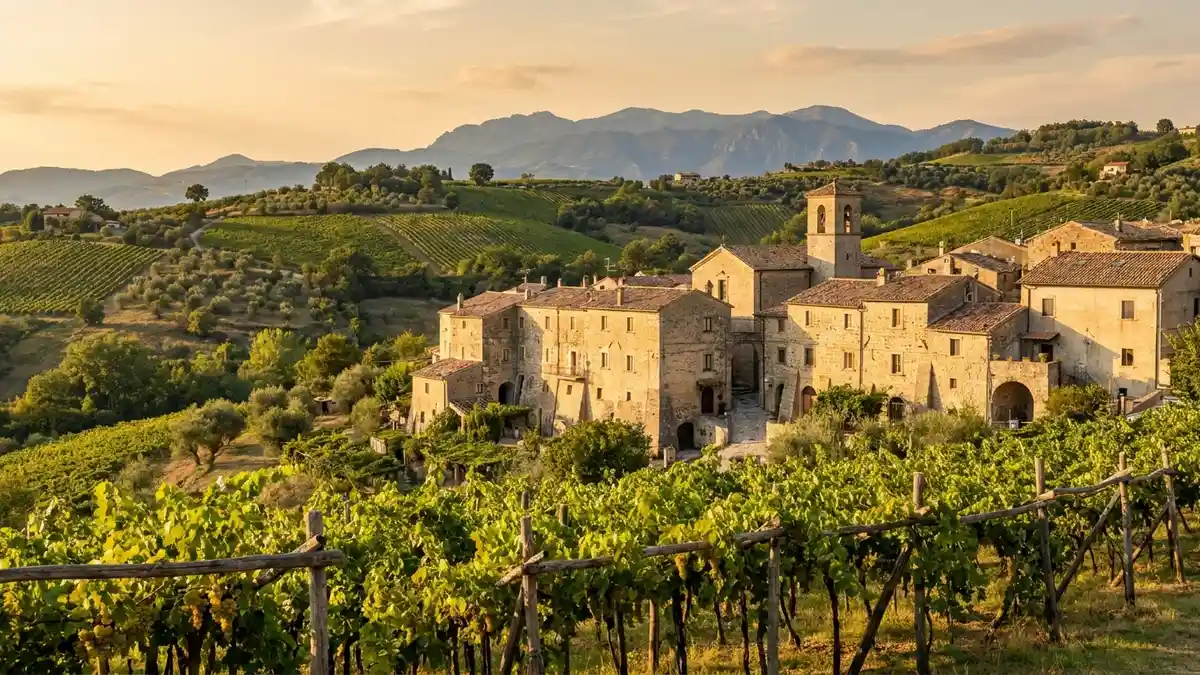
The Greco di Tufo DOCG covers a small zone in the province of Avellino, in the hills inland from Naples. Eight communes share the appellation:
- Tufo — the namesake village, with the most concentrated plantings on the steepest volcanic slopes
- Altavilla Irpina — known for fuller-bodied expressions
- Chianche — high-altitude vineyards that produce some of the most mineral examples
- Montefusco — a key central commune with diverse soil exposures
- Petruro Irpino — small but historically significant plantings
- Prata di Principato Ultra — modern producers focused on quality reform
- Santa Paolina — cooler microclimate, longer hang times
- Torrioni — eastern slopes with lighter soils
Total plantings sit around 950 hectares, making Greco di Tufo one of Italy's smaller white DOCGs. For comparison, Soave covers more than 7,000 hectares. The scarcity matters — there is simply not much Greco di Tufo in the world, which keeps quality high among serious producers and prices firm at the top end.
DOCG rules require at least 85 percent Greco grapes (the remaining 15 percent can be Coda di Volpe, a local white). Maximum yields are tightly controlled, minimum alcohol is 11 percent, and every bottle is tested before release. A spumante (sparkling) version is also permitted under the same DOCG, though it represents only a small fraction of production.
Volcanic Tufa: Where the Wine Gets Its Soul
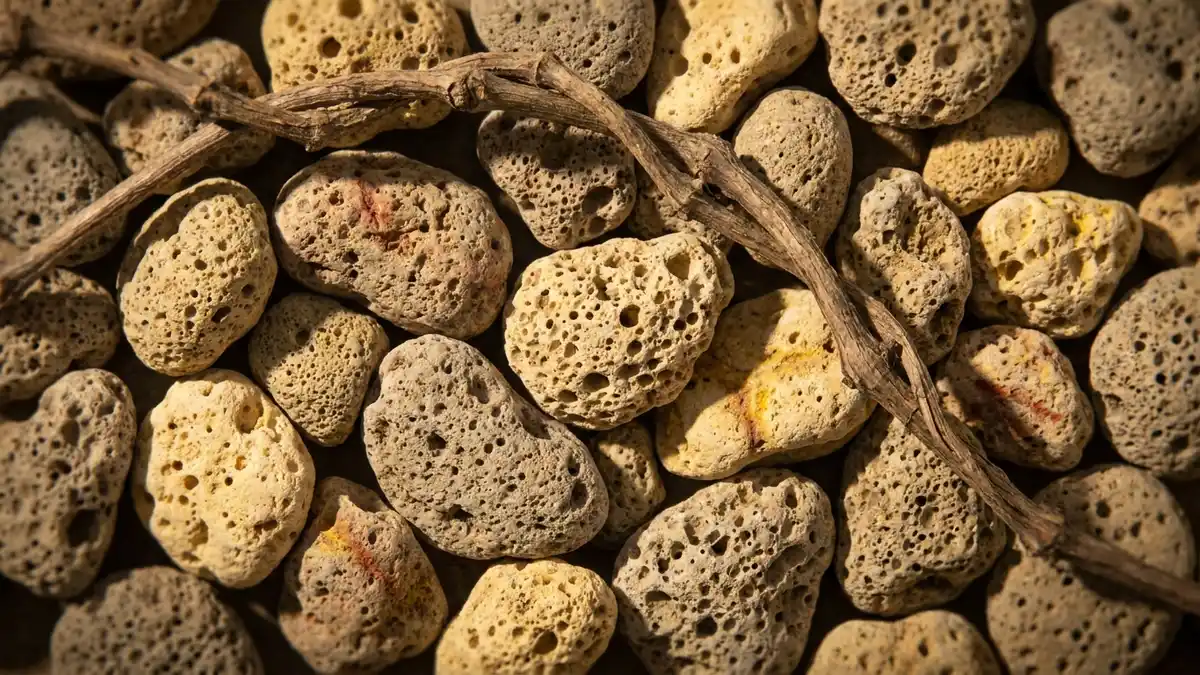
The single most important factor in Greco di Tufo's character is tufa stone — a soft, porous volcanic rock formed by ancient ash deposits cemented over millennia. Tufa is light, pale yellow to gray, and crumbles easily under pressure. Across the DOCG zone, tufa shows up in three forms:
- Subsoil tufa — solid stone that vine roots must work through to find water
- Friable tufa — broken, sandy material in the topsoil that drains quickly
- Sulfur-rich tufa — pockets near old sulfur mines (Tufo had active sulfur mining into the 20th century) that contribute trace minerals
These soils produce small berries with concentrated flavor and naturally high acidity. The volcanic origin matters because it brings minerals to the surface that limestone, clay, or sand cannot — sulfur, silica, potassium, and traces of iron all leave their mark on the finished wine.
This is terroir at its most specific. Our guide to what is terroir covers the broader concept, and our piece on how soil affects wine taste goes deeper on volcanic soils specifically. Greco di Tufo sits alongside Assyrtiko from Santorini, Soave from the Lessini hills, and Etna whites as one of the textbook volcanic-soil whites in the world.
What Greco di Tufo Tastes Like
Tasting Greco di Tufo for the first time is memorable because it does not taste like northern Italian whites. The closest familiar comparison might be unoaked Chablis or a young Greek Assyrtiko — firmer and more mineral than what you expect from southern Italy.
Color and Appearance
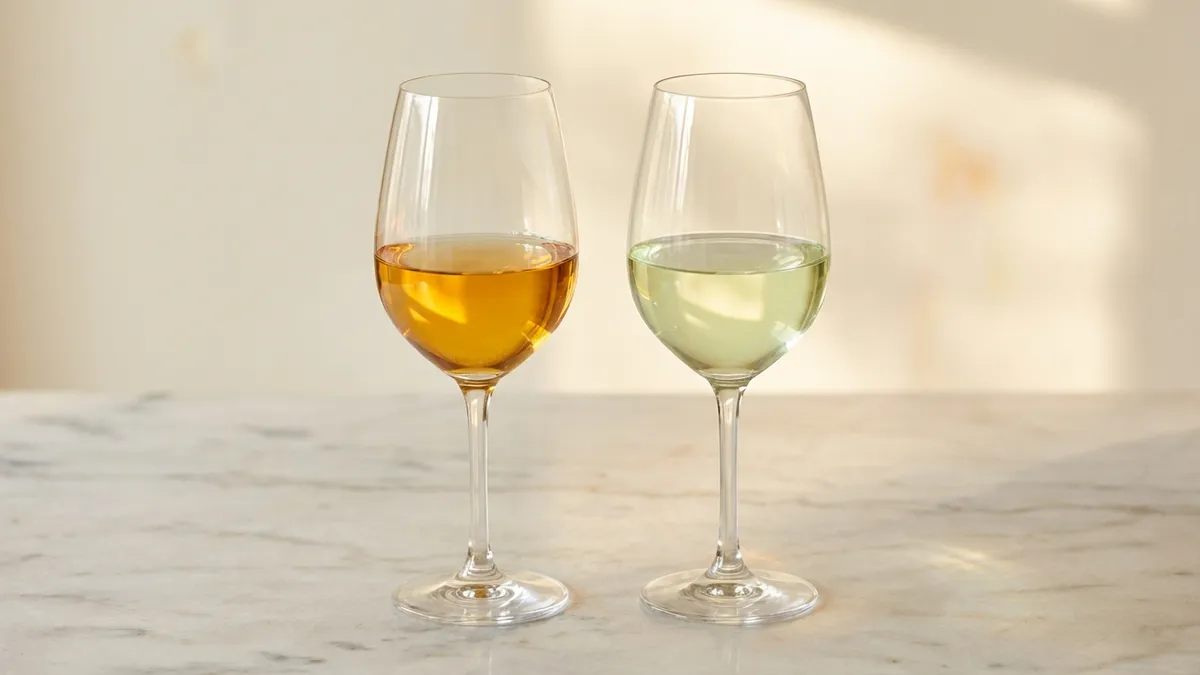
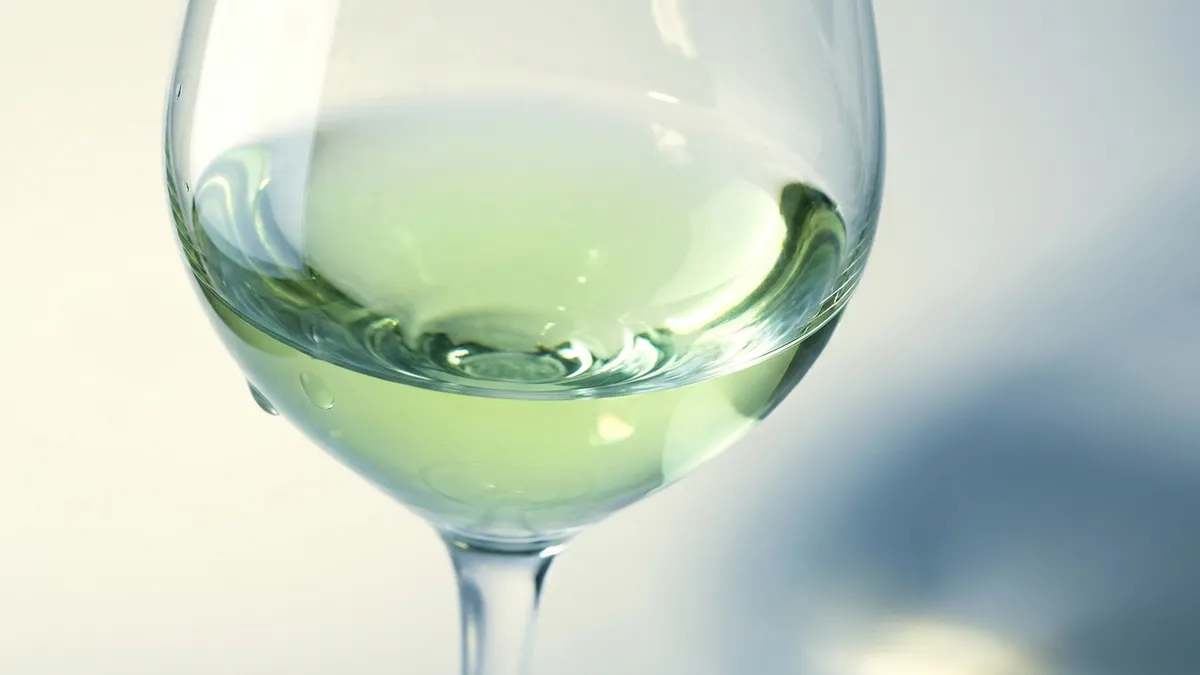
Pale lemon-green when young, deepening to lemon-gold and eventually deep gold with age. Building your reading of color is one of the foundations of wine appearance work, and Greco gives a useful reference point for moderately deep, slightly oxidative-looking southern Italian whites.
Aroma
- Citrus — lemon zest, grapefruit pith, sometimes a hint of orange peel
- Orchard fruit — green apple, white peach, slightly under-ripe pear
- Mineral — flint, wet stone, sulfur, sea salt
- Florals and herbs — chamomile, white blossom, occasionally a wisp of fennel
The aromas are restrained rather than showy. Greco is not an aromatic grape like Riesling or Gewürztraminer. Most of the intensity lives on the palate, not the nose.
Palate
This is where Greco di Tufo makes its case. Three things define the structure:
- Acidity — high, bright, mouth-watering. The acid is what makes the wine refreshing and what gives it aging potential.
- Body — medium, with more weight and grip than you might expect from a crisp, high-acid white. Concentrated extract from low-yield volcanic vines gives density without richness.
- Mineral salinity — a stony, slightly saline note that runs through the wine and lingers on the finish.
The signature element, though, is the bitter-almond finish — a faint, savory bitterness that closes the palate and keeps the wine from feeling sweet or simple. This is a Greco di Tufo trademark, mentioned in nearly every classical Italian tasting note for the wine. It is not a fault. It is the grape's calling card.
Greco vs Fiano vs Vermentino
Greco di Tufo gets compared most often to its DOCG neighbor, Fiano di Avellino. Both come from Campania, both grow in volcanic soils within roughly 30 kilometers of each other, and both are made by many of the same producers. They are distinctly different wines.
- Greco di Tufo — firmer, more mineral, more austere. Citrus and green apple drive the fruit, with saline stone and a bitter-almond finish. Best for seafood and high-acid dishes.
- Fiano di Avellino — richer, more aromatic, more honeyed. Pear, hazelnut, white flowers, and a waxy texture define the profile. Best for richer dishes and aged versions reward patience.
- Vermentino — broader, more herbal, more Mediterranean. Fennel, almond skin, citrus pith, and a softer salty finish. Vermentino comes from Sardinia, Tuscany, and Liguria — different terroir entirely. See our vermentino wine guide for a closer look.
If you want to taste the differences side by side, our how to compare two wines guide has a structured framework. A bottle of each, served at the same temperature, with the same glass, makes the differences immediately clear.
The Sommy app's tasting flow includes "saline," "flinty," "almond," and "stony" among its aroma chips, so as you compare Greco with Fiano and Vermentino you can tag the variations and see which markers consistently belong to each grape. Building this kind of side-by-side reference is one of the fastest ways to develop your palate — see our palate calibration exercises for structured drills.
Food Pairings: A Seafood Wine, First and Foremost
Greco di Tufo is one of the most food-friendly whites Italy produces, and it is built for the table from the start. The high acid, saline minerality, and bitter-almond finish make it pair instinctively with the cuisine of its homeland — coastal Campanian cooking centered on seafood, lemon, olive oil, and fresh vegetables.
Best matches:
- Seafood — grilled fish, octopus, calamari, oysters, anchovies, sea bass
- Campanian classics — spaghetti alle vongole (clam pasta), fritto misto (fried mixed seafood), mozzarella di bufala
- Light pasta — lemon-and-olive-oil sauces, seafood pasta, pesto-based dishes
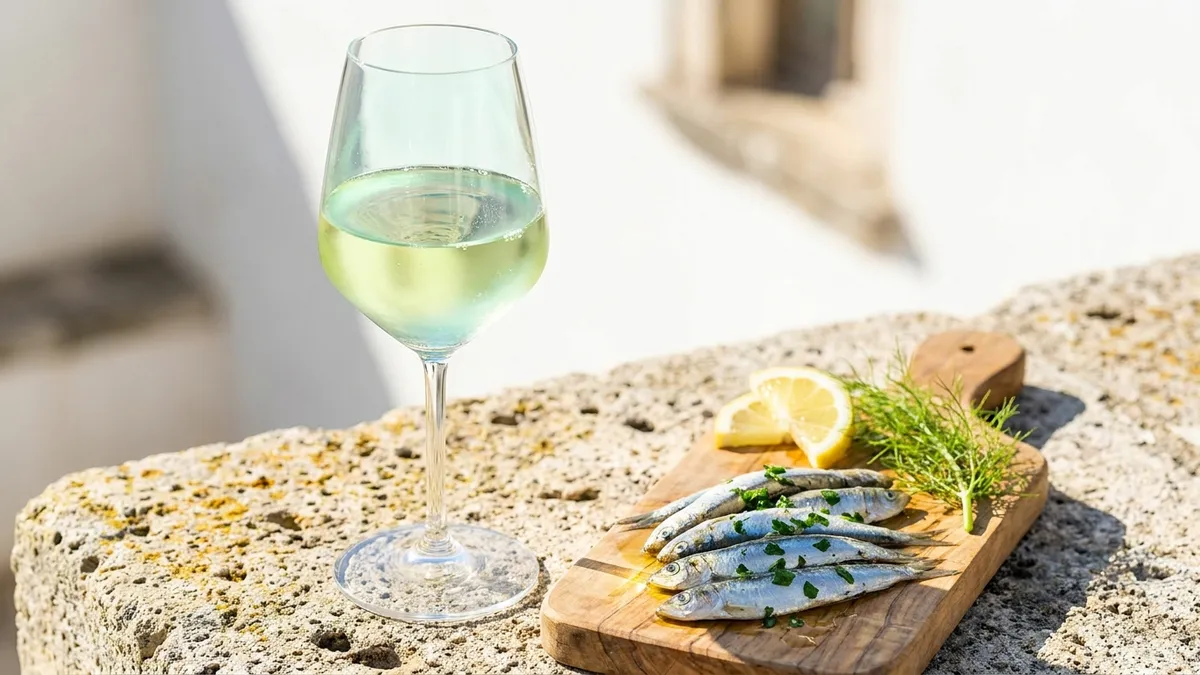
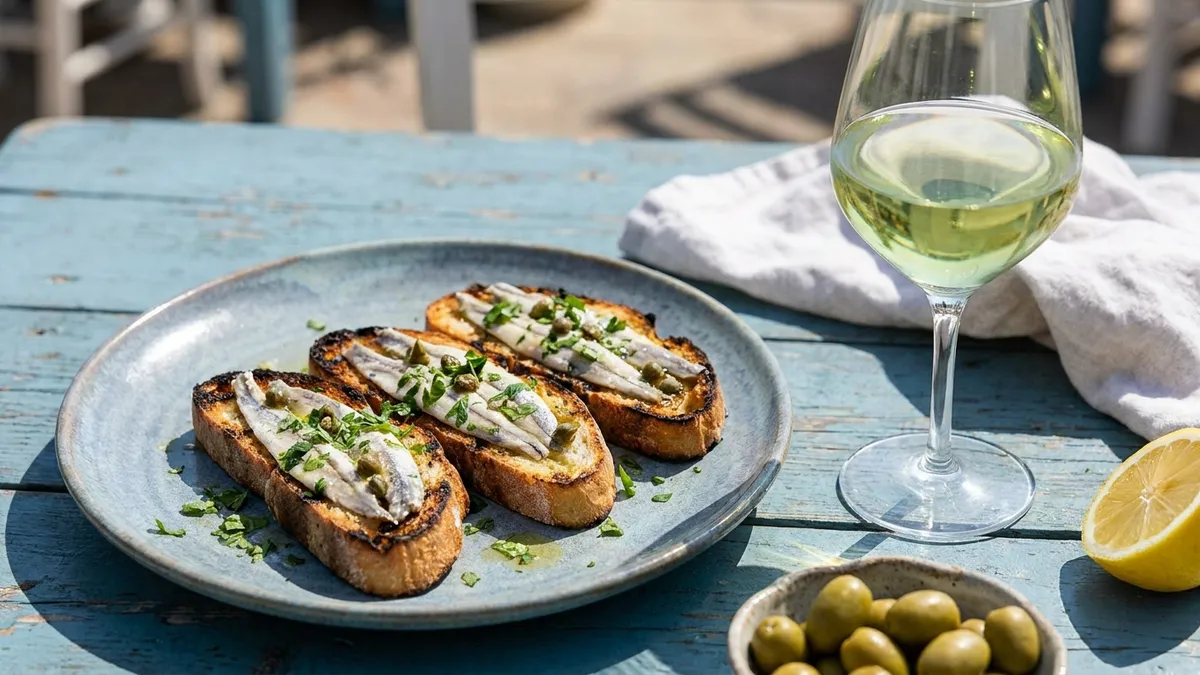
- Anchovies — one of the few wines that genuinely pairs with anchovy-driven dishes like acciughe al limone
- White meat with herbs — chicken with capers, veal piccata, herb-roasted pork
- Sharp cheeses — aged pecorino, fresh ricotta with honey, smoked scamorza
The bitter-almond finish is what makes Greco such a confident choice for anchovy dishes. Most whites either fight anchovies (too sweet) or get steamrolled by them (too soft). Greco's high acidity and mineral edge meet the anchovy's salt and oil head-on, and the almond note echoes the savory umami of the fish.
For a broader framework on these matches, our wine and seafood pairing and wine pairing rules guides cover the underlying logic.
Drink Young — But Know the Aging Exception
The conventional advice is that Greco di Tufo is a "drink-young" white. Most bottles taste best within two to four years of vintage, when the citrus and mineral notes are sharpest and the bitter-almond finish is at its most defined. Hold a basic Greco di Tufo too long and it can lose freshness without gaining complexity.
That said, top examples from the warmest sub-zones break the rule. Bottles from Tufo, Altavilla Irpina, and Montefusco — produced by serious estates focused on low yields and longer lees aging — can develop beautifully over five to seven years, occasionally longer. The aging arc:
- 0 to 2 years — citrus zest, green apple, saline mineral; tight, primary, mouth-watering
- 3 to 5 years — orchard fruit deepens, hints of beeswax and toasted bread emerge, the almond finish softens into something more savory
- 5 to 7 years — honey, hazelnut, dried apricot, waxy texture; the salt note transforms into something more complex
- 7+ years — rare, but top bottles develop tertiary nut, marmalade, and an almost sherry-like depth
If you want to age Greco di Tufo, look for serious producers, top vintages, and warmest sub-zones. Store sideways, cool, dark, stable. Our piece on tasting young vs aged wine covers what changes happen and why.
How to Buy and Serve
The benchmark is Greco di Tufo DOCG on the label. Without that designation, you are likely getting Greco from outside the zone — still drinkable, but missing the volcanic minerality that makes the DOCG version distinctive. Expect to spend 18 to 35 dollars for a serious bottle, with reserve and aged versions running higher. Entry-level Greco di Tufo can be found for 12 to 18 dollars in good wine shops.
What to look for on the back label:
- DOCG Greco di Tufo — the geographic and quality guarantee
- Vintage — recent vintages (last 3 years) for the freshest expression
- Steel-aged or extended-lees — most are steel-aged; some producers use neutral oak or lees aging for more texture
- Alcohol — typically 12.5 to 13.5 percent
Serve at 8 to 10°C (45 to 50°F) — slightly warmer than most whites to let the saline minerality and almond finish express. Use a standard white-wine glass; the wine does not need a fancy shape. For more on getting your serving setup right, see our wine serving temperature chart.
Tasting Tips: A Structured First Encounter
A focused first encounter with Greco di Tufo works best as a comparison tasting. Buy two bottles — one Greco di Tufo DOCG and one Fiano di Avellino DOCG, both from the same vintage and ideally from the same producer if you can find one that makes both. Pour them at the same temperature, in the same glass shape, and work through them in order:
- Look — pale lemon-green for Greco, often slightly deeper gold for Fiano
- Smell — Greco shows citrus, mineral, and a quiet almond note; Fiano shows pear, honey, and waxy depth
- Sip and focus on the mid-palate — Greco feels firmer and more linear; Fiano feels rounder and more layered
- Focus on the finish — Greco's bitter-almond tail should be unmistakable; Fiano finishes with honey and warmth
- Try each with a piece of grilled fish or fresh mozzarella — note how the saline acid in Greco lifts the salt and how Fiano blankets it
After this exercise, "saline mineral" and "bitter almond" stop being vague terms and become specific reference points. Our building a wine flavor library guide shows how to make these comparisons stick.
Sommelier note: Try Greco di Tufo with a plate of acciughe del mar Cantabrico (Cantabrian anchovies) on toasted bread with a squeeze of lemon. The salt-on-salt match with the bitter-almond finish is what every Campanian sommelier reaches for first, and it shows you exactly what makes the variety unique.
The Bottom Line
Greco di Tufo is the white wine that ancient Greek settlers and Campanian volcanic soils conspired to create, and it is unlike anything else in the Italian wine aisle. High acidity. Saline minerality. Citrus, flint, and a bitter-almond finish that signals Greco from across the room. A small DOCG zone of eight communes anchored on the village of Tufo, working with porous volcanic stone laid down by ancient eruptions and shaped by 2,800 years of viticultural patience.
It rewards beginners because the structural backbone — high acid, mineral edge, defined finish — makes every other element easy to read. It rewards experts because few southern Italian whites age this gracefully or carry this much sense of place. Once you have tasted a real Greco di Tufo DOCG, you understand what people mean when they talk about Italian whites that "drink like a place."
Want to track your own Greco di Tufo impressions and compare them with Fiano, Soave, and Vermentino as you go? The Sommy app's tasting journal lets you tag salinity, flint, almond, and citrus notes and search across your history — turning every bottle into data you can build on.
Frequently Asked Questions
What does greco di tufo wine taste like?
Greco di Tufo shows pale lemon-green to deeper gold color with high acidity, citrus zest, green apple, white peach, saline mineral notes, chamomile, and a distinctive bitter-almond finish. The wine is medium-bodied with a stony, austere edge that comes from volcanic tufa soils. Alcohol typically sits at 12.5 to 13.5 percent. Aged bottles develop honey, hazelnut, and waxy texture while keeping their saline backbone.
Where is greco di tufo wine from?
Greco di Tufo is produced in a small zone of eight communes in the province of Avellino, Campania, in southern Italy. The DOCG centers on the village of Tufo, which gives the wine its name. The total area is roughly 950 hectares planted, making it one of the smaller Italian white DOCGs. Vineyards sit at 300 to 600 meters elevation on volcanic and sulfurous soils.
Is greco di tufo the same as greco?
Greco di Tufo is the DOCG wine made from at least 85 percent of the Greco grape grown in the Tufo zone. Greco is the grape variety itself, which also grows in other parts of southern Italy under names like Greco Bianco in Calabria. Only wine from the Tufo DOCG zone can carry the Greco di Tufo name. Outside the zone, the same grape produces less mineral, less expensive wines.
How is greco di tufo different from fiano di avellino?
Both are DOCG whites from Campania grown near each other, but they taste distinctly different. Fiano di Avellino is more aromatic and richer, with honey, hazelnut, pear, and floral notes from the start. Greco di Tufo is more austere, mineral, and saline, with sharper citrus and a stonier finish. Fiano feels round and honeyed; Greco feels firm and flinty. Both can age well for several years.
What food pairs with greco di tufo?
Greco di Tufo's high acidity and saline minerality make it a textbook seafood wine. It pairs beautifully with grilled fish, anchovies, oysters, calamari, sea bass, and lemon-and-olive-oil pasta. Campanian classics like spaghetti alle vongole, mozzarella di bufala, and fritto misto are natural matches. The bitter-almond finish also handles white meat with herbs, chicken with capers, and sharp aged cheeses like aged pecorino.
How long does greco di tufo age?
Most Greco di Tufo is made for early drinking and tastes best within two to four years of vintage. Top examples from the warmest sub-zones and best producers age five to seven years, sometimes longer. With age the citrus mellows into honey and hazelnut, the body gains a waxy texture, and the saline minerality deepens. The grape's high acidity is the engine that allows this — without it, aging would flatten the wine.
Is greco di tufo a docg wine?
Yes. Greco di Tufo received DOCG status in 2003, joining Italy's top wine classification. The DOCG rules require at least 85 percent Greco grapes from eight specific communes around Tufo, maximum yields, and a minimum 11 percent alcohol. A spumante (sparkling) version is also permitted under the DOCG. The certification puts Greco di Tufo alongside Fiano di Avellino and Taurasi as Campania's three flagship DOCG wines.
Sommy Team
LinkedInFounder & Wine Educator
The Sommy Team is building the world's most approachable wine education app, helping beginners develop real tasting skills through structured courses and AI-guided practice.