Corkage Fee: Typical Costs by Restaurant Type and BYO Rules

By the Sommy Team — AI-assisted, human-edited.
Updated Nov 3, 2026
Contents (10)
- What Is a Corkage Fee, in One Paragraph?
- How Much Is a Typical Corkage Fee?
- Why Do Restaurants Charge a Corkage Fee?
- Can You Bring Your Own Wine to Any Restaurant?
- What Should You Ask Before You Bring a Bottle?
- What Is the Etiquette for BYO Wine?
- How Many Bottles Can You Bring?
- Is a Corkage Fee Ever Waived?
- Is Bringing Your Own Wine Worth It?
- Is Corkage the Same as BYOB?
TL;DR
A corkage fee is the charge for opening a bottle you brought. US restaurants usually ask $25 to $100, top dining rooms up to $200; UK venues average £12 to £15 for still wine. It is a house rule, so call ahead, bring a wine the restaurant does not sell and order from its list too.
A corkage fee is what a restaurant charges to open and pour a bottle you brought, and it is a house rule you confirm by phone, never a right. In the US it usually runs from $25 to $100 a bottle. In the UK, still wine averages about £12 to £15. The fee buys you the glasses, the service and permission to skip the list.
What Is a Corkage Fee, in One Paragraph?
A corkage fee is the charge a restaurant adds to open, pour and serve a bottle of wine you brought from outside. It is set per bottle, by each restaurant, and it often differs for sparkling wine. BYO or BYOB (bring your own bottle) is the arrangement; corkage is its price. US fees mostly fall between $25 and $100, with a few dining rooms at $150 to $200. UK venues average £12 to £15 for still wine, and the full range runs from £3 to £65. Most restaurants that allow it also expect you to respect a bottle limit and to bring a wine they do not sell.
How Much Is a Typical Corkage Fee?
In the US most corkage fees fall between $25 and $100 a bottle; in the UK the average for still wine is about £12 to £15. Sources quote different ranges because they survey different restaurants, so the table sorts them by the type of place.
| Type of venue | US fee per bottle | UK fee per bottle | Bring a bottle if |
|---|---|---|---|
| BYO-only venue (no drinks licence) | Low or none: ask | As little as £3 to £5 at some | You want wine at all: there is no list to order from |
| Casual or mid-range restaurant | From about $25 | £12 to £15 still, £15 to £20 Prosecco or Cava | The list is short, or your bottle is better than its price band |
| Upscale restaurant | About $30 to $55 in sommeliers' own examples | Champagne averages £20 to £35 | The bottle is special and not on the list |
| Top fine dining | $100, and $150 to $200 at a few | As high as £45 to £65 at some | The bottle is rare or aged and worth far more than the fee |
Sparkling wine often carries a higher fee than still wine: the UK averages climb from £12 for still wine to as much as £35 for Champagne. Some venues also spell out the bottle size, quoting the fee per standard 750 ml bottle.
If the restaurant's website gives no figure, budget for the upper half of its row until you have called.

Quick check
One question on what you just read
Your restaurant allows BYO. Which bottle should you bring?
Tap an answer to see how you did.
Why Do Restaurants Charge a Corkage Fee?
Restaurants charge corkage mainly to recover what it costs to serve the wine: the glasses, the washing, the staff time and the odd breakage. A server still opens the bottle, pours it through the meal and clears the glasses at the end.
The second reason is money the restaurant does not make. A licensed venue earns much of its margin on drinks, and a guest who brings a bottle skips that sale. The server loses the tip that would have come with it, a point sommeliers raise when they explain their policies. How much a restaurant normally adds to a bottle is set out in restaurant wine markup explained, and it is the number corkage stands in for.
Can You Bring Your Own Wine to Any Restaurant?
No. Corkage is a house rule, not a right: each restaurant sets its own policy inside the limits of its licence. Many licensed restaurants say yes for a fee, some refuse outside bottles outright, and a few small venues without a drinks licence are built entirely around guests bringing wine.
The rules underneath change by country. In the UK, Square's guide for venues notes that no licence is needed to let guests drink alcohol they bought elsewhere, and that charging for it is fine as long as the charge is clear. In New South Wales, Australia, BYO at a fully licensed restaurant is allowed only sometimes, because each licence carries its own conditions. A law firm there notes that corkage is usually lawful, and that the disputes start when a guest is surprised by the fee.
If the policy is not printed on the restaurant's website or booking page, call before you pack the bottle.
What Should You Ask Before You Bring a Bottle?
Ask five things on the phone: whether they allow it, the fee, any bottle limit, whether sparkling costs more and whether some nights are free. The call takes a minute, and VinePair's BYOB guide puts it first: confirm the policy and the fee before the bottle leaves home.
- Permission. Some licensed places say no to outside wine.
- The fee per bottle. Write the figure down.
- The bottle limit. Caps per table are common.
- The sparkling price. It is often higher than for still wine.
- Free nights. Early-week offers exist.
If they will not give a fee on the phone, plan to order from the list instead.
What Is the Etiquette for BYO Wine?
Bring a wine the restaurant does not sell, buy something from its list too, and offer the sommelier a small taste. Each one gives back part of the sale, or the tip, that the restaurant gave up to let the bottle in.
Leave listed bottles at home. Bringing a wine that already sits on the list is traditionally seen as taboo, because the restaurant could have sold it to you. Check the online list before you choose. If your bottle is on it, leave it in the rack. A guide to wine list types shows what a short list, a long list and a by-the-glass list usually hold.
Buy from the list as well. The usual guidance is to bring one bottle for each one you are willing to order from the menu. Sommeliers interviewed by Wine Spectator put it simply: always order another bottle. A glass of sparkling to start or a dessert wine to finish also counts.
Share a taste. With an older or unusual bottle, offer the sommelier (the restaurant's wine steward) a sip. A quarter glass is customary. More on the sommelier's role is in what a sommelier does.
Tip on the service. The server still opens, pours and clears. Tip on the corkage fee at least, and add more for a bottle that needed decanting or a lot of care.
How Many Bottles Can You Bring?
Usually one or two: restaurants set their own caps, often per table or per number of diners. One upscale US restaurant quoted by Wine Spectator allows two bottles per party at $30 each. Another allows one bottle for every two people at the table, so a party of four brings two.
If a group wants to bring more than the cap, the time to ask is at booking. A sommelier with notice can often say yes for a special dinner. Arriving with a bag of bottles puts the staff on the spot.
Is a Corkage Fee Ever Waived?
Sometimes, on slow nights or for wine that fits what the restaurant is promoting, but only if you ask politely. Some restaurants drop the fee on their slower nights, typically Sundays or Mondays. One upscale restaurant waives corkage for a bottle from the region it is currently featuring.
If you dine early in the week, ask whether corkage is free that night. Ask when you book, never when the bill arrives, and accept a no with good grace: the sommeliers' own advice is to respect the policy and to ask nicely if you want an exception.
Is Bringing Your Own Wine Worth It?
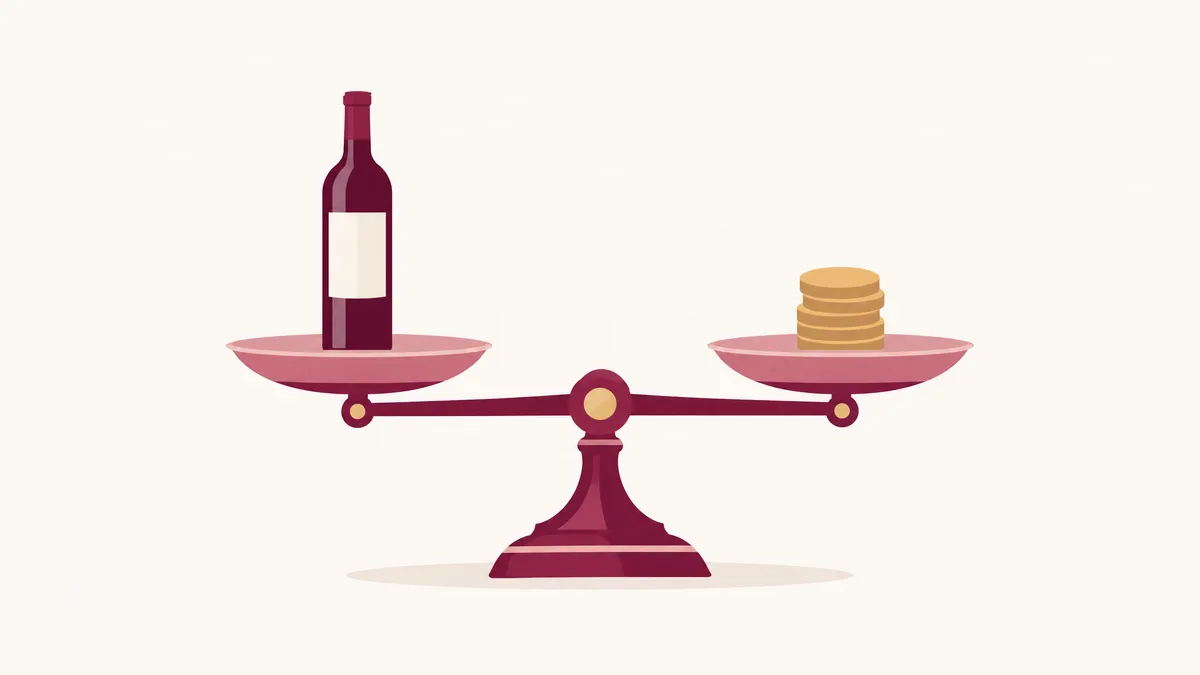
BYO pays when the fee plus the extra tip costs less than a comparable bottle on the list, which mostly means a special or older bottle. For an everyday wine, the list usually wins once corkage is added, because the saving on a cheap bottle is smaller than the fee.
Run the sum before leaving home. Take the fee from the call and add the tip on it. Compare that with the gap between the shop price of the bottle and the list price of something similar. If the fee and tip together exceed that gap, order from the list. The wine price vs quality guide helps you judge whether two bottles really are comparable.
The strongest case for BYO is a bottle the restaurant cannot sell you: a vintage from a birth year, a gift, a wine from a trip. Fine-dining fees of $100 or more only make sense for those. For ordering well from the list instead, see how to order wine at a restaurant. More ways to spend less on wine are in the wine budget guide and across the beginners' buying hub.
Is Corkage the Same as BYOB?
Corkage and BYOB are not the same thing: corkage is the fee, BYOB is the arrangement, and a BYOB-only venue may charge little or nothing. A licensed restaurant that permits BYO usually charges corkage to protect its list, at the rates in the table above.
An unlicensed café or small restaurant that only works as BYOB has no list to protect, so its fee, if any, tends to sit at the low end.
Wine bars are their own case. Many refuse outside bottles because selling wine is their whole business, while bars attached to wine shops let you buy a bottle off the shelf and drink it there for a small fee. The house rules for both are in wine bar etiquette.
In the Sommy app at sommy.wine, a photo of the label starts an AI-guided tasting through look, smell and taste, and the notes stay in a tasting journal. Tonight, pick the bottle to bring to your next dinner out, check it against the restaurant's online list, and call to ask the five questions. Then taste it at the table and log it.
Sources
Frequently Asked Questions
What is a corkage fee?
A corkage fee is the charge a restaurant adds for opening, pouring and serving a bottle of wine you brought from outside. It pays for the glasses, the washing up, the staff time and the occasional breakage, and it makes up for some of the wine sales the restaurant loses. Each restaurant sets its own fee, so ask before you go.
How much is a typical corkage fee?
In the US most corkage fees fall between $25 and $100 per bottle, and a few very high-end restaurants charge $150 to $200. In the UK the average is about £12 to £15 for still wine, £15 to £20 for Prosecco or Cava and £20 to £35 for Champagne. Fees vary widely by city and by restaurant, so call to confirm.
Is it rude to bring your own wine to a restaurant?
Not when the restaurant allows it and you follow the house rules. Call ahead to confirm the policy and the fee, bring a bottle the restaurant does not sell, and order at least one bottle or a few glasses from its list as well. Offering the sommelier a small taste of a special bottle is a customary thank-you.
Can you bring a bottle that is on the restaurant's wine list?
You can, but it is widely seen as taboo. The restaurant loses a sale it was ready to make, and it gains nothing that it could not have poured for you anyway. Bring a wine it does not sell, such as an older vintage, a gift or a bottle from a trip. Check the online list before you leave home.
Do restaurants waive the corkage fee?
Some do. A number of restaurants offer free corkage on slower nights, usually Sundays or Mondays, and some waive it for a bottle that fits a region they are featuring. Others drop it when you buy a bottle from the list. None of this is guaranteed, so ask politely when you book, not when the bill arrives.
How many bottles can you bring to a restaurant?
It depends on the house cap, which the restaurant sets. Some allow two bottles per party, others one bottle for every two diners. A good default is to bring one bottle for every bottle you are willing to order from the list. If you want to bring more than the cap, ask in advance rather than turning up with a bag of bottles.
Is corkage the same as BYOB?
No. BYOB, short for bring your own bottle, is the arrangement that lets you drink your own wine at a venue. Corkage is the fee charged for it. A licensed restaurant that allows BYO usually charges corkage, while a BYOB-only venue without a drinks licence may charge a small fee or nothing, because it has no wine list to protect.
Sommy Team
LinkedInFounder & Wine Educator
The Sommy Team is building the world's most approachable wine education app, helping beginners develop real tasting skills through structured courses and AI-guided practice.