Cold Soak Winemaking: What It Does and Why It Matters

By the Sommy Team — AI-assisted, human-edited.
Updated Oct 1, 2026
Contents (9)
- What Is a Cold Soak in Winemaking, in One Paragraph?
- How Does a Cold Soak Work?
- What Does a Cold Soak Change in the Wine?
- How Cold and How Long Is a Cold Soak?
- Why Do Winemakers Add Sulfur Dioxide or Dry Ice?
- Does Cold Soaking Really Work?
- Cold Soak Winemaking vs Extended Maceration vs Cold Fermentation
- Which Wines Use a Cold Soak?
- Can You Taste a Cold Soak in the Glass?
TL;DR
A cold soak holds crushed red grapes at roughly 5 to 15 °C for three to five days before fermentation. Cold juice and sulfur dioxide pull colour from the skins without alcohol. It can deepen early colour and, in one study, cut seed tannin, but results vary by grape and vintage, and winemakers still debate it.
Cold soak winemaking keeps crushed red grapes cold for a few days before any yeast gets to work. In that pause, chilled juice draws colour out of the grape skins the way cold water draws flavour from coffee grounds. The method aims to give a pale grape like Pinot Noir a deeper colour, but the research on whether it works is mixed.
What Is a Cold Soak in Winemaking, in One Paragraph?
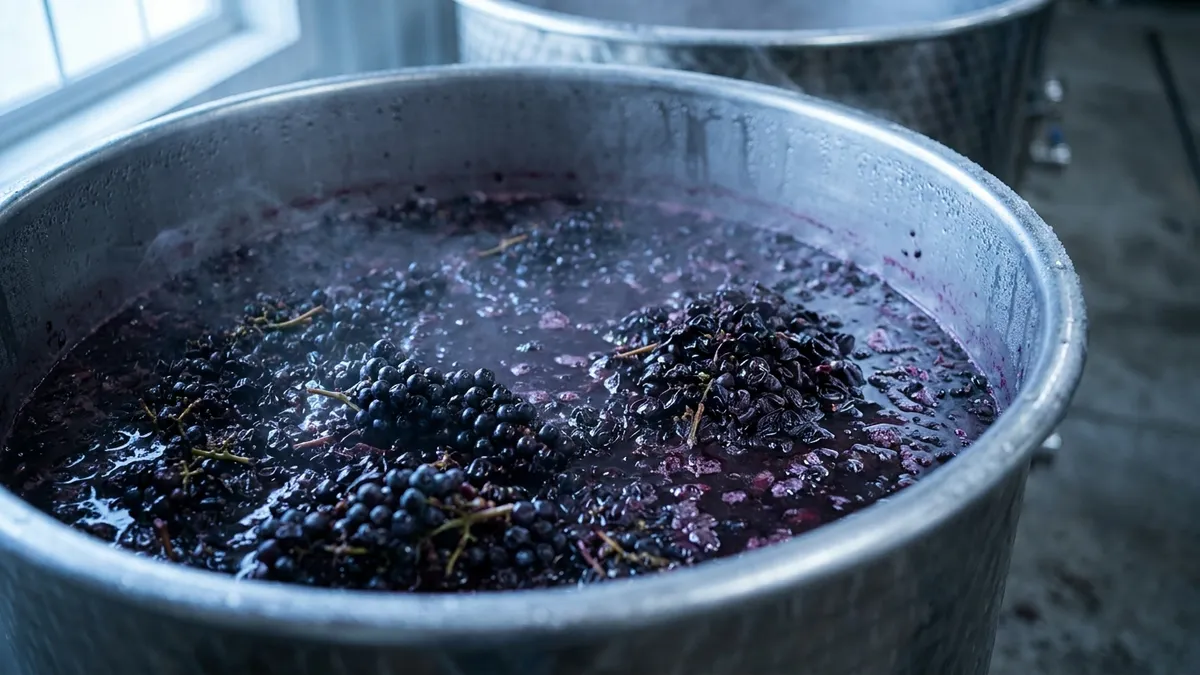
A cold soak, also called cold maceration or pre-fermentation maceration, holds crushed red grapes at low temperature for a few days before fermentation. Maceration means leaving the juice in contact with skins, seeds and pulp. The crushed mix is called must. During the soak the must sits at about 5 to 15 °C, often colder, for three to five days. Sulfur dioxide is added, and sometimes dry ice. Extraction relies on water and that sulfur dioxide instead of heat and alcohol. Then the tank warms up and fermentation starts. Burgundy made the technique popular in the 1970s and 1980s, and oenologists still debate how much it improves the wine.
How Does a Cold Soak Work?
Cold juice is a water-based solvent, so it pulls out compounds that dissolve well in water before any alcohol exists. The 2026 review by Sternad Lemut and colleagues describes this as extraction in "an aqueous, ethanol-free medium". That favours what sits in the skins over what sits in the seeds.
Cold-brew coffee is a useful analogy, though only an analogy. It steeps for hours in cold water and comes out less bitter than coffee made with hot water. A cold soak works on the same idea: low temperature and no alcohol mean a slower, more selective pull.
The skins hold the anthocyanins, the pigments that make red wine red. They diffuse quickly into the cold juice. The seeds hold harsher tannin (the drying grip on your gums). The same review notes that seed compounds usually need ten days or more of maceration to come out in quantity, so a short cold soak is expected to take little from them, though some studies found the opposite.
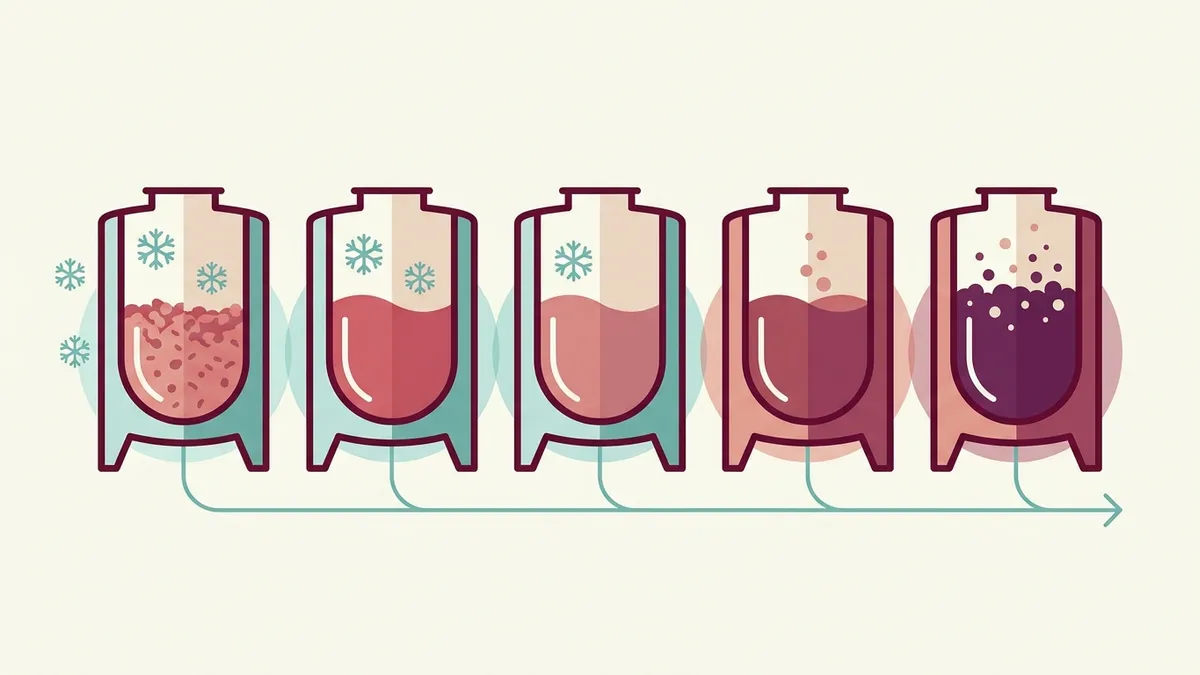
Once the soak ends, the winemaker lets the tank warm. Yeast wakes up, sugar turns to alcohol, and alcohol takes over as the main solvent. Our guide to how yeast drives fermentation covers that next stage.
What Does a Cold Soak Change in the Wine?
Mostly early colour, sometimes seed tannin, and little else that is proven. Winemakers credit the soak with deeper colour, softer tannin, more aroma and better wine overall. The evidence is strongest for the first, thin for the second, and unsettled for the last two.
| Claimed effect | What the research shows | What to look for in your glass |
|---|---|---|
| Deeper colour | Anthocyanins diffuse fast in cold juice and can lift early colour intensity; some studies find no lasting gain | Tilt the glass over white paper: a young red with a purple rim and dark core |
| Softer tannin | Lower seed tannin was confirmed in Teran wines, but other studies found more seed tannin | Less drying grip on your gums after you swallow |
| More aroma | The review says the soak may reshape the aroma profile; no single effect is settled | Nothing reliable: aroma depends on too many other steps |
| Better wine overall | Effects vary across grapes and vintages; oenologists still debate it | Judge the wine, not the method on the back label |
The tannin result comes from Teran, a red grape of the Slovenian and Croatian coast. There, the lower extraction of seed tannins was still visible in the finished wines. That is one grape, and other studies found more seed tannin, not less. Our explainer on what tannins are shows why seed tannin feels harsher than skin tannin.
How Cold and How Long Is a Cold Soak?
Usually 5 to 15 °C, often as low as 3 to 5 °C, for three to five days. The 2026 review by Sternad Lemut and colleagues also reports soaks stretched to 10 or even 12 days. A longer soak gives the skins more time, and every extra day keeps a tank full of unprotected juice waiting.
One real cellar trial landed in the middle. In a study of California Syrah by Stoffel and colleagues, every batch had a five-day cold soak averaging 10.6 °C. That is cold enough to keep yeast quiet without the near-freezing temperatures some cellars use.
Why Do Winemakers Add Sulfur Dioxide or Dry Ice?
Both protect juice that is sitting still for days with no alcohol to guard it. Cold alone slows the enzymes that brown and oxidise juice, and it delays unwanted microbes. Sulfur dioxide strengthens both effects, and dry ice adds a fast chill plus a shield against oxygen.
Sulfur dioxide (SO2, the same preservative behind the "contains sulfites" line on labels) holds back wild yeast and acetic acid bacteria, the microbes that turn wine toward vinegar. Our guide to sulfites in wine explains where else it is used.
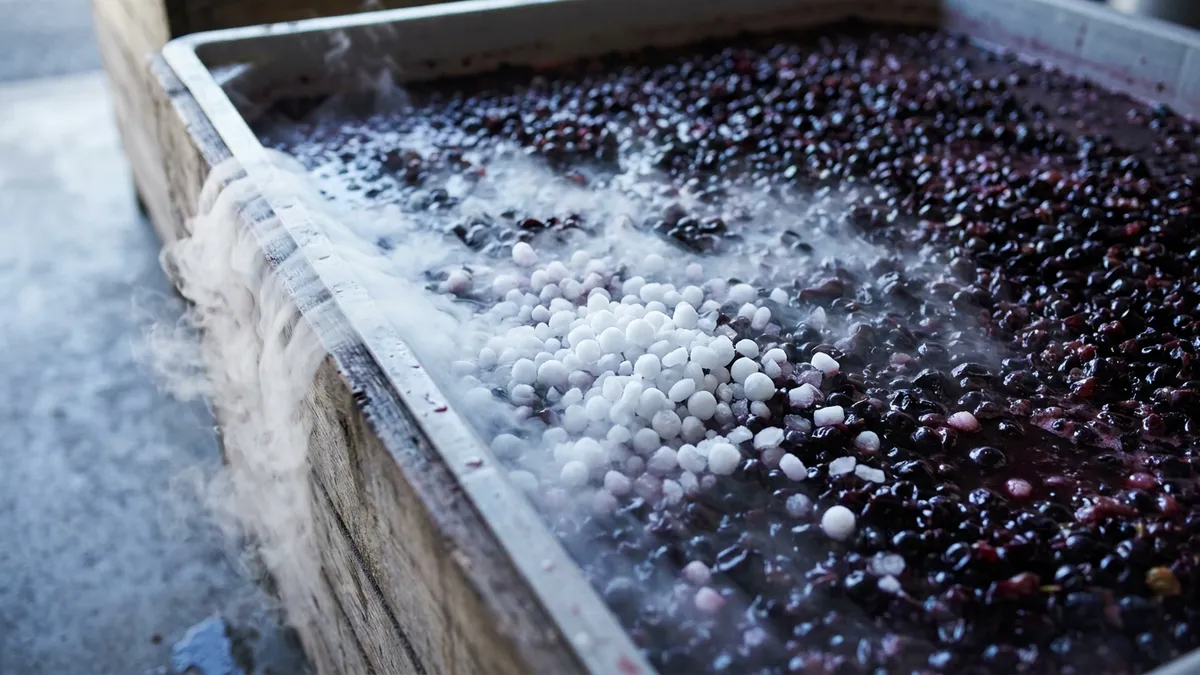
Dry ice is solid carbon dioxide. Dropped onto crushed grapes, it cools them fast. As it turns to gas, it lays a blanket of carbon dioxide over the must that keeps oxygen away. The review singles it out as particularly effective because it does both jobs at once.
Does Cold Soaking Really Work?
Sometimes. The 2026 review states that reported effects on anthocyanins, total phenolics and colour "are not always consistent", and that some studies show negative or negligible outcomes. The grape and the vintage decide much of it, and even pale Pinot Noir, which looks like it has the most to gain, often responds poorly.
That debate is old. Cold soaks became popular in Burgundy in the 1970s and 1980s, and oenologists still disagree about how much they improve wine quality. Burgundy's reds are Pinot Noir, which the same review describes as challenged in colour intensity and stability because of its naturally low anthocyanin content, yet notes it often responds poorly to a cold soak.
So judge it grape by grape. For pale, thin-skinned Pinot Noir, a cold soak is a hopeful bet for colour, not a sure one. For dark, thick-skinned grapes that already give plenty of pigment, it is a style choice with little to fix. Our guide to thick- and thin-skinned grapes shows which grapes fall where.
Cold Soak Winemaking vs Extended Maceration vs Cold Fermentation
The three names sound alike but sit at different points in winemaking. A cold soak happens before fermentation, in juice with no alcohol. Extended maceration happens after it, in finished wine left on its skins. Cold fermentation is fermentation itself kept cool, a method used mostly for whites.
| Technique | When | Temperature | Main goal |
|---|---|---|---|
| Cold soak | Before fermentation, no alcohol yet | Cold, about 5 to 15 °C | Pull colour from skins with water |
| Extended maceration | After fermentation, wine left on skins | Cellar temperature | More tannin and texture over days or weeks |
| Cold fermentation | During fermentation | Cool, mostly for white wines | Keep fresh fruit aromas |
Cold soak is not cold fermentation: during the soak, no fermentation happens at all. The two steps can also pull in opposite directions. In the Syrah study, wines given extended maceration ended with lower colour saturation, likely because pigments degraded or stuck to solids. The same study found that cap management (how the floating layer of skins is pushed back into the juice) and maceration length shaped the taste more than alcohol level did. For a fourth method that ferments whole grapes, see carbonic maceration.
Which Wines Use a Cold Soak?
It began with Burgundy Pinot Noir, but the 2026 review says it is now used broadly across grapes and regions. Studies cover Cabernet Sauvignon, Merlot, Syrah, Tempranillo and Teran, among others. Wineries rarely print it on the front label. When they mention it at all, it appears on back labels and on winery technical sheets, the one-page notes that list harvest and cellar details.
If a back label or tech sheet mentions a cold soak on a Pinot Noir, expect a winemaker chasing deeper colour and fresh fruit. If it appears on a dark grape such as Syrah, read it as a style choice. If the sheet says nothing, assume nothing: plenty of good Pinot is made without one. Our Pinot Noir guide and Burgundy wine guide show the range of styles this grape gives with or without it. More production choices that shape style sit in the wine styles hub.
Can You Taste a Cold Soak in the Glass?
Not reliably. Its best-supported effect, early colour, is also shaped by grape, ripeness, vintage and age, so no taster can name the method blind. What you can read is the colour it aims for: a deep core and a violet rim in a young red.
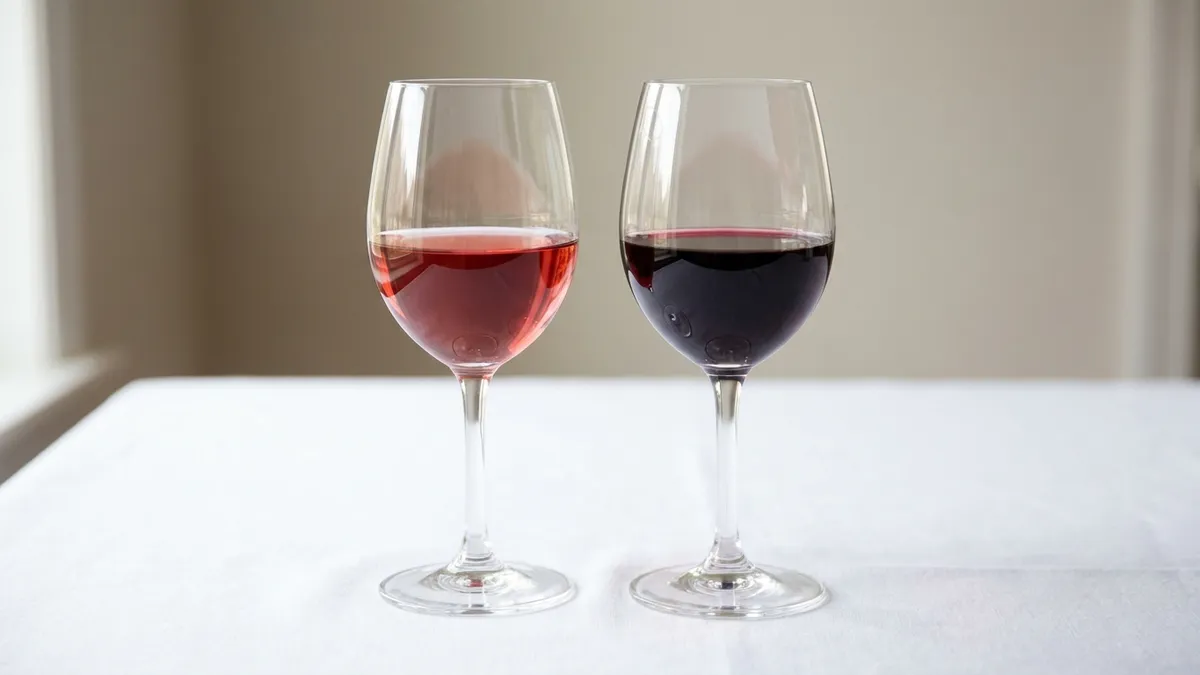
If one young Pinot Noir looks deep purple and another pale ruby, check the vintage first. Colour fades toward garnet as wine ages, as our guide to wine colour and age explains. Only when two wines are the same age and grape does a colour gap start to point at winemaking. Our guide to what wine colour means covers how to read hue, depth and rim.
The Sommy app teaches this kind of reading in bite-sized courses, including Wine 101. Tonight: pour any red, tilt it over white paper, and note whether the rim is violet, ruby or brick before you take the first sip.
Sources
Frequently Asked Questions
What is a cold soak in winemaking?
A cold soak is a pause between crushing red grapes and fermenting them. The crushed grapes are chilled, usually to 5 to 15 °C, and left for a few days, usually with a dose of sulfur dioxide, so yeast stays quiet. During that time the cold juice draws colour and other compounds out of the skins using water instead of alcohol.
How long does a cold soak last?
Most cold soaks last three to five days. A 2026 review of maceration research reports longer soaks of up to 10 or even 12 days. A study of California Syrah used a five-day soak at an average of 10.6 °C. After the soak, the winemaker lets the grapes warm up so yeast can start fermentation.
Does a cold soak make wine darker?
Often, at least early on. Colour pigments called anthocyanins move quickly from the skins into cold juice, which can lift colour intensity in the young wine. The research is not consistent, though: some studies find little or no lasting gain, and the result changes with the grape and the vintage. Even pale Pinot Noir often responds poorly in trials.
Is cold soak the same as cold fermentation?
No. During a cold soak no fermentation happens at all: the cold and the sulfur dioxide hold the yeast back. Cold fermentation is the fermentation itself run at a low temperature, a technique used mostly for white wines to keep fresh fruit aromas. A red can have a cold soak and then ferment warm.
What is the difference between cold soak and extended maceration?
Timing. A cold soak happens before fermentation, in cold juice with no alcohol. Extended maceration happens after fermentation, when the finished wine is left on its skins for days or weeks. In a study of California Syrah, wines given extended maceration ended with lower colour saturation, so the two steps can push colour in opposite directions.
Why is a cold soak used for Pinot Noir?
Pinot Noir has naturally low levels of the anthocyanins that give red wine its colour, so its wines are often pale and their colour can be unstable. Winemakers use a cold soak to try to pull more pigment from the skins, though trials on Pinot Noir often show little gain. The technique became popular in Burgundy, Pinot Noir's home, in the 1970s and 1980s.
Sommy Team
LinkedInFounder & Wine Educator
The Sommy Team is building the world's most approachable wine education app, helping beginners develop real tasting skills through structured courses and AI-guided practice.