Colchagua Valley Wine Guide: Chile's Red Wine Powerhouse

By the Sommy Team — AI-assisted, human-edited.
Updated Sep 23, 2026
Contents (11)
- What Is Colchagua Valley Wine?
- Colchagua Valley Wine, in One Paragraph
- Where Is Colchagua Valley, and How Far Is It from Santiago?
- What Makes Colchagua's Climate and Soil Suit Red Wine?
- What Are the Colchagua Sub-Zones: Costa, Entre Cordilleras and Andes?
- Why Is Carménère Colchagua's Signature Grape?
- What Other Grapes Grow in Colchagua Valley?
- What Is Apalta, and Why Do People Call It Chile's Grand Cru?
- How Does Colchagua Compare to Maipo Valley?
- What Does Colchagua Wine Taste Like, and How Should You Taste It?
- Is Colchagua Valley Worth Visiting, and When Should You Go?
TL;DR
Colchagua Valley is one of Chile's leading regions for premium red wine, about 130 kilometres south of Santiago. Its warm, dry Mediterranean climate ripens Cabernet Sauvignon, Carménère, Syrah and Malbec, while Pacific air cools its coastal Costa sub-zone. This Colchagua Valley wine guide covers the three sub-zones, the Carménère rediscovery, Apalta, and what to expect in the glass.
What Is Colchagua Valley Wine?
Colchagua Valley wine is the ripe, generous red that helped put modern Chile on the world's wine map. The valley sits about 130 kilometres south of Santiago, in the southern half of the wider Rapel region, and grows more Cabernet Sauvignon than any other grape. It is also the heartland of Carménère, a Bordeaux grape Chile grew as Merlot until it got its name back in 1994. This guide explains where the valley is, how its coastal, central and Andean sub-zones differ, what makes Apalta special, and what to expect when you pour a glass.
Colchagua Valley Wine, in One Paragraph
Colchagua is a warm, dry, Mediterranean-climate valley roughly 130 kilometres south of Santiago, framed by the Pacific coastal range to the west and the Andes to the east. Rain falls mostly between May and August, and the growing season is sunny and dry. Cabernet Sauvignon covers 11,928 hectares, followed by Carménère and Merlot. Since 2012 Chilean labels may add one of three complementary terms, Costa, Entre Cordilleras or Andes, that tell you whether the vineyard sits in the cool coastal hills, the central plain or the mountain foothills. Colchagua's signature is soft-tannin, dark-fruited red wine, with Carménère as its calling card and the Apalta amphitheatre as its most celebrated address.
Where Is Colchagua Valley, and How Far Is It from Santiago?
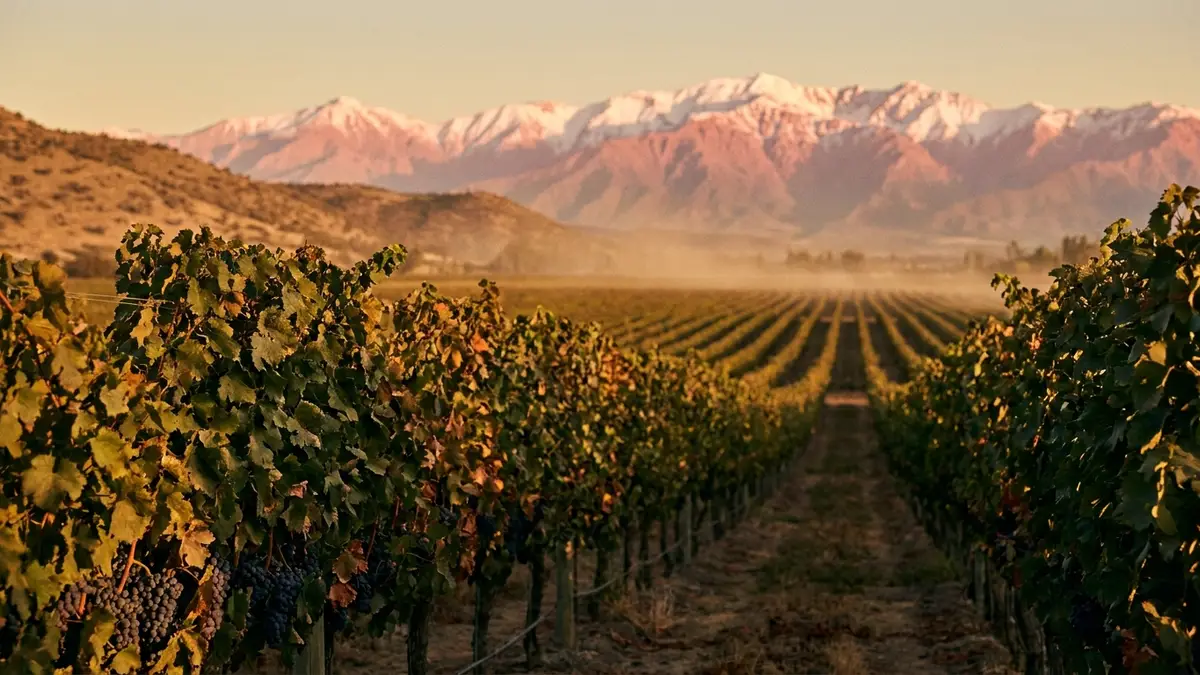
Colchagua Valley lies about 130 kilometres, or roughly 80 miles, south of Santiago in central Chile. It forms the southern half of the Rapel Valley and runs east to west, from the Andes foothills through the towns of San Fernando and Santa Cruz to the low coastal hills near the Pacific.
Like most Chilean wine valleys, Colchagua runs across the country rather than along it, so a single valley contains vineyards a short drive from the ocean and vineyards climbing into the mountains.
Santa Cruz is the wine town at its centre and the base for most visitors. Wines of Chile lists 22 wineries in the valley and describes it as having grown "from a quiet expanse of farmland to one of the largest and most active wine regions in the country" over the past twenty years. Our Chilean wine guide sets it alongside Maipo, Casablanca and the south, and the wine regions hub puts it on the world map.
What Makes Colchagua's Climate and Soil Suit Red Wine?
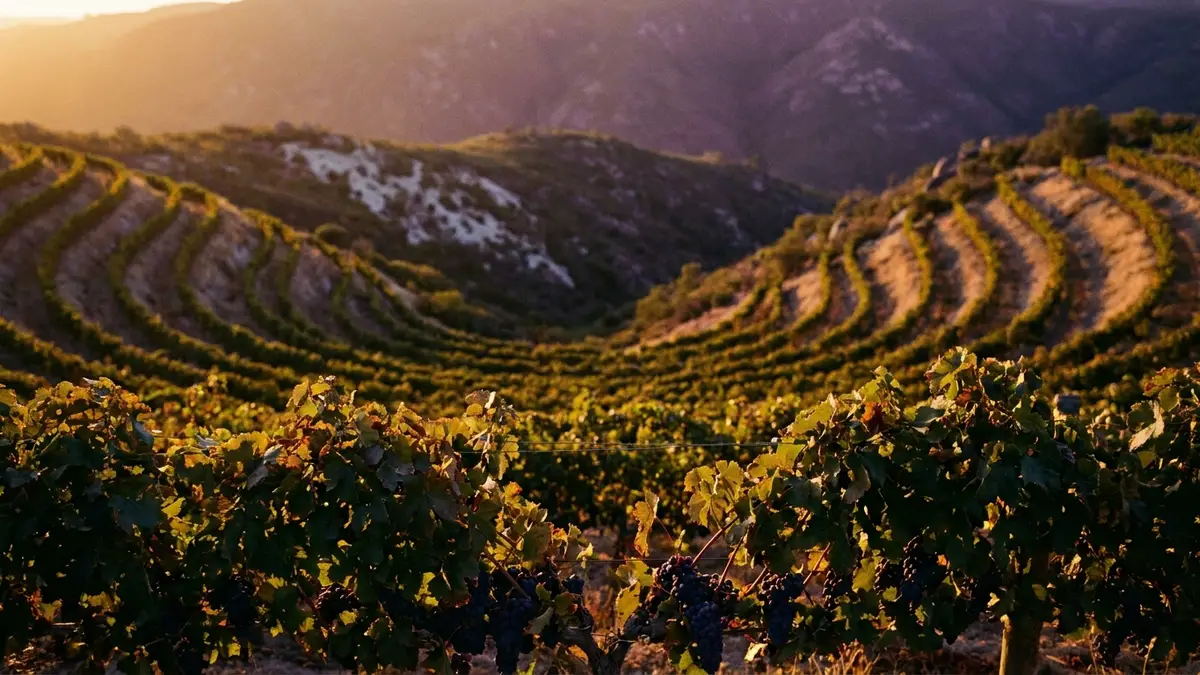
Colchagua has a warm, dry Mediterranean climate: sunny summers, low humidity, winter rain that falls mostly between May and August, and only occasional spring frost. Grapes ripen fully and reliably, which is why thick-skinned red varieties dominate.
The heat is only half the story. Because the coastal hills are relatively low, Pacific breezes push into the valley and meet cold air draining down from the Andes. Wines of Chile notes that this cooling "extends the ripening period," which "benefits the preservation of acidity in the grapes." Long, slow ripening is what lets a Colchagua red be ripe and fresh at the same time, rather than heavy and flat. Our explainer on how climate shapes wine flavour shows why that day-to-night swing matters so much.
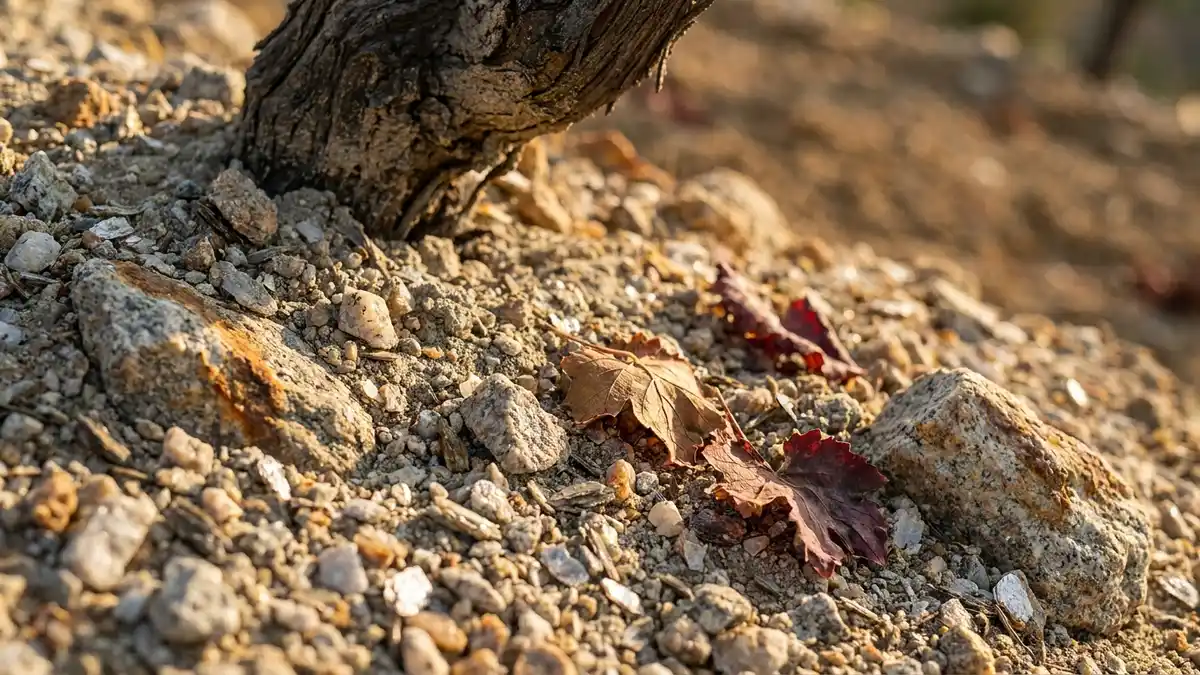
The soils split by location. The valley floor is deep sedimentary loam, a mix of clay and silt, which holds water and gives generous yields. The foothills carry medium-textured volcanic soil, and the prized hillsides such as Apalta sit on decomposed granite, coarse, free-draining rock that stresses the vine just enough to concentrate flavour. Read how soil affects wine taste for what granite tends to do to a red.
One more quiet advantage: like the rest of Chile, Colchagua is free of phylloxera, the root-eating louse that devastated Europe's vineyards in the 19th century. Desert, Andes, ocean and southern ice kept it out, so many vines here still grow on their own roots.
What Are the Colchagua Sub-Zones: Costa, Entre Cordilleras and Andes?
Colchagua's vineyards fall into three bands from west to east. Costa covers the Pacific-influenced coastal hills at roughly 100 to 300 metres, Entre Cordilleras ("between the ranges") the central plain and lower slopes at about 200 to 500 metres, and Andes the mountain foothills at around 400 to 800 metres. Each grows different grapes and gives a different style.
These three words are not separate appellations. Chile's Ministry of Agriculture added them to the country's 1994 wine law in September 2012 as complementary terms: a producer may print "Colchagua Costa" or "Colchagua Andes" on a label to say where in the valley the fruit grew, but the terms are optional and sit alongside the main Denomination of Origin (the legally protected place name). Decanter reported at the time that Entre Cordilleras alone covers the central appellations "where 60% of Chile's wine is produced." If the idea of a place name carrying legal weight is new to you, our guide to what an appellation is covers the basics.
| Sub-zone | Where it sits | Elevation | Cooling influence | Typical grapes and style |
|---|---|---|---|---|
| Colchagua Costa | Western coastal hills toward the Pacific | About 100–300 m | Ocean breezes and morning fog | Sauvignon Blanc, Chardonnay, Pinot Noir, cooler-style Syrah; crisp, aromatic, brighter acidity |
| Colchagua Entre Cordilleras | Central plain and low hills around Santa Cruz, including Apalta | About 200–500 m | Mild mix of coastal and mountain air | Cabernet Sauvignon, Carménère, Merlot, Syrah; ripe, plush, soft tannin |
| Colchagua Andes | Eastern foothills toward the mountains | About 400–800 m | Cold night air off the Andes | Cabernet Sauvignon, Carménère, Malbec; firmer structure, fresher fruit, longer ageing |
The practical lesson: a Colchagua white or Pinot Noir almost certainly comes from Costa; the big reds the valley is famous for come from the middle and the mountain side.
Why Is Carménère Colchagua's Signature Grape?
Carménère is Colchagua's signature because the valley's warm, long season ripens this late-ripening Bordeaux grape better than almost anywhere, and because Chile is where the grape was saved. Cuttings arrived from Bordeaux in the 1850s, were grown as Merlot for roughly 150 years, and were finally identified as Carménère in 1994.
Here is the story in dates. In the 1850s, Chilean landowners imported Bordeaux vines, and the bundles included Carménère mixed in with Merlot. Back in France, phylloxera and the grape's fussy flowering pushed Carménère to the edge of extinction, so for a century nobody was looking for it. In Chile it was picked, fermented and sold as Merlot; Wikipedia's summary of the research notes it may have made up as much as 50 percent of what was labelled Chilean "Merlot."
In 1994, French ampelographer (a scientist who identifies grape varieties by their leaves, shoots and DNA) Jean-Michel Boursiquot examined the vines and confirmed they were Carménère. Chile's Department of Agriculture officially recognised it as a distinct variety in 1998, and a new national grape was born, or rather rediscovered.
Colchagua became its heartland for a simple reason: Carménère needs heat and a long autumn to lose its green, bell-pepper edge and reach ripe plum and spice. Colchagua provides both. Wines of Chile counts 3,657 hectares of Carménère here, second only to Cabernet Sauvignon. The grape's full profile, from tasting notes to food pairings, lives in our Carménère wine guide.
What Other Grapes Grow in Colchagua Valley?
Cabernet Sauvignon is by far Colchagua's most planted grape at 11,928 hectares, according to Wines of Chile, more than Carménère, Merlot and Syrah combined. Merlot (3,132 ha), Syrah (2,153 ha) and Malbec (867 ha) round out the reds, while Chardonnay (1,935 ha), Sauvignon Blanc (1,688 ha) and Pinot Noir (412 ha) grow mainly in the cooler coastal hills.
Add those figures up and the valley clearly runs to tens of thousands of hectares, though published totals disagree because the vineyard is spread across three sub-zones and still changing as coastal plantings expand. What matters for you is the mix, not the exact hectare count.
- Cabernet Sauvignon gives blackcurrant, plum and a touch of dried herb, with tannins that are riper and softer than in Maipo. It is the backbone of the valley's premium blends. Our Cabernet Sauvignon wine guide sets Colchagua against its global rivals.
- Syrah does two things here. On the warm valley floor it turns dark, dense and peppery; on Costa hillsides it leans fresher and more floral. See how the grape splits in Syrah vs Shiraz.
- Malbec is the small but growing one. Compared with the plush Argentine version across the Andes, Colchagua Malbec is often leaner and brighter, closer to its French roots; our Malbec wine guide explains why.
- Merlot makes the friendly, everyday reds, softer and juicier than the rest.
- Whites and Pinot Noir are the Costa story: Sauvignon Blanc with citrus and herb, Chardonnay with orchard fruit, Pinot Noir with red cherry and a savoury lift.
What Is Apalta, and Why Do People Call It Chile's Grand Cru?
Apalta is a horseshoe-shaped bowl of hills inside Colchagua's Entre Cordilleras band, sheltered by hillsides on three sides. Its slopes are decomposed granite and its nights cool, and the reds grown there are the most concentrated and age-worthy in the valley. In May 2018 it became an official Denomination of Origin of its own, covering 1,007 hectares.
The surrounding hills shield the vines from the strongest Pacific and Andean influences and give relief from the afternoon sun, so the fruit ripens slowly. The granite on the slopes drains fast, so vines dig deep and yield small, thick-skinned berries, and cold air pooling at night keeps acidity in the fruit. The result is Carménère, Cabernet Sauvignon and Syrah with deep colour, dense tannin and the structure to age for a decade or more.
The "grand cru" label is a nickname, borrowed from Burgundy's top-ranked vineyards, not a legal rank; Chile has no cru system. But since 2018 Apalta has been a legal name in its own right, one of a handful of new Chilean appellations recognised that year. Its neighbour Los Lingues, 492 hectares of volcanic soil on the Andes side of the valley, was recognised at the same time. If the idea of a ranked vineyard site is new to you, our explainer on what cru means in wine untangles the European version.
How Does Colchagua Compare to Maipo Valley?
Maipo, wrapped around Santiago, is Chile's classic Cabernet region: firmer, more structured, often marked by blackcurrant and mint, and frequently called the most Bordeaux-like. Colchagua, further south, is warmer and broader, and makes riper, plusher reds with softer tannin, plus the country's benchmark Carménère.
| Maipo Valley | Colchagua Valley | |
|---|---|---|
| Location | Around Santiago, in the Andes foothills | About 130 km south, Andes to Pacific |
| Signature grape | Cabernet Sauvignon | Carménère (with Cabernet the most planted) |
| Typical red style | Firm, structured, blackcurrant and mint | Ripe, plush, plum and spice, softer tannin |
| Best-known site | Alto Maipo foothills | Apalta amphitheatre |
| Wine tourism | Day trips from the capital | Chile's first wine route, since 1996 |
Neither is better. Reach for Maipo when you want a Cabernet with grip and edge, and for Colchagua when you want fruit and softness. Tasting them side by side teaches what "structure" means in a red faster than any book; for the bigger picture, see Old World vs New World.
What Does Colchagua Wine Taste Like, and How Should You Taste It?
A typical Colchagua red is deep in colour, full-bodied and ripe, with plum, blackcurrant and black cherry fruit, a savoury edge of green pepper, dried herb or black pepper, and tannins that feel round rather than grippy. Alcohol is generous, acidity is moderate, and oak often adds vanilla and mocha.
Grape by grape:
- Carménère: ripe plum, blackberry, a distinct roasted red-pepper or green-peppercorn note, soft tannin, sometimes a smoky or cocoa finish.
- Cabernet Sauvignon: blackcurrant, plum, cedar and eucalyptus or dried herb, with more tannin than the Carménère but still smooth.
- Syrah: black fruit, black pepper and violets, dense on the valley floor, fresher and more floral from the coast.
- Costa whites and Pinot Noir: citrus, green herb and salinity in the Sauvignon Blanc; red cherry and earth in the Pinot Noir.
Serve the reds at around 16 to 18°C (60 to 65°F), a little below room temperature, so the fruit stays lively and the alcohol does not dominate; our wine serving temperature chart has the full ranges. Big Apalta reds benefit from 30 to 60 minutes in a decanter, a wide glass vessel that lets air soften the tannin.
If you want a structured routine, our guide on how to taste red wine walks through look, smell and taste step by step. Sommy's AI-guided tasting mode does the same thing with a bottle in front of you: photograph the label, and it walks you through each stage and logs your notes to a tasting journal so you can compare a Colchagua Cabernet with a Maipo one a week later.
Is Colchagua Valley Worth Visiting, and When Should You Go?
Yes. Colchagua is one of Chile's most developed wine-tourism valleys: its Ruta del Vino, founded in 1996, was the first wine route in the country and today groups 19 member wineries around Santa Cruz. Harvest in March and April is the liveliest time, while summer from December to February is hot, dry and reliable.
Most cellar doors sit within a short drive of Santa Cruz, so you can taste a coastal-influenced wine in the morning and an Apalta hillside red in the afternoon and feel the difference in the glass.
The signature event is the Fiesta de la Vendimia de Colchagua, the harvest festival held in Santa Cruz each March, where the valley's main wineries pour alongside music and food. Book accommodation early if you want to be there for it.
For a wider trip, our Mendoza wine guide covers Argentina's Malbec capital just across the Andes, and our wine tourism guide has the practical advice on booking visits, tasting fees and pacing a day.
Learn the three sub-zones, know that Cabernet fills the vineyards while Carménère carries the flag, and understand why a granite bowl called Apalta earned its own appellation. After that, every bottle from the valley tells you where it came from.
Sources
- Wines of Chile: Wine Regions: Colchagua Valley (planted hectares by variety, wineries, climate)
- Wikipedia: Carménère (1850s import, 1994 identification by Jean-Michel Boursiquot, 1998 official recognition)
- Decanter: Doubt about value of new Chilean denominations (Costa, Entre Cordilleras and Andes added to the 1994 wine law, 2012)
- SevenFifty Daily: What You Need to Know About Each of Chile's New Wine DOs (Apalta and Los Lingues, May 2018)
- Ruta del Vino de Colchagua: About us (first wine route in Chile, 1996, 19 member wineries)
Frequently Asked Questions
What is Colchagua Valley known for?
Colchagua Valley is known for ripe, full-bodied red wine. Cabernet Sauvignon is its most planted grape by a wide margin, followed by Carménère and Merlot. It is also the grape Carménère's spiritual home in Chile, and the Apalta area within the valley produces some of the country's most concentrated, age-worthy reds. Cooler coastal vineyards now add Sauvignon Blanc, Chardonnay and Pinot Noir.
How far is Colchagua Valley from Santiago?
Colchagua Valley lies roughly 130 kilometres, or about 80 miles, south of Santiago in the wider Rapel wine region. The main towns for visitors are Santa Cruz and San Fernando. Because it is close enough for a day trip yet far enough to feel rural, it has become one of Chile's most developed wine-tourism valleys, with a wine route that dates back to 1996.
What grapes grow in Colchagua Valley?
According to Wines of Chile, Cabernet Sauvignon leads with 11,928 hectares, followed by Carménère (3,657), Merlot (3,132), the deep-coloured Tintorera (2,509), Syrah (2,153), Chardonnay (1,935), Sauvignon Blanc (1,688), Malbec (867) and Pinot Noir (412). Red grapes dominate the warm interior, while the whites and Pinot Noir are concentrated in the cooler coastal hills of the Costa sub-zone.
What is the difference between Colchagua and Maipo Valley?
Maipo wraps around Santiago and makes Chile's most structured, Bordeaux-like Cabernet Sauvignon, often with a mint or blackcurrant edge. Colchagua sits further south, is warmer and broader, and produces riper, plusher reds with softer tannin, plus Chile's benchmark Carménère. Think of Maipo as firmer and more classical, Colchagua as more generous and fruit-forward.
What is Apalta, and why is it special?
Apalta is a horseshoe-shaped amphitheatre of hills inside the Colchagua Valley. The hills shelter the vines and shade them from the harshest afternoon sun, and the decomposed-granite slopes drain well, so Carménère, Cabernet Sauvignon and Syrah ripen slowly into deeply coloured, concentrated, age-worthy wines. It was granted its own official Denomination of Origin in May 2018, covering 1,007 hectares.
Is Carménère the same as Merlot?
No. Carménère is a distinct Bordeaux grape that Chilean growers mistook for Merlot for around 150 years after cuttings arrived in the 1850s. A French vine expert identified it as Carménère in 1994, and Chile's Department of Agriculture officially recognised it as its own variety in 1998. It ripens later than Merlot and shows a signature green-pepper and spice note.
When is the best time to visit Colchagua Valley?
Harvest runs through March and April, when the vineyards are busiest and Santa Cruz hosts the Fiesta de la Vendimia de Colchagua, the valley's harvest festival, each March. Summer, from December to February, brings hot, dry, reliable days for vineyard visits, while the southern winter from May to August carries most of the valley's annual rainfall and is the quietest season.
Sommy Team
LinkedInFounder & Wine Educator
The Sommy Team is building the world's most approachable wine education app, helping beginners develop real tasting skills through structured courses and AI-guided practice.