Zinfandel vs Merlot: Side by Side (Spice, Body, Food)

By the Sommy Team — AI-assisted, human-edited.
Updated Nov 3, 2026
Contents (8)
- Zinfandel vs Merlot, in One Paragraph
- How Do Zinfandel and Merlot Taste Different?
- Which Is Bolder, Zinfandel or Merlot?
- Is Zinfandel Sweeter Than Merlot?
- Why Does Each Grape Taste Different From Place to Place?
- What Food Goes With Zinfandel vs Merlot?
- Is Zinfandel the Same Grape as Primitivo?
- Which Should You Pick Tonight?
TL;DR
Zinfandel and Merlot are both dry reds, but they get their weight differently. Zinfandel runs from about 13.5 to 16% alcohol and tastes of jam, blackberry and black pepper. Merlot sits at 13.5 to 15%, with plum and cherry and softer acidity. Pour Zinfandel with spice and barbecue, Merlot with pizza and roasts.
Zinfandel vs Merlot comes down to where each wine gets its weight. Zinfandel builds it from alcohol and black pepper, so it tastes warm, jammy and spicy. Merlot builds it from plum and cherry fruit with softer acidity, so it feels round and gentle.
Zinfandel vs Merlot, in One Paragraph
Zinfandel and Merlot are both dry reds with similar tannin (the drying grip on your gums): Wine Folly rates Zinfandel medium to medium-high and Merlot medium-high. Zinfandel has the higher acidity (the tartness that makes your mouth water) and more alcohol, from about 13.5% in a lighter bottle to around 16% in a full, spicy one. Merlot sits at 13.5 to 15% with medium acidity and a medium-full body. Zinfandel tastes of jam, blackberry, cherry and black pepper. Merlot tastes of plum and cherry, turning to baked blackberry where the climate is warm. Pour Zinfandel with curry and barbecue, Merlot with pizza and roast turkey.
How Do Zinfandel and Merlot Taste Different?
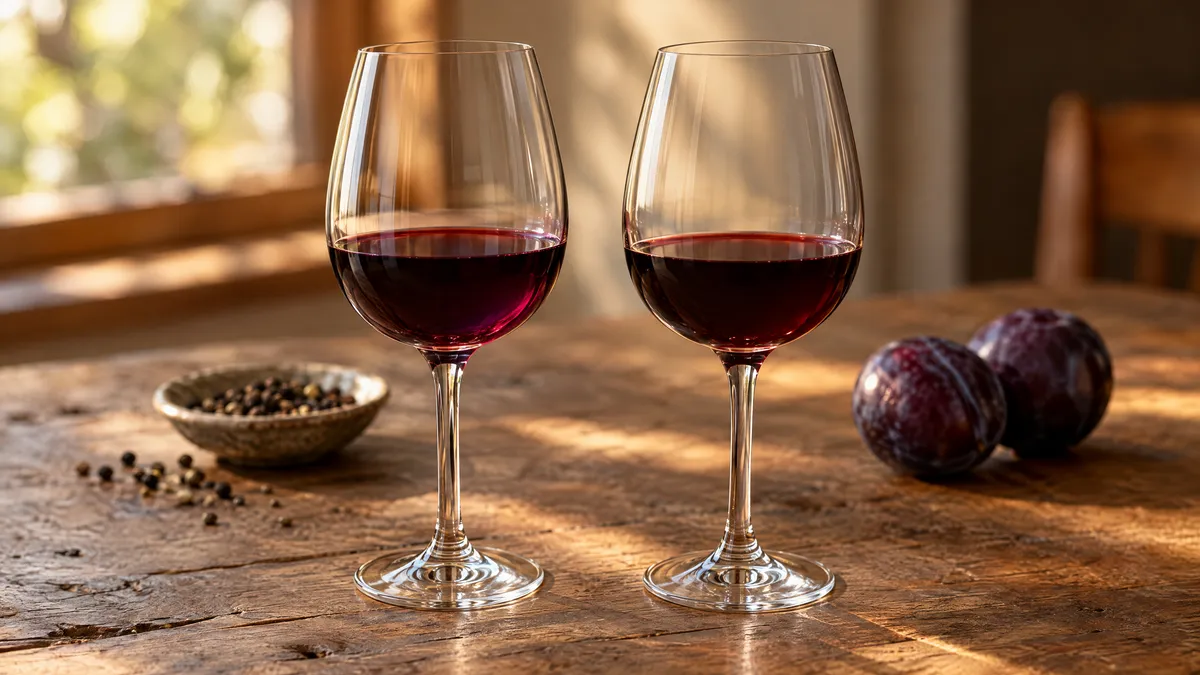
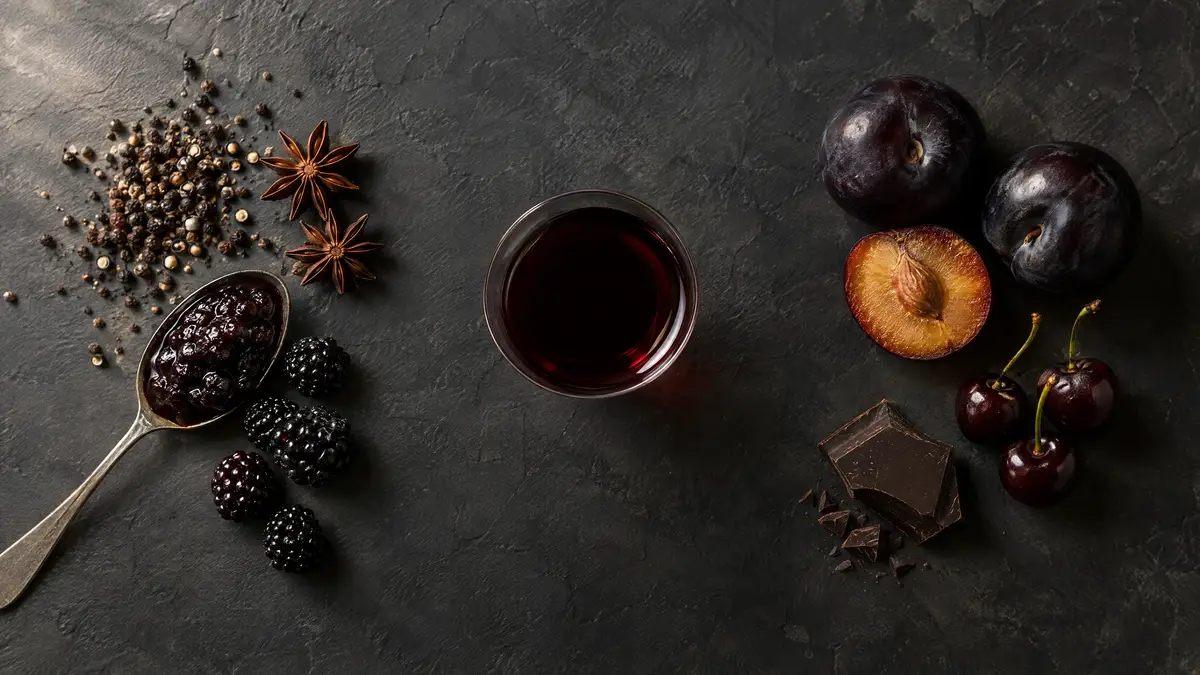
Zinfandel smells of jam, blackberry, cherry and black pepper, with licorice in riper bottles. Merlot smells of plum and cherry and feels rounder in the mouth. Zinfandel is the tarter, warmer and spicier of the two. Tannin is close, so the gap you feel first is alcohol and acidity.
| Zinfandel | Merlot | |
|---|---|---|
| Alcohol | About 13.5 to 16% | 13.5 to 15% |
| Body | Fuller as the alcohol climbs | Medium-full |
| Tannin | Medium to medium-high | Medium-high, fewer than Cabernet |
| Acidity | Medium to medium-high | Medium |
| Smells of | Jam, blackberry, cherry, plum, black pepper, licorice | Plum and cherry; baked blackberry and fruitcake if warm-grown |
| Tastes sweet? | Dry, but ripe fruit can read as sweet | Bone dry |
| Serve at | About 17°C (62°F) | 15 to 20°C (60 to 68°F), 30 minutes in a decanter |
| Pour it with | Curry, barbecued red meat, lamb, hard cheese | Pizza, BBQ chicken, roast turkey, beef short rib |
Merlot's softness has a physical cause. Its grapes have thinner skins and fewer seeds than Cabernet Sauvignon, and fewer tannins per unit of volume. Next to Zinfandel the gap is small, so the round feel comes mostly from Merlot's lower acidity. The Cabernet side of that story is in Cabernet Sauvignon vs Merlot, and you can feel tannin on its own with the exercises in what tannins are.

Quick check
One question on what you just read
Zinfandel usually feels warmer and heavier than Merlot. What mainly causes that?
Tap an answer to see how you did.
Which Is Bolder, Zinfandel or Merlot?
Zinfandel, usually, because it carries more alcohol. A lighter Zinfandel has about 13.5% and a full, spicy one around 16%, while Merlot tops out near 15%. Wine Folly notes that higher alcohol gives Zinfandel an oily texture and a bigger body (weight in the mouth: skimmed versus whole milk).
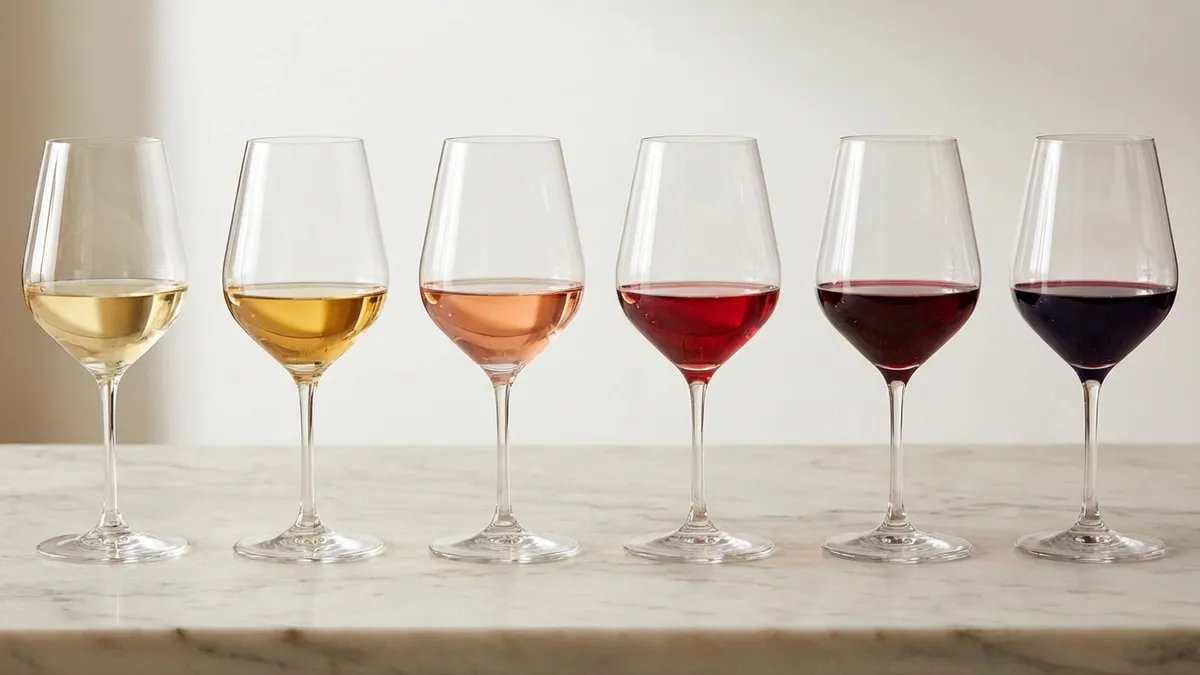
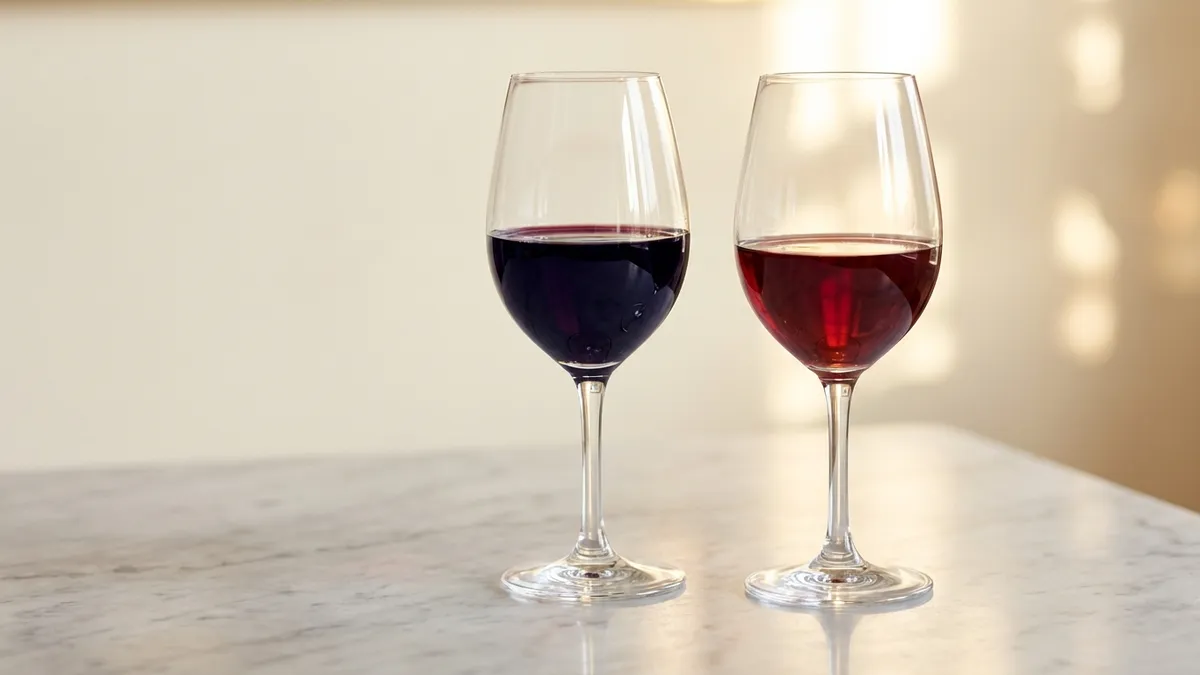
Judge weight by the alcohol figure, not the colour. Depth of colour comes from the skins, while the heavy, warm feel of a Zinfandel comes from alcohol. If the label says 15% or more, expect the fuller, warmer style whatever the glass looks like. The full alcohol range by style is in alcohol in wine by type.
Is Zinfandel Sweeter Than Merlot?
Red Zinfandel tastes sweeter, though both are dry (no sugar you can taste; fruity is not sweet) in most bottles. The sweet impression comes from jammy, very ripe fruit and high alcohol, which the tongue reads as softness and sugar. Wine Folly says red Zinfandel leans to the sweeter side of red wine and rates Merlot bone dry.
The pink wine on the shelf is the other source of confusion. White Zinfandel is made from the same grape but is a separate, light pink wine, often sweet. Its sweet style came out of a stuck fermentation (yeast stopping before all the sugar became alcohol) at a California winery. It tells you nothing about how a red Zinfandel tastes. Why ripe fruit fools the tongue is explained in sweet vs dry wine.
Why Does Each Grape Taste Different From Place to Place?
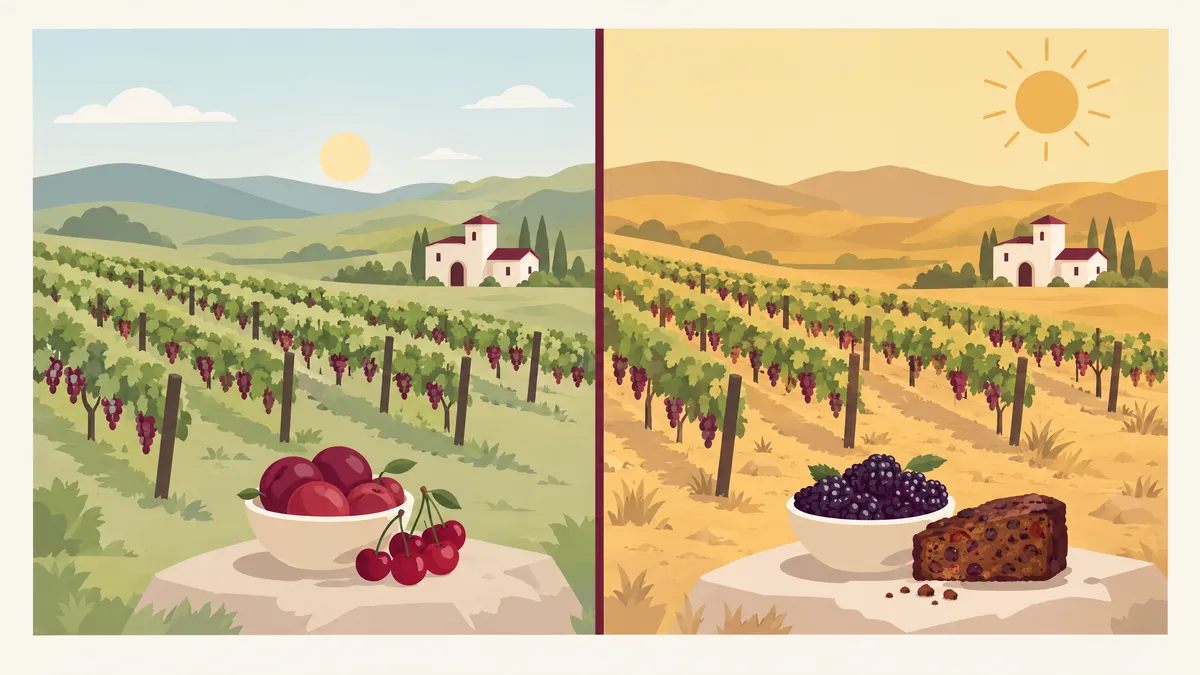
Ripeness decides more than the grape name. Both grapes change sharply between a cool climate (tarter and lighter) and a warm climate (riper and stronger). The alcohol figure on the label is the quickest clue to how ripe the grapes were picked.
Zinfandel ripens unevenly: one bunch can hold ripe berries, raisined berries and green ones at once. Picking later means more raisined fruit, more sugar and more alcohol, which is how some bottles climb past 15%. Blackberry, anise and pepper show up more in wines from warmer areas.
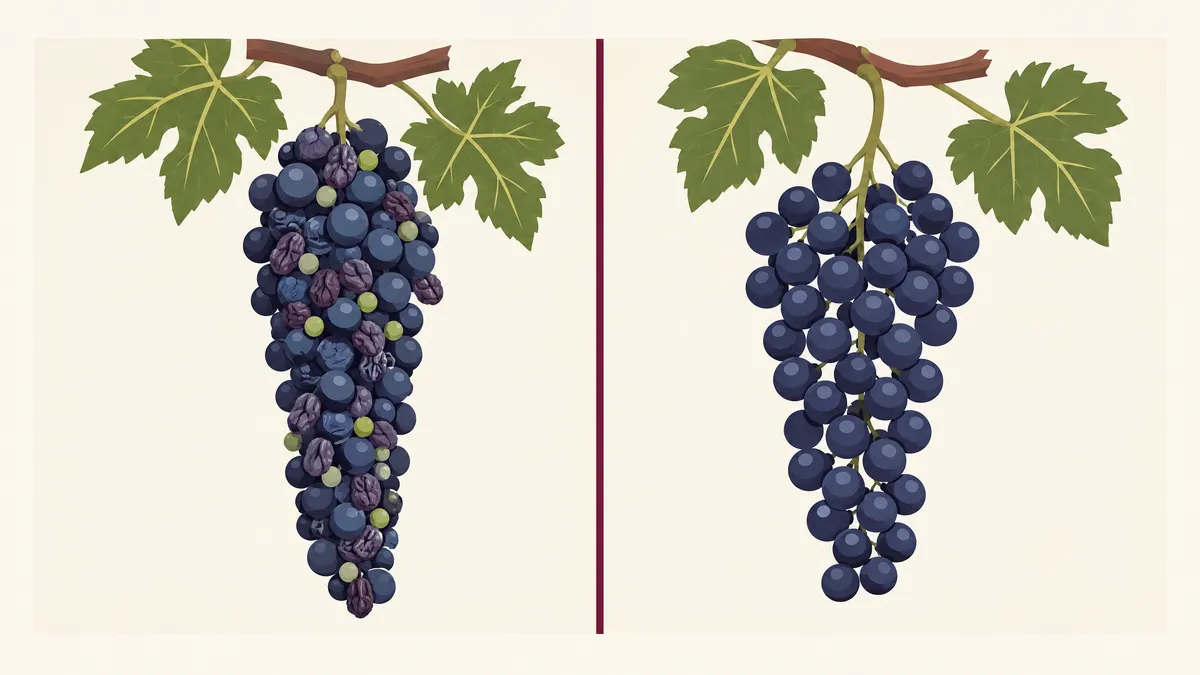
Merlot ripens up to two weeks earlier than Cabernet Sauvignon. In the traditional Bordeaux style it is picked earlier for moderate alcohol and tastes of fresh red plum and cherry. Warm New World regions pick it later, at higher alcohol, and it tastes of baked blackberry and fruitcake. Grapes that ripen early or late are compared in early vs late ripening grapes.
What Food Goes With Zinfandel vs Merlot?
Give Zinfandel spice and smoke; give Merlot pizza, roast chicken and gentler sauces. If the dish carries curry spice or a barbecue rub, open the Zinfandel: its pepper echoes the spice and its jammy fruit stands up to sweet, smoky glazes. Wine Folly also pairs it with barbecued red meat, lamb and hard, full-flavoured cow's and sheep's milk cheeses.
If the food is roasted in the oven or comes in a mild tomato sauce, open the Merlot. Its plum fruit and medium acidity sit beside pizza, BBQ chicken, roast turkey or beef short rib without covering their flavour. A warm-climate Merlot can handle rack of lamb too.
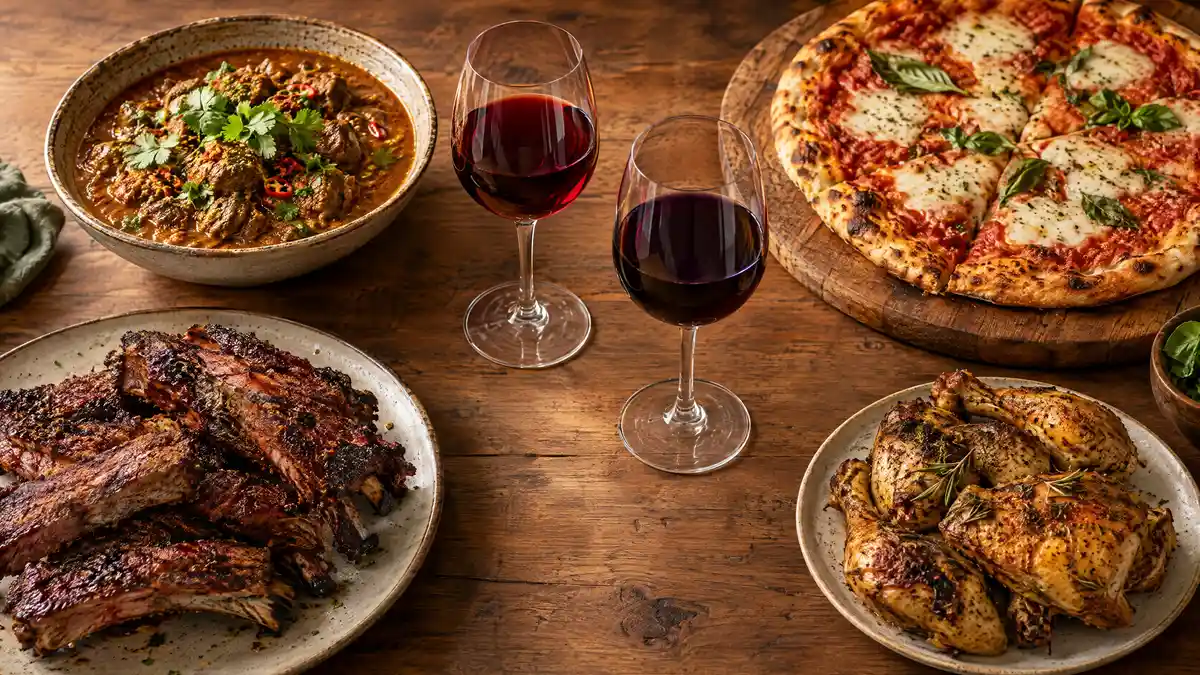
If the dish carries real chilli heat, pick the lower-alcohol bottle, usually the Merlot, because alcohol makes chilli burn harder. More matches by dish are in wine with BBQ, wine with pizza and wine with Indian food.
Is Zinfandel the Same Grape as Primitivo?
Yes. UC Davis researchers showed that Zinfandel and Italy's Primitivo are both Crljenak Kastelanski, a Croatian grape. In the late 1960s, a USDA researcher based at UC Davis noticed that Puglia's Primitivo grape looked strikingly like Zinfandel. DNA tests in December 2001 then confirmed that Crljenak and Zinfandel were the same variety.
The label still matters. US producers must label a wine as either Zinfandel or Primitivo, so the name tells you which vine clone the wine came from, not a different grape. Puglia's version is profiled in the Primitivo wine guide. Merlot's family is French: it is an offspring of Cabernet Franc.
Which Should You Pick Tonight?
Pick Zinfandel for pepper and punch, Merlot for plush and gentle. If one bottle has to suit a mixed table or a first-time red drinker, take the Merlot: its lower alcohol and softer acidity suit more dishes and more palates.
- Zinfandel if the food is spiced, smoked or off the grill, or you want a warm red at 15% and up.
- A Zinfandel at 13.5 to 14% if you want the pepper without the alcohol glow.
- Merlot for pizza, roast chicken or a glass on its own.
- A Merlot-led Pomerol or Saint-Émilion if you want fresh plum and cherry at moderate alcohol: Merlot commonly makes up most of those blends.
Each grape's full profile is in the Zinfandel wine guide and the Merlot wine guide, and more grape pairs sit in the grape varieties hub. Sommy's AI tasting mode at sommy.wine walks you through look, smell and taste for each glass and saves both sets of notes to your tasting journal.
Buy one bottle of each tonight and pour them side by side, as set out in how to compare two wines. Taste the Merlot first, then the Zinfandel, and check each label's alcohol against the warmth you feel.
Sources
Frequently Asked Questions
Is Zinfandel sweeter than Merlot?
Red Zinfandel usually tastes sweeter, though both are dry reds. Its jammy, very ripe fruit and high alcohol give an impression of sweetness, and Wine Folly describes it as leaning to the sweeter side of red wine. Wine Folly rates Merlot bone dry. White Zinfandel is a separate pink wine made from the same grape, and that one is often sweet.
Which is stronger, Zinfandel or Merlot?
Zinfandel, usually. Wine Folly puts a lighter Zinfandel at about 13.5% alcohol and a full, spicy one at around 16%, while Merlot runs from 13.5 to 15%. The extra alcohol is also why Zinfandel feels heavier and warmer in the mouth. The number on the label is the quickest way to check a bottle.
Which has more tannin, Zinfandel or Merlot?
They are close. Wine Folly rates Zinfandel's tannin medium to medium-high and Merlot's medium-high, so neither grape grips much harder than the other. Merlot feels softer to most drinkers because of its medium acidity and round texture. Both have fewer tannins than Cabernet Sauvignon, the grape Merlot is most often compared with.
Is Zinfandel the same grape as Primitivo?
Yes. UC Davis researchers showed that Zinfandel and Italy's Primitivo are both the Croatian grape Crljenak Kastelanski, confirmed by DNA tests in December 2001. The wines can still taste different because of where they grow and how they are made. In the United States, producers must label a wine as either Zinfandel or Primitivo.
What food goes with Zinfandel vs Merlot?
Zinfandel suits spice and smoke: curry, barbecued red meat, lamb and hard, full-flavoured cheeses. Its pepper echoes the spice and its fruit stands up to sweet rubs. Merlot suits gentler food: pizza, BBQ chicken, roast turkey and beef short rib. Its plum fruit and medium acidity sit beside roasted meat without covering it.
Which is better for beginners, Zinfandel or Merlot?
Merlot is the easier first red for most people. Its plum and cherry fruit, medium acidity and lower alcohol feel gentle from the first sip. Zinfandel is a good second step for anyone who already likes ripe, fruity reds and wants more pepper and warmth. Tasting the two side by side shows the difference fastest.
Sommy Team
LinkedInFounder & Wine Educator
The Sommy Team is building the world's most approachable wine education app, helping beginners develop real tasting skills through structured courses and AI-guided practice.