Wine with Tapas: A Spanish Small Plates Pairing Guide

By the Sommy Team — AI-assisted, human-edited.
Updated Oct 1, 2026
Contents (10)
- What Wine Goes With Tapas, in One Paragraph?
- Which Wine Goes With Which Tapa?
- Why Is Sherry the Classic Tapas Drink?
- Which White Wines Work Best With Tapas?
- Is Cava Good With Tapas?
- Can You Drink Red Wine With Tapas?
- What Goes With Spicy and Tomato Tapas?
- What Do Pintxos Need That Tapas Do Not?
- How Do You Pick Wine for a Tapas Night at Home?
- Where Does the Word Tapa Come From?
TL;DR
Most tapas are salty, fried, cured or briny, so the wine has to be dry, sharp and cold. Fino or manzanilla sherry handles ham and olives, Cava cuts fried food, Albariño and Txakoli suit seafood, rosado takes paprika and tomato, and a light red covers chorizo. Three bottles cover a full table.
Wine with tapas has one job: stand up to salt. Tapas are small Spanish plates, hot or cold, that can be combined into a full meal, and most of them are fried, cured, pickled or salted. Sharp, dry, cold wine meets that salt and fat head-on. In Andalusia the classic bar pour is fino sherry; in the Basque Country it is Txakoli.
What Wine Goes With Tapas, in One Paragraph?
Wine with tapas works best when it is dry (no sugar you can taste) and high in acidity (the tartness that makes your mouth water), and served cold. Acid cuts through frying oil and makes salt taste brighter. Fino or manzanilla sherry goes with ham, olives and almonds. Cava takes anything fried, Albariño takes prawns, and Txakoli takes Basque pintxos. Dry rosado meets tomato and paprika, and a young Rioja or Garnacha covers chorizo. For a mixed table, three bottles cover almost every plate: one sparkling or sharp white, one fino, one light red or rosado.
Which Wine Goes With Which Tapa?
Pick the wine by what dominates the plate: salt, fat, vinegar, tomato or chilli. If a plate is fried or salty, pour bubbles or fino. If it is cured and fatty, pour fino or a light red. If it is built on tomato and paprika, pour rosado.
| Tapa | What dominates | Pour this | Why it works |
|---|---|---|---|
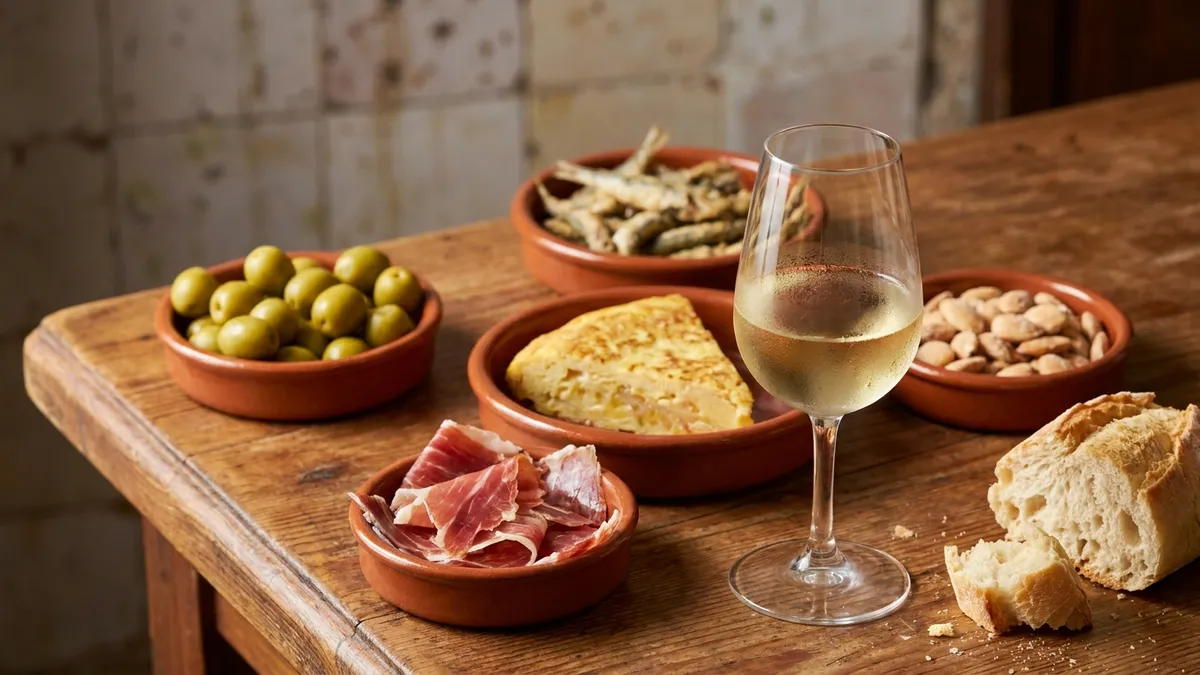
| Jamón ibérico | Salt and soft, marbled fat | Fino, manzanilla or Cava | Dry, salty-tasting sherry and bubbles cut the fat without masking the ham |
| Olives and salted almonds | Salt and brine | Manzanilla or fino | The sherry's own salty, bready smell meets the brine |
| Calamari, croquetas, fried fish | Frying oil and salt | Cava (brut or brut nature) | Bubbles and acid scrub oil off the tongue |
| Gambas al ajillo (garlic prawns) | Garlic, olive oil, sweet shellfish | Albariño | High acid cuts the oil; fresh fruit meets the sweet prawns |
| Boquerones en vinagre (vinegar anchovies) | Vinegar and oily fish | Txakoli or manzanilla | Only very sharp wine survives vinegar; tannin would turn metallic |
| Patatas bravas | Fried potato, tomato, paprika, some heat | Dry rosado | Acid for the oil, fruit for the tomato, low tannin for the spice |
| Chorizo, albóndigas (meatballs) | Paprika, pork fat, savoury meat | Young Rioja or Garnacha, lightly chilled | Soft tannin grips the fat; ripe fruit meets the paprika |
| Tortilla española | Egg, potato, olive oil | Cava or fino | Neutral, oily dish; acid and bubbles keep each bite fresh |
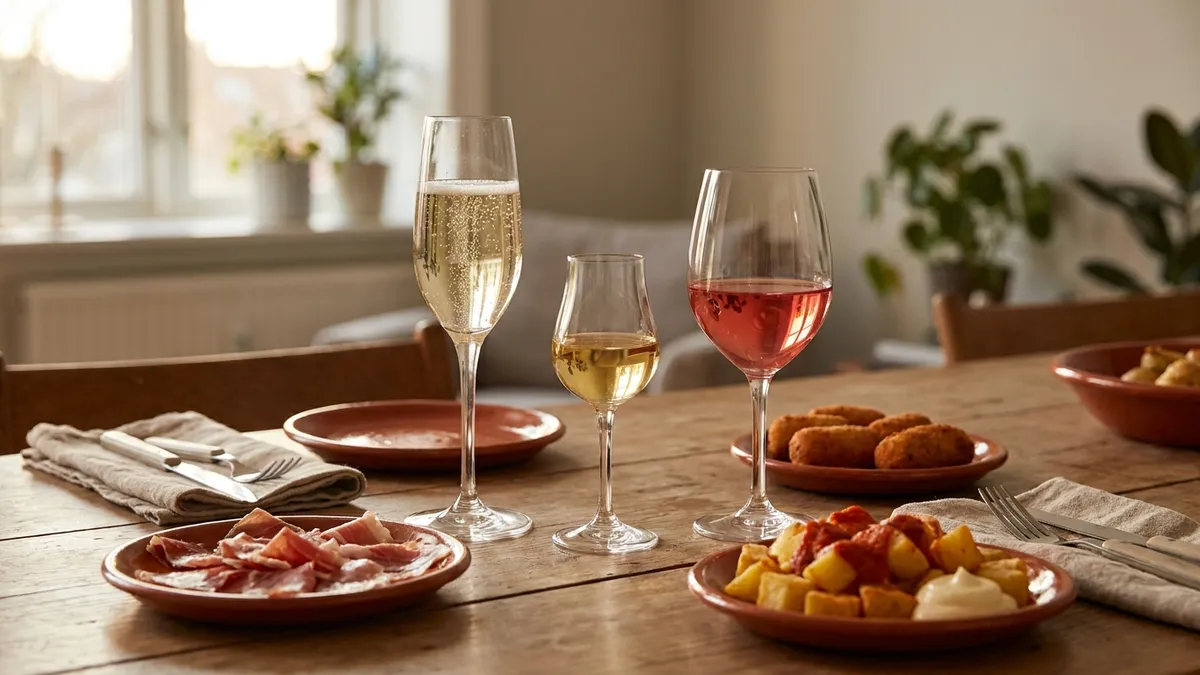
Why Is Sherry the Classic Tapas Drink?
Fino and manzanilla are bone-dry, salty-tasting and fortified (spirit added) to about 15.5% alcohol, so they stand up to cured ham, olives and fried fish where a delicate still white goes quiet. They come from the Sherry Triangle, the three Andalusian towns of Jerez de la Frontera, Sanlúcar de Barrameda and El Puerto de Santa María, protected as DO Jerez-Xérès-Sherry.
The salty, bready smell comes from flor, a layer of yeast that grows on the wine in the barrel and protects it from air. That keeps fino pale and fresh while it ages in the solera (a stack of barrels where younger wine tops up older wine) for at least two years. Manzanilla is the version aged by the sea in Sanlúcar, and it tastes even saltier.
Sherry is not always sweet, and that myth keeps people away from the best tapas wine. The sweetest is Pedro Ximénez, made from grapes dried in the sun to concentrate their sugar. If the bottle says fino or manzanilla, chill it hard and pour it with the salty plates. If it says Pedro Ximénez, save it for dessert. The sherry wine guide maps the other styles, from amontillado to oloroso, and the Jerez region guide shows where each town fits.
Which White Wines Work Best With Tapas?
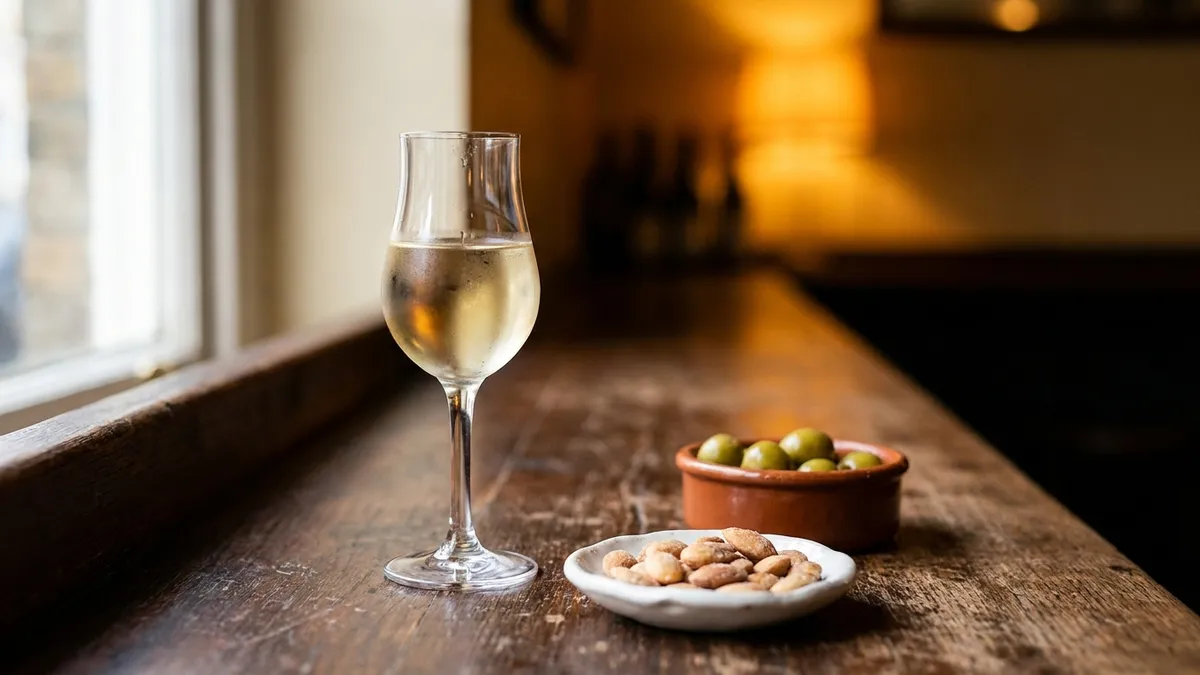
Albariño from Rías Baixas is the easiest dry white for a tapas table: sharp acid, fresh lemon and peach fruit, and a light salty edge that suits seafood. If the tapa is shellfish with garlic, lemon or olive oil, pour Albariño.
Rías Baixas is a DO (Denominación de Origen, Spain's protected place name) on the Atlantic coast of Galicia, in the far northwest. Albariño makes up over 90% of the vines planted there. The climate is Atlantic, with wet winters and sea fog, which keeps the grapes cool and the acid high. That acid is what cuts through the olive oil in gambas al ajillo and the batter on fried squid. The Albariño grape guide covers its styles, and the wine with seafood guide extends the same logic beyond tapas.
Is Cava Good With Tapas?
Yes: Cava is made by the traditional method (the second fermentation happens in the bottle, as in Champagne), and its bubbles and high acid scrub oil off the tongue. That makes it the best all-rounder for fried tapas, croquetas and tortilla.
The main grapes are Macabeo, Parellada and Xarel·lo, and most Cava, often cited as around 95%, comes from the Penedès area near Barcelona. Bubbles do a physical job with fried food: they lift fat from the palate between bites, so the fifth croqueta tastes as clean as the first. Cava also handles salty jamón well, which makes it the bottle to open first.
Read the sweetness word on the label. If it says brut nature or brut, the Cava is dry enough for savoury food. Sweeter words such as seco, semiseco and dulce belong with dessert. For how Cava differs from its rivals in grapes and method, see Champagne vs Prosecco vs Cava.
Can You Drink Red Wine With Tapas?
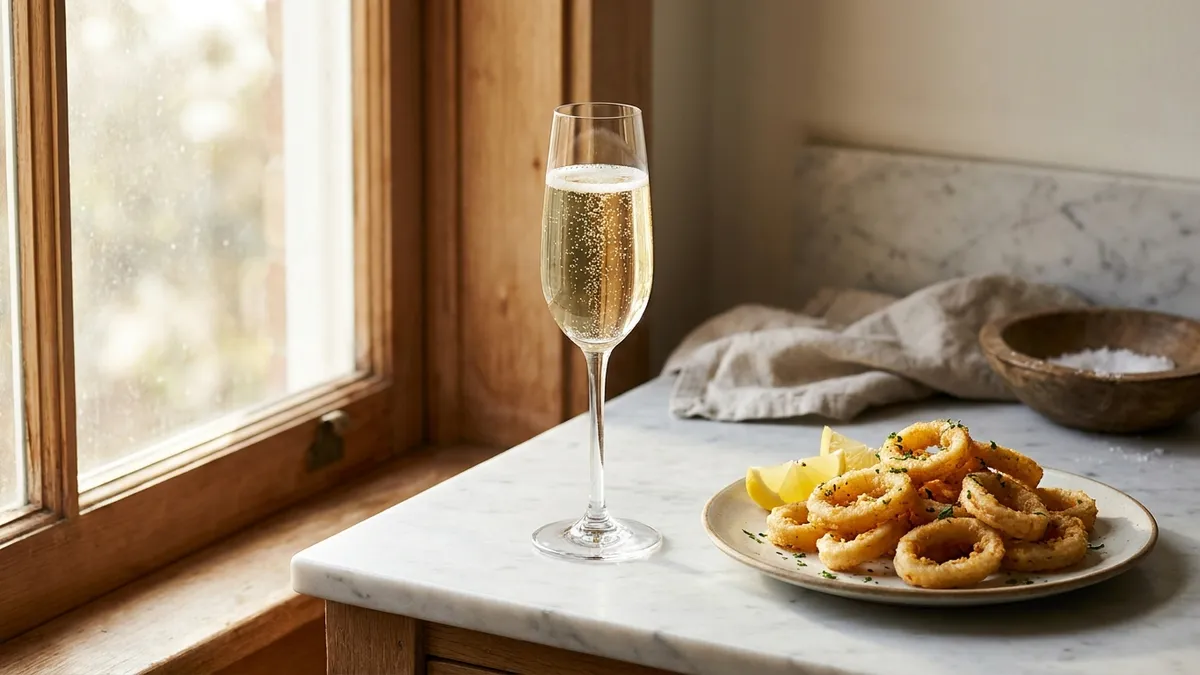
Yes, but pick a light or medium red with soft tannin (the drying grip on your gums) and save it for the meat tapas. Red wine is not the Spanish default with small plates, since many classics are fried fish, seafood, olives and anchovies.
Tannin turns metallic against fish oil and vinegar. If the plate has oily fish or vinegar anchovies, keep the red away.
Where red earns its place is chorizo, meatballs, grilled pork and jamón ibérico de bellota, ham from black Iberian pigs fed on acorns, with rich, marbled fat. Fat and protein soften tannin, and paprika in chorizo likes ripe, juicy fruit.
Rioja was Spain's first DOCa (its top tier of protected place name), granted in 1991. Its label words tell you the weight. Crianza (aged at least two years, part of it in oak) is the tapas Rioja: fresh enough for chorizo without heavy oak. A young Garnacha or Tempranillo with no ageing term works too, served slightly cool. The Rioja wine guide explains the ageing ladder, and the Grenache guide covers Garnacha.
What Goes With Spicy and Tomato Tapas?
A dry Spanish rosado (rosé) handles paprika, garlic and tomato better than a white or a big red. It has the acid of a white to cut frying oil and enough red-berry fruit to meet a tomato sauce, with almost no tannin to clash with heat.
Patatas bravas are the test case: fried potato, a spicy tomato and paprika sauce, often garlic mayonnaise. A rosado made from Garnacha or Tempranillo covers all three. If the sauce carries real chilli, choose a lower-alcohol bottle, because heat makes alcohol burn harder. Gambas al ajillo cooked with dried chilli want the same choice, or a cold Albariño. The rosé wine guide covers rosado styles, and wine with spicy food explains the chilli and alcohol rule in depth.
What Do Pintxos Need That Tapas Do Not?
Pintxos are the Basque cousin of tapas, usually built on bread and spiked with a toothpick, and their local wine is Txakoli. They are typical of the Basque Country and Navarre, where bar counters are lined with them from end to end.
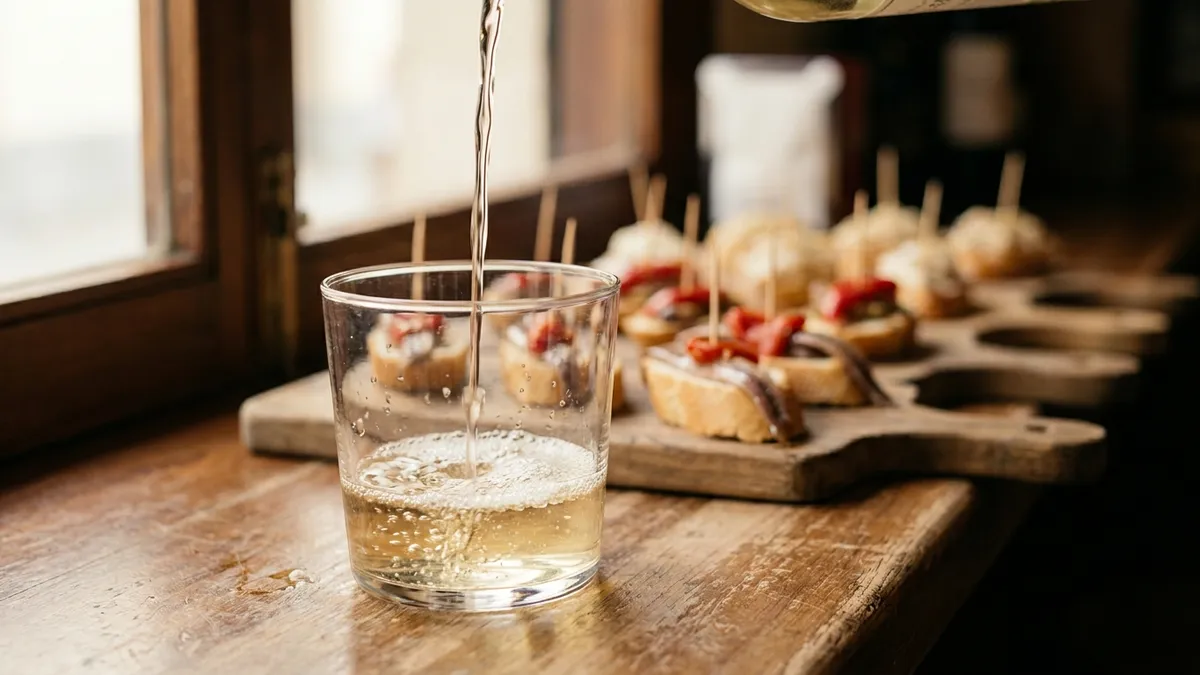
Txakoli is a very dry, slightly sparkling white with high acidity and low alcohol, about 9.5 to 11.5%. The main grape is Hondarribi Zuri, and it is made under three DOs: Getariako Txakolina (1989), Bizkaiko Txakolina (1994) and Arabako Txakolina (2001). Bartenders pour it into tall glasses from a height, which wakes up the light fizz. Its sharpness handles anchovies, peppers and vinegar, and its low alcohol suits a long crawl from bar to bar.
If you serve pintxos at home, pour Txakoli or Cava in small glasses and top up often.
How Do You Pick Wine for a Tapas Night at Home?
Buy three bottles: one sparkling or sharp white, one fino or manzanilla, and one light red or rosado. That covers every row of the table above, so guests can match each plate without you planning each pairing. If you can buy only one bottle, buy a brut Cava, because it handles fried, salty and cured plates.
Serve in the order of the plates. Open the Cava or white with the cold, salty dishes first: olives, almonds, ham. Pour the fino alongside them in small glasses, since at 15.5% a full wine glass is too much. Bring out the red or rosado when the hot meat and tomato plates arrive.
Temperature matters as much as the pick. Fino, manzanilla, Cava and Txakoli go straight from the fridge. Rosado wants a full chill; a light red stored at room temperature wants a short spell in the fridge. Warm wine with salty food tastes flat and alcoholic. The serving temperature chart gives the target for each style, and the wine tasting party guide covers glasses and pour sizes for a group.
Where Does the Word Tapa Come From?
Tapa means lid: it comes from the Spanish verb tapar, to cover. A popular legend says a waiter in Cádiz laid a slice of cured ham over the glass of wine served to King Alfonso XIII, to keep out blowing sand.
Another theory says bars covered sherry glasses with salty meat to keep fruit flies off, and the salt made drinkers thirsty for another glass. Neither story is proven. Both point to the same habit: salty ham and a glass of dry sherry, which is still the first pairing to try.
The Spanish wine regions guide places Jerez, Rías Baixas, Penedès, Rioja and the Basque coast on one map, and the food pairing hub applies the salt, fat and acid logic to other cuisines. Sommy's bite-sized Spain course at sommy.wine covers most of these regions.
Tonight, set out salted almonds, ham and one fried plate, and photograph each label in Sommy to log your notes. Then pour a cold fino next to a brut Cava and taste which one holds up best to the salt.
Sources
Frequently Asked Questions
What wine goes best with tapas?
Dry, high-acid wine served cold. Fino or manzanilla sherry is the classic choice in southern Spain, because it is bone-dry and salty-tasting and holds its own against ham, olives and fried fish. Cava, Albariño and Txakoli do a similar job with fried food and seafood. Keep one light red or dry rosado for chorizo, meatballs and tomato dishes.
Is red or white wine better with tapas?
White, sparkling and dry sherry cover more of a typical tapas spread than red does. Fried fish, prawns, olives, anchovies and potato tortilla all want acid and freshness, and tannin in red wine clashes with oily fish. A light or medium red still has a place: it suits jamón, chorizo and meatballs, the fatty meat plates where tannin meets something to grip.
Why is sherry served with tapas?
Fino and manzanilla are dry, fortified to about 15.5% alcohol and aged under a layer of yeast called flor, which gives them a salty, bready smell. That makes them strong enough for cured ham and briny olives. They come from the Sherry Triangle in Andalusia, a heartland of the tapas habit, and bars there still pour them cold alongside small plates.
Can you drink Cava with tapas?
Yes, and it may be the best single bottle for a mixed tapas table. Cava is made by the same traditional method as Champagne, so its bubbles and high acidity scrub oil and salt off the tongue. It suits croquetas, fried calamari, tortilla and cured ham. Pick a label that says brut or brut nature, which are dry enough for savoury food.
What wine goes with patatas bravas?
A dry Spanish rosado. Patatas bravas combine fried potato, a tomato and paprika sauce and often garlic mayonnaise. A rosado has the acid to cut the frying oil and enough fruit to meet the tomato. If the sauce is fiery, keep the alcohol low, because chilli heat makes alcohol taste hotter. A lightly chilled young Garnacha is the red alternative.
What do Basque people drink with pintxos?
Txakoli, a very dry, slightly sparkling white from the Basque Country made mainly from the Hondarribi Zuri grape. It runs about 9.5 to 11.5% alcohol and is poured into tall glasses from a height, which lifts its light fizz. Its sharp acid and low alcohol suit the anchovies, peppers and seafood on many pintxos, and the small pours fit a bar crawl.
Sommy Team
LinkedInFounder & Wine Educator
The Sommy Team is building the world's most approachable wine education app, helping beginners develop real tasting skills through structured courses and AI-guided practice.