Wine with Carbonara: Crisp Whites, Bubbles and Light Reds

By the Sommy Team — AI-assisted, human-edited.
Updated Oct 1, 2026
Contents (9)
- What Wine Goes With Carbonara, in One Paragraph?
- Why Is Carbonara Hard on Wine?
- Which Wine Fits Which Carbonara?
- Which White Wines Work Best With Carbonara?
- Does Sparkling Wine Go With Carbonara?
- Can You Drink Red Wine With Carbonara?
- What Changes With Cream, Pancetta or Peas?
- Which Wines Should You Avoid With Carbonara?
- Should You Put Wine in Carbonara?
TL;DR
Carbonara is egg yolk, cured pork fat, salty pecorino and black pepper, with no tomato. A crisp, dry, unoaked white with high acidity, such as Frascati, Soave or Vermentino, cuts the fat. Dry sparkling wine works too. A red must be light, low in tannin and served cool.
Wine with carbonara has one job: cut through a sauce made of egg yolk, rendered pork fat and salty sheep's cheese, with no tomato anywhere. A crisp, dry white with no oak does that best. Dry sparkling wine is close behind. A red can work only if it is light and low in tannin, which rules out most of the reds people reach for with pork.
What Wine Goes With Carbonara, in One Paragraph?
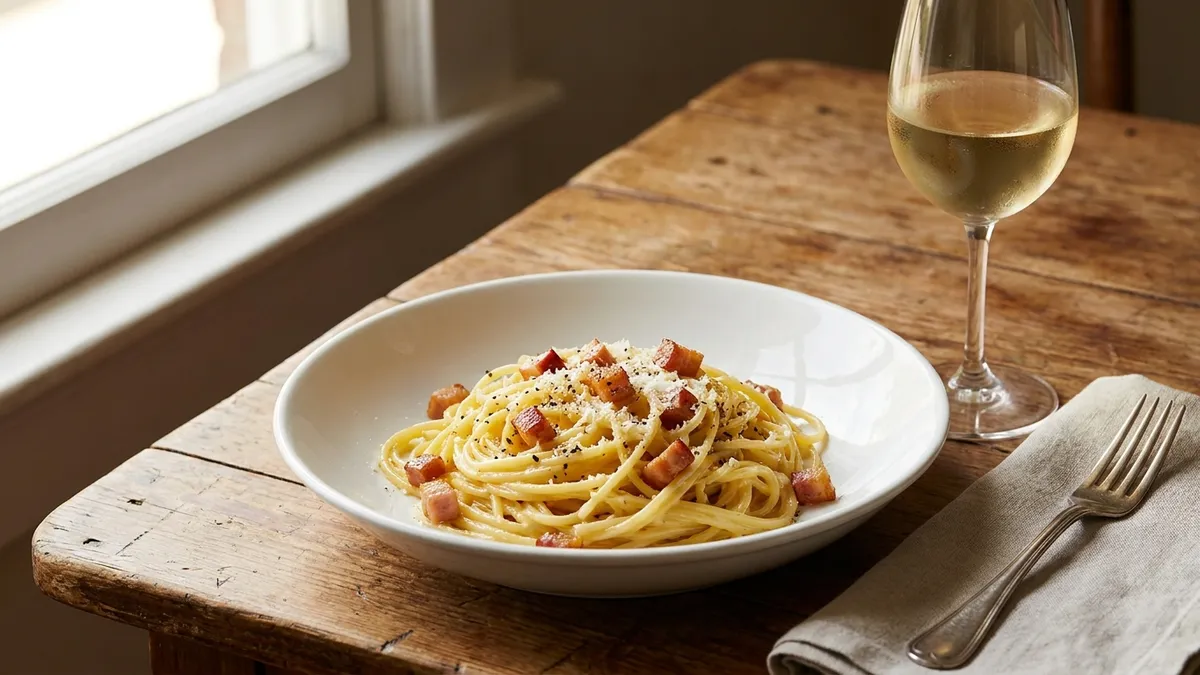
The best wine with carbonara is a crisp, dry, unoaked Italian white such as Frascati, Soave, Orvieto or Vermentino. Carbonara is a dish of Lazio, the region around Rome, and Frascati is the white grown in the hills just southeast of the city. These wines have high acidity, light fruit and moderate alcohol, so they refresh the mouth between forkfuls of guanciale fat and egg. Dry sparkling wine is the second choice, best when the sauce is extra rich. If you want red, choose a light, low-tannin one such as Pinot Noir or Etna Rosso and chill it slightly. Skip big tannic reds and buttery, oaked whites.
Why Is Carbonara Hard on Wine?
Carbonara stacks fat, salt, pepper and egg yolk, and it has no tomato to lean on. The classic recipe uses spaghetti, guanciale (salt-cured pork jowl), pecorino romano, eggs and black pepper. The wine has to bring all the tartness the plate lacks, so acidity matters more than colour.
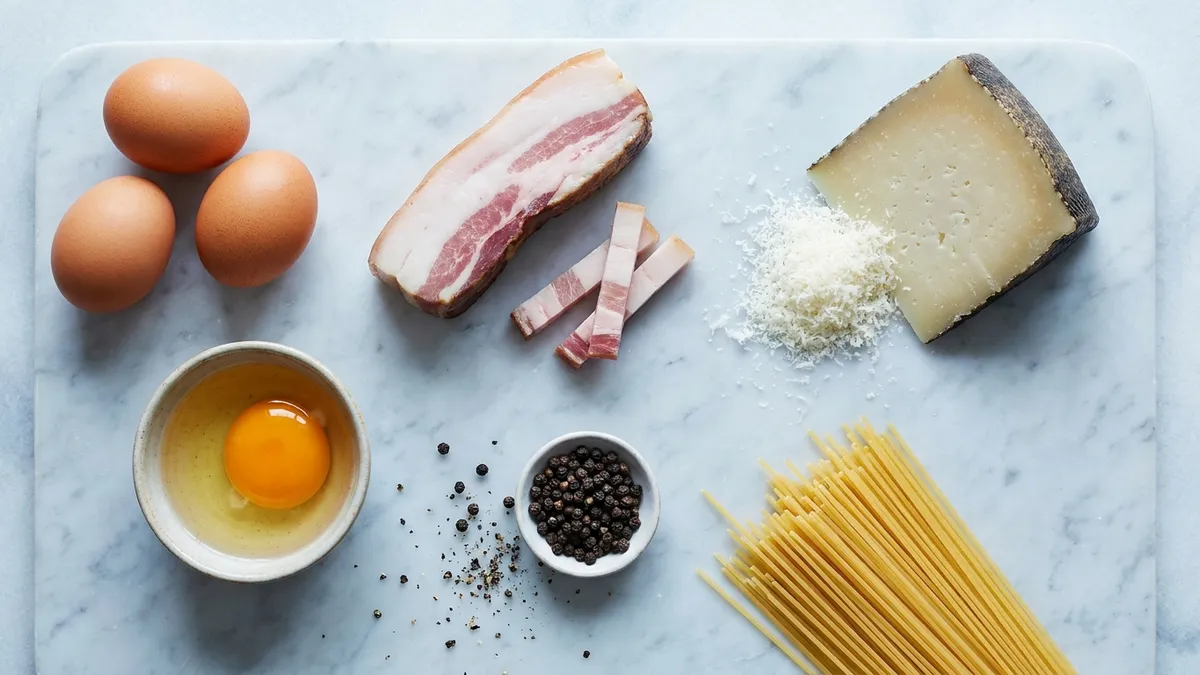
- Fat. Guanciale renders into the sauce and coats your tongue. It has a stronger flavour than pancetta, and that fat dulls a soft wine.
- Salt. Pecorino romano is a hard, salty cheese made only from sheep's milk. Salt makes a wine taste fruitier and softer, which helps a tart white and flattens a soft one.
- Pepper. Black pepper adds a little heat, and alcohol makes heat feel stronger.
- Egg yolk. Yolk coats the mouth and makes tannin taste harsh.
Acidity (the tartness that makes your mouth water) is the answer to all four. The Italian producer Banfi puts it plainly: choose wines with good acidity, able to balance the fat. Our guide to wine acidity shows how to spot it in a sip.
Which Wine Fits Which Carbonara?
Match the wine to what is in the pan. If the sauce is just egg, pecorino and guanciale, pour a crisp white and serve it well chilled. Cream asks for a white with more body, smoky bacon asks for a light red with ripe fruit, and a very eggy sauce asks for bubbles.
| Version | What it does to wine | Pour this | Serve |
|---|---|---|---|
| Classic Roman (guanciale, pecorino, egg, pepper) | Fat and salt, high pepper | Frascati, Soave, Orvieto or Vermentino | Well chilled |
| Extra eggy, very rich | Heavy coating on the tongue | Brut sparkling: Franciacorta, Cava or Brut Prosecco | Fridge cold |
| With cream | Milder, heavier, less salty | Fiano or unoaked Chardonnay | Chilled, a little less cold |
| With pancetta or smoked bacon | Milder pork, or added smoke | Pinot Grigio for pancetta; Pinot Noir or Etna Rosso for smoked bacon | White chilled, red lightly chilled |
| With peas or mushrooms | Sweeter or earthier | Vermentino for peas; Pinot Noir for mushrooms | White chilled, red lightly chilled |
Sommy's Italy course teaches the regions behind these labels in bite-sized lessons. For the sauce-first logic across other pasta dishes, see wine with pasta.
Which White Wines Work Best With Carbonara?
Pick a dry Italian white with high acidity and no oak, and choose a fuller one if the sauce is heavier. Body (a wine's weight in the mouth, like skimmed versus whole milk) is the second dial after acidity: a light white suits the classic version, a medium one suits cream.
- Frascati. A Malvasia-based white from the hills southeast of Rome, near Lake Albano. It is light and dry and tastes of lemon and fresh almond, which is the local fit for a Roman dish.
- Soave. Made mainly from Garganega near Verona. Basic Soave is light and tastes of lemon and pear; a Soave Classico from the hills carries a little more weight.
- Orvieto. A blend of mostly Grechetto and Trebbiano from Umbria, on the border with Lazio. Choose a bottle labelled secco, which means dry.
- Vermentino. Grown in Sardinia, Liguria and Tuscany. It has a salty, slightly bitter finish that echoes the pecorino. The Vermentino wine guide covers its styles.
- Fiano. A fuller white from Campania, with the body for creamy versions. See the Fiano wine guide.
- Pinot Grigio. The easiest to find. Pick one from northeast Italy, which is crisper than many cheap versions; Pinot Grigio vs Pinot Gris explains the label difference.
If the back label mentions barrels, barrique or oak, put the bottle back. Steel-fermented whites keep the lemon and apple flavours bright, and that freshness is what cuts the guanciale.
Does Sparkling Wine Go With Carbonara?
Yes, and it is the strongest choice when the sauce is very rich. Banfi describes the bubbles as openly contrasting the fat of the egg and the pork. Bubbles scrub the coating off your tongue, and sparkling wine is usually high in acidity as well.

Franciacorta, from Lombardy, is the Italian pick: The Italy Edit singles it out for carbonara's silky texture and peppery flavour. It is made by the traditional method (a second fermentation inside each bottle, as in Champagne), which gives fine, firm bubbles and a toasty, bread-like flavour that suits the pork. Cava is made the same way and costs less.
If you choose bubbles, pick a bottle labelled Brut (dry, with very little sugar). A sweeter Extra Dry Prosecco makes the salt in pecorino taste odd. The sparkling wine types guide sorts the styles by sweetness.
Can You Drink Red Wine With Carbonara?
Yes, if it is light, low in tannin and served a little cool. Tannin (the drying grip on your gums) is the problem. Banfi warns that too much tannin clashes with the soft, sweetish taste of the egg, and in practice a tannic red tastes harsh and metallic beside yolk.
Pork does not make carbonara a red-wine dish: the guanciale is a seasoning inside an egg sauce, not a roast. Our wine with pork guide pairs the roasts and chops where that rule holds.
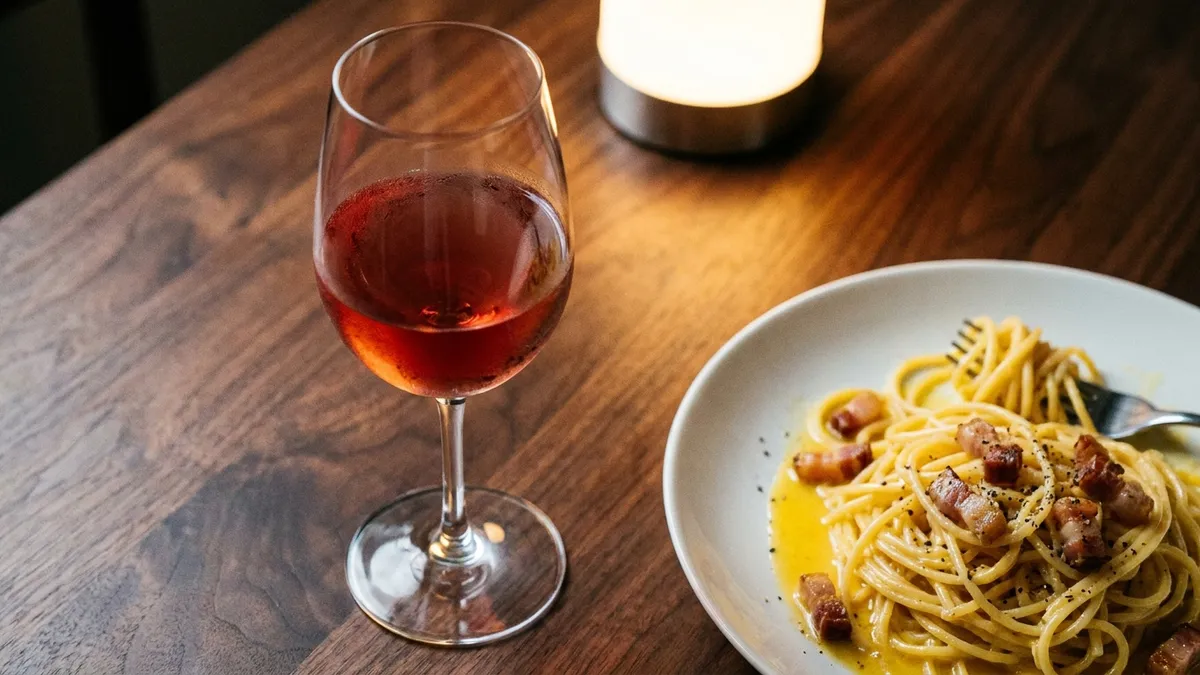
Three reds work:
- Pinot Noir. Thin-skinned and low in tannin, with fresh cherry flavour. See the Pinot Noir guide.
- Etna Rosso. From the slopes of the Sicilian volcano, mainly from Nerello Mascalese. It is pale and tart, with fine tannin.
- Barbera. High in acidity and low in tannin for a red. Choose a young, unoaked one; the Barbera wine guide explains how to read the label.
If a red leaves your gums feeling dry when you sip it on its own, it will fight the egg. Our explainer on what tannins are shows the gum test in detail.
What Changes With Cream, Pancetta or Peas?
Cream and peas soften the dish, so the wine can be rounder, while smoked bacon adds smoke that wants riper fruit. Most Italian recipes leave cream out. Cooks elsewhere add it because it makes the sauce more stable, so the egg is less likely to scramble.
Cream. Cream makes the sauce milder and less salty but heavier on the tongue. If the sauce has cream, move up one step in body: Fiano or an unoaked Chardonnay instead of Frascati. Keep the acidity high, because cream adds fat without adding tartness.
Pancetta. Pancetta is milder than guanciale, so the dish carries less pork fat. A lighter white such as Pinot Grigio is enough. Smoked bacon is different: the smoke suits a light red with ripe fruit, like Pinot Noir or Etna Rosso.
Parmesan instead of pecorino. Some recipes use Parmesan, Grana Padano or a mix. Both are less salty than pecorino, so a soft white tastes less flat than it would with the classic cheese.
Peas or mushrooms. Peas add sweetness and suit Vermentino's herbal edge. Mushrooms echo the damp-earth smell of an older Pinot Noir.
Which Wines Should You Avoid With Carbonara?
Avoid big tannic reds, heavily oaked whites, very high-alcohol wines and sweet wines with carbonara. Tannin turns harsh against egg yolk, oak piles more richness onto pork fat, alcohol burns with the black pepper, and sugar clashes with the salty pecorino.
- Tannic reds such as Cabernet Sauvignon, Syrah or young Nebbiolo taste metallic beside the yolk.
- Heavily oaked whites. Oak (barrels that add vanilla, toast or spice) stacks butter and toast on top of pork fat, and the pairing turns heavy after a few bites. Our guide to what oaked means explains how to spot it on a label.
- High-alcohol wines. The black pepper makes alcohol burn. If two bottles look similar, take the one with the lower alcohol figure on the label.
- Sweet wines. Off-dry Riesling or Moscato taste cloying next to pecorino.
Should You Put Wine in Carbonara?
No. The classic recipe has no wine in it. The egg, cheese and pepper are mixed with the hot pasta away from direct heat so the egg does not curdle, and there is no simmering step where wine could cook off.
Splashing wine into the guanciale pan only adds liquid that thins the sauce. Pour the wine into a glass instead, and serve it at the temperature in the table; the wine serving temperature chart gives the full ranges. For the general rules behind this pairing, see the food pairing hub.
Tonight, make the classic version and open two bottles: a Frascati or Soave, and a light red with a short spell in the fridge. Taste each before and after a forkful and note which one still tastes fresh. Sommy's AI-guided tasting mode at sommy.wine walks you through look, smell and taste for each glass after you photograph the label, and saves both sets of notes to your tasting journal.
Sources
Frequently Asked Questions
What is the best wine with carbonara?
A crisp, dry, unoaked Italian white with high acidity. Frascati, made from Malvasia in the hills just southeast of Rome, is the local choice, and Soave, Orvieto and Vermentino do the same job. Their tartness cuts through egg yolk and pork fat, and their light fruit stays fresh against salty pecorino. Serve the wine well chilled.
Is red or white wine better with carbonara?
White is better for the classic version. Carbonara has no tomato, so it offers no acidity for a red to lean on, and tannin in a red tastes harsh and metallic next to egg yolk. A light, low-tannin red such as Pinot Noir, Etna Rosso or Barbera, served a little cool, works if you prefer red.
Can you drink Chardonnay with carbonara?
Yes, if it is unoaked or only lightly oaked. A crisp, steel-fermented Chardonnay has the acidity and medium body for carbonara, and it suits creamy versions especially well. A heavily oaked, buttery Chardonnay adds vanilla and toast on top of pork fat and egg, and the pairing turns heavy and dull after a few bites.
Does Prosecco go with carbonara?
It works, but a traditional-method sparkling wine such as Franciacorta or Cava works better. Both have finer, firmer bubbles and more weight than most Prosecco, so they stand up to the egg and pork fat. If you pour Prosecco, choose a Brut, because a sweeter Extra Dry bottle makes salty pecorino taste odd.
What wine goes with carbonara made with cream?
A rounder white. Cream makes the sauce heavier and milder, so the wine can carry more body: Fiano, an unoaked Chardonnay or a fuller Soave. Keep the acidity high and the oak low. Sparkling wine also handles cream well, because the bubbles lift the coating that cream leaves on your tongue.
Should you add wine to carbonara?
No. The classic carbonara ingredient list is pasta, guanciale, pecorino romano, eggs and black pepper, with no wine. The sauce is mixed away from direct heat so the egg does not curdle, and there is no simmering step where wine could cook off. Pour the wine into a glass instead.
Sommy Team
LinkedInFounder & Wine Educator
The Sommy Team is building the world's most approachable wine education app, helping beginners develop real tasting skills through structured courses and AI-guided practice.