Wine with Beef Stew: From Bourguignon to Weeknight Stew

By the Sommy Team — AI-assisted, human-edited.
Updated Oct 1, 2026
Contents (10)
- What Wine Goes With Beef Stew, in One Paragraph?
- Which Wine Fits Which Beef Stew?
- Why Does Red Wine Taste Softer With Beef Stew?
- What Wine Goes With Beef Bourguignon?
- Is Pinot Noir or Cabernet Better With Beef Stew?
- Should You Cook With the Wine You Serve?
- Does the Alcohol Cook Out of a Stew?
- Can You Drink White or Rosé With Beef Stew?
- Where Did Beef Bourguignon Come From?
- Pour, Taste, Eat, Taste Again
TL;DR
Pick wine for beef stew by the liquid in the pot. A red-wine braise like bourguignon wants a high-acid, low-tannin red such as Pinot Noir or Gamay. Tomato wants a sharp Sangiovese. A fatty, peppery stew can take Syrah or Cabernet, because beef protein softens tannin.
The best wine with beef stew is chosen by the liquid the beef cooked in. A stew braised in red wine and stock wants a light, tart red such as Pinot Noir. A tomato stew wants a sharper red. A fatty, peppery stew with thick gravy can take Syrah or Cabernet Sauvignon. The beef does part of the work in every case: its protein softens the grip of a red wine.
What Wine Goes With Beef Stew, in One Paragraph?
The best wine with beef stew is a dry red whose acidity and weight match the sauce. Acidity is the tartness that makes your mouth water, and body is the wine's weight in the mouth, like skimmed versus whole milk. Match the weight of the wine to the weight of the dish. For beef bourguignon, pour Pinot Noir or a Beaujolais cru. For a tomato stew, pour Sangiovese. For a beer stew, pour a fruity Grenache blend such as Côtes du Rhône. For a fatty, peppery stew, pour Syrah or Cabernet Sauvignon. After an hour of simmering, about a quarter of the alcohol in the pot is still there.
Which Wine Fits Which Beef Stew?
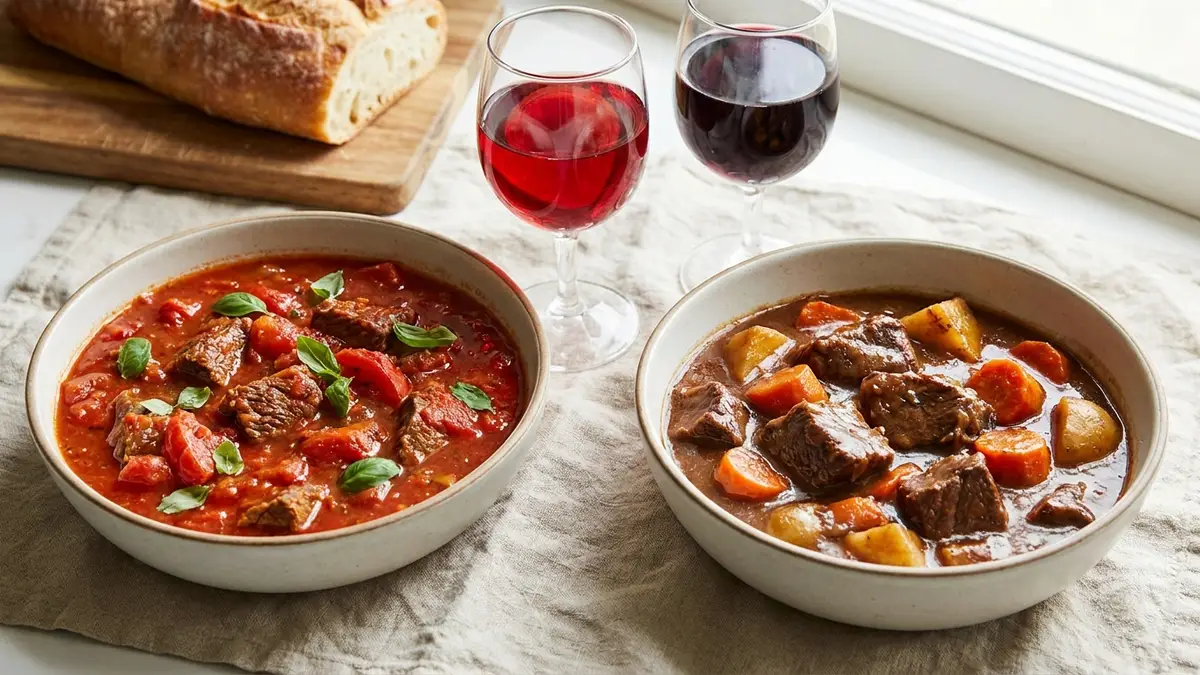
Read the pot, then the label. A stew is meat simmered slowly in liquid and served in its gravy, and that liquid can be water, stock, wine or beer. Each liquid changes what the wine meets: tomato adds acid, stout adds bitterness, wine adds both acid and fruit.
| Stew style | What is in the pot | Wine style | Why it works | Look for on the label |
|---|---|---|---|---|
| Bourguignon or red-wine braise | Red wine, stock, mushrooms, bacon, pearl onions | Light to medium red, high acid, low tannin | Acid matches the wine in the sauce; low tannin leaves the mushrooms alone | Bourgogne Rouge, Pinot Noir, Beaujolais cru |
| Tomato stew | Tomatoes, garlic, herbs | Medium red, high acid | Tomato is sour, so a low-acid wine tastes flat beside it | Sangiovese, Chianti |
| Dark beer stew | Stout, onions, brown sugar | Fruity red, soft tannin | Stout is already bitter; heavy tannin adds more | Côtes du Rhône, Grenache |
| Weeknight stock stew | Stock, carrots, potatoes | Medium red, ripe fruit | Sweet root vegetables want fruit, not grip | Merlot, Côtes du Rhône |
| Fatty, peppery stew | Well-marbled chuck, black pepper, thick gravy | Full-bodied red, firm tannin | Fat and protein soften tannin; pepper meets pepper | Syrah, Cabernet Sauvignon, Malbec |
If the sauce is built on tomato, buy a red with high acid, such as a Sangiovese. If the stew uses stout, buy a fruity, low-tannin red. Côtes du Rhône is a blend led by Grenache, with Syrah and Mourvèdre, and its ripe fruit sits well beside malt. The Côtes du Rhône guide explains how to read those labels. The tomato, beer and stock rows are Sommy's rules of thumb from how acid and bitterness add up.
Why Does Red Wine Taste Softer With Beef Stew?
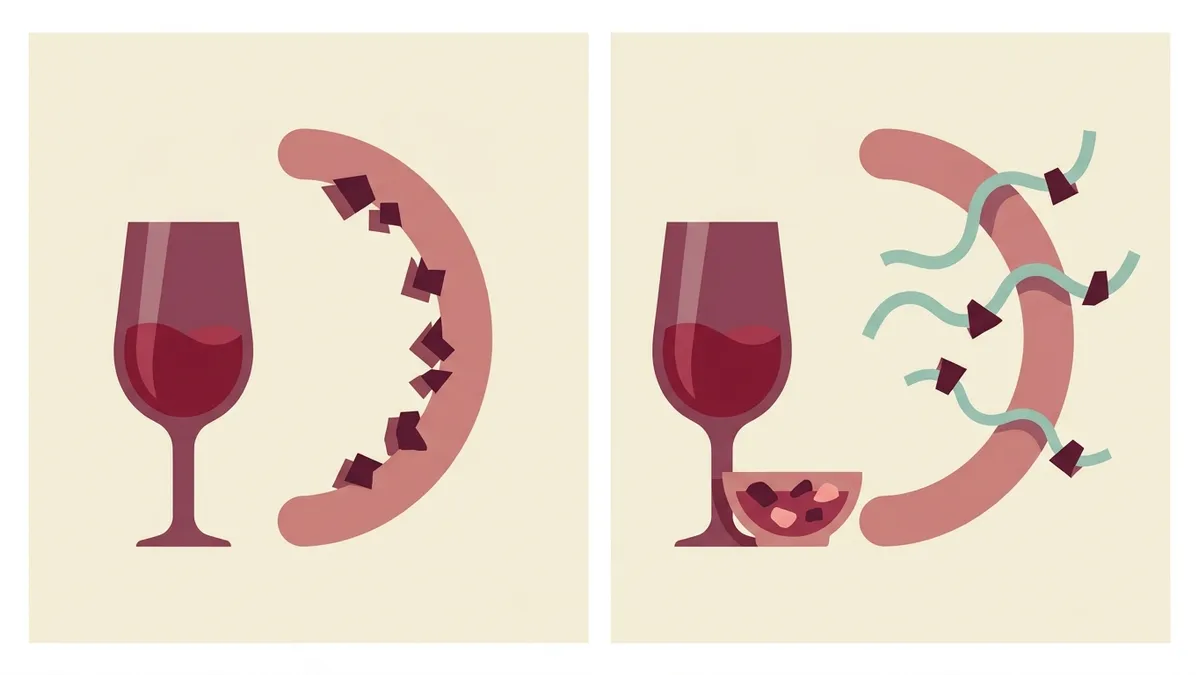
Tannin binds to protein, so the beef in a stew takes the grip off the wine before it reaches your gums. Tannin is the drying grip of red wine or strong tea, and it comes from grape skins and seeds. With protein and fat in the mouth, tannin latches onto them and comes across as softer.
A stew gives tannin more protein than most dishes. A braise browns the meat at high heat, then simmers it slowly in a covered pot.
Chuck and shin are full of collagen, the connective tissue that makes these cuts tough. Gentle heat breaks the collagen down into gelatin, which gives stew its glossy, lip-sticking gravy. Gelatin is a protein, so the sauce itself softens tannin too.
The braise softens the beef, not the wine. Hours in the pot do nothing to the bottle you pour beside it. The softening happens in your mouth, bite by bite, which is why a red that seems harsh before dinner can taste rounder halfway through the bowl.
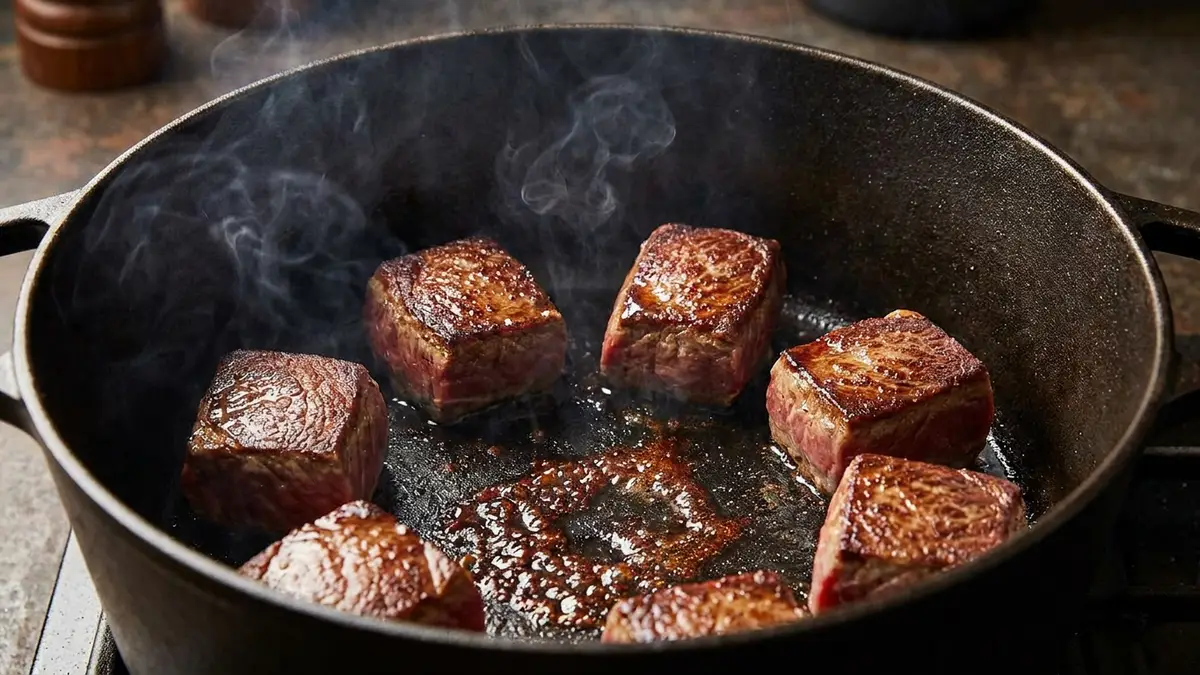
Browning matters for the wine as well. The Maillard reaction, the browning that builds savoury, roasted flavours, runs fast at around 140 to 165°C (280 to 330°F). A crust that dark calls for a red with some savoury depth of its own, such as Syrah's black pepper. More on how grip works is in what are tannins.
What Wine Goes With Beef Bourguignon?
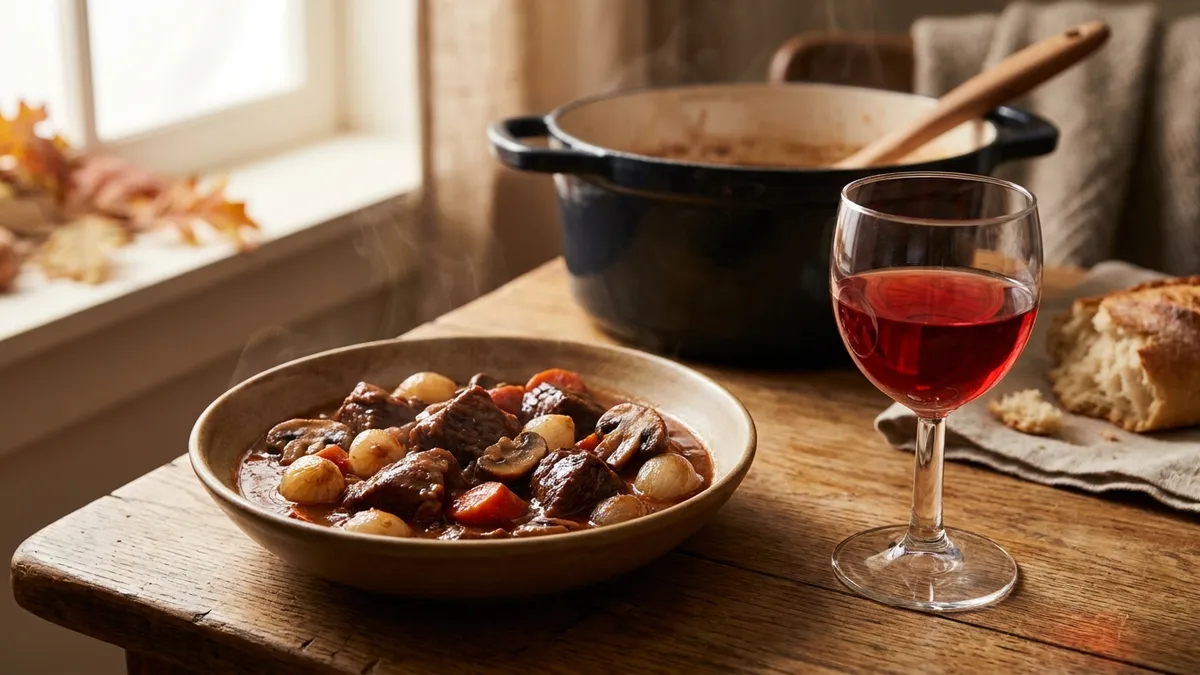
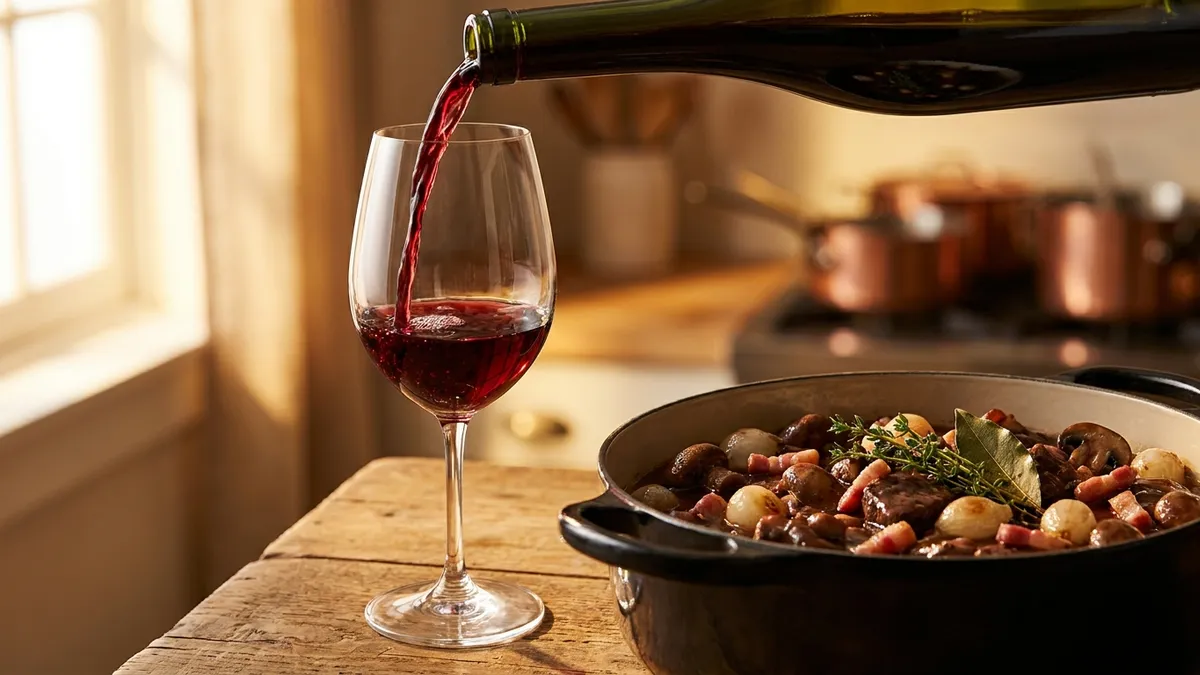
Red Burgundy, which is Pinot Noir, or a cheaper Pinot Noir or Gamay from the same broad region. Beef bourguignon is a French stew of beef braised in red wine, often red Burgundy, and beef stock. It is garnished with lardons, pearl onions, mushrooms and a bouquet garni, the tied bundle of herbs.
That garnish explains the pick. Mushrooms and thyme are delicate, and a heavy, tannic red flattens them. A wine-and-stock sauce is also tart, because the wine reduces into it. A red with high acidity matches that tartness and cuts through the fat of the bacon and the gelatin of the gravy. The Burgundy wine guide shows which village names on a label mean Pinot Noir.
Beaujolais is the budget swap. Gamay makes up about 98% of its vines, and it gives a light-bodied red with high acidity and low tannin. Look for a cru, one of the 10 named areas printed on the label, for more depth than basic Beaujolais. The Beaujolais wine guide lists them.
If the recipe used Pinot Noir, pour Pinot Noir. If the budget is tight, pour a Beaujolais cru.
Is Pinot Noir or Cabernet Better With Beef Stew?
Pinot Noir for a wine-and-stock braise; Cabernet Sauvignon for a fatty, peppery stew. The difference is skin. Pinot Noir has thin skins, low in the compounds that give colour and tannin, so it makes a lightly coloured, medium-bodied, low-tannin red.
The Pinot Noir guide covers where it grows and how the styles differ.
Cabernet Sauvignon has thick skins and firm tannin. With a lean or tart sauce, that tannin stays hard and can taste like stewed tea. With well-marbled chuck and a thick, peppery gravy, there is enough fat and gelatin to soften it. The Cabernet Sauvignon guide explains its blackcurrant and cedar flavours.
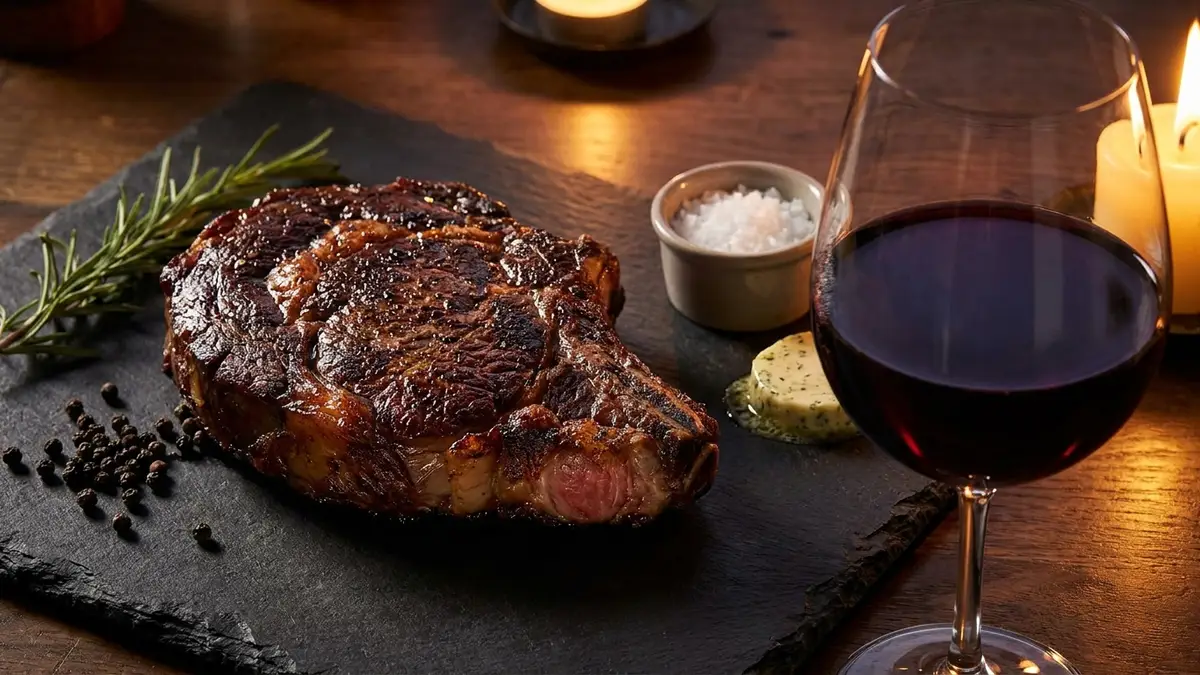
If the sauce tastes sharp when you sip it from the spoon, pour Pinot Noir. If it tastes fatty and round, Cabernet or Syrah will hold up. The same weight logic runs through wine with steak, where the cut decides the bottle.
Should You Cook With the Wine You Serve?
Cook with a modest wine of the same style, and serve a step up. Most professional chefs prefer inexpensive but drinkable wine for cooking. Reduction concentrates whatever is in the wine, so a sour or stale red makes a sour, stale sauce.
Skip anything sold as "cooking wine". In North America it is usually salted, and the salt concentrates as the sauce reduces. That makes seasoning harder and adds nothing a cheap dry red would not.
The same style links the sauce and the glass. A stew braised in a modest Pinot Noir shares its acidity and cherry fruit with a better Pinot Noir at the table. A stew braised in a big Australian Shiraz makes a delicate Burgundy in the glass taste thin. Half a bottle left over from last week is fine for the pot if it still tastes sound; leftover wine uses covers how long an opened red stays usable for cooking.
If you would not drink it, do not cook with it. If the bottle says "cooking wine", leave it on the shelf.
Does the Alcohol Cook Out of a Stew?
No, not all of it. A 1992 study by the USDA and researchers at two US universities measured how much alcohol stays in simmered dishes. About 25% remained after one hour of simmering, about 10% after two hours, and about 5% after two and a half hours.
A long, slow bourguignon loses most of its alcohol. A quick weeknight stew that simmers for 30 minutes keeps about a third. Neither is alcohol-free, which matters if you are cooking for someone who avoids alcohol. Use stock and a spoonful of red wine vinegar for tartness instead.
Can You Drink White or Rosé With Beef Stew?
Yes, if the white has body and the rosé has some colour. A stew is heavy, so a light white tastes thin and sour beside it. A barrel-aged Chardonnay, fuller and rounder, holds up to a stock-based stew with root vegetables and herbs.
A darker rosé works with tomato and paprika stews. It has the acidity to meet the tomato and enough fruit to sit beside the meat. Choose one with a deep salmon or pale cherry colour rather than a very pale one. The rosé wine guide explains how colour tracks with weight.
If the stew is built on red wine, stay with red. The sauce carries red-wine flavour, and a white tastes out of place beside it.
Where Did Beef Bourguignon Come From?
Later than its reputation suggests: the dish was first written down in 1867. Escoffier included a beef dish "à la bourguignonne" in his 1907 A Guide to Modern Cookery. It came to be seen as a Burgundian classic only in the 20th century.
"Bourguignon" means "in the Burgundy style", and the style is the wine in the sauce, so "Bourgogne Rouge" on a label is its most direct match.
Pour, Taste, Eat, Taste Again
Food shifts taste in more ways than tannin, as how food changes wine taste shows, and the food pairing hub collects every pairing guide. The Sommy app at sommy.wine has bite-sized courses, including Wine 101 and a France course, plus an AI-guided tasting mode that saves notes to a tasting journal.
Tonight, photograph the label of the red beside the stew and let Sommy walk through look, smell and taste. Then taste one sip before the first bite and one after it, and log both.
Sources
Frequently Asked Questions
What wine goes best with beef stew?
A dry red whose acidity and weight match the sauce. For a stew braised in red wine and stock, pour Pinot Noir or a Beaujolais cru. For a tomato-based stew, pour a high-acid red such as Sangiovese. For a fatty, peppery stew, a fuller red such as Syrah or Cabernet Sauvignon works, because the beef protein softens its tannin.
What red wine do you use for beef bourguignon?
The dish is defined as beef braised in red wine, often red Burgundy, which is Pinot Noir. A cheaper Pinot Noir from anywhere works in the pot, and so does a Beaujolais made from Gamay. Use a dry red you would drink. Save the better bottle of the same style for the table.
Should I drink the same wine I cooked the stew with?
Drink the same style, not necessarily the same bottle. Cooking with a modest Pinot Noir and serving a better Pinot Noir links the sauce and the glass, because both share acidity and fruit. Never cook with salted cooking wine. Its salt concentrates as the sauce reduces, and it tastes flat in the glass.
Does the alcohol cook off in beef stew?
Not all of it. A study by the USDA and two US universities found about 25% of the alcohol left after an hour of simmering, and about 5% after two and a half hours. A long stew loses most of the alcohol but rarely all of it, so it is not alcohol-free.
Is Pinot Noir or Cabernet better with beef stew?
Pinot Noir suits a stew braised in wine and stock, because its acidity matches the sauce and its low tannin leaves the mushrooms and herbs alone. Cabernet Sauvignon suits a fatty, peppery stew with a thick gravy. The extra fat and protein take the edge off its firm tannin.
Can you drink white wine with beef stew?
Yes, if the white has body. A barrel-aged Chardonnay has the weight to hold up to a stock-based stew with root vegetables. A light, sharp white such as Pinot Grigio tastes thin beside the gravy. A darker rosé is the other option, especially with a tomato or paprika stew.
Sommy Team
LinkedInFounder & Wine Educator
The Sommy Team is building the world's most approachable wine education app, helping beginners develop real tasting skills through structured courses and AI-guided practice.