Wine Expectations vs Reality: Why Reviews Rarely Match Your Experience

By the Sommy Team — AI-assisted, human-edited.
Updated Apr 29, 2026
Contents (13)
- TLDR
- Wine Expectations vs Reality, in One Paragraph
- Reason 1: Bottle Variation Is Real and Measurable
- Reason 2: Palate Calibration Differs by Person
- Reason 3: Context Bends Perception
- Reason 4: Expectation Effects Prime Your Brain
- Reason 5: Palate Fatigue Hits Every Reviewer
- Reason 6: Point Inflation Has Lifted Every Score
- Reason 7: Palate Drift Across a Career
- A Famous Case Study: The 100-Point Bottle That Fell Flat
- How to Read Reviews Without Being Misled
- Building Your Own Reference Points
- The Practical Bottom Line
TL;DR
A 95-point review rarely matches your experience because seven things differ between the reviewer's pour and yours: bottle variation from cork porosity, palate calibration differences, drinking context, expectation effects, palate fatigue from tasting hundreds of wines, three decades of point inflation, and palate drift over a tasting career. Reviews are calibrated guidance, not absolute truth.
TLDR
A 95-point review rarely matches your experience because seven things differ between the reviewer's pour and yours: bottle variation from cork porosity, palate calibration differences, drinking context, expectation effects, palate fatigue from tasting hundreds of wines, three decades of point inflation, and palate drift over a tasting career. Reviews are calibrated guidance, not absolute truth.
Wine Expectations vs Reality, in One Paragraph
The gap between wine expectations vs reality is not a flaw in your palate. Seven measurable variables sit between any published score and the bottle in your glass. Bottle variation from cork porosity, oxidation rate, and storage history can drift two bottles in the same case noticeably apart. Palate calibration — your sensitivity to bitter, tannin, and acid — differs from the reviewer's by birth and training. Context — food, mood, time of day, glass shape, serving temperature — bends perception in real, measurable ways. Expectation effects prime you toward whatever the score predicts, but novelty fades within three sips. Palate fatigue dulls a reviewer tasting fifty to two hundred wines per day. Point inflation has lifted average scores about five points since 1990. And palate drift means the reviewer who scored a wine in 2008 was a different taster than the one writing today. Reviews are calibrated guidance, not absolute truth.
Reason 1: Bottle Variation Is Real and Measurable
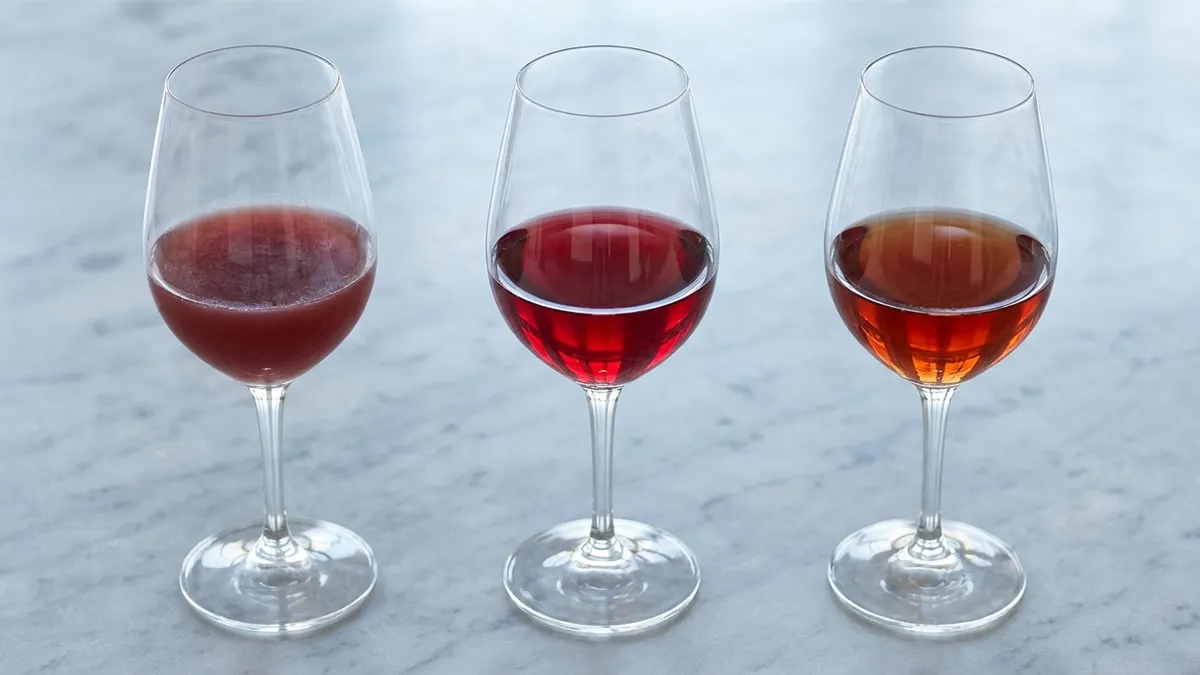
Two bottles filled from the same tank in the same hour will not taste identical a year later. The closure does most of the work.
Cork Porosity and Oxygen Transfer
Natural cork is bark — a living material with thousands of microscopic channels. Each cork lets a tiny, slightly different amount of oxygen through every year. A tighter cork keeps the wine youthful and reductive. A looser cork accelerates aging. After three or four years, two bottles from the same case can sit at clearly different points on the aging curve.
A reviewer tasting from an importer's fresh case in March is not tasting the bottle that sat upright on a shelf in your local store in October. The wine in print and the wine in your glass are biological siblings, not identical twins. The mechanics behind this drift are covered in detail in our piece on why wine tastes different every time.
Storage History
Every bottle travels through a logistics chain — winery, importer, distributor, retailer, your kitchen. Each leg has its own temperature curve. A pallet that sat on a hot dock for a weekend ages faster than one that did not. You rarely know which path your specific bottle took.
Sub-Threshold Cork Taint
Around three to five percent of natural-cork bottles carry TCA — the compound behind cork taint, which produces a wet-cardboard smell. Obvious cases are easy to spot. The harder cases are sub-threshold TCA — too low to recognize as a fault but high enough to mute fruit and shorten the finish. The bottle reads as "fine, just not as good as the review said." Our guide to how to tell if wine is corked walks through the full range.
Reason 2: Palate Calibration Differs by Person
You and the reviewer are not running the same instrument. Genetics, training, and exposure all shift sensitivity to specific compounds.
Some tasters are genetically more sensitive to bitter compounds. Others have higher thresholds for tannin or alcohol. Trained reviewers spend years calibrating against reference samples, but calibration only narrows the spread — it does not eliminate it. Two qualified critics tasting the same flight blind regularly diverge by three to five points on the same wine. Both are professionally correct.
Style preference layers on top. A reviewer trained on bold, oaky reds tends to reward concentration. A reviewer trained on cool-climate elegance rewards restraint. The same wine can earn 95 from one and 88 from the other without either being mistaken — they are scoring against different templates of excellence. To understand the broader sensory machinery at work, our piece on the science of wine sensory evaluation digs into how these thresholds form.
Reason 3: Context Bends Perception
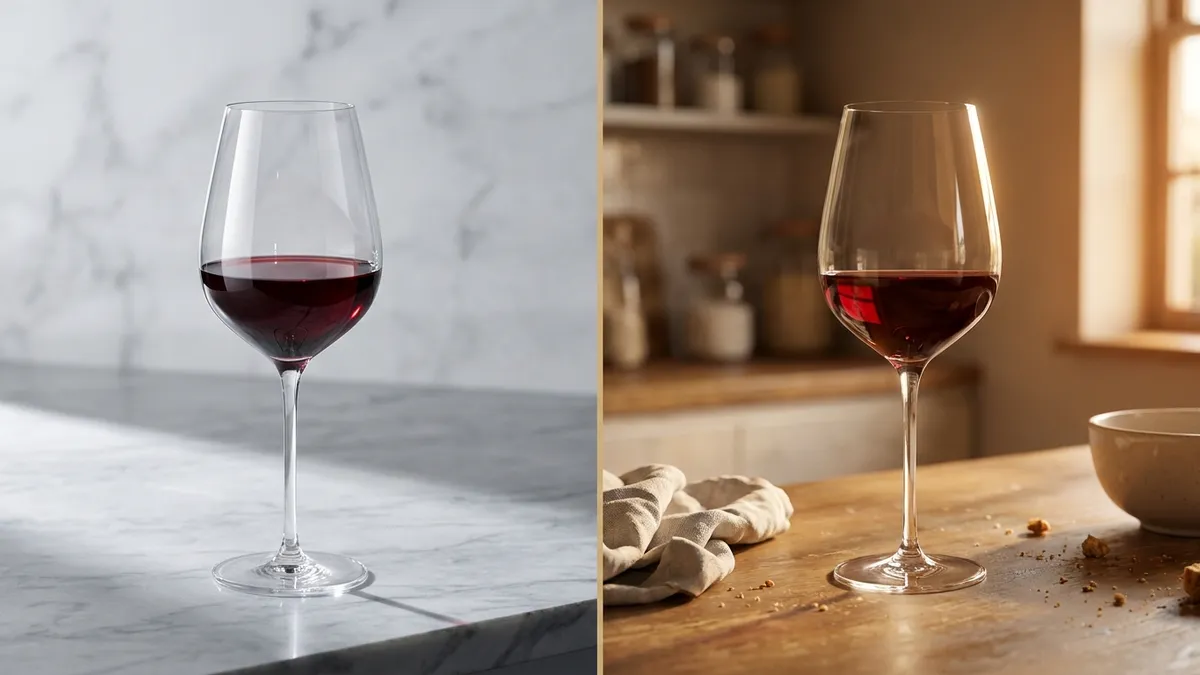
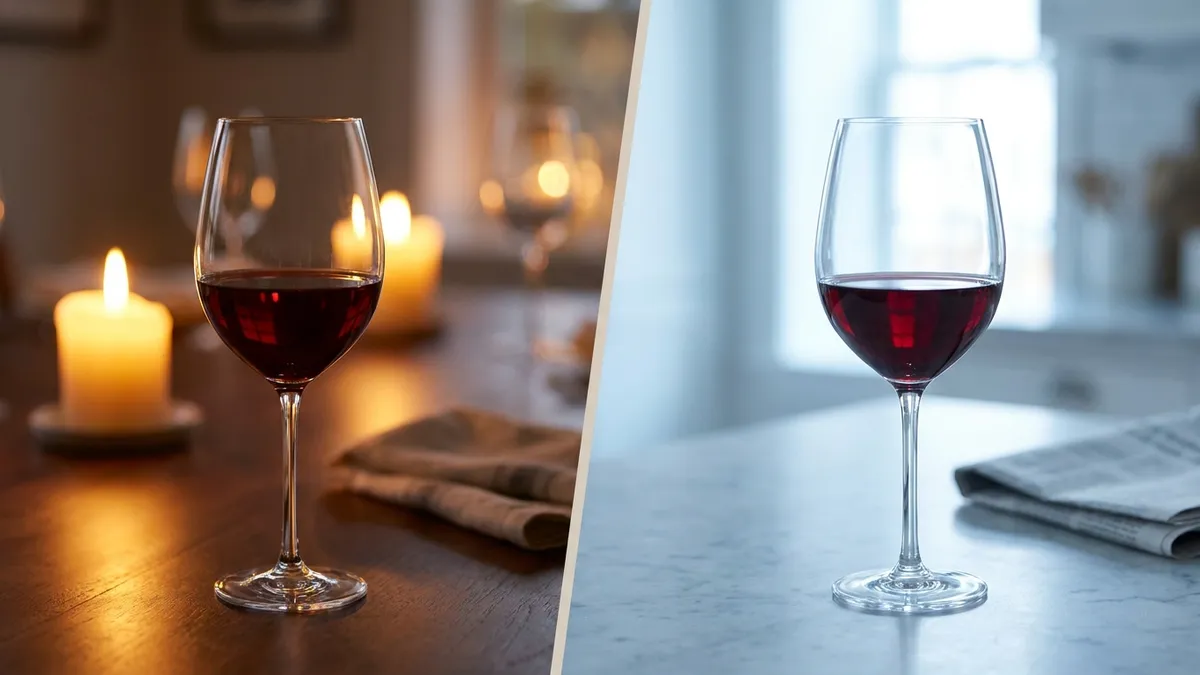
A reviewer pours every wine into the same glass at the same temperature on the same morning, with no food, in a neutral room. You do almost none of those things.
Temperature
A six-degree shift in serving temperature changes which aromas evaporate, how sweet the wine seems, how sharp the acid feels, and how the tannin reads. The same red at twelve degrees and at twenty-two degrees can taste like two different wines. Most home pours land outside the wine's balance window. The full breakdown is in our deep dive on how temperature affects wine taste.
Glass Shape
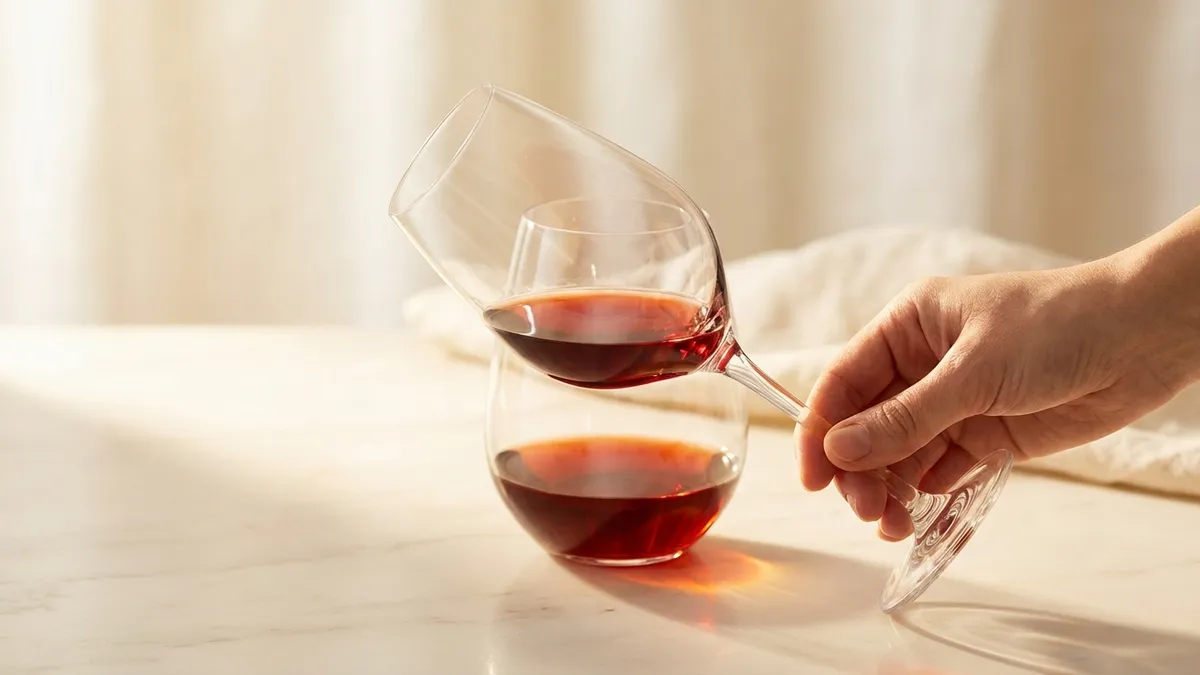
Wider bowls release more aromatics. Narrow rims funnel the bouquet toward your nose. A thick lip pours wine onto a different part of the tongue than a thin one. Reviewers often use a single ISO tasting glass. You probably use whatever is clean. The piece on whether glass shape affects taste breaks down what genuinely matters and what does not.
Food and Palate Reset
Anything you ate in the last hour resets your sweetness, salt, and acid baselines. After a creamy pasta, an acidic white reads brighter. After dessert, a dry red reads harsh. The reviewer tasted on a clean palate. You did not.
Time of Day, Mood, and Lighting
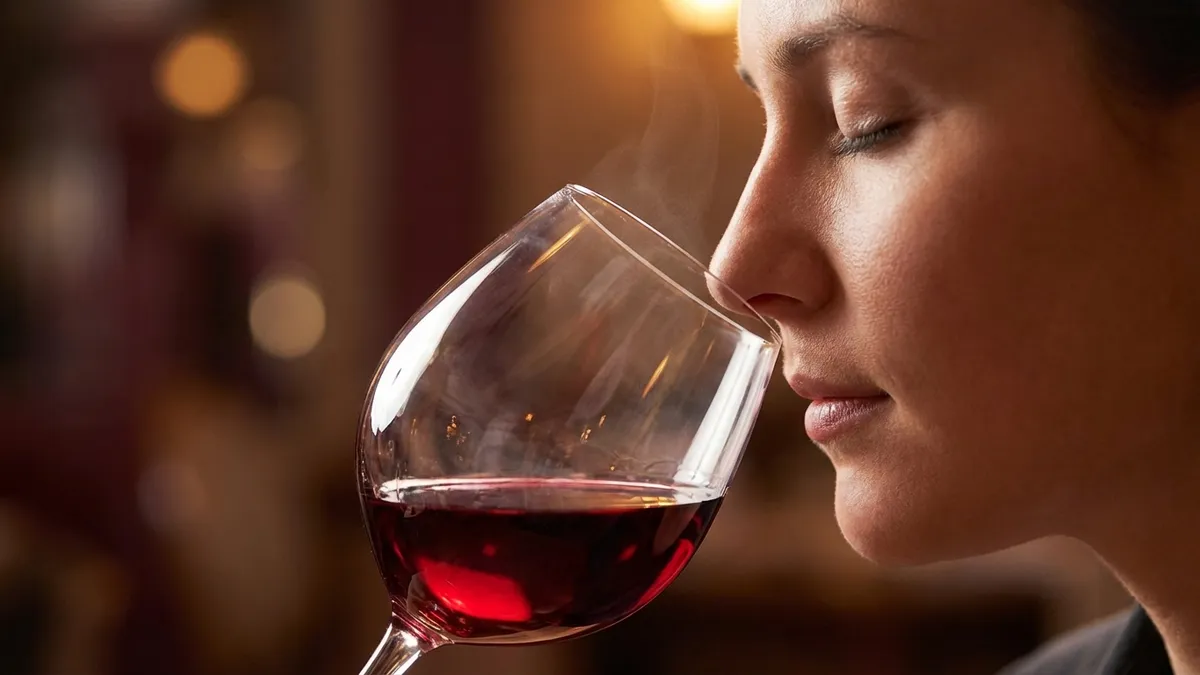
Saliva volume and smell sensitivity peak in late morning and dip again at night. Studies show the same wine rated higher with classical music than with loud rock, and lower under red light than warm yellow. None of this is in the bottle — it is in the room you opened it in.
Reason 4: Expectation Effects Prime Your Brain
When you know a wine scored 95, your brain starts working to confirm the score before the wine reaches your tongue. This is one of the most studied effects in sensory science, and it is bidirectional. A 95 primes you to find quality. An 82 primes you to find flaws.
The effect is real but short. Within the first three sips, novelty fades and the wine has to defend its score on its own merits. If the bottle does not match the printed promise, the contrast often reads sharper than if you had opened it cold — which is why a hyped 95-pointer can disappoint harder than an unrated find that surprises you.
The same dynamic explains why blind tastings frequently scramble expert rankings of famous wines. Strip out the label and the score, and the wine has to earn its reaction in the glass.
Reason 5: Palate Fatigue Hits Every Reviewer
Professional wine criticism is high-volume work. A typical session for a published reviewer covers thirty to two hundred wines in a day, often grouped into flights of ten to fifteen at a time.
Taste and smell receptors dull with repeated exposure. By wine forty, the reviewer's discrimination of subtle structure is measurably weaker than at wine three. Most pros mitigate fatigue with water, neutral bread, palate-cleansing protocols, and morning-only schedules. The mitigation narrows the gap — it does not close it. Our piece on wine palate fatigue covers what the dulling actually feels like and how it skews scores.
You taste one or two wines on a fresh palate. Your sensitivity to oak, tannin, and finish on bottle one is meaningfully sharper than a reviewer's on flight wine forty-seven. The same wine you both drink lands on different instruments.
Reason 6: Point Inflation Has Lifted Every Score
The 100-point scale started at 50 and was meant to use the full range. It does not anymore.
Across major publications, average published scores have climbed roughly five points since the early 1990s. A wine that would have scored 88 then often scores 92 to 93 today. Multiple forces drive the inflation: genuinely better winemaking, retailer pressure for shelf-talker scores of 90 and above, competition between publications for the highest average, and a sliding rubric that quietly moved the bar.
A 90-point score in 1995 meant a clearly distinguished wine. A 90-point score in 2026 is closer to the modern definition of "competent and clean." If the review you are reading today seems generous compared to a similar bottle a decade ago, you are not imagining it. The full mechanics of the scale are in our breakdown of the 100-point wine scale.
Reason 7: Palate Drift Across a Career
Reviewers age. Their palates evolve with experience, exposure, and physiology. A critic who scored a famous wine in 2008 was a different taster than the one writing today.
Sensitivity shifts with age — most people lose smell discrimination by their fifties, and bitter sensitivity often increases. Style preference also drifts as critics get tired of fashions they once championed. A reviewer who rewarded high extraction in their twenties may quietly shift toward elegance in their fifties. The score in print is a snapshot of one taster on one morning at one stage of their career.
You also drift. The wine you loved at twenty-five is rarely the wine you reach for at forty. A score from a reviewer at a different life stage is not necessarily a score that fits where your palate sits today. Our explainer on how age affects palate covers what physically shifts.
A Famous Case Study: The 100-Point Bottle That Fell Flat
The wine press is full of stories of bottles that earned a perfect 100 from a major publication, sold out within weeks, and then disappointed buyers when they finally opened them at home a year later.
The mechanics are predictable. The reviewer tasted a single fresh sample at the importer, on a tightly controlled morning, before any retail shelving. The bottle that reached the consumer traveled through three more handoffs, sat upright on a warm shelf, and was finally opened in a thirty-degree dining room with a steak. The score was earned honestly. The reality just stacked seven variables against it.
This is not a failure of the system. It is the system working as designed — a calibrated note from a controlled session, not a guarantee of universal experience.
How to Read Reviews Without Being Misled
Reviews are useful. They are not gospel. A few habits keep them in their proper role.
- Use the score as a fault filter, not a quality oracle. Anything below 85 is rarely worth chasing. Above 85, the score tells you the wine is competent — the tasting note tells you the style.
- Read the tasting note for style cues. Words like ripe, oaky, restrained, savory, fresh, and dense predict your experience better than the number does.
- Track which critics match your palate. If three 92-pointers from one reviewer all underwhelm you, that critic's calibration does not match yours. Find one whose 92s land for you.
- Account for time. A wine reviewed three years ago has aged. The note in print was a younger version of the bottle on the shelf today.
- Trust your own scoring more than anyone else's. A simple one-to-ten "would I buy this again" scale, kept in a journal, is more useful than any external rating after thirty bottles.
The Sommy app's tasting flow is built around this idea — every session captures temperature, glass, food, and a personal score, so your own reference points compound over time instead of relying on a stranger's morning palate. Browse sommy.wine for a walk-through of how the journal works in practice.
Building Your Own Reference Points
A printed score from a reviewer is one data point on one wine on one morning. Your reference points compound across every bottle you taste, in your own glass, with your own meals, on your own palate. The more bottles you log honestly, the less you need anyone else's number.
The skill is not abandoning reviews. It is reading them with the seven variables in mind and using your own journal as the source of truth. The piece on wine tasting journal tips covers a workable template, and our breakdown of the systematic approach to tasting shows the same skeleton professionals use without the hundred-bottle daily flight.
After thirty entries you will see patterns. After a hundred, you will know exactly when a reviewer's 92 will land for you and when it will fall flat — which is the whole point of building a personal palate rather than outsourcing one.
The Practical Bottom Line
A wine review is one taster, one morning, one bottle, one room. Your bottle is a different bottle, opened in a different room, on a different palate, with a different meal, on a different day. Seven things sit between the score and your sip — and not one of them is in the wine itself.
Reviews are calibrated guidance from people who have tasted more wine than you ever will. They are not predictions of how the bottle will taste in your glass. Use them as a starting point. Build your own scoring habit. Trust the journal in front of you more than the magazine on the shelf. The Sommy app's tasting flow makes that process structured without making it clinical, so the reference points you build are actually the ones you will use.
Frequently Asked Questions
Why does a 95-point wine sometimes taste ordinary at home?
Seven variables shift between the reviewer's session and yours. The two biggest are bottle variation — every cork lets oxygen through at a slightly different rate — and context, which covers temperature, glass, food, and your mood. A reviewer pours twenty wines into the same glass at the same temperature on the same morning. You pour one bottle, after dinner, alongside a meal. The score does not adjust for any of that.
Are wine reviewers actually calibrated to the same standard?
Not really. Each reviewer carries their own sensitivity to bitterness, tannin, and acidity, plus a personal preference for ripe versus restrained styles. Two qualified critics tasting the same flight blind regularly diverge by three to five points. They are not wrong — they are calibrated differently. A score reflects the rubric and the taster, not absolute quality.
Has the average wine score really gone up over time?
Yes. Across major publications, average published scores have climbed roughly five points since the early 1990s. A wine that would have scored 88 then often scores 92 to 93 now. Some of the rise reflects genuinely better winemaking. Most of it reflects rubric drift, retailer pressure for high scores, and competition between publications for the highest average.
What is palate fatigue and how does it affect reviews?
Palate fatigue is the dulling of taste and smell after repeated exposure. A professional reviewer tasting fifty to two hundred wines per day cannot detect subtle structure as accurately on wine forty-seven as on wine three. Most pros work mornings and rotate water and bread between flights, but late-flight wines still get scored against a tired palate. You taste the same wine on a fresh palate at home — a different experience entirely.
How should I use wine reviews if they do not predict my experience?
Treat reviews as calibrated guidance, not verdicts. Use the score to filter out flawed wines and the tasting note to predict style — ripe versus restrained, oaky versus fresh, fruit-forward versus savory. Then check the reviewer's known biases. If you tend to like wines a critic rates 90, you will probably like their next 90. If your tastes diverge, follow a different critic or trust your own scoring journal.
Is bottle variation really enough to change a score?
Yes, especially in older wines. Two bottles from the same case can sit two to four years apart on the aging curve because of cork porosity. Around three to five percent of natural-cork bottles also carry trace cork taint that mutes fruit without being recognizably faulty. A reviewer pulling a fresh case sample from the importer is not tasting the bottle on a retail shelf six months later.
How can I build my own reference points instead of relying on scores?
Keep a simple tasting journal with the same template every time. Score on a one-to-ten scale based on whether you would buy the bottle again. Note temperature, food eaten, and the glass you used. After thirty bottles you will see clear patterns in what you actually enjoy, which is more useful than any reviewer's 92.
Sommy Team
LinkedInFounder & Wine Educator
The Sommy Team is building the world's most approachable wine education app, helping beginners develop real tasting skills through structured courses and AI-guided practice.