What Does "Bright" Mean in Wine? Acidity and Freshness

By the Sommy Team — AI-assisted, human-edited.
Updated Apr 29, 2026
Contents (9)
- What "Bright" Means in Wine
- What Is "Bright" Wine, in 90 Words
- Bright vs Crisp, Fresh, Lively, Vibrant, Electric
- What Creates Brightness in Wine
- Grapes and Regions Known for Brightness
- How to Spot a Bright Wine on the Palate
- Wines That Are Not Bright (and Why)
- Common Vocabulary Around Brightness
- How to Train Your Palate for Brightness
TL;DR
Bright wine describes a glass that feels lively, fresh, and vivid — the result of high acidity, pure primary fruit, and a faintly luminous color. Bright wines salivate the palate, pop on the front of the mouth, and feel alive. The opposite is flat, flabby, or tired. Brightness fades with heat, oxidation, and age, so serving and storage matter.
What "Bright" Means in Wine
Bright wine describes a glass that feels lively, fresh, and vivid the moment it hits your palate. The word covers three things at once — high acidity that makes your mouth water, pure primary fruit that smells clean and clear, and a faintly luminous quality to the color. When tasters say a wine is bright, they mean it feels alive in the mouth rather than heavy or still.
The opposite of bright is flat, flabby, or tired. Those words describe wines without enough acidity, with muddied or oxidized fruit, or with too much oak softening every edge. A bright wine sparks the palate; a flat wine settles on it.
Brightness is one of the most useful words in everyday wine vocabulary because it is intuitive. You do not need to be trained to feel it — your salivary glands react to a bright wine before your brain can name what is happening.
What Is "Bright" Wine, in 90 Words
In tasting terms, bright in wine signals a glass driven by high acidity, pure primary fruit, low residual sugar, and a faintly luminous color. Bright wines salivate the palate within a second, pop on the front of the mouth, and feel energetic. Sauvignon Blanc, dry Riesling, Albarino, Chablis, young Pinot Noir, Beaujolais, and most non-vintage Champagne are textbook bright. Brightness fades with warm temperature, oxidation, and age, so the same wine can taste bright at 10 Celsius and dull at 20 Celsius. Cool climate, cool fermentation, and minimal oak are the production levers that lock brightness in.
Bright vs Crisp, Fresh, Lively, Vibrant, Electric
These words travel together in tasting notes, but they are not synonyms. Knowing the differences helps you describe wine more precisely.
Crisp focuses on the acidity itself — a clean, clipped, sharp edge. A crisp wine has high acid but is not necessarily fruity. "Crisp Muscadet, all citrus rind and salt."
Fresh emphasizes the youthful primary fruit. A fresh wine smells of bright cherry, green apple, or citrus rather than dried fruit, leather, or earth. "Fresh strawberry Pinot Noir, no funk."
Lively describes mouthfeel — the wine moves on the palate instead of sitting still. Often a function of acidity plus fine bubbles or vibrant fruit. "Lively, almost dancing on the tongue."
Vibrant stretches across both color and palate. A vibrant Pinot Noir has a glowing red hue and a snappy mouthfeel.
Electric is the most extreme form of brightness — racing acidity that almost tingles. Mosel Riesling and top Champagne earn this word.
Bright combines them. A bright wine has the crisp acid, the fresh fruit, the lively pop, and the vibrant color, all in the same glass. That is why it is the catch-all term most tasters reach for first.
For a wider toolkit of sensory words, the guide to wine tasting vocabulary groups 50 essential terms by sight, smell, and palate.
What Creates Brightness in Wine
Four factors stack up to produce a bright wine. Take any one of them out and the brightness softens.
High Natural Acidity
Acidity is the engine. Without it, a wine cannot feel bright no matter how clean its fruit. Tartaric acid (the dominant grape acid) and malic acid (the same acid as green apples) deliver the salivating, mouth-watering kick that defines brightness on the palate.
Cool climates preserve more acid because grapes do not get warm enough to metabolize it during ripening. This is why Chablis, Mosel, Loire Valley, and high-elevation New World sites produce so many bright wines. The deeper mechanics live in the what is wine acidity guide.
Pure Primary Fruit
Bright wines smell of clear, fresh fruit — citrus, green apple, white peach, red cherry, strawberry, cranberry. These are primary aromas, the ones that come straight from the grape and the early fermentation, before oak or age add a second layer.
When primary fruit is muddied by heavy oak, lees character, or oxidation, the wine still has acidity but loses the bright impression. A Chardonnay from the same vineyard can taste bright when made unoaked and rich-but-not-bright when aged in new oak with lees stirring.
The primary, secondary, and tertiary aromas framework explains why this hierarchy matters for the bright vs deep distinction.
Low Residual Sugar
Most bright wines are dry or off-dry. Residual sugar (the grape sugar left in the wine after fermentation) softens the impression of acidity and adds weight. A few grams of sugar can transition a wine from bright to round in the same glass.
Some exceptions exist — top off-dry Riesling can taste bright because its acidity is so high it overwhelms the sugar. But on the whole, dry wines feel brighter than sweet ones.
Cool Fermentation and Minimal Oak
Bright wines are usually fermented at low temperature in stainless steel, which preserves the volatile aromatic compounds responsible for that fresh, lifted nose. Warm fermentation drives off the same compounds. Heavy oak adds vanilla, coconut, and toast notes that crowd the primary fruit.
Producers chasing brightness pick early to keep acid, ferment cool to keep aroma, skip or limit oak to keep fruit pure, and bottle young to preserve everything. This is why bright wines tend to be young wines.
Grapes and Regions Known for Brightness
Brightness is a stylistic signature of specific grape varieties grown in specific places.
Bright Whites
- Sauvignon Blanc — especially from the Loire Valley (Sancerre, Pouilly-Fume) and New Zealand's Marlborough; sharp citrus and green-fruit acidity
- Dry Riesling — Mosel, Rheingau, Alsace, Clare Valley; the most electric acidity in dry white wine
- Albarino — saline, citrus brightness from Spain's Rias Baixas and northern Portugal
- Chablis (unoaked Chardonnay) — lean, mineral, mouth-watering
- Picpoul, Vermentino, Assyrtiko — Mediterranean whites that retain bright acid despite warm sites
- Non-vintage Champagne and quality sparkling wine — high acid is non-negotiable for sparkling
For a deeper look at the comparison most beginners face, see Chardonnay vs Sauvignon Blanc.
Bright Reds
- Pinot Noir — bright red-fruit and salivating acidity, particularly from Burgundy, Oregon, and German Spatburgunder
- Gamay (Beaujolais) — crunchy, fresh, almost juice-like
- Sangiovese — Chianti and other Tuscan reds; cherry-tart with high acid
- Barbera — one of Italy's most acidic red grapes
- Young Cabernet Franc — Loire Valley Chinon and Bourgueil; herbaceous brightness
- Cool-climate Syrah — Northern Rhone or cool New World sites; pepper, violet, bright acid
The new world vs old world tasting style guide explains how the same grape can swing from bright in one region to plush in another.
How to Spot a Bright Wine on the Palate
Brightness is one of the easier qualities to detect because your body gives you clear signals.
The Front-Mouth Pop
Take a sip and notice where the wine first registers. A bright wine pops on the front of the tongue and the tip — almost a tingling sensation. Heavier, riper wines spread across the back of the palate first. Bright wines lead with the front and let the rest of the mouth follow.
The Salivary Gland Test
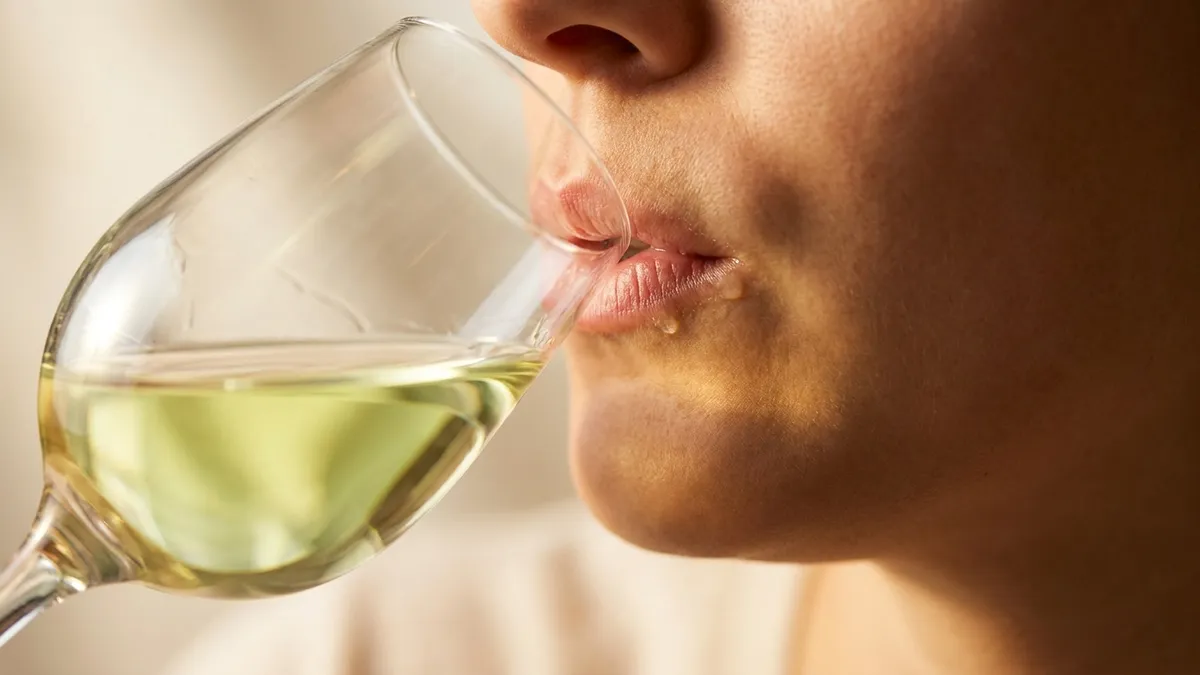
Within a second or two of swallowing or spitting, your salivary glands react. A bright wine triggers a flood of saliva — your cheeks tingle, your jaw twitches, your mouth feels watery. A flat wine leaves your mouth feeling slightly dry or static.
This is the same reflex you get biting into a lemon, dialed back. The intensity of the response tells you the acidity level, and acidity is the heart of brightness.
The Color Cue
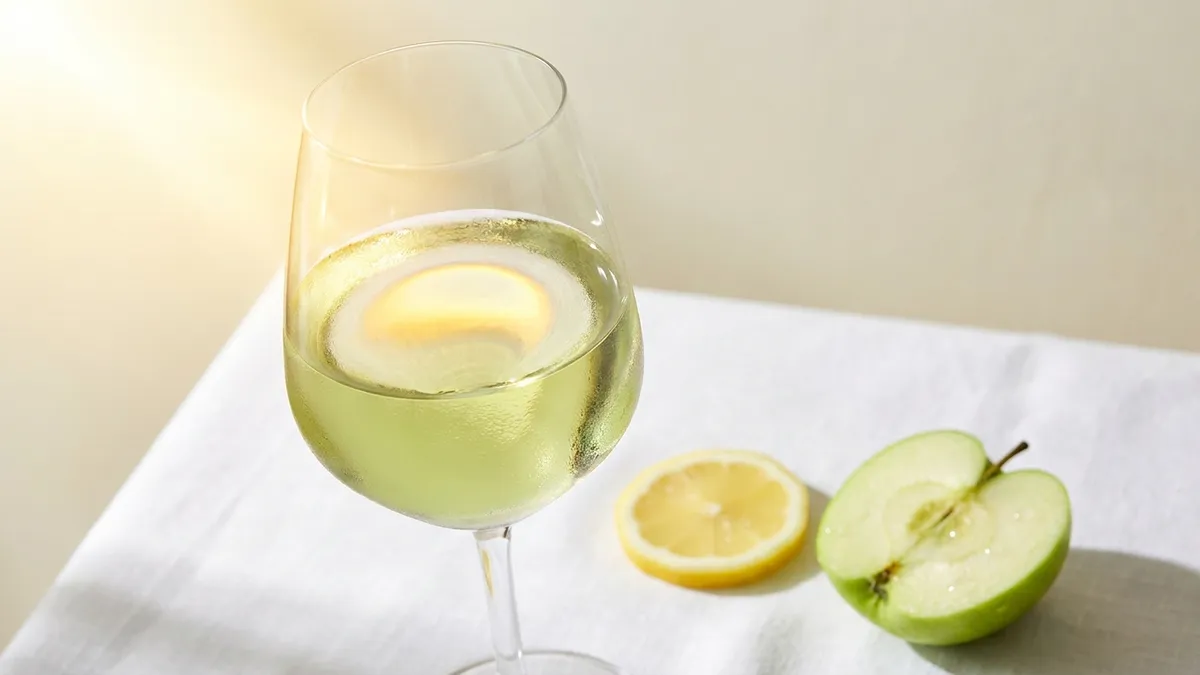
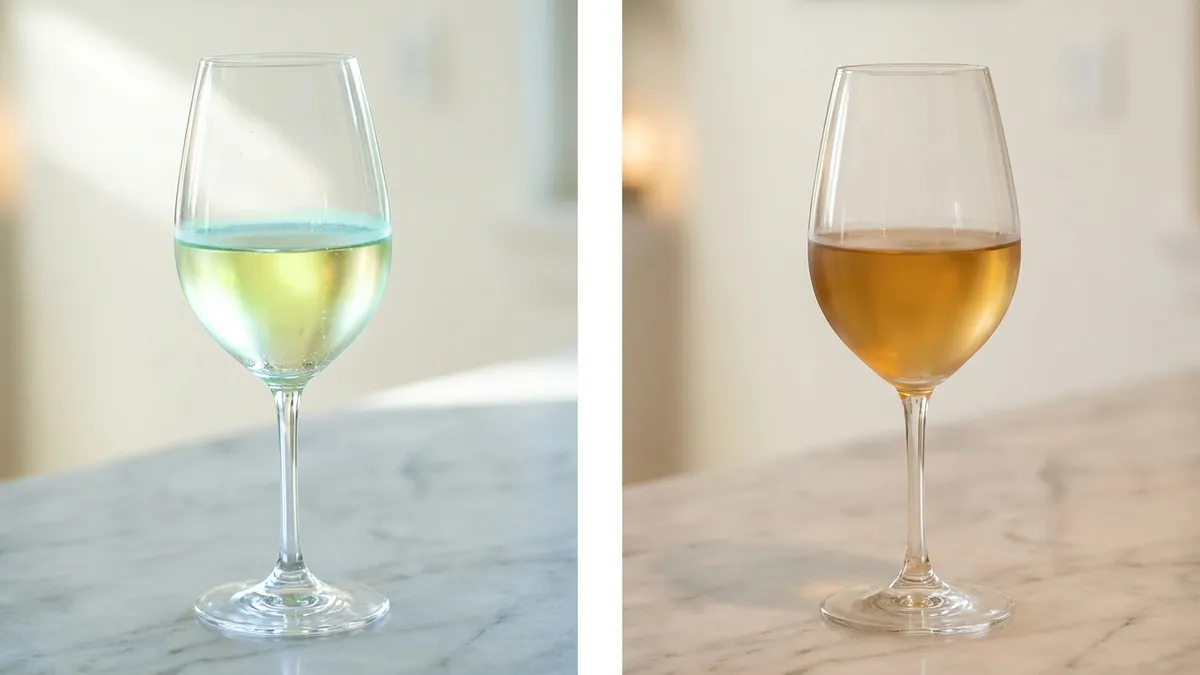
Tilt the glass against a white surface. Bright whites tend to be pale lemon to lemon-green rather than golden or copper. Bright reds tend to be vivid ruby or pale ruby rather than deep purple or brick. Aged or oxidized wines lose this luminous quality and shift toward duller, browner shades.
For more on what each shade signals, see wine color meaning and wine appearance guide.
The Finish
Bright wines finish clean. The acidity refreshes the palate, the fruit fades without turning bitter or hot, and you feel ready for another sip. A flat wine leaves a heavy, sometimes cloying impression that lingers without lifting. The wine finish meaning guide unpacks the finish vocabulary in detail.
The Sommy app trains this front-mouth-pop calibration through paired tasting exercises so you can tell bright from flat with a single sip after a few sessions.
Wines That Are Not Bright (and Why)
Not every wine is meant to be bright, and that is fine. Some of the world's greatest wines deliberately trade brightness for depth, weight, or complexity.
Oxidative whites — Sherry, oxidative Jura whites, oloroso, and aged white Rioja are intentionally exposed to oxygen during aging. The result is rich, nutty, savory wine that has aroma and depth but no brightness.
Heavily oaked styles — California Chardonnay aged in new French oak with full malolactic fermentation tastes buttery, vanilla-laden, and creamy. Delicious in its own right, but not bright.
Warm-climate reds — Napa Cabernet, Barossa Shiraz, Priorat reds. Ripe, plush, often high in alcohol. Their power is the opposite of brightness. The warmth-and-freshness contrast shows up most clearly when you compare these to cool-climate versions of the same grape.
Aged wines — A 15-year-old Bordeaux is no longer bright, even if it was when young. Acidity has dropped slightly, primary fruit has receded, tertiary aromas (leather, tobacco, mushroom) have taken over. The tasting young vs aged wine guide explains how brightness fades.
Warm wine — Even a bright wine served at room temperature loses its bright character. The acidity flattens on the palate, the volatile aromas dissipate, the fruit feels cooked. Serve whites at 8 to 12 Celsius and lighter reds slightly cool. The wine serving temperature chart covers the exact ranges.
Common Vocabulary Around Brightness
When tasters describe brightness, they often pair the word with structural cues:
- Bright acid — high acidity, clean and clipped
- Bright fruit — pure, primary, unmuddied
- Bright finish — the wine ends fresh rather than heavy
- Bright nose — lifted, expressive, clear aromatics
- Bright color — pale, vivid, luminous
Sommelier note: When a server says a wine is bright, they almost always mean it will work with food. Brightness is shorthand for food-friendly because acidity is the structural element that cuts richness. If you ask for "something bright," you will rarely get a wine that fights your dinner.
For more on how acidity drives food matches, see the wine food pairing guide and wine pairing rules primer.
How to Train Your Palate for Brightness
The fastest way to lock in the sensation is to taste two wines side by side at opposite ends of the spectrum.
Pour a glass of cool-climate Sauvignon Blanc or Albarino. Pour a glass of warm-climate, oaked Chardonnay or Viognier. Taste them alternately at the same temperature, paying attention to:
- Where the wine first hits your palate (front vs back)
- How quickly your mouth waters after swallowing
- How the fruit smells — clean and clear vs rich and broad
- How the wine ends — refreshing vs heavy
The contrast is unmistakable once you feel it. After two or three of these paired exercises, your brain encodes brightness as a distinct sensation rather than a vague compliment, and you can identify it across grape varieties and regions on instinct.
For a structured practice plan, the develop your wine palate guide builds brightness detection alongside tannin, body, and sweetness assessment. The interactive flights in the Sommy app turn each session into a measurable skill check, and the how to taste wine walkthrough sets the foundation the rest of the vocabulary builds on.
Brightness is the easiest structural quality to recognize and one of the most useful to know. Once you can spot it, you can pick the right wine for warm weather, cut through rich food, and tell at a glance whether a glass is going to lift the meal or weigh it down.
Frequently Asked Questions
What does bright wine actually mean?
Bright in wine means the glass feels lively and fresh on the palate, driven by high acidity, pure primary fruit, and a faintly luminous color. A bright wine makes your mouth water, pops on the front of the tongue, and feels energetic rather than heavy. The opposite of bright is flat, flabby, or tired — a wine that sits still in the mouth instead of lifting it.
Is bright the same as crisp or fresh?
They overlap but are not identical. Crisp focuses on a clean, clipped acidity. Fresh emphasizes youthful primary fruit. Bright combines both, plus a visual quality — a faintly luminous color and an energetic feel. A wine can be crisp without being especially fruity, and fresh without being especially acidic. Bright wines hit all three notes at once.
Which wines are usually described as bright?
Cool-climate whites like Sauvignon Blanc, dry Riesling, Albarino, and Chablis are textbook bright. Among reds, young Pinot Noir, Beaujolais (Gamay), and high-acid Sangiovese show bright character. Most non-vintage Champagne and unoaked sparkling wine is bright by design. Warm-climate reds, oxidative whites, and heavily oaked styles are rarely described as bright.
What makes a wine taste bright?
Four things stack up to create brightness — high natural acidity, pure primary fruit (citrus, red cherry, green apple) without heavy oak or oxidation, low residual sugar, and cool fermentation that preserves volatile aromatics. Climate matters too. Cool sites produce more acid and sharper fruit, so bright wines almost always come from cooler regions or higher elevations.
Can a red wine be bright?
Yes. Bright reds tend to be light to medium bodied with high acidity, low to medium tannin, and clear red-fruit character — cherry, cranberry, pomegranate. Pinot Noir, Gamay, Sangiovese, Barbera, and young Cabernet Franc all show brightness. The cue is the front-mouth pop and salivation, not the color. A heavy, jammy red can taste delicious but rarely tastes bright.
Why does my bright wine sometimes taste dull?
Two common reasons. First, temperature — warm wine loses its bright character because acidity and aromatics flatten as the liquid warms. Whites should be served around 8 to 12 Celsius, not room temperature. Second, age — acidity slowly drops and primary fruit fades, so a wine bottled to be bright can taste tired after a few years. Storage and serving matter as much as the wine itself.
Is brightness a sign of quality?
It is a sign of style and freshness, not always of quality. A bright wine can be excellent or simply pleasant. Some of the world's greatest wines — aged Burgundy, top Bordeaux, vintage Port — are not bright by design. Brightness suits styles where energy and lift matter most. For everyday drinking, food friendliness, and warm-weather enjoyment, brightness is one of the most reliable quality cues you can use.
Sommy Team
LinkedInFounder & Wine Educator
The Sommy Team is building the world's most approachable wine education app, helping beginners develop real tasting skills through structured courses and AI-guided practice.