Umbria Wine Guide: Sagrantino, Orvieto and Torgiano

By the Sommy Team — AI-assisted, human-edited.
Updated Sep 24, 2026
Contents (11)
- The Umbria Wine Guide in One Paragraph
- What Wines Is Umbria Known For?
- What Is Montefalco Sagrantino, and Why Is It So Tannic?
- Should You Buy Sagrantino Secco, Passito or Montefalco Rosso?
- Is Orvieto Wine Sweet or Dry?
- What Grapes Go Into Orvieto?
- What Food Goes With Umbrian Wine?
- How Should You Serve Sagrantino?
- What Is Torgiano, Umbria's First DOC?
- Why Is Umbria Called the Green Heart of Italy?
- How Do You Start Tasting Umbria Tonight?
TL;DR
Umbria is Italy's landlocked green heart, and it makes two opposite wines an hour apart. Montefalco Sagrantino is a 100% Sagrantino red aged at least 37 months for its heavy tannin. Orvieto is a mostly dry white from Grechetto and Trebbiano. Torgiano, Umbria's first DOC in 1968, adds Sangiovese reds.
The two most famous wines of Umbria sit about an hour apart and taste like opposites: a dark red that dries your gums, and a pale dry white made for lunch. The fastest Umbria wine guide is the front label. Montefalco Sagrantino, Orvieto and Torgiano each name a place, and each place makes one clear style.
The Umbria Wine Guide in One Paragraph
Umbria is the landlocked region of central Italy between Tuscany, Lazio and the Marche, with about 12,400 hectares of vines. Sangiovese is its most planted grape, but its signature red is Montefalco Sagrantino, a DOCG wine made from 100% Sagrantino and aged at least 37 months, including 12 in barrel. Its best-known white is Orvieto, a mostly dry blend led by Grechetto and Trebbiano (called Procanico locally). Torgiano, near Perugia, was Umbria's first DOC in 1968. For an easier red, Montefalco Rosso blends Sangiovese with some Sagrantino.
What Wines Is Umbria Known For?
Umbria is known for Sangiovese, Trebbiano and Grechetto, which together cover just over half its vineyards, and for two famous names: Montefalco Sagrantino for reds and Orvieto for whites. The region holds 2 DOCGs and 13 DOCs, the two top tiers of Italy's protected place names.
A DOC is an appellation, a protected place name with rules on grapes, ageing and alcohol. A DOCG adds a G for "guaranteed" and stricter rules; our explainer on what an appellation is covers how the system works. For you in a shop, the useful fact is simpler: in Umbria, the place name on the front label tells you the style.
| Label word | Colour and style | Main grapes | Open it for |
|---|---|---|---|
| Montefalco Sagrantino | Dark red, full-bodied, very tannic | 100% Sagrantino | Braised meat, wild boar, a long dinner |
| Montefalco Sagrantino Passito | Sweet red | 100% Sagrantino, dried grapes | Dark chocolate, dry biscuits |
| Montefalco Rosso | Medium-bodied red, gentler grip | Sangiovese-led, some Sagrantino | Pizza, pasta with meat sauce, weeknights |
| Orvieto | Pale white, usually dry | Grechetto and Trebbiano (Procanico) | Aperitivo, fried starters, grilled fish |
| Torgiano Rosso Riserva | Savoury, medium-bodied red | At least 70% Sangiovese | Roast chicken, mushroom dishes |
Sangiovese covers 22% of Umbria's vines, Trebbiano 17% and Grechetto 13%. The first is the same red grape behind Chianti, and the Sangiovese wine guide explains its cherry-and-tea character. In Umbria it works mostly as a blending base: it softens Montefalco Rosso and forms the core of Torgiano.
What Is Montefalco Sagrantino, and Why Is It So Tannic?
Montefalco Sagrantino is a DOCG red made from 100% Sagrantino, a thick-skinned local grape. The law holds it back for at least 37 months before sale, including 12 months in barrel and 4 in bottle. The result is dark, full-bodied and very high in tannin, the drying grip you feel on your gums.
Tannin comes mainly from grape skins, so a thick-skinned grape fermented on its skins gives a lot of it. Many tannic reds soften that grip by blending in a gentler grape. Montefalco Sagrantino cannot, because the DOCG demands the grape alone. The long ageing rule does the softening instead: time in barrel and bottle lets the tannin settle, so the wine is less harsh by the day it is sold. Our guide to what tannins are explains why the grip rounds out over time.
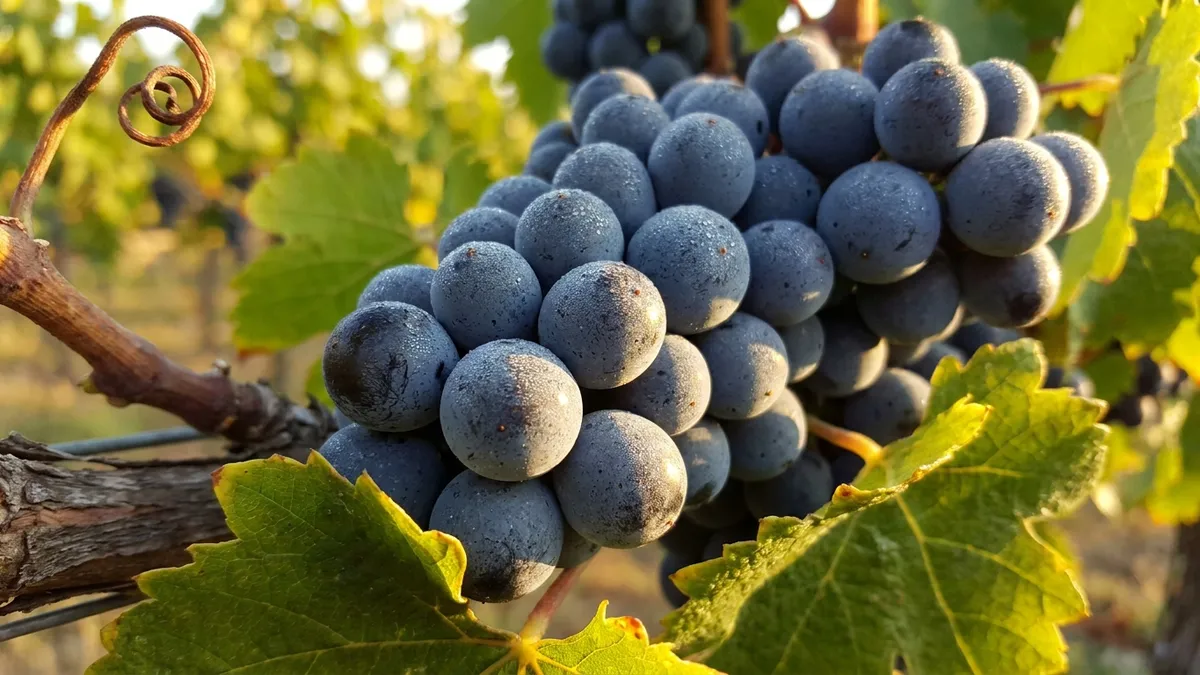
The zone is small: about 374 hectares of vineyard in 2021, around Montefalco in the province of Perugia, averaging about 9,170 hectolitres a year. The DOCG dates from 1992. The dry red must reach at least 13% alcohol, or 13.5% when a single vineyard is named on the label.
In the glass, expect a near-black colour and a full, dense body. It smells of blackberry ripe to the point of jam, because the thick skins carry so much colour and fruit. With age, dried-plum and leather smells take over as the fruit fades. For the grape's full story, from near-extinction to revival, read the Sagrantino wine guide.
Should You Buy Sagrantino Secco, Passito or Montefalco Rosso?
Buy the dry secco for a long dinner, the sweet passito for dessert, and a Montefalco Rosso when you want the Montefalco taste with gentler tannin. All three come from the same hills around Montefalco, but they suit different meals.
- Montefalco Sagrantino (secco) is the dry red described above. If the label says Montefalco Sagrantino and nothing else, it is dry.
- Montefalco Sagrantino Passito is sweet. Passito means the grapes are dried, on or off the vine, before pressing, which concentrates their sugar. It also ages at least 37 months.
- Montefalco Rosso is a separate DOC wine, led by Sangiovese with a smaller share of Sagrantino. It is readier to drink young.
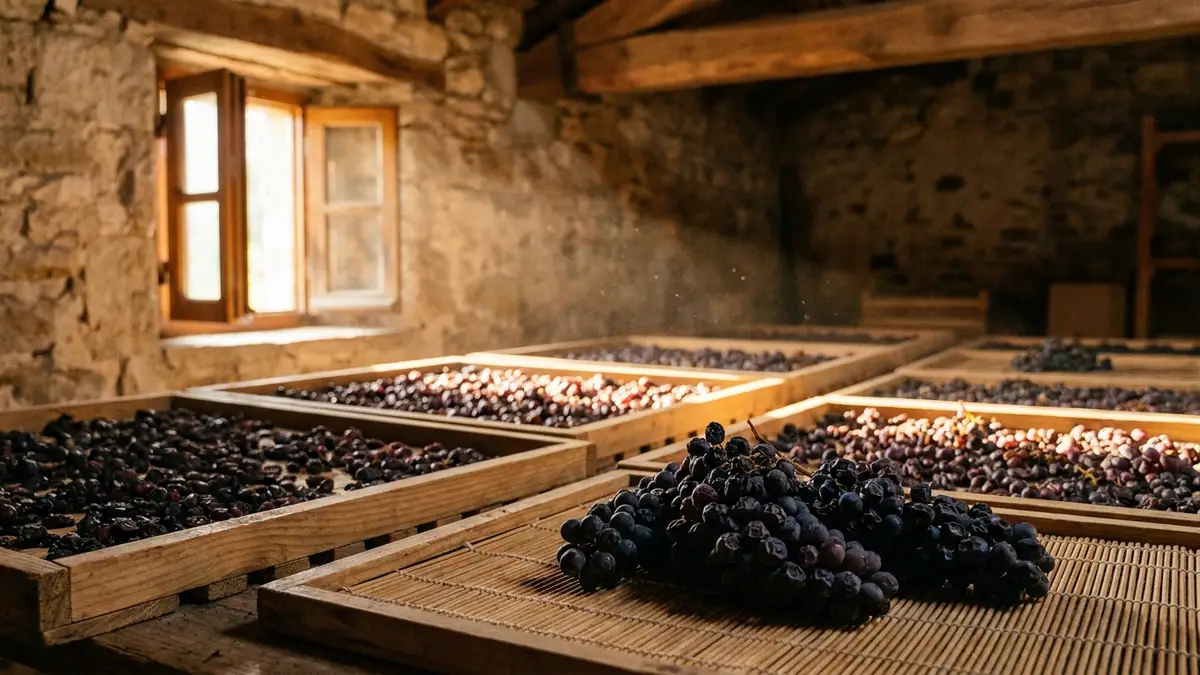
If you like sweet reds with bitter chocolate, the passito is worth a small bottle, and our dessert wine guide shows where it sits among other sweet wines. If you are new to big reds, start with the Rosso. It shows the same blackberry fruit with far less grip.
Is Orvieto Wine Sweet or Dry?
Almost always dry: dry Orvieto makes up over 95% of production. Orvieto was not always this way. For centuries it was a sweet golden wine, made from grapes left in the humid caves under the town until noble rot set in. Noble rot (Botrytis cinerea) is a mould that shrivels ripe grapes and concentrates their sugar.
That sweet style survives in small amounts. The DOC also allows a semi-sweet Bianco and two dessert wines: Muffa Nobile, the noble-rot style, and Vendemmia Tardiva, meaning late harvest. If the label says Orvieto with no sweetness word, it is dry. If it says Muffa Nobile or Vendemmia Tardiva, it is a dessert wine. If you are unsure what dry means on the tongue, read what dry wine means.
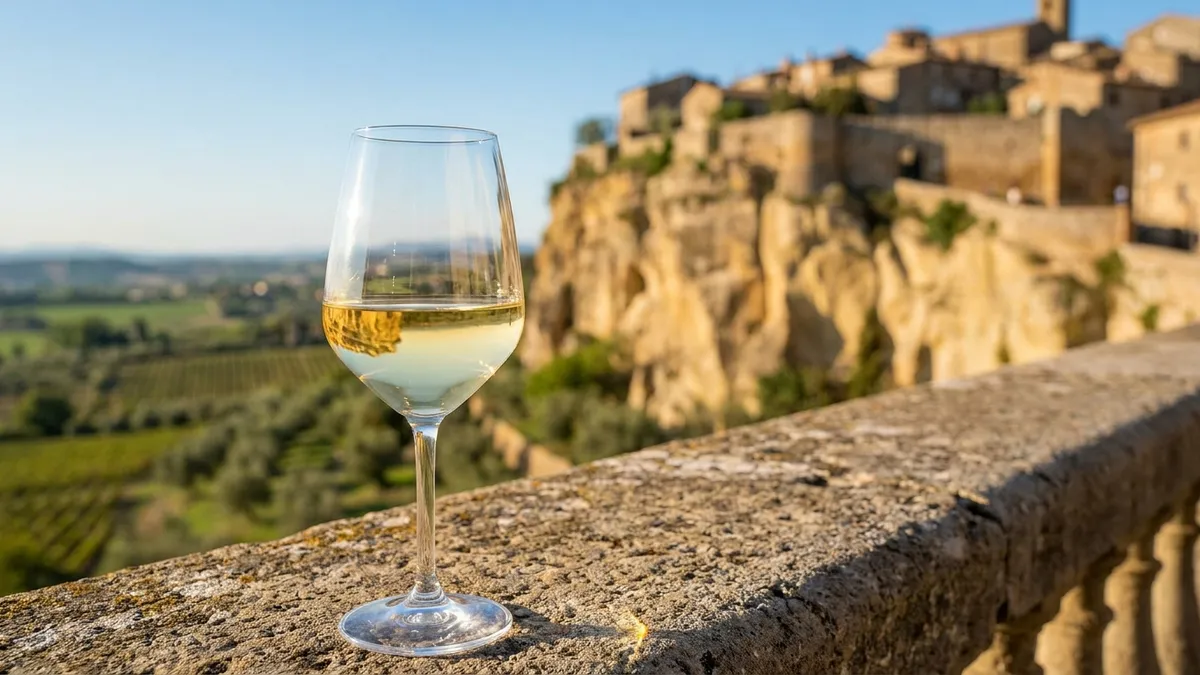
Orvieto received its DOC in 1971 and covers about 2,100 hectares (2022), and about 75% of it is exported, which is why it is easy to find outside Italy. The zone crosses into Lazio, but nearly 95% of production is in Umbria, and the Classico zone, the historic core around the town, lies entirely within Umbria. Classico on the label means the grapes came from that historic core.
What Grapes Go Into Orvieto?
Grechetto and Trebbiano Toscano, called Procanico locally, form the backbone of Orvieto; current rules require at least 60% of the two combined, with other approved white grapes making up the rest. Older reference texts give a different recipe, with fixed shares for Trebbiano and a grape called Verdello, so the blend has changed over time.
The two main grapes do different jobs. Trebbiano gives high acidity and a light, lemony body, and the Trebbiano wine guide covers its many regional forms. Grechetto is Umbria's own white grape. Its thick skin lets growers pick it late, with high sugar, so it adds weight and a nutty, pear-skin richness to the blend.
The practical upshot: an Orvieto heavy in Grechetto tastes rounder and fuller, one heavy in Trebbiano tastes leaner and sharper. Back labels often list the grapes. If you want more body, pick the bottle that names Grechetto first.
Orvieto has a red sibling too. Rosso Orvietano is a separate DOC for reds from the same area, and it allows thirteen grape varieties, including Sangiovese, Merlot and Cabernet Sauvignon, alone or blended. If the label says Rosso Orvietano, read the back label for the grape, because the same name can cover a Sangiovese or a Merlot.
What Food Goes With Umbrian Wine?
Match Sagrantino to fat and protein, and Orvieto to salt, oil and light dishes. Fat and protein bind tannin and soften its grip, so a heavy red needs a rich plate. A light, tart white needs something salty or fried to cut through.
- Braised beef or wild boar stew with Sagrantino: the fat and gelatine coat the mouth, so the tannin feels finer and the blackberry fruit comes forward.
- Pizza or pasta with meat sauce with Montefalco Rosso: the tomato's acidity meets Sangiovese's acidity, so neither tastes flat.
- Fried vegetables or grilled fish with Orvieto: the wine's acidity cuts oil and refreshes the mouth between bites.
- Aged pecorino with Sagrantino: salt and fat both soften tannin, which is why hard sheep's cheese is the easiest test.
- Mushroom or truffle pasta with Torgiano Rosso: its savoury, medium-bodied style does not bury earthy flavours.
Truffles matter here. Umbria's Valnerina valley is a leading source of Italian black truffle, so earthy dishes are part of local cooking. If a dish is light, lemony or raw, keep the Sagrantino closed and pour Orvieto. For the reasoning behind these rules, see how food changes wine taste, and for steak-night specifics, wine with steak.
How Should You Serve Sagrantino?
Serve Sagrantino at a cool room temperature, around 16 to 18°C, in a large glass, and pour it into a decanter an hour before dinner if it is young. Air softens the first rough edge of tannin and lets the fruit smell stronger.
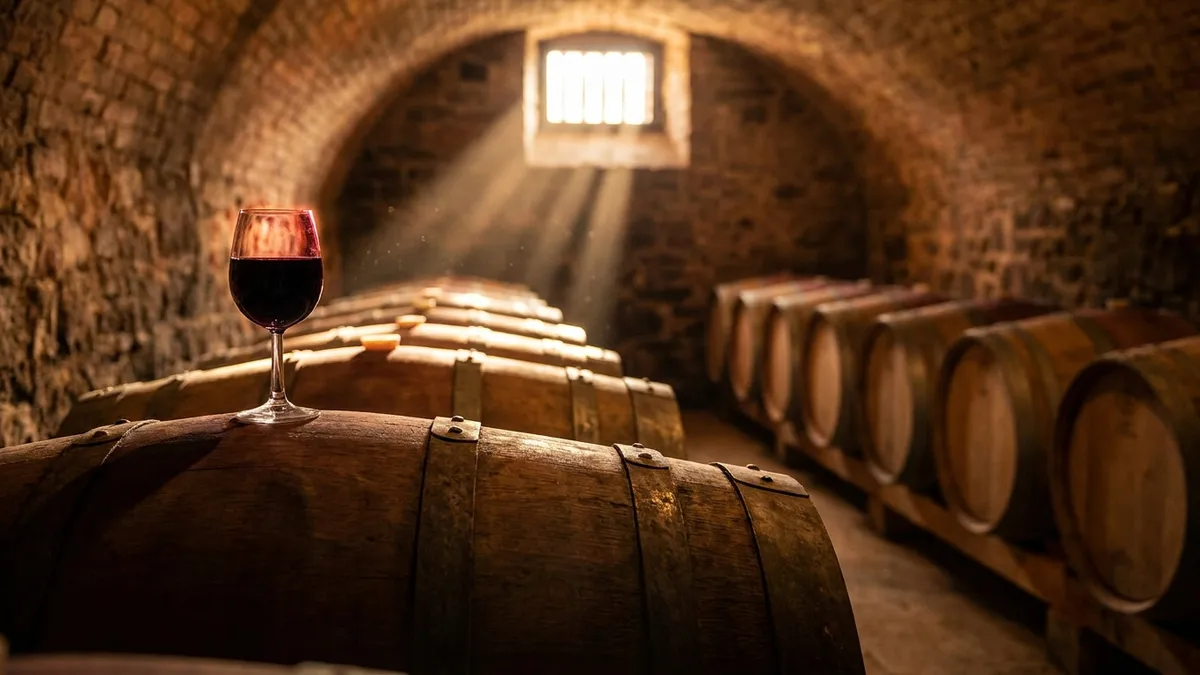
Young here means within its first few years after release. If the vintage on the label is recent, decant for an hour; if the wine is well over ten years old, pour it gently straight from the bottle and watch for sediment. Our step-by-step guide to how to decant wine covers both cases. Chill Orvieto in the fridge to around 8 to 10°C, like most light whites.
What Is Torgiano, Umbria's First DOC?
Torgiano, a hill village southeast of Perugia, became the first area in Umbria to gain DOC status, in 1968, three years before Orvieto. Its top red, Torgiano Rosso Riserva, became a separate DOCG in 1990, which makes Torgiano the only Umbrian zone besides Montefalco with a DOCG wine.
The Riserva must be at least 70% Sangiovese, reach at least 12.5% alcohol, and age at least three years, including six months in bottle. That makes a savoury, medium-bodied red with sour-cherry fruit, since Sangiovese keeps high acidity even when ripe. It is also rare. The Riserva DOCG covered just 5 hectares in 2021.
The village also holds a wine museum, opened in 1974 by a local winemaking family. If you see Torgiano Rosso Riserva, expect an aged Sangiovese closer to a mature Chianti than to Sagrantino.
Why Is Umbria Called the Green Heart of Italy?
Umbria is called the green heart of Italy (il cuore verde d'Italia) because it sits in the middle of the peninsula, covered in woods and hills. It is also the only region of peninsular Italy with no coastline. The river Tiber runs through it on the way to Rome.
Umbria is modest in size, with about 12,400 hectares of vines producing roughly 600,000 hectolitres of wine in 2022. Next door, Tuscany shares Sangiovese but has a coast and far greater fame; the Tuscany wine guide shows the contrast, and the Italian wine guide places both on the national map. Our wine regions hub links every region we cover.
How Do You Start Tasting Umbria Tonight?
Buy one Orvieto and one Montefalco red, either a Rosso or a Sagrantino, and taste them in that order. The chilled white first shows acidity and body at their lightest. The red second shows what tannin feels like at full strength.
For a guide through the pair, Sommy's AI-guided tasting mode takes a photo of each label and walks through look, smell and taste, then saves both notes to a tasting journal. The Sommy app also has a bite-sized Italy course for the wider map. Tonight, pour the Orvieto with something salty, then open the Montefalco red with the main course and feel how the fat on the plate changes its grip.
Sources
Frequently Asked Questions
What is Umbria known for in wine?
Umbria is best known for Montefalco Sagrantino, a dark and very tannic red, and Orvieto, a dry white made mainly from Grechetto and Trebbiano. Sangiovese is the most planted grape, at 22% of vineyards. The region has 2 DOCGs and 13 DOCs, including Torgiano, the first Umbrian area to win DOC status, in 1968.
Is Orvieto wine sweet or dry?
Almost all Orvieto is dry today, with dry wine making up over 95% of production. It was once a sweet golden wine made from grapes touched by noble rot in the humid caves under the town. Sweet versions still exist, labelled Muffa Nobile or with a semi-sweet style word, so read the front label before you buy.
Why is Sagrantino so tannic?
Sagrantino is a thick-skinned grape, and skins are a main source of tannin, so the wine is dense and grips the gums hard when young. Montefalco Sagrantino DOCG must be 100% Sagrantino, with no softer grape blended in, and it must age at least 37 months before release, including 12 months in barrel, which gives that tannin time to settle.
What is the difference between Montefalco Rosso and Montefalco Sagrantino?
Montefalco Sagrantino is 100% Sagrantino and needs at least 37 months of ageing, so it is dark, full-bodied and very tannic. Montefalco Rosso is a separate DOC wine led by Sangiovese with a smaller share of Sagrantino, so it is lighter, softer in grip and ready to drink sooner. Choose Rosso for a weeknight meal and Sagrantino for a long, rich dinner.
What food goes with Sagrantino?
Sagrantino needs fat and protein, because both soften the drying grip of its tannin. Braised beef, roast lamb, wild boar stew, sausages with lentils and aged hard cheese all work. The sweet passito version goes with dark chocolate or dry biscuits. Avoid delicate fish and bare salads, which leave the tannin with nothing to bind to and make the wine taste harsh.
What is Torgiano wine?
Torgiano is a small wine zone southeast of Perugia and the first area in Umbria to gain DOC status, in 1968. Its top red, Torgiano Rosso Riserva, became a DOCG in 1990. It is at least 70% Sangiovese, reaches at least 12.5% alcohol and ages at least three years before release, giving a savoury, medium-bodied red.
Sommy Team
LinkedInFounder & Wine Educator
The Sommy Team is building the world's most approachable wine education app, helping beginners develop real tasting skills through structured courses and AI-guided practice.