Tuscany Wine Region Guide: Chianti, Brunello, and Super Tuscans
Sommy Team
Founder & Wine Educator
April 29, 2026
12 min read
TL;DR
The Tuscany wine region centers on Sangiovese and four key zones — Chianti Classico, Brunello di Montalcino, Vino Nobile di Montepulciano, and coastal Bolgheri. Each zone offers a distinct expression, from herbal Chianti to powerful Brunello to Bordeaux-style Super Tuscans, all built around food and the Italian table.
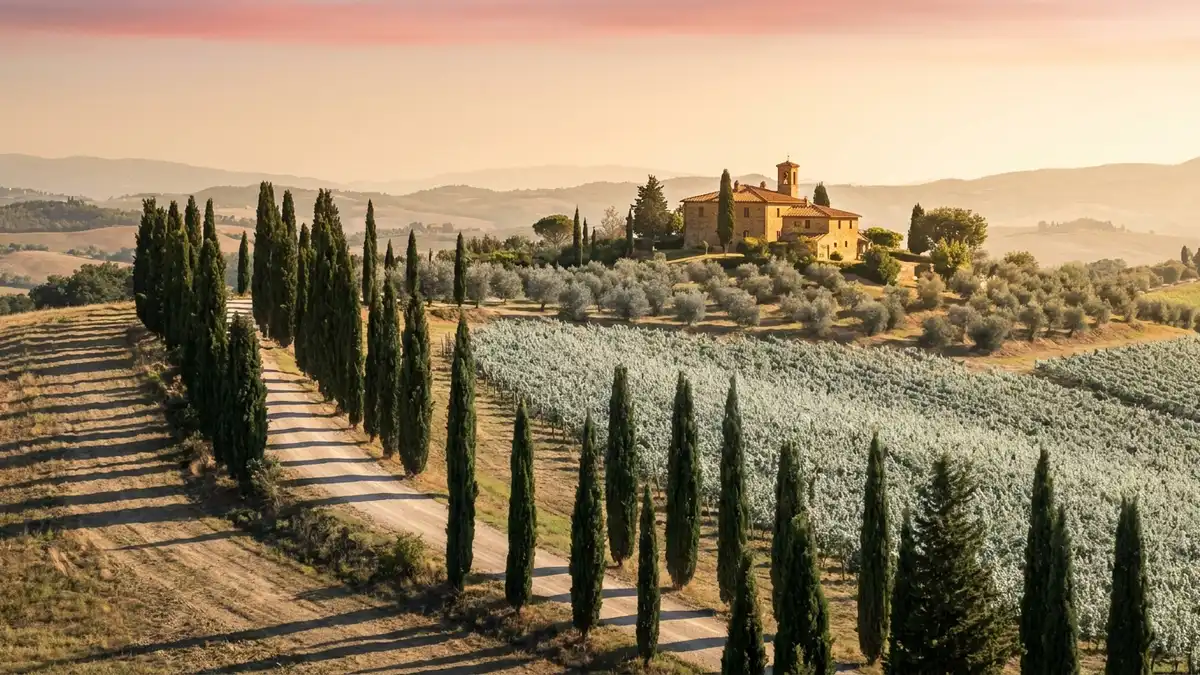
What the Tuscany Wine Region Is
The Tuscany wine region sits in central Italy, anchored by the cities of Florence and Siena. It produces some of the most internationally recognized Italian reds — Chianti, Brunello di Montalcino, and the modern wave of Super Tuscans from the coast.
Tuscany is the spiritual home of one grape in particular: Sangiovese, whose name translates loosely as "blood of Jove." It is grown across nearly every red appellation in the region, but the way it expresses itself in Chianti, Montalcino, Montepulciano, and Bolgheri is strikingly different.
This guide walks through the four zones every drinker should know, the classification system that organizes them, the Super Tuscan story, what each style tastes like, and how to choose a bottle that matches the meal.
Tuscany Wine Region, in 90 Seconds
The tuscany wine region is built around Sangiovese and four key zones: Chianti and Chianti Classico (Sangiovese-based blends, herbal and high acid), Brunello di Montalcino (100% Sangiovese, aged 5+ years, structured and age-worthy), Vino Nobile di Montepulciano (a third Sangiovese expression, more rustic and savory), and coastal Bolgheri (home of Super Tuscans, Bordeaux-style blends of Cabernet Sauvignon, Merlot, and Cabernet Franc). Classifications run from DOCG (top) through DOC to IGT, where Super Tuscans found their legal home in the 1990s. Tuscan wine is built for tomato, olive oil, grilled meat, and aged sheep's cheese.
Sangiovese: The Grape That Defines Tuscany
Before exploring the zones, get to know the grape. Reading a Sangiovese wine guide end to end is the fastest shortcut to understanding most Tuscan reds.
Sangiovese is high in acidity, medium to firm in tannin, and aromatically tilted toward red fruit and savory notes rather than dark, jammy ones. Classic descriptors include sour cherry, dried oregano, leather, tomato leaf, dusty earth, and balsamic vinegar.
That high acidity is the secret to why Tuscan wine and Tuscan food fit so well together. Acid cuts through olive oil, tomato, and rendered fat — three ingredients that show up in nearly every Tuscan dish. Without food, Sangiovese can taste angular. With food, it sings.
Sangiovese also goes by local names depending on where it grows. In Montalcino it is called Brunello ("the little dark one"). In Montepulciano it is called Prugnolo Gentile. Same grape, different clones and microclimates.
Other Grapes You Will See
While Sangiovese carries the region, several other varieties show up regularly:
- Cabernet Sauvignon — the backbone of most Bolgheri blends and many Super Tuscans
- Merlot — soft, plummy partner in Bordeaux-style blends
- Cabernet Franc — adds aromatic lift and herbal edge to Super Tuscans
- Trebbiano — historic white grape, used in everyday Tuscan whites
- Vermentino — coastal white with citrus and herbal character
For background on the international red blending grapes, see our breakdown of Bordeaux blend grapes and the comparison of Cabernet Sauvignon vs. Merlot.
The Italian Classification System, Tuscany Edition
Tuscan wines fall under Italy's three-tier classification system. The hierarchy from broadest to most controlled:
- IGT (Indicazione Geografica Tipica) — flexible regional designation. This is where most Super Tuscans live, often labeled "IGT Toscana."
- DOC (Denominazione di Origine Controllata) — defined area with rules on grapes, yields, and aging. Bolgheri DOC is a famous example.
- DOCG (Denominazione di Origine Controllata e Garantita) — the highest tier with stricter quality controls and government tasting panels. Chianti Classico, Brunello di Montalcino, Vino Nobile di Montepulciano, and Bolgheri Sassicaia are all DOCG.
Higher tier does not automatically mean better wine — but it does mean tighter rules around what is in the bottle. For more on how this works across countries, see what is appellation and how to read a wine label.
Chianti and Chianti Classico
What Makes Them Different
The word "Chianti" covers two distinct DOCG zones, and confusing them is the most common Tuscan wine mistake.
Chianti DOCG is a large area of central Tuscany producing wines that range from simple and fruity to medium-bodied and structured. It must contain at least 70% Sangiovese.
Chianti Classico DOCG is the original historic heartland between Florence and Siena. The rules are stricter: minimum 80% Sangiovese, lower yields, longer aging, and stricter vineyard zoning. Authentic Chianti Classico carries the Gallo Nero (Black Rooster) seal on the neck of the bottle — a 700-year-old symbol that today functions as a quality marker.
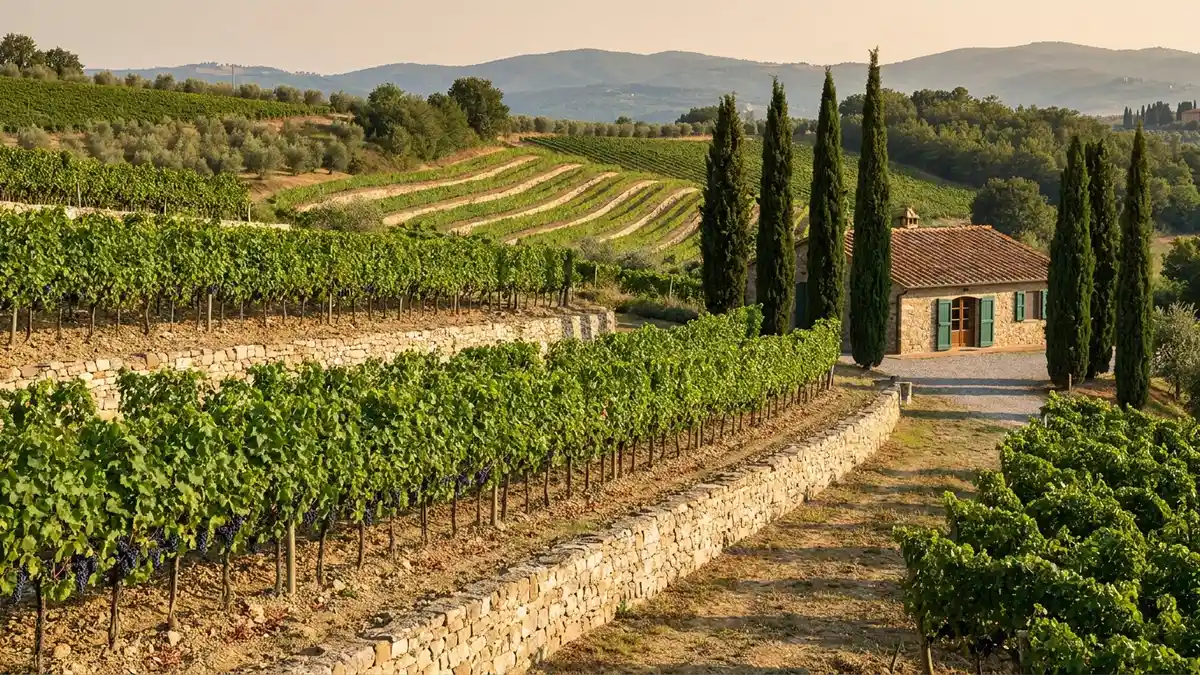
The Chianti Classico Tiers
Chianti Classico has its own internal quality ladder:
- Annata (the standard Chianti Classico) — aged a minimum of 12 months
- Riserva — aged a minimum of 24 months, more concentrated
- Gran Selezione — the top tier, introduced in 2014, aged 30+ months from estate-owned vineyards
A well-made Chianti Classico tastes of sour cherry, dried oregano and rosemary, leather, dusty earth, and bright red-fruit acidity. The tannins feel grippy but lifted, never heavy. Served with a plate of pici al ragu, it is one of the most complete pairings in the wine world.
Brunello di Montalcino
About an hour south of Chianti Classico, the hilltop town of Montalcino sits on a warmer, drier ridge. The Sangiovese clone grown here — Brunello — produces deeper, richer, more structured wine than its northern cousin.
Brunello di Montalcino DOCG is 100% Sangiovese and is held to some of the strictest aging rules in Italy. The minimum is five years from harvest, with at least two of those years spent in oak. The Riserva requires six years of aging. By the time a Brunello reaches the shelf, it has already spent more time aging than most wines see in a lifetime.
The result is a wine of remarkable depth. Expect black cherry rather than sour cherry, balsamic, dried fig, tobacco leaf, leather, and a long, savory finish. The tannins are firm but polished by long oak aging.
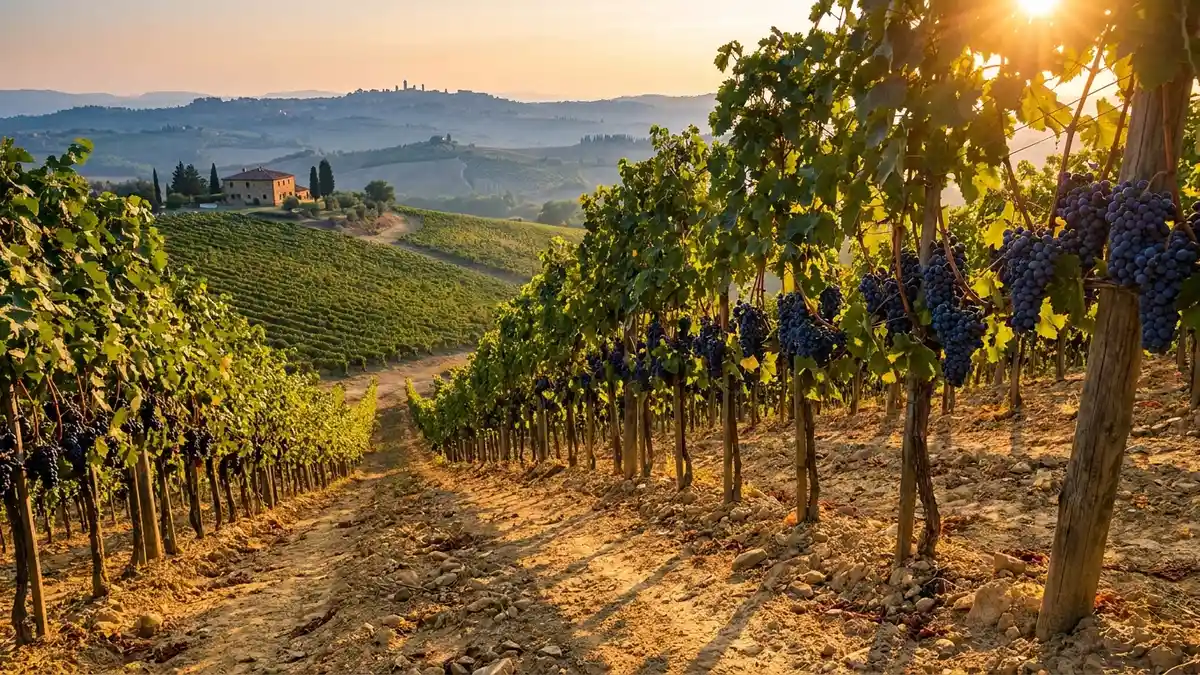
Rosso di Montalcino
If Brunello prices feel out of reach, Rosso di Montalcino is the entry-level DOC from the same producers and vineyards. It is also 100% Sangiovese but requires only one year of aging. Think of it as a younger, fresher snapshot of Montalcino character at roughly a third of the price.
For a deeper read on how time in bottle changes Sangiovese-based reds, our piece on tasting young vs. aged wine walks through the textural shifts step by step.
Vino Nobile di Montepulciano
Often the forgotten sibling of the three great Sangiovese DOCGs, Vino Nobile di Montepulciano comes from the steep slopes around the medieval town of Montepulciano in southeastern Tuscany. The local Sangiovese clone is called Prugnolo Gentile.
The style sits between Chianti Classico and Brunello — more structured than Chianti, more rustic and herbal than Brunello. Expect plum and dried cherry, sweet tobacco, dried herbs, and a slightly more savory profile. Vino Nobile DOCG requires two years of aging; the Riserva requires three.
Confusingly, Vino Nobile di Montepulciano has nothing to do with the Montepulciano grape grown in Abruzzo on Italy's east coast. Same name, different grape, different region. Our Montepulciano grape guide covers the eastern grape; Vino Nobile is the Tuscan place name.
Bolgheri and the Super Tuscan Story
How a Tax-Code Loophole Reinvented Italian Wine
In the 1970s, a small group of Tuscan producers wanted to make wines that did not fit any existing DOC rule — Bordeaux blends of Cabernet Sauvignon and Merlot, or 100% Sangiovese wines without the required white grapes that DOC Chianti then mandated.
Italian law forced these wines into the lowest legal tier, Vino da Tavola (table wine), the same bracket as cheap jugs sold by the liter. The 1971 vintage of "Tignanello" — a Sangiovese-led wine aged in French oak — was sold as humble Vino da Tavola while costing more than most Brunellos.
These rebel wines proved so successful that by the 1990s the system had to bend. The new IGT Toscana category was created to give them a legal home, and the coastal Bolgheri DOC was elevated to recognize the area where many of the original Bordeaux-style Super Tuscans were grown.
What Bolgheri Tastes Like
The coastal Maremma climate is warmer and more maritime than inland Tuscany, with gravelly soils that mirror Bordeaux's Left Bank. A typical Bolgheri Superiore blends Cabernet Sauvignon, Merlot, and Cabernet Franc — sometimes with a splash of Petit Verdot or Syrah.
Expect blackberry and cassis instead of sour cherry, sweet oak, cedar, and a richer, more polished texture than traditional inland Tuscan reds. Tannins are firm but velvety. These are wines built for international palates that grew up on premium Napa Cabernet.
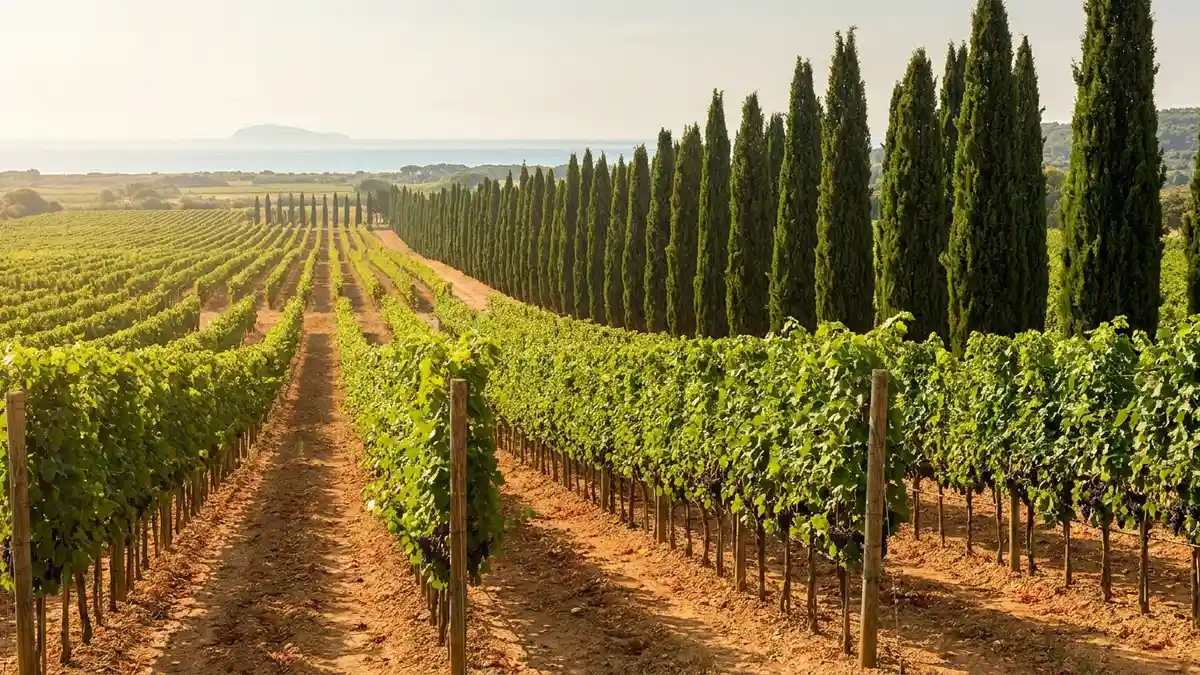
For context on how this compares to other Cabernet-driven regions, our Napa Valley wine guide and overview of old world vs. new world wine are useful companion reads.
Tasting Profiles by Zone
A quick mental cheat sheet for what each Tuscan style delivers in the glass:
- Chianti Classico: sour cherry, dried oregano, leather, dusty tannin, high acid, lifted finish
- Chianti Classico Riserva: deeper cherry, sweet tobacco, more oak, longer finish
- Brunello di Montalcino: black cherry, balsamic, leather, dried fig, structured tannin, long savory finish
- Vino Nobile di Montepulciano: plum, dried herbs, sweet tobacco, rustic finish
- Bolgheri Super Tuscan: blackberry, cassis, cedar, sweet oak, plush tannin, fruit-forward finish
If those flavor categories feel abstract, our piece on developing your wine palate breaks down how to identify them step by step. The Sommy app covers the same vocabulary inside a guided red wine module so the words start matching what is actually in the glass.
Aging Potential
Tuscan wine rewards patience, but the right window depends on the zone:
- Chianti DOC: 3-7 years
- Chianti Classico: 5-15 years
- Chianti Classico Riserva and Gran Selezione: 10-25 years
- Brunello di Montalcino: 15-30+ years
- Top Bolgheri Super Tuscans: 20-40 years
Younger Sangiovese drinks bright and red-fruited. With age, sour cherry softens into dried cherry and fig, and leather, balsamic, and forest floor join the mix. The high acidity in Sangiovese is what allows even mid-tier Tuscan reds to hold their shape for a decade or more.
Pricing Tiers
The tuscany wine region offers something at almost every price point, which is part of why it is so beginner-friendly:
- Chianti DOC: $12-20
- Chianti Classico: $20-40
- Chianti Classico Riserva: $30-60
- Rosso di Montalcino: $25-45
- Brunello di Montalcino: $50-150+
- Top Super Tuscan from Bolgheri: $80-300+
- Cult Super Tuscan: $200-1000+
Quality at the lower end has improved dramatically since the 1990s. A $25 Chianti Classico today is a far more serious wine than the same shelf bottle was 25 years ago.
Food Pairing the Tuscan Way
In Tuscany, wine pairing is not a theory — it is a default setting. The wine on the table grew up next to the food on the table, and the two are calibrated for each other.
A few reliable matches:
- Chianti Classico: tomato-based pasta, pizza margherita, grilled chicken with rosemary, aged pecorino, lasagna
- Chianti Classico Riserva: roasted lamb, mushroom risotto, hard sheep's cheese, grilled sausages
- Brunello di Montalcino: dry-aged steak, wild boar ragu, truffle pasta, hard aged cow's milk cheese
- Vino Nobile di Montepulciano: braised meats, roasted pork, lentil stew, aged pecorino
- Bolgheri Super Tuscan: bistecca alla Fiorentina, lamb chops, blue cheese, hard aged cheese with honey
The Sangiovese acid-and-tannin profile is built to cut through tomato sauce and rendered fat — the two flavor pillars of Tuscan cooking. Our wine with pasta and wine with steak guides cover the pairing logic in depth.
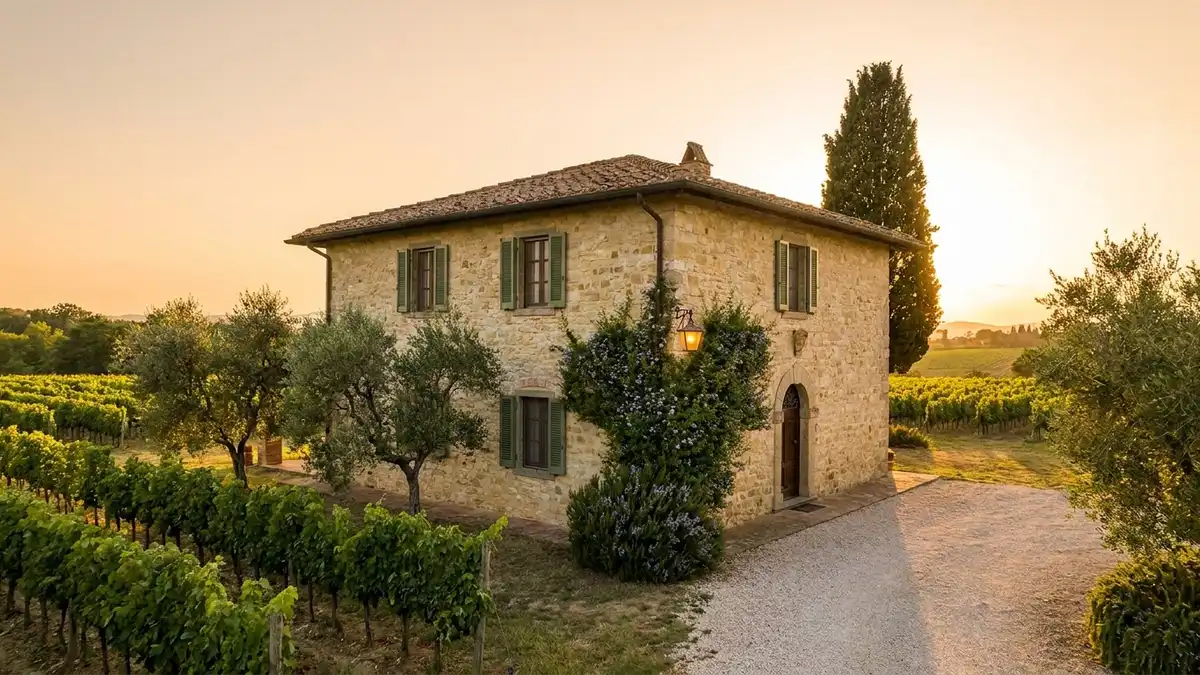
A 4-Bottle Starter Flight
The fastest way to understand Tuscany is to taste four bottles side by side rather than reading another long article. A practical flight:
- Chianti Classico — your reference for inland Sangiovese
- Brunello di Montalcino (or Rosso di Montalcino if budget is tight) — premium Sangiovese, longer aging
- Bolgheri Superiore — your Super Tuscan introduction
- Vino Nobile di Montepulciano — a third Sangiovese expression to compare
Drink them in that order on a Sunday afternoon with a chunk of aged pecorino, some bread and olive oil, and a tomato-based pasta. By the second pour, the differences between zones will be obvious in a way no article can teach.
For a method to actually capture what each glass is doing, the structured tasting tool inside Sommy walks through appearance, aroma, and palate in a way that surfaces side-by-side comparisons. It is the same approach used in the app's region-specific courses.
Climate Change and the Modern Tuscan Vintage
Tuscany is warming. Harvest dates have moved roughly two to three weeks earlier compared to the 1980s, and average alcohol levels in finished wine have crept up by close to a full percentage point.
That has practical consequences. Cooler high-altitude sites in Chianti Classico are increasingly prized — vineyards above 350 meters now produce some of the freshest, most balanced expressions of Sangiovese. On the coast, producers are experimenting with later-ripening varieties and earlier picking windows.
If you have memories of dusty, herbal Tuscan reds from the 1990s, modern bottles will taste riper, fuller, and slightly higher in alcohol. The herbal lift is still there in cooler vintages, but the overall style has shifted toward a more polished, internationally-friendly profile.
Buying Tips
A few practical rules for shopping Tuscan wine:
- Look for the Gallo Nero (Black Rooster) on the bottle neck for authentic Chianti Classico
- "Riserva" usually means longer aging and more depth — a reliable upgrade
- "Gran Selezione" is the top Chianti Classico tier and works as a quality shortcut
- Any wine labeled Bolgheri DOC comes from the original Super Tuscan zone and is generally well-made
- For Brunello on a budget, look for Rosso di Montalcino from a respected zone — same fruit, less aging
- Check the vintage — Tuscan vintages can vary, and the difference between a hot, low-acid year and a cooler, fresher one is significant
Where to Go Next
A few natural follow-ups once Tuscany makes sense:
- For the wider Italian context, see the Italian wine guide, which covers Piedmont, Veneto, and the south
- For the international red template that shaped Super Tuscans, our Cabernet Sauvignon wine guide and Merlot wine guide are the direct points of comparison
- For coastal whites from the same region, the Vermentino wine guide covers what is in the Tuscan white glass
The full Sommy wine regions hub collects every region guide in one place, including dedicated modules on French, Spanish, and Italian wine.
Final Thought
The Tuscany wine region is unusually beginner-friendly because almost every great bottle traces back to one grape, four zones, and a clear classification system. Learn what Sangiovese tastes like in Chianti Classico, taste the same grape transformed by the warm hills of Montalcino, then jump to the coast for the Super Tuscan story — and the rest of the region clicks into place.
Open a bottle, set out some bread and olive oil, and let the wine do the teaching.
Frequently Asked Questions
What is the most famous wine from Tuscany?
Chianti Classico is the most widely recognized, identifiable by the black rooster seal on the neck of the bottle. Brunello di Montalcino is the most prestigious, made from 100% Sangiovese and aged at least five years before release. Super Tuscans from Bolgheri are the most internationally collected modern style.
What grape is used in most Tuscan red wine?
Sangiovese is the dominant red grape across Tuscany, used in Chianti, Chianti Classico, Brunello di Montalcino, and Vino Nobile di Montepulciano. It is high in acidity, medium to firm in tannin, and known for sour cherry, dried herb, and leather aromas. Different zones produce different clones and styles of Sangiovese.
What is a Super Tuscan wine?
A Super Tuscan is a Tuscan red made outside traditional DOC rules, usually a Bordeaux-style blend of Cabernet Sauvignon, Merlot, and Cabernet Franc, sometimes with Sangiovese. The category emerged in the 1970s and is now formally recognized under the Bolgheri DOC and the broader IGT Toscana classification.
How long does Tuscan wine age?
Aging potential depends on the zone. Chianti DOC is best within 3 to 7 years. Chianti Classico holds 5 to 15 years and Riserva up to 25. Brunello di Montalcino can age 15 to 30 years or more. Top Super Tuscans from Bolgheri often improve for 20 to 40 years.
What does Chianti Classico taste like compared to Brunello?
Chianti Classico tastes brighter and more herbal, with sour cherry, dried oregano, leather, and dusty tannin. Brunello di Montalcino is deeper and more structured, with black cherry, balsamic, tobacco, and longer aging in oak. Both are 100% or near-100% Sangiovese, but Brunello is richer and built for the long cellar.
Is Tuscan wine good for beginners?
Chianti Classico is one of the best entry points into Italian wine because it is widely available, food-friendly, and clearly expresses the Sangiovese character. Start with a basic Chianti Classico, then taste a Riserva from the same producer style to feel how aging changes the wine. Brunello and Super Tuscans usually make more sense once you know what Sangiovese tastes like.
What food pairs best with Tuscan wine?
Tuscan wine is built for Tuscan food. Chianti pairs with tomato-based pasta, pizza margherita, grilled meats with rosemary, and aged pecorino. Brunello suits aged steak, wild boar ragu, and truffle dishes. Super Tuscans handle Florentine steak, lamb, and bold blue cheese. The high acidity in Sangiovese cuts through fat and tomato beautifully.
Get the free Wine 101 course
Start learning to taste wine like a pro with structured lessons and AI-guided practice.
Sommy Team
LinkedInFounder & Wine Educator
The Sommy Team is building the world's most approachable wine education app, helping beginners develop real tasting skills through structured courses and AI-guided practice.
Keep Reading
French Wine Regions: A Complete Guide
Explore the major French wine regions from Bordeaux to Provence. Understand the AOC system, signature grapes, and what makes each region unique.
Italian Wine: From Chianti to Barolo
Discover Italian wine from north to south. Learn the key regions, native grapes, classification system, and why Italian wine and food are inseparable.
Spanish Wine Regions: From Rioja to Sherry
Explore Spain's major wine regions, from the legendary Rioja to the unique world of Sherry. Learn the DO system, key grapes, and aging classifications.