Petit Verdot: The Blending Grape That Stands Alone

By the Sommy Team — AI-assisted, human-edited.
Updated Apr 29, 2026
Contents (12)
- The Quiet Workhorse of the Bordeaux Blend
- What Is Petit Verdot, in 100 Words
- A Short History: Why It Almost Disappeared
- The Sensory Profile: How to Recognize It
- Why Violet? The Floral Lift Explained
- The Bordeaux Blend Role: Why 1 to 5 Percent Matters
- Solo Petit Verdot: The New World Rebirth
- Petit Verdot vs Cabernet Sauvignon: Head to Head
- Food Pairings: Big Wine, Big Food
- Aging: How Long Does Petit Verdot Last?
- How to Taste Petit Verdot Like a Pro
- Why Petit Verdot Is Worth Seeking Out
TL;DR
Petit Verdot is a thick-skinned, late-ripening Bordeaux red grape historically used as a 1 to 5 percent blender for color, structure, and floral lift. Now increasingly bottled solo in warm New World regions where it ripens reliably. Profile: deep inky purple, very firm tannin, intense violet, black plum, black olive, dried herb, and leather.
The Quiet Workhorse of the Bordeaux Blend
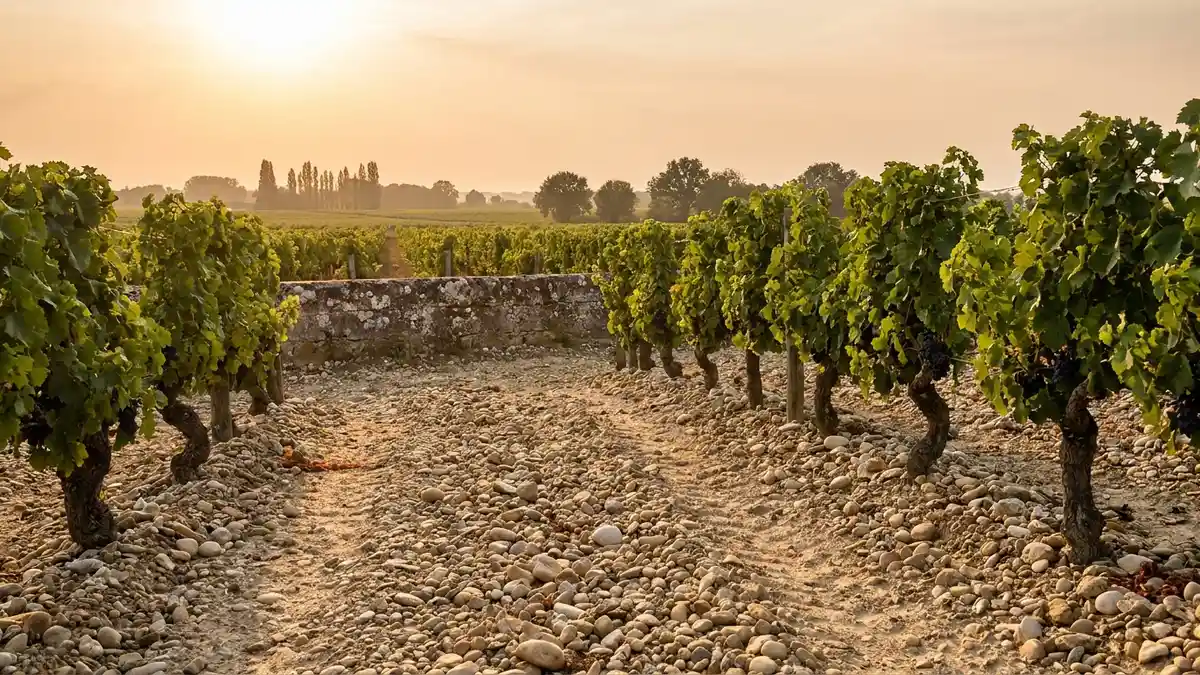
Walk through almost any Médoc vineyard and you will see Cabernet Sauvignon, Merlot, and Cabernet Franc dominating the rows. Tucked into a corner, often the last to be harvested, is a thick-skinned, dark-berried grape that almost vanished from Bordeaux in the 20th century — Petit Verdot. The "small green one" got its name from grapes that frequently failed to ripen in cool vintages, leaving small green clusters at harvest. When it does ripen, petit verdot wine delivers some of the deepest color, firmest tannin, and most perfumed florals of any red grape on earth.
This guide walks through what petit verdot actually tastes like, why it spent two centuries as a 1 to 5 percent blending partner, why warm New World regions are now bottling it solo, and how to spot its violet-and-graphite signature in any glass.
What Is Petit Verdot, in 100 Words
Petit Verdot is a thick-skinned, late-ripening Bordeaux red grape historically used as a 1 to 5 percent blending partner in Médoc reds, where it contributes deep color, firm tannin, and a floral violet lift. The grape is now increasingly bottled solo in warm New World regions — Spain's La Mancha, California's Central Valley, Argentina, and Australia — where reliable heat lets it ripen fully. The sensory profile is unmistakable: opaque inky purple, very firm tannin, intense violet, black plum, black olive, dried herb, leather, and graphite, with alcohol typically landing between 13.5 and 14.5 percent. Often called Bordeaux's fifth grape, it is rarely the headliner but always recognizable.
A Short History: Why It Almost Disappeared
The story of Petit Verdot is the story of a grape that nearly lost its place at the table. For centuries, the classic Bordeaux blend used five red grapes: Cabernet Sauvignon, Merlot, Cabernet Franc, Petit Verdot, and Malbec. Petit Verdot was always the smallest contributor by volume, but its role was structural — thick skins delivering pigment that even Cabernet could not match, late ripening packing in concentrated phenolics, and perfumed violet aromas lifting what would otherwise be heavy, brooding wines.
The problem was climate. Petit Verdot ripens two to four weeks later than Cabernet Sauvignon, often refusing to reach full ripeness in cool Médoc vintages. By the 1970s, plantings had collapsed as growers tore out unreliable rows and replaced them with dependable Merlot.
Two things saved the grape. Climate change warmed Bordeaux's growing seasons, giving Petit Verdot more reliably ripe vintages. And ambitious winemakers in warmer New World regions discovered the grape ripens beautifully when the heat shows up. In Bordeaux itself, the Médoc is replanting Petit Verdot for the first time in fifty years. For the broader picture of how the five Bordeaux grapes work together, see our guide to Cabernet Sauvignon vs Merlot and our deep dive on Cabernet Franc.
The Sensory Profile: How to Recognize It
Once you know the signature, petit verdot wine is one of the easier reds to identify blind. The combination of pigment, tannin, and floral perfume is hard to mistake for any other grape.
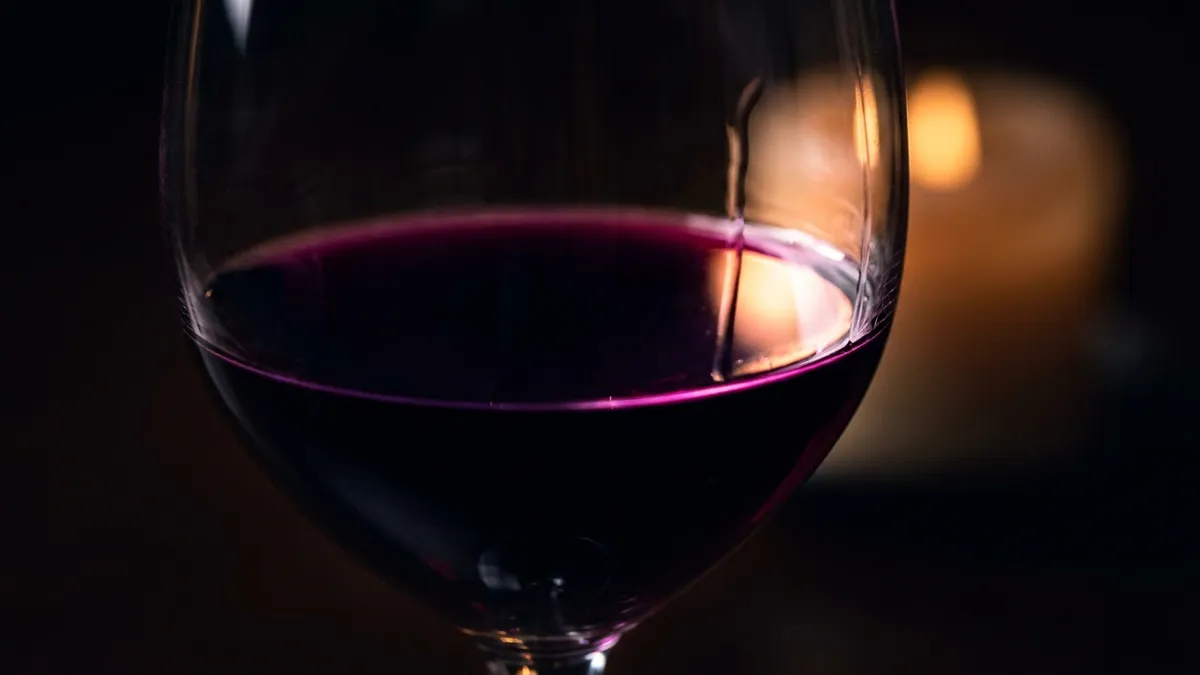
Color
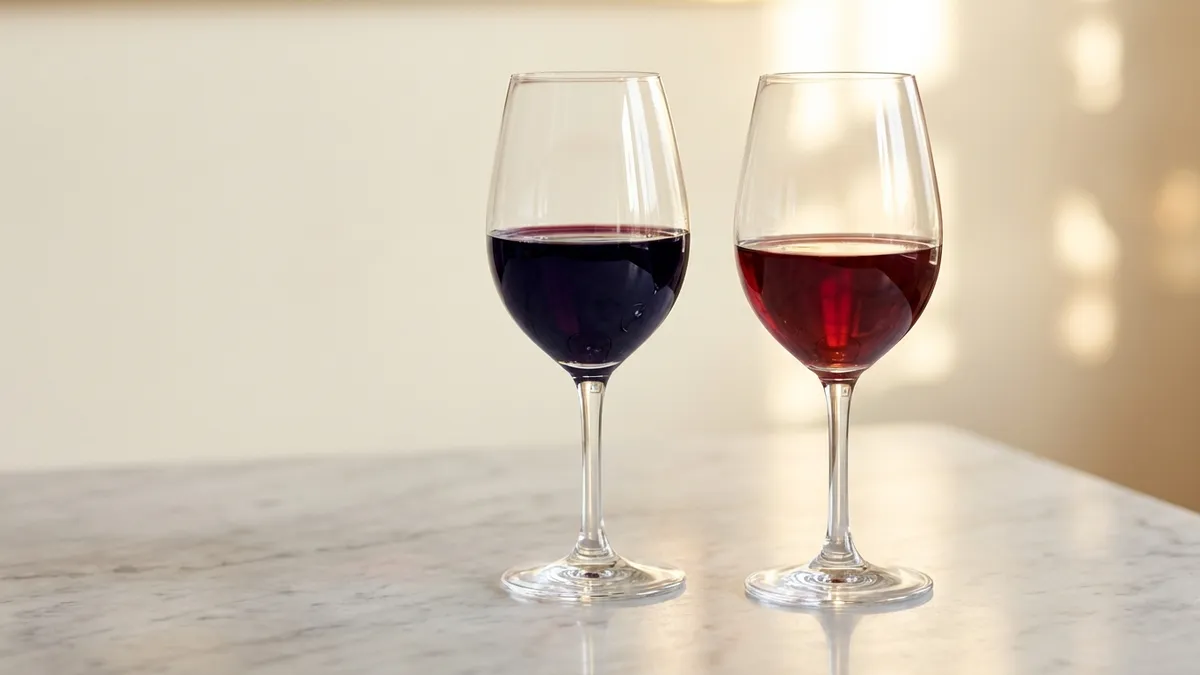
Opaque, inky deep purple — often the darkest red wine in any lineup. Held against light, the rim shows almost no translucency in young wines. The intensity comes from the grape's thick skins and high anthocyanin content, the same pigment compounds that make blueberries blue. For more on what color reveals about a wine's age and grape, see our wine color and age guide.
Aroma
This is where the grape shows its hand. The signature notes:
- Violet — the floral hallmark, perfumed and lifted, more intense than in any other Bordeaux red
- Black plum and black cherry — the dominant fruit, dense and ripe rather than juicy
- Blueberry — secondary fruit, especially in warm-climate examples
- Black olive and dried herb — the savory undertow that distinguishes it from softer reds
- Leather, graphite, and pencil shavings — the mineral edge, sharing DNA with Cabernet Franc
- Mocha, licorice, and bitter chocolate — common in oaked New World bottlings
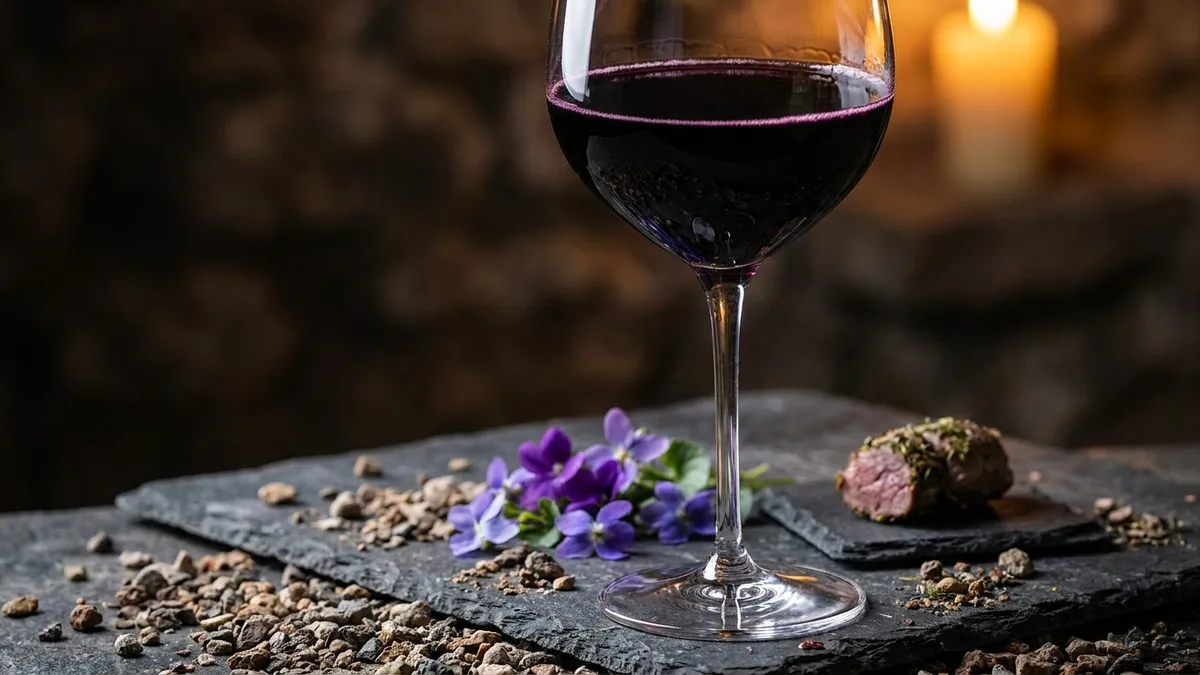
The single most diagnostic aroma is violet. If you sniff a deep inky red and immediately think "perfume shop floor," there is a strong chance you are smelling Petit Verdot or a blend with significant Petit Verdot in it. Our guide to floral notes in wine breaks down how to recognize and name these aromas.
Palate
Full body, very firm tannin, and bright acidity. The mouthfeel is dense and grippy, closer to muscular Cabernet Sauvignon or Tannat than to silky Merlot — but with a perfumed lift that keeps it from feeling heavy. The finish is long, savory, and herbal, often with a graphite mineral aftertaste that lingers for thirty seconds or more.
For a deeper look at how tannin and acidity create structure on the palate, see our guide to understanding tannins, acidity, and body.
Why Violet? The Floral Lift Explained
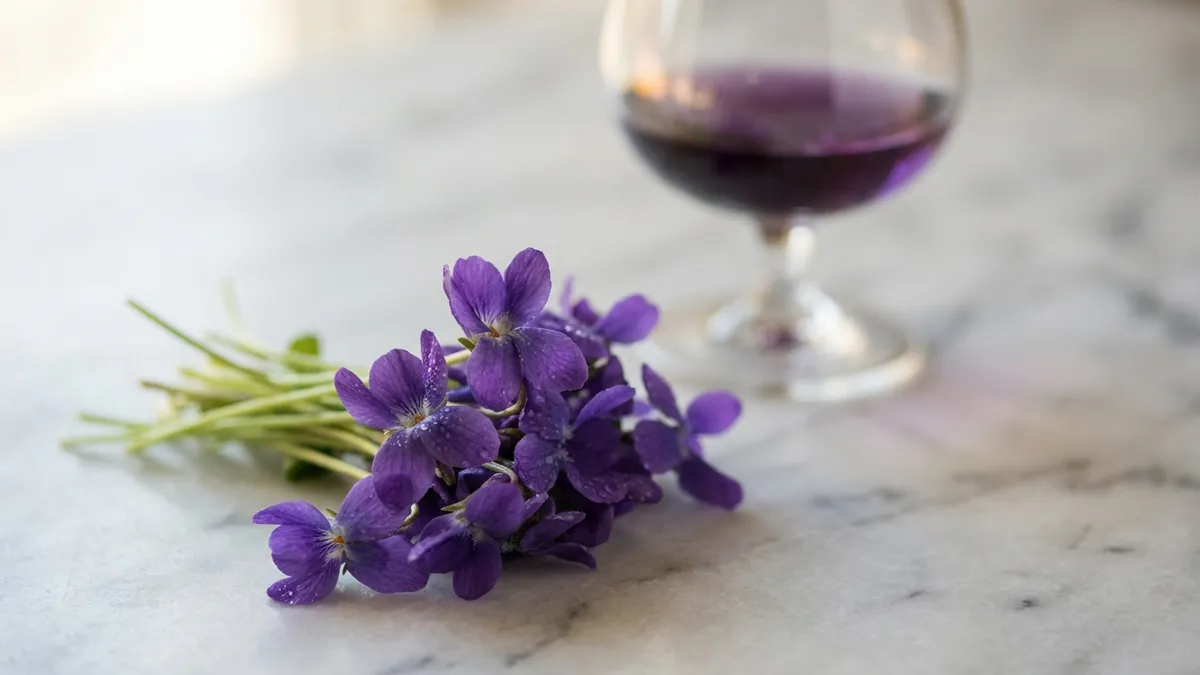
The intense violet aroma in Petit Verdot is not a coincidence — it is a measurable fingerprint. The compound responsible is called alpha-ionone, an aroma molecule that the grape produces in higher concentrations than almost any other red variety. Alpha-ionone is the same compound that gives violets and certain irises their signature scent.
In Petit Verdot, the floral lift is most intense in young wines from cooler sites, where it sits prominently on top of the dark fruit. As the wine ages, violet softens and merges into a broader bouquet of dried flowers, leather, and tobacco. In warm-climate solo bottlings, ripe black fruit can sometimes overpower the floral note — but a careful sniff still reveals it.
The violet lift in Petit Verdot is not a metaphor. It is alpha-ionone, the same compound that gives violet flowers their scent — measurable in the lab and trainable on the palate.
The Sommy app's aroma training modules help you isolate notes like violet from the broader fruit profile, with side-by-side reference exercises that build pattern recognition over time.
The Bordeaux Blend Role: Why 1 to 5 Percent Matters
The classic question about Petit Verdot is why anyone bothers with a grape that contributes only a few percent of the final blend. The answer is that what it contributes is structural and cannot be replicated by the other grapes.
What Petit Verdot Brings to a Bordeaux Blend
- Color intensity — thick skins deliver more pigment per liter than any of the other Bordeaux grapes
- Tannin reinforcement — adds a firmer backbone, especially in vintages where Cabernet does not fully ripen
- Acidity — keeps blends fresh in warm vintages where lower acidity could leave wines flat
- Floral aromatics — the violet note lifts the blend above pure black-fruit density
- Aging structure — concentrated phenolics extend cellaring potential
A typical Médoc classified-growth blend might be 70 percent Cabernet Sauvignon, 20 percent Merlot, 5 percent Cabernet Franc, 4 percent Petit Verdot, and 1 percent Malbec. Pull the Petit Verdot out and the wine loses some of its color, some of its floral lift, and a measurable amount of its aging potential. That is why winemakers fought to keep the grape in the blend even when it ripened unreliably.
For the broader regional picture, see our guides to French wine regions and the differences between Old World and New World tasting style.
Solo Petit Verdot: The New World Rebirth
The transformation of petit verdot wine into a standalone variety has been one of the most interesting grape stories of the last twenty years. Outside Bordeaux, growers in warmer regions discovered that Petit Verdot is remarkably consistent when given enough heat to fully ripen — producing wines of unusual depth, color, and aromatic intensity. The leading regions:
Spain — La Mancha and Castilla
Hot, dry central Spain has emerged as the global capital of solo Petit Verdot. The high plateau climate gives the grape long, hot growing seasons with cool nights, producing wines with deep color, ripe black fruit, firm tannin, and pronounced violet aromatics. Many bodegas now make 100 percent Petit Verdot bottlings as a flagship style. For more on Spain's wine landscape, see our Spanish wine regions guide.
California — Central Valley and Paso Robles
Warm-climate California sites have produced single-varietal Petit Verdot since the 1990s. Lodi, Paso Robles, and the Central Valley deliver ripe, plush expressions with mocha, licorice, and ripe black fruit dominating the typical floral and herbal markers. Cooler North Coast sites are too cool for the grape to ripen reliably.
Argentina — Mendoza
High-elevation Mendoza vineyards give Petit Verdot the heat it needs to ripen plus the altitude-driven cool nights that preserve acidity. Argentine bottlings often blend the grape with Malbec, but solo expressions exist and tend to be muscular, dark, and floral — a natural fit for Argentina's grilled beef culture. Our Argentina wine guide maps out the broader regional context.
Australia — Riverland and McLaren Vale
Hot Australian regions ripen Petit Verdot reliably and produce a generous, fruit-forward style with prominent violet, black plum, and a touch of eucalyptus. The grape is often blended with Shiraz to add color and structure, but standalone bottlings are increasingly common. See our Australian wine guide for regional context.
Other Warm Regions
Israel, South Africa, and Virginia all have small but growing plantings. Virginia is a particularly interesting case — its hot, humid summers suit the grape, and the state's producers are leading a North American Petit Verdot movement.
Petit Verdot vs Cabernet Sauvignon: Head to Head
The two grapes are often confused in blind tastings — both are dark, tannic, and structured. Here is how to tell them apart.
| Trait | Petit Verdot | Cabernet Sauvignon | |-------|-------------|-------------------| | Color | Opaque inky purple | Deep ruby to opaque | | Body | Full | Medium-full to full | | Tannin | Very firm, dense | High, gripping | | Acidity | Bright, lifted | Firm | | Primary fruit | Black plum, blueberry | Blackcurrant, black cherry | | Signature notes | Violet, black olive, leather | Cassis, cedar, tobacco | | Ripening | Very late | Late | | Climate | Warm to hot only | Moderate to warm | | Solo bottling tradition | New World, recent | Global, centuries old |
The fastest way to separate them blind is the floral note. Cabernet Sauvignon leans toward cassis and cedar with a structural backbone. Petit Verdot leads with violet, black plum, and black olive, with even deeper color and a slightly more savory profile. For a structured framework on tasting two related wines side by side, see our how to compare two wines guide.
Food Pairings: Big Wine, Big Food
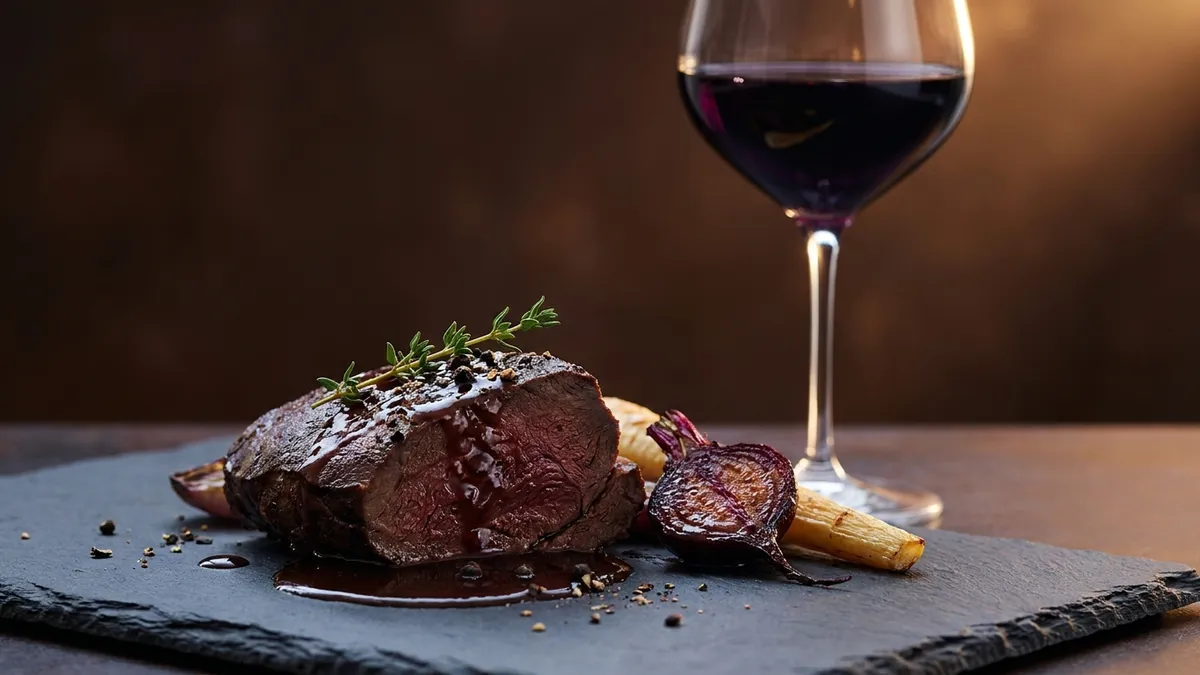
The combination of full body, firm tannin, and savory herb notes makes Petit Verdot a classic match for rich, slow-cooked, deeply flavored food. The grape struggles with anything delicate or lightly seasoned — its intensity overwhelms subtle dishes — but shines with meat, game, and umami-heavy preparations.
What to Pair With Petit Verdot
- Roast venison and other game — the wine's savory herb notes echo the gaminess
- Braised short ribs and oxtail — full body matches deep richness
- Lamb shanks with rosemary — the herbal lift in the wine echoes the rosemary
- Beef stew and bourguignon — tannin cuts through the heavy braise
- Hard aged cheeses — Manchego, aged cheddar, Parmigiano
- Mushroom-heavy dishes — the umami matches the wine's earthy edge
- Grilled steak with peppercorn crust — classic high-tannin red pairing
What to Avoid
Skip Petit Verdot with delicate fish, raw seafood, lightly seasoned poultry, cream-based dishes, or anything aggressively spicy. The wine's tannin and intensity will flatten subtle flavors. For a broader pairing framework, see our wine food pairing guide and wine pairing rules.
Aging: How Long Does Petit Verdot Last?
Petit Verdot has serious aging potential thanks to its high tannin, strong acidity, and concentrated phenolics. The grape's structure outlasts most New World reds and rivals top Cabernet Sauvignon in cellaring potential.
- Everyday solo Petit Verdot: drink within 3 to 7 years of the vintage. Bright, fruit-forward, with prominent violet aromatics.
- Top New World single-varietals: peak between 10 and 15 years. Develops dried fruit, leather, tobacco, and graphite as the violet softens.
- Bordeaux blends with significant Petit Verdot: contributes to wines that age 20 to 50 years from classified-growth Médoc estates.
- Spanish La Mancha bottlings: surprisingly long-lived for the price point, often peaking at 8 to 12 years.
As Petit Verdot ages, the inky purple color fades to garnet-brick, the violet softens into a broader floral bouquet, and the savory leather and graphite notes become more prominent. The firm tannin slowly resolves into velvet. For more on how wines evolve in the bottle, see our guide to tasting young vs aged wine.
How to Taste Petit Verdot Like a Pro
The grape rewards careful, methodical tasting. To get the most out of a glass:
- Serve at a true red-wine temperature — 62 to 65 degrees Fahrenheit. Too warm and the alcohol dominates; too cold and the violets close down. See our wine serving temperature chart for full guidance.
- Decant young examples for at least 30 minutes — the firm tannin softens noticeably with air, and the floral aromatics open up.
- Use a Bordeaux glass, not a Burgundy bowl — the narrower rim concentrates the violet and graphite notes.
- Sniff first for violet, then dig for the savory layer — the floral lift sits on top of black olive, leather, and herb.
- Compare a Bordeaux blend with a solo bottling — a Médoc next to a La Mancha pure Petit Verdot reveals exactly what the grape contributes.
The Sommy app has a guided tasting walkthrough that flags the violet, black plum, and graphite notes in real time as you taste. Visit sommy.wine to start working through the grape varieties one at a time.
Why Petit Verdot Is Worth Seeking Out
Petit Verdot is the grape that almost disappeared and came back stronger. Its journey from neglected fifth-place blender to flagship solo variety across three continents is one of the more interesting modern wine stories. For tasters building a structured grape vocabulary, it offers something few other reds do — a recognizable floral fingerprint sitting on top of muscular structure.
Pair this guide with our noble grapes overview and our deep dives on Malbec and Tannat to round out the deep, dark, age-worthy reds in your tasting library.
Frequently Asked Questions
What does petit verdot wine taste like?
Deep inky purple with very firm tannin and high acidity. The signature aromas are intense violet florals, black plum, blueberry, black olive, dried herb, leather, and a graphite mineral edge. Cool-climate examples lean herbal and savory. Warm-climate solo bottlings show ripe black fruit, mocha, and licorice. Alcohol typically lands between 13.5 and 14.5 percent.
Why is petit verdot called the fifth Bordeaux grape?
Bordeaux's classic red blend traditionally uses five grapes: Cabernet Sauvignon, Merlot, Cabernet Franc, Petit Verdot, and Malbec. Petit Verdot is the smallest contributor by volume, usually 1 to 5 percent of the final blend, but its role is structural — it adds deep color, firm tannin, and a violet floral lift that lifts the whole wine. Hence fifth grape, never first.
Where is petit verdot grown?
Its historical home is the Médoc on Bordeaux's Left Bank, where it is a minority blending grape. Modern solo bottlings come mainly from warm New World regions: Spain's La Mancha and Castilla, California's Central Valley, Argentina's Mendoza, Australia's Riverland and McLaren Vale, plus pockets in Virginia, Israel, and South Africa. The grape needs heat to ripen reliably.
Why was petit verdot almost abandoned in Bordeaux?
Petit Verdot ripens later than every other Bordeaux red — sometimes weeks after Cabernet Sauvignon. In the cool, damp Médoc, it often failed to reach full ripeness, producing harshly tannic, vegetal wine. Through the 20th century, plantings collapsed as growers replaced it with reliable Merlot. Climate change and warmer vintages have since reversed the trend, with new plantings increasing across the Médoc.
Petit verdot vs cabernet sauvignon — what is the difference?
Both are dark, tannic, age-worthy reds, but petit verdot is even darker in color, more aromatic, and more floral. Cabernet Sauvignon leads with blackcurrant and cedar; petit verdot leads with violet, black plum, and black olive. Petit verdot ripens later, has thicker skins, and brings more pigment per liter. In a Bordeaux blend, Cabernet builds the structure and petit verdot adds intensity and lift.
What food pairs best with petit verdot?
The combination of deep color, firm tannin, and savory herb notes makes petit verdot a classic match for game, lamb, and slow-cooked meat dishes. Try it with roast venison, braised short ribs, lamb shanks with rosemary, beef stew, hearty mushroom dishes, or aged hard cheeses. Avoid delicate fish and lightly seasoned poultry — the wine will overwhelm them.
How long does petit verdot age?
Top examples age extremely well thanks to high tannin, strong acidity, and concentrated phenolics. Single-varietal bottlings from quality New World producers typically peak between 10 and 15 years from the vintage, with the best examples evolving for 20 years or more. As blend partner in classified Médoc Bordeaux, petit verdot contributes to wines that age 30 to 50 years.
Is petit verdot a good wine for beginners?
Solo petit verdot is a bold introduction — deep, tannic, and intensely flavored, more in the league of Malbec or Tannat than easy-drinking Merlot. Beginners may find it powerful at first, but the perfumed violet aromatics give it real charm. Try it with rich, fatty food rather than on its own, and serve at a true red-wine temperature around 64 degrees Fahrenheit.
Sommy Team
LinkedInFounder & Wine Educator
The Sommy Team is building the world's most approachable wine education app, helping beginners develop real tasting skills through structured courses and AI-guided practice.