Malbec vs Merlot: Side by Side (Taste, Tannin, Food)

By the Sommy Team — AI-assisted, human-edited.
Updated Oct 29, 2026
Contents (9)
- Malbec vs Merlot, in One Paragraph
- How Do Malbec and Merlot Compare Side by Side?
- Which Has Softer Tannin, Malbec or Merlot?
- Is Malbec or Merlot Sweeter?
- Does the Region Change the Answer?
- Which Is Better With Steak and Other Food?
- Which Should a Beginner Pick First?
- Are Malbec and Merlot Related?
- How to Taste Malbec and Merlot Side by Side Tonight
TL;DR
Malbec has thick skins and pours inky purple with more grip; Merlot grows larger, thinner-skinned berries and usually feels rounder. Region can flip that: Cahors makes Malbec at its most tannic, Mendoza makes it velvety, and Right Bank Bordeaux Merlot is fresher than warm-climate Merlot. Both are dry, and they are half-siblings.
Malbec vs Merlot comes down to skin and place. Malbec is the thicker-skinned grape that pours inky purple and dries your gums more; Merlot is usually the rounder, lighter-coloured glass. Where each one grew can flip that order, so the table below sorts them by the region on the label.
Malbec vs Merlot, in One Paragraph
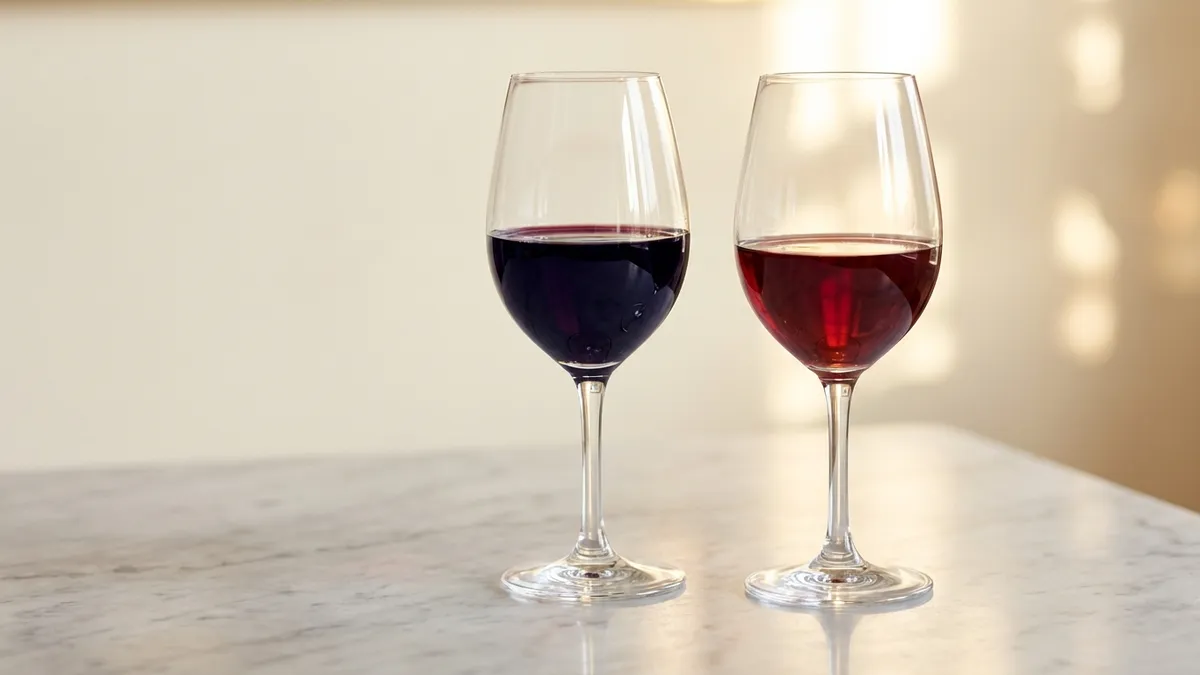
Both are dry red grapes from south-west France, and both taste of plum. Malbec has thick skins and needs more sun and heat than Merlot to ripen, so it gives an inky, purple-black wine with firm tannin (the drying grip on your gums). Merlot grows larger berries in loose bunches, so its wine is lighter in colour and rounder. Region matters as much as grape. Cahors in France makes Malbec at its darkest and most tannic, while high Mendoza vineyards make it plummy and velvety. Right Bank Bordeaux Merlot is picked earlier and tastes fresher than late-picked warm-climate Merlot. The two grapes are half-siblings with one shared parent.
How Do Malbec and Merlot Compare Side by Side?
Sort them by the place on the label first, because each grape has a firm version and a soft one. If the label says Cahors, expect the darkest glass and the most grip of the four. If it says Mendoza or a warm New World region, expect plush fruit and little roughness.
| Bottle | Colour | Smells of | Grip | Pick it if |
|---|---|---|---|---|
| Mendoza Malbec (Argentina) | Inky purple, magenta rim | Ripe plum, blackberry, a floral lift | Medium, velvety | You want a big, soft red for grilled meat |
| Cahors Malbec (France) | Near-black | Blackberry when young; tobacco, coffee and meat with age | High, firm | You like black coffee and fatty, charred meat |
| Right Bank Bordeaux Merlot (Pomerol, Saint-Emilion) | Ruby | Red cherry, plum, sometimes a leafy edge | Medium, fine | You want freshness with roast pork, duck or mushrooms |
| Warm-climate Merlot (California, Chile) | Deep ruby | Ripe plum, blackberry, chocolate | Low to medium, soft | You want the softest glass in the row, or a first red |
The single-grape guides go deeper: Malbec and Merlot.

Quick check
One question on what you just read
You want the darkest red with the most grip on your gums. Which label should you pick?
Tap an answer to see how you did.
Which Has Softer Tannin, Malbec or Merlot?
Merlot, in most bottles, because its berries are larger and its skins are thinner, so less tannin reaches the wine. Tannin and colour both come mainly from grape skins, so more skin per drop of juice means a darker, grippier glass.
Malbec is a thick-skinned grape with high tannin, and it needs more sun and heat than Cabernet Sauvignon or Merlot to ripen. Merlot grows loose bunches of large berries with thinner skins than Cabernet Sauvignon, and it ripens up to two weeks earlier.
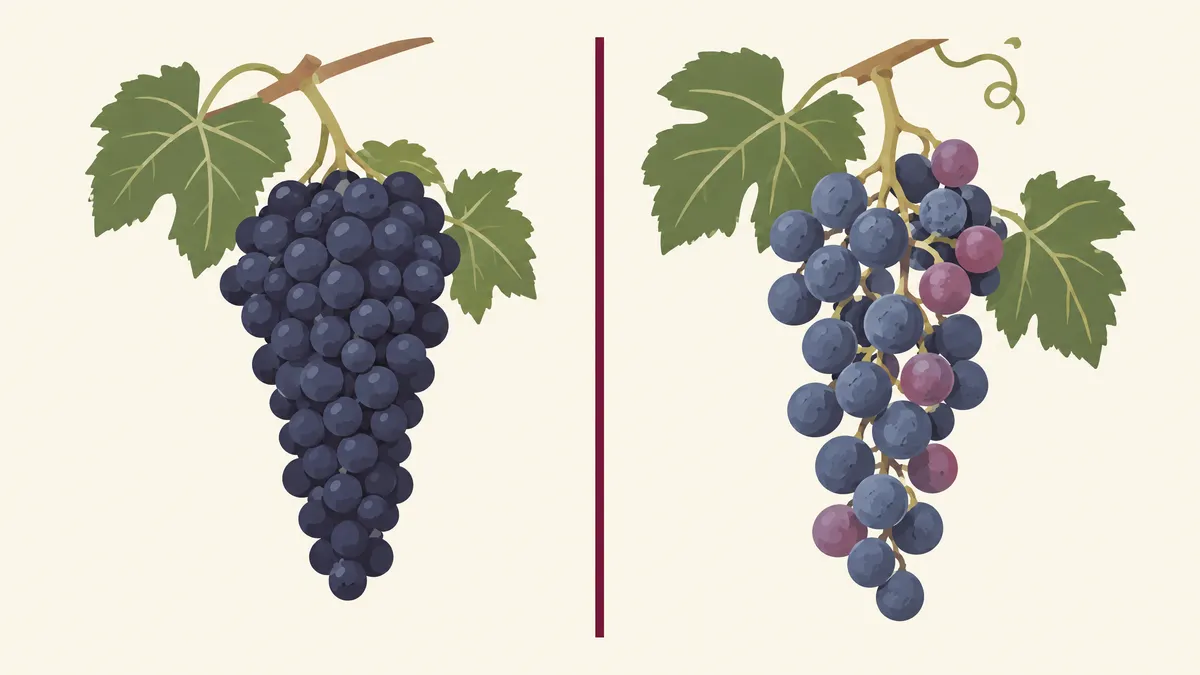
The exception is high-altitude Argentine Malbec, covered in the region section below. For how grip feels, see what tannins are; the Malbec vs Cabernet Sauvignon table adds a third grape.
Is Malbec or Merlot Sweeter?
Neither. Both are normally dry (no sugar you can taste; fruity is not sweet). Ripe plum and blackberry smell sweet, so the brain expects sugar before the wine reaches the tongue. Late-picked styles fool it most, which is why a warm-climate Merlot or a Mendoza Malbec can taste sweeter than it is.
If a red tastes sweet to you, check the region before blaming sugar: a warm, ripe style is the usual cause. The sweet vs dry wine guide shows how to tell the two apart.
Does the Region Change the Answer?
Yes, more than the grape name does. Malbec's two homes, the limestone of Cahors and the high Andes foothills, pull it in opposite directions. Merlot splits by harvest date: picked early for freshness in Bordeaux, or picked late for plush fruit in warmer regions.
In Cahors, in south-west France, Malbec is the main red grape. Limestone soils help it keep acidity (the tartness that makes your mouth water) late into the season. The result is Malbec at its darkest and most tannic, with blackberry when young and tobacco, coffee and meat as it ages. The South-West France wine guide covers the rest of the region.
Mendoza vineyards sit between 800 and 1,500 metres up in the Andes foothills, where cooler air slows ripening. There Malbec turns plummy and fruit-forward with a velvety texture. The Mendoza wine guide maps the high valleys.
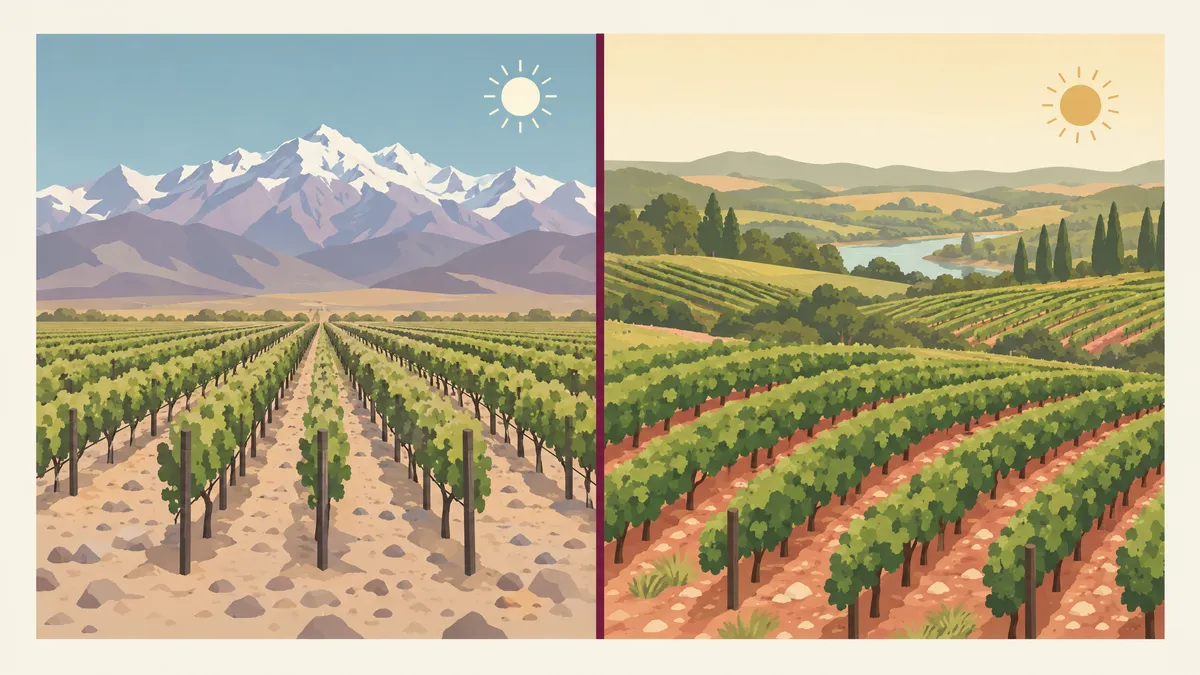
Bordeaux-style Merlot keeps its acidity and gives a medium-bodied wine with red cherry and sometimes a leafy edge. Merlot makes up around 80% of a typical Pomerol blend and about 60% in Saint-Emilion (Bordeaux wine guide). The international style, common in New World regions, is fuller and plummier.
If you want the firmest glass, buy Cahors. If you want the softest, buy Mendoza Malbec or a warm-climate Merlot. If you want Merlot with freshness, buy Pomerol or Saint-Emilion.
Which Is Better With Steak and Other Food?
Malbec for a fatty, charred steak; Merlot for a lean cut or a lighter meat. Fat and protein soften tannin, so a marbled steak can carry a firm red. A lean cut has nothing to cushion the grip, and a firm red tastes harsh beside it.
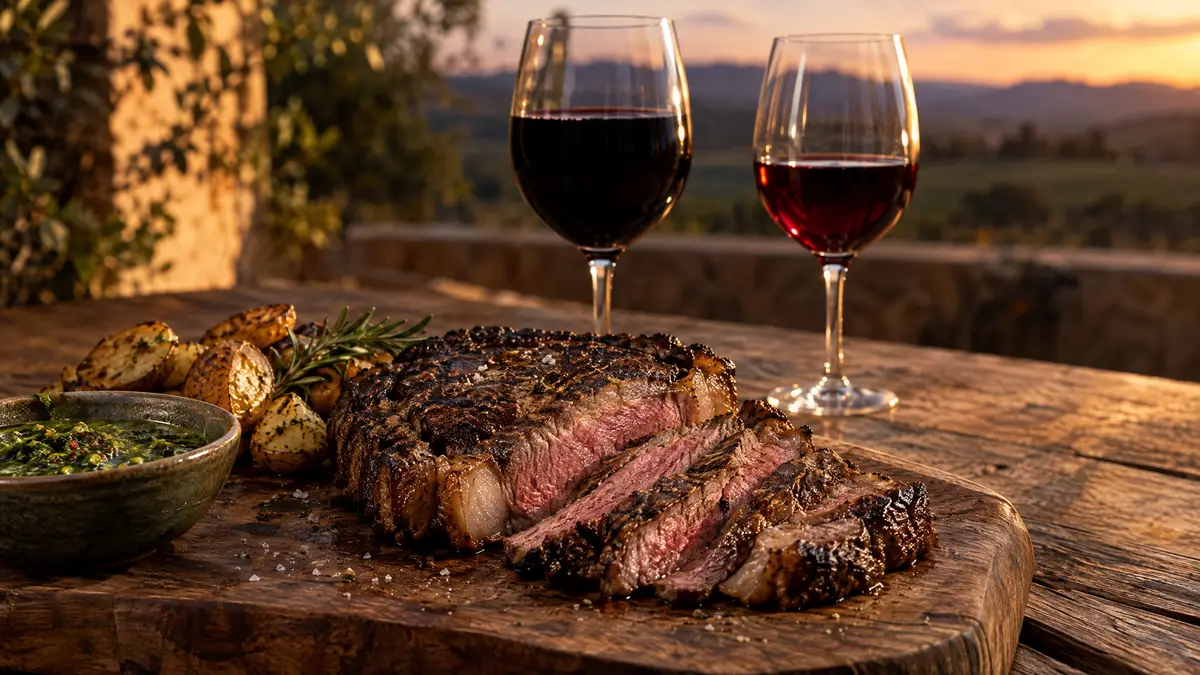
- Ribeye, short ribs or burgers off the grill: Malbec. The fat and char meet its grip, and Cahors suits the fattiest cuts.
- Filet, roast chicken or pork loin: Merlot. Lean meat needs low tannin.
- Mushroom dishes: Bordeaux-style Merlot or an older Cahors, whose leafy or tobacco notes echo the earthiness.
- Chilli heat: the softest bottle on the table, Mendoza Malbec or warm-climate Merlot, because tannin makes heat feel harsher.
The full cut-by-cut chart is in wine with steak.
Which Should a Beginner Pick First?
Start with Merlot or a Mendoza Malbec if drying grip puts you off; start with Cahors if you already like black coffee and strong tea. The soft styles show ripe plum with little roughness, so they teach fruit before structure.
The best wines for beginners list adds more first reds, and the Wine 101 course in Sommy teaches structure in bite-sized lessons. Buy one soft bottle from the table first, then add a Cahors.
Are Malbec and Merlot Related?
Yes, they are half-siblings. A 2009 DNA study found that Merlot's parents are Cabernet Franc and a forgotten grape its authors named Magdeleine Noire des Charentes. The same study lists Côt, Malbec's original French name, as a cross of Magdeleine Noire des Charentes and Prunelard, and places it in Merlot's family group.
Argentina made Malbec famous, but the grape is French. It is still the main red of Cahors, and a French label may call it Côt. It lost ground in Bordeaux after a 1956 frost killed 75% of the crop there, while Merlot spread to 266,000 hectares worldwide by 2015. The Argentina wine guide follows Malbec's move to the Andes.
How to Taste Malbec and Merlot Side by Side Tonight
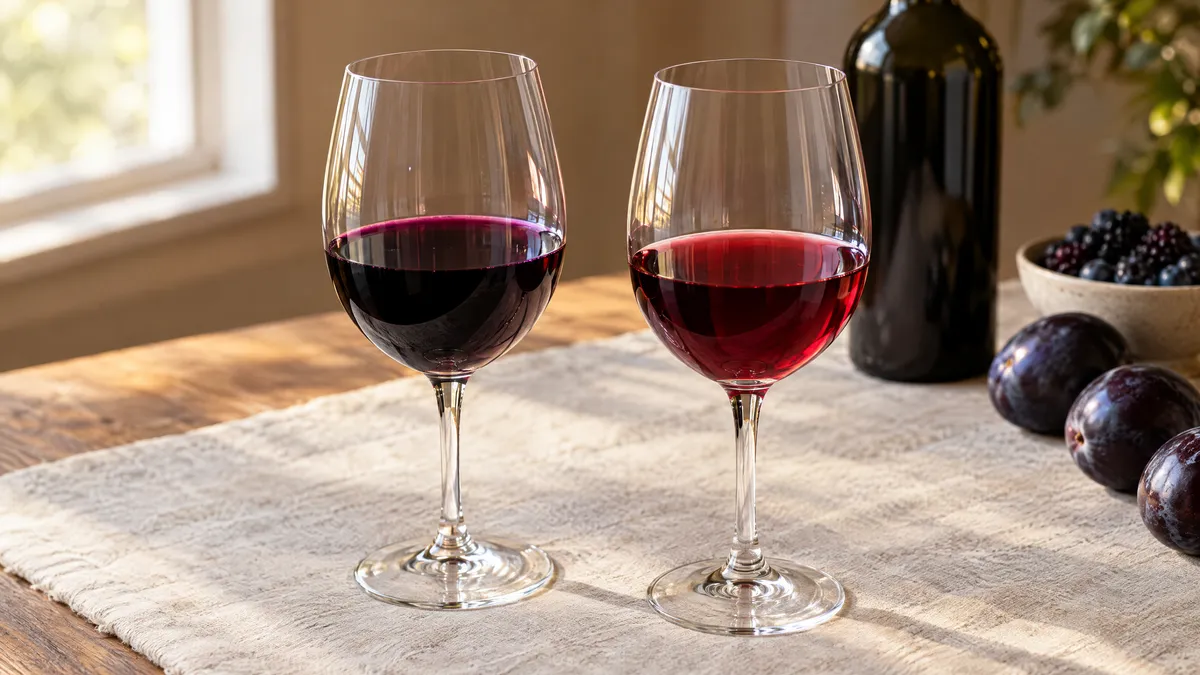
Pour a Mendoza Malbec and a Merlot into two identical glasses, a third full each. Tilt both over a sheet of white paper: the darker, more purple glass is the Malbec in most pairs. Smell each for plum, then sip and hold each for five seconds. The one that leaves your gums drier has more tannin. The method for any pair is in how to compare two wines, and the other grape matchups sit in the grape varieties hub.
Take a photo of both labels in Sommy tonight: its tasting mode walks you through look, smell and taste, then saves each note to your tasting journal. Pour a Cahors beside the same Merlot next weekend and taste the pair again.
Sources
Frequently Asked Questions
Which is sweeter, Malbec or Merlot?
Neither. Both are normally dry reds with no sugar you can taste. Ripe plum and blackberry smell sweet, so the brain expects sugar, and late-picked styles such as warm-climate Merlot and Mendoza Malbec fool it most. If a red tastes sweet, check the region on the label: a warm, ripe style is the usual reason, not leftover sugar.
Which has softer tannin, Malbec or Merlot?
Merlot, in most bottles. Malbec is a thick-skinned grape with robust tannins, while Merlot grows larger berries in loose bunches, with thinner skins than Cabernet Sauvignon. Less skin per drop of juice means less grip. The exception is high-altitude Mendoza Malbec, which is plummy with a velvety texture and can feel as soft as a Merlot.
Are Malbec and Merlot related?
Yes, they are half-siblings. A 2009 DNA study found Merlot's parents are Cabernet Franc and a forgotten grape named Magdeleine Noire des Charentes. The same study lists Côt, the original French name for Malbec, as a cross of Magdeleine Noire des Charentes and Prunelard. The one shared parent places both grapes in the same family.
Is Malbec or Merlot better with steak?
Malbec for a fatty, charred cut such as ribeye or short ribs, because fat and protein soften its grip. Merlot for a lean filet, which has little fat to cushion tannin, and for roast chicken or pork. If the steak comes with chilli heat, pick the softest bottle on the table, a Mendoza Malbec or a warm-climate Merlot.
Do Argentine and French Malbec taste the same?
No. Cahors in south-west France makes Malbec at its darkest and most tannic, with blackberry when young and tobacco, coffee and meaty notes with age. Mendoza vineyards sit 800 to 1,500 metres up, where cooler air slows ripening, and give plummy, fruit-forward Malbec with a velvety texture. Read the region before the grape.
Should a beginner try Malbec or Merlot first?
Merlot or a Mendoza Malbec, if drying grip on your gums puts you off. Both show ripe plum with little roughness, so they teach fruit before structure. If you already like black coffee and strong tea, a Cahors Malbec is a fair first step. Then taste a soft and a firm bottle side by side to learn what tannin feels like.
Sommy Team
LinkedInFounder & Wine Educator
The Sommy Team is building the world's most approachable wine education app, helping beginners develop real tasting skills through structured courses and AI-guided practice.