How to Re-Taste a Wine: Getting More from a Second Pour

By the Sommy Team — AI-assisted, human-edited.
Updated Apr 29, 2026
Contents (11)
- TLDR
- How to Re-Taste a Wine, in One Paragraph
- What Re-Tasting Wine Actually Is
- Why a Second Pour Matters
- A Simple Re-Tasting Protocol
- What Each Wine Style Does on a Second Pour
- The Next-Day Test
- What Not to Do
- How Re-Tasting Changes Pairing Decisions
- How to Build Re-Tasting Into a Practice Routine
- The Bottom Line on Re-Tasting Wine
TL;DR
Retasting wine means pouring the same bottle a second time, 30 to 60 minutes later or the next day, to track how oxidation shifts aroma, tannin, and finish. Pour two glasses 30 minutes apart, taste in alternation, and write what changes. Some wines bloom with air; others fade fast.
TLDR
Retasting wine means pouring the same bottle a second time, 30 to 60 minutes later or the next day, to track how oxidation shifts aroma, tannin, and finish. Pour two glasses 30 minutes apart, taste in alternation, and write what changes. Some wines bloom with air; others fade fast.
How to Re-Taste a Wine, in One Paragraph
To retaste wine, pour two small glasses from the same bottle about 30 minutes apart, taste them in alternation, and write down every shift in aroma, tannin, fruit, and finish. Wines often open up — fresh primary fruit gives way to secondary aromas (the savory, earthy, or buttery notes that develop with age and air), tight tannin softens, and reductive notes blow off. Some wines improve dramatically over an hour; tight young Bordeaux and reductive young Burgundy whites are classic examples. Others fade fast, especially delicate older reds, light Pinot Noir, and aromatic whites. The next-day pour, sealed with a vacuum stopper, reveals the longest horizon. The exercise teaches you which wines need air and which to drink fast.
What Re-Tasting Wine Actually Is
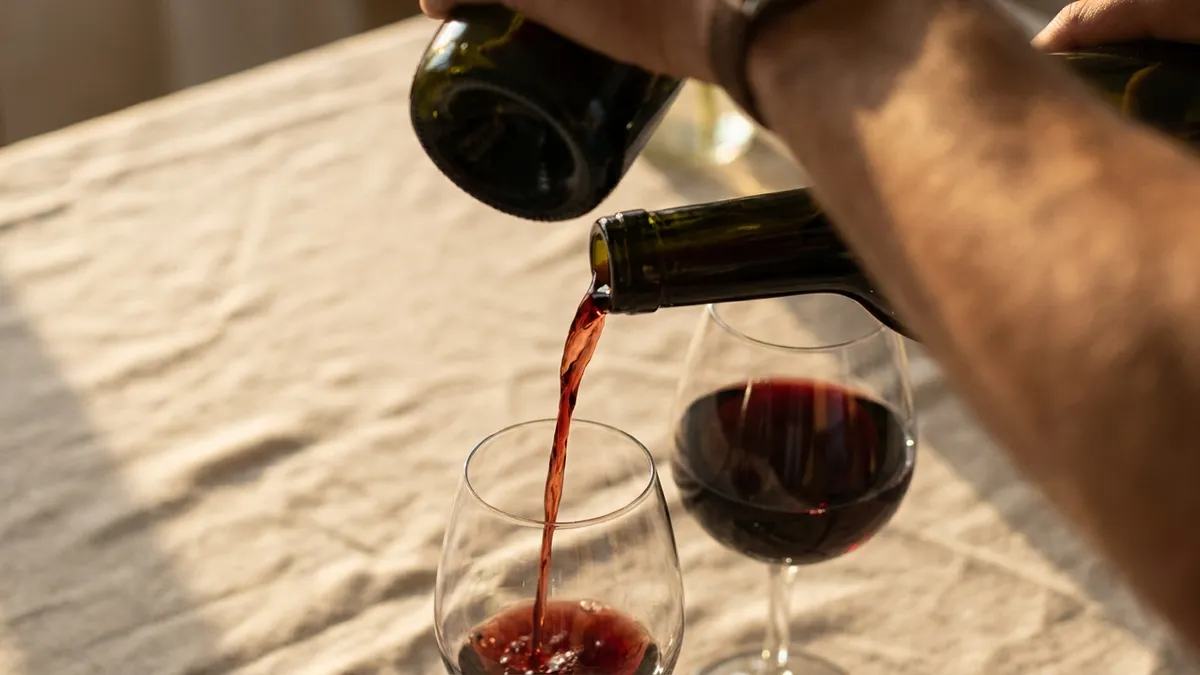
Re-tasting is the simple act of pouring the same wine again after a gap of minutes, hours, or a full day, and comparing how it has changed. The first pour is the snapshot. The second pour is the trajectory. Together, they tell you something neither glass can tell you on its own.
The exercise sits between two more familiar wine practices. Decanting moves the whole bottle into a wider vessel for a fixed window, then serves it. Aerating in the glass uses a swirl to release a few aromas right before a sip. Re-tasting is different — it is a deliberate comparison exercise across two real time points, with the goal of learning how the wine evolves. You are not chasing a single peak moment. You are reading the shape of the curve.
A second pour answers questions a single sip cannot. Did this wine just need air? Was the first impression accurate or coloured by the bottle popping? Will another hour help, or have we already passed the best window? Without a comparison, all of these are guesses. With one, they are data.
Why a Second Pour Matters
Three things change between the first sip and a second pour 30 to 60 minutes later, and each one tells you something different about the wine.
Oxygen Reshapes Tannin and Burns Off Reduction
Tannin (the drying, gripping sensation in red wines) sits in long polymer chains in a sealed bottle. Once oxygen reaches the wine, those chains slowly reorganize into shorter, less astringent forms. A tight young red that scoured the gums on first pour can feel rounder and more integrated 45 minutes later. Our understanding tannins, acidity, and body guide covers the underlying structure.
The same air also dissipates reductive aromas — the smell of struck match, burnt rubber, or boiled cabbage that sometimes shows up on screwcap whites and tight young reds. Reduction blows off in 15 to 30 minutes of contact with air. The second pour often smells transformed.
Aromatics Lift From the Liquid Into the Headspace
Volatile aromatic molecules are partly trapped in the liquid in a freshly opened bottle. Air contact and gentle agitation release them into the headspace — the air above the wine in the glass, which is what your nose actually samples. A second pour of the same bottle has a richer aromatic signal because more molecules have escaped the liquid since opening.
This is the same mechanism that makes a swirled wine smell more expressive than a still one. Re-tasting is just swirling at the bottle scale across a longer window.
Fragile Aromas Fade
Going the other direction, the most delicate aromas — fresh red fruit in light Pinot Noir, lemon-blossom in young Riesling, leather and dried mushroom in mature Burgundy — are also the first to dissipate. Wines built on these fragile notes often peak on the first pour and decline from there. The second pour lets you see whether you are watching a wine bloom or fade.
A Simple Re-Tasting Protocol
The exercise works best when it is structured. The whole point is comparison, and comparison requires consistent conditions across both pours.
Step 1: Pour Two Small Glasses 30 Minutes Apart
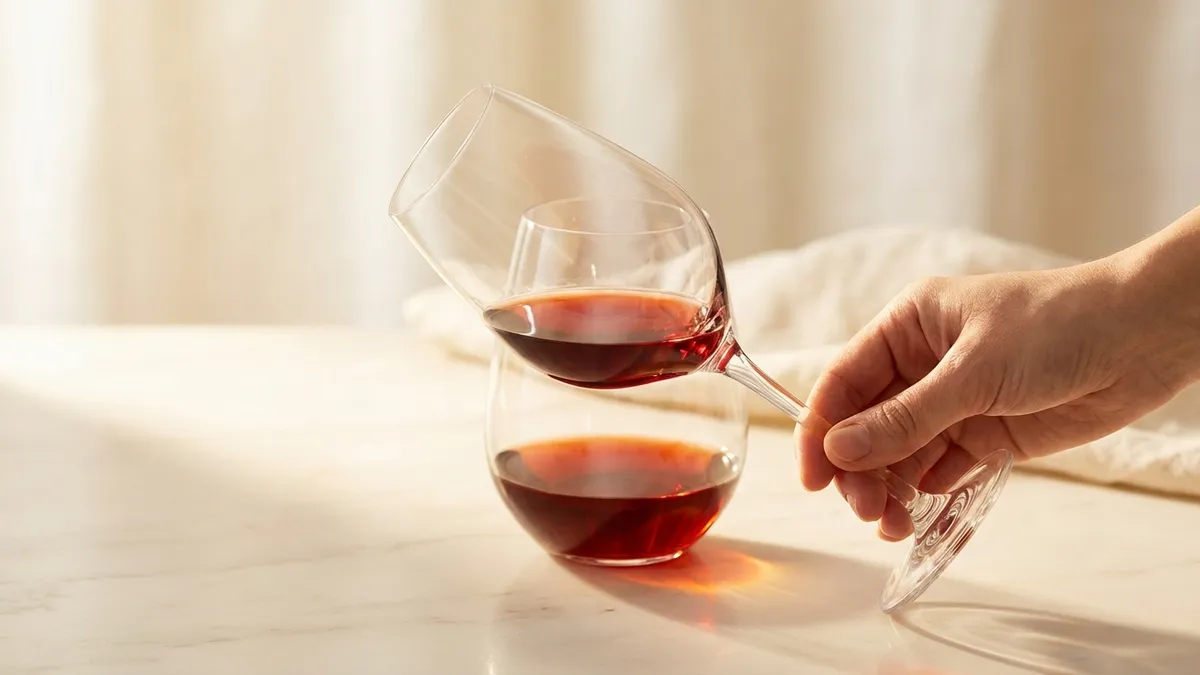
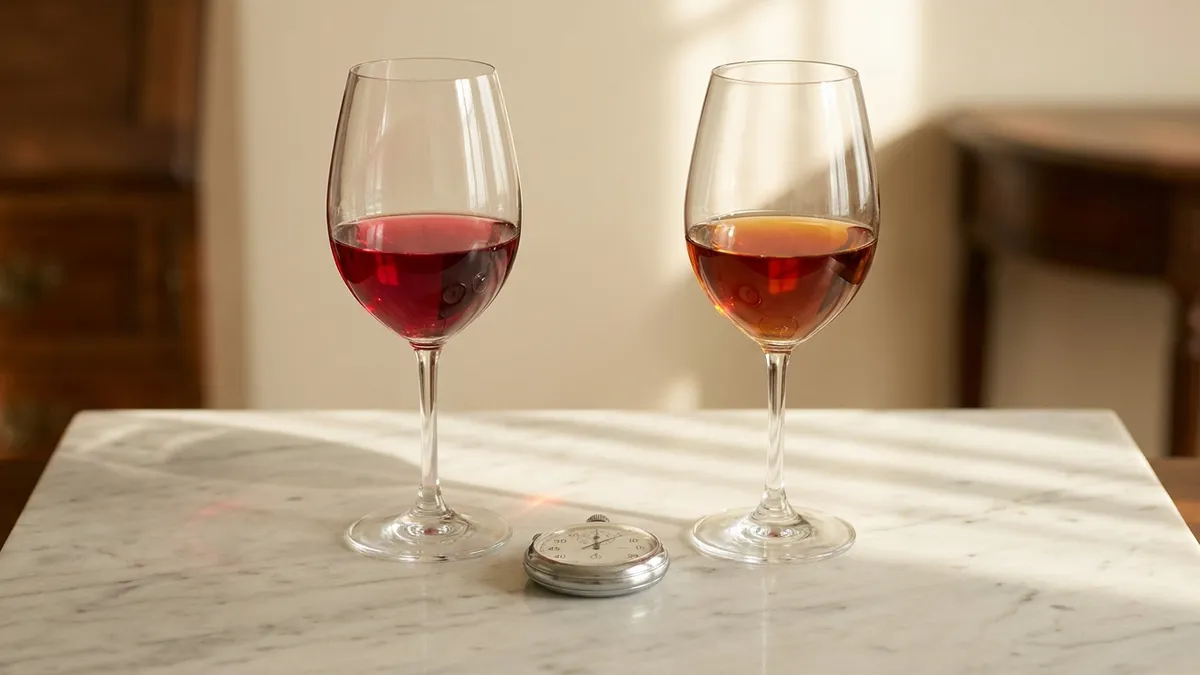
Pour about two ounces into the first glass right after opening. Label it mentally as glass A. Set the bottle aside, lightly recorked. Wait 30 minutes. Pour another two ounces into a second matching glass and label it glass B.
You now have two pours of the same wine: one freshly opened, one slightly aerated through bottle headspace. The 30-minute gap is the minimum window where most young reds and reductive whites show real change. For tighter young reds, extend to 60 minutes.
Step 2: Taste in Alternation
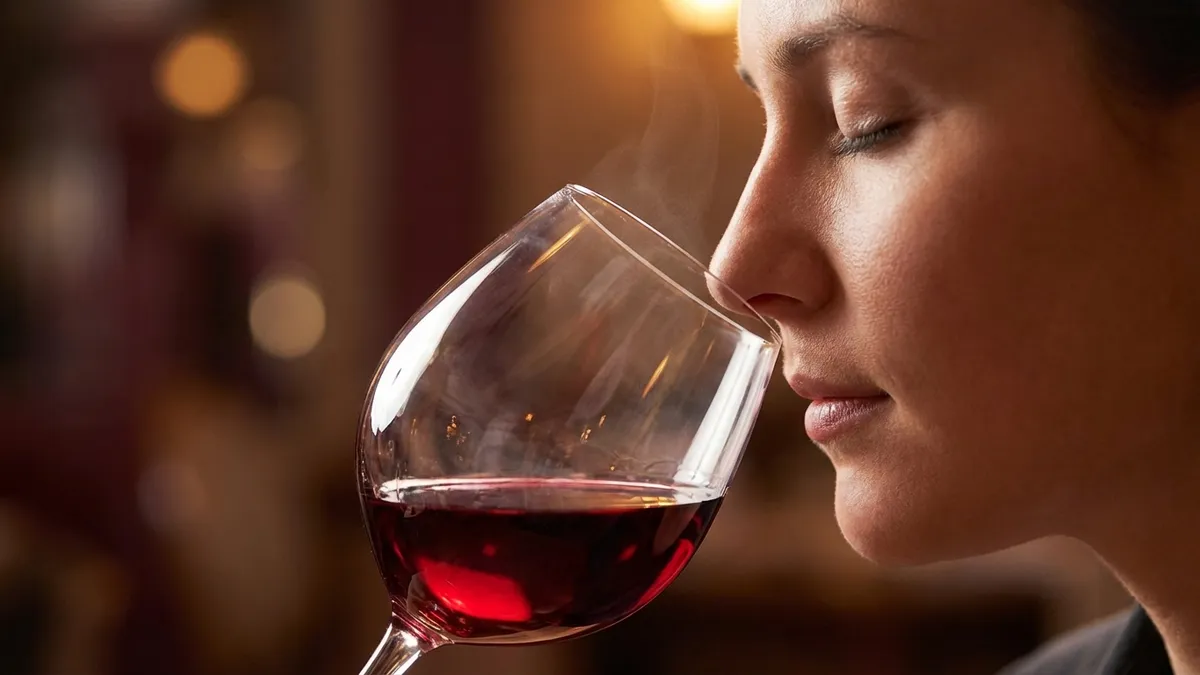
Smell A, then B. Sip A, then B. Note acidity, fruit intensity, tannin grip, finish length, and overall balance for each. Direct alternation is non-negotiable — your palate forgets exact intensities within minutes, and sequential tasting will tell you very little.
The Sommy app's structured tasting flow logs the same wine across multiple time points, so the rating you gave at minute zero is right next to the rating you gave at minute 30. Patterns emerge after a handful of sessions.
Step 3: Write What Shifted
A short note per pour is enough. Force yourself to commit to specific shifts rather than vague impressions. "Tannin softer in B, fruit lifted, oak more integrated, finish a touch shorter" beats "B is better." The wine tasting notes template guide has structures you can copy.
Step 4: Reset Your Palate Between Sips
Sip room-temperature water and eat half a plain, unsalted cracker between A and B. Skip cold water, cheese, and coffee — they all flatten the next assessment. A 60-second nose break breaks olfactory habituation. Our wine palate fatigue guide covers the full reset routine in detail.
What Each Wine Style Does on a Second Pour
Different wines move on different timelines. Knowing the rough shape of each curve tells you when to retaste and when to skip the exercise entirely.
Young, Tannic Reds — Bloom Over 30 to 90 Minutes
The biggest gainers. Young Cabernet Sauvignon, Syrah, Nebbiolo, Aglianico, and structured Bordeaux blends often start tight and angular and finish the first hour expressive and balanced. Tannin softens, fruit lifts, oak integrates. The second pour at 45 minutes commonly outperforms the first.
Wines under ten years old with high tannin and dense fruit are the prime targets. Our tasting young vs aged wine guide goes deeper on what the curve looks like at different ages.
Mid-Aged Reds — Modest Lift, Slow Decline
Reds between ten and twenty years old usually gain a modest amount of aromatic lift in the first 15 to 30 minutes, then plateau, then start fading after about two hours. The second pour at 30 minutes is often the best moment. After that, fragile aromas start to retreat.
Mature Reds — Often Fade on the Second Pour
Wines over twenty years old are at the edge of their lives. The most distinctive aromas — leather, dried mushroom, dried cherry, forest floor, the tertiary aromas that develop with bottle age — are fragile and dissipate within minutes of air. A second pour 30 minutes later often smells thinner than the first.
For mature wines, retasting is a diagnostic tool, not an improvement strategy. If the second pour fades quickly, the wine is on its way down. Drink it now.
Aromatic Whites — Lose Freshness Fast
Riesling, Sauvignon Blanc, Albariño, Vinho Verde, and other delicate aromatic whites are built around freshness. The volatile aromatics that make them distinctive are precisely the molecules that vanish first with air. A retaste at 30 minutes usually reads duller than the first pour. The exception is reduction — a struck-match Riesling can bloom in 15 minutes.
Reductive Whites — Open Dramatically
White Burgundy, top Chardonnay, and Riesling sealed under screwcap often show reductive aromas of struck match, flint, or rubber on opening. Air dissipates these in 15 to 30 minutes, revealing the underlying fruit. The second pour is sometimes a different wine.
Orange Wines — Reward Patience
Orange wines (white grapes fermented on their skins, gaining tannin and amber color) often need real air. The phenolic structure resembles a red wine, and the aromatics frequently develop over an hour. Retasting is essential here — the first pour rarely shows the wine's full range. Our orange wine explained guide covers the style end to end.
Sparkling Wines — Skip the Drill
Carbon dioxide is the carrier for sparkling wine's aromatics. A second pour 30 minutes later loses most of the mousse (the persistent stream of fine bubbles) and reads as flat and slightly sweet. Sparkling wines belong on the how to taste sparkling wine protocol, not on a retasting drill.
The Next-Day Test
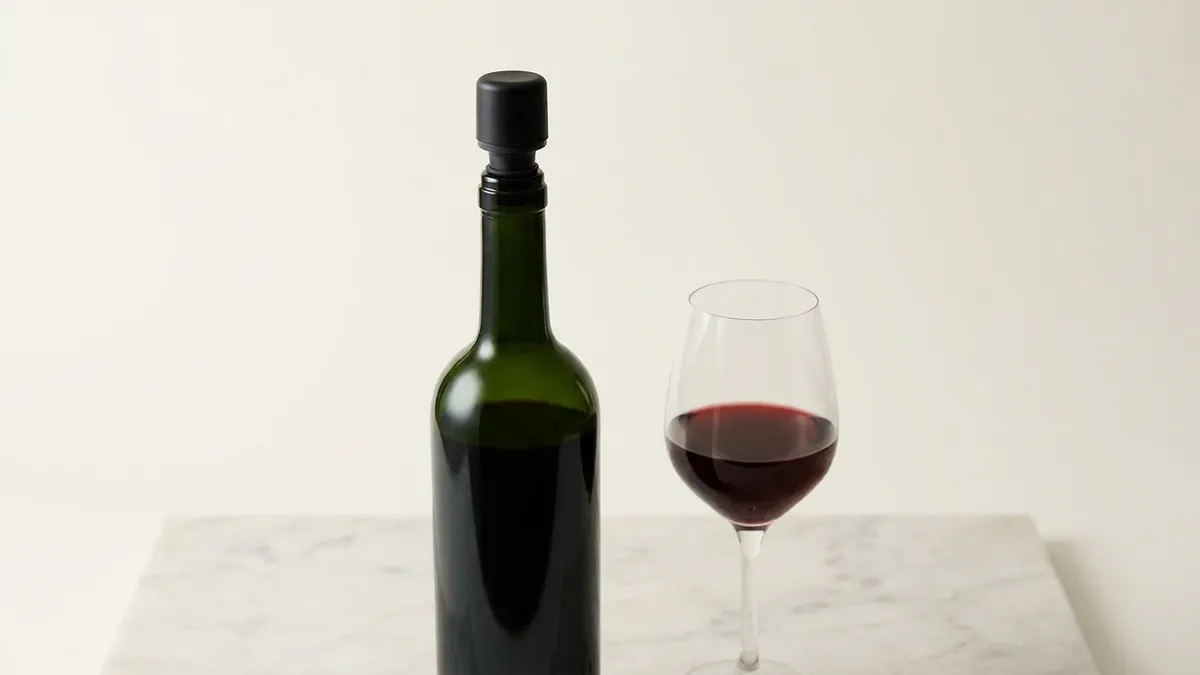
The longest-horizon retaste happens 24 hours later. Recork the bottle with a vacuum stopper — a small device that pumps air out of the headspace, slowing oxidation. Store the bottle upright in the fridge. Yes, reds too. Cold storage slows the chemistry; you will warm the wine back up to room temperature before pouring.
The next day, pour a small glass and taste it side by side with a written note from yesterday's first pour, if you kept one. Three patterns commonly show up.
- Wines that gained: tight, structured young reds often taste better on day two. Bordeaux blends, Nebbiolo, dense Syrah, and tannic Italian reds frequently improve. Their fruit settles, tannin integrates, and the alcohol feels less obtrusive.
- Wines that held: many mid-bodied reds and oak-aged whites taste roughly the same on day two as they did 60 minutes after opening. The plateau lasts.
- Wines that faded: delicate older reds, light Pinot Noir, aromatic whites, and rosé typically taste flatter on day two. The freshness that defined them is gone.
The next-day test is the cheapest learning tool for understanding which wines have stamina and which do not. Two ounces from yesterday tells you something a single dinner cannot.
What Not to Do
Re-tasting fails when the conditions between the two pours are not consistent. A few habits actively undermine the comparison.
Do Not Over-Aerate Between Pours
Aggressive splash-pouring or running the bottle through a Venturi aerator between glass A and glass B compresses the timeline and obscures what air alone would have done. The protocol works because the conditions are simple — bottle, time, glass. Skip the gadgets.
Do Not Warm the Wine
Warming a wine speeds oxidation and shifts perception of alcohol and acidity. The two pours need to be at the same temperature to compare cleanly. If glass A is served at 16°C and glass B sits in your hand for 20 minutes climbing to 20°C, you are not measuring time alone — you are measuring temperature too. Our how temperature affects wine taste guide explains what shifts when serving temperature drifts.
Do Not Refill Glass A Before Tasting B
Topping up glass A with a fresh splash from the bottle just before the comparison defeats the exercise. Glass A is supposed to represent the first pour as it has aged in the glass. Top-ups reset the clock.
Do Not Rush
The 30-minute minimum gap matters. Re-tasting at the 5-minute mark catches almost no aromatic shift. The change is slow and incremental. Patience is part of the learning.
How Re-Tasting Changes Pairing Decisions
Once you know how a wine moves over an hour, food pairing becomes a different conversation. A young, tight Cabernet Sauvignon that opens dramatically over 60 minutes pairs differently from one served immediately on opening. Decanting before the meal, or simply opening the bottle an hour ahead, can shift the wine into a more food-friendly window.
Aromatic whites that fade with air pair best with the first course and the first pour. Tertiary-aromatic mature reds reward the diner who finishes them within an hour. Knowing the curve lets you order the meal around the wine, not the other way around. Our wine and food pairing guide covers the structural rules; re-tasting tells you which wines bend them.
How to Build Re-Tasting Into a Practice Routine
A few habits compound quickly.
- Retaste one wine a week. Pick a midweek bottle. Pour two small glasses 30 minutes apart. Write three lines per pour. After ten weeks you will have a personal map of which styles bloom and which fade.
- Use the next-day pour as a default. Vacuum-stopper everything, save two ounces, and taste it 24 hours later. The data is free.
- Pair with side-by-side tasting. A retaste of one wine and a side-by-side comparison of two related wines train different muscles. Together they cover most of what beginners need.
- Log structure scores at each pour. Sweetness, acidity, tannin, body, alcohol on a 1 to 5 scale. The Sommy app ships with the structure scorecard so the same five numbers exist at minute zero, minute 30, and the next day. Patterns leap off the page.
Sommelier note: Most wines you think are "bad on opening" are actually "tight on opening." A second pour 45 minutes later is the cheapest test that exists for separating the two. Train the habit and you stop blaming bottles that just needed time.
The Bottom Line on Re-Tasting Wine
Re-tasting is not a ritual or a gadget. It is the simplest possible comparison exercise — one bottle, two glasses, two time points, a few honest notes. The drill teaches you what no single sip can: how a wine moves with air, on what timeline, and in what direction.
Some wines bloom over an hour. Some peak on the first pour and fade. Some come back stronger the next day. The only way to know which is which is to actually pour the second glass — and then the third, the next morning — and write down what you find. Short, structured retasting beats long, ambitious tasting every time. The Sommy app's tasting flow is built around exactly this kind of repeated, time-stamped logging, so the patterns you build in your first month carry into every bottle you open after that.
Frequently Asked Questions
What does it mean to retaste a wine?
Retasting wine means pouring the same bottle a second time after the first pour has been exposed to air for a while — usually 30 to 60 minutes later, or even the next day. The goal is to track how oxidation shifts the wine. Aroma, tannin, fruit, and finish often change measurably between the first sip and a second pour. Comparing the two teaches you how a wine evolves with time and air.
How long should you wait before a second pour?
Thirty to 60 minutes is the standard window for noticing real change in young, structured wines. Tight Bordeaux blends, young Nebbiolo, and reductive Chardonnay often need a full hour before the fruit lifts and tannin softens. Mature reds over twenty years old change in 10 to 15 minutes. The next-day test, with a vacuum stopper, shows you the longest-horizon shift.
Which wines change the most on a second pour?
Tight, young, structured reds change the most — young Cabernet Sauvignon, Syrah, Nebbiolo, and Bordeaux blends. Reductive whites like young white Burgundy or sealed-screwcap Riesling also bloom dramatically. Aromatic whites and very mature reds change for the worse, fading rather than opening. Light reds and rosés sit somewhere in between, with modest aromatic lift but quick decline after about an hour.
Can you retaste a wine the next day?
Yes, and it is one of the most useful drills for beginners. Reseal the bottle with a vacuum stopper, store it upright in the fridge — yes, even reds — and pour a small glass 24 hours later. Many young structured reds taste better on day two. Delicate older wines and aromatic whites usually taste worse. The next-day test reveals the wine's stamina more clearly than any single-session aeration.
Is retasting the same as decanting?
No. Decanting transfers the entire bottle into a wider vessel for a fixed window before service. Retasting is a comparison exercise — you drink the wine at two distinct time points and notice the difference between them. You can decant and retaste together, but they answer different questions. Decanting asks how much the wine changes; retasting asks how it changes and on what timeline.
How do you reset your palate between the two pours?
Sip room-temperature still water and eat a plain, unsalted cracker. Step away for 60 to 90 seconds and breathe clean air to break aromatic adaptation. Skip cold water, cheese, coffee, and toothpaste — all of them flatten the next assessment. A short reset routine keeps the second pour honest rather than washed out by the lingering film of the first.
Should you taste the two pours side by side or in sequence?
Side by side is the better drill. Pour two small glasses 30 minutes apart from the same bottle, label them mentally as glass A and glass B, and taste in alternation. Direct comparison reveals shifts that sequential tasting hides — your palate forgets the exact intensity of the first pour within minutes. Two ounces in each glass is plenty for the comparison.
Can retasting tell you if a wine is past its peak?
Yes, more reliably than a single sip. If the second pour smells flat, dull, or vaguely cardboard-like, the wine is fading. If the next-day pour tastes vinegary or sherry-like, oxidation has already taken over. Wines on the way up gain fruit and lift on a second pour. Wines on the way down lose them. The trajectory is the signal — not the absolute quality of either glass.
Sommy Team
LinkedInFounder & Wine Educator
The Sommy Team is building the world's most approachable wine education app, helping beginners develop real tasting skills through structured courses and AI-guided practice.