Wine Cooperatives: How Farmer Co-Ops Shape the Wine World

By the Sommy Team — AI-assisted, human-edited.
Updated Oct 1, 2026
Contents (7)
- What Is a Wine Cooperative, in One Paragraph?
- Where Do Co-Ops Make Most of the Wine?
- How Does a Co-Op Pay Its Growers, and Why Does It Change the Wine?
- Why Do Co-Op Wines Have a Mixed Reputation?
- How Can You Pick a Good Co-Op Bottle?
- Are Co-Ops a Good Source of Wine Under $20?
- Why Did Farmers Start Wine Co-Ops?
TL;DR
A wine cooperative is a winery jointly owned by the farmers who supply its grapes. Co-ops make about 65% of Spain's wine and more than half of France's. Quality follows the pay system: paying by weight rewards big crops; paying for ripe, healthy fruit rewards better wine. Alto Adige's co-ops rival top estates.
A wine cooperative is a winery owned by the farmers who grow its grapes. The way it pays those farmers decides whether its bottles are bulk wine or some of the best value on the shelf. Co-ops make most of the wine in Spain and more than half of it in France, so you have probably drunk one without knowing.
What Is a Wine Cooperative, in One Paragraph?
A wine cooperative is a winery owned jointly by its member growers: they deliver their grapes at harvest, and the co-op makes, bottles and sells the wine. Members keep farming their own plots and share the cellar, the equipment and the sales team. Spain's agriculture ministry said in 2019 that co-ops produce 65% of the country's wine and must. Germany's oldest co-op still working, Winzerverein Mayschoß in the Ahr valley, dates from 1868. On a label the co-op shows up as cave coopérative, cantina sociale, Winzergenossenschaft or cooperativa.
Where Do Co-Ops Make Most of the Wine?
Co-ops dominate the volume regions of southern Europe and parts of Germany. They are strongest where farms are small and grapes are grown in bulk. Sources disagree on the exact European share, so trust the country figures below over any single headline number.
| Country | Co-op words on the label | Co-op share of wine | On the shelf, look for |
|---|---|---|---|
| Spain | Cooperativa, bodega cooperativa | 65% of wine and must (2019) | A named DO, such as Cariñena or Rioja, not just "Vino de España" |
| France | Cave coopérative, cave des vignerons, les vignerons de | More than half; about three-quarters of vin de pays | An AOP place name; in the Languedoc, a named village |
| Italy | Cantina sociale, cantina produttori, Kellerei (Alto Adige) | Around 60% quoted | A DOC or DOCG, and a vineyard or selection name |
| Germany | Winzergenossenschaft, Winzerverein | Slightly under a third; 80% in Württemberg (2008) | A village or vineyard name plus a quality level |
| Portugal | Adega cooperativa | Around 60% quoted | A DOC region on the label |
The German row hides a surprise. About two-thirds of German growers belong to a co-op, yet co-ops make slightly under a third of the wine, because many members farm tiny plots. In the southwest the picture flips: co-ops made 80% of Württemberg's wine and 76% of Baden's in 2008. The German wine regions guide shows where those two sit.
An appellation (a protected place name with rules on grapes and yields) is the first filter on a co-op bottle. If the back label says cave coopérative, cantina sociale or Winzergenossenschaft, check for an appellation before you buy: without one, you are holding the co-op's most basic blend. The appellation explainer covers the tiers country by country.
How Does a Co-Op Pay Its Growers, and Why Does It Change the Wine?
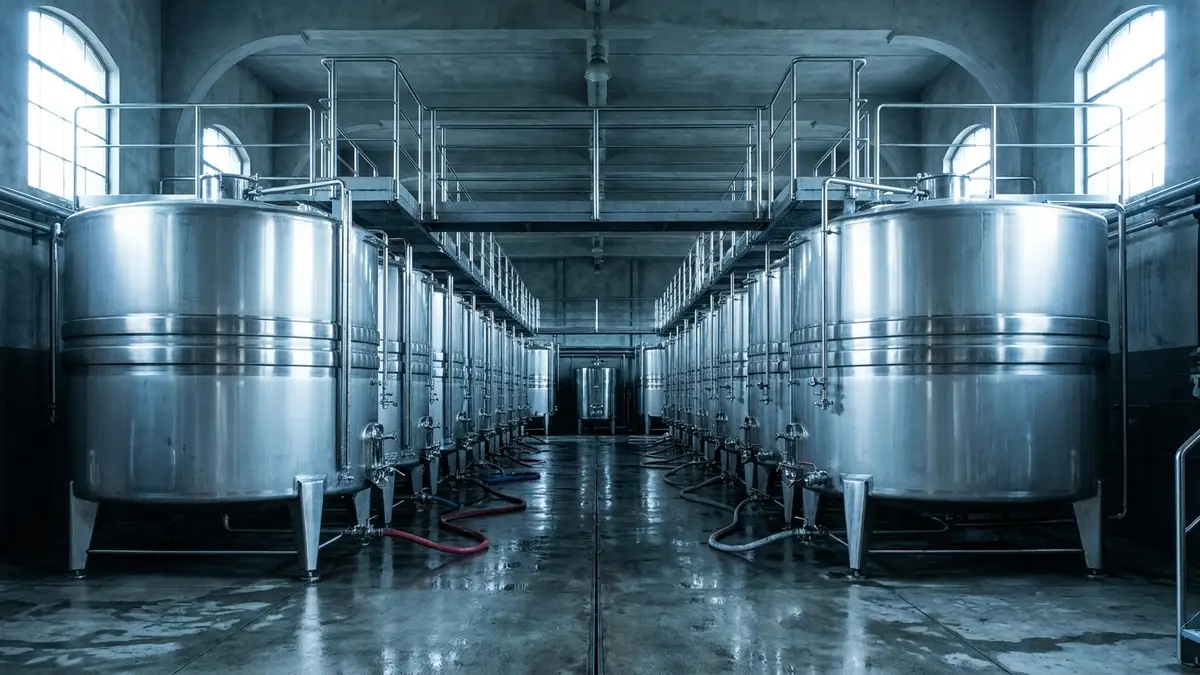
A co-op that pays by weight rewards heavy crops; one that pays for ripeness and healthy fruit rewards smaller, better ones. Two co-ops with the same kind of owners and similar vineyards can make very different wine on that rule alone. Growers farm to the price list, so the pay rule is the biggest quality lever a co-op has.
The mechanism runs through yield (how much fruit each vine or hectare carries). A vine has only so much leaf and sun to ripen its grapes. Spread that across twenty bunches and each one ripens less: lower sugar, less colour, thinner flavour. Cut the vine back to eight bunches and each grape gets more of the vine's work.
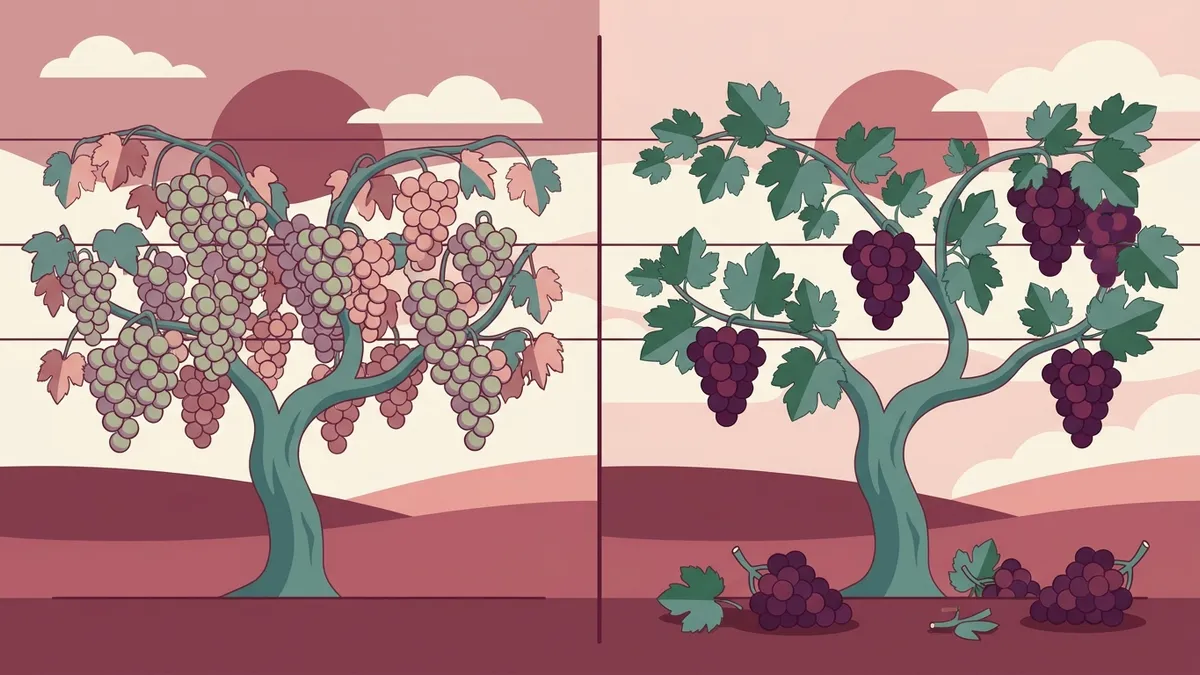
Now put a price on it. If the co-op pays a flat rate per kilo, a member earns most by leaving every bunch on the vine and picking early, before rain or rot can cost weight. The co-op then receives a flood of dilute grapes and makes dilute wine from them. If the co-op pays more for sugar levels, sound fruit and vineyard sites it has inspected, the same member earns more by thinning the crop. The co-op can then sort grapes by vineyard and send the best into a separate, pricier bottling.
That sorting is what you see later as a co-op's tiers: a basic red, a "selection" or reserve, and sometimes single-vineyard wines. A co-op without a quality pay system rarely has much to sort.
Why Do Co-Op Wines Have a Mixed Reputation?
Because most co-op volume is basic wine, but the best co-ops rival top family estates. Wine Spectator notes that in Italy "wine cooperative" can be a pejorative, synonymous with collectives that turn out "oceans of basic wine destined for supermarkets."
Much of that is bulk wine: wine sold by the tanker to bottlers or brands, never under the co-op's own label. The myth is that a co-op label means poor wine. It doesn't: the same magazine calls Alto Adige, in northeastern Italy, an exception, "known for co-ops that produce wines as good as those from top independent winemakers." Almost 70% of South Tyrolean wine is made by co-ops, so the region's reputation largely rests on them. Farms there are small and steep, which is where pooling a cellar makes sense; the Alto Adige wine guide covers its grapes and valleys.
The opposite shortcut, that any co-op is a hidden gem, fails too. The co-op word names the owner; the place name and the tier on the label show which kind of co-op made the bottle.
How Can You Pick a Good Co-Op Bottle?
Look for a specific place and a named top tier on the label, beyond the co-op's name and a grape. A co-op that bothers to bottle a single village or vineyard separately is sorting its grapes, and sorting is the sign of a quality pay system.
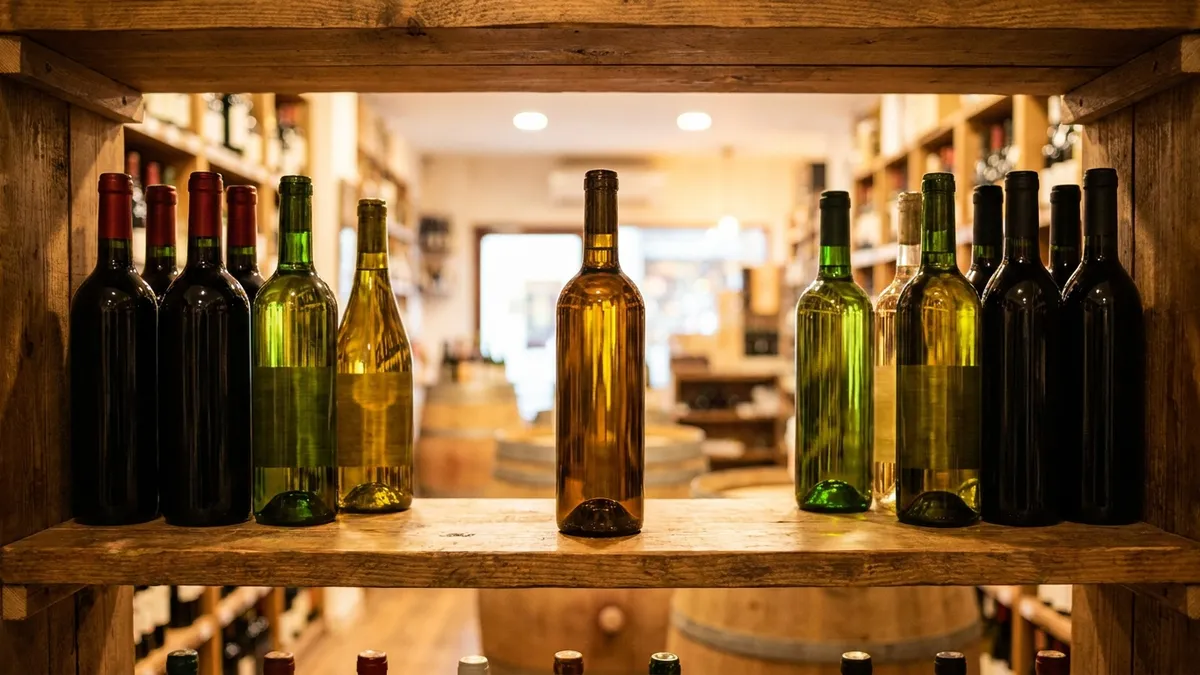
Use these rules in the shop:
- If a co-op bottle names a single village or vineyard, it is usually from the co-op's selection tier. If it shows only a grape and a broad region, expect the everyday blend.
- If it carries an appellation, the grapes came from one defined area under its rules. A co-op wine labelled only with the country name could be a blend from anywhere in it.
- If the co-op sells two or three tiers of the same grape, the middle one is often the best value: selected fruit, without the price of the top cuvée.
- If it comes from Alto Adige, the co-op word is close to a quality signal on its own.
Producer lines and legal small print sit on the back, which the back label guide decodes. For the front, the wine label guide shows where place, grape and tier usually appear.
Are Co-Ops a Good Source of Wine Under $20?
Yes, often, because costs are shared. Copa-Cogeca, the EU body for farmers and their co-ops, describes co-ops that "often include hundreds, if not thousands, of micro and small producers." One cellar, one bottling line and one sales team serve all of them, so the cost per bottle drops.
The co-op structure explains why some of the regions in the good wine under $20 guide stay cheap: southern France, Spain and southern Italy all lean heavily on co-ops. If a budget shelf offers a co-op bottle with an appellation beside a branded wine with none at the same price, take the co-op. The wine budget guide sets out how to split a monthly spend between everyday and better bottles.
Why Did Farmers Start Wine Co-Ops?
To survive. A farmer with a few rows of vines could not afford a press and a cellar alone. Selling grapes to a négociant (a merchant who buys from many growers and sells under their own name) left the price in the buyer's hands. Pooling the harvest gave growers a cellar and a say in the price.
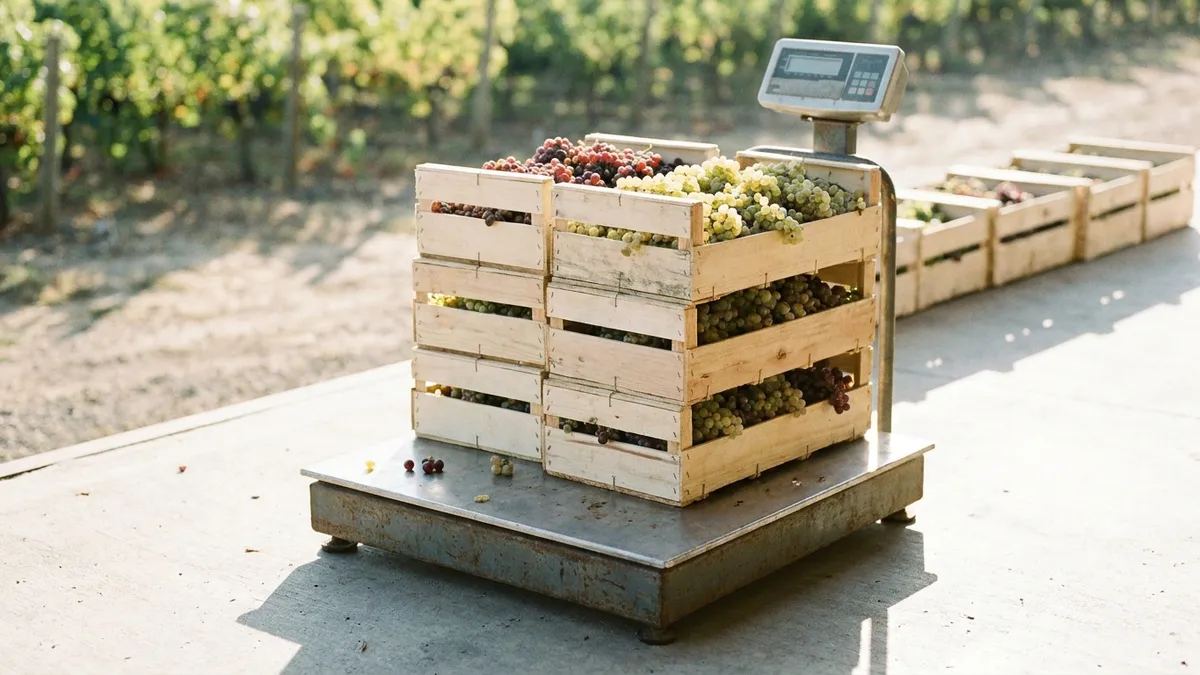
Germany moved first. A growers' union in Neckarsulm, Württemberg, pressed grapes and sold the must together as early as 1834, and a new cooperative law led to Winzerverein Mayschoß in 1868. Alsace had a co-op by 1895. Many more were founded in the early 1930s, in the hard years after the Great Depression.
The Languedoc, France's largest vineyard area, was built on that model, and many of its villages still have a cave coopérative; the Languedoc wine guide maps its appellations. Some co-ops outgrew the structure: South Africa's KWV, long a co-op, later became a regular commercial company.
More styles shaped by how wine is made and sold sit in the wine styles hub. The Sommy app at sommy.wine has bite-sized courses on Spain, Italy and France, where co-ops make so much of the wine. Pour a glass from a co-op bottle tonight, then photograph its label in Sommy's tasting mode and work through look, smell and taste.
Sources
- Wikipedia: Winemaking cooperative
- Spain Ministry of Agriculture, Fisheries and Food: Luis Planas on the Spanish cooperative model (2019)
- Wine Spectator: Italy's Life-Changing White Wines (2016)
- Wikipedia: Trentino-Alto Adige/Südtirol wine
- EFA News: Copa-Cogeca proposals to support the wine sector (2024)
Frequently Asked Questions
What is a wine cooperative?
A wine cooperative is a winery owned jointly by its member growers. Each member farms their own vineyard and delivers the grapes at harvest. The co-op crushes, ferments, bottles and sells the wine, then shares the income with members. It lets farmers with a few rows of vines share a cellar and sales team none of them could afford alone.
Are cooperative wines good quality?
They range from basic to excellent. Most co-op volume is everyday wine, often sold in bulk or to supermarkets, which is why the word is a pejorative in parts of Italy. Yet the co-ops of Alto Adige make wines Wine Spectator compares with top independent estates. The deciding factors are how strictly the co-op selects grapes and how it pays growers.
How do I know if a wine was made by a cooperative?
Read the back label for the producer line. In France look for cave coopérative or vignerons, in Italy cantina sociale or cantina produttori, in Alto Adige Kellerei, in Germany Winzergenossenschaft or Winzerverein, and in Spain or Portugal cooperativa. Many co-ops also sell under a brand name, so the front label may not say it.
How much of Europe's wine comes from cooperatives?
A large share, but no single reliable figure exists. Spain's agriculture ministry put co-ops at 65% of the country's wine and must in 2019, and more than half of French wine comes from them. In Germany about two-thirds of growers are members, yet co-ops make slightly under a third of the wine.
Why are co-op wines often cheap?
Because costs are shared. Hundreds or even thousands of small growers can supply one co-op, so one cellar, one bottling line and one sales team serve all of them. Much of that wine is also everyday wine sold in volume. The best value sits where a co-op adds strict grape selection to those shared costs.
What does cantina sociale mean on an Italian wine label?
Cantina sociale means a cooperative winery, owned by the local growers who bring it their grapes. Cantina produttori, meaning producers' winery, is a common variant. The words say who made the wine, not how good it is, so check the appellation and whether the bottle is a named selection rather than the co-op's basic line.
Sommy Team
LinkedInFounder & Wine Educator
The Sommy Team is building the world's most approachable wine education app, helping beginners develop real tasting skills through structured courses and AI-guided practice.