Clare Valley Wine Guide: Australia's Home of Dry Riesling

By the Sommy Team — AI-assisted, human-edited.
Updated Sep 24, 2026
Contents (10)
- What Is the Clare Valley Wine Region?
- Is Clare Valley Riesling Sweet or Dry?
- What Else Grows in the Clare Valley Besides Riesling?
- Why Does Riesling Do So Well in the Clare Valley?
- What Are the Clare Valley's Sub-Regions?
- How Does Clare Valley Riesling Change With Age?
- What Food Goes With Clare Valley Riesling?
- Why Is Clare Valley Riesling Sealed With a Screw Cap?
- How Did Wine Start in the Clare Valley?
- How Do You Visit the Clare Valley and Ride the Riesling Trail?
TL;DR
The Clare Valley in South Australia makes bone-dry riesling that smells of fresh lime and turns toasty with age. Warm days and cold nights keep its acidity high. The valley grows more Shiraz than riesling, began moving its riesling to screw cap in July 2000, and is best explored by bike on the Riesling Trail.
What Is the Clare Valley Wine Region?
The Clare Valley makes some of Australia's benchmark dry riesling, a white that smells of fresh lime and comes under a screw cap on purpose. The first fact in any Clare Valley wine guide is that surprise: riesling made the valley famous, yet Shiraz covers more of its vineyards. The region sits in South Australia, north of the Barossa Valley.
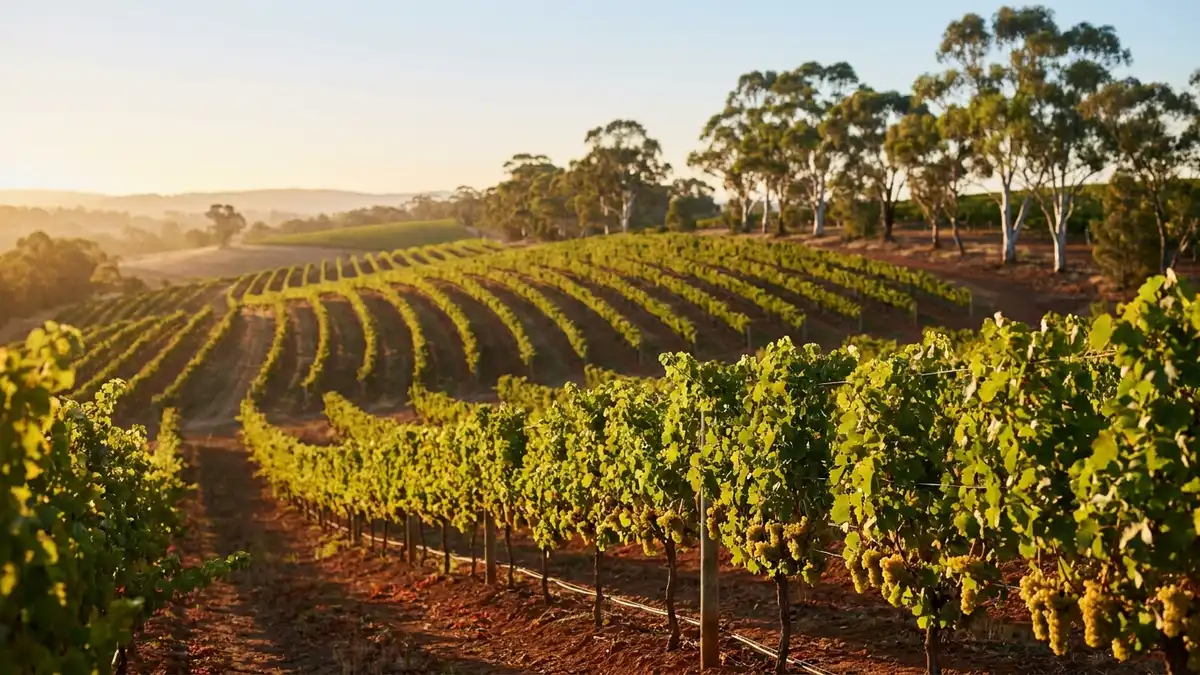
Vines grow at 400 to 500 metres, where warm summer days are followed by cold nights. That swing keeps acidity high, which is why the riesling tastes so crisp. About 5,300 hectares of vines feed close to 50 wineries, and a 35 km bike path, the Riesling Trail, links the villages. For the country-wide picture, start with the Australian wine guide.
Is Clare Valley Riesling Sweet or Dry?
Dry, almost always. Clare Valley riesling is made dry, meaning no sugar you can taste, and it often feels drier still because of its high acidity (the tartness that makes your mouth water). The grape's sweet reputation comes from Germany; this valley has built its name on the opposite style.
The method explains the taste. Australian riesling is usually fermented at low temperatures in stainless steel tanks, with no contact with air. Cold, sealed fermentation keeps the fresh fruit aromas locked in and adds no oak flavour at all. What is left is a pale, light-bodied wine with lemon and a distinct lime smell, the note that Clare and neighbouring Eden Valley are known for. The texture can feel slightly oily on the tongue, which rounds off the sharp edges.
If the back label says "dry" or gives no sweetness word at all, expect a bone-dry wine. A word like "late harvest" or "botrytis" signals the rare sweet exception. The what does dry wine mean explainer shows how to tell dryness apart from acidity, since the two are easy to confuse on the first sip.
What Else Grows in the Clare Valley Besides Riesling?
Shiraz, first of all. In 2014 Shiraz covered 34.9% of the valley's vineyards and Cabernet Sauvignon 22.3%, both ahead of riesling at 21.8%, with Merlot at 5.4%. Riesling is the valley's most important white grape and its reputation, but by area it is the third grape.
Chardonnay, Semillon, Sauvignon Blanc, Pinot Noir, Tempranillo and Grenache fill smaller plots. Across roughly 5,339 hectares, at least 200 growers sell to at least 48 wineries. The same warm days that ripen riesling push the reds to full ripeness, and the cold nights keep them from tasting jammy.
| Grape | Share of vines (2014) | Style in the glass | Pick it when |
|---|---|---|---|
| Shiraz | 34.9% | Full-bodied red, ripe plum and pepper, firm grip | You are grilling or roasting red meat |
| Cabernet Sauvignon | 22.3% | Full-bodied red, blackcurrant and mint, drying tannin | The plate has fatty lamb or hard cheese |
| Riesling | 21.8% | Light, dry white, lime and lemon, sharp acidity | The food is salty, citrusy, spicy or fishy |
| Merlot | 5.4% | Medium-bodied red, plum, softer tannin | You want a red for a mixed table |
If you want a red from the valley, pick Shiraz for pepper and plum or Cabernet for blackcurrant and a firmer grip. Tannin (the drying feel on your gums) is higher in the Cabernet, so give it fattier food. The Syrah vs Shiraz comparison explains why Australian labels use the second name, and the Cabernet Sauvignon guide covers the grape in full.
Why Does Riesling Do So Well in the Clare Valley?
Because warm days ripen the grapes while cold nights keep their acidity. The valley has a moderately continental climate (big swings between day and night, and between summer and winter), with warm to hot summer days and cool to cold nights.
Grapes build sugar and flavour in daytime sun. At night, cold air slows the vine down, so the acids that give riesling its snap are not burnt off. The result is a wine with ripe lime fruit and the acidity of a much cooler place. Height helps too. Vines are planted between 400 and 500 metres above sea level, which is what brings those cold nights to a region this far inland.
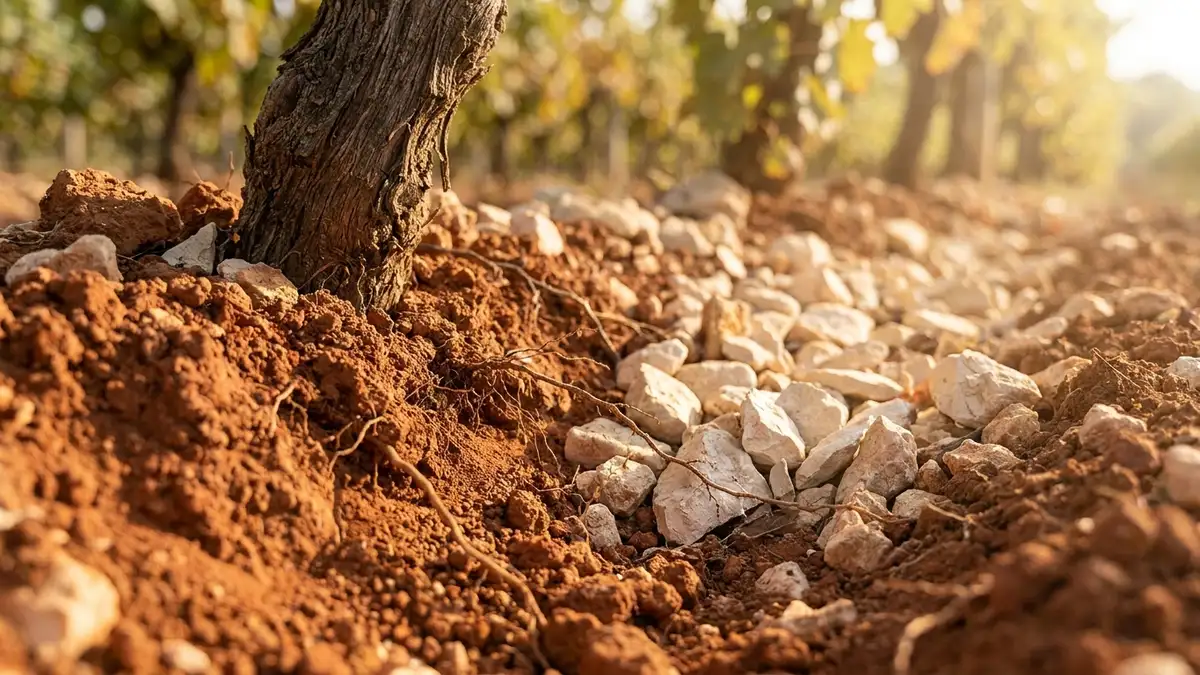
Rain falls mostly from June to September, the southern winter and early spring, averaging around 630 mm a year. Dry summers mean less disease pressure and small, concentrated berries. Soils vary from red to brown-grey over old basement rock, which is why growers talk about individual slopes as much as the valley as a whole.
What Are the Clare Valley's Sub-Regions?
Five informal sub-regions share the valley: Auburn, Watervale, Sevenhill, Clare and Polish Hill River. None of them has legal boundaries of its own. Producers still print the names on labels to show which slopes the grapes came from, and each place has its own soil and height.
- Auburn is the southern gateway and the start of the Riesling Trail.
- Watervale sits under Mount Horrocks, the valley's highest point at 609 metres. Its terra rossa soils (red loam coloured by iron) lie over limestone and are prized for riesling.
- Sevenhill was founded by Jesuits in 1850 and named after the seven hills of Rome.
- Clare is the main town at the northern end of the trail.
- Polish Hill River grew up around a church built by Polish Catholic immigrants, and its riesling is often bottled under the sub-region's name.
When a label names one of these places, the grapes came from that part of the valley. If you see Watervale on a riesling, you are drinking fruit from terra rossa over limestone, the soil most tied to the region's reputation. Buying two rieslings from different sub-regions is the fastest way to learn how much one valley can vary. The Mosel wine guide shows the same grape on slate in a far cooler place.
How Does Clare Valley Riesling Change With Age?
Young, it tastes of lime and lemon with sharp acidity; with years in bottle it turns toasty and picks up a kerosene smell. Australian rieslings are known for citrus and a slightly oily texture when young, and for kerosene and caramel as they mature.
That kerosene smell comes from a natural compound called TDN, which builds up in riesling as it ages. It is a sign of age, and many riesling fans wait years for it. Petrol notes can turn up in riesling from any country, but they are most common in aged Australian bottles. Ripe grapes, strong sun and dry vines all raise the potential for TDN, and the Clare Valley supplies all three.
Riesling ages well because its natural acidity acts like a spine that holds the wine together while the fruit changes. The colour deepens from pale straw towards gold. The lime softens into marmalade and toast. If a riesling smells of kerosene, check the vintage on the label before calling it faulty; it is almost certainly an older bottle doing what riesling does. Tasting young vs aged wine walks through the other changes to look for.
In Sommy's AI-guided tasting mode, you photograph the label and are walked through look, smell and taste, so your "lime, then toast" notes land in your tasting journal with the vintage attached.
What Food Goes With Clare Valley Riesling?
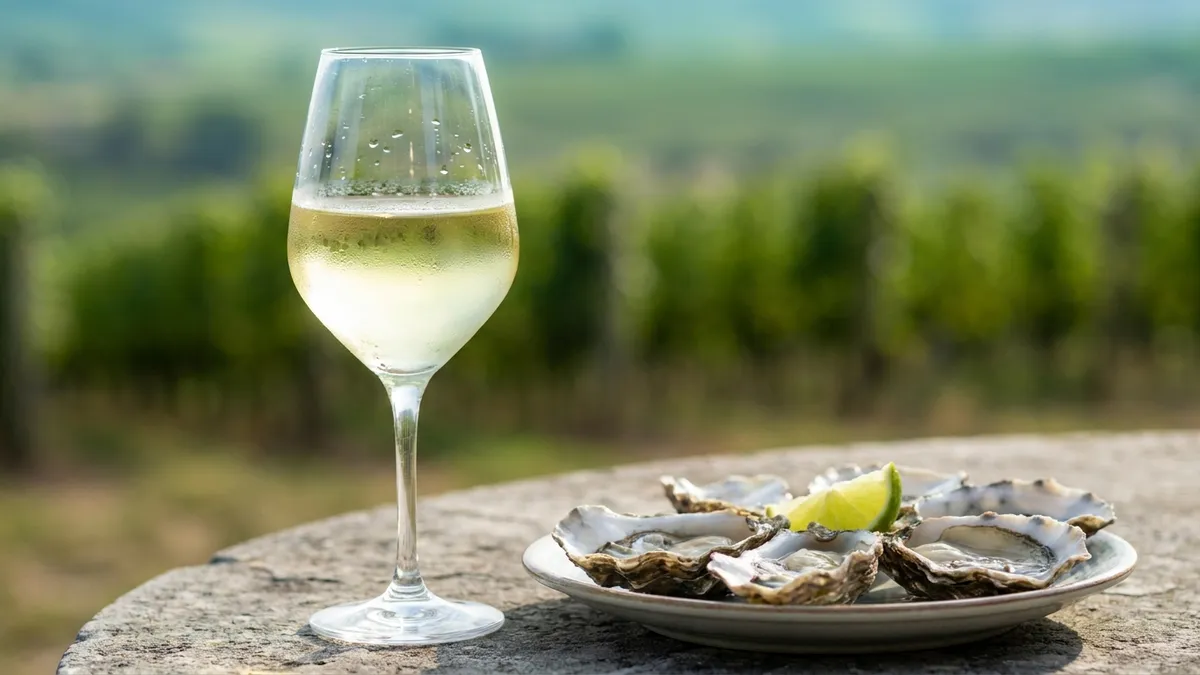
Choose Clare riesling when the plate has salt, citrus, chilli or oily fish. High acidity cuts through fat and salt the way a squeeze of lime does, and the lack of oak or tannin means nothing clashes with delicate seafood.
- Oysters, prawns and grilled white fish: the acidity works like a lemon wedge.
- Thai and Vietnamese salads: lime, fish sauce and herbs echo the wine's own lime smell.
- Mild chilli dishes: a light, crisp white does not make chilli burn the way a high-alcohol red does.
- Fresh goat's cheese: tart cheese meets tart wine, and neither tastes flat.
- Pork belly or fried chicken: the acid slices through the fat.
If the dish has real chilli heat, choose riesling over an oaked white, because oak and alcohol make the heat sharper. If the dish is a rich red-meat stew, skip the riesling and pour a Clare Shiraz. The wine with Thai food and wine with seafood guides go deeper, and the wine serving temperature chart gives the right chill.
Why Is Clare Valley Riesling Sealed With a Screw Cap?
Because in July 2000 a group of Clare Valley producers, led by winemaker Jeffrey Grosset, bottled part of their riesling under screw cap. Their goal was to keep the wine's fresh lime aromas safe from cork taint (a musty, wet-cardboard smell caused by the compound TCA), which flattens fruit.
Riesling is a poor place to hide a fault. It has no oak and no tannin, so a whiff of taint strips the one thing the wine is built around: fresh aroma. A screw cap removes that risk and lets in less oxygen than most corks, which keeps a young riesling tasting young. The Clare move was a quality decision, not a cost cut. It helped make screw caps normal on Australian whites.
If a Clare riesling comes under screw cap, you can store it upright and open it without a corkscrew. The screw cap vs cork comparison covers how both closures age wine, and how to tell if wine is corked shows the smell to watch for in cork-sealed bottles.
How Did Wine Start in the Clare Valley?
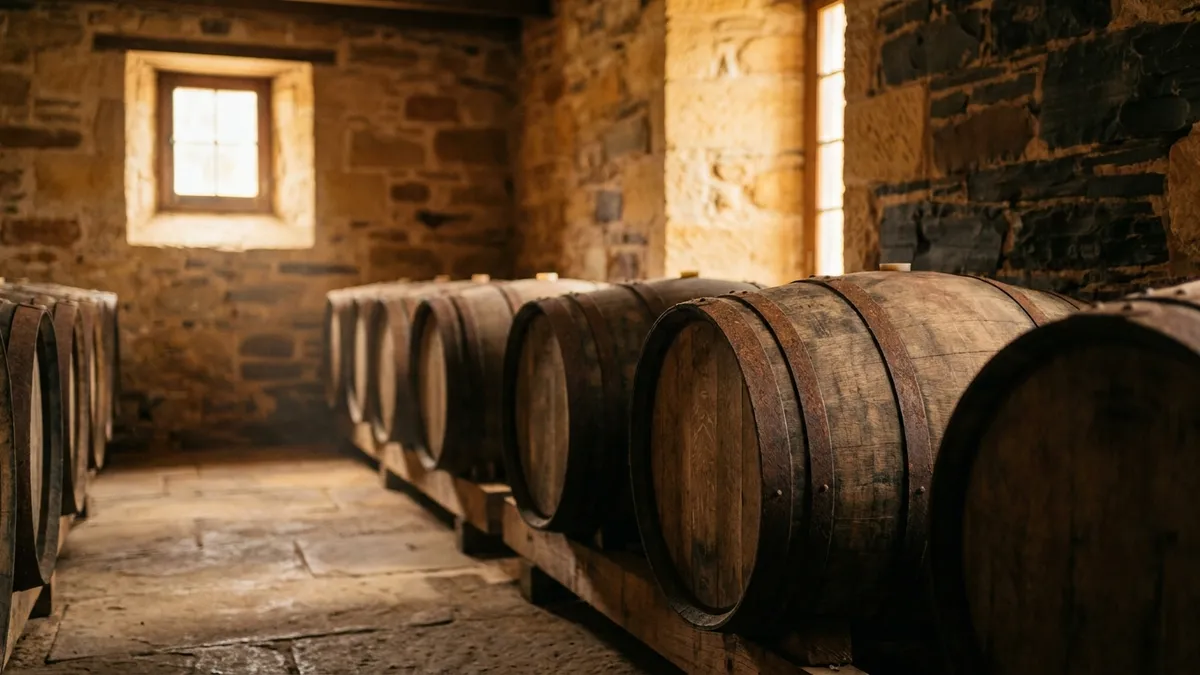
Vines came with the first settlers in the 1840s and 1850s. Settlers from England, Ireland, Poland and Silesia farmed the valley, and their place names are still on today's labels. Polish Hill River carries the Polish settlers' name. Sevenhill keeps the Jesuit mission where brothers planted vines to make wine for the church.
At Watervale, Valentine Mayr planted four acres in 1852 and made his first wine in 1856. An estate founded at Watervale in 1865 still makes wine today. Riesling itself reached Australia before the valley's first vines: it was first planted near Penrith, in New South Wales, in 1838. It stayed the country's most-planted white grape until the early 1990s, when Chardonnay overtook it.
How Do You Visit the Clare Valley and Ride the Riesling Trail?
Start at Auburn or Clare and ride the Riesling Trail, a 35 km walking and cycling path on an old railway line. It passes Leasingham, Watervale, Penwortham and Sevenhill, with side loops to cellar doors, cafés and pubs. It runs through vineyard and farming country for most of its length.
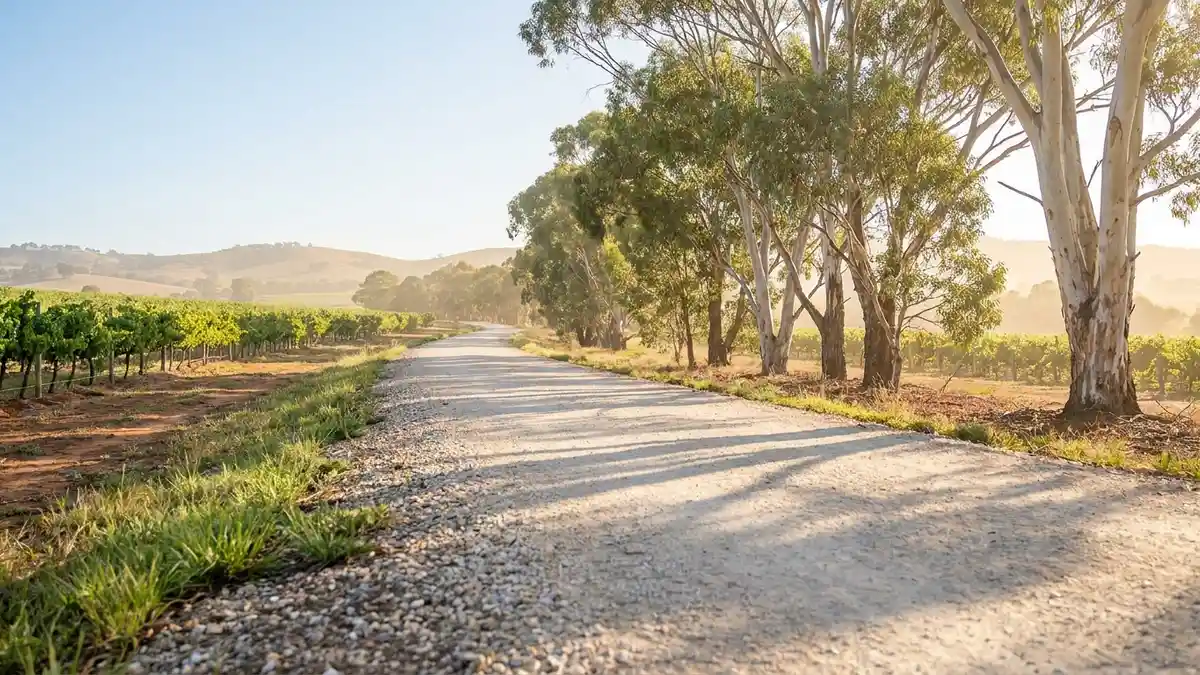
The railway opened in 1918 and stopped running after the 1983 Ash Wednesday bushfires damaged the track. The rails were lifted in 1989 and the path opened in 1993. Bikes can be hired at Auburn and Clare. If you plan to taste at several cellar doors, spit and carry water, so the last stop tastes as clear as the first. Our guide to wine tasting at wineries covers cellar-door manners, and the wine regions hub maps where Clare sits among the world's riesling places.
Tonight, pick up a young Clare Valley riesling, chill it well, and pour two glasses: one for now and one after it has sat in the glass for twenty minutes. Smell for lime in both and note what fades. Log both notes in Sommy and compare them with the next riesling you open.
Sources
Frequently Asked Questions
Is Clare Valley riesling sweet or dry?
Clare Valley riesling is almost always dry, meaning there is no sugar you can taste. It is fermented cool in stainless steel, which keeps it crisp and fresh, and its high acidity makes it taste even drier than it is. Sweet late-harvest rieslings exist in Australia, but they are a small side style. If the label gives no sweetness word, expect dry.
What does Clare Valley riesling taste like?
Young Clare Valley riesling tastes of fresh lime and lemon, with mouth-watering acidity and a slightly oily texture. The lime note is the region's signature and also shows up in nearby Eden Valley. With years in bottle, the fruit softens and the wine picks up toast, caramel and a kerosene smell that riesling fans prize.
Why do Clare Valley wineries use screw caps?
In July 2000 a group of Clare Valley riesling producers, led by Jeffrey Grosset, bottled part of their wine under screw cap. Their aim was to protect riesling's fresh lime aromas from cork taint, a musty fault that strips fruit from a wine. The move was about quality, and screw caps soon spread across Australian white wine.
What other wines does the Clare Valley make?
Plenty of red. In 2014 Shiraz covered 34.9% of Clare Valley vineyards and Cabernet Sauvignon 22.3%, both ahead of riesling at 21.8%. Merlot, Chardonnay, Semillon, Sauvignon Blanc, Pinot Noir, Tempranillo and Grenache grow there too. The reds tend to be ripe and firm, shaped by the valley's warm summer days and cool nights.
Does the petrol smell in aged riesling mean the wine is faulty?
No. The kerosene or petrol smell in older riesling comes from a natural compound called TDN, which builds up as the wine ages. It is found in riesling from anywhere but is most common in aged Australian examples. Ripe grapes and strong sun raise it. Many drinkers wait years for exactly this smell.
What is the Riesling Trail in the Clare Valley?
The Riesling Trail is a 35 km walking and cycling path between Auburn and Clare, passing Leasingham, Watervale, Penwortham and Sevenhill. It follows an old railway line that opened in 1918 and stopped after the 1983 Ash Wednesday bushfires. Bikes can be hired at Auburn and Clare, with side loops leading to cellar doors.
Sommy Team
LinkedInFounder & Wine Educator
The Sommy Team is building the world's most approachable wine education app, helping beginners develop real tasting skills through structured courses and AI-guided practice.