Eden Valley Wine Guide: Australia's Other Great Riesling

By the Sommy Team — AI-assisted, human-edited.
Updated Sep 25, 2026
Contents (9)
- What Is the Eden Valley Wine Region?
- Is Eden Valley Part of the Barossa Valley?
- How Does Eden Valley Compare With the Barossa Valley and Clare Valley?
- What Grapes Grow in Eden Valley?
- What Does Eden Valley Riesling Taste Like?
- How Does Eden Valley Riesling Change With Age?
- How Do You Buy and Serve Eden Valley Riesling?
- What Is High Eden?
- How Old Is Winemaking in Eden Valley?
TL;DR
Eden Valley is a cool South Australian region in the Mount Lofty Ranges, next to the Barossa Valley and inside the same Barossa zone. It is best known for dry riesling that smells of lime when young and turns toasty with age, though Shiraz is its most planted grape. Read the region and the vintage to choose.
The first fact in any Eden Valley wine guide: Eden Valley is the cooler hill country beside the Barossa Valley, and it makes some of Australia's best dry riesling. The region sits in South Australia, a short drive north of Adelaide. Its riesling smells of fresh lime when young and turns toasty with age. Its most planted grape, though, is Shiraz.
What Is the Eden Valley Wine Region?
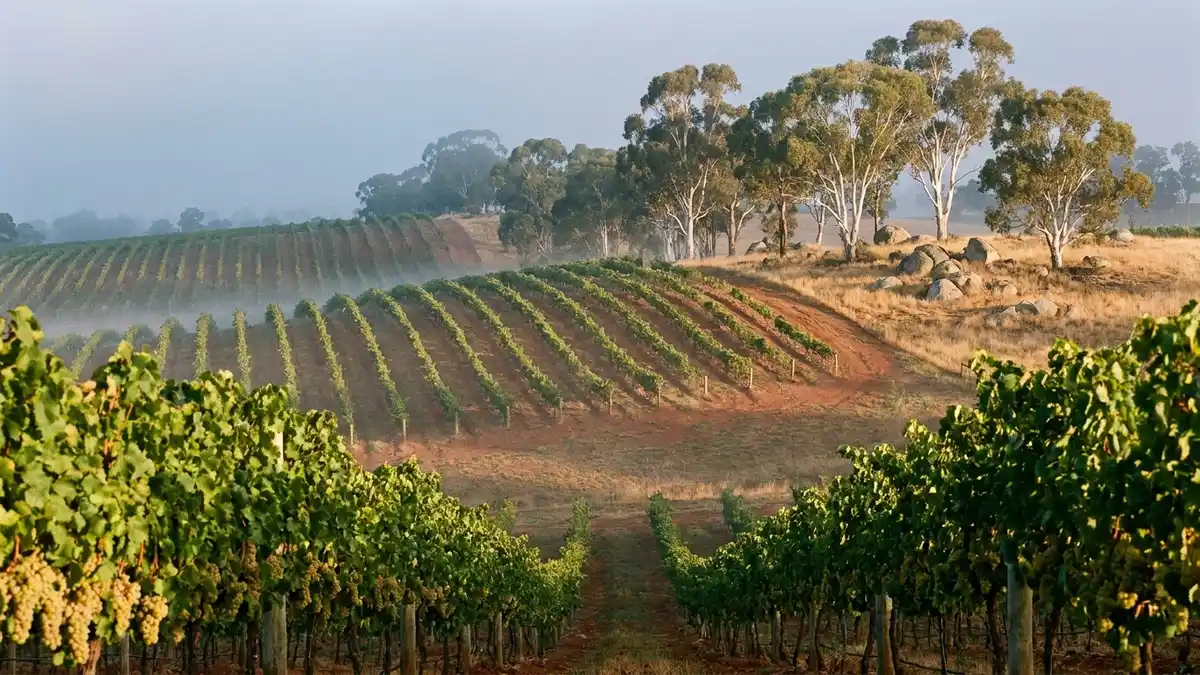
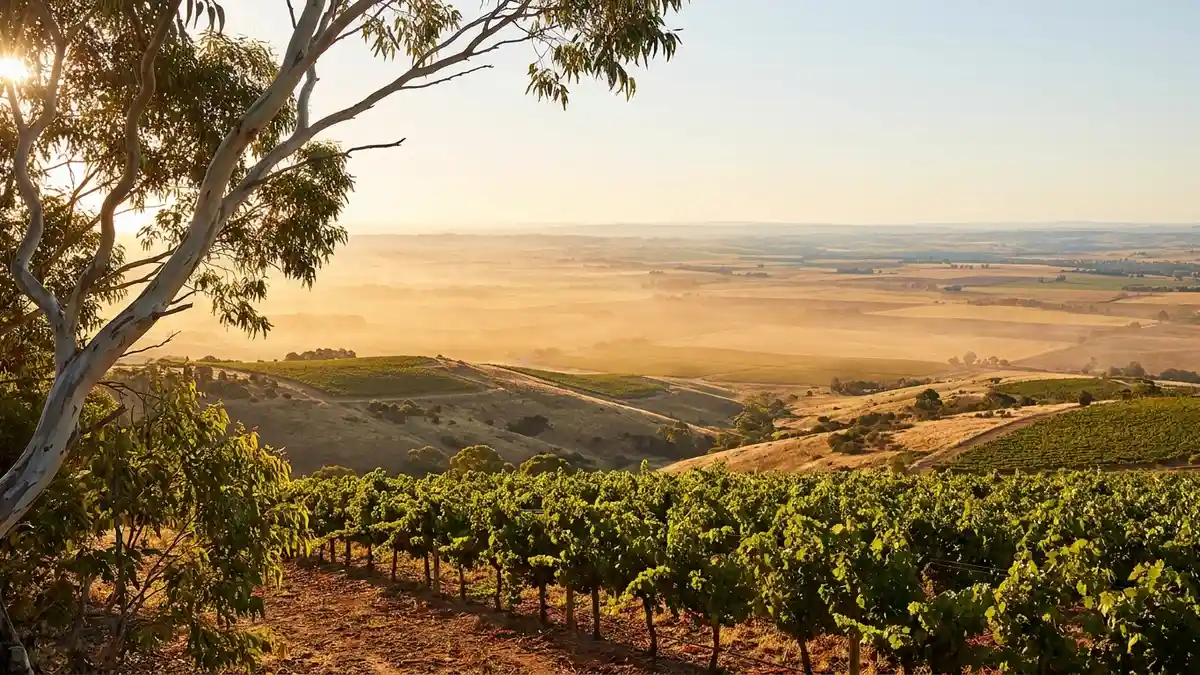
Eden Valley is a protected wine region in South Australia's Mount Lofty Ranges, stretching from Truro in the north to just south of Springton. It is an official Geographical Indication (GI), Australia's legally protected wine place name. It is best known for lean, lime-scented dry riesling. As of 2014 it had 2,264 hectares of vines, and at least 36 wineries operate in the region. Shiraz covers more ground than riesling. What sets it apart is its position in the hills beside the warmer Barossa Valley, which gives its wines more tartness and less weight than the valley floor.
Is Eden Valley Part of the Barossa Valley?
It sits in the Barossa zone but is a separate region from the Barossa Valley, and it was registered as its own GI on 15 August 1997. The two regions share a border: the Barossa Valley lies to the west, and the Adelaide Hills region lies to the south.
The confusion comes from Australia's label ladder. Wine places are nested in three steps. A zone is the widest area, a region sits inside a zone, and a subregion sits inside a region. The Barossa zone holds two regions, the Barossa Valley and Eden Valley. Eden Valley in turn holds one subregion, High Eden.
That difference shows up on the shelf. If a label says only "Barossa", the grapes can come from either region, so the wine may blend valley-floor and hill fruit. If it says "Barossa Valley", the grapes grew on the valley floor. If it says "Eden Valley", they grew in the hills. Australian law backs this reading: at least 85% of the grapes must come from the place named, and a label must not mislead about where they grew. The Barossa Valley wine guide covers the valley floor and its old-vine Shiraz.
How Does Eden Valley Compare With the Barossa Valley and Clare Valley?
The Barossa Valley is the warm valley floor for ripe Shiraz, Eden Valley is the cooler hill country beside it, and Clare Valley is a different valley about 100 km north of Adelaide. Eden Valley and Clare Valley are the two South Australian names most tied to dry riesling, which is why they get mixed up.
Climate explains most of the difference. Wine regions are often ranked by heat units, a running total of warmth across the growing season: fewer units means a cool climate, with tarter and lighter wines. Eden Valley counts about 1,390 heat units, which puts it in the coolest band of that scale. Cool nights and days slow ripening, so the grapes keep their acidity and riesling stays lean.
| Region | Where it is | Main grapes | Style in the glass | Pick it when |
|---|---|---|---|---|
| Eden Valley | Mount Lofty Ranges, just north of Adelaide, east of the Barossa Valley | Shiraz, riesling, Cabernet Sauvignon, Chardonnay | Dry, lean riesling with lime; Shiraz lighter than the valley floor | You want a dry white for salty or spicy food, or a Shiraz with less weight |
| Barossa Valley | Valley floor west of Eden Valley, same Barossa zone | Shiraz, Grenache | Full-bodied, ripe Shiraz from a warmer valley floor | The dish is rich, grilled or braised red meat |
| Clare Valley | A separate valley about 100 km north of Adelaide | Riesling, Shiraz | Dry riesling with lime and a slightly oily feel | You want to compare two riesling regions side by side |
| Barossa (zone only) | Either region; the label names only the zone | Any | Can blend valley-floor and hill fruit | You are happy with a blend and the price is lower |
The Clare Valley wine guide covers that valley's sub-regions and its Riesling Trail, a 35 km path on an old railway line, and the Australian wine guide maps every region in the country.
What Grapes Grow in Eden Valley?
Shiraz is the most planted grape in Eden Valley, at 31.4% of vineyards in 2014, with riesling second at 24.1% of the planted area. Cabernet Sauvignon came third at 13.4% and Chardonnay fourth at 11.7%. Red grapes took 53.8% of plantings and white grapes 45.5%.
The harvest figures tell a different story from the vineyard map. The 2014 vintage produced 6,460 tonnes of grapes. White grapes made up 3,858 tonnes and red grapes 2,601 tonnes, so the region picked more white fruit than red despite planting more red vines. The reds earned more per tonne, though. The red crop was worth about A$4.9 million and the white crop about A$4.2 million. That works out to roughly A$1,880 a tonne for red grapes against about A$1,090 for white.
Shiraz from the hills tastes different from Shiraz on the valley floor. Cooler ripening gives a red with fresher acidity and less weight than the full-bodied Barossa Valley style. If you find valley-floor Shiraz too heavy, look for "Eden Valley" on a Shiraz label. The Syrah vs Shiraz comparison explains why the same grape carries two names.
What Does Eden Valley Riesling Taste Like?
Young Eden Valley riesling is dry (no sugar you can taste), light-bodied and high in acidity (the tartness that makes your mouth water). It smells of lime and lemon and feels slightly oily on the tongue. Riesling from Eden Valley and Clare Valley is known for this lime note.
Structure comes first. The acidity is what you feel before any aroma: a quick rush of saliva along the sides of the tongue. Body, the weight of the wine, sits closer to skimmed milk than whole milk. There is no oak, so nothing smells of vanilla or toast in a young bottle.
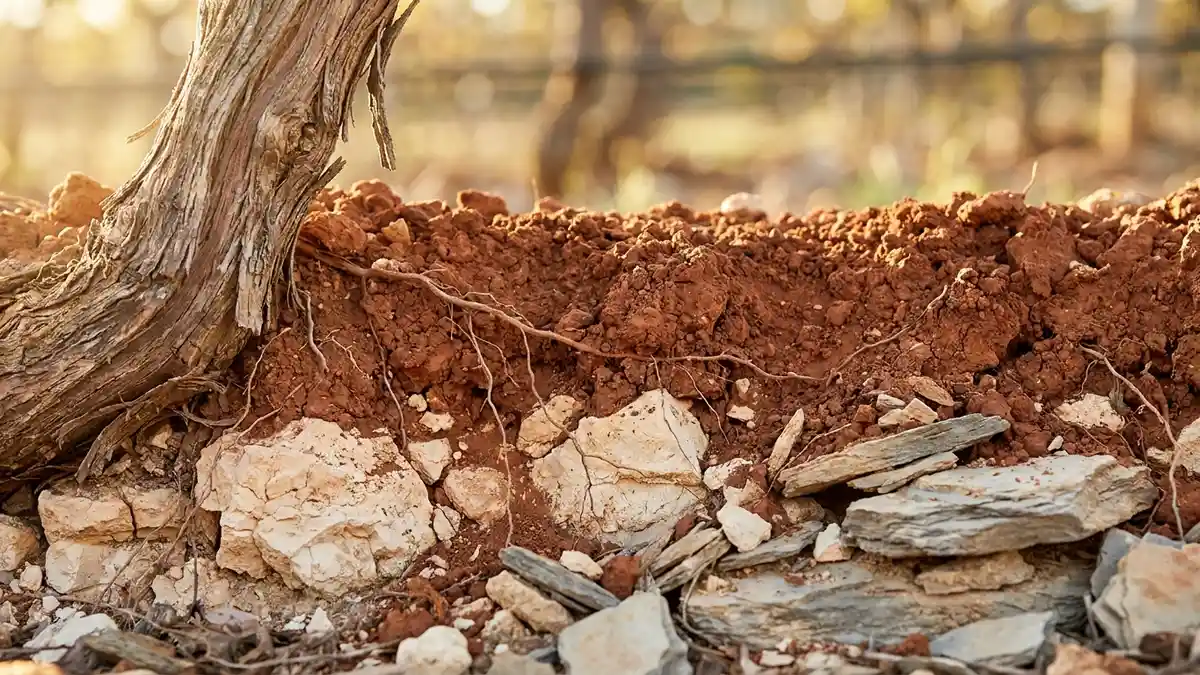
Then come the aromas, each with a cause. Lime is the first, the signature note of riesling from these hills. Young wines can also smell of lychee or pineapple, fruit smells that give way to other aromas as the bottle ages. The soil adds to the lean shape. Riesling in these cool South Australian areas is often grown in free-draining soil, such as red soil over limestone and shale, which gives a lean wine rather than a broad one. The what is terroir guide explains how soil and slope change a glass.
How Does Eden Valley Riesling Change With Age?
It gets deeper, softer and toastier: the lime stays but toast and honeycomb join it, and a petrol or kerosene smell can appear. These are tertiary aromas, smells that come from time in bottle rather than from the grape or the fermentation.
Aged Australian rieslings pick up kerosene and caramel as they mature, while the young fruit fades. Petrol notes can turn up in riesling from any country, but they are most common in aged Australian bottles. That smell is a marker of age, not a fault. If an older Eden Valley riesling smells of kerosene, check the vintage before you blame the wine.
The winemaking sets up that long life. Australian riesling is usually fermented cold in stainless steel tanks, kept away from air and bottled early. Cold, sealed fermentation locks in fresh fruit and adds no oak, so the wine starts pale and sharp and changes slowly. Most bottles now close with a screw cap, which lets in very little oxygen. That habit spread from Clare Valley, where a group of producers bottled part of their riesling under screw cap in July 2000. The screw cap vs cork comparison explains how each closure ages wine.
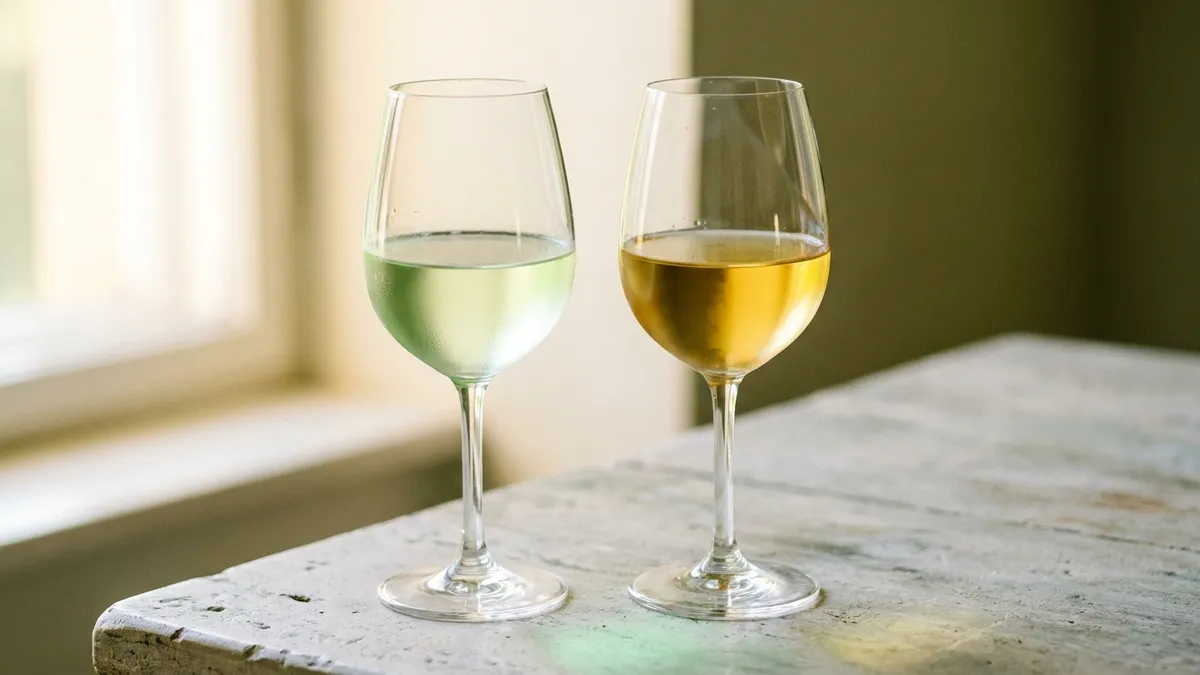
Colour follows the same path, from pale straw toward gold. The tasting young vs aged wine guide lists the other changes to look for.
How Do You Buy and Serve Eden Valley Riesling?
Read the region, then the vintage (the harvest year): "Eden Valley" with a recent year means fresh lime and sharp acidity, and "Eden Valley" with an older year means toast, honey and perhaps petrol. If you want fresh lime, buy the youngest vintage on the shelf. If you want toast and honeycomb, look for a bottle several years older.
The how to read a wine label guide covers the other words on the bottle. On Eden Valley riesling, "dry" is the norm, so a sweetness word is the rare thing to look for.
Serve it well chilled in a standard white wine glass, and let it warm a little as you drink. The wine serving temperature chart gives the exact range for light whites. Food follows the acidity:
- Oysters and prawns: the acid works like a squeeze of lemon on the salt.
- Thai or Vietnamese salads: lime and fish sauce echo the lime in the glass.
- Mild chilli dishes: a light, low-alcohol white does not make chilli burn.
- Grilled mackerel or sardines: the tartness cuts through oily fish.
- Fresh goat's cheese: tart cheese beside tart wine keeps both lively.
If the dish has lime, salt, chilli or oily fish, pour the riesling. If it is a rich beef or lamb stew, pour an Eden Valley Shiraz instead, because its tannin and ripeness stand up to the fat. The wine with Thai food guide has more chilli-friendly matches.
In Sommy's AI-guided tasting mode, you photograph the label and are walked through look, smell and taste. Your notes land in your tasting journal with the vintage attached, so a young bottle and an older one can be compared later.
What Is High Eden?
High Eden is an official subregion inside Eden Valley, the lowest step of the zone, region and subregion ladder on Australian labels. Its name on a label means at least 85% of the grapes came from that smaller area rather than from anywhere in the wider Eden Valley region.
If a label names High Eden, the fruit came mainly from the subregion. If it names only Eden Valley, it can come from anywhere inside the wider region, High Eden included. The same 85% rule covers both words.
How Old Is Winemaking in Eden Valley?
Eden Valley's wine industry began in 1847, the same year Shiraz vines were planted on the valley floor next door at Tanunda. The Barossa Valley grew into an established wine region from the mid-1850s, with a large contribution from emigrants from Prussia.
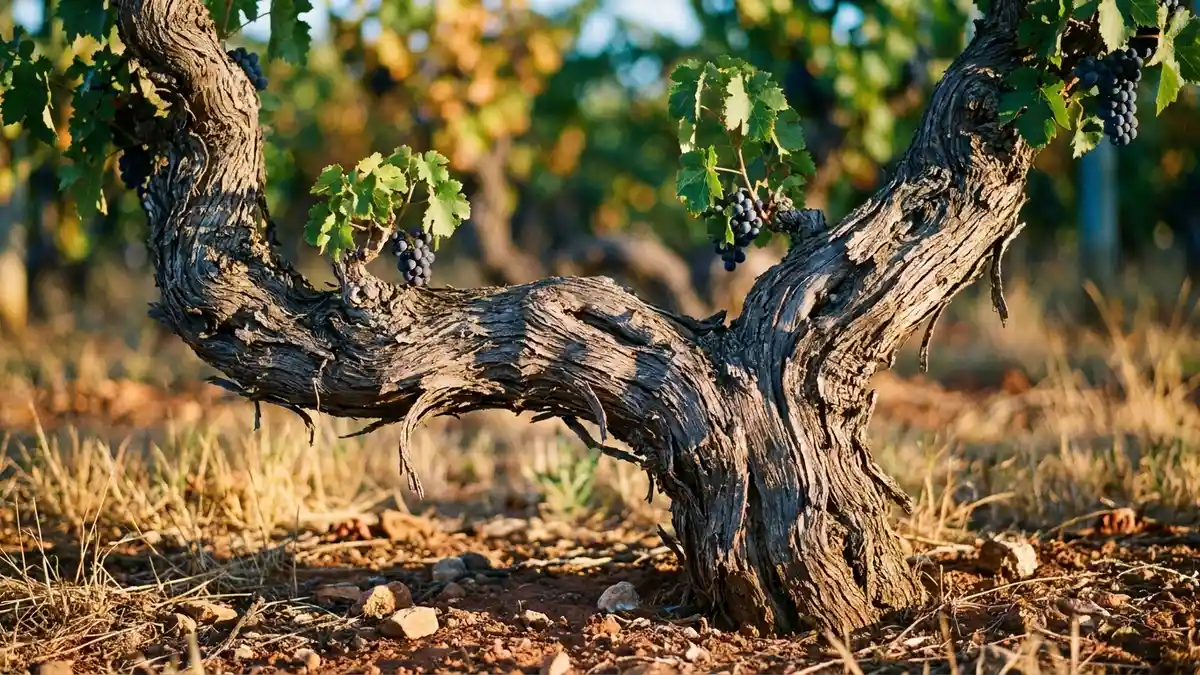
Some of the region's oldest Shiraz vines explain why aged Eden Valley reds are prized. One settler from Silesia arrived in 1841, bought land in 1862 and made his first vintage of about 300 gallons at Keyneton in 1868. His family later bought a nearby vineyard, in 1891, with Shiraz vines planted in the 1860s. Wine from those vines was first sold under the vineyard's own name in 1958. Old vines give small crops of concentrated fruit, which is why "old vine" on a Shiraz label often signals a deeper, more concentrated red.
The GI date matters on the label too. Since 15 August 1997, "Eden Valley" has been a protected name, so it can only appear on wine made from at least 85% grapes grown inside the boundary. The wine regions hub shows where Eden Valley sits among the world's riesling places, and the riesling wine guide compares it with Germany and Alsace.
Tonight, buy a young Eden Valley riesling, chill it, and pour two glasses: one now and one after twenty minutes on the table. Smell both for lime and note which is stronger. Log both glasses in Sommy and compare them with the next riesling you open.
Sources
- Wikipedia: Eden Valley wine region (location, GI date, plantings, 2014 vintage)
- Wine Australia: Register of protected GIs (Barossa zone, Eden Valley, High Eden)
- Wine Australia: The blending rules (85% from the named GI)
- Wikipedia: Barossa Valley (Shiraz planted at Tanunda in 1847)
- Wikipedia: Riesling (Australian style, lime, petrol and ageing)
- Wikipedia: Stelvin screw cap (Clare Valley, July 2000)
- Wikipedia: Henschke (Keyneton history, 1860s vines)
Frequently Asked Questions
What is Eden Valley wine known for?
Eden Valley is best known for dry riesling: light-bodied, high in acidity and smelling of lime and lemon when young, then toast and honeycomb with age. The region also grows plenty of red wine. Shiraz was its most planted grape in 2014, at 31.4% of vineyards, ahead of riesling at 24.1%, with Cabernet Sauvignon and Chardonnay behind.
Is Eden Valley part of the Barossa?
Yes and no. Eden Valley sits inside the Barossa zone, the larger legal area on Australian labels, but it is a separate region from the Barossa Valley. It became an official Geographical Indication on 15 August 1997. The Barossa Valley region lies to its west, on lower and warmer ground. A label reading Eden Valley means at least 85% of the grapes came from the hills.
What is the difference between Eden Valley and Clare Valley riesling?
Both are dry, high-acid rieslings that smell of lime, and both are Australia's best-known riesling regions. They are different places. Eden Valley lies just north of Adelaide in the Mount Lofty Ranges, beside the Barossa Valley. Clare Valley is a separate valley about 100 km north of Adelaide. Taste one of each side by side to learn your own preference.
Why does old Australian riesling smell like petrol?
The petrol or kerosene smell is a normal sign of age in riesling. It can appear in riesling from any country, but it is most often found in aged Australian bottles. Alongside it, the fresh lime of a young wine moves toward toast, honeycomb and caramel. If an older Eden Valley riesling smells of kerosene, check the vintage: it is almost always age, not a fault.
What is High Eden?
High Eden is an official subregion inside the Eden Valley region, one step down in Australia's label system of zone, region and subregion. When High Eden appears on a label, at least 85% of the grapes had to come from that smaller area rather than from anywhere in Eden Valley. The rule behind it is simple: an Australian label must not mislead you about where the grapes grew.
How should you serve Eden Valley riesling?
Serve it well chilled in a standard white wine glass, and let it warm slightly in the glass so the lime smell comes through. Its high acidity suits food with salt, citrus, chilli or oily fish, such as prawns, oysters, Thai salads or grilled mackerel. With a rich red-meat stew, choose an Eden Valley Shiraz instead.
Sommy Team
LinkedInFounder & Wine Educator
The Sommy Team is building the world's most approachable wine education app, helping beginners develop real tasting skills through structured courses and AI-guided practice.