Chenin Blanc vs Sauvignon Blanc: Side by Side (Taste, Food)
By the Sommy Team — AI-assisted, human-edited.
Updated Nov 3, 2026
Contents (8)
TL;DR
Sauvignon Blanc smells of cut grass, gooseberry and passion fruit, and is almost always dry and sharp. Chenin Blanc smells of quince, apple and honey, and is made bone dry, off-dry, sweet or sparkling. Both have high acidity. Smell first, read the sweetness word on a Chenin label, and pour Sauvignon with goat cheese, Chenin with pork.
Chenin Blanc vs Sauvignon Blanc splits on how much the grape name tells you. Sauvignon Blanc almost always means a dry, sharp white that smells of cut grass and passion fruit. Chenin Blanc smells of quince, apple and honey, and the same grape is sold bone dry, off-dry, sweet and sparkling.
Chenin Blanc vs Sauvignon Blanc, in One Paragraph
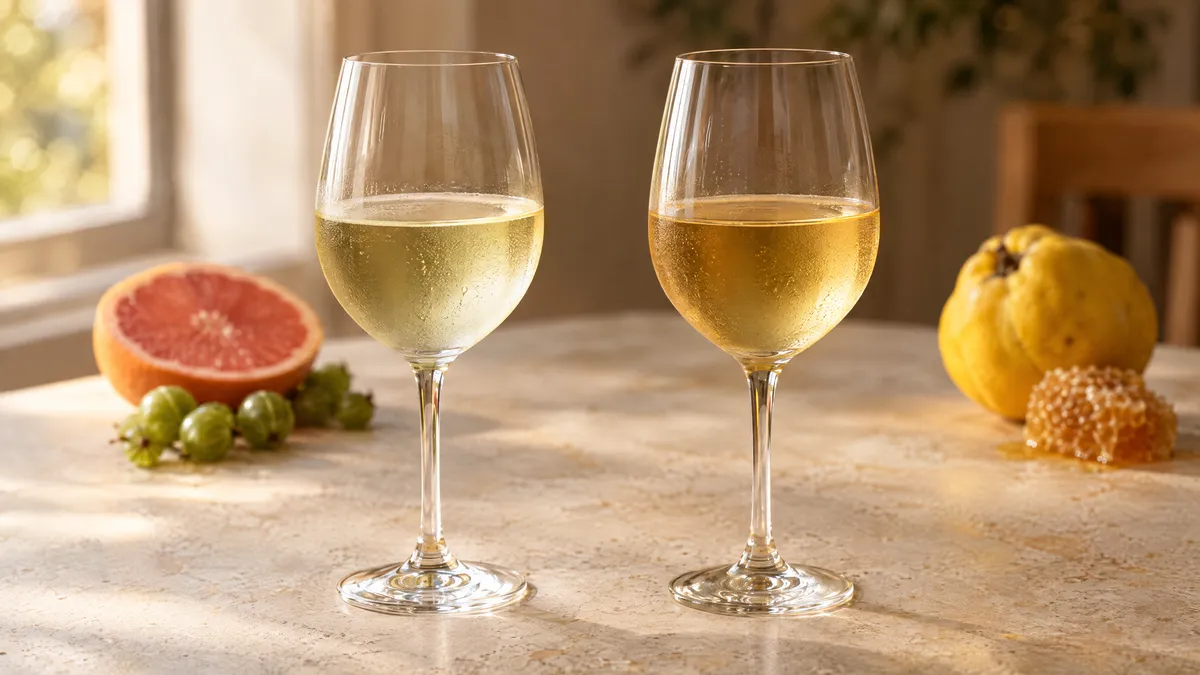
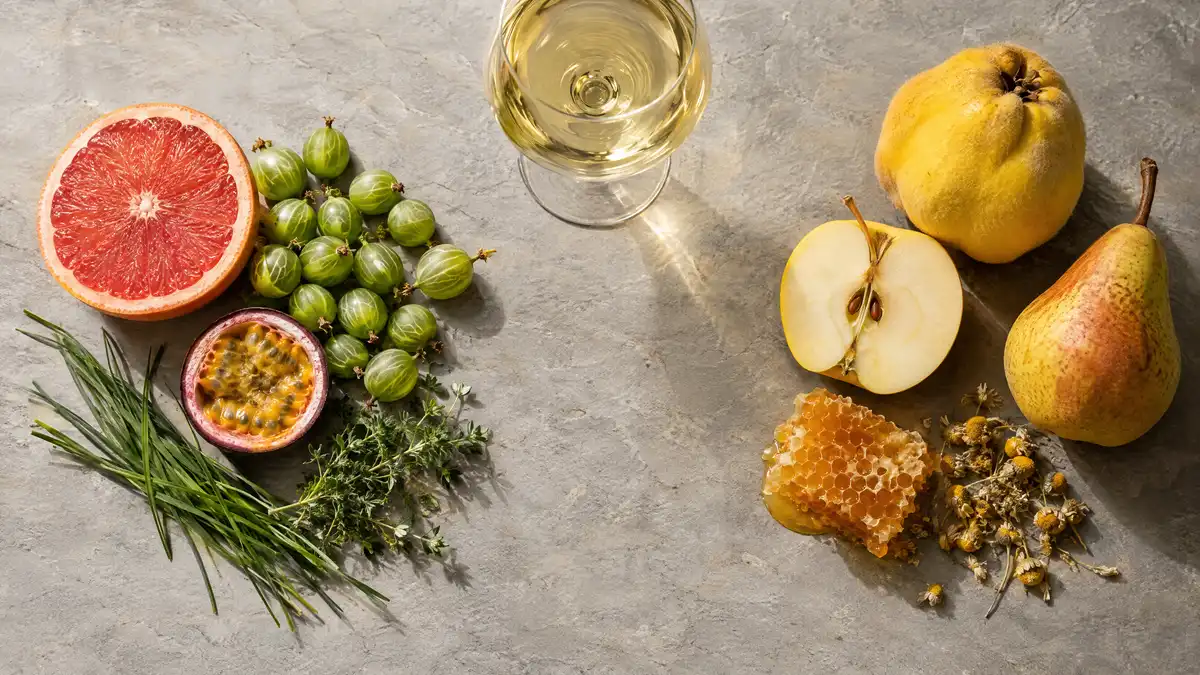
Both are white grapes from France's Loire Valley with high acidity (the tartness that makes your mouth water), and there the likeness ends. Sauvignon Blanc is dry, with a medium-light body (weight in the mouth, like skimmed versus whole milk) and 11.5 to 13.5% alcohol. It smells of gooseberry, grapefruit, passion fruit and green herbs. Chenin Blanc smells of quince, yellow apple, pear, chamomile and honey. It runs from light to creamy, and its best bottles age for decades.
| Sauvignon Blanc | Chenin Blanc | What to do with it | |
|---|---|---|---|
| First smell | Green and tropical: cut grass, gooseberry, grapefruit, passion fruit | Orchard and honey: quince, yellow apple, pear, chamomile | Sniff before you sip. Grass means Sauvignon Blanc |
| Sweetness | Almost always dry | Bone dry to sweet, plus sparkling | Buying Chenin? Find the style word on the label first |
| Acidity | High | High in every style | Tart or lemony food: either works |
| Body and texture | Medium-light, crisp | Light to creamy | Want a rounder white with no grass? Pick Chenin |
| Ageing | Mostly drink young; 3 to 5 years is typical | Top bottles for many years, dry Savennières for decades | Keeping a bottle to open later? Choose Chenin |
| Serve at | 7 to 12°C | Cold, 7 to 12°C; oaked a touch warmer | Chill both the same so the comparison is fair |
| Goes with | Goat cheese, herb sauces, Thai and Vietnamese herbs | Pork, roast chicken, sweet and sour, chilli heat (off-dry) | Green and tangy plate: Sauvignon. Pork or chilli: Chenin |
Why Does Sauvignon Blanc Smell Green and Tropical?
Two groups of aroma compounds do it. Methoxypyrazines give the cut grass and green pepper, and thiols (a second group, linked to riper fruit) give the passion fruit. In cooler climates the grape also keeps noticeable acidity, so a Loire bottle tastes leaner than one from a warm region.
Regions are mapped in the Sauvignon Blanc guide and the Marlborough guide.
One label word changes the profile. Fumé Blanc usually means Sauvignon Blanc aged in oak (barrels adding vanilla, toast or spice), which rounds the flavour and softens the acidity. Fumé is French for smoky. If a label says Fumé Blanc, expect a rounder, often toastier wine.
Quick check
One question on what you just read
You want a dry white and don't want to read the label. Which grape name is the safer bet?
Tap an answer to see how you did.
Is Chenin Blanc Sweeter Than Sauvignon Blanc?
Sometimes. Sauvignon Blanc is almost always dry, while Chenin Blanc is made bone dry, off-dry, sweet and sparkling, so the label word decides. Chenin is not a sweet grape by default. Its high acidity lets one grape cover that range, and it keeps the sweet versions from tasting syrupy.
Savennières is the best-known Loire appellation for mostly dry Chenin. Vouvray often aims for an off-dry style (a little sugar you can taste, balanced by acid), and it also makes sparkling wine, as does Crémant de Loire. Left late on the vine, Chenin can catch noble rot (a mould that shrivels the grapes and concentrates their sugar), which gives sweet wines that smell of peach and honey.
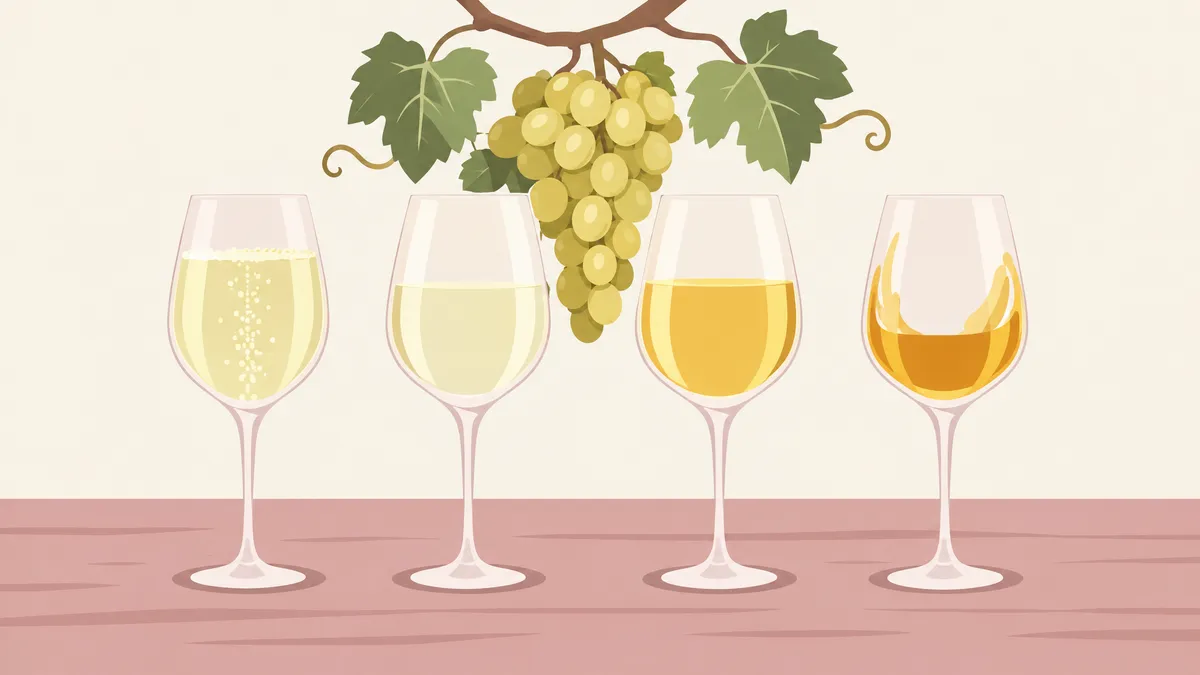
If a French Chenin label says demi-sec, expect off-dry. If it gives no style word, check the back label before serving it with a savoury dinner. The full ladder of style words sits in the wine sweetness scale, and the off-dry wine guide explains the middle step.
Which One Is More Acidic?
Neither by much: both have high acidity, but Chenin often hides it under a rounder texture. Chenin keeps high acidity whatever the style, dry, sweet or sparkling. A creamy Chenin is still a high-acid wine, so roundness is no sign of low acid.
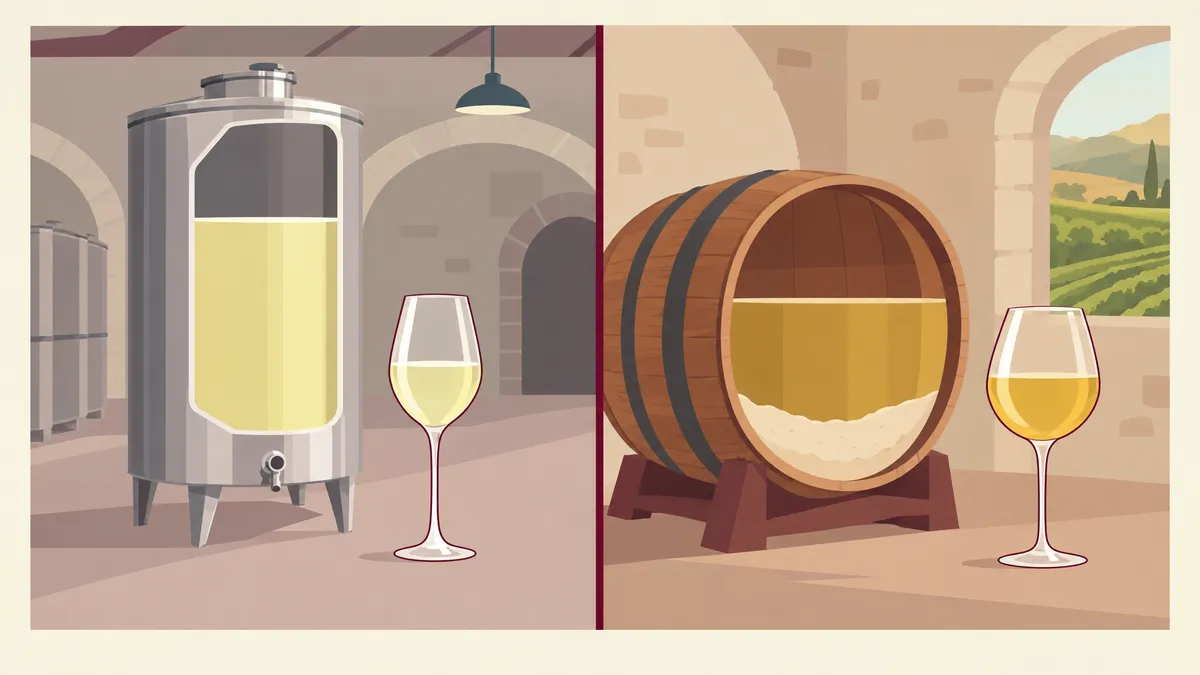
The roundness comes from the cellar. Ageing on the lees (spent yeast; bread and cream notes) adds a creamier texture and weight. Malolactic fermentation (bacteria turning tart malic acid into softer lactic acid) softens the acid itself; the malolactic fermentation guide shows how. Oak and a touch of sugar add more. Most Sauvignon Blanc skips all four, so it lands on the tongue sharper even at the same acidity.
How Can You Tell Them Apart Blind?
Smell first, then feel the weight. Sauvignon Blanc gives itself away before any swirl, with cut grass or gooseberry. A Chenin usually needs a sip, because its texture is the clearer clue, so run all three checks before you name it:
- Smell without swirling. Grass or gooseberry points to Sauvignon; quince, apple or honey to Chenin.
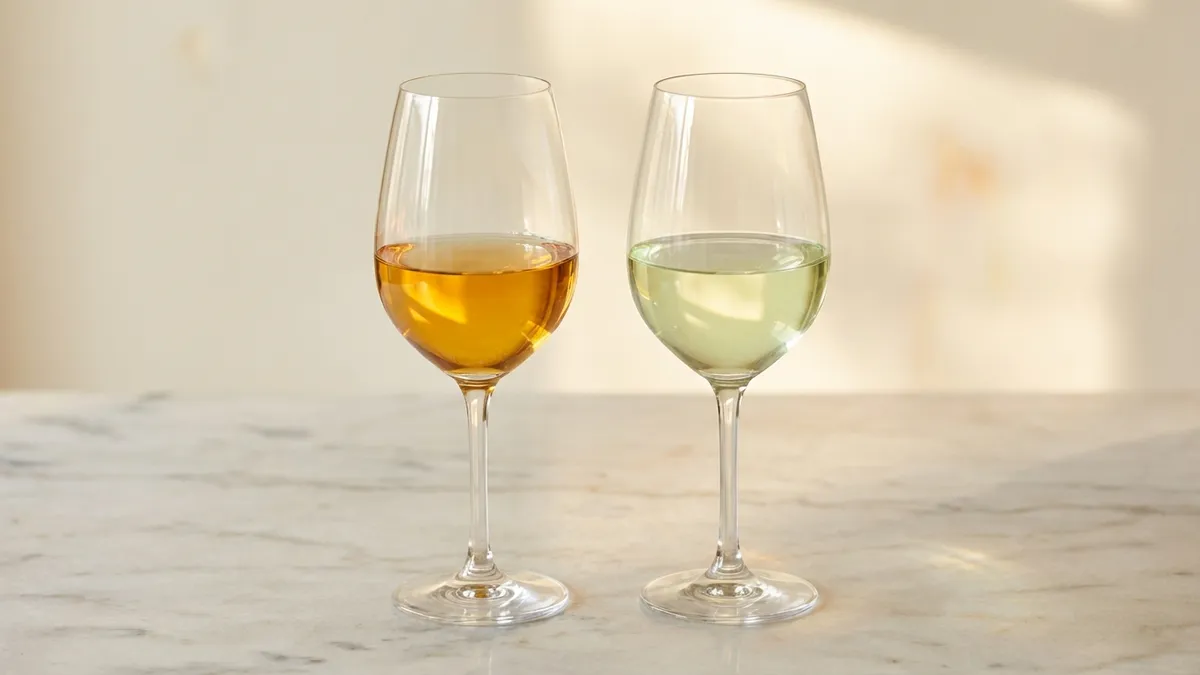
- Check the colour. Deeper gold suggests Chenin with age, oak or sugar; pale with a green tint fits Sauvignon.
- Feel the texture. Round, waxy or creamy under the acid means Chenin; thin and crisp means Sauvignon.
A sharp glass with a quiet nose can still be a young dry Chenin: let the honey or quince decide. More drills for unlabelled glasses are in the blind tasting tips.
What Food Goes With Each?
Pour Sauvignon Blanc with green, herby, tangy food and Chenin Blanc with pork, roast chicken, sweet-and-sour or chilli-hot dishes. Sauvignon's high acidity cuts through feta and fresh goat cheese, and its green smell matches herb sauces and herb-led Thai food.
Goat cheese with Sancerre is the Loire's classic match, and the wine with goat cheese guide covers the rest.
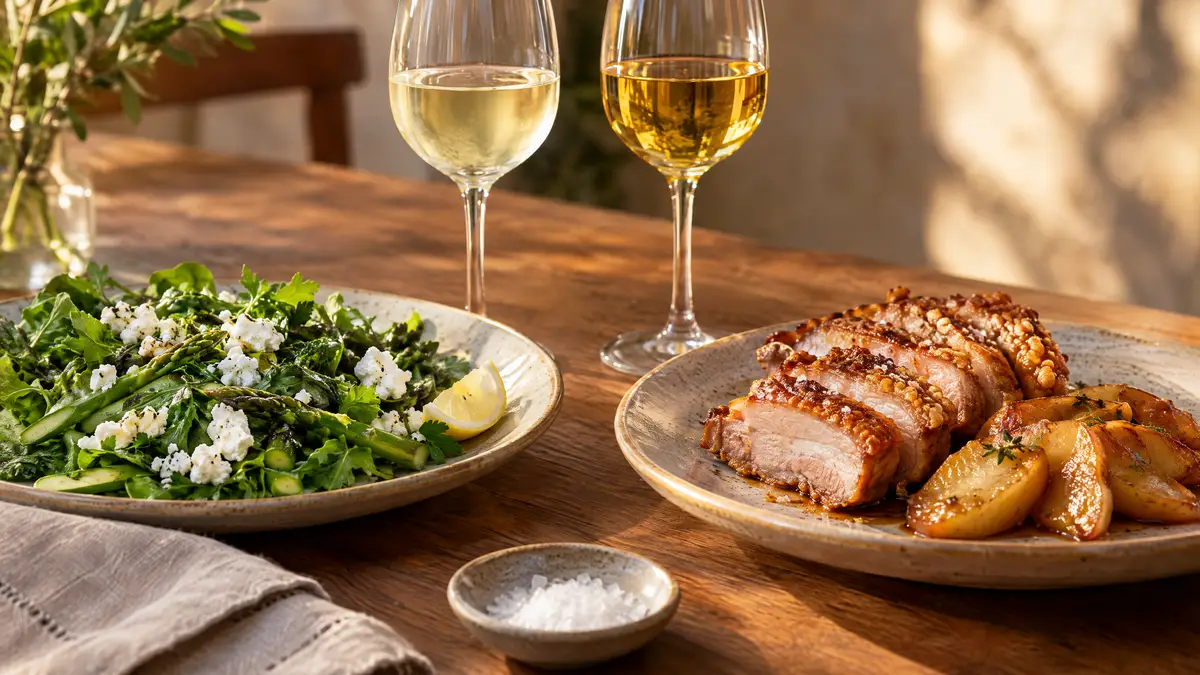
Dry Chenin goes with salads, fish and chicken. Off-dry Chenin meets the sugar in sweet-and-sour sauces and caramelised apple with pork belly. Medium-dry styles cut through cream sauces and pâté, and sweeter ones balance chilli heat. An oaked Chenin can stand in for Chardonnay with roast chicken or turkey. A sparkling Chenin goes with salted nuts and crisps.
Which Should You Buy?
Buy Sauvignon Blanc for a sure dry, sharp white, and Chenin Blanc for a rounder feel, a touch of sweetness or a bottle to keep for years. Sauvignon needs no label reading; Chenin does. Let the style word and the dish decide:
- Pick Sauvignon Blanc if the plan is a salad, goat cheese or an aperitif.
- Pick a dry Chenin Blanc, such as Savennières, if you want the same tartness with a rounder feel and orchard fruit.
- Pick a demi-sec or Vouvray if the dish is spicy, sweet-and-sour or pork with fruit.
Where Do Both Grapes Come From?
Both come from the Loire Valley in France, and Loire labels print the place name and usually leave the grape off. Chenin has probably grown there since around the ninth century: Vouvray and Savennières on a label mean Chenin. White Sancerre and Pouilly-Fumé mean Sauvignon Blanc. The Loire Valley wine guide maps both.
Sauvignon Blanc, crossed with Cabernet Franc, gave the world Cabernet Sauvignon. Chenin's second home is South Africa, where it was long called Steen and made up nearly a fifth of all vineyard plantings in 2008; the South African wine guide covers its old vines. The Chenin Blanc guide covers all five of its styles.
Tonight, chill one Sauvignon Blanc and one dry Chenin to fridge temperature, then pour two small glasses and taste them side by side, the method set out in how to compare two wines. More pairs sit in the grape varieties hub, including Chardonnay vs Sauvignon Blanc. The Sommy app's AI tasting mode photographs each label, walks you through look, smell and taste, and saves both notes to your tasting journal.
Sources
Frequently Asked Questions
What is the main difference between Chenin Blanc and Sauvignon Blanc?
Smell and range. Sauvignon Blanc smells green and tropical, of cut grass, gooseberry, grapefruit and passion fruit, and is almost always a dry, light white. Chenin Blanc smells of quince, yellow apple, pear and honey, and is made in every style from bone dry to sweet and sparkling. Both come from the Loire Valley and both have high acidity.
Is Chenin Blanc sweeter than Sauvignon Blanc?
Sometimes. Sauvignon Blanc is almost always dry. Chenin Blanc can be bone dry, off-dry or lusciously sweet, depending on when the grapes were picked and what the winemaker wanted. Savennières is mainly dry, while Vouvray often aims for an off-dry style. On a French label, demi-sec means off-dry. If you want a dry Chenin, look for a dry style word before you buy.
Which is more acidic, Chenin Blanc or Sauvignon Blanc?
Both have high acidity, the tartness that makes your mouth water, and neither wins by much. Chenin keeps high acidity whatever its style. It often feels less sharp because lees ageing, malolactic fermentation, oak or a touch of sugar round it out. A Sauvignon Blanc from a cool region usually feels the most mouth-watering of the two.
Does Chenin Blanc taste like Sauvignon Blanc?
Only in their tartness. Sauvignon Blanc smells loudly of grass, gooseberry and passion fruit. Chenin Blanc smells of quince, yellow apple, pear, chamomile and honey, and often feels rounder or creamier. Wine Folly describes Chenin as Riesling's acidity meeting Chardonnay's body and texture, which is a closer comparison than Sauvignon Blanc.
Which one ages better, Chenin Blanc or Sauvignon Blanc?
Chenin Blanc. Top Chenin can age for many years, and dry Savennières for decades, because its high acidity keeps the wine fresh while honeyed flavours build. Most Sauvignon Blanc is made to drink young, and Wine Folly gives it three to five years of cellaring.
Which is better with spicy food?
An off-dry or sweeter Chenin Blanc. A little sugar balances chilli heat, and Chenin's acidity keeps the glass fresh. Sauvignon Blanc suits herb-led Thai or Vietnamese dishes with gentler heat, because its green, herbal smell matches the fresh herbs on the plate.
Sommy Team
LinkedInFounder & Wine Educator
The Sommy Team is building the world's most approachable wine education app, helping beginners develop real tasting skills through structured courses and AI-guided practice.