Cabernet Sauvignon vs Pinot Noir: Side by Side (Taste, Food)
By the Sommy Team — AI-assisted, human-edited.
Updated Oct 23, 2026
Contents (7)
- Cabernet Sauvignon vs Pinot Noir, in One Paragraph
- Which Is Sweeter, Cabernet Sauvignon or Pinot Noir?
- Why Is Pinot Noir Paler and Softer Than Cabernet?
- How Do Cabernet and Pinot Noir Taste Different?
- What Food Goes With Cabernet or Pinot Noir?
- Where Does Merlot Fit Between Them?
- How to Serve and Taste Them Side by Side
TL;DR
Cabernet Sauvignon is full-bodied and high in tannin and smells of blackcurrant and black cherry, because its small berries have thick skins. Pinot Noir is lighter, low in tannin and smells of cherry and raspberry, because its skins are thin. Both are dry. Pour Cabernet with steak or lamb and Pinot with salmon, duck or mushrooms.
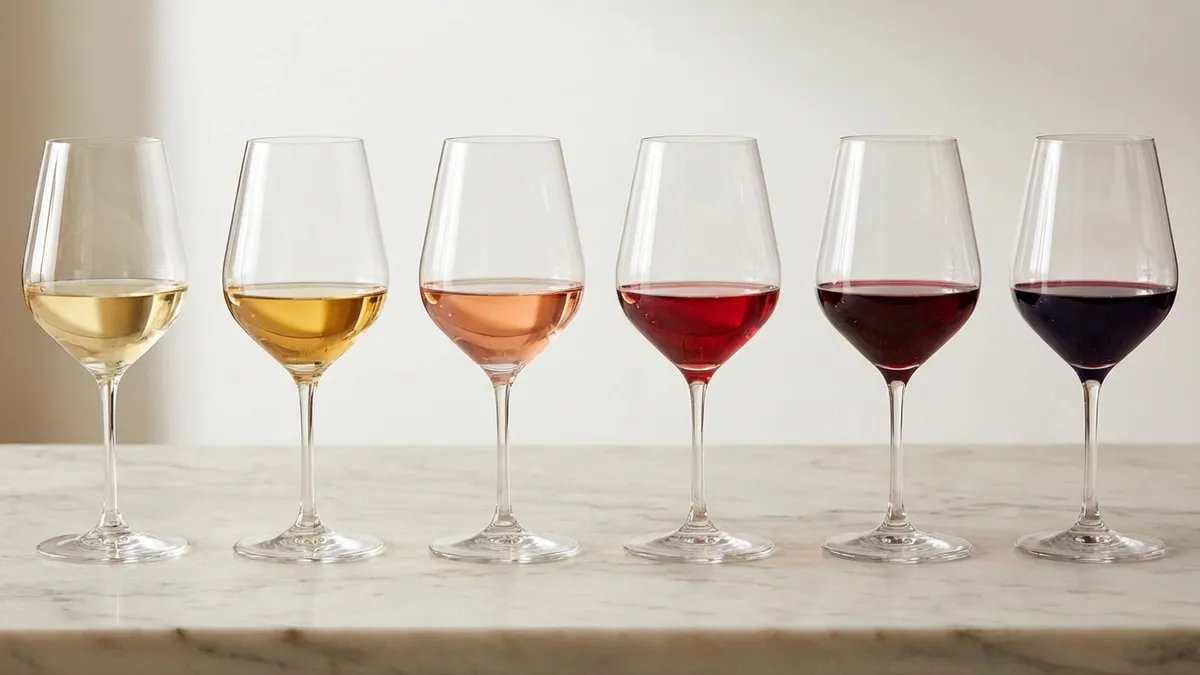
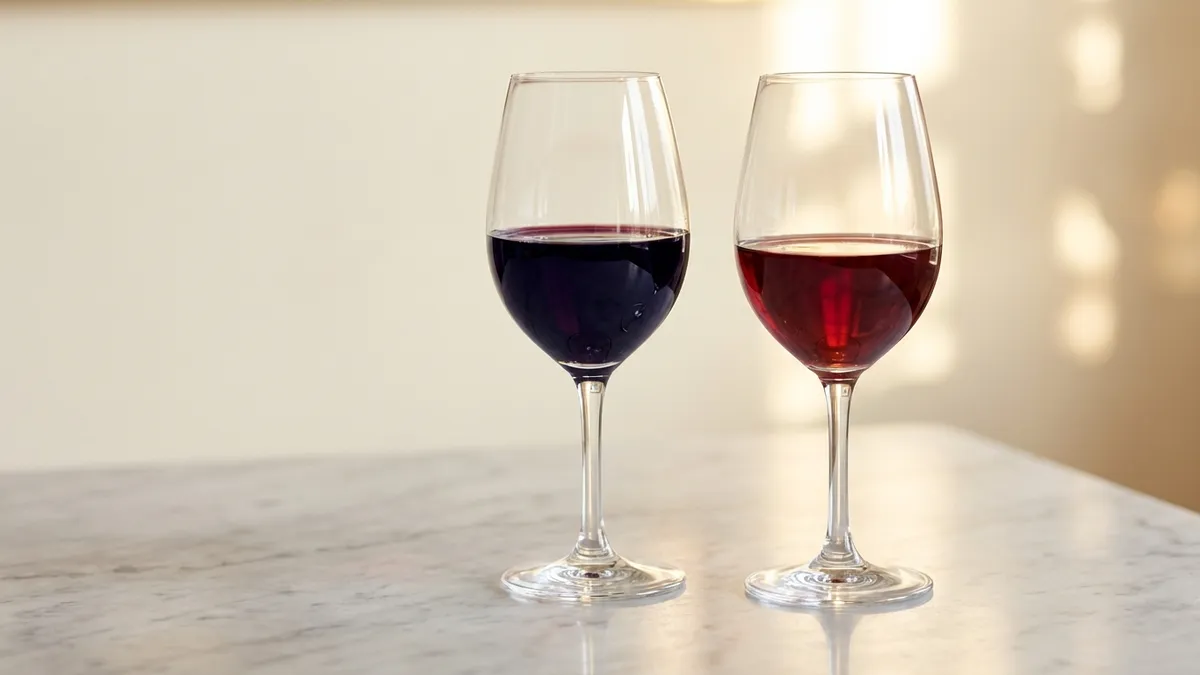
Cabernet Sauvignon vs Pinot Noir comes down to grape skins. Cabernet's small, thick-skinned berries give a dark wine with a firm grip, built for steak; Pinot Noir's thin skins give a pale, soft one for salmon, duck and roast chicken. Both are dry.
Cabernet Sauvignon vs Pinot Noir, in One Paragraph
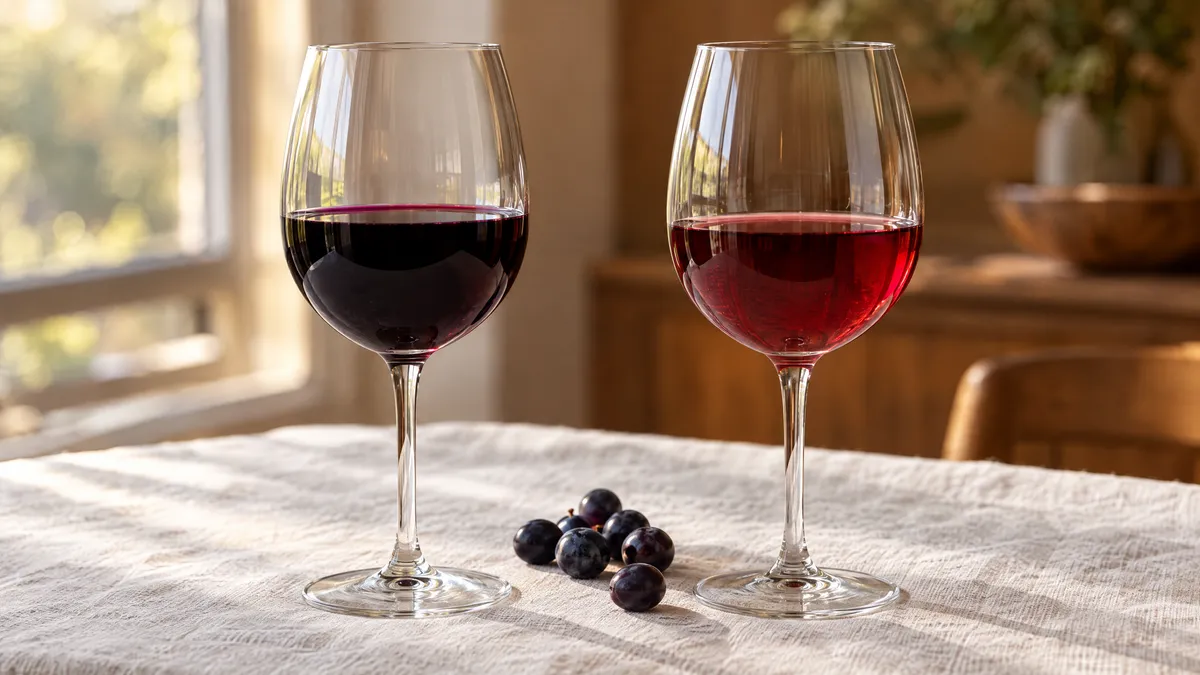
Cabernet Sauvignon is a full-bodied, high-tannin red that smells of blackcurrant, black cherry and cedar. Pinot Noir is a light-to-medium-bodied, low-tannin red that smells of cherry, raspberry and strawberry. Body is the weight of wine in your mouth, like whole milk against skimmed. Tannin is the drying grip on your gums, drawn from grape skins and seeds. Wine Folly puts Cabernet at 13.5 to 15% alcohol and Pinot at 12 to 14%. Both carry medium-high acidity.
| Cabernet Sauvignon | Pinot Noir | |
|---|---|---|
| Colour | Deep purple-red | Pale ruby, see-through |
| Body | Full | Light to medium |
| Tannin | High: dries your gums | Low: soft on the gums |
| Acidity | Medium-high, masked by tannin | Medium-high, easy to notice |
| Smells of | Blackcurrant, black cherry, cedar | Cherry, raspberry, strawberry, mushroom |
| Sweetness | Dry | Dry |
| Alcohol | 13.5 to 15% | 12 to 14% |
| Goes with | Steak, lamb, aged hard cheese | Salmon, duck, roast chicken, mushrooms |
| Serve at | 15 to 20°C (60 to 68°F) | 12 to 15°C (55 to 60°F) |
| Pick it if | You want grip and weight next to fatty meat | You want a lighter red for fish or poultry |
Which Is Sweeter, Cabernet Sauvignon or Pinot Noir?
Neither: Wine Folly lists both grapes as dry (no sugar you can taste). Pinot Noir often seems sweeter because its ripe cherry and raspberry fruit comes with little tannin, so nothing dries the finish. Cabernet's tannin dries the gums, which makes the same ripeness taste firmer and less sweet.
Fruit aroma is a smell, not sugar: the nose finds ripe cherry and expects a sweetness the tongue never gets. Sweet vs dry wine shows how ripe fruit and alcohol fool the palate in the same way.
Quick check
One question on what you just read
Pinot Noir often tastes sweeter than Cabernet Sauvignon. Why?
Tap an answer to see how you did.
Why Is Pinot Noir Paler and Softer Than Cabernet?
Skin thickness. Cabernet Sauvignon berries are small, with thick skins and a high seed-to-pulp ratio. Colour comes from the skins and tannin from skins and seeds, so fermentation pulls plenty of both into the wine. Pinot Noir's thin skins hold low levels of those compounds, so its wine comes out pale and soft.
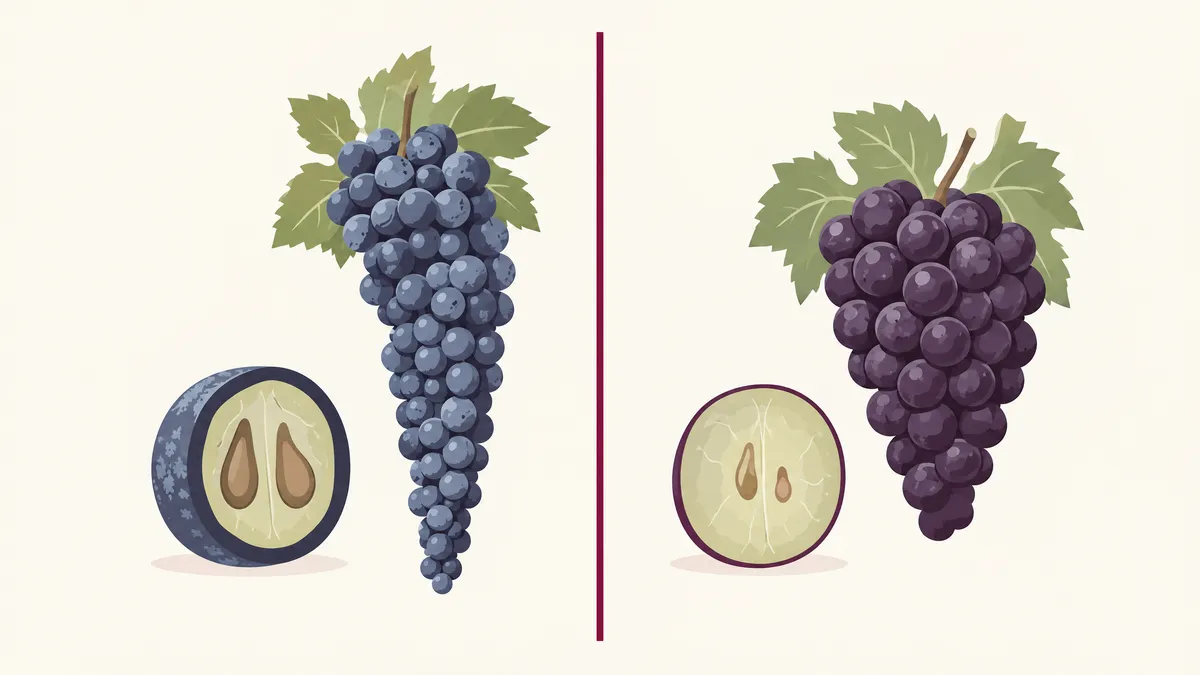
Cabernet's high tannin and noticeable acidity also give it a long life in the bottle. Pinot's pale colour is the thin skin showing, not a sign of weak wine. The grape is hard to grow and prone to mutation, and the wine writer Jancis Robinson calls it "a minx of a vine".
How Do Cabernet and Pinot Noir Taste Different?
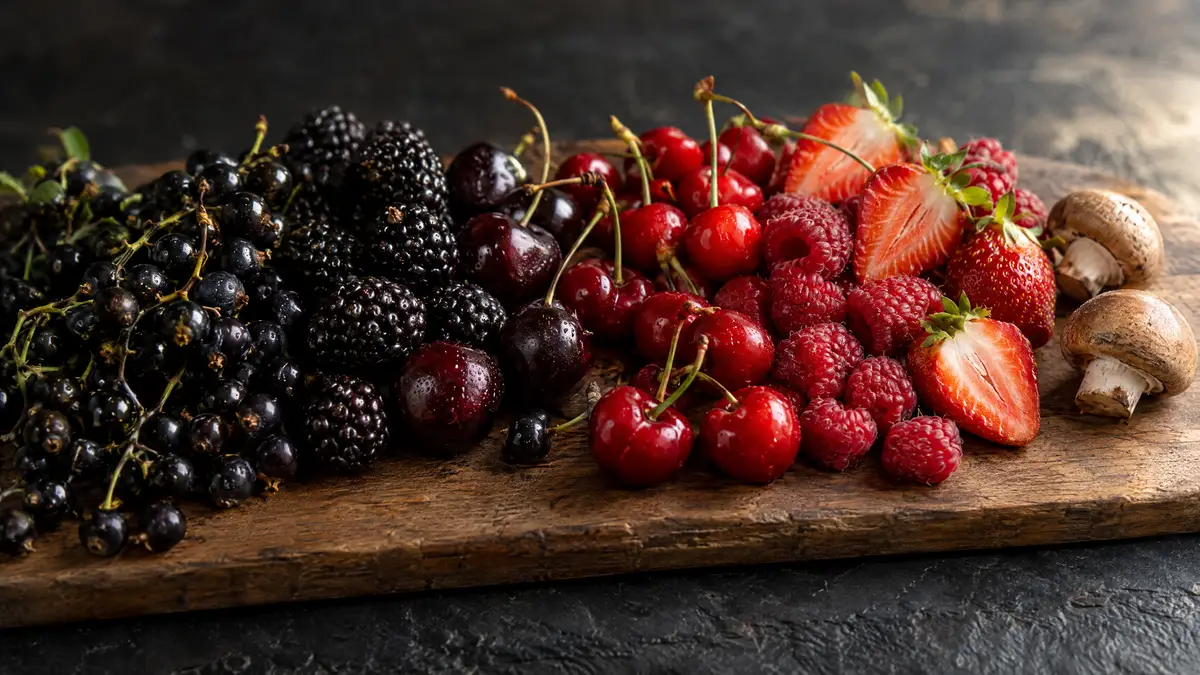
Cabernet smells of blackcurrant, black cherry and cedar; Pinot Noir smells of fresh cherry, raspberry and strawberry, often with an earthy mushroom note. Cabernet is one of the last major grapes to bud and ripen, so it needs warm sites, and under-ripe grapes from a cool year can smell of green bell pepper.
Pinot Noir grows mostly in cooler climates, which keeps its cherry fresh rather than jammy. Acidity (the tartness that makes your mouth water) is medium-high in both grapes, but it stands out more in Pinot, where little tannin and a lighter body sit on top of it. In Cabernet the tannin reaches your gums first.
The alcohol ranges in the table overlap at 13.5 to 14%, so a Pinot from a warm site can be as strong as a Cabernet from a cool one. If a Pinot Noir label reads 14%, expect a riper, fuller wine than a 12.5% bottle beside it.
What Food Goes With Cabernet or Pinot Noir?
If the plate has fat and char, pour the Cabernet: fat and protein reduce how much tannin you feel, so a grilled steak, lamb chops or a peppery sauce softens its grip. If it is salmon, duck, roast chicken or mushrooms, pour the Pinot Noir, whose low tannin leaves lighter food room to taste.
Some labels name a place instead of a grape. If it says red Burgundy (Bourgogne), the grape is almost always Pinot Noir. If it names the Médoc or Graves in Bordeaux, expect a blend led by Cabernet.
Where Does Merlot Fit Between Them?
In the middle, and closer to Cabernet. Merlot is an offspring of Cabernet Franc, which is also a parent of Cabernet Sauvignon, so the two grapes share a parent. Merlot has thinner skins and fewer tannins than Cabernet and ripens up to two weeks earlier. Next to Pinot Noir it is still darker and firmer.
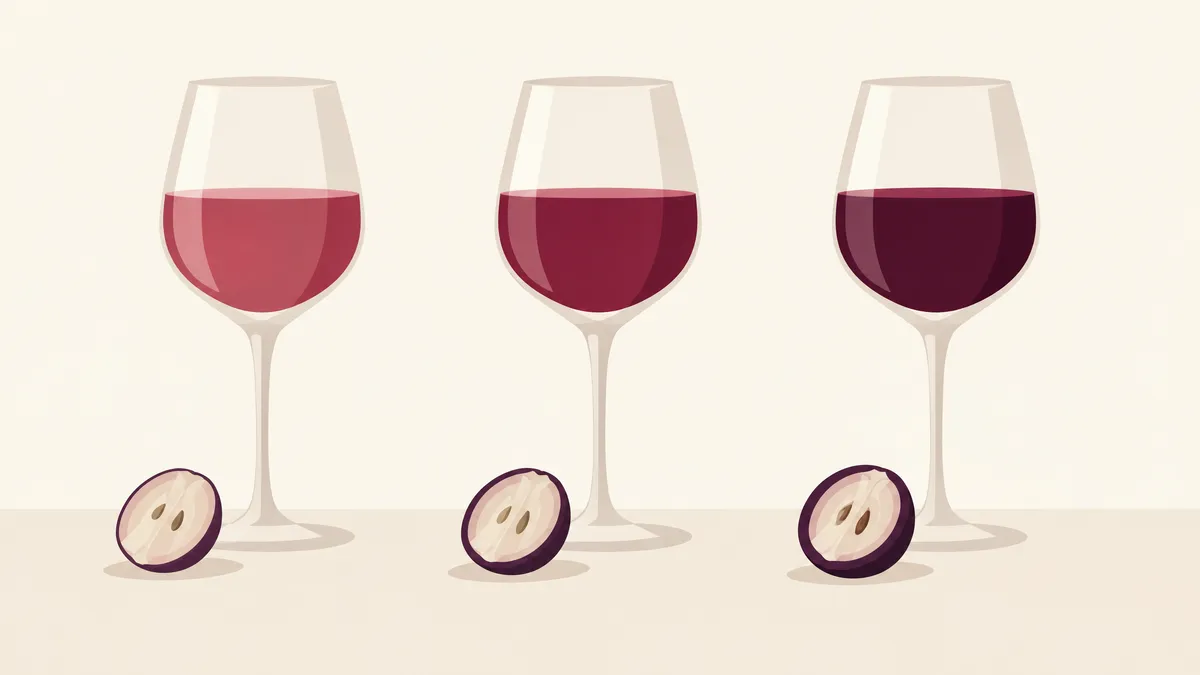
If Pinot feels too light and Cabernet too drying, try a Merlot. Cabernet Sauvignon vs Merlot and Pinot Noir vs Merlot set each pair side by side.
How to Serve and Taste Them Side by Side
Pour the same amount into matching glasses and taste both in the same order, so only the grape changes: the method behind how to compare two wines.
- Set the temperature. Pinot at 12 to 15°C (55 to 60°F), Cabernet at 15 to 20°C (60 to 68°F); the serving temperature chart shows how to get there without a thermometer. If the Cabernet is young, pour it into a jug an hour before.
- Look. Hold each glass over white paper. The paper usually shows through the Pinot, while the Cabernet stays close to opaque.
- Smell. Find blackcurrant in the Cabernet, then cherry or raspberry in the Pinot.
- Sip, then eat. Check your gums after each wine. Then take a bite of hard cheese and sip the Cabernet again: its grip eases.
Sommy's AI-guided tasting mode runs the same steps: photograph each label, and the app walks you through look, smell and taste, then logs both wines to your tasting journal.
Each grape has its full profile in the Cabernet Sauvignon guide and the Pinot Noir guide, and more reds sit in the grape varieties hub. The Wine 101 course in Sommy has short lessons on both grapes, plus a red-grape tasting practice. Buy one bottle of each tonight, pour them side by side and check your gums after every sip.
Sources
Frequently Asked Questions
Which is sweeter, Cabernet Sauvignon or Pinot Noir?
Neither. Both are made dry, with no sugar you can taste, and Wine Folly lists both grapes as dry. Pinot Noir often seems sweeter because its ripe cherry and raspberry fruit comes with little tannin, so nothing dries the finish. Cabernet's tannin leaves the gums dry, which makes its blackcurrant fruit taste firmer and less sweet.
Which is lighter, Pinot Noir or Cabernet Sauvignon?
Pinot Noir. Its thin skins hold low levels of the compounds that give red wine its colour and tannin, so it is pale ruby, light to medium in body and low in tannin. Cabernet Sauvignon grows small berries with thick skins and a high share of seed to pulp, which makes a dark, full-bodied wine with high tannin.
Which has more alcohol, Cabernet Sauvignon or Pinot Noir?
Usually Cabernet Sauvignon. Wine Folly gives Cabernet a range of 13.5 to 15% alcohol and Pinot Noir 12 to 14%. The ranges overlap, though: a Pinot from a warm site can reach 14%, as strong as a Cabernet from a cooler one. For any single bottle, the figure printed on the label is the answer.
Which is better for a beginner, Cabernet Sauvignon or Pinot Noir?
If red wine has felt harsh or drying to you before, start with Pinot Noir: its low tannin and fresh cherry fruit are easy to enjoy on their own. If you are eating steak or lamb, start with Cabernet, because the fat and protein soften its grip. Tasting the two side by side teaches more than drinking either alone.
Should Pinot Noir be served colder than Cabernet Sauvignon?
Yes, a little. Wine Folly suggests 12 to 15°C (55 to 60°F) for Pinot Noir and 15 to 20°C (60 to 68°F) for Cabernet Sauvignon. A light red tastes fresher slightly cool, while a full, tannic red tastes harsher when cold. If your Pinot has been standing in a warm room, a short spell in the fridge brings it down.
What food goes with Cabernet Sauvignon and Pinot Noir?
Cabernet Sauvignon goes with fatty red meat such as steak and lamb, peppery sauces and aged hard cheese, because fat and protein reduce how much tannin you feel. Pinot Noir goes with salmon, duck, roast chicken and mushroom dishes, because its low tannin leaves lighter food room. Pour Cabernet for char and fat, Pinot for fish and poultry.
Where does Merlot fit between Cabernet Sauvignon and Pinot Noir?
In the middle, closer to Cabernet. Merlot is an offspring of Cabernet Franc, which is also a parent of Cabernet Sauvignon, so the two share a parent. Merlot has thinner skins and fewer tannins than Cabernet and ripens up to two weeks earlier, yet it is darker and firmer than Pinot Noir. Try it when Pinot feels too light and Cabernet too drying.
Sommy Team
LinkedInFounder & Wine Educator
The Sommy Team is building the world's most approachable wine education app, helping beginners develop real tasting skills through structured courses and AI-guided practice.