Aglianico: Southern Italy's Powerful Ancient Grape

By the Sommy Team — AI-assisted, human-edited.
Updated Apr 29, 2026
Contents (12)
- What Is Aglianico Wine?
- Aglianico Wine, in 60 Seconds
- The Ancient Greek Origins of Aglianico
- Taurasi DOCG: The Flagship of Campania
- Aglianico del Vulture: Volcanic Power From Basilicata
- Other Aglianico Zones to Know
- Aglianico Tasting Notes and Flavor Profile
- Aglianico vs Nebbiolo: A Head-to-Head
- How to Pair Aglianico Wine With Food
- Serving Aglianico Wine
- How to Recognise Aglianico Blind
- Building Your Aglianico Tasting Skills
TL;DR
Aglianico is southern Italy's flagship red grape, planted by Greeks in Campania and Basilicata over two thousand years ago. Often called the Barolo of the South, aglianico wine shows deep ruby color, very high tannin, high acidity, and aromas of dark cherry, leather, tobacco, tar, and violet. Top Taurasi and Vulture wines age fifteen to twenty-five years.
What Is Aglianico Wine?
Aglianico is the most important red grape of southern Italy and one of the country's three great age-worthy reds, alongside Sangiovese and Nebbiolo. The name itself hints at the origin story — most scholars trace aglianico to the Italian word ellenico, meaning Hellenic or Greek. Greek settlers are believed to have brought the vine to the Italian peninsula in roughly the 7th century BC, planting it across what is now Campania and Basilicata. Two and a half thousand years later, aglianico wine still defines the south.
The grape is famously demanding. Aglianico ripens late — often well into late October or even November — which is why it thrives only in southern regions with long, warm autumns. It produces small, thick-skinned berries packed with tannin and acid, the two structural elements that give the wine its monumental aging potential.
What lands in your glass is striking. A young aglianico pours deep ruby-purple, almost opaque, and hits the palate with the gripping tannin and racing acidity of a heavyweight Italian red. Dark cherry, plum, leather, tobacco, tar, and violet weave through the aroma. Critics have called it the Barolo of the South for good reason — like nebbiolo wine, it asks for patience and rewards it with decades of evolution.
Aglianico Wine, in 60 Seconds
Aglianico is a thick-skinned, late-ripening red grape native to southern Italy. The two flagship zones are Taurasi DOCG in Campania (often called the South's Barolo) and Aglianico del Vulture Superiore DOCG in Basilicata, on the volcanic slopes of Mount Vulture. Aromas reach for dark cherry, blackberry, dried plum, leather, tobacco, tar, and violet, with smoky minerality on volcanic soils. The structure is severe — very high acidity, very high drying tannins, full body, and 13.5 to 14.5 percent alcohol. Color stays deep ruby longer than Nebbiolo. Top Taurasi needs 8 to 12 years to soften and the best can age 25 years or more. Cilento DOC and Aglianico del Taburno DOCG round out the major appellations. Terroir matters: volcanic soils give Vulture its smoky signature, while limestone-clay around Taurasi gives a more savory, austere profile.
The Ancient Greek Origins of Aglianico
Few European grapes have such a deeply traceable history. The Greeks colonised much of southern Italy from the 8th century BC onward, founding cities including Naples, Cumae, and Paestum. They brought their own grapevines and viticulture, planting widely across the volcanic and hill country of what they called Magna Graecia — Greater Greece.
Pliny the Elder, writing in the 1st century AD, described a wine called Vinum Hellenicum from Campania. Most ampelographers — the scientists who study grape varieties — link this directly to modern aglianico. The name evolved through medieval Latin and Spanish colonial use into the aglianico we know today.
This deep history matters for tasting. Aglianico is not a recently selected grape bred for productivity. It is an ancient variety that survived because it suits the volcanic and limestone soils of the Italian south, ripens reliably in long warm autumns, and produces wines of distinct, unmissable character. When you drink a serious aglianico wine, you are tasting something close to what Greek and Roman drinkers tasted two millennia ago.
Taurasi DOCG: The Flagship of Campania
Taurasi DOCG sits in the hills east of Naples, in the province of Avellino, at altitudes between 400 and 700 metres above sea level. The zone earned DOCG status in 1993 — the first red wine south of Rome to do so — and remains the historic benchmark for aglianico wine.
Production and Aging Rules
- Grape composition — minimum 85 percent Aglianico, with the remainder typically other local red grapes
- Aging requirements — minimum 36 months from harvest, of which 12 must be in oak
- Riserva — minimum 48 months, with at least 18 in oak
- Style — full-bodied, dark cherry, plum, leather, tar, tobacco, very firm tannins
- Aging potential — 10 to 25 years for typical vintages, longer for great years
Soils here are mainly clay and limestone with volcanic ash from nearby Mount Vesuvius. The combination gives Taurasi its characteristic savouriness and austere, slow-evolving structure. A young Taurasi can taste forbiddingly tannic on release, much like a young Barolo, and the wines genuinely need a decade in the cellar to show what the variety can do.
If Sangiovese is the warm heart of Tuscany and Nebbiolo is the cool brain of Piedmont, Taurasi is the iron spine of Campania.
Aglianico del Vulture: Volcanic Power From Basilicata
Across the Apennine mountains in Basilicata, the second great expression of aglianico grows on the dormant volcano of Monte Vulture. The Aglianico del Vulture DOC dates back to 1971, and the higher Aglianico del Vulture Superiore DOCG was created in 2010 for top wines with stricter aging requirements.
Volcanic Terroir
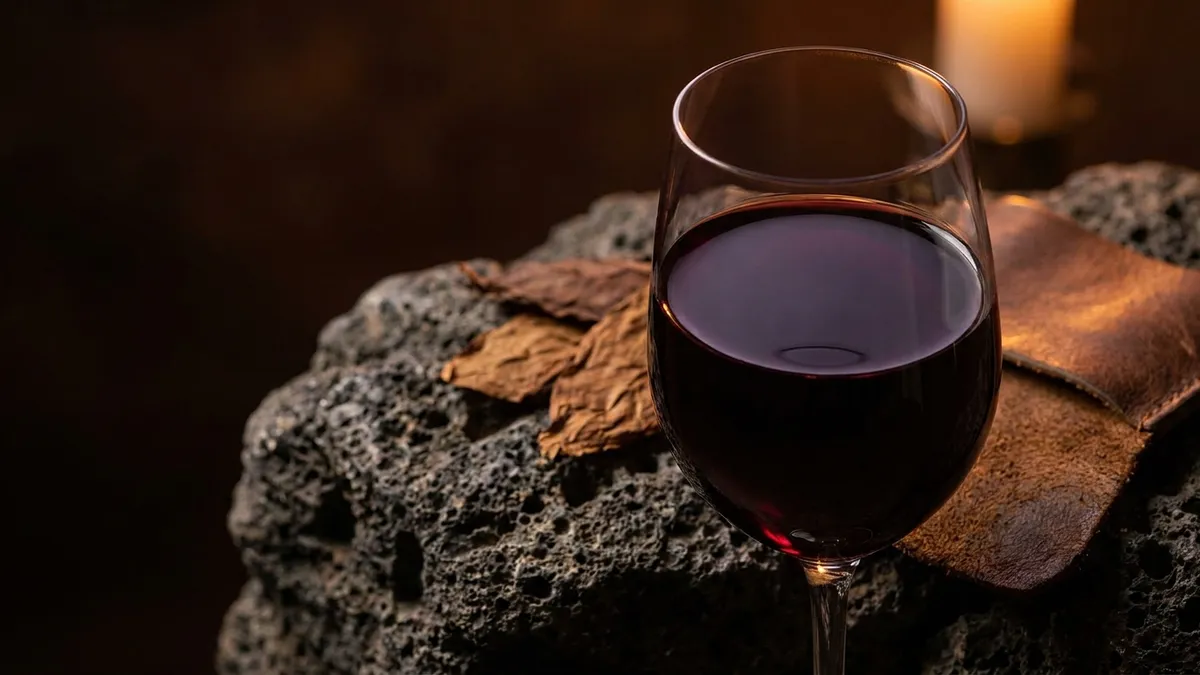
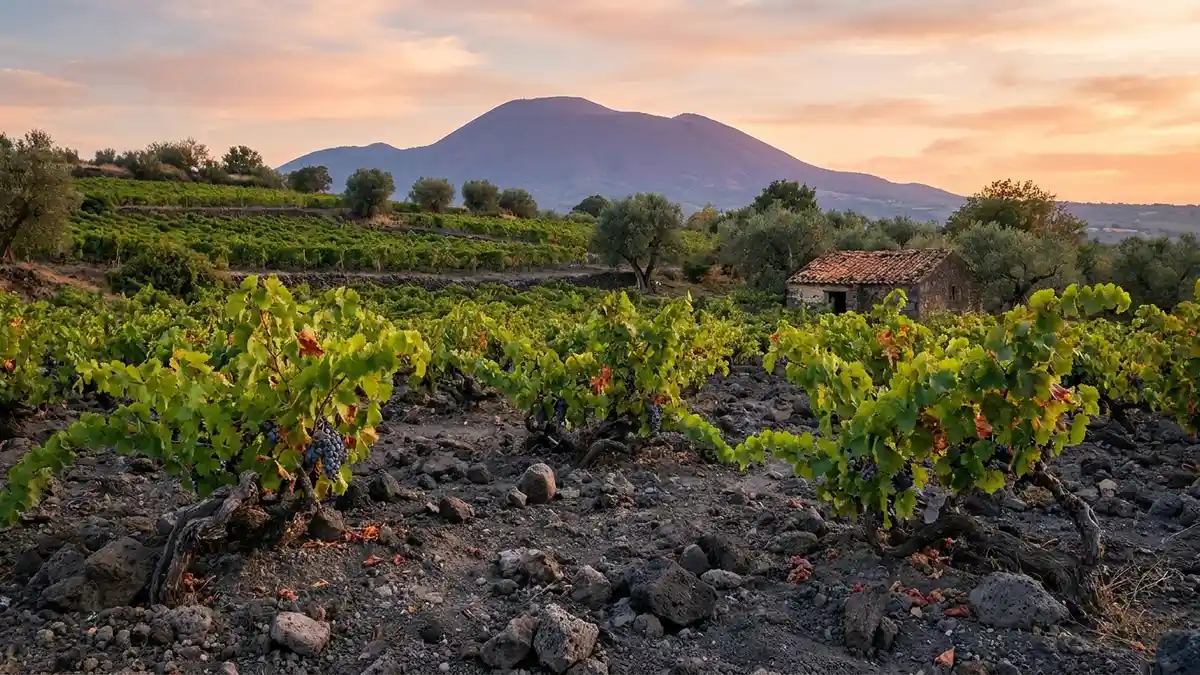
The slopes of Mount Vulture are covered in dark volcanic soils — basalt, tuff, ash, and lapilli left by past eruptions. These soils drain quickly, hold heat, and force the vine roots deep, where mineral-rich subsoil layers shape the resulting wine. As covered in the guide to how soil affects wine taste, volcanic soils tend to push wines toward smoke, iron, gunflint, and salty mineral notes.
Aglianico del Vulture Superiore typically shows:
- More smoke, ash, and iron-like minerality than Taurasi
- Slightly riper dark fruit (blackberry, black cherry compote)
- Equally gripping tannin but a sometimes silkier mid-palate
- Aging requirements of 36 months minimum with 12 in wood; Riserva is 60 months with 24 in wood
The high-altitude vineyards (450 to 700 metres) give the wine cool-climate acidity even in the warm south, similar to how altitude shapes wines covered in the climate and wine flavor guide.
Other Aglianico Zones to Know
While Taurasi and Vulture dominate the conversation, several other appellations deserve attention.
Aglianico del Taburno DOCG
In the province of Benevento, also in Campania, the Taburno zone elevated to DOCG in 2011. Wines here tend to be slightly more approachable than Taurasi, with riper fruit and a touch less austerity, while keeping the variety's structural backbone.
Cilento DOC
Further south along the Campania coast, Cilento DOC produces aglianico-based reds with a noticeably more Mediterranean character. The proximity to the sea and warmer climate give softer tannins and earlier-drinking wines, often blended with smaller percentages of native grapes like Piedirosso.
Castel del Monte DOCG
In the Puglia region, Aglianico is the lead grape for Castel del Monte Rosso Riserva DOCG. The wines here are typically rounder and more fruit-forward than the Campania or Basilicata versions, reflecting the warmer climate of southeastern Italy.
Beyond Italy
Small plantings of aglianico have appeared in California, Australia, and Argentina, but the variety is so site-sensitive that the wines rarely match their southern Italian origin in fragrance or structure. Like Nebbiolo, aglianico travels poorly.
Aglianico Tasting Notes and Flavor Profile
Aglianico has one of the most recognisable signatures among Italian reds, once you have tasted it carefully two or three times.
Core Aromas
- Fruit — black cherry, dark plum, blackberry, dried fig, prune in older bottles
- Floral — violet, dried rose, sometimes lavender
- Earth — leather, tobacco, tar, dried herbs, forest floor, truffle in older Taurasi
- Spice — black pepper, clove, anise, cinnamon
- Volcanic minerality — smoke, iron, gunflint, ash (especially Vulture)
- Oak (when present) — vanilla, baking spice, sweet wood from large casks or barrique
The trio of dark cherry, leather, and tobacco is the giveaway combination for blind tasting. Add a violet lift on the nose and a smoky-mineral finish, and you are almost certainly in aglianico territory.
Structure on the Palate
- Acidity — high to very high. The wine feels lifted and bright despite its weight
- Tannins — very high. Drying, gripping, sometimes mouth-coating in young wines
- Body — full. Heavier on the palate than Nebbiolo
- Alcohol — typically 13.5 to 14.5 percent
- Length — long. A great Taurasi can echo for 30 seconds or more
For deeper background on these structural terms, the tannin and acidity guide and wine structure explained are useful companions.
Aglianico vs Nebbiolo: A Head-to-Head
Both grapes earn the "King of X" title in their respective regions, and both share an obsession with tannin and acidity. The differences are real and worth learning.
| Trait | Aglianico | Nebbiolo | |---|---|---| | Color | Deep ruby-purple, slow to fade | Pale ruby-garnet, fades fast | | Body | Full | Medium | | Tannin | Very high, broad-shouldered | Very high, fine-grained | | Acidity | High to very high | Very high | | Lead aromas | Dark cherry, leather, tobacco, tar | Dried cherry, rose, tar, truffle | | Climate | Warm south, late-ripening | Cool north, fog-cooled | | Soil | Limestone-clay or volcanic | Calcareous marl | | Aging arc | 8-25 years | 10-30 years |
Side by side, aglianico tastes denser, darker, and more savoury. Nebbiolo tastes more aromatic, more floral, and lighter on its feet. The structural family resemblance is unmistakable — but they are cousins, not twins.
For a complementary comparison from a different country, the contrast between Cabernet and Merlot covers a similar power-versus-elegance dynamic in Bordeaux.
How to Pair Aglianico Wine With Food
Aglianico's tannin and acidity demand richness and savoury depth. Southern Italian cuisine evolved alongside the grape, which is why classic regional pairings still feel inevitable.
Iconic Southern Italian Pairings
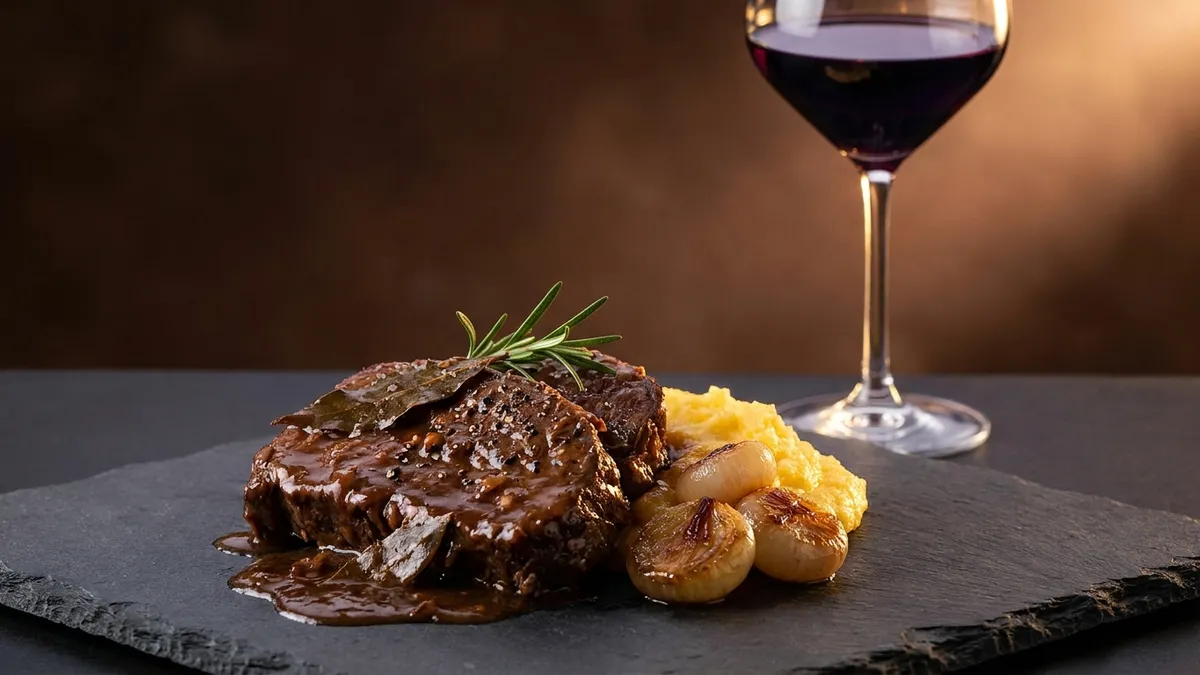
- Brasato di agnello — slow-braised lamb with rosemary and garlic, the Campania cousin of Piedmont's brasato al Barolo
- Ragù napoletano — long-cooked tomato and meat ragù over thick pasta. The acidity in the wine matches the acidity in the sauce
- Genovese di carne — slow-cooked beef and onion ragù, a Naples classic that turns aglianico into the perfect partner
- Wild boar (cinghiale) stew — gamey, fatty, slow-cooked. The wine's tannin binds beautifully to the protein
- Aged pecorino and caciocavallo — hard sheep's and cow's milk cheeses with salt and umami
- Grilled lamb chops with herbs, garlic, and olive oil
Beyond the Region
- Slow-roasted beef shoulder with rosemary and red wine jus
- Mushroom risotto with porcini or other forest mushrooms
- Hearty pasta with sausage ragù
- Grilled steak following the weight-and-intensity rule from the wine pairing rules guide
- Aged hard cheeses with honey or fig jam
What to Avoid
Aglianico's structure overwhelms light, delicate dishes. Skip raw fish, light salads, and anything with refined sugar — the tannins clash badly with sweetness. Spicy food also amplifies the wine's bitterness, so save the chilli for another bottle. The broader principle is covered in the wine and food pairing guide.
Serving Aglianico Wine
Temperature
Serve aglianico at 16 to 18°C (60 to 65°F). Slightly cooler dulls the perfume; warmer pushes the alcohol forward and softens the structure too much. The wine serving temperature chart covers temperature ranges for every red style if you want a deeper reference.
Decanting
- Young Taurasi or Vulture Superiore — 90 to 120 minutes in a decanter. Young aglianico genuinely opens up
- Mature Taurasi (15 years and older) — decant gently for sediment, but taste early. Old aglianico can fade in the glass within an hour
- Lighter Aglianico DOC bottlings — 30 to 45 minutes is usually enough
Glassware
A large, tulip-shaped glass works well — something close to a Bordeaux or Burgundy bowl. The wide bowl gives aglianico's perfume room to develop. A narrow glass mutes the aromatics and is the single most common reason new tasters miss what makes the grape special.
Aging Potential by Style
- Aglianico DOC (entry level): 4 to 8 years
- Cilento DOC: 5 to 10 years
- Aglianico del Taburno DOCG: 8 to 15 years
- Aglianico del Vulture Superiore DOCG: 8 to 15 years (Riserva: 12 to 20 years)
- Taurasi DOCG: 10 to 20 years (Riserva: 15 to 25+ years)
How to Recognise Aglianico Blind
If you are training your palate, aglianico is one of the most rewarding grapes to learn because the signature is so specific. The telltale combination is deep dark ruby color plus very high tannin plus dark cherry, leather, and tobacco.
A Sangiovese would have similar acidity but lighter color and brighter red cherry, less tobacco and leather. A Nebbiolo would have similar tannin but a much paler, garnet color and a lifted rose-and-tar aroma. A young Cabernet would have the depth of color but more cassis and graphite, less of the dried-tobacco character.
Tasted alongside a Sangiovese or a Nero d'Avola of similar age, aglianico shows more weight, darker fruit, broader tannin, and a savoury volcanic edge that the others rarely match. The Sommy app's blind tasting drills lean heavily on these regional comparisons — the deductive tasting method trains you to read color, structure, and aroma together rather than guessing from any one signal.
Building Your Aglianico Tasting Skills
Start with two bottles tasted side by side: an entry-level Aglianico del Vulture and a young Taurasi from the same vintage. The Vulture wine shows the volcanic, smoky end of the variety; the Taurasi shows the limestone-clay austerity and depth. Tasting them together is the fastest route to internalising what aglianico does across its two main expressions.
If you can stretch to three bottles, add an Aglianico del Taburno or a Cilento bottling for contrast. The differences in tannin grain, fruit ripeness, and minerality across these three wines will teach you more about southern Italian terroir in one evening than any book chapter.
The Sommy app walks through Italian grape comparisons exactly like this, with structured prompts that train you to notice the dark-cherry-and-leather signature, the volcanic smoke of Vulture, and the gripping tannin profile that define great aglianico wine. Pair that with the Italian wine guide and the wine tasting cheat sheet, and you have everything you need to taste southern Italy with confidence.
Aglianico rewards patience — both in the bottle and in the taster. Drink slowly, pair generously, and give the wine the food and time it asks for. The grape, like the people who first planted it on these volcanic hillsides two thousand years ago, returns the favour.
Frequently Asked Questions
What does Aglianico wine taste like?
Aglianico tastes of dark cherry, blackberry, dried plum, leather, tobacco, tar, and violet, with smoky volcanic minerality on the better examples. The structure is forceful — very high drying tannins, high acidity, full body, and 13.5 to 14.5 percent alcohol. Young bottles can feel austere and gripping, but with age the wine softens into something layered, savory, and deeply earthy.
Why is Aglianico called the Barolo of the South?
Because it shares the same defining traits as Nebbiolo from Piedmont — very high tannin, high acidity, slow ripening, deep complexity, and serious aging potential. Both grapes demand patience in the cellar and reward it with decades of evolution. The aromatic profile differs, with aglianico leaning darker and more volcanic, but the structural backbone and longevity put the two in the same conversation.
What are the most important Aglianico DOCGs?
Taurasi DOCG in Campania is the historic flagship, often called the South's Barolo, requiring three years minimum aging including twelve months in oak. Aglianico del Vulture Superiore DOCG in Basilicata grows on volcanic soils around Mount Vulture and has its own distinctive smoky minerality. Cilento DOC and Aglianico del Taburno DOCG round out the major appellations.
How long should you age Aglianico wine?
Top Taurasi typically peaks between 10 and 20 years from the vintage, with the best Riservas drinking beautifully for 25 years or more. Aglianico del Vulture Superiore generally hits its stride at 8 to 15 years. Lighter Aglianico bottlings without DOCG status are usually best within 5 to 8 years. The grape's high tannin and acid are what give it this longevity.
What food pairs best with Aglianico?
Aglianico's tannin and acidity demand rich, savory, fatty cooking. Classic southern Italian pairings include braised lamb, beef ragù over pasta, slow-cooked wild boar, oxtail stew, grilled steak, aged pecorino, and mushroom-heavy dishes. Hard sheep's milk cheeses and tomato-based ragù work beautifully because the acid in the wine matches the acid in the sauce.
Is Aglianico the same as Nero d'Avola?
No. Both are southern Italian red grapes but they differ sharply. Aglianico is grown mainly in Campania and Basilicata, with very high tannin, very high acidity, and an austere, age-worthy profile. Nero d'Avola is Sicily's flagship, with softer tannins, riper black-fruit character, and earlier drinkability. They are siblings in geography, not in style.
Where is the volcanic terroir of Aglianico del Vulture?
Mount Vulture is a dormant volcano in the Basilicata region of southern Italy. Its slopes are covered in dark volcanic soils — basalt, tuff, and ash — that drain quickly and retain heat. Vines planted between 450 and 700 metres above sea level on these soils give the wine a distinctive smoky, mineral, almost iron-like character that sets Vulture apart from Taurasi.
Sommy Team
LinkedInFounder & Wine Educator
The Sommy Team is building the world's most approachable wine education app, helping beginners develop real tasting skills through structured courses and AI-guided practice.