Wine with Short Ribs: Match the Big Red to the Sauce

By the Sommy Team — AI-assisted, human-edited.
Updated Oct 1, 2026
Contents (9)
- What Wine Goes with Short Ribs, in One Paragraph?
- Which Wine Fits Each Short Rib Sauce?
- Why Do Big Reds Taste Softer with Braised Beef?
- Which Grapes Work Best with Braised Short Ribs?
- What Wine Goes with Korean or BBQ Short Ribs?
- Can You Cook Short Ribs in the Wine You Will Drink?
- Is There a Lighter Wine for Short Ribs?
- How Should You Serve the Wine with Short Ribs?
- The Short Rib Pairing Rule to Use Tonight
TL;DR
Braised short ribs are mostly gelatin, fat and protein, which make tannin taste softer, so a full-bodied dry red is the safest pick. Choose by the sauce: Cabernet or Nebbiolo for a wine braise, high-acid reds for tomato, and soft, fruity Malbec or Syrah, slightly cool, for sweet soy or barbecue glazes.
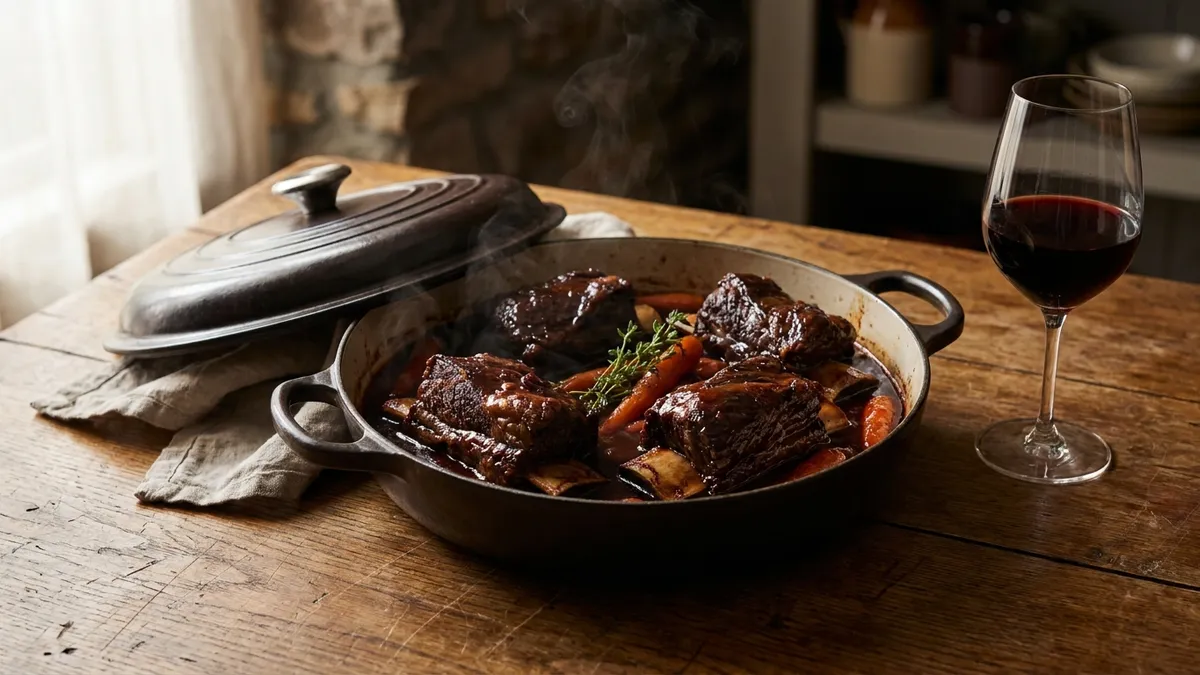
Wine with short ribs has an easier job than wine with steak. A braised short rib is almost nothing but melted collagen, fat and protein, and that mix makes a full-bodied, tannic red taste softer than it does with grilled beef. The cut tells you to open a big red. The sauce picks which one.
What Wine Goes with Short Ribs, in One Paragraph?
Wine with short ribs should be a full-bodied, dry red with firm tannin (the drying grip you feel on your gums), chosen by the sauce. For a classic braise in red wine and stock, open Cabernet Sauvignon, Nebbiolo or a structured Malbec from Cahors. For a tomato braise, pick a red with high acidity. For a sweet soy or barbecue glaze, choose a fruit-forward Malbec or warm-climate Shiraz with softer tannin, served slightly cool. Full-bodied means the wine feels heavy in the mouth, like whole milk next to skimmed.
Which Wine Fits Each Short Rib Sauce?
Pick the wine by the sauce, because on a braised short rib the sauce carries more flavour than the meat. Standard pairing guidance names sauce as the dominant flavour in many dishes, ahead of the meat. The rib itself is always rich and soft, so the liquid around it decides the wine.
| Sauce | What it brings | Wine style | Grapes to try | Open this when |
|---|---|---|---|---|
| Red wine and stock | Savoury depth, mild acidity | Full-bodied, firm tannin | Cabernet Sauvignon, Nebbiolo, Cahors Malbec | The braise is dark, glossy and unsweetened |
| Tomato | High acidity, a little sweetness | Medium to full body, high acidity | Nebbiolo, Sangiovese, cool-climate Syrah | The sauce tastes tart on a spoon |
| Soy, sugar and garlic glaze (galbi) | Sweetness, salt, sometimes chilli | Fruit-forward, soft tannin, served cool | Mendoza Malbec, warm-climate Shiraz | The glaze is sticky and sweet |
| Smoky barbecue sauce | Sugar, smoke, char | Ripe and fruity, moderate tannin | Shiraz, Malbec | The ribs finished on a grill or under a broiler |
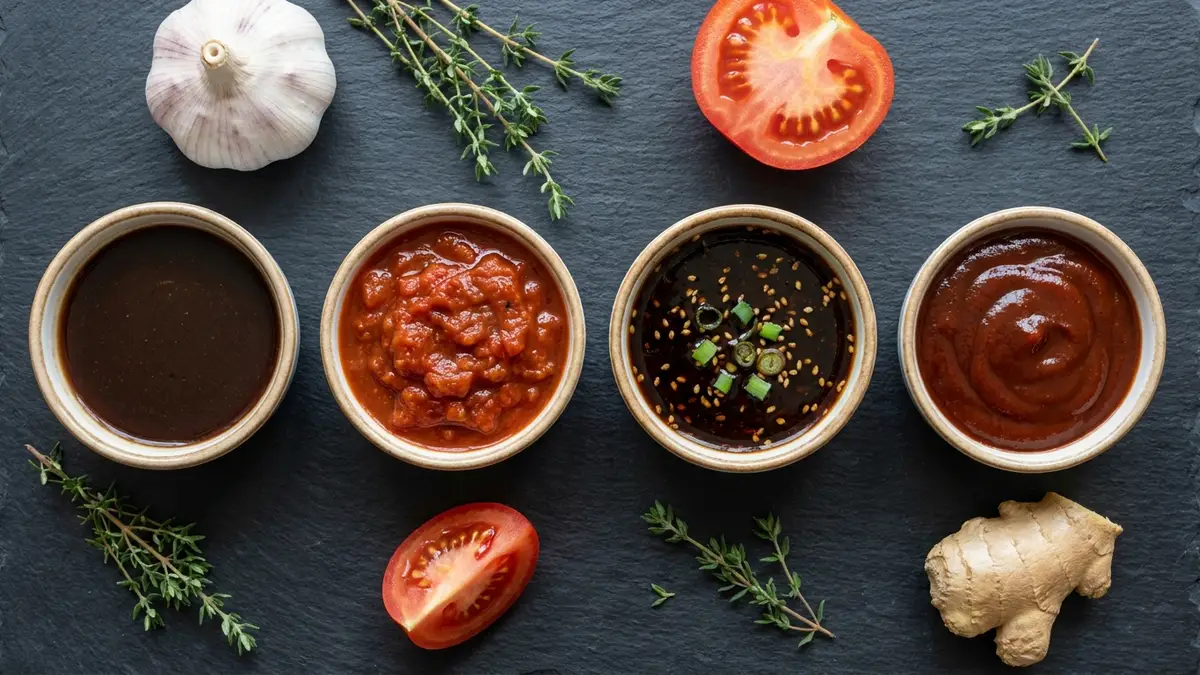
Tomato needs the most care. Acidity is the tartness that makes your mouth water, and most wines sit between pH 2.9 and 3.9. A wine less tart than the dish tastes thin and weak beside it, and a wine with too little acidity tastes flabby and flat. If the sauce tastes tart on a spoon, pick a red that tastes at least as tart.
If the braise is wine and stock, open the most tannic red on this list. If it is tomato, trade some tannin for acidity.
Why Do Big Reds Taste Softer with Braised Beef?
Because tannin grabs protein and fat, and a braised short rib is little else. Tannins bind to and precipitate proteins, which is where the dry, astringent grip of red wine comes from. With dishes high in protein and fat, such as red meat and hard cheese, the tannins bind to those proteins instead and come across as softer.
Short ribs come from the brisket, chuck, plate or rib areas of the animal, and they are packed with connective tissue. That is why they need long cooking, by braising, stewing or sous-vide, to turn tender. Heat breaks down collagen, the protein in that tissue, into gelatin. Gelatin melts below body temperature, so it turns silky in the mouth and coats it.
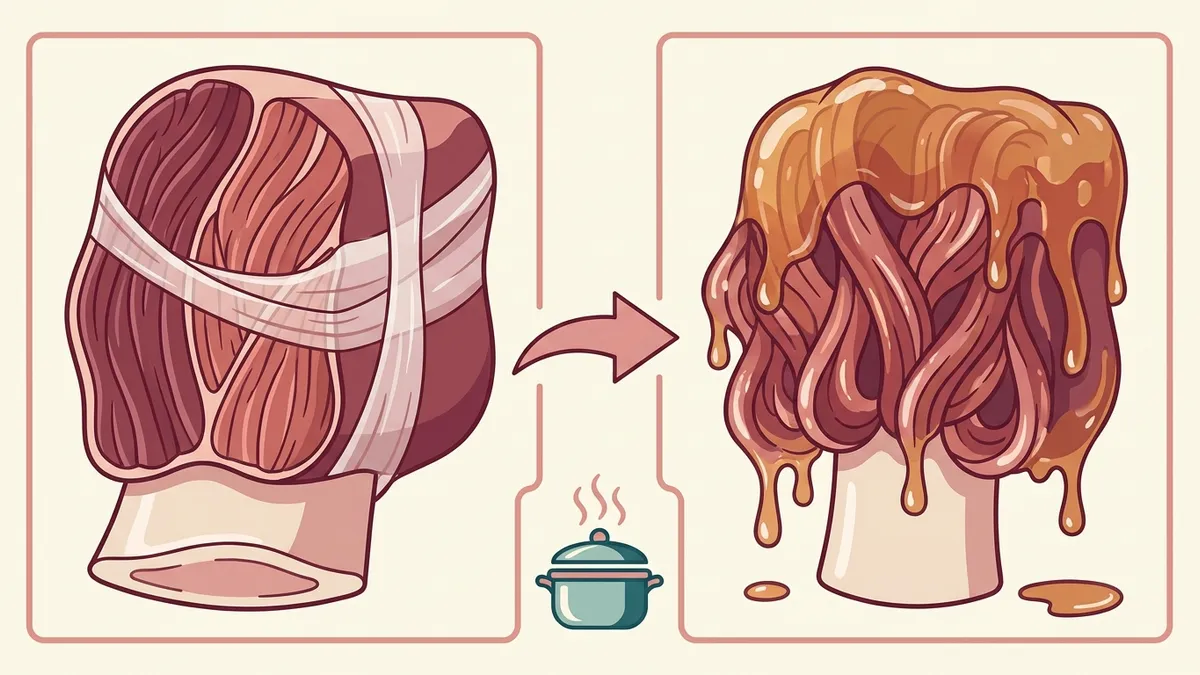
Braising does not add moisture to meat, despite the common belief. The juicy feel comes from that broken-down collagen lubricating the fibres. Before the long simmer, the ribs are browned at high heat. That browning is the Maillard reaction, which runs fast at around 140 to 165°C (280 to 330°F) and builds the roasted, savoury crust that dark red wine suits.
So the same Cabernet that grips hard beside a lean grilled steak feels rounder beside a short rib. Lean meat gives tannin less to bind to. For how fat and cut change the pick on grilled beef, see wine with steak, and for how tannin works on its own, what are tannins.
Which Grapes Work Best with Braised Short Ribs?
Cabernet Sauvignon, Syrah, Malbec and Nebbiolo cover almost every braise, and the style of each matters as much as the grape. Weight is the target, not the biggest wine on the shelf. A very ripe, high-alcohol red on top of a sweet, heavy sauce feels clumsy, however fine the bottle.
- Cabernet Sauvignon has firm tannin and full body, the classic choice for a dark braise in wine and stock. More on its styles in the Cabernet Sauvignon guide.
- Syrah changes with climate. Moderate climates give blackberry, mint and black pepper; hot ones give licorice, anise and leather. The Syrah vs Shiraz explainer shows how labels signal each.
- Malbec comes in two styles. Cahors Malbec from south-west France is much more tannic and darker. Argentine Malbec is softer, with a plusher texture and riper tannin, grown in Mendoza between 800 and 1,500 metres. The Malbec wine guide maps both.
- Nebbiolo has ample acidity and tannin together, so it handles both a wine braise and a tomato braise. Barolo is 100% Nebbiolo. See the Nebbiolo guide.
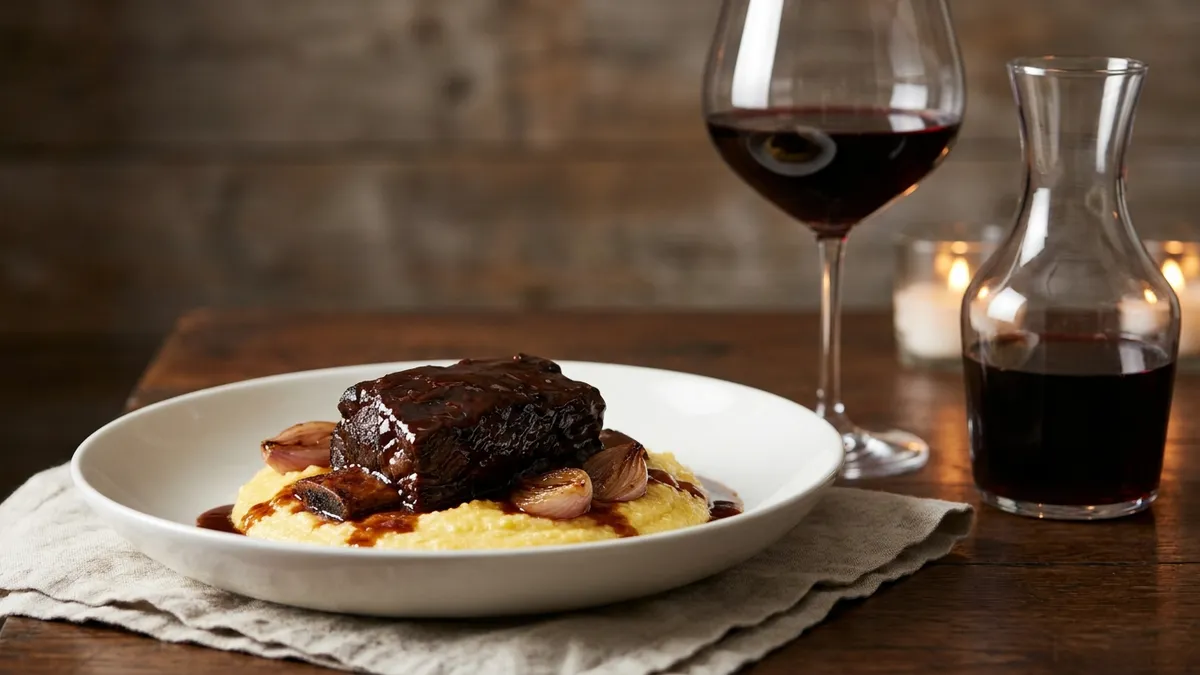
If the label says Cahors, expect firmer tannin, which suits an unsweetened wine braise. If it says Mendoza, expect riper, softer fruit, which suits a glaze.
What Wine Goes with Korean or BBQ Short Ribs?
Choose a fruit-forward red with soft tannin and serve it a little cool, because sugar and spice make tannin taste harsher. Spicy and sweet foods accentuate the dry bitterness of tannin. Salt and chilli heat accentuate alcohol and make a wine feel hot.
Korean galbi (short ribs marinated in soy, sugar and garlic) is mostly grilled rather than braised, so the sweet glaze sets the terms. A Mendoza Malbec or a warm-climate Shiraz brings enough ripe fruit to meet the sugar. A slight chill makes the alcohol feel less hot. For the rest of the Korean table, from bulgogi to kimchi stew, see wine with Korean food.
Barbecue sauce follows the same logic, with one helpful twist. Grilling and blackening add a bitter char, and char plays well with a tannic wine. A ripe Shiraz or Malbec with moderate tannin bridges the sugar and the char. The wine with BBQ guide covers brisket, pulled pork and sauces in more detail.
Can You Cook Short Ribs in the Wine You Will Drink?
Yes, and it is the simplest way to tie plate and glass together. Braising means browning the meat first, then simmering it covered in liquid. That liquid often includes something acidic, such as tomatoes, beer, balsamic vinegar or wine. In a classic braise it covers about two-thirds of the meat.
Hours of simmering reduce that wine to something deeper and less fruity than the bottle you opened. An exact match matters less than sharing a style: same grape, same weight, same acidity. Cook with a wine you would drink, because hours of reduction concentrate its faults along with its fruit.
If you braise in a red, buy two bottles of the same one: one for the pot, one for the table.
Is There a Lighter Wine for Short Ribs?
Yes: a lighter red with high acidity, such as Sangiovese, keeps the freshness and drops some weight. A light white is the wrong step down, because the dish buries it. Pairing guides give the example of a light-bodied Pinot Grigio being overwhelmed by a hearty stew.
Sangiovese brings plenty of acidity with a lighter body than Cabernet. If the meal is long or the room is warm, choose it over a full-bodied red. The Sangiovese guide explains how each label signals its weight.
How Should You Serve the Wine with Short Ribs?
Serve it slightly below room temperature, in a large glass, and give a young bottle some air first. A warm room makes full-bodied reds taste of alcohol before fruit. Our wine serving temperature chart gives the target range for full-bodied reds.
Short ribs braise for hours, so there is time to pour a young, tannic red into a decanter or jug before dinner. That air softens the first impression. The step-by-step in how to decant wine covers timing for young and old bottles.
If the bottle feels warm to the hand, chill it briefly in the fridge before pouring.
The Short Rib Pairing Rule to Use Tonight
Match the weight to the meat, then the wine to the sauce. If you can taste only one thing before buying, taste the sauce: sweet means a soft, fruity red, tart means high acidity, savoury means firm tannin. The general version of that rule, for every dish, sits in our wine pairing rules and the food pairing hub.
Tonight, buy two bottles of one full-bodied dry red, braise the ribs in one and pour the other. Before you eat, use the tasting mode in the Sommy app: photograph the label and taste it through look, smell and taste. Then taste it again after a forkful and log how the grip changed in your tasting journal.
Sources
Frequently Asked Questions
What wine goes best with braised short ribs?
A full-bodied dry red with firm tannin. Cabernet Sauvignon, Syrah, Malbec and Nebbiolo all work, because the gelatin, fat and protein in a braised rib make tannin taste softer. Let the sauce settle the choice: a classic red-wine braise suits Cabernet or Nebbiolo, tomato wants high acidity, and a sweet glaze wants soft, fruity Malbec or Syrah.
Should I cook short ribs in the same wine I serve?
It helps, because the sauce and the glass then share their fruit and acidity. Use a dry red you would happily drink, not a cheap leftover. The braising liquid reduces for hours, so the finished sauce tastes deeper than the wine you poured in. Buying two bottles of the same red is the simplest way to link plate and glass.
Is Cabernet Sauvignon good with short ribs?
Yes, especially with a classic braise in red wine and stock. Cabernet's firm tannin binds to the protein and fat in the meat and feels softer than it does on its own. It is a weaker choice with a sweet soy or barbecue glaze, where sugar makes its tannin taste harsh and bitter.
What wine goes with Korean short ribs?
Korean galbi is marinated in soy, sugar and garlic, so the wine needs ripe fruit and gentle tannin. A fruit-forward Malbec or warm-climate Shiraz, served slightly cool, handles the sweetness. Avoid very tannic or very high-alcohol reds if the dish carries chilli, because spice and salt make alcohol feel hotter and sweetness makes tannin taste bitter.
What wine goes with short ribs in tomato sauce?
A red with high acidity, such as Nebbiolo, Sangiovese or a cool-climate Syrah. Tomato is tart, and a wine less tart than the dish tastes thin and weak beside it. Matching the acidity keeps the wine fresh and lets the fruit come through. A soft, low-acid red tends to taste flat with a tomato braise.
Can I drink white wine with short ribs?
You can, but it is the harder path. A braised rib is a heavy dish, and light whites such as Pinot Grigio simply vanish next to a hearty stew. If red is off the table, pick the fullest white available, ideally one aged in oak, and save it for a lighter sauce rather than a dark red-wine braise.
Sommy Team
LinkedInFounder & Wine Educator
The Sommy Team is building the world's most approachable wine education app, helping beginners develop real tasting skills through structured courses and AI-guided practice.