Wine with Korean Food: BBQ, Kimchi, and Fried Chicken

By the Sommy Team — AI-assisted, human-edited.
Updated Sep 24, 2026
Contents (9)
- Does Wine Actually Work with Korean Food?
- Why Does Spicy Korean Food Make Wine Taste Different?
- What Wine Goes with Korean BBQ, Bulgogi, Galbi, and Samgyeopsal?
- What Wine Pairs with Kimchi?
- What's the Best Wine for Gochujang-Based Dishes?
- What Wine Goes with Korean Fried Chicken (Chimaek), and Why Is It Usually Beer?
- Is Soju or Wine the Better Match for a Korean Meal?
- What Wines Should You Avoid with Korean Food?
- Quick Picks: A Bottle for Every Kind of Korean Dinner
TL;DR
Wine does work with Korean food, but the usual big red is the wrong tool. Off-dry, low-alcohol whites tame the capsaicin in kimchi and gochujang, a dry sparkling wine cuts through fried chicken's oil, and a lightly chilled red suits plain bulgogi and galbi. Skip tannic, high-alcohol reds.
Pairing wine with Korean food gets hard once a bottle is open and the table holds banchan, grilled meat, and a jar of kimchi. Korean food is one of the harder cuisines to pair with wine. The usual instinct is to reach for a big red to match the grilled meat. That red runs straight into capsaicin, salt, and fermented funk, which turn tannin and alcohol harsh. The fix is to match the glass to the dish's heat and salt, and to ignore how much protein is on the grill.
Does Wine Actually Work with Korean Food?
Yes, once the wine style changes. High-alcohol, heavily oaked reds clash with capsaicin and fermented funk, and soju, beer, and makgeolli remain the traditional pours for good reason. Off-dry, low-alcohol whites and lightly chilled, low-tannin reds handle Korean food's heat and salt the same way they handle any other spicy, savory cuisine. If a dish is hot, then pick a wine lower in alcohol and tannin, however much meat is on the table.
Why Does Spicy Korean Food Make Wine Taste Different?
Capsaicin (the compound behind chili heat in gochugaru and gochujang) changes how wine tastes in two directions at once: it makes alcohol feel hotter, and it makes tannin feel harsher. The WSET's guidance on pairing drinks with spice describes both effects. The standard advice for any spicy cuisine therefore holds for Korean food too: go lower in alcohol and tannin.
Three effects stack up at a Korean table. First, alcohol and chili heat amplify each other, because ethanol sensitizes the same heat receptor capsaicin triggers. A wine at 14% ABV next to a fiery gochujang glaze reads hotter than the same dish next to something at 11%. Second, tannin (the drying, gripping sensation from grape skins and oak) turns harsh against capsaicin heat. A big Cabernet Sauvignon or Barolo feels rougher with spicy food than it would with plain grilled meat.
Third, residual sugar (unfermented grape sugar left in the finished wine) softens the burn the way a spoonful of yogurt calms a hot curry. Serving the wine a touch cooler calms it further. If the dish is fiery, then pour a wine with less alcohol, less tannin, and a little sugar, served cool.
The same physics as Thai and Indian food
None of this is unique to Korean cooking. The same physics makes a tannic red taste wrong with Thai chili or an Indian vindaloo (see wine with spicy food and the food and wine pairing hub). What is specific to Korean food is how often heat, salt, and ferment show up in the same bite.
Pick the row that matches the hottest dish on the table.
| Dish | Wine style | ABV / sweetness target | Serve at |
|---|---|---|---|
| Bulgogi / galbi (unglazed BBQ) | Light, low-tannin red: Beaujolais or cool-climate Pinot Noir | 12–13% ABV, dry | 12–14°C, or 15–17°C for structured crus |
| Mild kimchi | Dry Riesling or Grüner Veltliner | 11–12.5% ABV, dry | 8–10°C |
| Aged, very hot kimchi | Off-dry Riesling Spätlese | 8–11% ABV, off-dry | 8–10°C |
| Gochujang-glazed dishes | Off-dry Riesling or Gewürztraminer | 8–13% ABV, off-dry | 8–10°C |
| Korean fried chicken (chimaek) | Dry sparkling wine or crisp Vinho Verde | 11–12.5% ABV, dry | 6–8°C |
What Wine Goes with Korean BBQ, Bulgogi, Galbi, and Samgyeopsal?
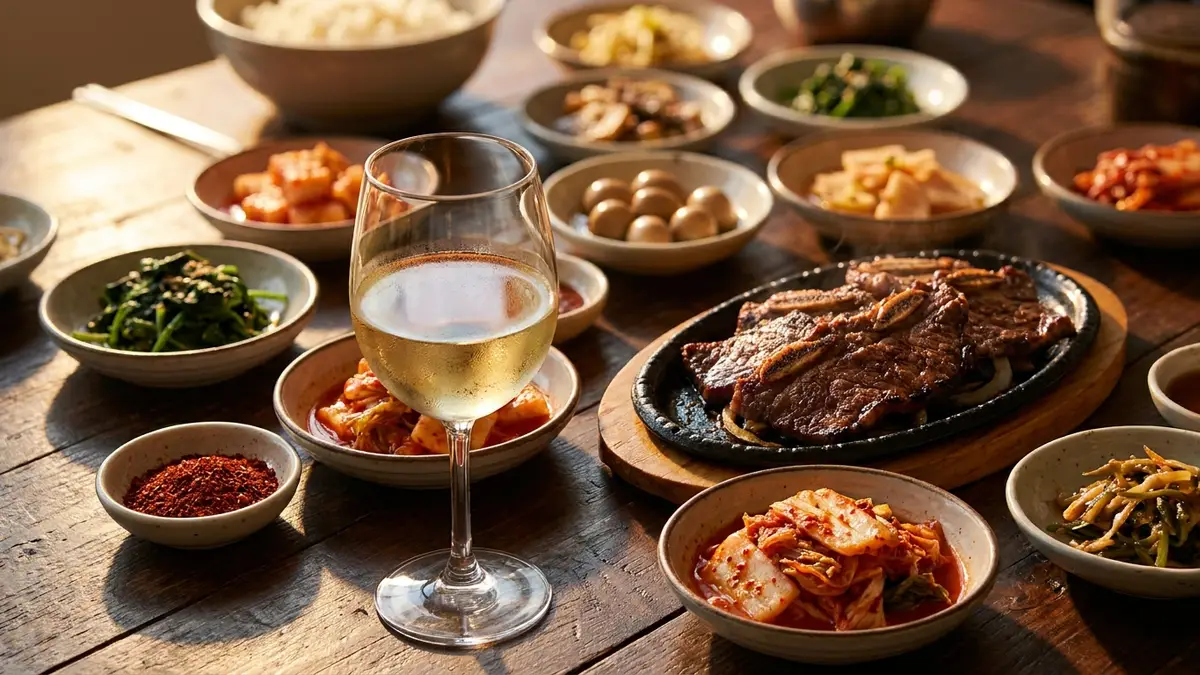
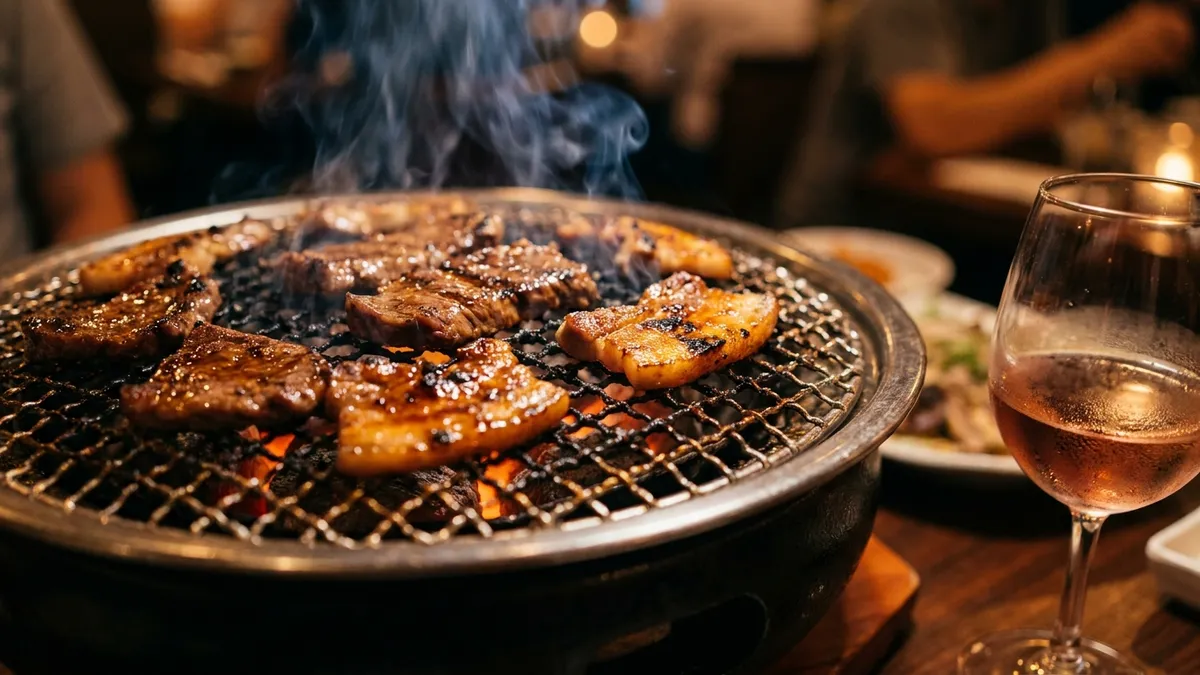
A lightly chilled, low-tannin red is the best match for Korean BBQ. Beaujolais and its lighter crus, or a cool-climate Pinot Noir, carry enough fruit for grilled and marinated meat. They also lack the tannin that clashes with a gochujang glaze or dipping sauce on the table.
Bulgogi (thin-sliced marinated beef) and galbi (marinated short ribs) both lean sweet and savory rather than fiery. That leaves more room for red wine than kimchi or a gochujang stew does. Serve a light red cool, around 12 to 14°C, the way Beaujolais is meant to be served. The chill keeps the tannin in check and the fruit bright.
For richer cuts like galbi, Beaujolais crus such as Morgon or Moulin-à-Vent add more structure; serve them a touch warmer, at 15 to 17°C. A Pinot Noir from a cool region does the same job with a little more earthiness.
Samgyeopsal (grilled pork belly) is the fattiest of the three. It needs the acidity and slight chill of an off-dry Riesling or a dry rosé to cut through the fat. That matters more once it is dipped in ssamjang, a fermented soybean and chili paste. If any of the three arrives with a spicy gochujang marinade, then treat it like a gochujang dish and pour white.
What Wine Pairs with Kimchi?
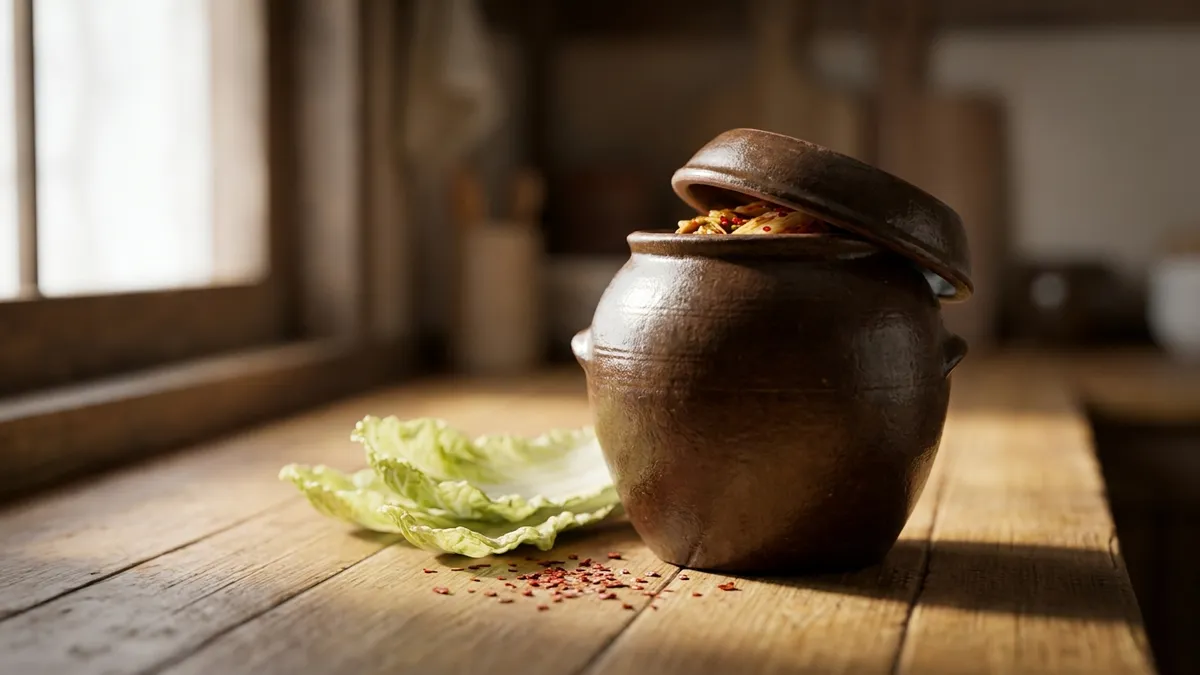
Kimchi's fermented sourness and salt call for a crisp, off-dry white with enough acidity to match. Riesling is the standard answer. Its acidity mirrors the lactic tang, and its fruit softens the chili. If the kimchi is young and mild, then pour it dry; if it is aged and hot, then pour it off-dry.
Kimchi comes in more than 180 recognized varieties. Cooks salt cabbage or other vegetables at anywhere from 5 to 15 percent salt, then pack them into an airtight jar. The jar ferments at room temperature for 24 to 48 hours, until lactic acid drops the pH to roughly 4.2 to 4.5.
Chili heat varies just as widely. Korean chili paste's pungency is graded on its own scale, the Gochujang Hot-taste Unit (GHU), from mild (under 30) to extreme hot (over 100). A young, mild baechu (napa cabbage) kimchi tastes closer to a tangy pickle and works with a dry Riesling or Grüner Veltliner. An aged, very hot kimchi needs the extra cushion of an off-dry Riesling Spätlese. Its touch of sweetness matches the heat, while its acidity still cuts through the salt and funk. For the dry-to-sweet ladder, see Riesling; the wine sweetness scale explains what "off-dry" means on a label.
What's the Best Wine for Gochujang-Based Dishes?
Off-dry Riesling or Gewürztraminer is the safest match for gochujang (Korea's fermented red chili paste). Both carry enough fruit and a touch of sweetness to soften the paste's heat, and neither adds the tannin that makes chili burn worse.
Gochujang chicken, tteokbokki (spicy rice cakes), and other gochujang-forward dishes tend to sit in the medium-to-very-hot range on the GHU scale. If the dish is gochujang-based, then treat sugar as you would with a hot kimchi: pour an off-dry Riesling in the roughly 8 to 13 percent ABV range. Its sweetness meets the paste's own sweetness head on. Gewürztraminer's lychee and rose-petal aromas do the same job, and its spicy smell adds a spice-on-spice layer that goes with the sesame and garlic under the chili.
Gochujang gets its heat from red pepper powder, its body from glutinous rice and fermented soybean (meju), and its savory depth from months of fermentation. A typical recipe runs roughly a quarter red pepper powder, a fifth glutinous rice, about 5 percent meju powder, and around 13 percent salt. Chili itself reached East Asia with Portuguese traders only in the early 16th century. Fermented pepper-and-grain pastes predate that arrival in a milder form. Sunchang County has been known for the paste since the founding of the Joseon Dynasty in 1392.
What Wine Goes with Korean Fried Chicken (Chimaek), and Why Is It Usually Beer?
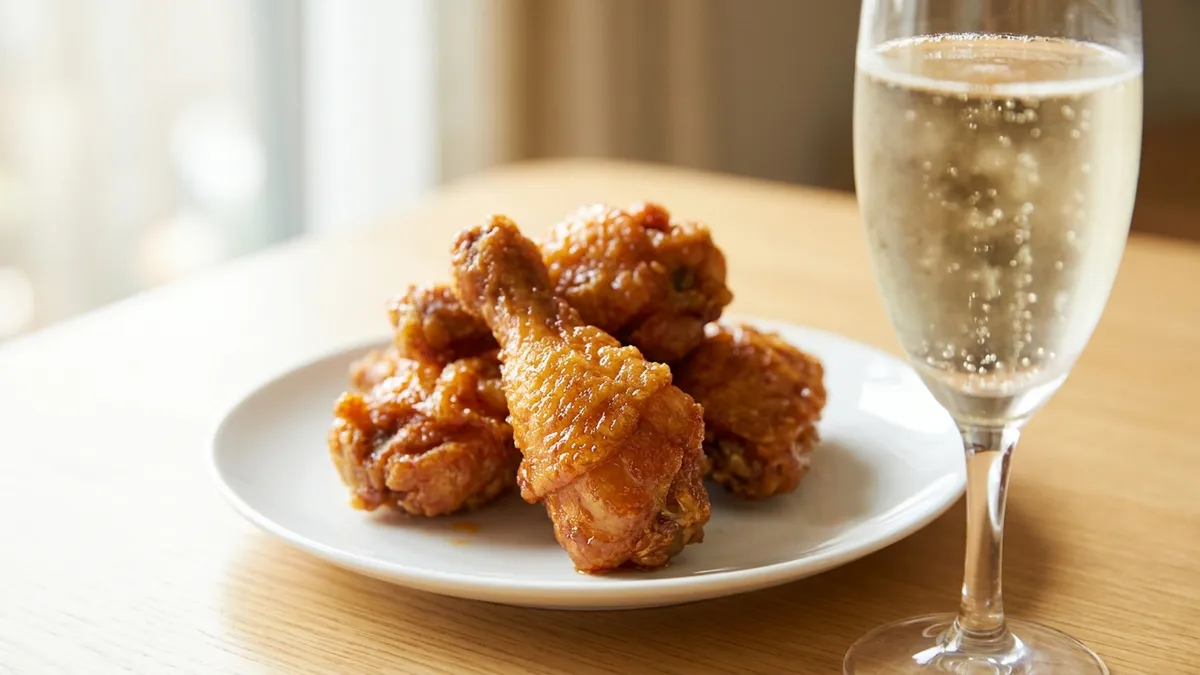
Beer is the traditional pour. Chimaek, fried chicken and beer served together, is a modern combination built around cold carbonation cutting through fried batter. A dry sparkling wine or a crisp, high-acid white does the same cleansing job just as well.
Beer cuts through the oil and resets the palate between crispy bites. A dry, high-acid sparkling wine or a light Vinho Verde does that with acid and bubbles. If the chicken is fried, then pour the wine cold and sparkling. Sparkling wine types lists the styles with enough acid and bubbles, and the wine serving temperature chart gives the target for serving it cold.
Chimaek is a 20th-century invention. A 1459 Korean cookbook called Sangayorok recorded a stir-fried chicken dish, but chicken and beer as one shared custom came centuries later. Cooking oil was introduced in Korea only in 1971, which made fried chicken an everyday food, and draft beer grew popular through the 1970s. The pairing took off after the 2002 FIFA World Cup, when Korean chicken restaurants grew from around 10,000 to roughly 25,000. It went global after the 2014 Korean drama "My Love From the Star" made it a pop-culture reference point in China.
Is Soju or Wine the Better Match for a Korean Meal?
Soju is not automatically stronger than wine. Mainstream bottles today usually sit around 16 percent ABV, close to a fortified wine's strength, while traditional distilled soju can reach as high as 53 percent. Wine at 11 to 14 percent ABV is often the gentler pour of the two.
A Korean meal does not force a choice between the two. Soju works as a neutral palate cleanser at almost any ABV. Wine, chosen by style over habit, adds the fruit, acidity, and aromas that make a specific dish taste better.
Soju traces back to 13th-century Goryeo. The Mongol rulers who had conquered the region introduced the Persian technique of distilling arak. Local makers adapted it with rice fermented for about 15 days, then distilled in a cauldron called a sot. In 1965, a rice shortage led South Korea to ban traditional rice-based soju distillation. Production moved to sweet potato and tapioca ethanol, a shift that still shapes most bottles sold today. The wide ABV range, from about 12.5 to 53 percent, also explains a licensing rule. California and New York exempt soju of up to 25 percent ABV from their spirits licensing rules, so beer-and-wine licensees can sell it.
What Wines Should You Avoid with Korean Food?
Skip big, tannic, high-alcohol reds such as Napa Cabernet Sauvignon or Barolo, and skip heavily oaked whites too. Korean food's gochujang glazes, char, salt, and ferment all make tannin taste harsher and alcohol taste hotter. The size that works with a plain steak works against you here.
Korean BBQ is meat-heavy, which makes a full-bodied, tannic red tempting. Weight is only one variable at the table. A gochujang glaze, char from the grill, and a side of kimchi add sugar, capsaicin, and acid. A big tannic red cannot absorb those the way it absorbs plain protein and fat. Heavily oaked Chardonnay fails for the same reason: its toasty, vanilla oak clashes with chili and fermented funk, as it does with any spicy cuisine (more in wine and food pairing). If gochujang or kimchi is on the table, then leave the big red and the oaked Chardonnay unopened.
Quick Picks: A Bottle for Every Kind of Korean Dinner
The spicier or more fermented the dish, the lower the alcohol and the more sugar the glass needs. The closer the dish is to plain grilled meat, the more room there is for a light, chilled red. If you can buy only one bottle, then buy off-dry Riesling. It flexes from dry to sweet and covers kimchi, gochujang dishes, and mild BBQ marinades. A cold, dry sparkling wine is the backup for anything fried, and a lightly chilled Beaujolais or Pinot Noir covers unglazed BBQ.
Tasting two glasses side by side is the fastest way to feel why an off-dry white behaves differently against kimchi than a dry one does.
Sommy's regional courses do not cover Korean wine culture directly; the current lineup spans Spain, Italy, France, California, and a foundational Wine 101 course. Those courses and the Sommy app teach the method behind these pairings: matching sweetness, acidity, and alcohol to what is on the plate. Pour an off-dry Riesling tonight next to the hottest dish on the table and taste how the chili changes.
Sources
- Gochujang — Wikipedia
- Kimchi — Wikipedia
- Soju — Wikipedia
- Chimaek — Wikipedia
- Ethanol elicits and potentiates nociceptor responses via the vanilloid receptor-1 — Nature Neuroscience, 2002
- How to pair drinks with spice — Wine & Spirit Education Trust (WSET) blog, 2026
Frequently Asked Questions
Does wine go well with Korean food?
Yes, once you swap the wine style rather than the drink itself. Korean food's capsaicin, salt, and fermented funk clash with tannic, high-alcohol reds, which is why soju and beer are the traditional pours, but off-dry whites, dry sparkling wine, and lightly chilled low-tannin reds handle the same dishes well. Match alcohol and sugar to the heat, not the amount of meat on the table.
What wine goes with Korean BBQ (bulgogi, galbi, samgyeopsal)?
A lightly chilled, low-tannin red such as Beaujolais or a cool-climate Pinot Noir suits bulgogi and galbi, since the marinade is sweet and savory rather than fiery. Fattier samgyeopsal (grilled pork belly) does better with an off-dry Riesling or a dry rosé, which cut through the fat. If any cut carries a spicy gochujang glaze, treat it like a gochujang dish and pour white instead.
What wine pairs with kimchi?
Riesling, dry to off-dry depending on the kimchi. A young, mild kimchi works with a dry Riesling or Grüner Veltliner, whose acidity mirrors the ferment's tang. An aged, very hot kimchi needs the extra sweetness of an off-dry Riesling Spätlese to soften the chili. Kimchi spans over 180 varieties and a wide heat range, so there is no single correct bottle, only a correct sweetness level for the jar in front of you.
What wine goes with Korean fried chicken (chimaek)?
A dry sparkling wine or a crisp, high-acid white such as Vinho Verde. Beer is the traditional match because its carbonation and coldness cut through the fried batter's oil, and a dry sparkling wine does the identical job. Chimaek itself is a modern combination, not an old tradition, so there is no historical reason wine cannot stand in for the beer.
Should I drink red or white wine with spicy Korean food?
White, in most cases. An off-dry white wine's sweetness and acidity soften capsaicin's burn, while a red wine's tannin makes the same heat feel harsher. The exception is a lightly chilled, low-tannin, fruit-forward red like Beaujolais, which works with mild, non-spicy Korean BBQ but should be skipped once gochujang or a hot kimchi enters the dish.
Does alcohol make spicy food taste hotter?
Yes. Lab research shows ethanol amplifies the same heat receptor capsaicin triggers, and the Wine & Spirit Education Trust notes that alcohol's burn intensifies when it meets spice, which is why a 14% ABV red feels hotter next to a fiery dish than an 11% ABV white does. Lowering the alcohol, adding a touch of residual sugar, and serving the wine slightly cooler are the three practical ways to counter the effect.
Is soju stronger than wine?
Not necessarily. Soju's alcohol content ranges from about 12.5% to 53% ABV, but mainstream bottles today are typically diluted to around 16%, which is close to a fortified wine's strength and often stronger than table wine's usual 11 to 14%. Traditional distilled soju at the top of that range is far stronger than any wine.
Sommy Team
LinkedInFounder & Wine Educator
The Sommy Team is building the world's most approachable wine education app, helping beginners develop real tasting skills through structured courses and AI-guided practice.