Wine with Ramen: Unexpected Pairings for Every Broth

By the Sommy Team — AI-assisted, human-edited.
Updated Oct 1, 2026
Contents (11)
- What Wine Goes With Ramen, in One Paragraph?
- Why Is Ramen Hard on Wine?
- What Wine Goes With Shoyu or Shio Ramen?
- What Wine Goes With Tonkotsu Ramen?
- What Wine Pairs With Miso Ramen?
- What Wine Goes With Spicy Ramen and Chili Oil?
- Can You Drink Red Wine With Ramen?
- Can You Pair Wine With Instant Ramen?
- How Do Toppings Change the Pick?
- Where Do the Broth Styles Come From?
- Tonight's Ramen Test
TL;DR
The best wine with ramen is chosen for the broth. Clear shoyu and shio take dry sparkling wine. Creamy tonkotsu takes an off-dry Riesling or Alsace Pinot Gris with weight and acidity. Miso takes a nutty, savoury white. Chili oil calls for a sweeter, lower-alcohol Riesling. Tannic, strong reds clash with most bowls.
The best wine with ramen is picked for the broth, not the noodles. A clear soy broth wants dry bubbles, a creamy pork broth wants an off-dry white with some weight, and a thick miso broth wants a nutty, savoury white. Chili oil changes the pick again, toward sweeter and lighter.
What Wine Goes With Ramen, in One Paragraph?
The best wine with ramen is a high-acid white or sparkling wine chosen for the broth. Light, salty shoyu (soy) and shio (salt) broths take dry sparkling wine; one sommelier's top pick is Blanc de Blancs Champagne. Creamy tonkotsu, made from pork bones boiled for up to 18 hours, takes an off-dry Spätlese Riesling or Alsace Pinot Gris. Miso, the most savoury style, takes a nutty white from the Jura. Spicy bowls take a Riesling that tastes sweeter than the soup. Avoid tannic, high-alcohol reds: salt and chili heat make alcohol burn.
Why Is Ramen Hard on Wine?
Ramen hits wine with four things at once: salt, fat, savoury umami (the meaty, brothy fifth taste) and, often, chilli heat. Each one pushes on a different part of the wine, and each broth style turns these four dials to a different setting.
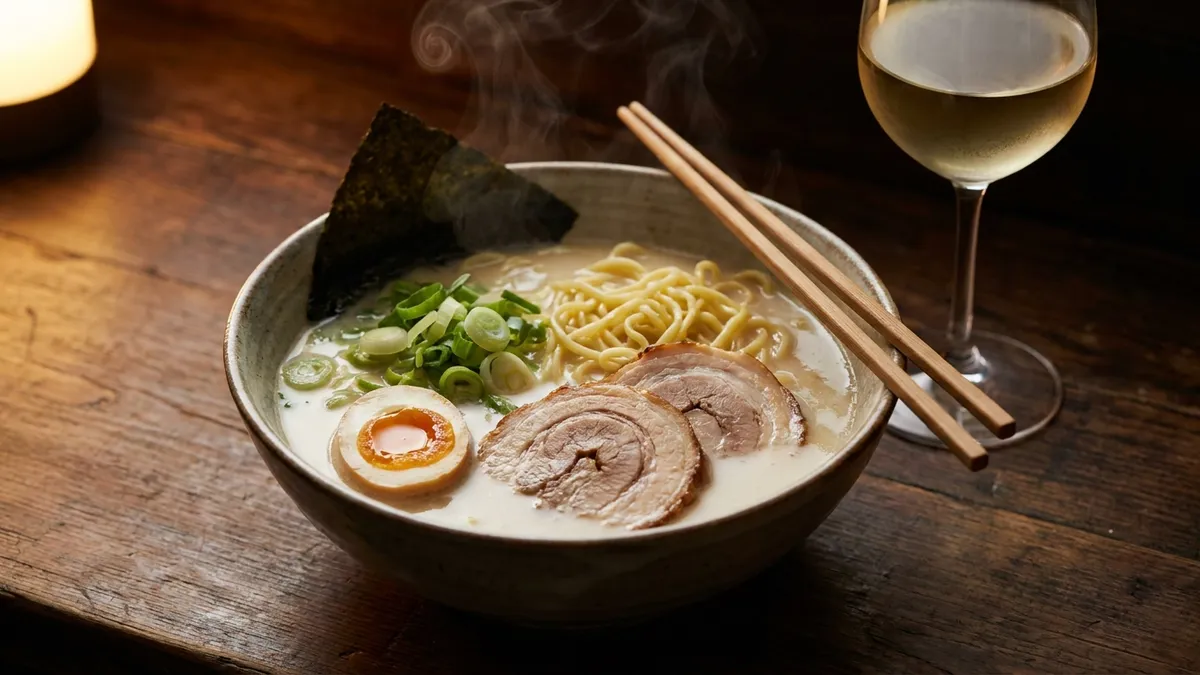
Broths fall into two families. Chintan is clear and light. Paitan is opaque, white and creamy. Clear broths are mostly salt and umami. Creamy ones add fat and body.
Three wine traits answer those dials. Acidity (the tartness that makes your mouth water) cuts through heaviness and refreshes the palate between sips of fatty broth. A little sugar softens salt and calms chilli. Alcohol works against you: salt and spicy heat both make alcohol taste hotter, so a 14.5% wine turns burning next to a salty bowl.
| Ramen style | What dominates | What the wine must do | Pour this |
|---|---|---|---|
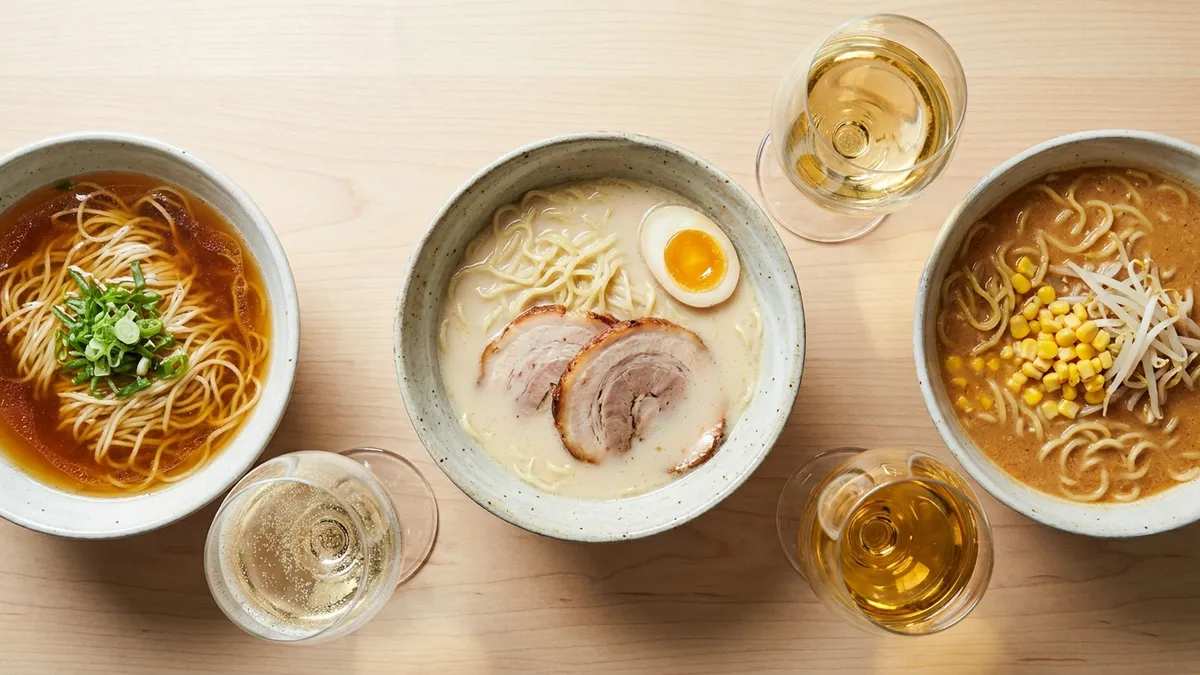
| Shoyu (soy, clear) | Salt and umami, light body | Refresh with acid and bubbles | Blanc de Blancs Champagne or other dry sparkling |
| Shio (salt, clear) | Salt, the lightest body | Cut salt, stay delicate | Dry Riesling or dry sparkling |
| Tonkotsu (pork bone, creamy) | Fat, body, salt | Match weight, cut fat, soften salt | Off-dry Spätlese Riesling or Alsace Pinot Gris |
| Miso (thick, nutty) | Umami, nutty sweetness | Echo the savoury, nutty notes | Jura white or dry Fino Sherry |
| Spicy (chili oil, tantanmen) | Heat on top of salt | Be sweeter than the bowl, keep alcohol low | Off-dry or medium-sweet Riesling |
| Instant | Very salty, thin body | Refresh cheaply | Dry sparkling such as Cava or Crémant |
What Wine Goes With Shoyu or Shio Ramen?
Clear shoyu and shio broths want dry sparkling wine or a crisp, unoaked white. Soy sauce boosts the salt and umami in shoyu, but the body stays light, so the wine needs acid more than weight. One sommelier quoted by Tasting Table names Blanc de Blancs Champagne as the top choice for shoyu.
Blanc de Blancs means sparkling wine made only from white grapes, usually Chardonnay in Champagne. It brings high acidity and bready, savoury flavours from long contact with spent yeast, which line up with the soy. The bubbles scrub the palate after each salty spoonful. The Champagne region guide explains the styles on the label.
Shio is lighter still, seasoned mainly with salt, so a dry Riesling works as well as bubbles. Avoid oaky Chardonnay: its vanilla and butter flatten a clear broth.
If the broth is clear and you can see the noodles through it, pour dry sparkling wine. If it is clear but extra salty, pour a dry Riesling and serve it cold.
What Wine Goes With Tonkotsu Ramen?
Tonkotsu wants a white with weight, a touch of sugar and medium-to-high acidity. The sommelier interviewed by Tasting Table names Spätlese Riesling and Alsace Pinot Gris, citing their "acid, body, fruit, and touch of sweetness" against the rich pork broth.
Spätlese is a German ripeness level meaning "late harvest", and as a style it is often off-dry, with a little sugar you can taste. The riper grapes give a fuller body, so the wine does not vanish under a creamy broth. Its acidity cuts the pork fat, and its sugar softens the salt. Alsace Pinot Gris is the same grape as Pinot Grigio, made riper and rounder, with pear and spice; the Pinot Grigio vs Pinot Gris guide shows how to tell the styles apart on a label.
A light, crisp white with no sugar tastes thin and sour here. A dry Pinot Grigio is the usual mistake.
If the broth is white and coats your spoon, pick a wine labelled Spätlese or an Alsace Pinot Gris. If the bowl also carries a spoon of chili oil, move up to a sweeter Riesling. The Riesling guide maps the German ripeness words from dry to sweet.
What Wine Pairs With Miso Ramen?
Miso ramen wants a savoury, nutty white that echoes the paste. Miso broth is thick, nutty, slightly sweet and hearty. Tasting Table's sommelier calls it the most savoury and umami-laden of the common styles, so a fresh, fruity white tastes thin beside it.
That sommelier's pick is a white from the Jura, in eastern France. Many Jura whites are oxidative (deliberately exposed to air as they age), which gives them nutty, slightly savoury aromas that many types of miso echo. The Jura wine guide explains how those wines are made and labelled.
A dry Fino Sherry follows the same logic: it tastes of salted almonds and bread, and it meets a nutty bowl with nutty flavours of its own. Serve it cold, in small pours. The Sherry guide covers Fino and its siblings.
If you cannot find either, an Alsace Pinot Gris from the tonkotsu section also handles miso's sweetness and body. If the miso bowl is a spicy one, treat it as spicy ramen first.
What Wine Goes With Spicy Ramen and Chili Oil?
Spicy ramen wants an off-dry Riesling that is sweeter than the bowl and low in alcohol. Food Republic puts it plainly: when Riesling balances "rich acidity and sweetness," it suits fiery food. Sugar calms the chili and acidity keeps the sugar from tasting heavy.
Two rules decide it. First, sugar softens the burn, but a sweet wine needs to be sweeter than the dish it meets, or the food makes it taste thin. A spicy miso with sweet corn already carries sugar, so the wine needs more. Second, heat plus salt makes alcohol burn, the same effect the salt test shows. A spicy bowl and a strong wine push the burn twice.
Look for German Riesling labelled Kabinett for a gentle chili-oil drizzle and Spätlese for a hot tantanmen (sesame and chili ramen), avoiding any bottle marked trocken (dry). The wine with spicy food guide gives a heat-by-heat table with alcohol levels.
If the bowl makes your lips tingle, choose the sweeter of the two bottles on the shelf. If the label shows more than about 13% alcohol, put it back.
Can You Drink Red Wine With Ramen?
Yes, if it is a light, low-tannin red served cool and the broth is pork-rich rather than spicy. The old rule of white with noodles is a habit, not a law. What matters is tannin (the drying grip on your gums).
Tannin binds to protein. With fatty pork and chashu in the bowl, the tannins grab the meat's proteins and come across as softer. With a lean shoyu or a vegetable broth there is no protein to grab, so the tannins grab your tongue instead and the wine feels dry and harsh. A light red such as Gamay or Pinot Noir has little tannin to begin with, so it stays easy across more bowls.
Serve the red cool, about 30 minutes in the fridge, which also tames the alcohol. The guide to tannins shows how to feel the grip in your own mouth.
If the broth is tonkotsu and you want red, pour a chilled Gamay. If the broth is spicy or clear, skip red altogether.
Can You Pair Wine With Instant Ramen?
Yes: treat the packet like a very salty shoyu and pour inexpensive dry sparkling wine. Instant broth is mostly salt and seasoning with a thin body, so acidity and bubbles do all the work and the wine needs no weight at all.
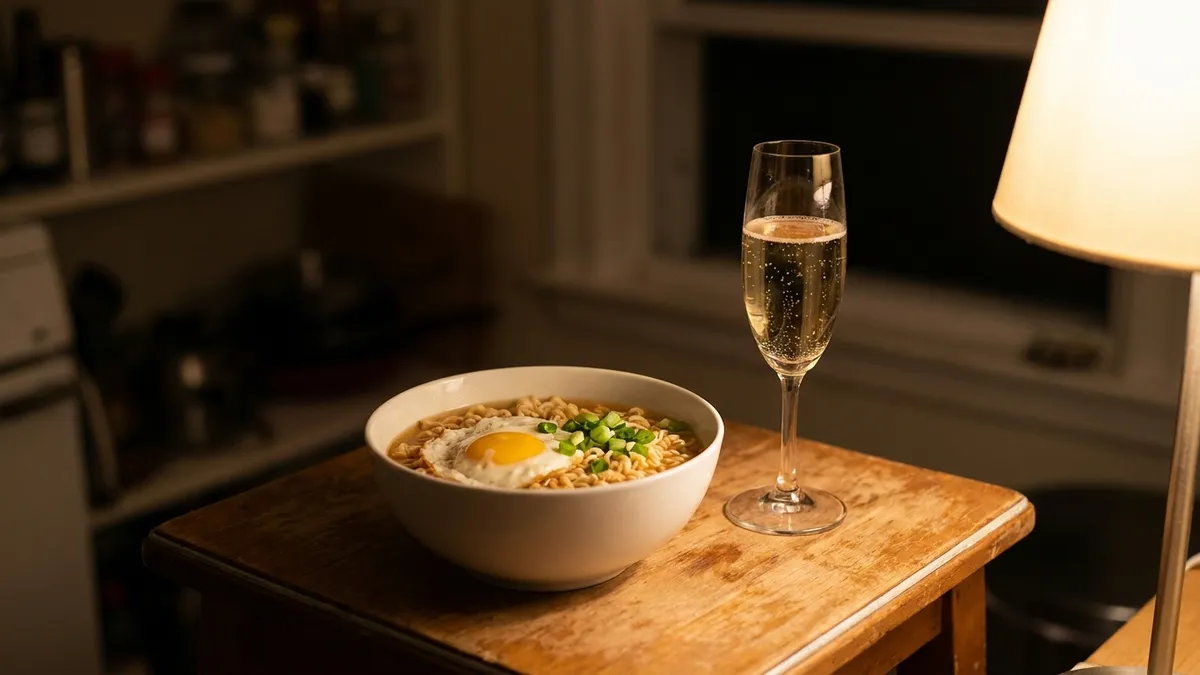
A Spanish Cava or a French Crémant does the job of Champagne at a fraction of the price. If the packet is a spicy flavour, swap in an off-dry Riesling for the same reasons as a fresh spicy bowl. If you add an egg and butter, the dry sparkling still holds.
How Do Toppings Change the Pick?
Toppings shift the pick one step, never more. Start from the broth and choose the wine for it. Then let the loudest topping in the bowl nudge that choice one step, toward sweeter, crisper or lighter, before you open the bottle:
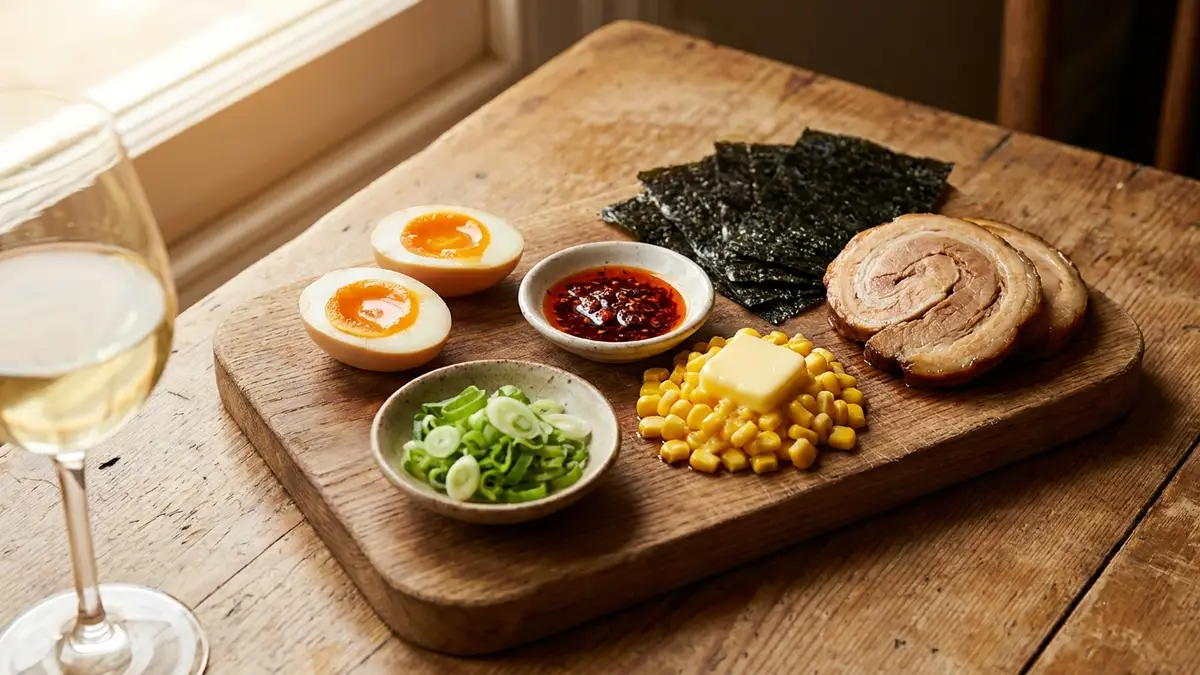
- Chili oil or chili paste: move to a sweeter, lower-alcohol wine.
- Butter and sweetcorn: add richness and sugar, so favour more acidity or a touch of sweetness.
- Soft-boiled egg: rich but mild, it changes nothing.
- Chashu pork: more fat and protein, which makes a light red more workable.
- Nori and seafood: more salt and sea flavour, so stay with white or sparkling.
If a topping adds heat, change the wine. If it only adds richness, keep the wine and make sure it is cold.
Where Do the Broth Styles Come From?
Tonkotsu tastes creamy because pork bones are boiled for up to 18 hours, until the soup turns cloudy. The style is often credited to Tokio Miyamoto, a street-stall cook in Kurume, Fukuoka, in 1937. That long boil is why the bowl needs a wine with body.
The savoury pull of every broth has a name and a date. The chemist Kikunae Ikeda identified umami in 1908 while studying kombu seaweed broth. Ramen kitchens stack kombu with pork, chicken or dried fish. Together these taste stronger than the sum of each alone. That stacked savouriness is why fruit-forward, oaky wines can taste hollow next to a bowl. It is also why the nutty whites in the miso section fit. The umami in wine guide shows where the same savoury notes come from in a glass, and the wine with Japanese food guide covers the rest of the menu, from sushi to tempura.
Tonight's Ramen Test
More food rules sit in the food pairing hub, and the Sommy app at sommy.wine has bite-sized courses, including Wine 101, plus an AI-guided tasting mode that saves notes to a tasting journal.
Order or cook one bowl of ramen tonight and pour two small glasses side by side: a dry sparkling wine and an off-dry Riesling. Alternate them with spoonfuls of broth. Photograph the label of the winner in Sommy and save your notes to the tasting journal. With creamy tonkotsu, expect the Riesling to taste fresher; with clear shoyu, pour a second glass of the bubbles.
Sources
Frequently Asked Questions
What wine goes best with ramen?
A high-acid white or a dry sparkling wine covers most bowls, but the broth decides the exact pick. Clear soy-based shoyu suits Blanc de Blancs Champagne or another dry sparkling wine. Creamy pork tonkotsu suits an off-dry Spätlese Riesling or Alsace Pinot Gris. Thick miso suits a nutty white from the Jura. Spicy bowls need a sweeter, low-alcohol Riesling.
Can you drink red wine with ramen?
Yes, with limits. Choose a light, low-tannin red such as Gamay or Pinot Noir, serve it cool, and save it for pork-rich bowls like tonkotsu, where fat and protein soften the tannin. Skip big, oaky or high-alcohol reds. Salty broth makes alcohol feel hotter, and with lean or spicy bowls tannin turns dry and harsh.
Does Riesling go with ramen?
Riesling is the most flexible wine for ramen. A dry or lightly off-dry Riesling cuts salty shoyu with its acidity. A riper Spätlese has the weight and touch of sugar that a creamy tonkotsu needs. With chili oil or spicy miso, a sweeter, lower-alcohol Riesling cools the burn, as long as it is sweeter than the bowl.
What wine goes with tonkotsu ramen?
Tonkotsu is a cloudy, creamy pork-bone broth, so it needs a wine with body, medium-to-high acidity and a little sugar. Off-dry Spätlese Riesling and Alsace Pinot Gris are one sommelier's top picks. The acidity cuts the fat, the body keeps the wine from vanishing, and the sugar softens the salt.
What wine pairs with miso ramen?
Miso ramen is the most savoury ramen style, with a thick, nutty and slightly sweet broth. Look for a white with nutty, savoury aromas of its own, such as a white from France's Jura, whose slightly oxidative style echoes the paste. A dry Fino Sherry follows the same logic: salty, nutty and savoury against a salty, nutty bowl.
Is sparkling wine good with ramen?
Yes, especially with clear shoyu and shio broths and with instant ramen. Dry sparkling wine brings high acidity and bubbles, which refresh the mouth between salty sips. Blanc de Blancs Champagne, made only from white grapes, is a sommelier favourite for light shoyu. With chili-heavy bowls, choose a sweeter style, because dry bubbles do little for heat.
Should the wine be sweet or dry with ramen?
Dry for clear, salty broths; slightly sweet for creamy pork broths and spicy bowls. A touch of sugar softens salt and calms chili heat. For spicy ramen, the wine must taste sweeter than the dish, or the bowl makes it seem thin and sour. Keep alcohol modest in every case, since salt and heat both make it burn.
Sommy Team
LinkedInFounder & Wine Educator
The Sommy Team is building the world's most approachable wine education app, helping beginners develop real tasting skills through structured courses and AI-guided practice.