Wine with Pumpkin Pie, Plus Pecan and Apple Pie Pairings

By the Sommy Team — AI-assisted, human-edited.
Updated Oct 1, 2026
Contents (9)
- What Wine Goes With Pumpkin Pie, in One Paragraph?
- Why Does Dry Wine Taste Bitter or Thin With Pie?
- How Sweet Is Each Dessert Wine?
- What Wine Goes Best With Pumpkin Pie?
- What Wine Goes With Pecan Pie?
- What Wine Goes With Apple Pie?
- Can You Drink Dry Red or White With Pie?
- How Should You Serve Wine With Pie?
- What Is the Easiest Pie Wine for Thanksgiving?
TL;DR
Pie needs a wine at least as sweet as the slice, or the wine tastes sour and thin. Spiced pumpkin custard suits light, aromatic sweet whites like Moscato d'Asti. Pecan pie suits nutty, barrel-aged tawny port or sweet Vin Santo. Tart apple pie suits high-acid sweet wines like ice wine or Sauternes.
Wine with pumpkin pie works on one condition: the wine has to be at least as sweet as the slice. Below that line it turns sour and thin. Above it, the filling picks the style. Spiced pumpkin custard wants a light, aromatic sweet white. Pecan pie wants a nutty wine aged in barrel. Apple pie wants a sweet wine with sharp acidity to match its tart fruit.
What Wine Goes With Pumpkin Pie, in One Paragraph?
The best wine with pumpkin pie is a light, aromatic sweet white such as Moscato d'Asti (a gently fizzy sweet white from Piedmont, around 5.5% alcohol) or a late harvest Riesling. Pumpkin pie is a soft custard of pumpkin, eggs, evaporated milk and sugar, spiced with cinnamon, ginger, nutmeg and cloves or allspice. A wine at least as sweet as that filling lifts the spice. A dry red does the opposite: sugar and spice make its tannin taste bitter. For pecan pie, switch to tawny port or a sweet Vin Santo. For apple pie, choose ice wine or Sauternes, whose acidity matches the fruit.
Why Does Dry Wine Taste Bitter or Thin With Pie?
Because the sugar in the pie cancels the fruit in a drier wine and leaves its acid and tannin exposed. Wikipedia's entry on food and wine pairing states the working rule: sweet wines often need to be sweeter than the dish they are served with.
Its own example is a brut (dry) Champagne with a sweet cake, which comes across as tart and weak.
Two things in a wine decide how badly it fails. Residual sugar is the grape sugar left after fermentation; the more of it, the better the wine holds up against dessert. Tannin is the drying grip on your gums from red grape skins. Sweet and spicy foods both make tannin taste more bitter, and pumpkin pie is both at once.
That kills a popular autumn idea. A Cabernet with pumpkin pie is not a seasonal match, it is a clash: the cinnamon and sugar push its tannin toward stewed tea. If the wine is red, it needs to be a sweet fortified one. The full set of matching principles sits in the wine pairing rules.
How Sweet Is Each Dessert Wine?
The range runs from almost none to over 300 grams of sugar per litre, so the style name on the label tells you more than the colour does. Use this table in the shop: find the pie in the last column and read across to what the wine brings.
| Wine style | Sugar | Alcohol | Pour it with |
|---|---|---|---|
| Amontillado sherry | 0 to 5 g/l (dry) | 16 to 17% | Roasted nuts and cheese before the pie, not the pie itself |
| Moscato d'Asti | Sweet but light-bodied, gently fizzy | Around 5.5% | Pumpkin pie, or any pie after a heavy meal |
| Late harvest Riesling | Sweet; varies by producer | Varies | Pumpkin pie with a mild custard, or apple pie |
| Sauternes | About 80 to 120 g/l | About 14% | Apple pie and creamy pumpkin pie |
| Tawny port | Sweet | 19 to 22% | Pecan pie, and pumpkin pie if you want caramel |
| Vin Santo | Bone dry to very sweet | Varies | Pecan pie, but only the sweet versions |
| Ice wine | 180 to 320 g/l, acidity above 10 g/l | Varies | Very sweet apple pie with caramel |
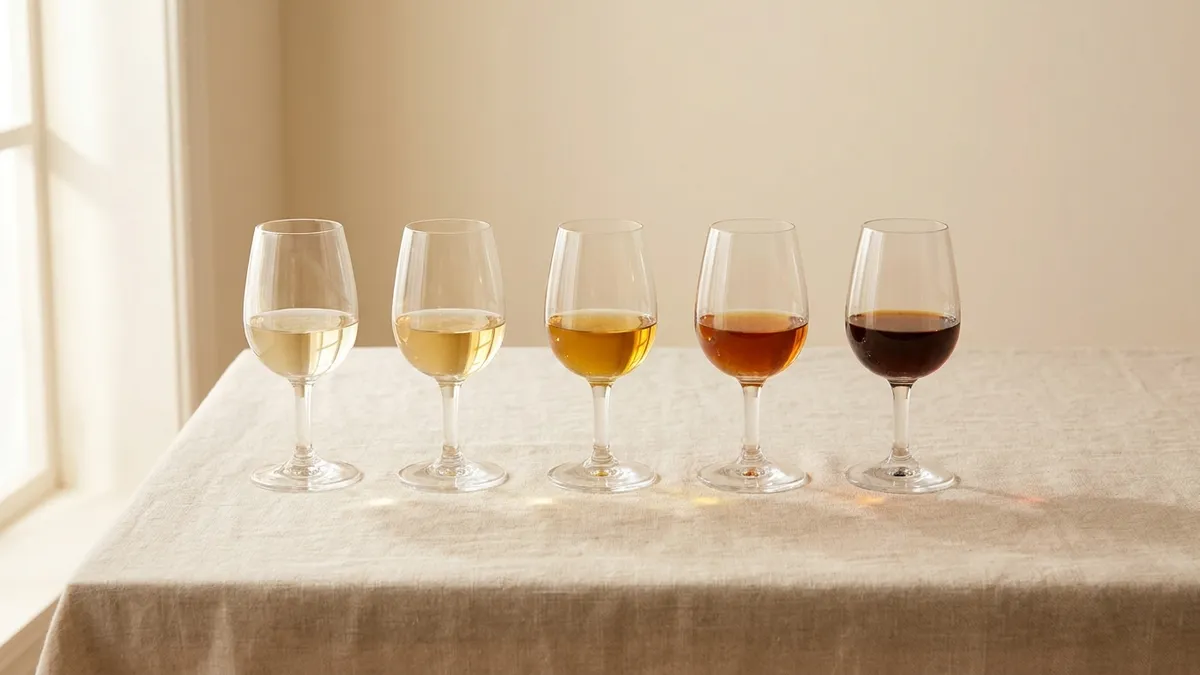
Colour tracks age and air more than sugar. A pale ice wine can be far sweeter than a brown tawny. For how the tongue reads these levels, the wine sweetness scale puts numbers to the words on the label.
What Wine Goes Best With Pumpkin Pie?
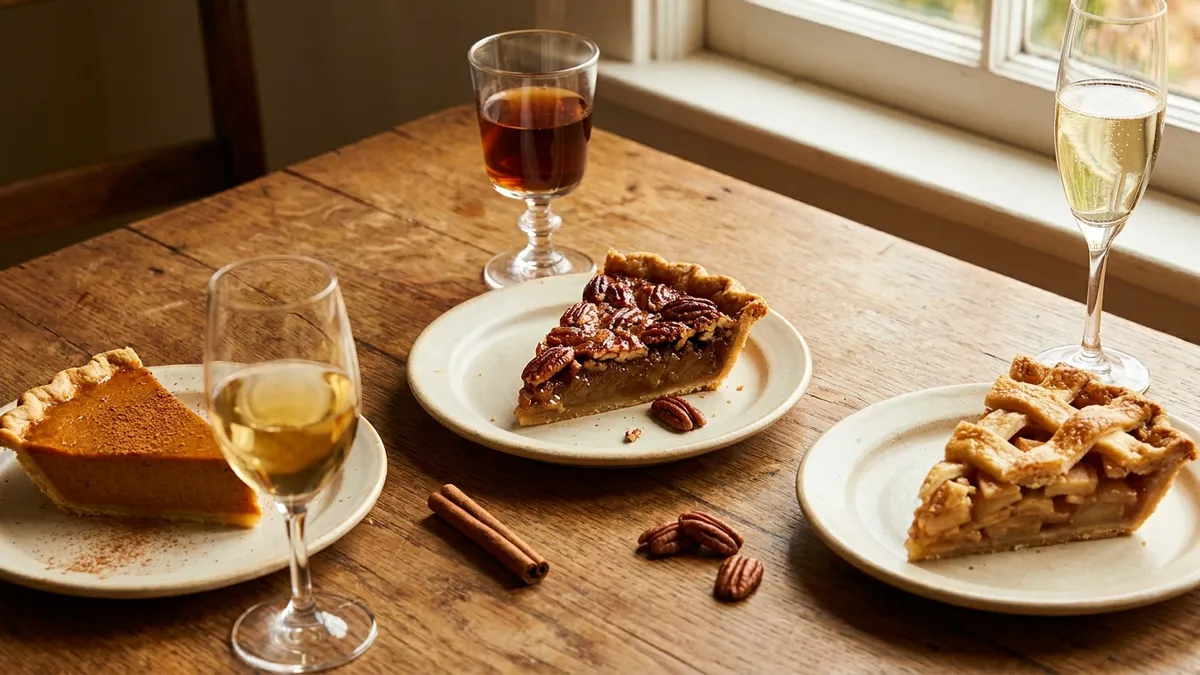
Pick a sweet white that is light and aromatic, because pumpkin pie is a soft, spiced custard that a heavy wine flattens. The filling is cooked and puréed pumpkin set with eggs, evaporated milk and sugar. Its flavour comes mostly from the spice blend: cinnamon, ginger, nutmeg, and cloves or allspice.
Moscato d'Asti is the lightest choice. It is sweet, softly fizzy and low in alcohol, so the bubbles scrub custard from the palate and the low strength suits the end of a long meal. More on the style is in the Moscato guide.
Late harvest wine is made from grapes left on the vine longer than usual, so they carry more sugar at picking. Riesling made this way keeps the grape's high acidity, which cuts through the egg and milk richness. The late harvest wine guide shows which labels use the term and how sweet they run.
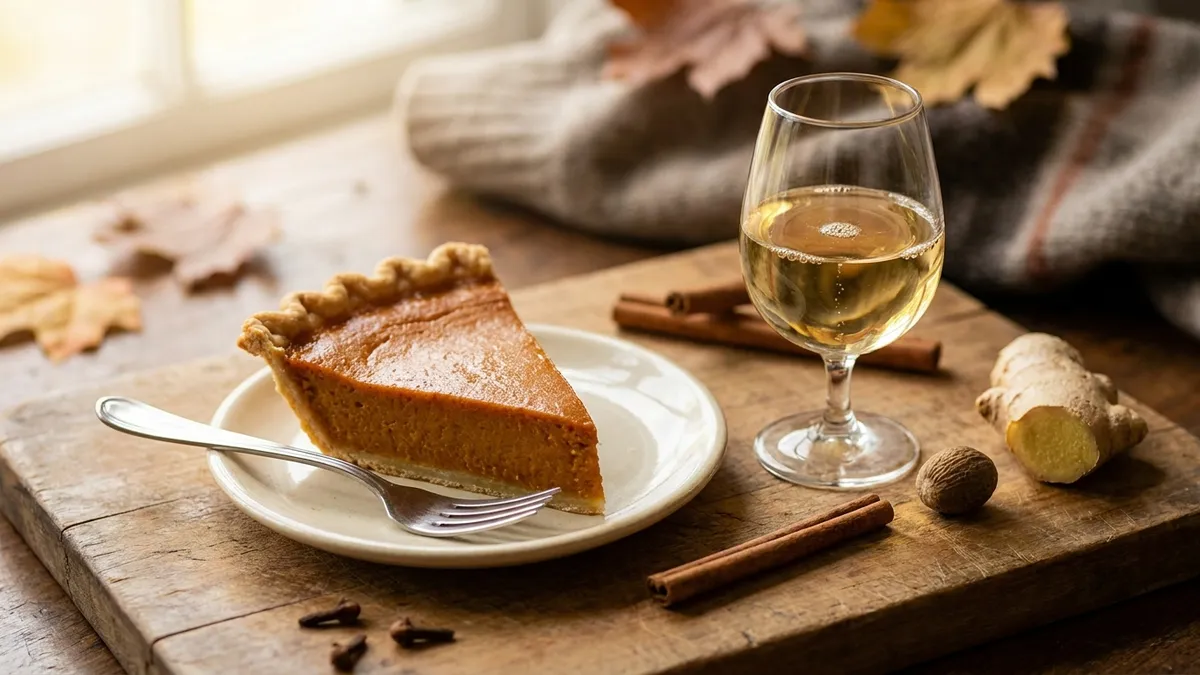
If the pie is heavy on clove and ginger, pour Moscato d'Asti: its scent stands up to strong spice without adding weight. If the pie is mild and creamy, pour late harvest Riesling, whose acidity keeps the custard from feeling heavy. Tawny port works too when the pie has a dark, molasses-style sweetness, for the reasons in the pecan section below.
What Wine Goes With Pecan Pie?
Tawny port or a sweet Vin Santo, because their nutty, caramel flavours come from years in barrel and meet toasted pecans and syrup head on. Pecan pie is pecans set in a filling of eggs, butter and sugar, typically corn syrup. That makes it one of the sweetest pies on the table, so light wines disappear beside it.
Tawny port is a fortified wine from Portugal (spirit is added, which leaves sugar in the wine and lifts alcohol to 19 to 22%). It ages in wooden casks, where slow contact with air turns it golden-brown and gives it its nutty flavours. Labels often carry an age statement of 10, 20, 30 or 40 years. The port wine guide explains how tawny differs from ruby.
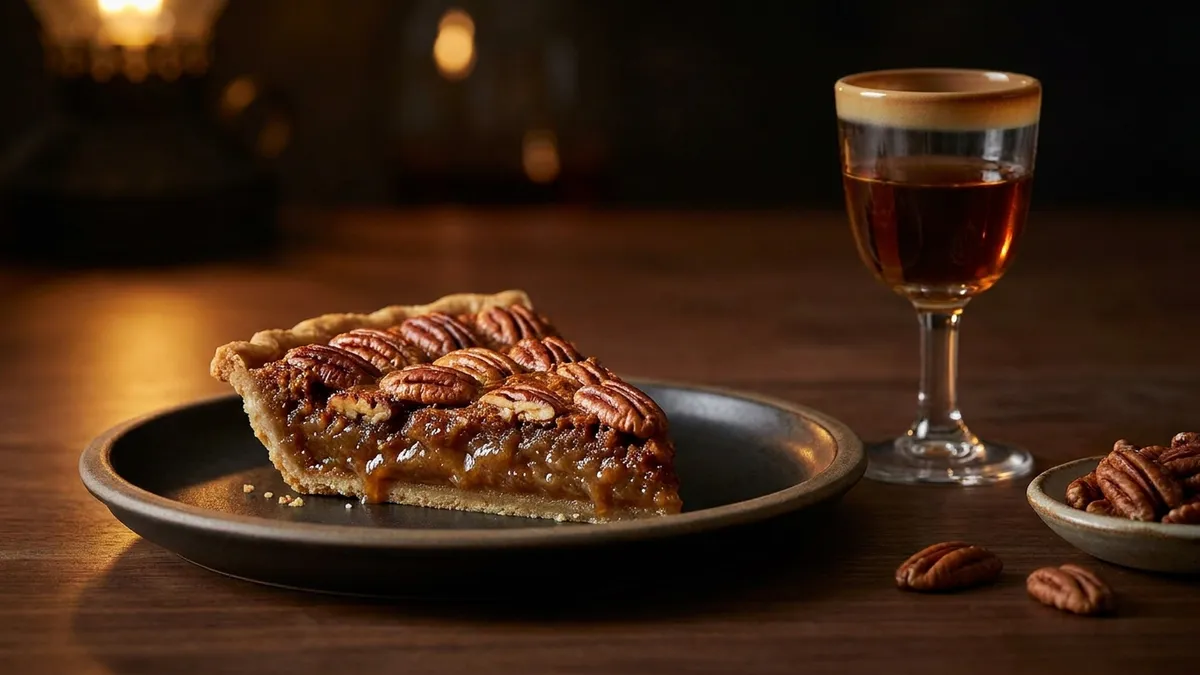
Vin Santo is Tuscany's dried-grape wine. The grapes are laid out on straw mats before pressing, and the wine ages for at least three years, often five to ten. It smells of nuts, raisins and honey, with a creamy edge. The catch is range: Vin Santo runs from bone dry, like a fino sherry, to extremely sweet. If the label gives no sweetness word, ask in the shop, because a dry one will taste harsh against pecan pie. The Vin Santo guide covers the styles.
What Wine Goes With Apple Pie?
A sweet wine with high acidity, such as ice wine or Sauternes, because apple pie filling is tart as well as sweet. Recipes often add lemon juice to keep the apples from browning, so the pie carries real acid. Sweetness in a wine can balance tartness in food, especially when the food is also sweet.
Here sugar alone is not enough. A sweet wine with soft acidity tastes flat and syrupy next to tart apples, while one with high acidity (the tartness that makes your mouth water) stays fresh.
Ice wine comes from grapes frozen on the vine, picked at −7 °C or colder in Germany and −8 °C in Canada. Pressing frozen grapes leaves the water behind as ice, so the juice is very sweet: 180 to 320 grams of sugar per litre, with acidity almost always above 10 grams per litre. The ice wine guide explains the harvest. Sauternes is less sweet, with about 14% alcohol; the Sauternes guide covers it.
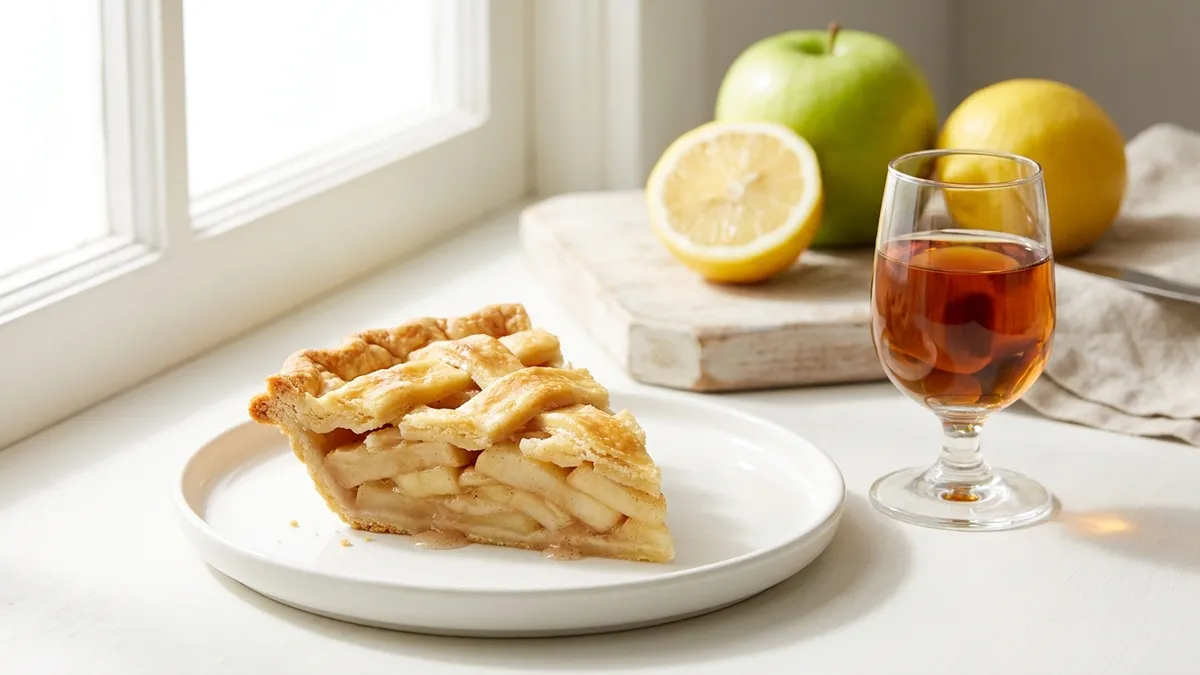
American apple pies can use more sugar than European versions. If the pie is a tart, European-style apple tart, pour Sauternes or late harvest Riesling. If it is a very sweet American pie with caramel, pour ice wine, the sweetest style in the table. Avoid brut sparkling wine here; if you want bubbles, choose a sweet one such as Moscato d'Asti.
Can You Drink Dry Red or White With Pie?
You can, but the wine will taste worse beside the pie than on its own, so serve it before the slice or with cheese. A dry Chardonnay loses its fruit and turns sharp. A dry red turns bitter for the tannin reasons above.
If dry wine is all there is, finish it with the cheese course and give the pie a small glass of something sweet. Guests who dislike sweet wine can take Amontillado sherry: a dry, nutty sherry at 16 to 17% alcohol with 0 to 5 grams of sugar per litre. It goes with roasted nuts and hard cheese. Since 2012, sweetened Amontillado must be labelled "Medium Sherry", so check for that word if you want the dry one. The sherry guide maps the styles, and wine and cheese pairing covers the cheese course.
How Should You Serve Wine With Pie?
Chilled, in small glasses, poured after the dinner wine is cleared. Sweet wine is dense, so a small pour lasts through a slice. The sweet whites go in the fridge; tawny port is best slightly cool to the hand. The wine serving temperature chart gives the target for each style.
If several dessert wines are open, start with the lightest and lowest in alcohol, Moscato d'Asti, and finish with the port. If a bottle will not be finished, make it the fortified one: its alcohol and sugar keep it fresh far longer after opening than a light sweet white.
Sommy's AI-guided tasting mode walks you through look, smell and taste from a photo of the label and saves the notes to a tasting journal. Next year, the record shows which wine beat which pie.
What Is the Easiest Pie Wine for Thanksgiving?
One bottle of tawny port covers pumpkin and pecan pie, two classic Thanksgiving pies. Add a bottle of Moscato d'Asti if apple pie is on the table or some guests want something light after the meal. The rest of the dinner, from turkey to cranberry sauce, is matched in the Thanksgiving wine guide.
If one sweet bottle has to serve every pie, tawny is the safer choice, because its sugar and strength stand up to the sweetest fillings. If the crowd is mixed and the meal was heavy, Moscato d'Asti is the easier drink. The wider set of sweet styles is in the dessert wine guide, and every pairing guide sits in the food pairing hub.
The Sommy app at sommy.wine teaches tasting in bite-sized courses, starting with Wine 101. Tonight, taste a forkful of the filling on its own, then sip the wine. If the wine still tastes of fruit, it is sweet enough to pour.
Sources
Frequently Asked Questions
What wine goes best with pumpkin pie?
A light, aromatic sweet white is the safest match: Moscato d'Asti or a late harvest Riesling. Pumpkin pie is a soft custard spiced with cinnamon, ginger, nutmeg and cloves, so it needs a wine at least as sweet as the filling but not so heavy that it flattens the spice. Tawny port also works if you prefer caramel and nut flavours.
Does red wine go with pumpkin pie?
Usually not. Dry red wine has tannin, and sweet and spicy foods make tannin taste more bitter. The sugar in the pie also strips out the red's fruit, so it tastes sour and thin. If you want a red-coloured wine with pie, choose a sweet fortified one such as tawny port, which has the sugar to hold up.
What wine goes with pecan pie?
Tawny port and sweet Vin Santo are the closest matches. Pecan pie is toasted nuts set in a filling of eggs, butter and sugar, usually corn syrup, so it is very sweet. Tawny port's caramel and nutty flavours come from years in barrel, and it is strong enough, at 19 to 22% alcohol, to stand up to the syrup.
What wine pairs with apple pie?
Pick a sweet wine with high acidity, such as ice wine, Sauternes or a late harvest Riesling. Apple pie filling is tart as well as sweet, and recipes often add lemon juice. A wine with matching acidity keeps the pairing fresh, while its sugar softens the tartness of the apples. Very sweet American-style pies need the sweeter end of that range.
Should dessert wine be sweeter than the dessert?
Yes, as a working rule. A sweet wine generally needs to be at least as sweet as the dish beside it. When the dessert is sweeter, it cancels the wine's sugar, and what is left is acidity and alcohol, so the wine tastes sharp and weak. A dry Champagne with a sweet cake is the classic example of the mismatch.
Can you drink dry wine with pie?
You can, but it will taste worse with the pie than without it. The better plan is to finish the dry wine before dessert, or pour it with the cheese course, and switch to a small glass of sweet wine for the slice. A dry, nutty Amontillado sherry with roasted nuts is a good bridge if you dislike sweet wine.
Sommy Team
LinkedInFounder & Wine Educator
The Sommy Team is building the world's most approachable wine education app, helping beginners develop real tasting skills through structured courses and AI-guided practice.