Wine with Paella: Match the Wine to What's in the Pan

By the Sommy Team — AI-assisted, human-edited.
Updated Oct 1, 2026
Contents (10)
- What Wine Goes With Paella, in One Paragraph?
- Which Wine for Which Paella?
- Why Is Paella Hard to Pair With Wine?
- Does White Wine Go With Seafood Paella?
- Is Rosé the Safest Choice for Paella?
- Can You Drink Red Wine With Paella?
- Does Cava Work With Paella?
- Which Wines Should You Avoid With Paella?
- How Should You Serve Wine at a Paella Lunch?
- Is Paella Really a Seafood Dish?
TL;DR
The best wine with paella follows what is in the pan. Rabbit-and-chicken paella valenciana suits a dry Garnacha rosado or a light, chilled Garnacha. Seafood paella suits Albariño or brut Cava. Every version needs acidity to cut the olive oil, fruit to meet the saffron, and moderate alcohol so the smoke does not burn.
The right wine with paella follows what is in the pan. The original rabbit-and-chicken paella from Valencia wants a dry Spanish rosé or a light, chilled red. A seafood paella wants a crisp white such as Albariño, or a dry Cava. Whatever the version, the saffron, the olive oil and the toasted rice crust push out any wine that is too light, too oaky or too strong.
What Wine Goes With Paella, in One Paragraph?
For most paella, a dry Spanish rosado (rosé) made from Garnacha is the safest single bottle. It has the acidity (the tartness that makes your mouth water) to cut olive oil, enough red-berry fruit to stand up to saffron, and almost no tannin to clash with seafood. For seafood paella, Albariño from Rías Baixas is the first choice: high acidity and usually 11.5 to 12.5% alcohol. For paella valenciana, made with rabbit and chicken, a light Garnacha red served cool also works. Brut Cava is the best wine to open while the rice cooks. Skip heavy oak and anything at 15% alcohol or above.
Which Wine for Which Paella?
Read the pan first: meat, seafood, both, or vegetables. If there is seafood in it, keep the wine white, pink or sparkling. If there is only rabbit or chicken, pink or a light red both work. Then check the crust: a thick socarrat or a lot of meat calls for more fruit and body.
| Paella | What is in the pan | First choice | Second choice | Avoid |
|---|---|---|---|---|
| Valenciana | Rabbit, chicken, snails, green and lima beans, saffron | Dry Garnacha rosado | Light, chilled Garnacha red (Navarra) | Oaky Reserva reds, 15%+ reds |
| Seafood (de marisco) | Prawns, mussels, squid, clams, fish stock | Albariño (Rías Baixas) | Brut Cava or Verdejo (Rueda) | Tannic reds, oaked whites |
| Mixta | Meat and seafood together, vegetables | Dry Garnacha rosado | Brut Cava | Big reds, very light whites |
| Vegetable (de verduras) | Artichoke, peppers, beans, tomato | Verdejo (Rueda) | Pale rosado | Oaky or sweet wines |
Mixta is the hardest case because it carries both meat and shellfish. Rosado sits between the two: fruit for the chicken, freshness and no grip for the prawns. More pairings for each protein are in wine with chicken and wine with seafood.
Why Is Paella Hard to Pair With Wine?
Three things in the pan fight light wine: saffron, olive oil and the toasted crust called socarrat (the layer of scorched rice stuck to the bottom of the pan). Each one makes a thin, oaky or strong wine taste worse, so the bottle needs acidity, ripe fruit and moderate alcohol.
Saffron brings colour, bitterness and smell from three different compounds. Crocin gives the yellow-orange colour, picrocrocin the pungent, bitter edge, and safranal most of the aroma. That aroma is often described as metallic honey with grassy or hay-like notes. A wine with little fruit tastes thin and sour next to it. A wine with ripe fruit meets the honey and softens the bitterness.
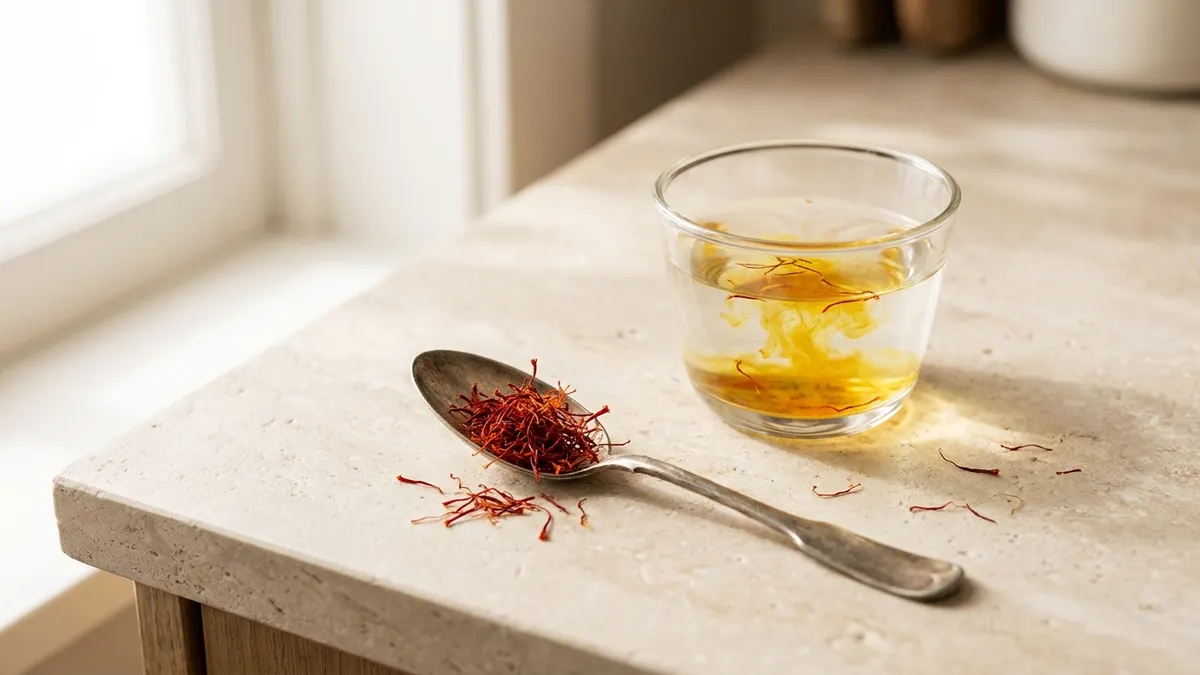
Olive oil coats the mouth, and bomba rice (the short-grain rice most paella cooks use) can absorb two or three times its volume in liquid. Every grain carries oil and stock. Acidity in the wine cuts that coating, so a low-acid white tastes flat by the third bite.
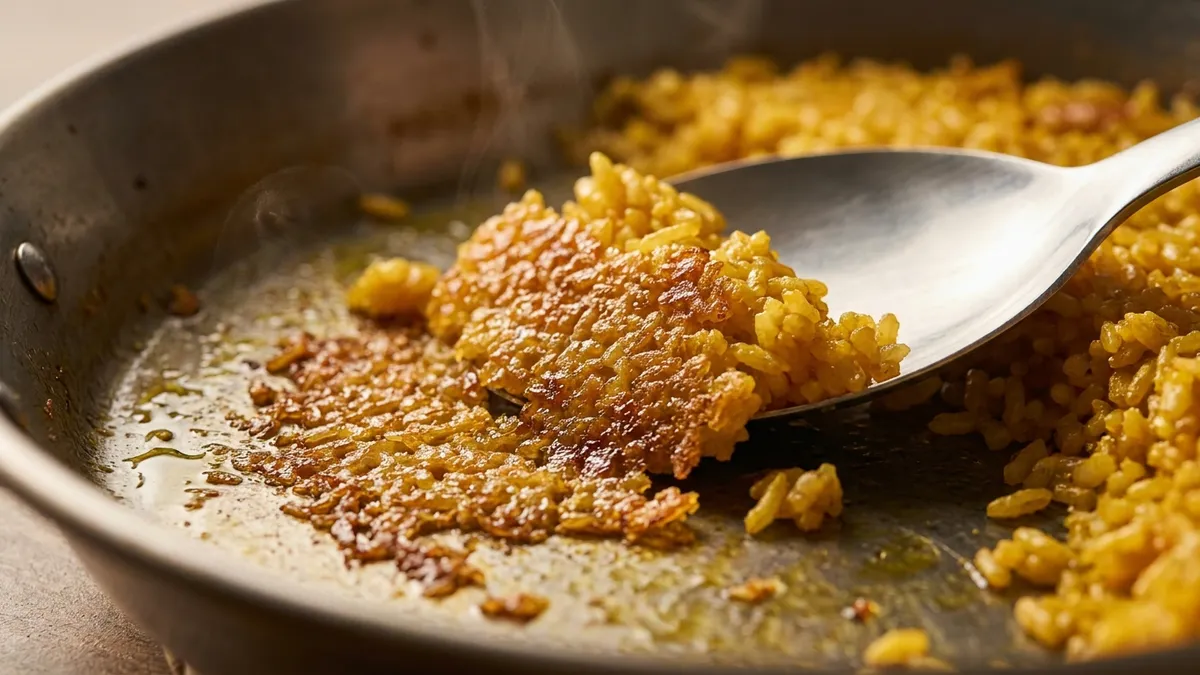
The socarrat is browning by the Maillard reaction (amino acids and sugars reacting under heat), which runs fast from about 140 to 165 °C. It tastes toasted, savoury and a little bitter. Traditional paella is cooked over a fire of orange-tree and pine branches, which adds a light smoke. Bitterness and smoke make high alcohol and firm tannin (the drying grip on your gums) taste harsher.
Does White Wine Go With Seafood Paella?
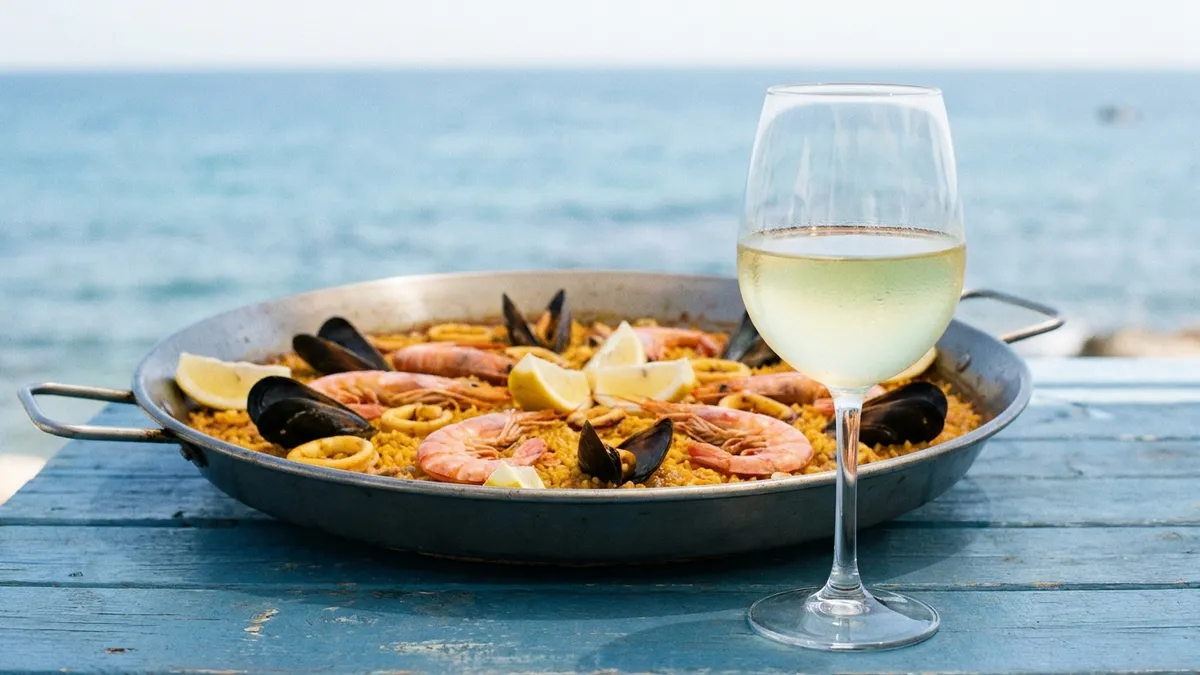
Yes, and with seafood paella a crisp, unoaked white is the first choice. Albariño leads. It has high acidity and usually 11.5 to 12.5% alcohol, so it cuts the oil without adding heat that the smoke and saffron would amplify.
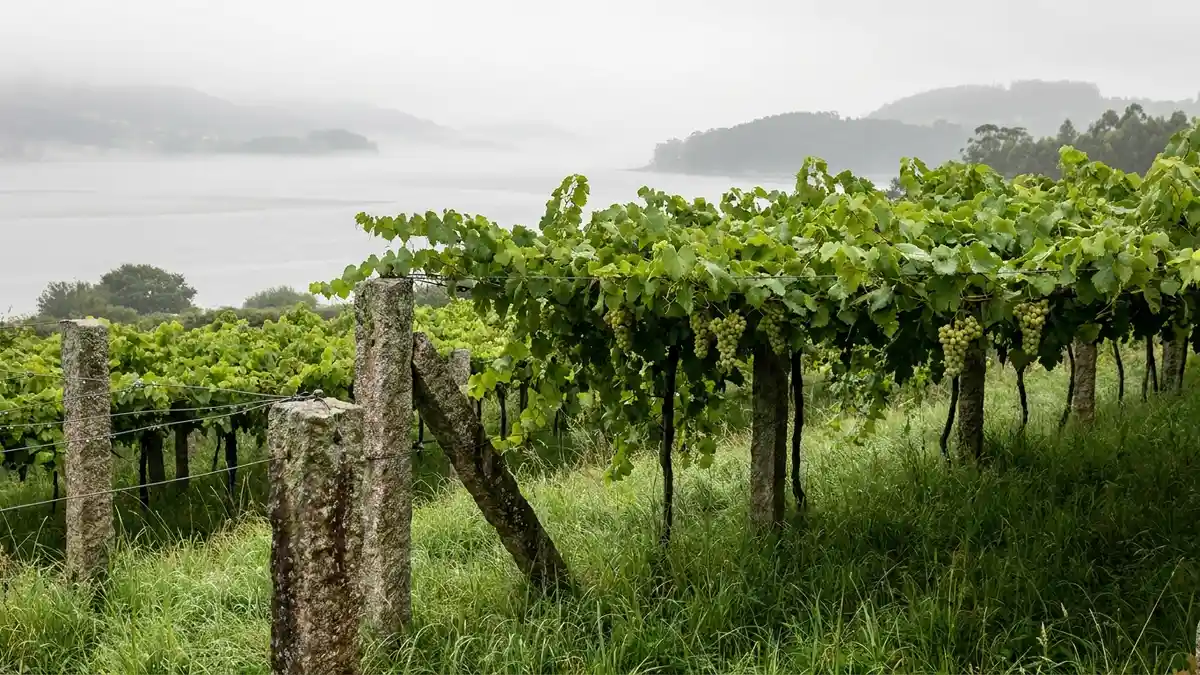
Albariño makes up over 90% of the vines in Rías Baixas, on the Atlantic coast of Galicia in north-west Spain. The region has wet winters and sea fog, and its warmest sub-zone gets over 2,000 millimetres of rain a year. That cool, damp climate keeps the grapes tart, which is why the wine tastes of lemon and green apple rather than ripe tropical fruit. Grapes, sub-zones and food matches are covered in the Albariño wine guide.
Verdejo from Rueda is the second white. It is aromatic and often fuller in body (weight in the mouth, like whole milk against skimmed) than Albariño, with a slightly bitter almond finish that mirrors the socarrat. Where it grows and how it tastes young is covered in the Verdejo wine guide.
If the paella is mostly shellfish, pick Albariño. If it leans on chicken, artichoke or beans, Verdejo's fuller body holds up better.
Is Rosé the Safest Choice for Paella?
For paella valenciana and paella mixta, yes. A dry rosado carries red-berry fruit for the rabbit, chicken and saffron, and the freshness and low grip a seafood mix needs. It is the one bottle that fits every version in the table.
Much Spanish rosado, notably Navarra's, is made from Garnacha, one of Spain's most planted red grapes. Its thin skin and pale colouring suit rosé. That means a short time on the skins gives colour and fruit without much tannin. Rioja is known for pale rosados. If the pan has a thick crust or lots of meat, a deeper pink rosado holds up better than the palest one.
If the label says rosado and Garnacha and the wine is dry, it will fit any version in the table. Avoid sweet "blush" styles, which turn cloying against saffron. How rosé gets its colour and which styles are dry is set out in the rosé wine guide.
Can You Drink Red Wine With Paella?
Yes, with the meat versions, if the red is light, low in tannin and slightly chilled. Young Garnacha from Navarra is lighter and fruitier than the grape's Rioja style and is made for drinking young. It meets rabbit and chicken without fighting the saffron.
With shellfish, red wine is a risk. Many reds leave a metallic, fishy aftertaste with prawns and mussels, which one study traced to iron in the wine, and firm tannin adds a drying grip. Our explainer on what tannins are shows where that grip comes from.
Garnacha has a second trap. In warm sites it often reaches 15% alcohol or more, and that heat makes saffron's bitterness and the smoky crust taste harsher. Check the label: if a red shows 15% or more, or says Crianza or Reserva, save it for grilled lamb. Those labels mean time in oak (barrels that add vanilla, toast and spice), and the vanilla clashes with saffron. The Grenache wine guide maps the lighter regions to look for.
Does Cava Work With Paella?
Yes. Brut Cava is the best opener and a strong match for seafood or vegetable paella. Its acidity and bubbles scrub olive oil off the palate between bites, and its 'Brut' label means dry, so saffron's bitter edge does not turn it cloying.
Only wine made by the traditional method (a second fermentation inside the bottle, as in Champagne) may be labelled Cava. Macabeo, Parellada and Xarel·lo are the classic grapes, and about 95% of all Cava comes from the Penedès area near Barcelona. How it compares with tank-made Italian sparkling wine is set out in Cava vs Prosecco.
The sweetness word on the label decides the match. Cava runs from Brut Nature (driest) through Brut, Seco and Semiseco to Dulce. If you buy one sparkling for paella, buy Brut or Brut Nature. If the label says Seco or Semiseco, keep it for dessert, because sugar turns cloying next to saffron.
Which Wines Should You Avoid With Paella?
Avoid three things: heavy oak, high alcohol and firm tannin. Oak's vanilla and toast pile onto the socarrat's toast and turn the pairing bitter. Alcohol at 15% and above feels hot next to the smoke. Red wine can taste metallic with shellfish, so keep any red for the meat versions only.
Two lighter mistakes are common too. A very neutral, low-acid white disappears under saffron and oil. A sweet wine, still or sparkling, turns cloying against saffron's bitter edge.
If a wine tastes hot or woody on its own, the paella will make it worse. Our guide to alcohol in wine by type shows which styles usually sit under 13%.
How Should You Serve Wine at a Paella Lunch?
Serve everything colder than you think, and open the sparkling first. Paella arrives hot and is often eaten outdoors, so wines warm fast in the glass. If the lunch is outside in the sun, pour half glasses so each pour stays cold.
Pour Cava while the rice cooks, with olives or almonds. Move to the white or rosado when the pan reaches the table, and to the light red last for anyone still eating the rabbit. Exact ranges for each style are in the wine serving temperature chart.
Is Paella Really a Seafood Dish?
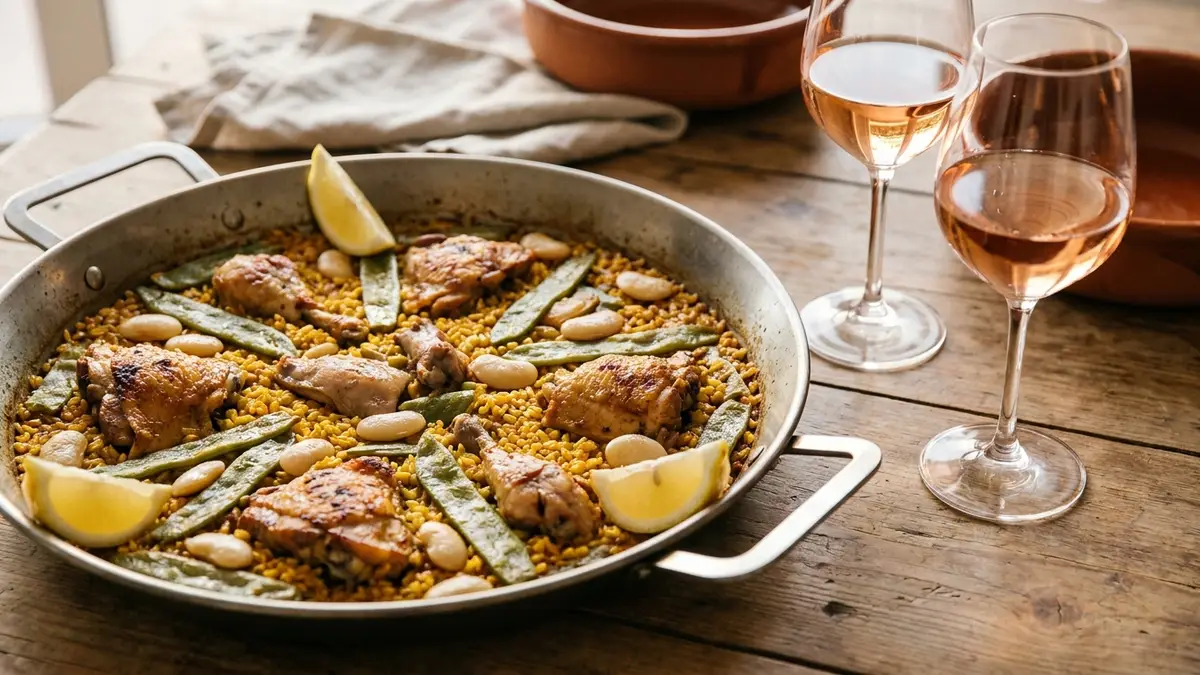
No. The original paella valenciana is a rabbit-and-chicken dish, which is why rosado and light red belong at the table at all. It comes from the rural area around the Albufera lagoon near Valencia and took its modern form in the mid-19th century.
The traditional recipe uses Valencian rice, olive oil, rabbit, chicken, duck, snails, saffron or a substitute, tomato, flat green beans, lima beans, salt and water. Seafood paella and paella mixta, which combines meat, seafood and vegetables, came later. The name comes from the pan itself: paella is the Valencian word for a frying pan.
The wines of each Spanish region on the table are mapped in the Spanish wine regions guide, and more pairings by dish sit in the food pairing hub.
The Sommy app includes a bite-sized Spain course and an AI-guided tasting mode. Tonight, pour a Garnacha rosado and an Albariño side by side with a pan of paella. Photograph each label in Sommy and taste both through look, smell and taste. Then pour a second glass of whichever one held up to the socarrat.
Sources
Frequently Asked Questions
What wine goes best with paella?
A dry Spanish rosado made from Garnacha is the safest single bottle, because it has the acidity for olive oil, the fruit for saffron and almost no tannin to clash with seafood. For seafood paella, Albariño or brut Cava fits better. For the rabbit-and-chicken original, a light, chilled Garnacha red also works.
Does red or white wine go with paella?
Both can, depending on the pan. Seafood paella wants white, rosé or sparkling, because many red wines leave a metallic, fishy aftertaste with shellfish. Paella valenciana, made with rabbit and chicken, takes a light, low-tannin red served slightly cool. Skip big oaky reds with any version, since the saffron and smoky crust make them taste harsh.
Is Albariño good with paella?
Yes, especially with seafood paella. Albariño has high acidity and usually 11.5 to 12.5% alcohol, so it cuts through olive oil without adding heat. It comes mainly from Rías Baixas on Galicia's wet Atlantic coast. With a meat-heavy paella valenciana, a rosado or light red has more fruit and body to meet the rabbit and chicken.
Can you drink Cava with paella?
Yes. Brut or Brut Nature Cava is dry and high in acidity, and its bubbles scrub olive oil from the palate between bites. It works best as the opening wine and with seafood or vegetable paella. Avoid Seco, Semiseco and Dulce Cava with the rice: those are sweeter, and saffron's bitter edge makes sweetness taste cloying.
What wine goes with seafood paella?
Choose a crisp, unoaked white or a sparkling wine. Albariño is the first pick, with Verdejo from Rueda a fuller second and brut Cava a third. Each has the acidity to cut olive oil and no tannin to clash with prawns, mussels or squid. Avoid oaked whites and red wines with firm tannin.
What wine goes with paella valenciana?
Paella valenciana is made with rabbit, chicken, beans and saffron, with no seafood. A dry Garnacha rosado is the first choice, and a light, fruity Garnacha red, such as a young one from Navarra served cool, is a strong second. Both have enough body for the meat and low enough tannin for the saffron.
Should you cook paella with wine?
The traditional paella valenciana recipe uses water, not wine, with olive oil, saffron, tomato and beans. Some cooks add a splash of dry white wine to seafood versions. If you do, use the same dry, unoaked white you plan to drink, and add it early so most of the alcohol cooks off before the rice goes in.
Sommy Team
LinkedInFounder & Wine Educator
The Sommy Team is building the world's most approachable wine education app, helping beginners develop real tasting skills through structured courses and AI-guided practice.