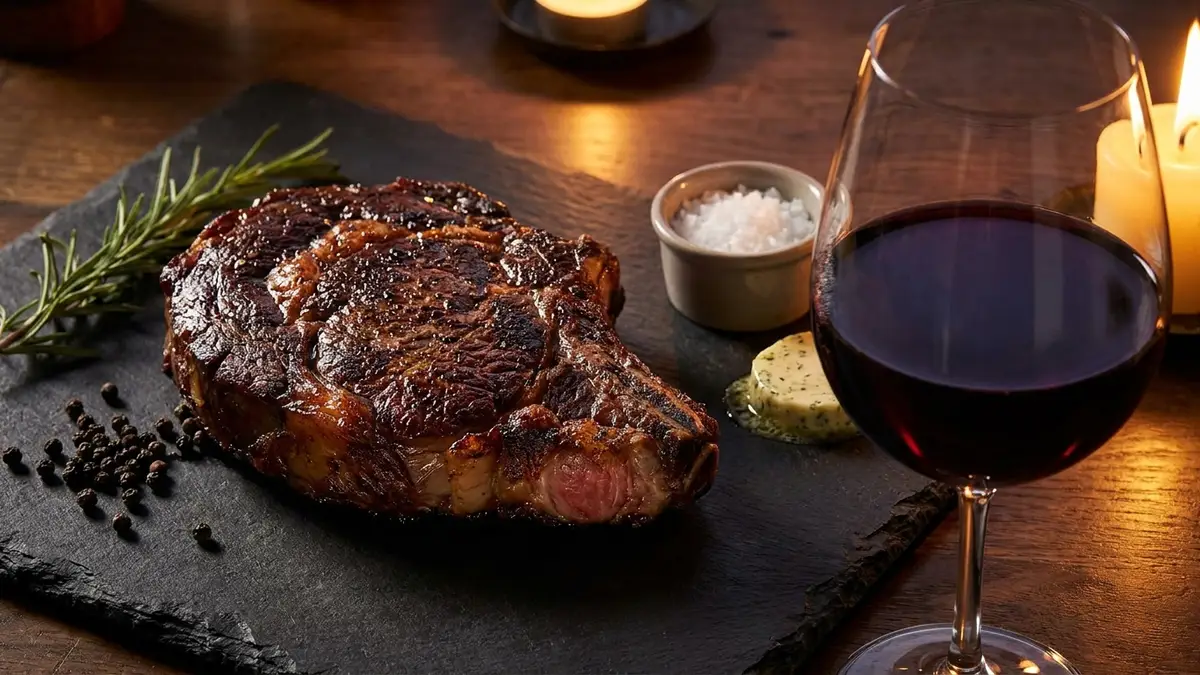
Wine with Ice Cream: The Pairing Nobody Expects to Love

By the Sommy Team — AI-assisted, human-edited.
Updated Oct 1, 2026

Contents (9)
- How Do You Pair Wine with Ice Cream, in One Paragraph?
- Which Wine Goes with Which Ice Cream Flavour?
- Should the Wine Be Sweeter Than the Ice Cream?
- Why Does Cold Ice Cream Change How Wine Tastes?
- Does Port Go with Ice Cream?
- Can You Pour Wine over Ice Cream?
- Which Wines Suit Sorbet and Fruit Flavours?
- Is Gelato Different from Ice Cream for Pairing?
- What Mistakes Make the Pairing Fall Flat?
TL;DR
Wine with ice cream works when the wine is sweeter than the scoop, which carries 12 to 16% sugar. Tawny Port suits vanilla and caramel, ruby Port suits chocolate, Moscato d'Asti suits sorbet, and a spoonful of Pedro Ximénez poured on top makes an instant sauce. Dry tannic reds turn sour and bitter.
Wine with ice cream works when three things line up: the wine is sweeter than the scoop, it is sharp or fizzy enough to cut through the cream, and the pour is small. Tawny Port next to vanilla, ruby Port next to chocolate and Moscato d'Asti next to a berry sorbet all pass that test. A dry red does not, and that one mistake is why most people assume the pairing cannot work.
How Do You Pair Wine with Ice Cream, in One Paragraph?
Pick a sweet wine that is sweeter than the ice cream, match its weight to the flavour, and pour about half a normal glass. Standard ice cream carries 12 to 16% sweeteners by weight, so the wine must be properly sweet: Port, Pedro Ximénez sherry, sweet Moscato or a sweet sparkling red.
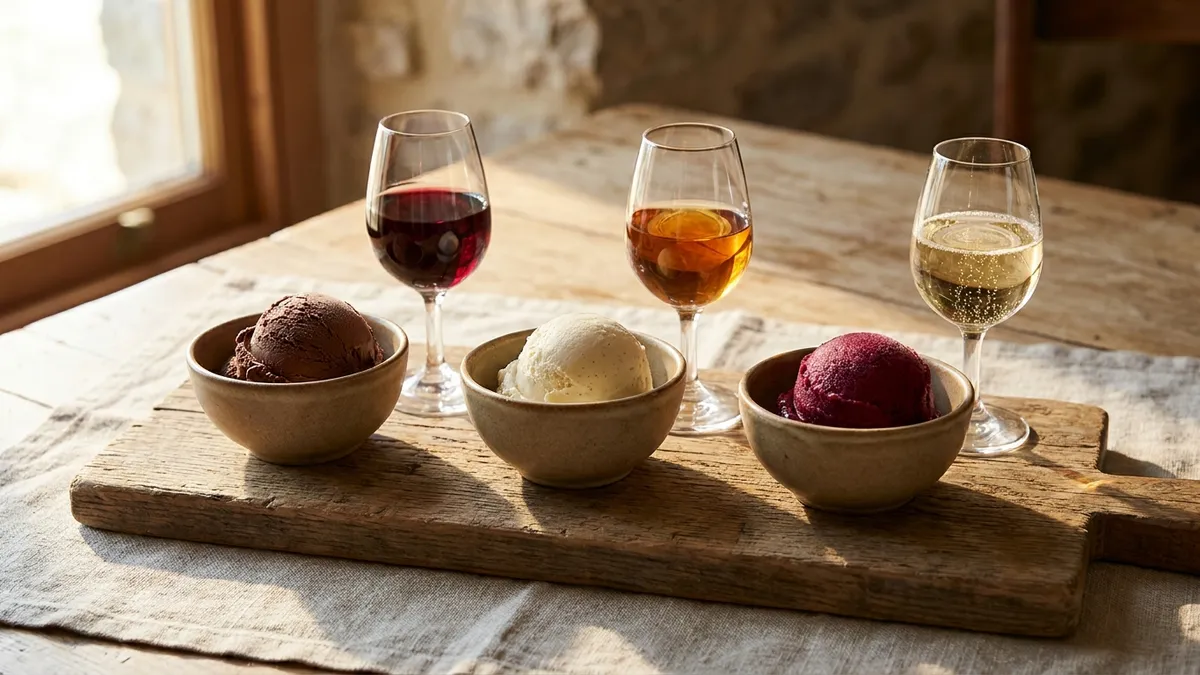
If the scoop is vanilla, caramel or nut, pour tawny Port or Pedro Ximénez. If it is chocolate or dark berry, pour ruby Port. If it is fruit sorbet, pour lightly sweet fizz such as Moscato d'Asti. For a dessert in one bowl, spoon a little Pedro Ximénez over vanilla. Let a rock-hard scoop soften for a few minutes first, because cold blunts sweetness on the tongue.
Which Wine Goes with Which Ice Cream Flavour?
Vanilla takes almost any sweet wine; darker, more bitter flavours want darker, fruitier wines. If the scoop is vanilla, any wine from the table works. If it is chocolate or coffee, choose a wine that tastes of ripe cherry, plum or roasted coffee of its own.
| Ice cream | Wine style | Why it works | Pour |
|---|---|---|---|
| Vanilla | Tawny Port or Pedro Ximénez sherry | Caramel, nut and raisin flavours sit on top of plain cream | Half glass, or a spoonful over the scoop |
| Chocolate | Ruby Port | Dark cherry fruit and sugar stand up to cocoa's bitterness | Half glass, cellar cool |
| Caramel or salted caramel | Tawny Port | Toffee flavours from wood ageing echo the caramel | Half glass, lightly chilled |
| Coffee | Pedro Ximénez sherry or tawny Port | Molasses and roasted notes match the coffee | Small glass, or poured on top |
| Strawberry or cherry | Sweet sparkling red (Lambrusco amabile) | Red-berry fruit and bubbles lift the cream | Small flute, well chilled |
| Fruit sorbet | Moscato d'Asti | Bubbles and acidity match sharp fruit; low alcohol keeps it light | Small flute, well chilled |
Should the Wine Be Sweeter Than the Ice Cream?
Yes. If the ice cream is sweeter than the wine, the wine tastes sour and thin. A standard scoop carries 12 to 16% sweeteners by weight, usually table sugar plus glucose syrup. A dry wine (no sugar you can taste) brings nothing to set against that sugar.
The usual pairing rule says sweet wines need to be sweeter than the dish they are served with. A dry Champagne beside wedding cake is the classic failure: the wine tastes tart and weak, and the cake can pick up odd flavours. Ice cream sits at the extreme end of that problem, because it is sweet, fatty and cold at once.
Sugar in food makes your mouth notice the wine's acidity (the tartness that makes your mouth water) more and its fruit less. In a sweet wine, the sugar balances that acidity, so the swap barely shows. In a dry wine nothing balances it.
The myth worth dropping is that any good wine can go with dessert. A fine dry red beside ice cream tastes worse, not better. Our sweet vs dry wine explainer and the wine sweetness scale show which label words mean real sugar.
If you cannot tell which is sweeter, sip the wine, take a spoon of ice cream, then sip again. If the second sip tastes noticeably less sweet or sharper, the wine is not sweet enough for this scoop.
Why Does Cold Ice Cream Change How Wine Tastes?
Cold numbs sweet taste, and fat coats the tongue, so a frozen scoop mutes both itself and the wine that follows. A 2005 study in Nature found that a key channel in sweet-taste cells, TRPM5, responds far more strongly as temperature rises from 15 to 35°C. The researchers, working with mice, suggested it may explain the known effect in people: warmer food tastes sweeter.
Ice cream straight from the freezer is far below that range. It chills the tongue, so the first sip of wine after it lands on a cold mouth that reads less sugar and fruit. The wine seems thinner for a moment, then recovers as the mouth warms.
The fat adds a second layer. Milkfat leaves a film on the tongue, which softens how sharp and how fruity the next sip feels. Wines with good acidity or bubbles cut that film, which is why Moscato d'Asti and sweet sparkling reds work better than a flat, heavy dessert wine with a rich scoop. More on how temperature shifts taste sits in how temperature affects wine taste.
If the scoop is rock-hard, leave it on the counter for five minutes before serving. Serve fortified wines at cellar temperature rather than straight from the fridge, so the wine is not adding more cold to a cold mouth.
Does Port Go with Ice Cream?
Yes, and the style decides the flavour: ruby with chocolate and berries, tawny with vanilla, caramel and nuts. Port is a fortified wine (spirit added, usually about 19 to 22% alcohol). Producers add neutral grape spirit partway through fermentation, which stops the yeast and leaves a large share of the grape sugar in the wine.
That leftover sugar is what lets Port meet ice cream on equal terms. The two main styles split by how they age.
Ruby Port is younger, with minimal time in barrel. It tastes of blackberry and cherry fresh enough to be juicy, so it holds its own against chocolate, which would make a lighter wine taste bitter. Tawny Port spends years in wooden casks, where slow contact with air turns it amber and moves its flavour toward caramel, toffee and walnut. Those flavours sit naturally on top of vanilla, caramel and coffee ice cream.
If the ice cream is chocolate, cherry or berry, pour ruby. If it is vanilla, caramel, coffee or nut, pour tawny. Vintage Port is not needed for this: a basic ruby or a 10-year-old tawny is the right weight. The full range of styles is laid out in the Port wine guide, and how to taste fortified wine explains why a small pour of a 20% wine still feels warm.
Can You Pour Wine over Ice Cream?
Yes, and Pedro Ximénez sherry is the classic choice: a spoonful or two over vanilla makes an instant sauce. Pedro Ximénez (PX) is a sherry made from sun-dried grapes of the same name. It is a thick, nearly black wine that tastes of raisins and molasses, with more than 212 grams of residual sugar (grape sugar left unfermented) per litre.
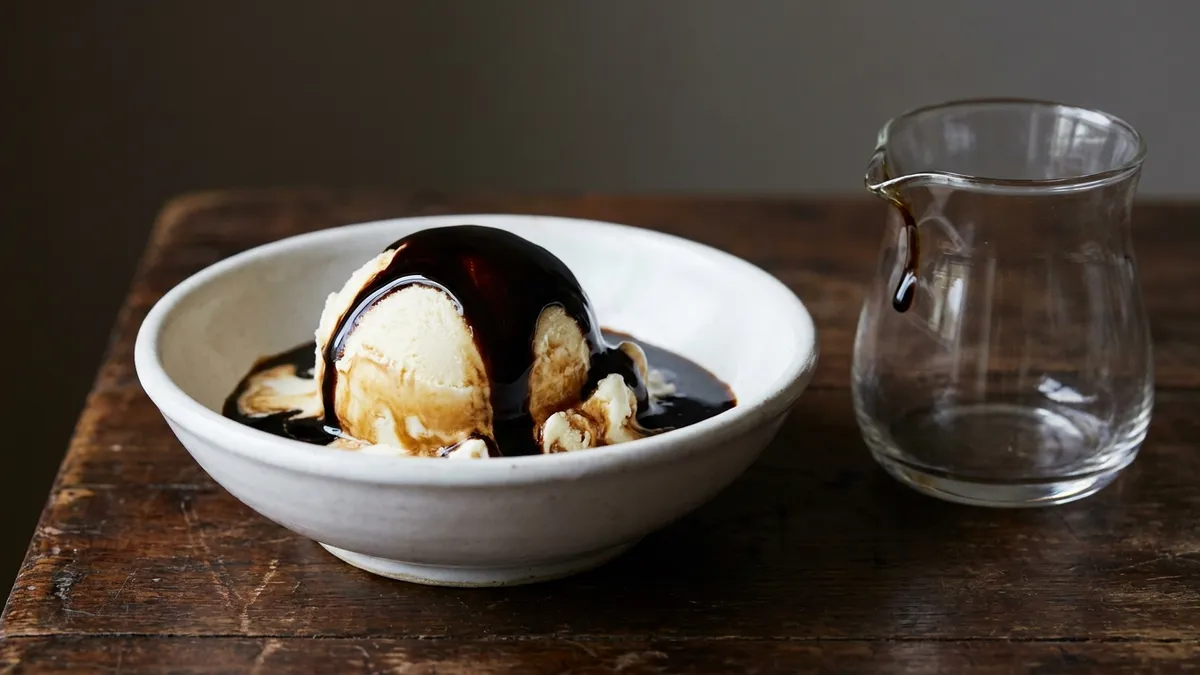
The trick works because of how ice cream freezes. It is 55 to 64% water, and its sugar lowers the freezing point, so some of that water never fully freezes. Pouring on more sugar and alcohol pushes the freezing point lower still at the surface. A splash softens the outer layer into a glossy, toffee-coloured sauce while the centre stays firm.
The same physics sets the limit. If you pour more than a couple of tablespoons per scoop, the wine melts the ice cream faster than you can eat it. Tawny Port and sweet Oloroso-style sherries work too, but nothing matches PX for thickness. More on the grape and its sherry sits in the Pedro Ximénez wine guide.
Which Wines Suit Sorbet and Fruit Flavours?
Lightly sweet, low-alcohol fizz such as Moscato d'Asti, because bubbles and acidity match the fruit without weighing it down. Moscato d'Asti comes from the Moscato Bianco grape in Piedmont, in north-west Italy, and is frizzante (gently sparkling, softer than Champagne).
It carries DOCG status (Italy's top tier of protected wine names). It smells of peach, orange blossom and fresh grapes because the grape itself is intensely aromatic.
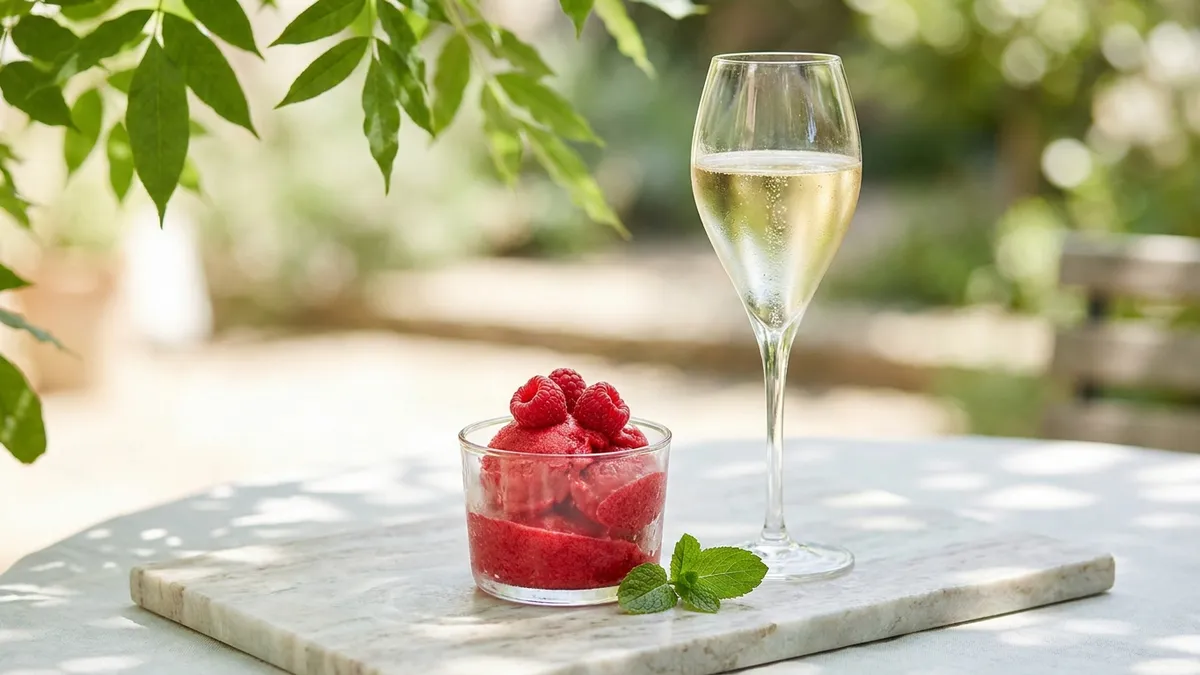
Sorbet has no milk fat to cut through, so it needs a lighter wine than ice cream does. A heavy fortified wine overwhelms it. For red-fruit flavours such as strawberry or cherry, a sweet sparkling red works: look for Lambrusco labelled amabile or dolce, which keeps its berry fruit and bubbles. The Moscato wine guide and the Lambrusco wine guide explain which label words mean sweet.
If the sorbet is sharp lemon or passion fruit, pour Moscato d'Asti well chilled. If it is a berry or cherry flavour, pour a sweet sparkling red. For a richer fruit ice cream, a small glass of ice wine brings high acidity and peach-apricot sweetness.
Is Gelato Different from Ice Cream for Pairing?
Slightly. Gelato carries less fat than ice cream, so it suits lighter, fizzier wines such as Moscato d'Asti. Gelato usually sits at 4 to 9% fat. US federal rules require at least 10% milkfat for a product to be called ice cream.
The same rules demand at least 10% nonfat milk solids. A gallon must also weigh at least 4.5 pounds, which limits how much air is whipped in.

The rules relax for bulky flavours. When chocolate, fruit or nuts make up part of the weight, the milkfat floor can fall to 8% of the finished food. So a fruit-heavy ice cream already sits closer to gelato than a plain vanilla does.
Less fat means less coating on the tongue and more room for the wine's own flavour, so a delicate wine is not drowned out. If the scoop is gelato or a light fruit ice cream, pour Moscato d'Asti or a sweet sparkling red. If it is a dense, premium vanilla or chocolate, pour a fortified wine with the weight to match.
What Mistakes Make the Pairing Fall Flat?
Most failures come from a dry wine, a big pour or too much wine on the scoop. If a pairing tastes sour, bitter or thin, the wine was not sweet enough; if it tastes cloying, the pour was too big. The common slips and their fixes:
- A dry red. Tannin (the drying grip on your gums) clashes with cold sugar and turns bitter. Swap it for ruby Port.
- Brut sparkling wine. Dry fizz beside ice cream tastes sharp and thin. Choose Moscato d'Asti or a sweet sparkling red.
- A full glass. Sweet wine and ice cream together are a lot of sugar. Half a normal glass is enough.
- Wine poured straight from the freezer. It adds more cold to an already cold mouth. Serve fortified wines at cellar temperature.
- Drowning the scoop. More than two tablespoons per scoop melts it. Pour a little, eat, pour again.
Chocolate desserts beyond ice cream follow similar logic, covered in wine with chocolate. The broader rules, from weight to sweetness, are gathered in the food pairing hub and the dessert wine guide.
The Sommy app at sommy.wine has bite-sized courses, from Wine 101 to regional courses, and an AI-guided tasting mode that starts from a photo of the label. Pour a small glass of whatever sweet wine you have open tonight, set a scoop of vanilla beside it, and taste wine, scoop, wine.
Sources
Frequently Asked Questions
Can you drink wine with ice cream?
Yes, as long as the wine is sweet. Ice cream holds 12 to 16% sugar by weight, and a dry wine next to that much sugar tastes sour and thin. Sweet fortified wines such as Port and Pedro Ximénez sherry, and sweet sparkling wines such as Moscato d'Asti, carry enough sugar to stay balanced. Pour about half a normal glass.
What wine goes best with vanilla ice cream?
Tawny Port and Pedro Ximénez sherry are the safest picks. Tawny brings caramel, toffee and nut flavours that sit on top of vanilla, and Pedro Ximénez tastes of raisins and molasses. Vanilla is the easiest flavour to pair, because it adds sweetness and fat but no strong flavour of its own, so almost any properly sweet wine works with it.
Does Port go with ice cream?
Yes. Port is sweet because grape spirit stops its fermentation early, so it has the sugar to match ice cream. Ruby Port, younger and fruitier, suits chocolate, cherry and berry flavours. Tawny Port, aged for years in wood, tastes of caramel and nuts, so it suits vanilla, caramel, coffee and nut flavours. Serve a small pour, around half a normal glass.
Can you pour wine over ice cream?
Yes. A tablespoon or two of Pedro Ximénez sherry, which holds more than 212 grams of sugar per litre, turns a scoop of vanilla into a dessert with its own sauce. Sugar and alcohol both lower the freezing point of water, so a splash softens the edges. Pour much more and the scoop melts into a sweet soup.
What wine goes with chocolate ice cream?
Ruby Port is the classic choice. Its dark cherry and plum fruit and its sugar stand up to cocoa, which carries bitterness that makes dry wines taste harsher. A sweet sparkling red such as Lambrusco labelled amabile or dolce is a lighter, fizzier option. Avoid dry Cabernet or Merlot: the sugar and bitterness of chocolate make their tannin feel rough.
What wine goes with fruit sorbet?
Lightly sweet, gently fizzy wine works best. Moscato d'Asti is low in alcohol, smells of peach and orange blossom, and its bubbles and acidity match the sharp fruit of a sorbet without weighing it down. Sorbet has no milk fat, so it needs less body from the wine than ice cream does. Serve the wine well chilled.
Is gelato paired differently from ice cream?
Slightly. Gelato usually carries 4 to 9% fat, while US law requires at least 10% milkfat in ice cream. Less fat coats the tongue less, so gelato suits lighter wines such as Moscato d'Asti or a sweet sparkling red. Dense, high-fat ice cream can take a heavier fortified wine such as tawny Port or Pedro Ximénez.
Sommy Team
LinkedInFounder & Wine Educator
The Sommy Team is building the world's most approachable wine education app, helping beginners develop real tasting skills through structured courses and AI-guided practice.