Wine with Game Meat: Venison, Elk, Wild Boar, and More

By the Sommy Team — AI-assisted, human-edited.
Updated Sep 25, 2026
Contents (10)
- Wine With Game Meat, in One Paragraph
- How Do You Pick a Wine for Game Meat?
- What Wine Goes Best With Venison?
- What Wine Pairs With Elk?
- What Wine Goes With Wild Boar?
- What Wine Goes With Pheasant and Other Game Birds?
- Does Cooking Method Change the Wine for Game?
- Why Do Tannic Reds Work With Game Meat?
- What Makes Game Meat Taste Gamey?
- What Are the Most Common Game Pairing Mistakes?
TL;DR
Pick wine for game meat by the fat on the plate. Lean venison and elk want juicy reds with medium tannin and bright acidity, such as Pinot Noir, Syrah or Rioja Reserva. Fattier wild boar and long braises can carry firm Sangiovese, Sagrantino or Barolo. Pheasant suits a light red or full white.
The best wine with game meat is chosen by the fat on the plate first and the animal second. Lean venison and elk want juicy reds with medium grip. Fattier wild boar and long, slow braises can carry the most tannic reds on the shelf. Game birds such as pheasant sit at the light end and can even take a white.
Wine With Game Meat, in One Paragraph
Match the wine to the fat and the cooking method. Pink, seared venison and elk are leaner than beef, so pour a juicy, medium-bodied red with moderate tannin and bright acidity: Pinot Noir, Syrah or Rioja Reserva. Wild boar has more fat, and a roast or ragù suits Sangiovese, such as Chianti Riserva.
Boar or venison braised for hours in wine and stock can carry the grippiest reds, such as Sagrantino and Barolo, which by law spend at least 37 and 38 months ageing before release. Pheasant and other game birds are mild and pale, so they suit a light red or a full-bodied white. Sweet berry and port sauces need a riper wine than the meat alone would.
How Do You Pick a Wine for Game Meat?
Sort the dish by fat first and cooking method second, then choose how much grip the wine should have. Tannin is the drying grip on your gums that comes from grape skins, and fat and protein soften it. Acidity is the tartness that makes your mouth water, and it keeps rich sauces from tasting heavy.
Game is often treated as one category that always needs the biggest red available. That is where most pairing mistakes start. Lean game has little fat to cushion a very tannic wine, while fatty or slow-cooked game can take far more. If you can see fat, or the meat cooked for hours, go grippy. If it is a lean, pink cut cooked fast, go juicy and medium.
| Dish | Fat and flavour | Wine style | Pour this |
|---|---|---|---|
| Venison loin or medallions, pink | Very lean, fine texture, mild iron flavour | Medium body, medium tannin, bright acidity | Pinot Noir, northern Rhône Syrah |
| Venison or elk roast | Lean, deeper crust from the oven | Medium to full body, moderate tannin | Rioja Reserva, Syrah, Malbec |
| Elk burgers or chili | More fat from grinding, char and spice | Ripe fruit, soft tannin | Zinfandel, Argentine Malbec |
| Wild boar roast or ragù | Fattier, savoury, tomato and herbs | Firm tannin, high acidity | Chianti Riserva, other Sangiovese |
| Boar or venison stew, braised for hours | Rich sauce, gelatin, deep flavour | Full body, high tannin | Sagrantino, Barolo |
| Roast pheasant or partridge | Pale, lean, mild | Light red or full-bodied white | Pinot Noir, oaked Chardonnay |
The same logic runs through our wine with steak guide, where lean filet and fatty ribeye need different reds. The broader food-pairing hub collects every dish we cover.
What Wine Goes Best With Venison?
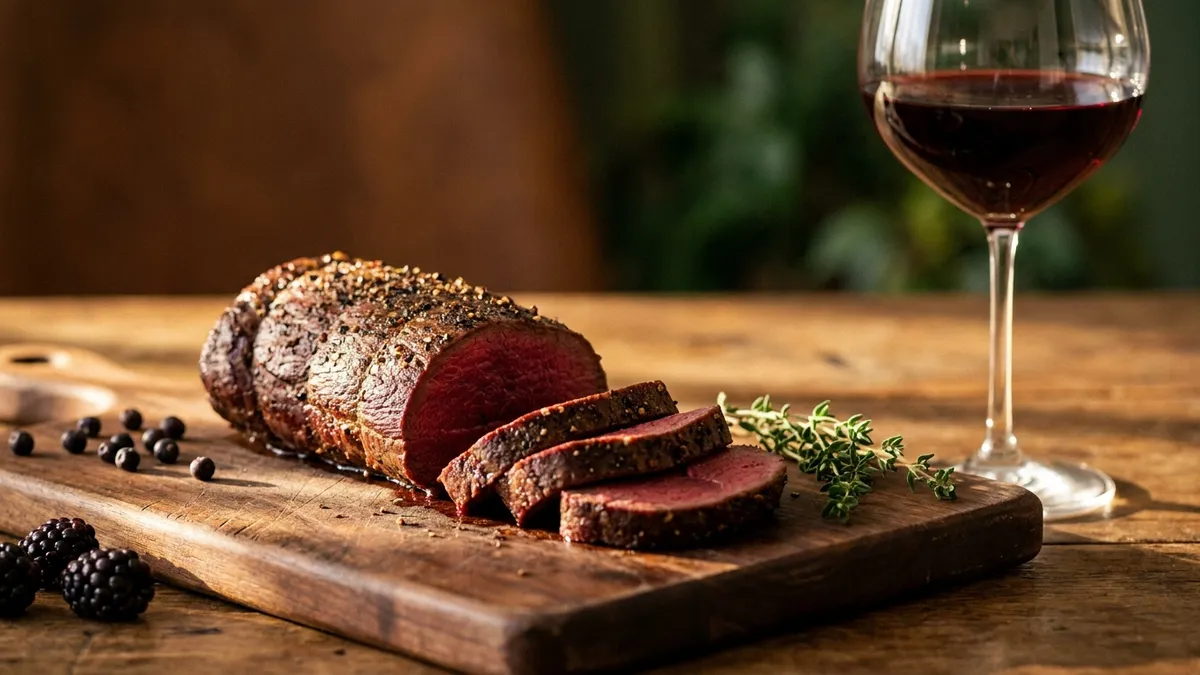
A juicy red with medium tannin and bright acidity, such as Pinot Noir, Syrah or Rioja Reserva, goes best with venison. Venison meat tends to be leaner and finer in texture than comparable cuts of beef. It is also higher in moisture and lower in fat than most cuts of grain-fed beef, pork or lamb.
That leanness matters in the glass. A very tannic red grabs the meat's protein, but with no fat to buffer it, the wine can taste like stewed tea. A lighter red with good acidity makes the mouth water, so each lean bite tastes juicier.
- Pinot Noir is light in colour, medium-bodied (the weight of whole milk rather than cream) and low in tannin. It smells of fresh cherry and raspberry, because the thin-skinned grape is mostly grown in cool places. Pour it with pink loin or medallions.
- Syrah from the northern Rhône smells of black pepper and fresh blackberry, because the cool valley keeps its spice sharp. It suits a pepper crust or juniper rub.
- Rioja Reserva, mostly Tempranillo, has softer tannin after time in oak barrels. It smells of vanilla and dried strawberry, because the oak adds sweet spice and the ageing dries the fruit. It suits a whole roast.
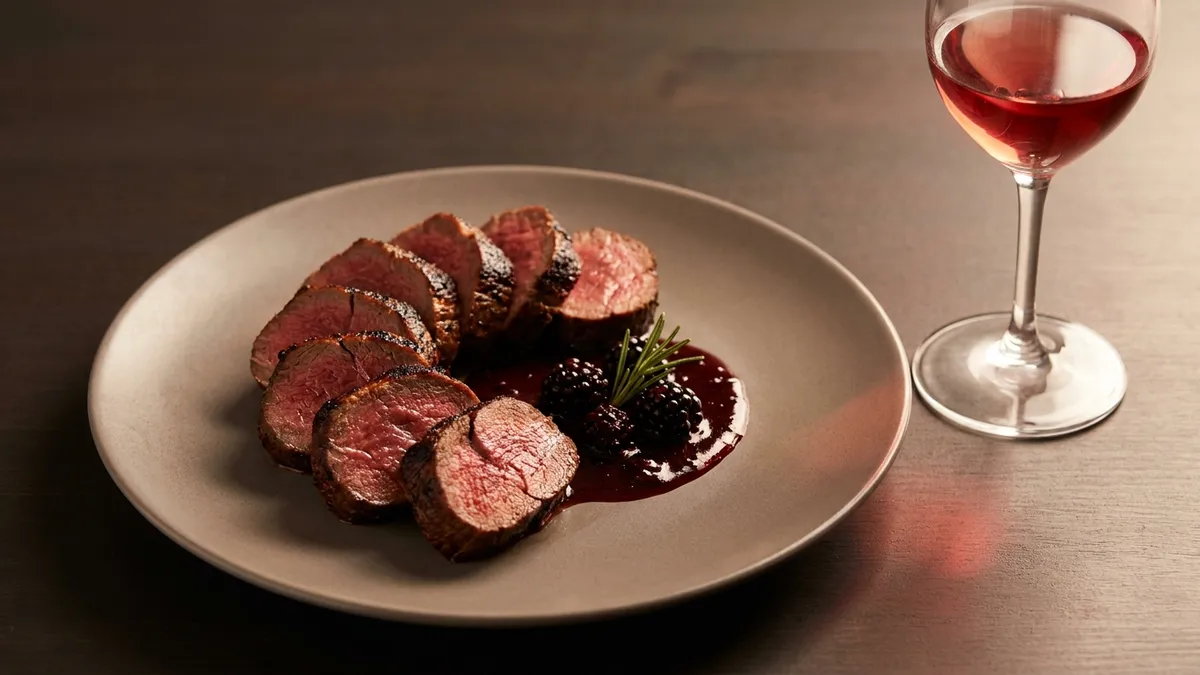
Venison often arrives with a sauce of blackberry, redcurrant or port. If it does, choose a riper red, such as warm-climate Syrah or Malbec, because a tart wine tastes sour next to sweet fruit. If the venison is plain with salt and pepper, stay with Pinot Noir or northern Rhône Syrah. Syrah vs Shiraz explains which label word gives the peppery style and which the riper one, and the Pinot Noir guide covers where the lighter styles grow.
What Wine Pairs With Elk?
Elk takes the same wines as venison, leaning slightly fuller, because it is lean and high in protein but milder in flavour. Elk meat is higher in protein and lower in fat and cholesterol than beef, pork and chicken. Elk farms are common in North America and New Zealand, so farmed elk is easy to find.
Elk steaks can take a little more structure than venison loin. Syrah, Rioja Reserva and Malbec all work with a seared elk steak or a roast.
Elk is also sold ground, and burgers and chili change the plate. Ground elk often has fat mixed in, and chili brings heat that makes high alcohol burn. If elk is ground for burgers, pour a ripe, fruity red such as Zinfandel or Malbec with soft tannin. If it goes into a spicy chili, pick a lower-alcohol bottle, because chilli heat makes alcohol taste hotter. The Zinfandel guide and Malbec guide explain which regions give the softer, riper bottles.
What Wine Goes With Wild Boar?
Wild boar goes with firm, tannic Italian reds: Sangiovese-based Chianti Riserva with roasts and ragù, Sagrantino or Barolo with long braises. Boar carries more fat than venison and has a savoury, pork-like depth, so it can handle much more grip.
In Tuscany, boar ragù over wide pasta is a standard autumn dish, and Sangiovese is the local answer. Its high acidity cuts through tomato and fat, and it smells of sour cherry and dried herbs, because the grape keeps its tartness even when fully ripe. Riserva on a Chianti label means the wine spent longer ageing before release, which softens its tannin and adds depth. The Sangiovese guide explains the label tiers.
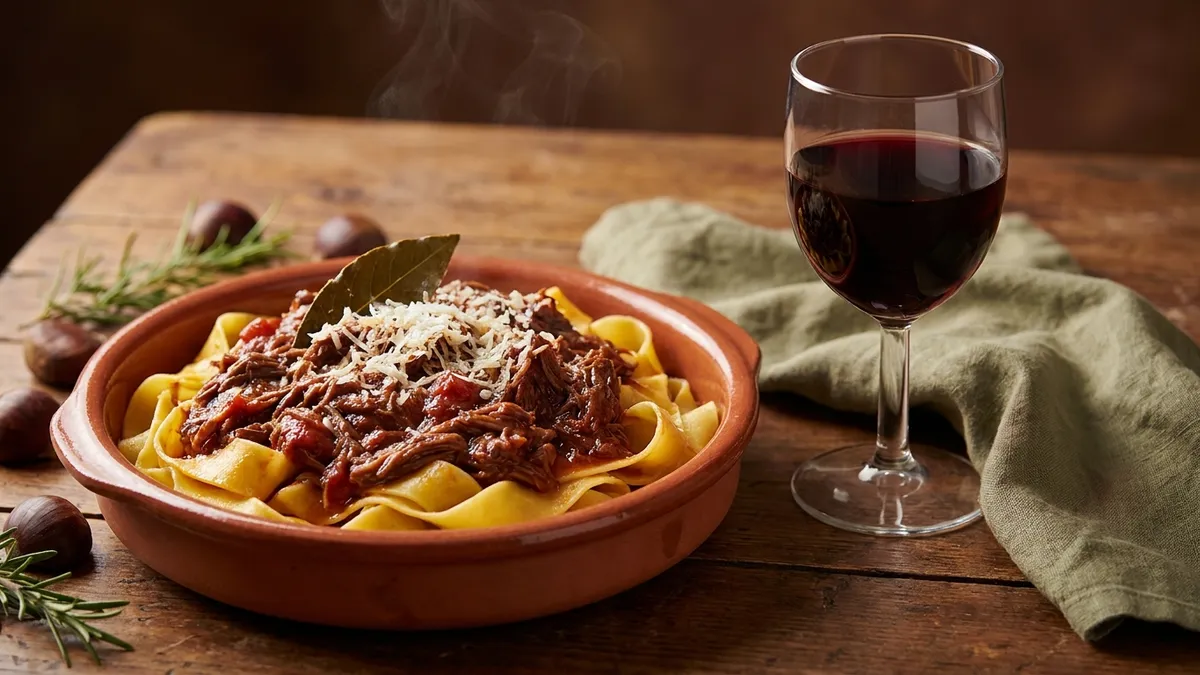
For a boar braise that cooks for hours, reach for the grippiest reds Italy makes. Sagrantino di Montefalco is made from 100% Sagrantino, a thick-skinned grape with very high tannin. It is sharply astringent when young, and the law requires at least 37 months of ageing, 12 of them in oak barrels. The Sagrantino guide covers its Umbrian home.
Barolo is 100% Nebbiolo, aged at least 38 months with 18 in wood, and it has pronounced tannin and acidity. The Nebbiolo guide covers why the pale grape grips so hard. If the boar braises for more than two hours, choose Sagrantino or Barolo. If it is roasted or made into quick sausages, Chianti Riserva is enough.
What Wine Goes With Pheasant and Other Game Birds?
Pheasant wants a light red such as Pinot Noir or a full-bodied white; the big reds that suit boar bury its flavour. Pheasant is the most popular game bird in many parts of the United States, and its meat is pale, lean and mild.
That mildness makes pheasant the one common game dish where white wine often works better than red. A full-bodied white, such as oaked Chardonnay or a white Rhône blend, has the weight to meet roast skin and creamy sauces. A crisp, light white such as Pinot Grigio tastes thin next to a crust.
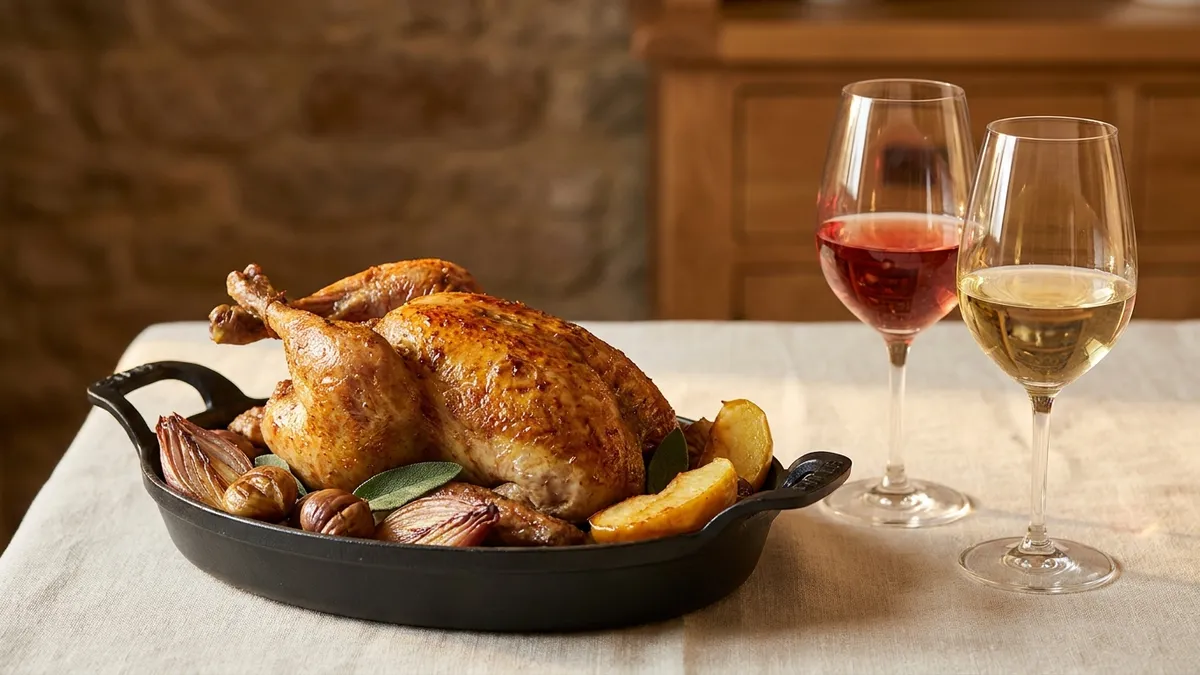
If the pheasant is roasted with apple, cream or sage, pour the full white. If it comes wrapped in bacon, with mushrooms or a dark gravy, pour a light red such as Pinot Noir or Gamay. Partridge and quail follow the same rule.
Duck is the exception among birds. Its meat is high in fat, which lets it carry far more tannin and acidity than pheasant. Our guide to wine with duck covers confit, roast and seared breast one by one.
Does Cooking Method Change the Wine for Game?
Yes: a quick sear keeps the meat lean, while a braise adds fat, gelatin and sauce that can carry more tannin. The same venison haunch wants a different bottle as a pink steak than as a stew, and a sweet sauce shifts it again toward riper fruit.
Searing and roasting to pink leave the meat's leanness intact, so stick with medium tannin. Grilling adds char, which suits a wine with some smoky oak or peppery spice, such as Syrah. Slow braising in wine and stock breaks down connective tissue into gelatin, which coats the mouth the way fat does. That coating is what lets a stew take a Barolo that would taste rough beside a pink loin.
Sauces pull the pairing further. Game recipes often lean on juniper, red berries, port or chocolate. Sweetness in the sauce makes a dry, tart wine taste thinner and sourer. Our explainer on how food changes wine taste walks through the sugar, salt and acid effects in detail.
Why Do Tannic Reds Work With Game Meat?
Tannin binds to protein, so a bite of meat gives it something to grab other than your mouth, and the wine feels softer. Tannins are plant compounds that bind to and precipitate proteins. That binding is what causes astringency, the dry, puckering feeling after red wine or strong tea.
Proteins in saliva normally catch tannin, which is why a tannic red sipped alone dries your gums. Meat protein takes over part of that job. Each bite gives the tannin a new target, so the next sip feels less drying.
A common claim says tannin "cuts through" gaminess by masking the flavour. It does not remove flavour. It changes texture: the drying grip drops and the meat feels less heavy. In Piedmont, Barolo is often served with meat dishes and rich risotto, where the tannins bind to the food proteins and come across as softer.
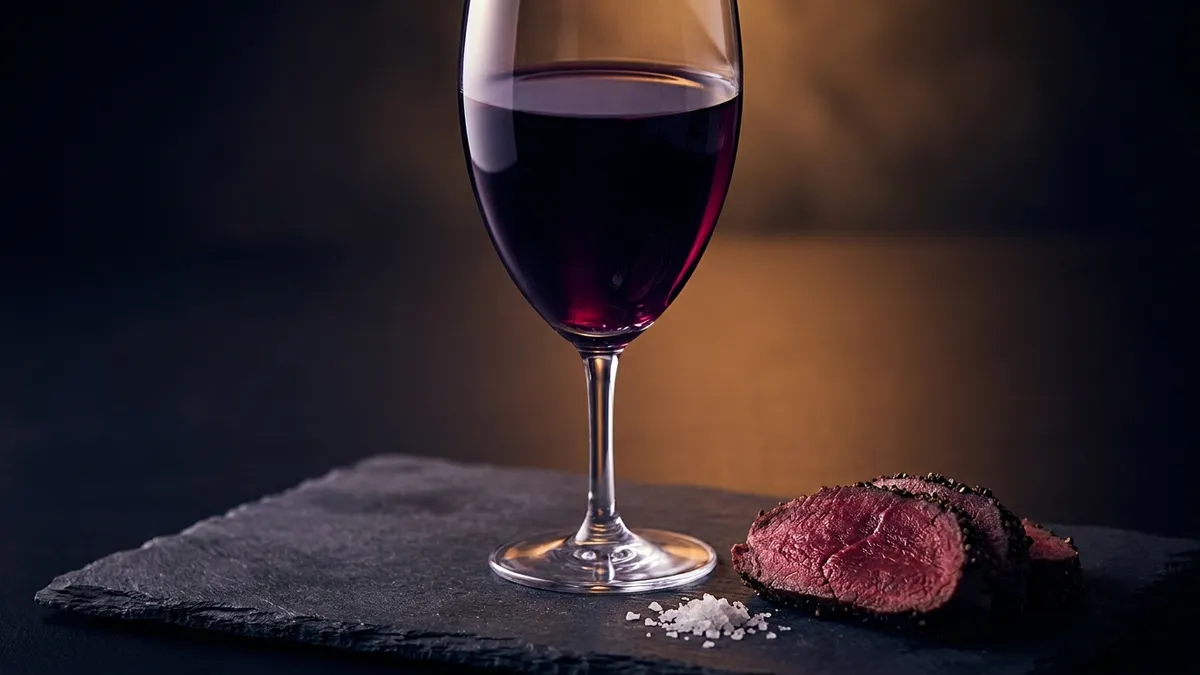
This also explains why lean game is the harder match. There is plenty of protein, but little fat to coat the mouth, so a highly tannic wine stays rough. Our explainer on what tannins are covers where tannin comes from in skins, seeds and barrels.
What Makes Game Meat Taste Gamey?
Wild animals eat a natural diet and carry less fat, which gives their meat a stronger, "gamey" flavour compared with farmed meat. That lower fat shapes every pairing above, and the old habit of hanging game once made the flavour far stronger still.
Game was traditionally hung until it turned "high", close to decomposition. Farmed venison bought today is usually far milder. If an old recipe pairs an earthy, aged Barolo with venison, it assumed high game; with a mild farmed steak, pour a fresher Syrah or Pinot Noir instead.
Old menus can also mislead. The word venison comes from the Latin venari, "to hunt", and historically covered wild boar, hare and goat as well as deer. If an old recipe's venison turns out to be boar, pour the firmer Italian reds.
What Are the Most Common Game Pairing Mistakes?
The most common mistakes all come from treating game as one dish: pouring the same heavy red with every animal, ignoring the sauce, and serving the wine too warm. If a pairing feels harsh or sour, one of the five below is usually the cause.
- Pouring the biggest red with lean venison. Without fat, high tannin tastes harsh. Save it for braises.
- Ignoring the sauce. A port or berry sauce makes a tart wine taste sour. Match the ripeness of the sauce.
- Pairing pheasant like boar. A mild bird disappears beside Sagrantino. Use a light red or a full white.
- Too much alcohol with spicy elk chili. Chilli heat makes alcohol burn, so pick a lower-alcohol red.
- Serving reds too warm. A red at a warm room temperature tastes of alcohol first. Give it a short spell in the fridge before serving.
For a wider set of meat rules, wine with lamb uses the same fat-and-cooking logic for another strongly flavoured red meat.
Next time game is on the menu, open two reds: a light Pinot Noir and a firm Chianti Riserva. Take a bite, then a sip of each, and keep pouring the one that leaves your mouth clean and watering. In the Sommy app, photograph each label in AI tasting mode and log how the wine felt after the bite. Your notes then sit in your tasting journal for the next time venison or boar comes out of the oven.
Sources
- Wikipedia: Tannin (protein binding and astringency)
- Wikipedia: Venison (texture, fat and word origin)
- Wikipedia: Elk (meat composition and farming)
- Wikipedia: Barolo (Nebbiolo and food pairing)
- Wikipedia (Italian): Barolo (38-month ageing rule)
- Wikipedia: Game (hunting) (diet, fat and hanging)
- Wikipedia: Sagrantino di Montefalco (tannin and ageing rules)
Frequently Asked Questions
What wine goes best with venison?
A juicy red with medium tannin and bright acidity suits venison best. Pinot Noir works with pink loin and medallions, Syrah with peppery crusts, and Rioja Reserva with roasts. Venison is leaner than beef, so a very tannic wine has no fat to soften it and can taste harsh. Save the biggest reds for venison stew or pie.
What wine pairs with elk meat?
Elk takes the same wines as venison, leaning a little fuller. It is higher in protein and lower in fat than beef, so medium tannin with plenty of ripe fruit works well: Syrah, Malbec or Rioja Reserva with seared steaks. For elk burgers or chili, a ripe Zinfandel or Malbec suits the char and spice.
What wine goes with wild boar?
Firm, tannic Italian reds are the classic choice. Pour a Sangiovese-based Chianti Riserva with roast boar or boar ragù, and save Sagrantino or Barolo for braises that cook for hours. Boar carries more fat than venison, and slow cooking adds sauce and gelatin, so it can handle much more grip in the glass.
Is Pinot Noir good with venison?
Yes, especially with lean, pink cuts such as loin and medallions. Pinot Noir is low in tannin and high in acidity, so it does not dry out lean meat, and its cherry and raspberry fruit suits berry sauces. It is too light for a rich venison stew, where a Syrah or Rioja Reserva holds up better.
Can you drink white wine with game meat?
Yes, with game birds and light dishes. Roast pheasant with apple, cream or sage goes well with a full-bodied white such as oaked Chardonnay or a white Rhône blend. Red game such as venison, elk and boar has too much flavour for most whites, so keep whites for pale meat and creamy sauces.
Does game meat need a bigger wine than beef?
Usually not. Venison and elk are leaner than most beef, so they often need less tannin than a fatty ribeye. Their stronger flavour calls for ripe fruit and acidity rather than raw grip. Only fatty game such as wild boar, or game cooked slowly in a rich sauce, benefits from the biggest, most tannic reds.
Sommy Team
LinkedInFounder & Wine Educator
The Sommy Team is building the world's most approachable wine education app, helping beginners develop real tasting skills through structured courses and AI-guided practice.