Wine with African Food: Jollof, Suya, Egusi and Pepper Soup

By the Sommy Team — AI-assisted, human-edited.
Updated Oct 1, 2026
Contents (8)
- Wine with African Food, in One Paragraph
- Why Do Heat, Fat and Smoke Decide the Wine?
- What Wine Goes with Jollof Rice?
- What Wine Goes with Suya?
- What Wine Goes with Egusi and Pepper Soup?
- What About Fried Plantain and Puff-Puff?
- Is South African Wine a Good Choice for West African Food?
- How Should You Pick and Serve Wine for a West African Meal?
TL;DR
West African dishes run on three dials: chilli heat, fat and smoke. Heat sets the limits, so keep alcohol at 12.5% or less and tannin low. Chilled Gamay or dry rosé suits everyday jollof, off-dry Riesling suits hot suya and pepper soup, Chenin Blanc cuts egusi, and sparkling wine suits fried plantain.
Wine with African food works best when you read three dials on the plate: chilli heat, fat and smoke. In West African cooking the heat usually comes from scotch bonnet pepper, and it decides first. It caps the wine's alcohol, asks for a touch of sugar, and pushes tannic reds off the table. Fat and smoke then choose between a crisp white, a sparkling wine and a chilled light red.
Wine with African Food, in One Paragraph
For West African dishes, pick wine by heat, then fat, then smoke. Hot dishes such as pepper soup and well-spiced suya need an off-dry white at 12.5% alcohol or less, such as German Riesling Kabinett or Chenin Blanc labelled demi-sec. Rich, palm-oil stews such as egusi need high acidity, which dry or off-dry Chenin Blanc brings. Smoky jollof rice and mild grilled meat take a chilled light red such as Gamay, or a dry rosé. Fried plantain takes sparkling wine. Keep big, high-alcohol reds such as Shiraz for dishes with no chilli. If the dish is hot, the alcohol figure matters more than the wine's colour.
Why Do Heat, Fat and Smoke Decide the Wine?
Chilli heat sets the limits, fat decides how much acidity you need, and smoke decides whether a red can join in. Capsaicin, the compound that makes chilli burn, dissolves in alcohol but barely in water. Alcohol magnifies the heat of spicy food, so a 15% red makes the burn worse rather than putting it out.
Heat also changes red wine. Spicy food makes tannin (the drying grip on your gums, from grape skins and oak) taste harsher and more bitter. Sweetness does the opposite: a little sugar softens the burn, though it never puts it out. That is why an off-dry wine (one with a little sugar you can just taste) is the safest bottle for hot food. The full mechanism, with sugar levels by style, is in wine with spicy food.
West African cooking leans on scotch bonnet, a pepper from the same species as the habanero, Capsicum chinense. It tastes fruity and citrus-like as well as hot. A wine with ripe fruit of its own, such as peach in a Riesling or strawberry in a Gamay, picks up that fruit instead of fighting it.
| Dish | Loudest dial | Wine to look for | Skip |
|---|---|---|---|
| Everyday jollof rice | Tomato and medium heat | Chilled Gamay or dry rosé | Oaky, tannic reds |
| Party jollof (wood fire) | Smoke | Chilled Gamay or a light Grenache | Reds over 14% |
| Suya, lightly spiced | Smoke and fat | Chilled Gamay; a cool, light Pinotage | Big Cabernet or Shiraz |
| Suya, thick with yaji | Heat | Off-dry Riesling or dry sparkling | Any wine over 12.5% |
| Egusi soup | Fat (palm oil, ground seeds) | Chenin Blanc, off-dry if hot | Soft, oaky Chardonnay |
| Pepper soup | Heat, no fat to cushion it | Riesling Kabinett, not trocken | Dry, strong whites and all reds |
| Fried plantain | Fat and caramel | Dry sparkling or Cap Classique | Tannic reds |
| Puff-puff | Sugar and fat | Moscato d'Asti | Any dry wine |
What Wine Goes with Jollof Rice?
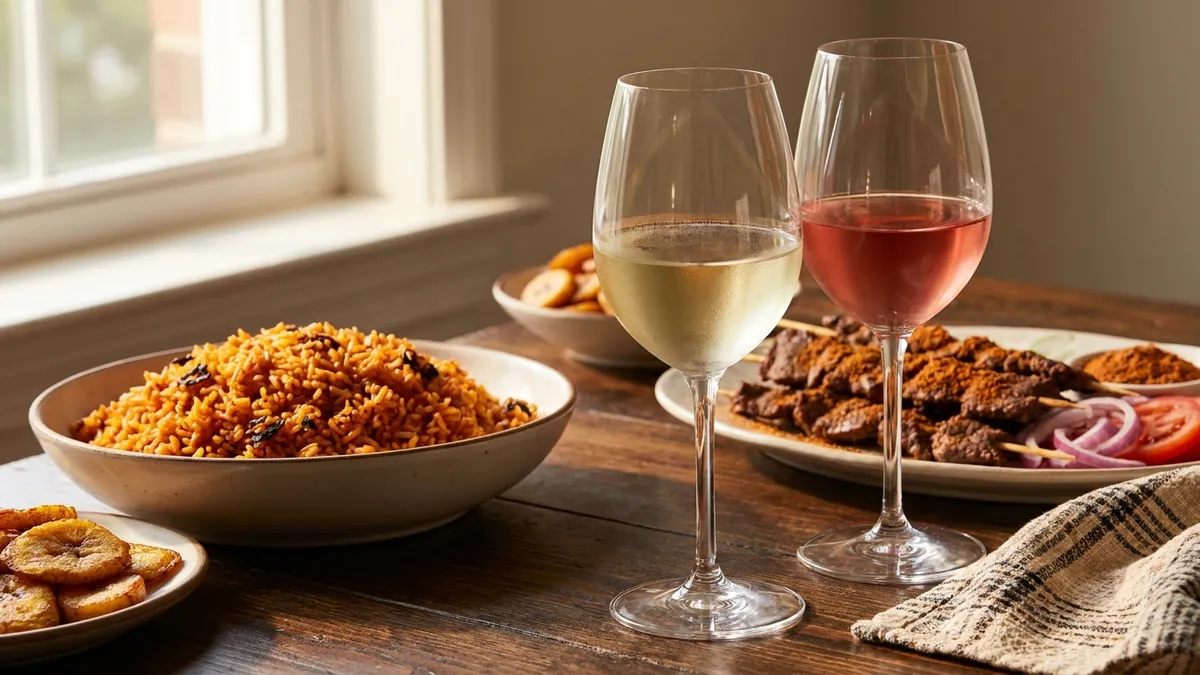
A chilled light red such as Gamay, or a dry rosé, goes with everyday jollof; switch to off-dry Riesling when the pot is hot. Jollof is rice cooked in tomatoes, tomato paste, onions, chilli and oil. The sweet-tart tomato base needs juicy fruit and fresh acidity (the tartness that makes your mouth water).
The dish takes its name from the Wolof people of Senegal and the old Jolof Empire. Ghana and Nigeria each claim the best version today, and both pair the same way.
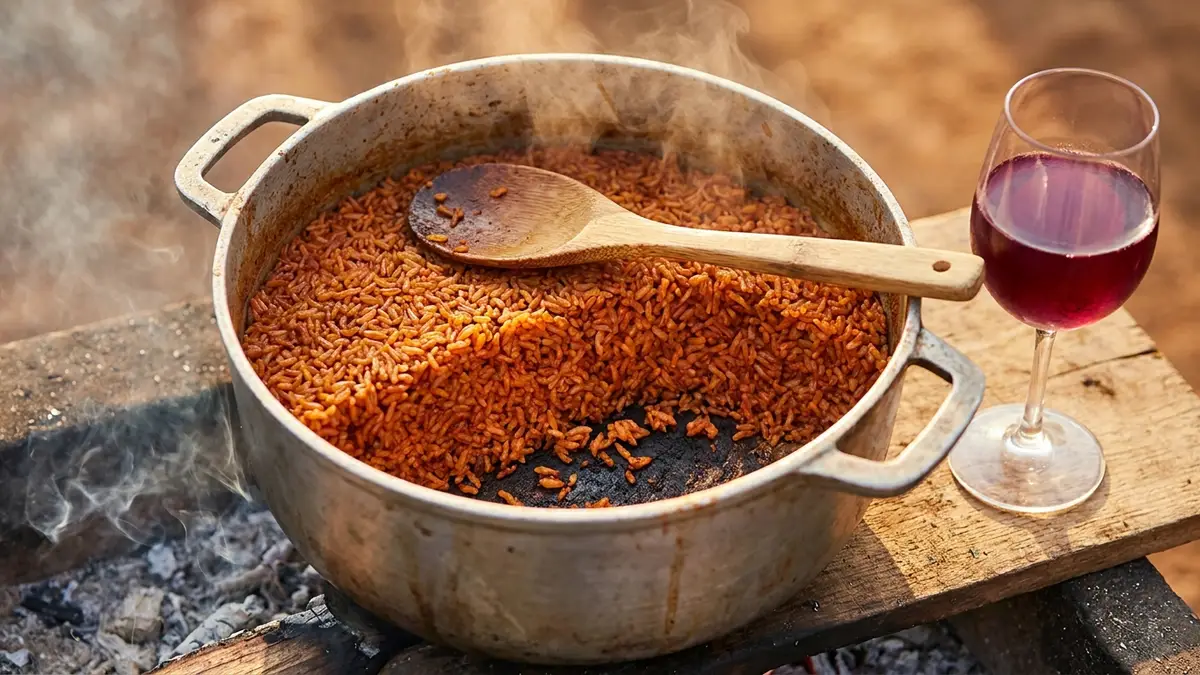
Party jollof is cooked outdoors over a wood fire, which gives it a smoky flavour and a crusty "bottom pot". Smoke is where a light red earns its place. Gamay, the grape of Beaujolais, tastes of fresh red cherry and strawberry with little tannin, so the smoke and tomato meet fruit without a bitter edge. Give it 20 minutes in the fridge.
If the jollof makes your lips tingle after one spoonful, put the red aside and pour an off-dry Riesling under 11%.
What Wine Goes with Suya?
Mild suya takes a chilled, juicy, low-tannin red; suya thick with yaji heat needs a cold off-dry white or a sparkling wine instead. Suya is the smoke-grilled spiced meat of the Hausa people of northern Nigeria, cut thin and cooked on skewers. Beef is the usual choice, with lamb, goat, ram or chicken also used.
The heat comes from yaji, a dry spice mix with no fixed recipe. It usually holds dried chilli and cayenne, ginger, dried onion, salt and kuli-kuli (ground peanut cake). So every bite carries three dials at once: smoke from the grill, fat from the meat and peanut, and chilli from the rub.
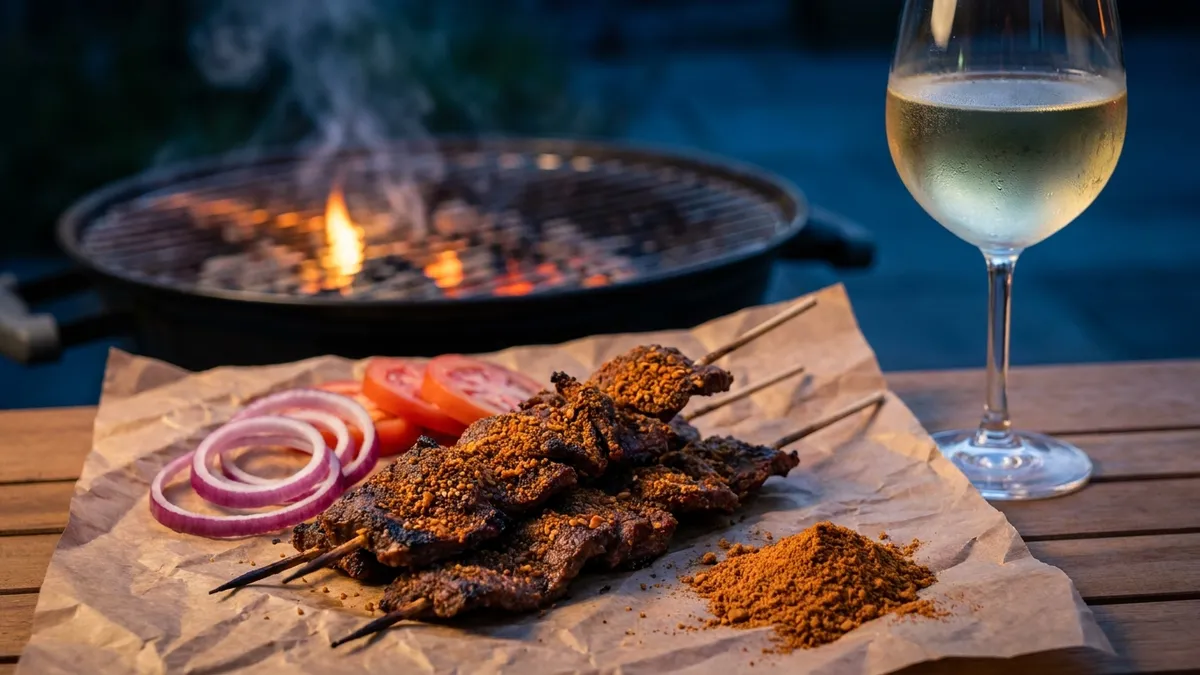
If the suya is lightly dusted, the smoke and fat lead, and a chilled Gamay or light Grenache works. Their fruit sits well against char and peanut. If the yaji is caked on, the heat leads. Choose an off-dry Riesling or a dry sparkling wine, whose bubbles scrub the peanut fat off your tongue between bites. Grilled meat with spice rubs follows the same logic as wine with BBQ, where the rub and the fire pick the bottle.
What Wine Goes with Egusi and Pepper Soup?
Egusi wants acidity to cut palm oil and ground seeds; pepper soup wants the lowest-alcohol, slightly sweet white you can find. The two sit at opposite ends of the fat dial: egusi is thick with oil and seeds, while pepper soup is a thin, fiery broth.
Egusi are the protein-rich seeds of melon and gourd plants, ground and used to thicken soup. They grow across Nigeria, Ghana, Cameroon, Benin, Togo, Mali, Burkina Faso and Côte d'Ivoire. Egusi soup is usually cooked with red palm oil, as is okra soup, so the bowl is rich, nutty and coats the mouth.
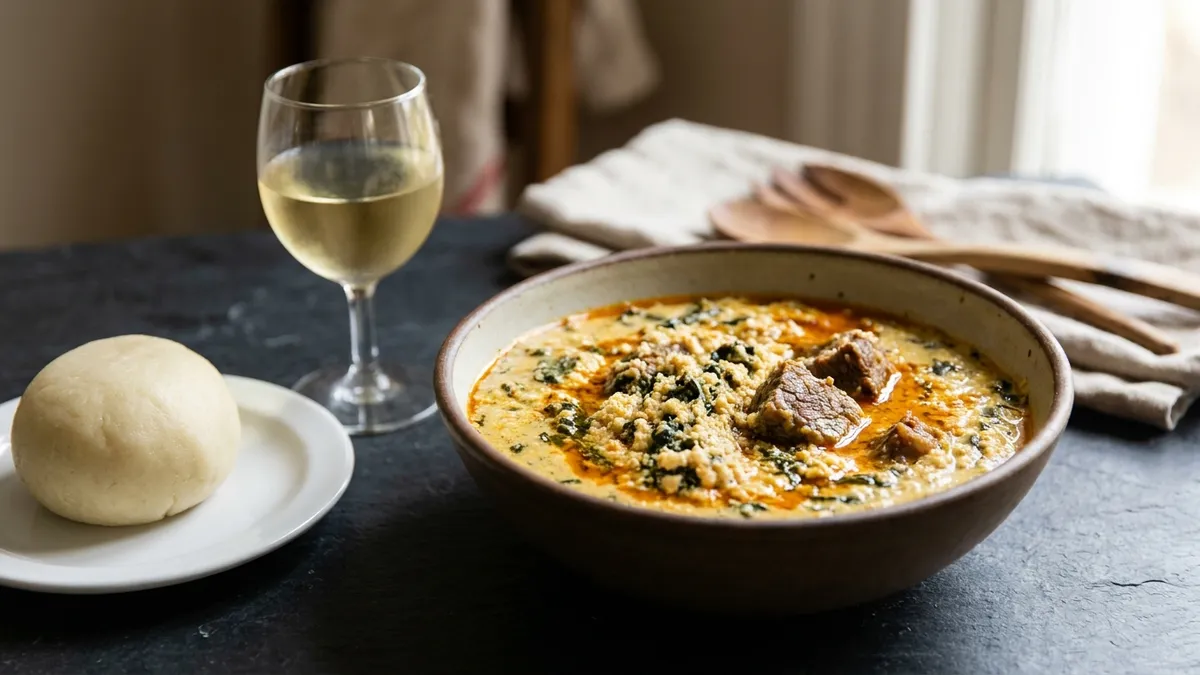
Acidity is the tool for that fat. Chenin Blanc has plenty, plus a waxy body and flavours of quince and baked apple that suit the nutty seeds. If the egusi is mild, a dry Chenin works. If it carries real scotch bonnet heat, choose an off-dry Chenin, labelled demi-sec in the Loire. Soft, oaky Chardonnay has too little acidity and turns heavy beside palm oil.
Pepper soup, from Nigeria and Cameroon, is the opposite: a thin broth of meat or fish, chilli, salt, scent leaves and calabash nutmeg. With no fat to cushion the heat, every point of alcohol shows. If the label shows 12.5% or more, keep that bottle for another dish. A German Riesling Kabinett that is not marked trocken is usually off-dry and well under that.
What About Fried Plantain and Puff-Puff?
Fried food takes sparkling wine, and anything sweet needs a wine at least as sweet. Fried ripe plantain is fat and caramel, and a dry sparkling wine's bubbles and acidity cut both. Prosecco, Cava and South African Cap Classique all work; the types of sparkling wine differ mostly in how the bubbles are made, which matters less than dryness.
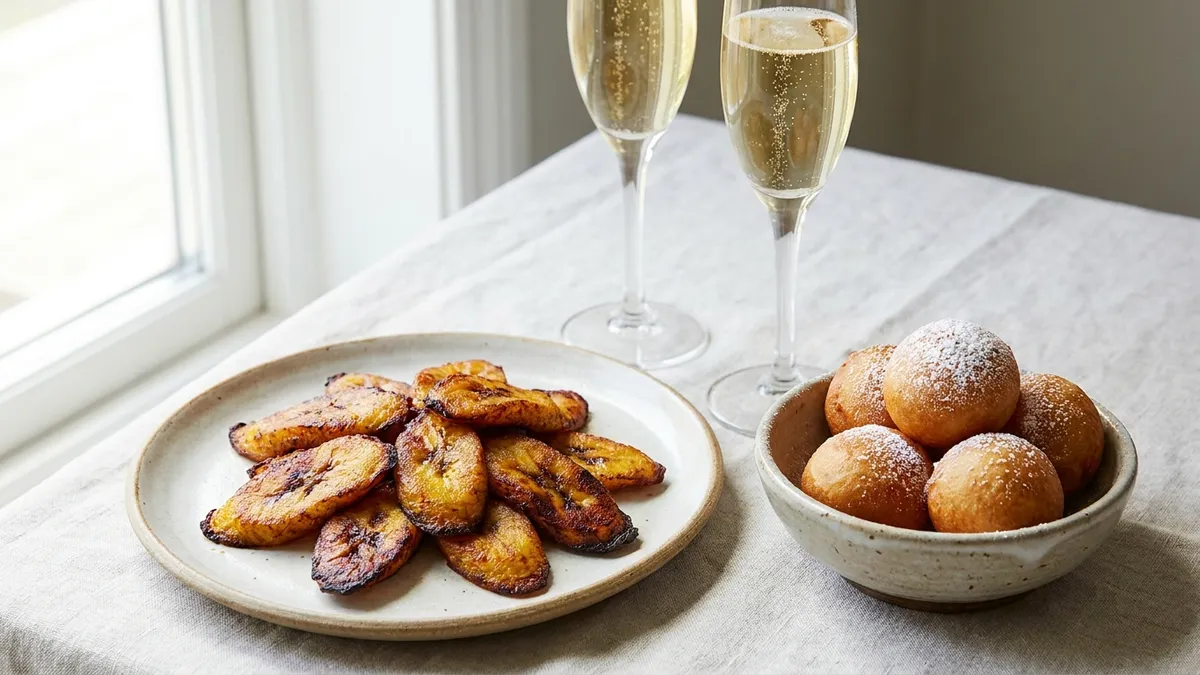
Puff-puff, the sweet fried dough balls served at parties, changes the rule. A dry wine tastes sour and thin next to sugar. If the plate is sweet, choose Moscato d'Asti, which is sweeter than the dough, lightly fizzy and low in alcohol. If the plantain is savoury and served with a hot pepper sauce, stay with dry sparkling.
Is South African Wine a Good Choice for West African Food?
Yes for whites and sparkling: South African Chenin Blanc and Cap Classique fit most of these dishes, while Pinotage fits only the mild, smoky ones. Chenin Blanc is South Africa's most planted grape, at about 18% of vineyards. Much of it is made dry, so it suits egusi and grilled fish better than hot pepper soup.
Pinotage is South Africa's own red, created in 1924 by Abraham Perold at Stellenbosch University by crossing Pinot Noir with Cinsaut. It often smells of smoke and plum, which fits suya, but it can carry firm tannin and high alcohol. If you choose Pinotage, keep it for lightly spiced suya and serve it cellar-cool.
The South African wine guide maps the regions, and the Pinotage guide covers its styles. Any region that makes crisp whites and light reds will do the same job, because the dials pick the style.
How Should You Pick and Serve Wine for a West African Meal?
Read the alcohol figure first: 12.5% or less for hot dishes. Then look for the sweetness word. On German Riesling, Kabinett without trocken, or feinherb, means a little sugar. On Loire Chenin, demi-sec means off-dry. If a label reads over 13.5%, keep that wine for the dishes without chilli.
Serve everything cold. Whites and sparkling go straight from the fridge. Light reds get 20 to 30 minutes in the fridge, because a warm red tastes more of alcohol, and alcohol fans the chilli. The wine serving temperature chart has the ranges by style, and the food pairing hub collects the other cuisine guides, including wine with Indian food.
Tonight, pour a small glass of off-dry white and a small glass of chilled light red, take a spoonful of the hottest dish on the table, and sip each one after it. Note which one calms the burn. Then photograph the label in the Sommy app, whose tasting mode walks you through look, smell and taste. It saves the result to your tasting journal for the next time jollof is on the table.
Sources
Frequently Asked Questions
What wine goes with jollof rice?
A chilled light red such as Gamay, or a dry rosé, goes with everyday jollof. Both have juicy fruit for the tomato and little tannin, so the chilli does not turn them harsh. Smoky party jollof cooked over wood suits the red best. If the pot is hot enough to make your lips tingle, switch to an off-dry Riesling at low alcohol.
What wine goes with suya?
Mild suya goes with a chilled, juicy red that has little tannin, such as Gamay. Suya coated thickly in yaji, the spice mix of dried chilli, ginger and ground peanut, needs a cold off-dry white or a sparkling wine. Sugar softens the burn and bubbles refresh the mouth after the fatty, peanut-crusted meat.
Is red or white wine better with spicy African food?
The colour matters less than three numbers on the wine: alcohol, sugar and tannin. High alcohol makes chilli burn harder, and chilli makes tannin taste bitter, which rules out big reds for hot dishes. A light, chilled red works with mild or smoky food. For real scotch bonnet heat, an off-dry white with low alcohol works best.
Does sweet wine stop chilli from burning?
Sweetness softens the burn but does not remove it. A wine with a little sugar, such as an off-dry Riesling or a Chenin Blanc labelled demi-sec, makes hot food feel calmer between bites. It works best when the alcohol is also low, because alcohol magnifies heat. Fat and starch on the plate, such as rice or pounded yam, help as well.
Can you drink wine with pepper soup?
Yes, but choose a light, low-alcohol white with a touch of sweetness, such as a German Riesling Kabinett that is not labelled trocken. Pepper soup is a thin, very hot broth with scent leaves and calabash nutmeg, so there is no fat to cushion the chilli. A strong or tannic wine would make the burn worse.
What wine should you bring to a Nigerian or Ghanaian party?
Bring three bottles that cover the three dials: an off-dry Riesling or Chenin Blanc for the hottest dishes, a dry sparkling wine for fried plantain and puff-puff, and a light red such as Gamay to chill for jollof and grilled meat. Keep every bottle at 12.5% alcohol or less and serve all three cold.
Does South African wine go with West African food?
South African Chenin Blanc and the country's sparkling Cap Classique go with most West African dishes, because both bring acidity that cuts palm oil and fried food. Chenin is the country's most planted grape. Pinotage is trickier: its tannin and alcohol can clash with chilli, so keep it for mild, smoky suya and serve it cool.
Sommy Team
LinkedInFounder & Wine Educator
The Sommy Team is building the world's most approachable wine education app, helping beginners develop real tasting skills through structured courses and AI-guided practice.