Wine Tasting for Couples: A Date Night Guide
By the Sommy Team — AI-assisted, human-edited.
Updated Apr 28, 2026
Contents (14)
- TLDR
- Why a Wine Tasting Date Night Works
- The Two-Person Format in One Glance
- Choose One Theme, Not Three
- Setup: Forty-Five Minutes Before You Sit Down
- A Simple Five-Point Scoring Rubric
- Conversation Prompts That Are Better Than Small Talk
- Food: Three Small Dishes, Fifteen Minutes of Prep
- A Ninety-Minute Flow
- When You Want to Reset for an Evening Out
- Common Mistakes Couples Make
- Practicing Between Date Nights
- A Short Sample Plan for This Weekend
- The Bottom Line
TL;DR
A wine tasting date night for two works best with two bottles, four glasses, three small dishes, ninety minutes, and one clear theme. Open both wines, taste blind, talk through what you smell and taste, score each on five quick variables, vote a favorite, then enjoy the rest with food.
TLDR
A wine tasting date night for two pairs structure with intimacy. Two bottles, four glasses, three small dishes, ninety minutes, and one clear theme. Open both, taste blind, score each one quickly, vote on a favorite, then enjoy the rest with food. The format turns an ordinary evening at home into a small ritual you will want to repeat once a month.
Why a Wine Tasting Date Night Works
Most couples drink wine the same way most people drink coffee — quickly, with a meal, without paying real attention. A wine tasting date night flips that habit. The moment two glasses sit side by side, the differences become obvious. The acidity of one, the softer fruit of the other, the way one finishes longer. Suddenly the wine is part of the evening, not background noise.
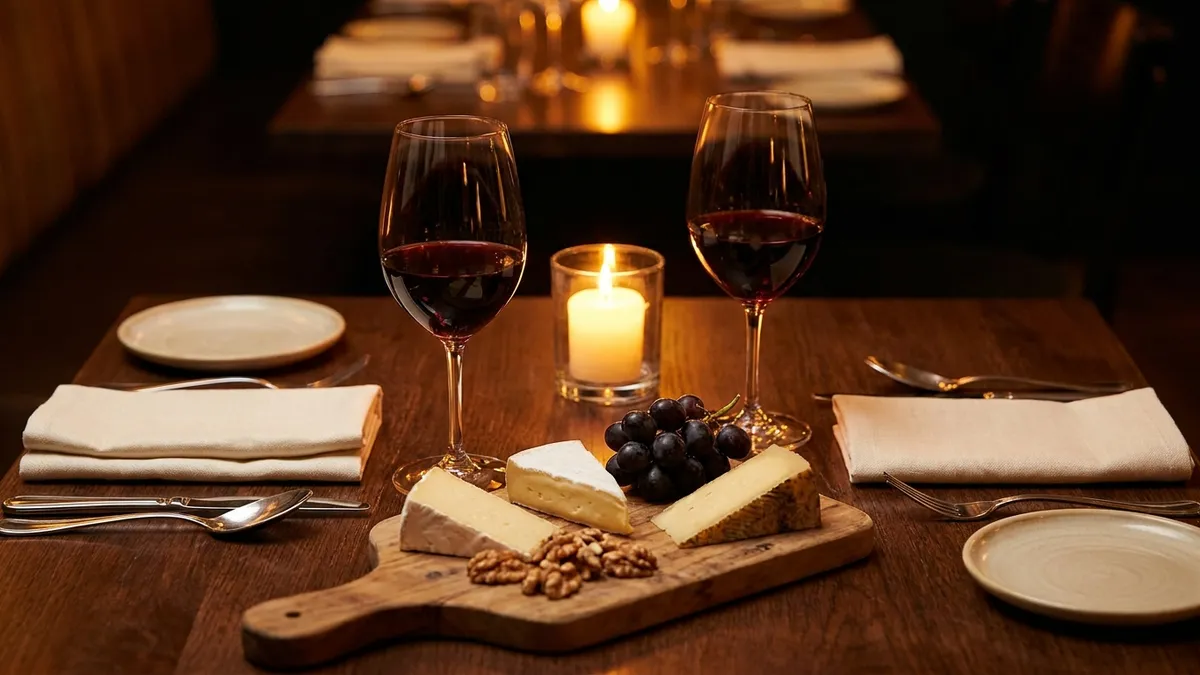
It also gives a date a shape. Cooking together is busy. A movie pins both people to a screen. A tasting sits in the middle — quiet enough to talk, structured enough to feel like an event, casual enough that nobody needs to perform.
This guide is built for two at home. It is the smaller cousin of our wine tasting party guide, which scales the same idea up for groups. Two-person tastings have their own rhythm and more room for conversation between sips.
The Two-Person Format in One Glance
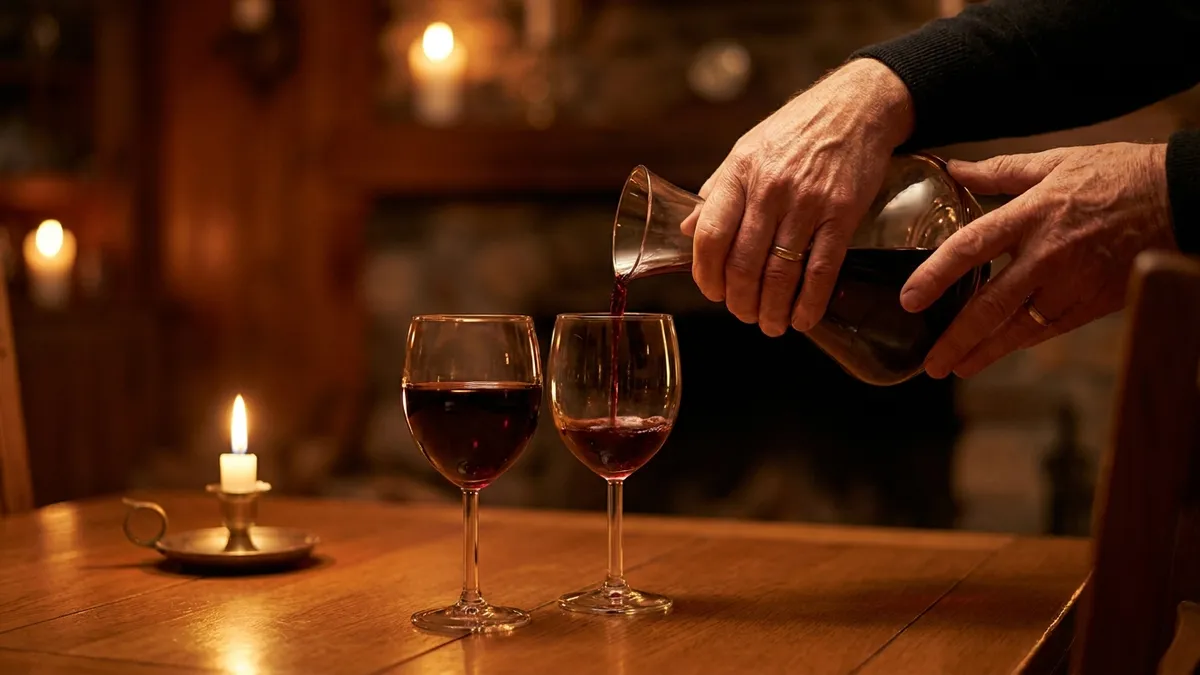
The whole thing reduces to a short formula:
- Two bottles — one theme, two examples
- Four glasses — two each, identical shape
- Three small dishes — palate-neutral snacks plus one shared warm course
- Ninety minutes — structured tasting, then food and chat
- One simple theme — same grape from two regions, two grapes from one region, sparkling versus still, young versus aged, or two roses
Open both bottles before sitting down. Pour blind from paper-bagged bottles. Taste each wine through five quick variables. Talk between sips. Vote on a favorite. Reveal the labels. Move to the food portion. That is the whole script.
The structure matters because it gives the conversation a runway. Without it, two glasses on a table is just dinner with extra steps. With it, the same two glasses become a small ritual.
Choose One Theme, Not Three
The single decision that separates a memorable date night from a forgettable one is the theme. Two random bottles is dinner. Two bottles around an idea is a tasting.
Five themes work especially well for couples:
Same grape from two regions
The classic. Cabernet from Bordeaux versus Napa. Pinot Noir from Burgundy versus Oregon. Sauvignon Blanc from the Loire versus New Zealand. The contrast is dramatic, and both bottles teach about the grape and the place at once.
Two grapes from one region
Pick a region you both want to explore. From Italy, a Sangiovese-led Chianti next to a Verdicchio. From Spain, a Tempranillo-led Rioja next to an Albariño. The shared region is a postcard, and the two grapes show what it sounds like in two voices. Our Italian wine guide and Spanish wine regions guide are useful starting points.
Sparkling versus still
A crisp sparkling alongside a still white from the same grape family — a sparkling Chardonnay-based wine beside a still Chardonnay, for example. The bubble-versus-no-bubble contrast is instantly clear. Our sparkling wine types guide breaks down the differences between the major sparkling styles.
Young versus aged
The same producer's wine in two vintages, or two wines from one region with five years between them. The older wine teaches what time does to fruit, tannin, and aroma. Ideal for an anniversary because the comparison itself is a quiet metaphor.
Two roses
Underrated and ideal for warm-weather dates. A pale Provence-style rose next to a deeper, fruitier rose. Different colors, different fruit on the nose, both refreshing. Our rose wine guide covers the spectrum.
Pick one theme. Resist combining two. A focused theme makes the comparison sharp; a multi-axis theme blurs it.
Setup: Forty-Five Minutes Before You Sit Down
The setup is what makes the difference between a thrown-together evening and one that feels designed. None of it is hard.
Glassware
Four stemmed tulip glasses, identical shape. Wash and air-dry them so no detergent residue clings to the rim. Different shapes change aroma release, so matching matters more than fancy crystal. Two universal stems each is enough.
Temperature
Whites and rose go in the fridge for one hour ahead. Reds get fifteen to twenty minutes in the fridge before serving — most homes are too warm for red wine. Sparkling needs about three hours in the fridge if it is starting from room temperature. Our wine serving temperature chart maps this out by style.
Spit or no spit
For a date night, no-spit is fine if you stop at two bottles and pace yourselves. If you want to stay sharp through both wines and a longer chat afterward, set out a small opaque cup as a casual spit option. Spitting at a tasting is normal, not awkward. The bigger risk is finishing both glasses too fast and losing palate accuracy halfway through.
Palate cleansers
A glass of room-temperature water each, plus a few plain crackers or a slice of baguette. Sip water between wines. Avoid lemon water — the acid resets your palate but skews the next sip.
Lighting and scent
Soft warm light, ideally from a candle or a lamp rather than overhead. Skip strong scented candles, fresh flowers in the room, and any cooking that leaves lingering fragrance. The nose does most of the work in tasting, and a perfumed room steals signal from the glass. Plain unscented candles are perfect.
Pour blind
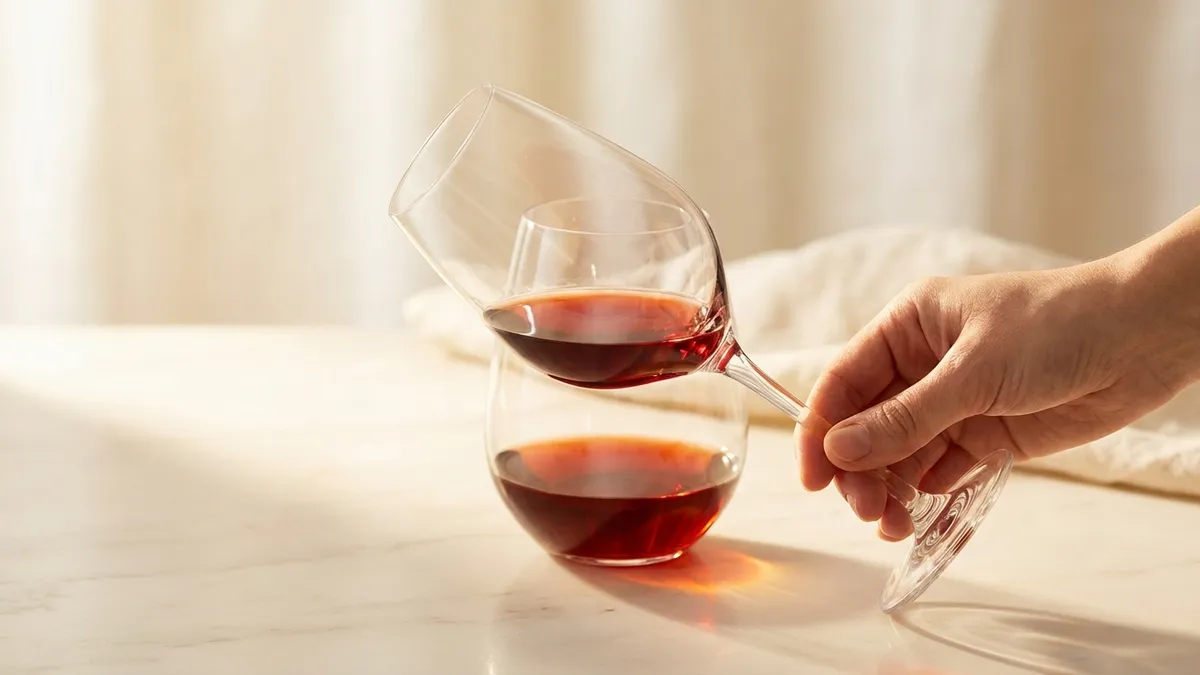
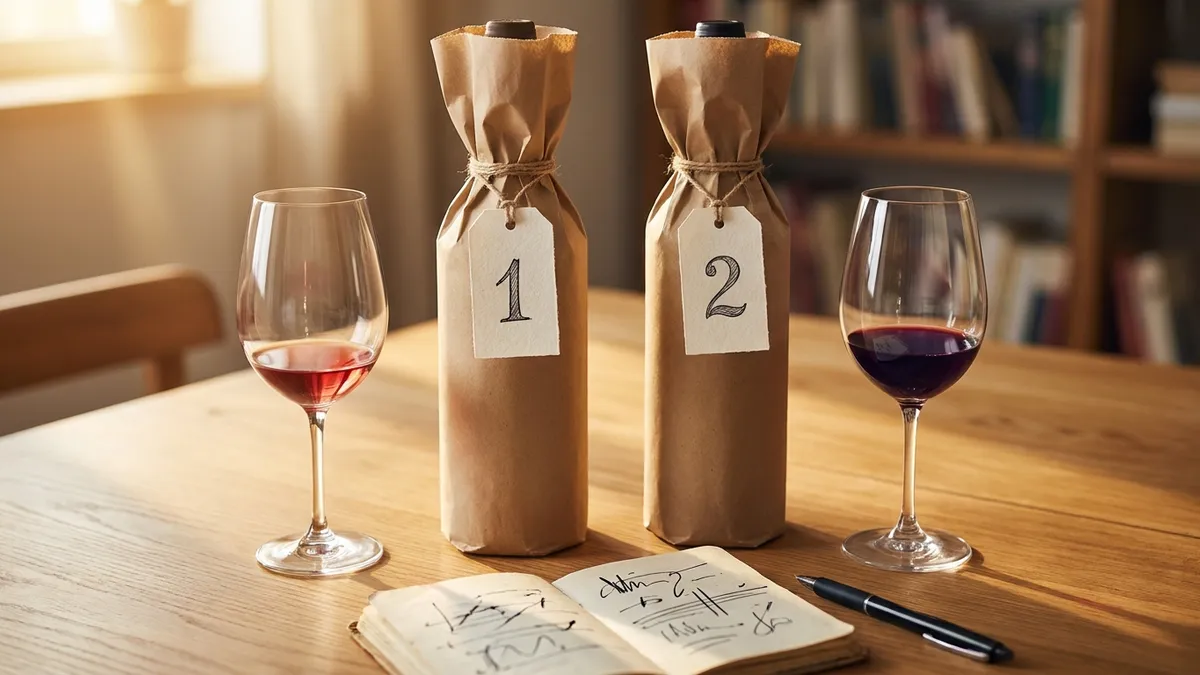
Wrap each bottle in a paper bag or aluminum foil before the date starts. Mark them A and B. Pour 2-ounce pours into the matched glasses. The blind format keeps both partners honest, removes price and label bias, and turns the reveal into the funniest part of the evening.
A Simple Five-Point Scoring Rubric
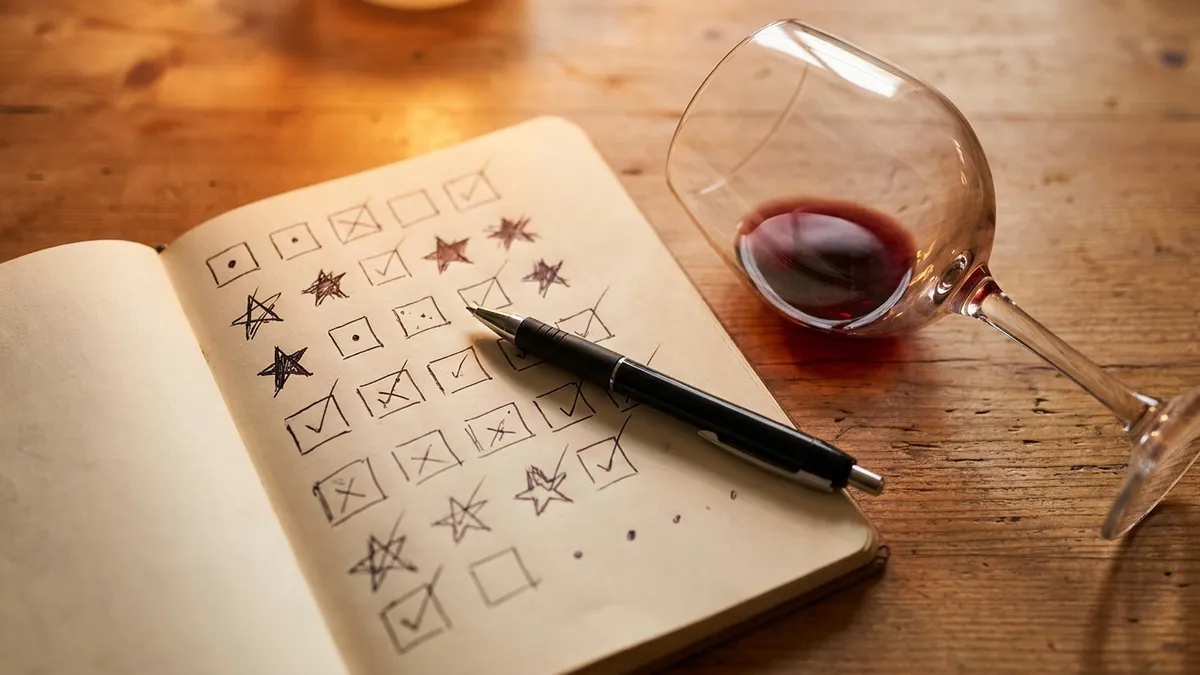
Couples score wine differently than groups do. With two people, big formal tasting cards feel forced. A short rubric works better.
For each wine, jot down a 1-to-5 number on these five variables:
- Color intensity — pale to deep
- Aroma openness — closed and shy to loud and giving
- Acidity — soft and round to bright and zippy
- Body — light and watery to full and weighty
- Finish length — short and gone to long and lingering
Then write one short line: what does this wine remind you of? A place, a fruit, a memory, a feeling. The line is the most useful note. Numbers help you compare; the sentence is what you remember.
After both wines are scored, vote on a favorite. Ranking is the closing move, the small ritual that turns the tasting into a shared conclusion. Save the labels for after the vote.
For a longer-form template, our wine tasting notes template offers a five-section format you can shrink onto a sticky note.
Conversation Prompts That Are Better Than Small Talk
Tasting cards alone do not save a quiet date. The conversation does. Three prompts that consistently produce real conversation:
What does this wine remind you of?
Ask between the first sip of wine A and the first sip of wine B. Answers are almost always specific — a grandparent's kitchen, a beach, a fruit you have not eaten in years. That kind of memory triggers stories. Stories are the date.
If this wine were a person, what kind of person?
A playful frame that pulls people out of analytical mode. Quiet and reserved, or loud and confident? Most people answer instantly, and the contrast with the second wine is often where the evening takes off.
Which one would you order at dinner this week?
Forces a real preference rather than a polite "they're both nice." The answer reveals taste in a way scoring does not. Useful for future dates and for stocking the rack.
Sommelier note: the goal is not to teach each other. If one of you knows more about wine, listen first. Ask what your partner notices before offering your own read. Tasting in pairs is one of the rare situations where being slow makes the experience better.
Food: Three Small Dishes, Fifteen Minutes of Prep
The food is the supporting act. Heavy or strongly seasoned food during the tasting kills your perception of the wines. Save big flavors for the meal portion at the end.
A short cheese-and-charcuterie plate
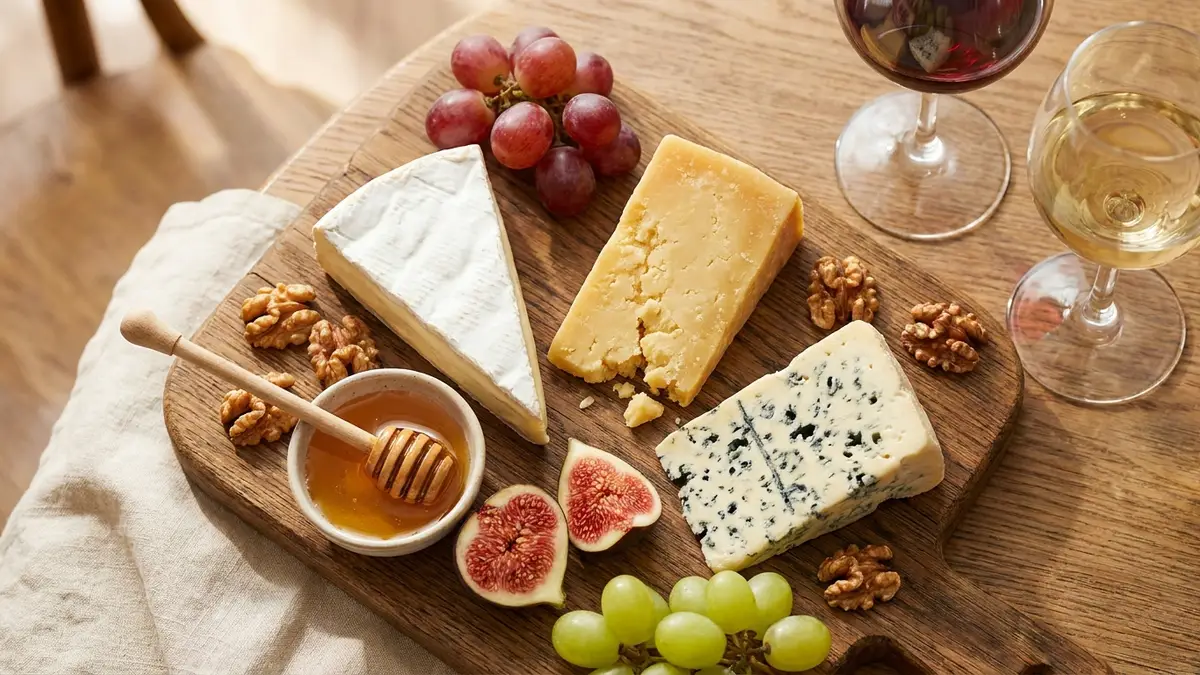
A young hard cheese (Manchego, a mild Pecorino, or fresh mozzarella) plus one cured meat (prosciutto or a mild salami) plus a small handful of unsalted almonds. Avoid blue cheese, washed-rind cheeses, and anything with strong herb coatings during the tasting itself.
Plain bread or unsalted crackers
Tear a baguette in half. Done. The starch resets the palate between sips.
One warm shared course for after
Something the oven can finish while you taste. A simple pasta with butter and Parmesan, a sheet-pan chicken, a quick risotto. After the structured tasting and the vote, you transition into a real meal with the rest of one or both bottles.
Our wine and cheese pairing guide has fuller pairing logic if you want to match the cheese to the theme. The wine food pairing overview is the next step.
A Ninety-Minute Flow
A real schedule for a date night that runs the format end to end:
- 0:00 — sit down, pour 2 ounces of A and B into matched glasses, hand each other the rubric
- 0:00 to 0:15 — first pass on wine A. Color, nose, sip, score, prompt
- 0:15 to 0:30 — first pass on wine B. Same five variables, same prompt
- 0:30 to 0:50 — second pass: smell both side by side, sip both back to back, talk through the contrasts
- 0:50 to 1:00 — vote on a favorite, reveal the labels, react to the reveal
- 1:00 onward — bring out the warm course, pour generous glasses of the winner (or both), and let the evening wander
The tighter the structure of the first hour, the easier the rest of the evening is. Once the rubric is filled in and the vote is in, the wine becomes part of dinner instead of the focus.
When You Want to Reset for an Evening Out
The home format also makes evenings out at a wine bar more interesting. The same five-variable rubric works on a flight ordered at a restaurant, and the same conversation prompts travel.
If a wine bar offers flights of three to four pours, treat it as a slightly larger version of the home format. Order one flight, share it, score together, pick a winner. Most flights are already designed around one theme — regional, single-grape, or sparkling — so the structure is half-built before you arrive.
For a group event, scale up to the wine tasting party guide. For a deeper comparison of producers in one region, the horizontal wine tasting format is the next step.
Common Mistakes Couples Make
Five quiet ways the format goes flat:
- Three or four bottles for two. Two is plenty. A third bottle pushes the evening past palate fatigue and into a heavier morning.
- Strong food during the tasting. A blue cheese platter at the start ruins the comparison. Save it for the meal portion.
- Skipping water. Without water between wines, the second always tastes like a continuation of the first.
- Filling the glass. A 2-ounce pour is correct. A full pour overwhelms the palate and removes the room you need to swirl.
- Talking through the first sip. Take the first sip in silence. Both of you. Then compare notes.
Our common wine tasting mistakes guide collects the rest.
Practicing Between Date Nights
A monthly couple's tasting builds a shared vocabulary faster than almost any other wine learning method. Five sessions in, both of you can describe a wine in the same five variables without much effort. Ten sessions in, you start anticipating what the other person will prefer.
Two ways to deepen the practice between dates:
- Solo sessions. Open one bottle, run the rubric, write the one-line memory note. Five minutes a few times a week, and the next date night benefits.
- Themed weeks. Spend a month on one grape or one region. Open one bottle a week, take notes, end with a comparative date night.
The Sommy app turns each tasting into a saved entry with color, nose, palate, and finish fields, so date-night notes stay searchable when you want to recreate the evening or buy the favorite again. The journal also surfaces patterns over time — which grape you both keep ranking first, which region you keep returning to.
Our develop your wine palate guide covers the slower work that makes every date night sharper, and our blind wine tasting tips piece goes deeper on the bagged-bottle format above.
A Short Sample Plan for This Weekend
If you want to run your first one this Saturday:
- Theme: Pinot Noir, two regions
- Bottles: A Burgundy Village-level Pinot Noir and an Oregon Willamette Valley Pinot Noir
- Glasses: Four matched stemmed tulips
- Snack: Manchego, prosciutto, unsalted almonds, a torn baguette
- Warm course: A simple pasta with butter and Parmesan
- Setup: forty-five minutes
- Tasting: ninety minutes
- Lighting: one unscented candle and a low lamp
Bag both bottles before sitting down. Pour 2 ounces of each into matched glasses. Run the rubric, write the one-line memory note, vote on a favorite, reveal the labels, then bring out the pasta and pour a real glass of the winner.
The Bottom Line
A wine tasting date night for two is two bottles, four glasses, three small dishes, ninety minutes, one theme, and a five-variable rubric. The structure is the gift. It frees both partners from filling silence, gives the wine a real role, and turns a quiet Saturday into a small ritual. Run it once a month for a year and you build a shared vocabulary, a stack of saved notes, and a habit that travels well to wine bars, vacations, and dinners with friends.
The wine teaches. The rubric organizes. The two of you supply the rest.
Frequently Asked Questions
How many bottles do we actually need for a couple's tasting?
Two bottles is the sweet spot. A 750 ml bottle gives roughly twelve 2-ounce pours, which is plenty for two tasting passes plus a generous glass with food. Two bottles also fits one clear theme — same grape from two regions, two different grapes, or sparkling versus still — without overwhelming your palate or your evening. A third bottle as a dessert pour is optional, never required.
Should we taste blind on a date night?
Yes, and it is more fun than it sounds. Wrap each bottle in a paper bag or pour into unlabeled carafes before the date starts. Blind tasting strips out price bias and the halo effect, so your impressions stay honest. Vote on a favorite before the reveal. Being wrong about which one cost more is part of the entertainment, and the surprise tends to land better than a debate over labels.
How long should a wine tasting date night last?
Plan ninety minutes for the structured tasting and another thirty to sixty minutes for the meal portion. About two hours total feels right. Beyond that, palate fatigue and alcohol accumulation flatten the experience and the conversation. The structured part has a beginning, middle, and end. The food and chat afterward can stretch as long as you both want.
What food works best for two people tasting at home?
Three small dishes you can prep in fifteen minutes. A short cheese-and-charcuterie plate, plain bread or crackers, and one warm dish to share later — pasta, a simple risotto, or a sheet-pan main. Avoid vinegar dressings, very spicy food, and strong blue cheeses during the tasting itself. Save big flavors for the meal portion after the comparison and ranking are finished.
Do we need fancy glasses?
Two stemmed tulip glasses per person, four total. Identical shape matters more than the brand. A medium bowl with a slightly narrowed rim works for almost any wine, red or white. Avoid colored glasses, tumblers, and shot-style pours. If you only own one set of stems, that is enough — most home flights for two people fit comfortably inside four matched glasses.
What if one of us is much more into wine than the other?
Use the format to close the gap rather than show off. The scoring rubric works because both people use the same five variables. The less experienced partner gets a structure that turns vague impressions into specific words. The more experienced partner practices listening rather than lecturing. Vote on a favorite with equal weight. The point is shared discovery, not a quiz.
Can a wine tasting work as a first date or anniversary?
Both work, with different framing. For a first date or early date, keep it lighter — two crisp whites, smaller pours, more focus on conversation than scoring. For an anniversary or milestone, pick a theme with a story — a grape you both tried on a trip, two regions one of you has never met, or a young versus aged comparison. The setup adjusts to the occasion.
Sommy Team
LinkedInFounder & Wine Educator
The Sommy Team is building the world's most approachable wine education app, helping beginners develop real tasting skills through structured courses and AI-guided practice.