What Does "Elegant" Mean When Describing Wine?

By the Sommy Team — AI-assisted, human-edited.
Updated Apr 29, 2026
Contents (13)
- TLDR
- Elegant Wine Meaning, in 100 Words
- Where the Word Comes From
- The Five Traits of Elegance in Wine
- Elegance Versus Power: Two Honest Styles
- Grapes and Regions Known for Elegance
- Power-Coded Counterparts
- When "Elegant" Is Used Dishonestly
- How to Taste for Elegance at Home
- Why Elegance Has Become a Movement
- Common Misuses of the Word
- How Elegance Connects to Quality
- The Bottom Line
TL;DR
An elegant wine is restrained but structured — moderate alcohol, high acidity, fine silky tannin, lifted aromatics, and a long finish that does not rely on weight. Elegance favors finesse and nuance over sheer impact, which is why the word maps so well to classic Burgundy, Mosel Riesling, and Loire Cabernet Franc.
TLDR
An elegant wine is restrained but structured — moderate alcohol, high acidity, fine silky tannin, lifted aromatics, and a long finish that does not rely on weight. Elegance favors finesse and nuance over sheer impact, which is why the word maps so well to classic Burgundy, Mosel Riesling, and Loire Cabernet Franc.
Elegant Wine Meaning, in 100 Words
The elegant wine meaning that sommeliers actually use comes down to one idea: structure delivered with restraint. An elegant wine usually sits at moderate alcohol around 12 to 13 percent, carries high natural acidity, shows fine and silky tannin rather than gritty or chewy tannin, leads with lifted aromatics, and finishes long without ever feeling heavy on the palate. Balance matters more than volume. The word describes wines that win attention through detail and precision instead of impact, which is why it lines up so consistently with classic Burgundy, Mosel Riesling, Loire Cabernet Franc, Chablis, and high-altitude Etna Rosso.
Where the Word Comes From
Wine writers borrowed elegance from classical aesthetics, where it always meant something close to grace under restraint. A dancer who does less but reads as more precise. A line drawing that captures a face in seven strokes. The word arrived in wine vocabulary to describe bottles where the impression on the drinker exceeds the apparent effort in the glass.
The earliest sustained use comes from Burgundy, where producers and merchants needed a word that distinguished their style from the heavier wines of Bordeaux. By the late nineteenth century, élégance was already shorthand for what cool-climate Pinot Noir was good at — perfume, transparency, and a finish that lingered without bulk.
The word has since traveled. You will hear it now applied to Mosel Riesling, Chablis, Loire Cabernet Franc, traditional Champagne, classed-growth Bordeaux from cool vintages, and more recently to Etna Rosso and Patagonian Pinot Noir. Wherever the climate is moderate enough to ripen slowly, the word follows.
The Five Traits of Elegance in Wine
A wine described as elegant almost always shows the same five structural fingerprints. Any one trait can wobble — wines are made of compromises — but a wine missing three of them is not really elegant, no matter what the back label says.
1. Moderate alcohol
Elegant wines tend to land between 11.5 and 13.5 percent alcohol. Above 14 percent, the warmth at the back of the throat starts to crowd out detail. Cool-climate sites and earlier picking dates are the easiest paths to moderate alcohol, which is why so many elegance-coded regions sit at the cooler edge of where their grape will ripen.
2. High acidity
Acidity gives a wine lift. It pulls the fruit forward, sharpens the finish, and stops the palate from feeling tired after three sips. An elegant wine almost always reads as fresh — the technical word for wines with assertive natural acidity that mouth-waters rather than sours.
For more on this signal specifically, the what is wine acidity guide breaks down how to perceive and rate acidity in any glass.
3. Fine, silky tannin
In red wines, tannin is the gripping sensation across the gums. Elegance demands that this grip be silky rather than gritty. The tannin must be present — without it, the wine is just thin — but it should feel like fine sandpaper on a polished surface, not coarse gravel.
Producers achieve fine tannin through a mix of careful skin contact, gentle extraction, the right oak regime, and time. Aggressive maceration produces tannin volume; restraint produces tannin quality. The difference is huge on the palate.
4. Lifted aromatics
Elegant wines tend to lead with the nose. Floral notes, red fruit, herbs, citrus, mineral, smoke — whatever the grape and place offer, an elegant wine offers it in detail rather than in volume. The nose is precise. You can name three or four distinct notes without straining, and they shift as the wine sits in the glass.
This is the same definition of complexity covered in primary, secondary, tertiary aromas, but elegance adds a quality requirement: the layers should feel lifted — light enough to read against each other rather than blurring into a single jammy chord.
5. A long finish without weight
The final test. After the swallow, an elegant wine continues to register on the palate for ten, fifteen, twenty seconds — but the persistence is detail, not heat. You feel the acidity, the silky tannin trail, the aromatic echo. You do not feel alcohol burn or thick syrupy residue.
A long finish powered by alcohol or extraction is a powerful finish. A long finish powered by acidity, tannin grain, and aromatic lift is an elegant finish. The two are not the same. The wine finish meaning guide explores this in more detail.
Elegance Versus Power: Two Honest Styles
Wine criticism over the past forty years has played out as a quiet argument between elegance and power. Both styles are valid. Neither is morally superior. They answer different questions about what a wine should do.
A powerful wine leads with impact. High alcohol, ripe jammy fruit, soft acidity, dense tannin, and oak that adds weight rather than spice. The first sip lands like a bass note. The wine fills the mouth.
An elegant wine leads with detail. Moderate alcohol, fresh fruit, high acidity, fine tannin, and oak that supports rather than announces. The first sip is precise. The wine reveals itself in layers.
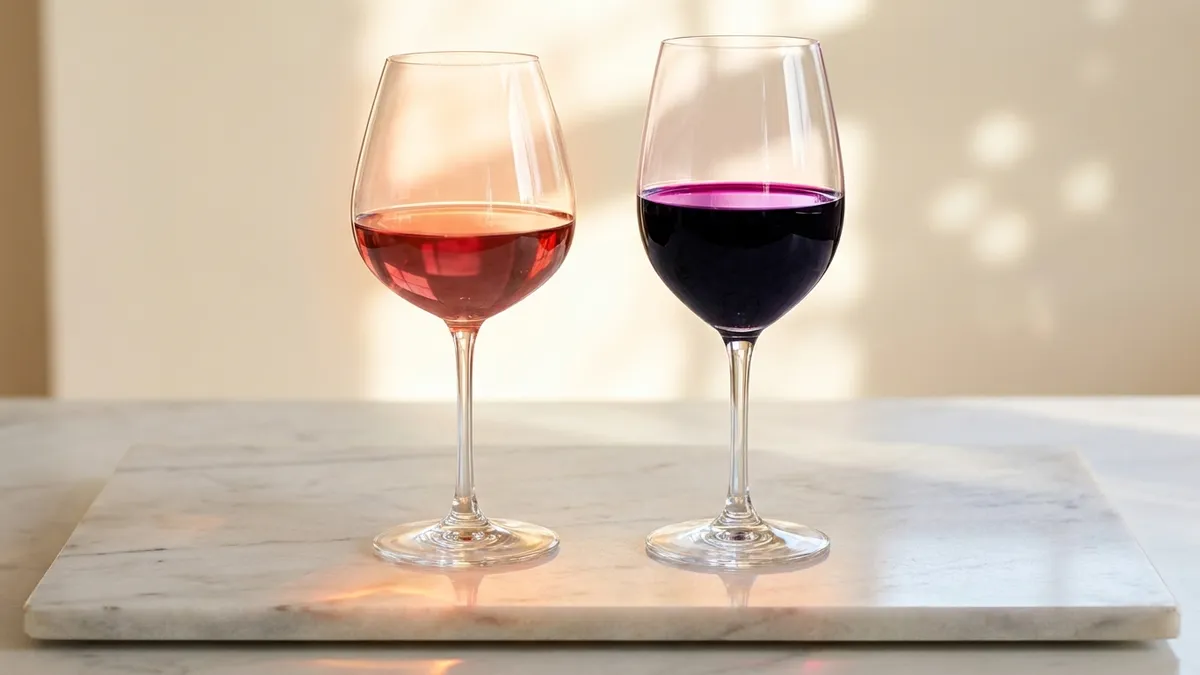
The most useful way to think about the divide: a powerful wine asks for a moment of attention all at once. An elegant wine asks for sustained attention over a glass and a meal. Pairings, occasions, and personal taste all favor one or the other. The new world vs old world tasting style guide goes deeper on the regional patterns behind the divide.
Grapes and Regions Known for Elegance
Some grape and place combinations are so consistently elegant that the word itself maps to them. The pattern repeats: cool to moderate climate, slow ripening, restrained winemaking, and grapes whose virtue is detail rather than density.
- Pinot Noir in classic Burgundy, the Sonoma Coast, the Willamette Valley, and parts of Patagonia
- Riesling in the Mosel, Nahe, and Rheingau, with the dry Austrian Wachau as a close cousin
- Cabernet Franc in the Loire Valley, particularly Chinon, Bourgueil, and Saumur-Champigny
- Chardonnay in Chablis, the Côte de Beaune, and cool-climate Tasmania
- Cabernet Sauvignon in classed-growth Bordeaux from cooler vintages
- Nebbiolo in higher-altitude or older-vine Barolo and Barbaresco crus
- Nerello Mascalese on the high northern slopes of Etna in Sicily
- Sangiovese from the cooler reaches of Chianti Classico and the more elevated Brunello sites
There is a reason these regions repeat across elegance-coded lists. Cool climates ripen grapes slowly enough that flavor and aroma develop without sugar — and therefore alcohol — running away. The result is a wine that has somewhere to go on the palate beyond impact.
For a broader tour of cool-climate styles, see French wine regions and German wine regions.
Power-Coded Counterparts
The shadow side. Some grape and place combinations are almost always described in the language of power, opulence, intensity, or richness. A short list, for contrast:
- Napa Valley Cabernet Sauvignon at higher elevations and warmer sites
- Barossa Valley Shiraz
- California Zinfandel from old-vine warm vineyards
- Many South Australian Cabernet blends
- Lodi reds and many Central Valley wines
- Late-harvest Argentine Malbec
These wines are not lesser. Many are world-class for what they do. They simply are not chasing elegance — they are chasing concentration, ripeness, and immediate impact. A powerful wine done well is its own achievement. The mistake is calling it elegant when it is not, or expecting elegance to land like power.
When "Elegant" Is Used Dishonestly
The word has a small but real reputation problem. Reviewers sometimes use elegant as a polite cover for underwhelming — a wine that does not have enough fruit, acidity, or finish to actually be interesting, but is technically clean and inoffensive.
The honest test is whether the wine has the structural traits that make elegance possible. If you cannot point to lifted acidity, real tannin grip, or a finish that persists, the wine is probably just thin. A bland wine is not elegant. It is bland.
Some signals of dishonest elegance language:
- Tasting notes with vague phrases like "delicate" and "gentle" and no concrete structural detail
- Reviews that praise restraint without naming any specific aromatic note
- Scores in the mid-to-high 80s where balance is praised but no element is celebrated
- Wines that disappear from the palate within five seconds of swallowing
Real elegance is the harder achievement. It needs everything power needs — concentration, structure, length — but delivered with restraint. Anything less is a wine that simply has nothing to say. The wine balance explained guide is a good companion here, because true elegance is one specific expression of broader balance.
How to Taste for Elegance at Home
You can train the perception with a few weeks of structured practice. Most beginners find elegance abstract until they have tasted the elegant and powerful versions of the same grape side by side. Then the word stops being decorative and starts being a real description.
A practical exercise:
- Pour two wines made from the same grape, one from a cool-climate region (the elegant candidate) and one from a warm-climate region (the powerful candidate). Pinot Noir and Cabernet Sauvignon work especially well.
- Match them at the same temperature — slightly below room temperature for reds, around 12 degrees Celsius — and use identical glassware.
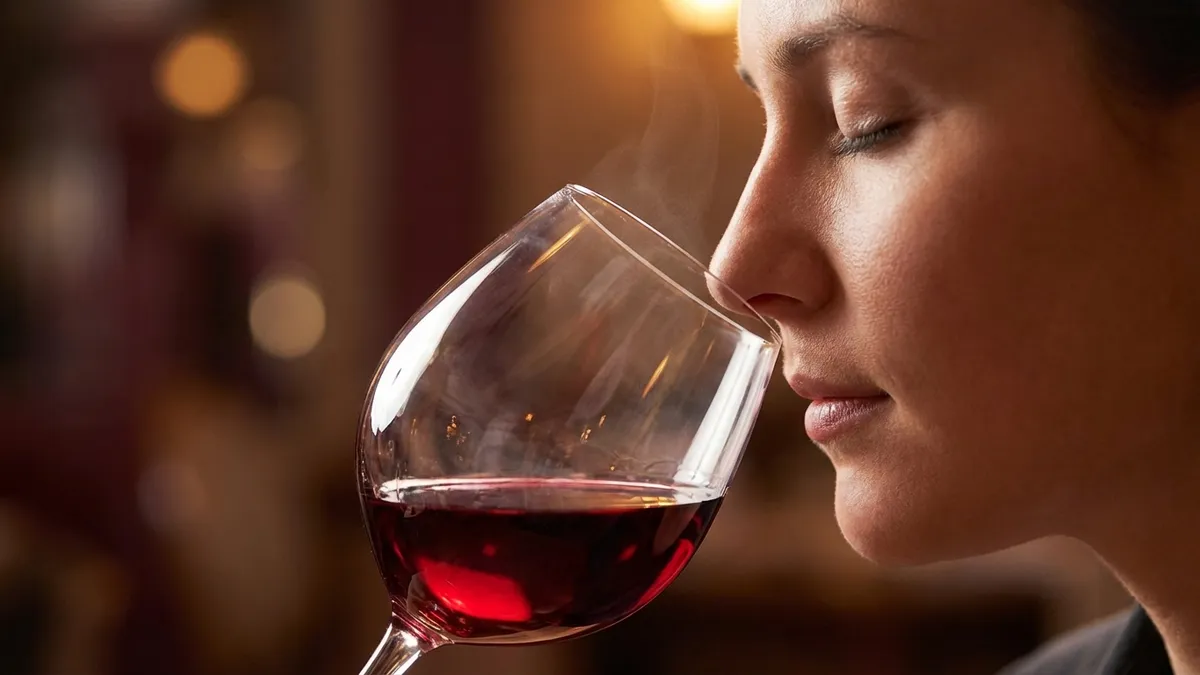
- Smell each wine before tasting. Note which feels lifted and which feels heavier on the nose.
- Take a small sip of each. Hold the wine on the mid-palate for five seconds. Pay attention to alcohol warmth, acidity, and tannin texture.
- Time the finish. Note both how long the wine lingers and what carries the persistence — acidity and detail, or weight and warmth.
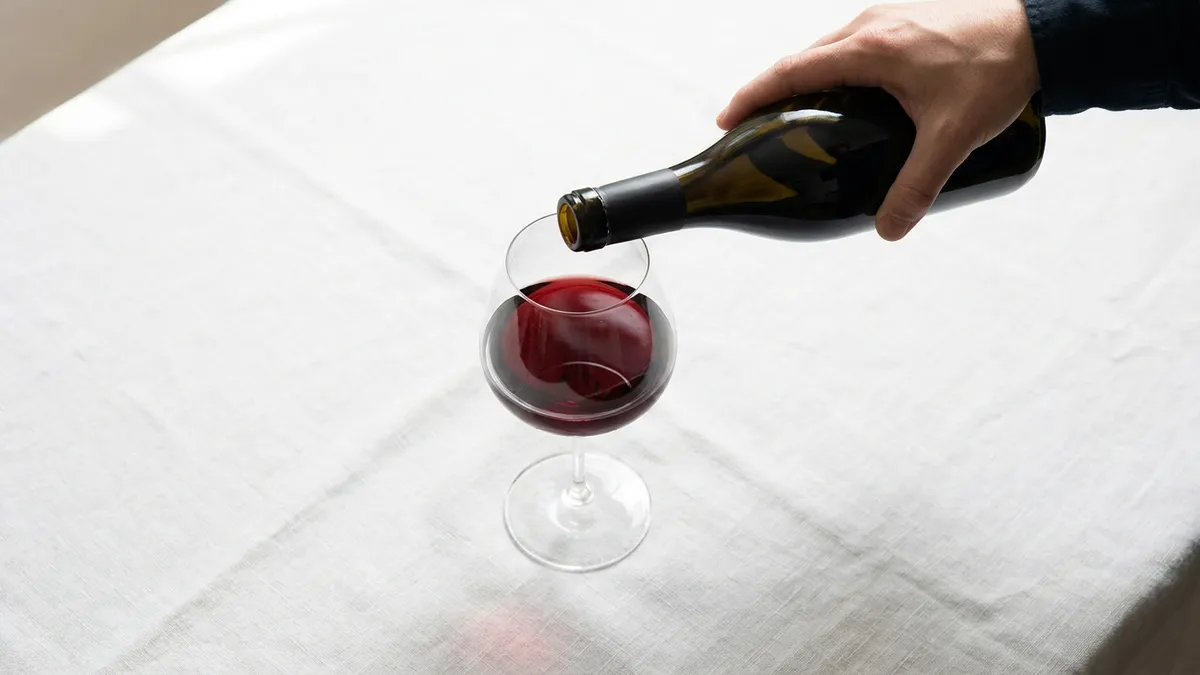
After six or eight comparisons, the difference between elegance and power stops being theoretical. You start hearing reviewers and bottle descriptions differently because you can map the language to a real sensation in your own mouth.
The Sommy app's tasting flow rates each structural element on a 1 to 5 scale, which makes the elegance pattern jump out visually — moderate alcohol, high acidity, fine tannin, and long finish all clustering around the same shape across the wines you record. It is a faster way to see your own elegance preference than relying on memory across separate sessions.
Why Elegance Has Become a Movement
For roughly two decades from the early 1990s to the early 2010s, influential wine reviews skewed firmly toward power. High alcohol, dense extraction, and oak-driven richness scored well, and producers worldwide adjusted to match.
Since the mid 2010s, the pendulum has swung back. Producers in warm regions are picking earlier and using less new oak. Sommeliers in major restaurant cities curate lists toward freshness and finesse. Younger drinkers cite elegance as a value.
Sommelier note: The elegance trend is not a rejection of power. It is a re-balancing after a stretch in which power was the only style being celebrated. The conversation just got wider.
Common Misuses of the Word
Three traps to watch for in your own notes and in the notes of others.
Confusing elegant with weak. A weak wine has low concentration, no length, and no aromatic detail. An elegant wine has all three, just delivered without volume. Weakness is a flaw. Elegance is a quality.
Confusing elegant with old. An aged wine that has lost fruit and gained tertiary character is not automatically elegant. Some aged wines become elegant; many become tired. The tasting young vs aged wine guide separates the two.
Confusing elegant with light. A light-bodied wine can be elegant, but a light-bodied wine is not elegant by default. Elegance is a structural quality that includes acidity, tannin, and length. Body alone does not earn the word.
The cleanest mental rule: weight does not decide elegance. Detail and persistence do.
How Elegance Connects to Quality
Elegance is one specific shape that wine quality can take. It is not the only shape. A great Barossa Shiraz is great in a different way from a great Volnay, but both are great. Elegance, balance, complexity, and typicity are four overlapping markers of quality, and a wine can score high on some without scoring high on all.
A Master of Wine examiner will sometimes describe a wine as "good but not elegant" — meaning the wine is well-made and balanced for its style, but the style itself prioritizes power over restraint. That is a fair description. It is also a useful reminder that elegance is a stylistic choice, not a universal requirement.
For a fuller picture of how elegance fits into the broader vocabulary, see wine tasting vocabulary cheat sheet and wine judging criteria.
The Bottom Line
Elegance in wine is structure delivered with restraint — moderate alcohol, high acidity, fine silky tannin, lifted aromatics, and a long finish without weight. The word describes wines whose virtue is precision rather than impact, which is why it maps so consistently to classic Burgundy, Mosel Riesling, Loire Cabernet Franc, Chablis, and other cool-climate styles.
It is not a synonym for light, weak, or boring. A genuinely elegant wine has all the structural elements a powerful wine has — it just delivers them with finesse rather than force. Once you have tasted the elegant and powerful versions of the same grape side by side, the word stops being abstract and becomes one of the most useful descriptors in your tasting vocabulary.
Want a tasting flow that captures the structural fingerprint of every wine you try? Sommy logs alcohol, acidity, tannin, body, and finish on independent 1 to 5 scales, so the elegance pattern shows up clearly across your sessions instead of getting lost in memory.
Frequently Asked Questions
What does elegant mean when describing a wine?
Elegant describes a wine that achieves expression through restraint rather than power. It usually has moderate alcohol, high acidity, fine and silky tannins, lifted aromatics, and a long persistent finish that never feels heavy. The word signals balance over volume — the wine is detailed and precise, not loud or jammy. Sommeliers use it as a quality marker for finesse-driven styles.
Is elegant the same as light-bodied?
No. A light-bodied wine can be elegant, but elegance is not about weight — it is about how the structure is delivered. A medium-bodied wine with fine tannin, fresh acidity, and a long finish is elegant. A light, dilute wine with no structure is just thin. Elegance requires real structural elements that happen to be carried with restraint rather than force.
Which wines are typically called elegant?
Classic Burgundy Pinot Noir, Mosel and Nahe Riesling, Loire Cabernet Franc, Chablis, classed-growth Bordeaux from cooler vintages, Etna Rosso from the higher altitudes of Sicily, traditional Champagne, and many cool-climate Chardonnays. The shared thread is moderate alcohol, high acidity, and the kind of slow ripening that builds detail rather than weight.
What is the opposite of an elegant wine?
The opposite is usually called bold, powerful, opulent, blockbuster, or full-throttle. These wines lead with high alcohol, ripe jammy fruit, soft acidity, and dense tannin or extraction. They aim for impact rather than restraint. Neither style is wrong — they answer different questions about what a wine is for and which dishes or moods they fit.
Can elegant be a polite way of saying boring?
Sometimes. The word can be used as code for underwhelming when reviewers do not want to be harsh. A genuinely elegant wine has high acidity, real length, and fine structure. A bland wine has none of those things. If a wine is called elegant but you cannot point to its acidity, finish, or aromatic detail, the word is being used as soft cover for a missing center.
How do I taste elegance in a wine?
Look for four signals on the palate: moderate alcohol that does not burn, mouth-watering acidity that lifts the fruit, tannin that grips without scraping, and a finish that lasts more than ten seconds without ever feeling heavy. If a wine has all four, it is almost certainly being made in an elegant style. Practice on cool-climate examples to calibrate the sensation.
Is elegant wine always expensive?
No. Elegance correlates with attentive winemaking and the right climate, not with price tags. Many mid-priced wines from cool regions deliver real elegance, while many expensive wines aim for power instead. Price filters out the most poorly made wines but does not predict style — blind tasting across price points teaches this faster than any review.
Sommy Team
LinkedInFounder & Wine Educator
The Sommy Team is building the world's most approachable wine education app, helping beginners develop real tasting skills through structured courses and AI-guided practice.