Walla Walla Wine Guide: Rocks, Loess and Washington Reds

By the Sommy Team — AI-assisted, human-edited.
Updated Sep 24, 2026
Contents (9)
- Walla Walla Wine Guide in One Paragraph
- What Is Walla Walla Wine Known For?
- How Do You Read a Walla Walla Wine Label?
- What Food Goes With Walla Walla Reds?
- Is Walla Walla Part of the Columbia Valley?
- Why Does Walla Walla Taste Different From the Rest of Washington?
- What Is the Rocks District of Milton-Freewater?
- How Many Wineries Are in Walla Walla?
- How Do You Taste Walla Walla at Home Tonight?
TL;DR
Walla Walla Valley is a small appellation inside Washington's Columbia Valley that crosses into Oregon. Cabernet Sauvignon, Merlot and Syrah lead its plantings. Wind-blown silt on the slopes and basalt cobbles on the valley floor shape the wines, and its Rocks District is the only US appellation drawn by soil alone.
Walla Walla makes some of Washington's most structured red wine from two very different soils: wind-blown silt on the rolling slopes and round basalt cobbles on the valley floor. A Walla Walla wine guide starts with those soils, because they decide what lands in the glass. One stony patch of them, in Oregon, is the only US appellation drawn by soil alone.
Walla Walla Wine Guide in One Paragraph
The Walla Walla Valley is an American Viticultural Area (AVA: a legally protected US grape-growing place name) established on 6 February 1984. It covers 182,060 acres in southeast Washington and northeast Oregon, with 2,933 acres planted to vines. It sits inside the far larger Columbia Valley AVA. Red grapes dominate: Cabernet Sauvignon, Merlot and Syrah made up 83% of plantings in 2007. The valley is wetter than the desert around it, and its vines grow mostly in loess, a well-drained wind-blown silt. On the Oregon side, The Rocks District of Milton-Freewater is a sub-appellation of basalt cobbles that hold the day's heat. It is best known for savoury, peppery Syrah.
What Is Walla Walla Wine Known For?
Walla Walla is known for full-bodied red wine. In 2007, Cabernet Sauvignon covered 41% of the planted area, Merlot 26% and Syrah 16%, with Cabernet Franc at 4% and Sangiovese at 2%. Those five red grapes filled 89% of the vineyard between them that year.
All three main grapes share a structure. They carry firm tannin (the drying grip on your gums) and full body (the weight of whole milk rather than skimmed). They also keep fresh acidity, because the valley's nights run cool.
| Label word | Structure | Tastes like | Put it next to | Buy it if |
|---|---|---|---|---|
| Walla Walla Valley Cabernet Sauvignon | Full body, high tannin | Ripe blackcurrant and plum, cedar from oak | Grilled ribeye, aged hard cheese | You like a firm red that grips |
| Walla Walla Valley Merlot | Medium-full body, softer tannin | Ripe black cherry, cocoa | Roast chicken, pork chops, mushroom dishes | You want a red that is easy on the gums |
| Walla Walla Valley Syrah | Full body, medium-high tannin | Blackberry, cracked black pepper, smoke | Smoked brisket, pepper-crusted lamb | You like savoury, spicy reds |
| The Rocks District of Milton-Freewater Syrah | Full body, fine tannin | Olive brine, smoked meat, dark plum | Grilled sausages, lamb with herbs | You want the valley's most distinctive style |
| Walla Walla Valley Cabernet Franc | Medium body, medium tannin | Raspberry, green pepper, dried herbs | Roast pork, lentils, herby vegetables | You find Cabernet Sauvignon too heavy |
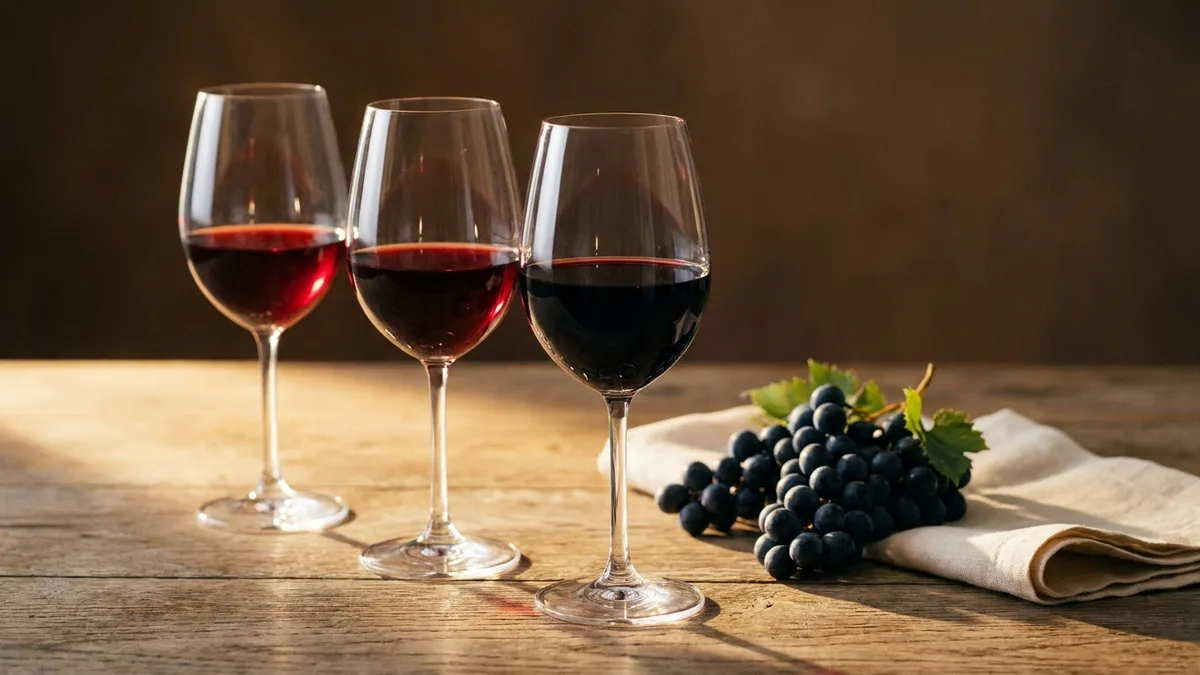
Cabernet here tastes of blackcurrant and plum ripe to the point of softness, because a long, warm season lets the skins ripen fully. Syrah is where Walla Walla stands apart. Tasters often describe Rocks District Syrah as savoury, closer to olive and smoked meat than to fruit. For the grape in full, see Syrah vs Shiraz. The Cabernet Sauvignon guide and the Merlot guide cover the other two.
How Do You Read a Walla Walla Wine Label?
The words "Walla Walla Valley" mean at least 85% of the grapes grew inside the appellation's boundary, and the wine was fully finished in one of the states the AVA covers. That rule comes from US federal law, enforced by the Alcohol and Tobacco Tax and Trade Bureau (TTB).
Three place names show up on bottles from this corner of the map. Each one narrows the source:
- Columbia Valley is the broad regional name, covering most of eastern Washington.
- Walla Walla Valley is one valley inside it, on both sides of the state line.
- The Rocks District of Milton-Freewater is one stony patch inside Walla Walla, entirely in Oregon.
If the label says Columbia Valley, the grapes may come from anywhere across the state's main growing region. If it says Walla Walla Valley, 85% came from this one valley. Buy the narrower name when the valley's own character is the point of the bottle.
An AVA is a place guarantee, not a quality rank. A petition for a new AVA must show the area is known by that name and must describe its climate, geology, soils and elevation. Nothing in the rule caps yield or dictates a style, so two Walla Walla Cabernets can taste very different. Our guide on how to read a wine label covers the other words on the bottle, and what an appellation is explains the system worldwide.
What Food Goes With Walla Walla Reds?
Walla Walla reds are ripe and firm, so they need fat, salt and char on the plate. Fat coats the mouth and softens tannin. Salt makes fruit taste riper. Char picks up the toasty side that oak barrels give many of these wines.
Match each grape by what is on the plate:
- Cabernet Sauvignon with a fatty, charred cut such as ribeye, because the fat takes the edge off high tannin.
- Syrah with smoked brisket or pepper-crusted lamb, because smoke and pepper echo the wine's savoury side.
- Merlot with roast chicken or pork, because its softer tannin will not flatten leaner meat.
- Cabernet Franc with herby vegetables or lentils, because its green-pepper edge suits herbs.
If the red is young and grips hard, pour it into a jug or decanter an hour before dinner. Air softens the first sharp grip of tannin. Our guide on how to decant wine shows the method, the wine with steak guide goes cut by cut, and the wine serving temperature chart covers how cool to serve each style.
Is Walla Walla Part of the Columbia Valley?
Yes. The Walla Walla Valley AVA sits entirely inside the Columbia Valley AVA, one of eighteen smaller appellations nested within it. Columbia Valley holds about 99% of Washington's vineyard acreage, with 60,079 planted acres. A smaller appellation inside a larger one is called a sub-AVA.
The dates run in an odd order. Walla Walla Valley was established on 6 February 1984, ten months before its parent Columbia Valley on 13 December 1984. So the smaller name is actually the older one on a label.
The other surprise is the border. The valley reaches from southeast Washington into the northeast corner of Oregon, so a Walla Walla wine can be grown in either state. The Washington State wine guide maps the other sub-AVAs of the Columbia Valley, and the Oregon wine guide covers the Oregon side of the story.
Why Does Walla Walla Taste Different From the Rest of Washington?
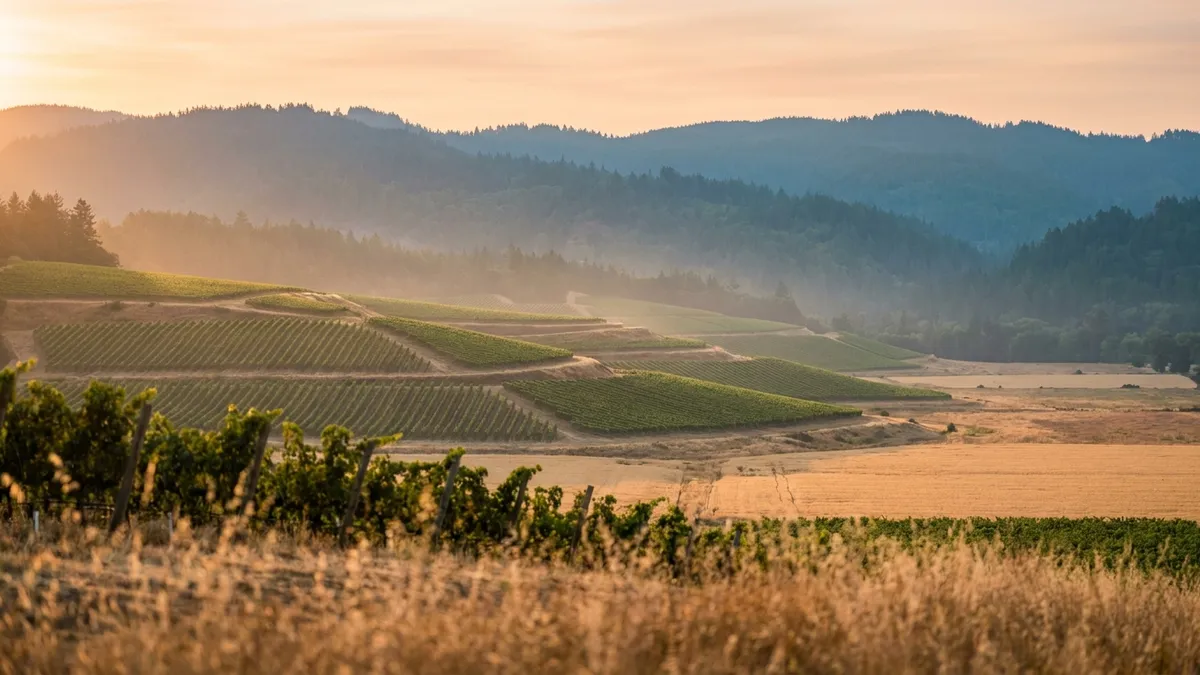
Walla Walla gets more rain than the desert around it, and its vines grow in deep, wind-blown silt. The valley receives 10 to 20 inches of precipitation a year. The surrounding Columbia Basin receives less than 10 inches, and the Blue Mountains just east receive 25 to 45.
That rain gradient follows the land. Vineyards run from about 1,500 feet at the foot of the mountain slopes down to about 500 feet on the valley floor. Higher sites sit closer to the mountains and catch more rain, while the lower ground is drier and warmer.
Heat is measured in growing degree days (a running total of how warm each day of the season was, above the point where vines start growing). Walla Walla scores 3,024, which puts it in Region III on the Winkler scale, a moderately warm climate for red grapes. The growing season lasts 190 to 220 days. Average highs run 65°F and average lows 42°F over the year. That long season is why Cabernet ripens fully here, and the cool nights are why the wines keep fresh acidity.
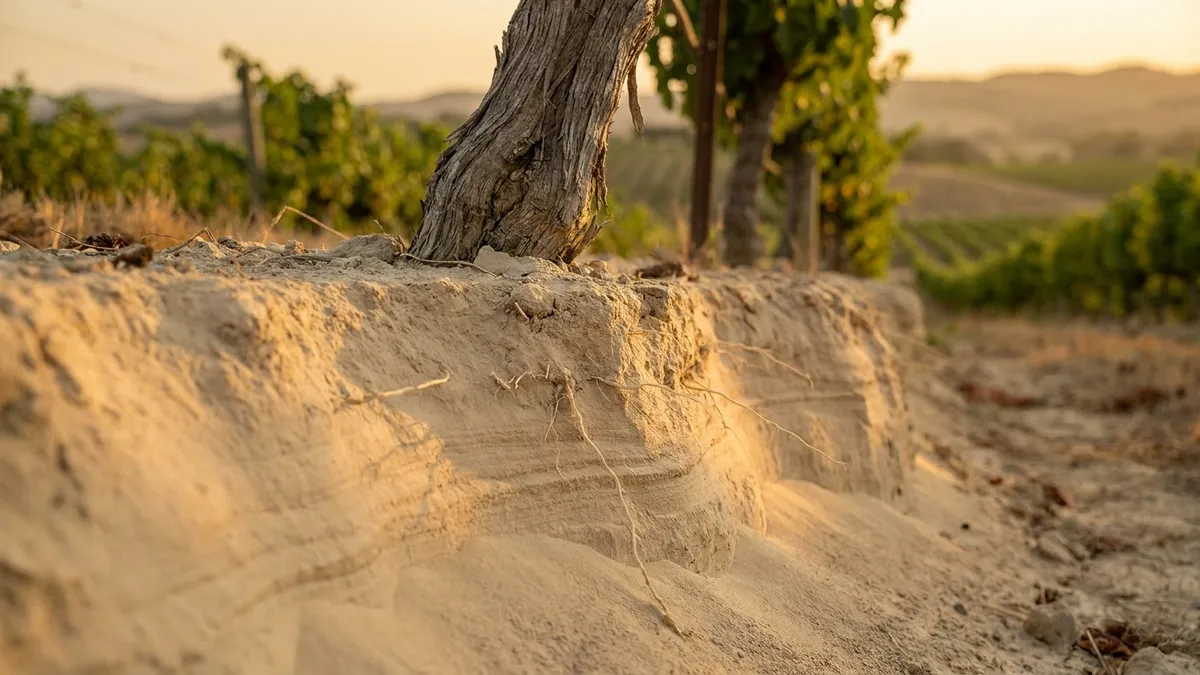
The main soil is loess (fine silt carried and dropped by the wind). It drains well, so vines do not sit in wet roots, and they put their energy into ripening fruit. For the wider mechanism, see how soil affects wine taste and climate and wine flavour.
What Is the Rocks District of Milton-Freewater?
The Rocks District of Milton-Freewater is a 3,770-acre sub-appellation inside the Walla Walla Valley, and the only US AVA whose boundary is defined by soil type. It was established on 9 February 2015 as the nation's 228th AVA. It lies entirely in Umatilla County, Oregon.
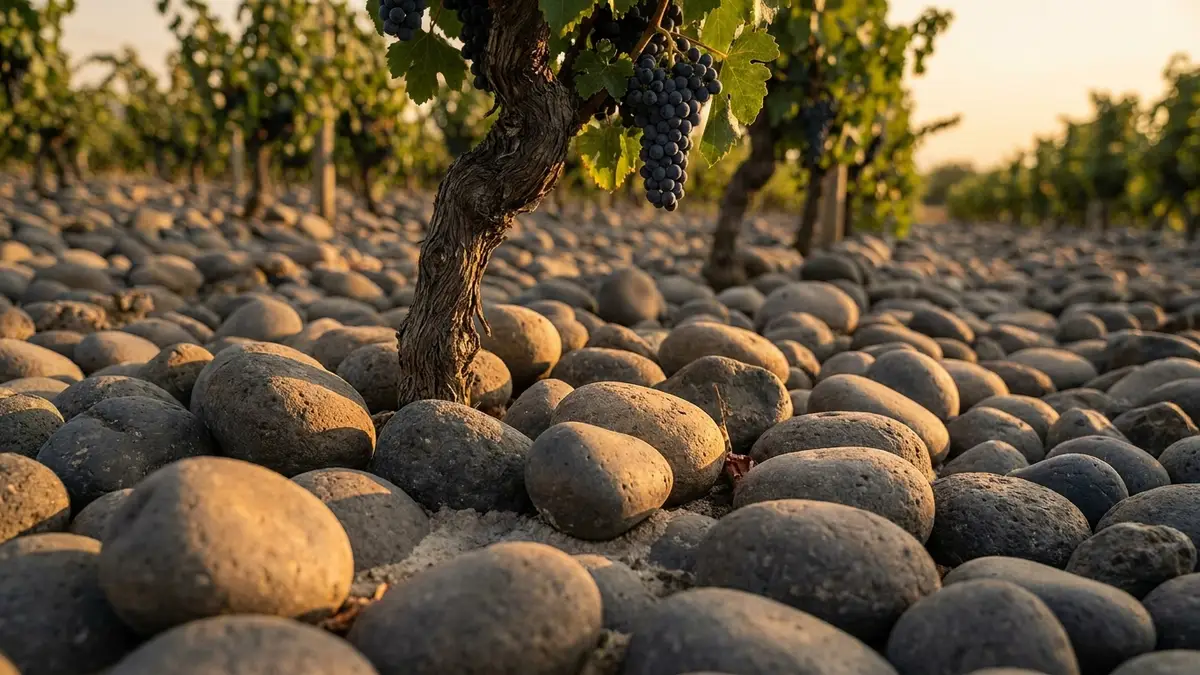
So a bottle of Walla Walla wine can be pure Oregon wine. The district's soil is a cobbly, gravelly silt loam in which 50 to 85 percent of the ground is coarse basalt gravel and cobbles. The petition was filed by Kevin R. Pogue, a geology professor at Whitman College, and the line on the map follows the stones.
The cobbles change the grapes. Dark basalt soaks up sunshine during the day and gives the heat back to the vines. At midday, grape clusters hanging above the stones can be 3 to 5°F warmer than those in grass-covered vineyards. That extra warmth pushes ripeness in a valley where nights stay cool.
The district is small: 472 planted acres across 33 vineyards, with 23 wineries. Growers there plant Cabernet Franc, Grenache, Malbec, Syrah, Tempranillo and Viognier. Syrah is the grape that made its name.
How Many Wineries Are in Walla Walla?
About 92 bonded wineries sit inside the Walla Walla Valley AVA as of 2025, while the wider Walla Walla area counts more than 120. A bonded winery is one licensed by the federal government to make wine. The two numbers come from different counts, so neither is simply wrong.
| Figure | Number | What it counts | Source |
|---|---|---|---|
| Wineries in the AVA | 92 | Bonded wineries inside the appellation boundary, as of 2025 | Wikipedia |
| Wineries in the Walla Walla area | 120+ | A looser count of the wider Walla Walla area | Wine Enthusiast |
| Planted acres | 2,933 | Vineyard land inside the AVA, as of 2025 | Wikipedia |
| Total AVA area | 182,060 acres | All land inside the boundary, planted or not | Wikipedia |
| Vineyards | 25 | Vineyards counted inside the AVA | Wikipedia |
Most of the modern industry is young. The first of today's wineries opened in the 1970s, and the AVA followed in 1984. Wine Enthusiast reports that the Walla Walla area's wineries generate over $100 million a year for the valley. It also says USA Today readers voted it "Best Wine Region" in 2020 and 2021. Walla Walla Community College also offers an associate degree in winemaking and grape growing through its Center for Enology and Viticulture.
For how Walla Walla's regional structure compares with California's best-known valley, the Napa sub-AVAs guide is a useful mirror. The full set of region guides sits in the wine regions hub.
How Do You Taste Walla Walla at Home Tonight?
Pour a Walla Walla Valley Syrah next to a Syrah labelled only Columbia Valley. Taste them side by side at the same cool room temperature. The narrower label may show more savoury smoke and pepper, and the broader one more plain, ripe blackberry.
Sommy's AI-guided tasting mode is built for this kind of comparison. Photograph each label in the Sommy app, and it walks you through look, smell and taste for each glass and saves both notes to your tasting journal. Pour the two Syrahs tonight and smell each glass before you sip. Then write down which one smells of olive or smoked meat first.
Sources
Frequently Asked Questions
What is Walla Walla wine known for?
Walla Walla is known for full-bodied red wine. Cabernet Sauvignon covered 41% of planted vines in 2007, Merlot 26% and Syrah 16%, with Cabernet Franc next at 4%. The Syrah from the stony Rocks District on the Oregon side has become the valley's most talked-about wine, often described as savoury, peppery and meaty.
Is Walla Walla part of the Columbia Valley?
Yes. The Walla Walla Valley AVA sits entirely inside the Columbia Valley AVA, which holds about 99% of Washington's vineyard acreage. Walla Walla is one of eighteen smaller appellations nested within it. A bottle labelled Walla Walla Valley comes from a much narrower area than one labelled Columbia Valley.
Is Walla Walla wine from Washington or Oregon?
Both. The Walla Walla Valley AVA straddles the state line, reaching from southeast Washington into the northeast corner of Oregon. Its sub-appellation, The Rocks District of Milton-Freewater, lies entirely in Umatilla County, Oregon. Wine from either side can carry the Walla Walla Valley name if at least 85% of the grapes grew inside the boundary.
What is the Rocks District of Milton-Freewater?
It is a 3,770-acre sub-appellation inside the Walla Walla Valley, established in February 2015. It is the only American Viticultural Area whose boundary is defined by soil type: a silt loam packed with 50 to 85 percent basalt gravel and cobbles. The stones hold daytime heat, and grape clusters above them can run 3 to 5°F warmer at midday.
How many wineries are in Walla Walla?
The answer turns on what you count. Wikipedia lists 92 bonded wineries and 25 vineyards inside the Walla Walla Valley AVA as of 2025, on 2,933 planted acres. Wine Enthusiast counts more than 120 wineries across the wider Walla Walla area, a looser count that may include tasting rooms.
What food goes with Walla Walla red wine?
Walla Walla reds are ripe and firm, so they want fat, salt and char. A young Cabernet Sauvignon suits a fatty grilled steak, because the fat softens its grip. Syrah suits smoked or pepper-crusted meat, since the smoke echoes its savoury side. Merlot, with softer tannin, suits roast chicken, pork or mushroom dishes.
Does an AVA label mean the wine is better?
No. An American Viticultural Area is a legal place name, not a quality rank. It guarantees that at least 85% of the grapes came from inside the boundary and that the wine was finished in that state. It sets no limit on yield and no required style, so quality still depends on the grower and the vintage.
Sommy Team
LinkedInFounder & Wine Educator
The Sommy Team is building the world's most approachable wine education app, helping beginners develop real tasting skills through structured courses and AI-guided practice.