Uruguayan Wine Guide: Tannat and the Atlantic Coast

By the Sommy Team — AI-assisted, human-edited.
Updated Jul 22, 2026
Contents (10)
- What Is Uruguayan Wine?
- Where Uruguay Sits on the Wine Map
- The Maritime Climate That Defines Uruguayan Wine
- The Uruguay Wine Guide to Its National Grape, Tannat
- Beyond Tannat: Uruguay's Other Grapes
- The Wine Regions of Uruguay
- How Uruguayan Wine Compares to Argentina and Chile
- Uruguayan Wine and Food
- How a Beginner Should Start with Uruguayan Wine
- Why Uruguay Is Worth Learning
TL;DR
Uruguay is South America's fourth-largest wine producer, a small maritime country between Argentina and the Atlantic. Its humid, sea-cooled climate and clay-loam soils give the wines a fresher, more European feel than its neighbors. Tannat is the bold national grape, but rising Albariño and Merlot round out this uruguay wine guide.
What Is Uruguayan Wine?
This uruguay wine guide starts with a surprise: Uruguay is one of the most distinctive wine countries in the Americas, yet almost nobody talks about it. It is South America's fourth-largest wine producer — behind Argentina, Chile, and Brazil — from a national vineyard of only around 6,000 hectares farmed by roughly 180 mostly family-run wineries. Its signature grape is Tannat, a dark, powerfully tannic red that Uruguay has claimed as its own. But the deeper story is climate: unlike its high-altitude, desert-dry neighbors, Uruguay is small, low-lying, and coastal, cooled and dampened by the Atlantic and the Rio de la Plata. That maritime setting gives Uruguayan wine a freshness and restraint that feels closer to Europe than to the rest of the New World.
Where Uruguay Sits on the Wine Map
Uruguay is the second-smallest country in South America, tucked between Argentina to the west and Brazil to the north, with the Atlantic Ocean along its southeastern edge. Its vineyards lie between roughly 30 and 35 degrees south — a latitude band shared with parts of Argentina and Chile — but everything else about the setting is different.
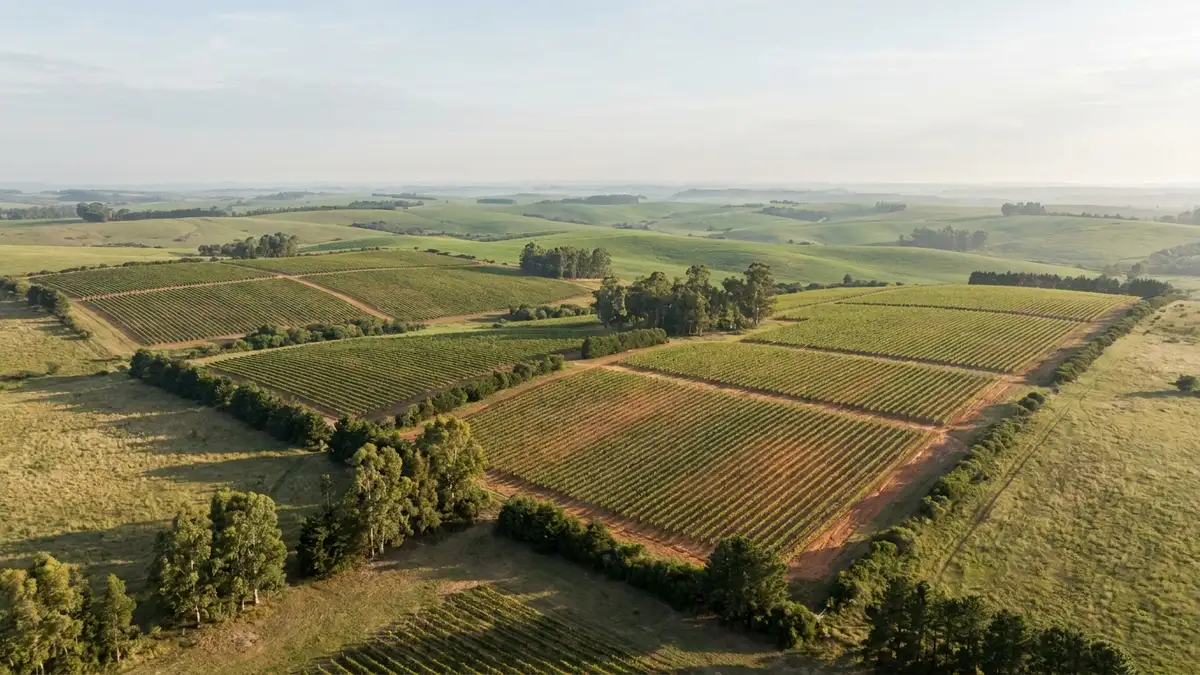
Where Argentina climbs into the Andes for its best sites, Uruguay stays low. Most vineyards sit below 300 meters on gently rolling hills, close enough to the coast that the sea shapes the growing season. The country is also unusually wine-soaked as a culture: Uruguay has long had one of the highest rates of per-person wine consumption in the Americas, and most of what it makes, it drinks itself.
The industry is overseen by INAVI (Instituto Nacional de Vitivinicultura), the national wine institute, which runs one of the world's stricter grape-to-bottle traceability systems. That small scale and tight regulation help explain why Uruguay punches above its weight in quality even as it stays under the radar. For the bigger picture of how coastal and inland countries differ, our Argentina wine guide and Chile wine guide map out the high-altitude and Pacific-cooled alternatives on either side.
The Maritime Climate That Defines Uruguayan Wine
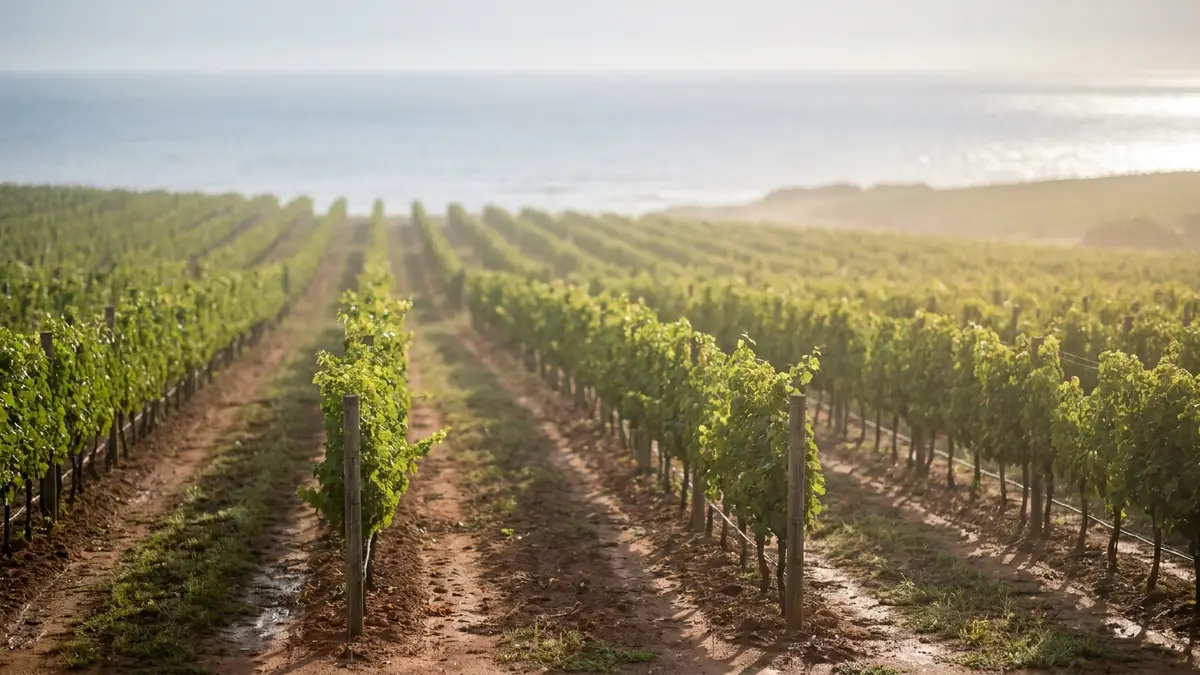
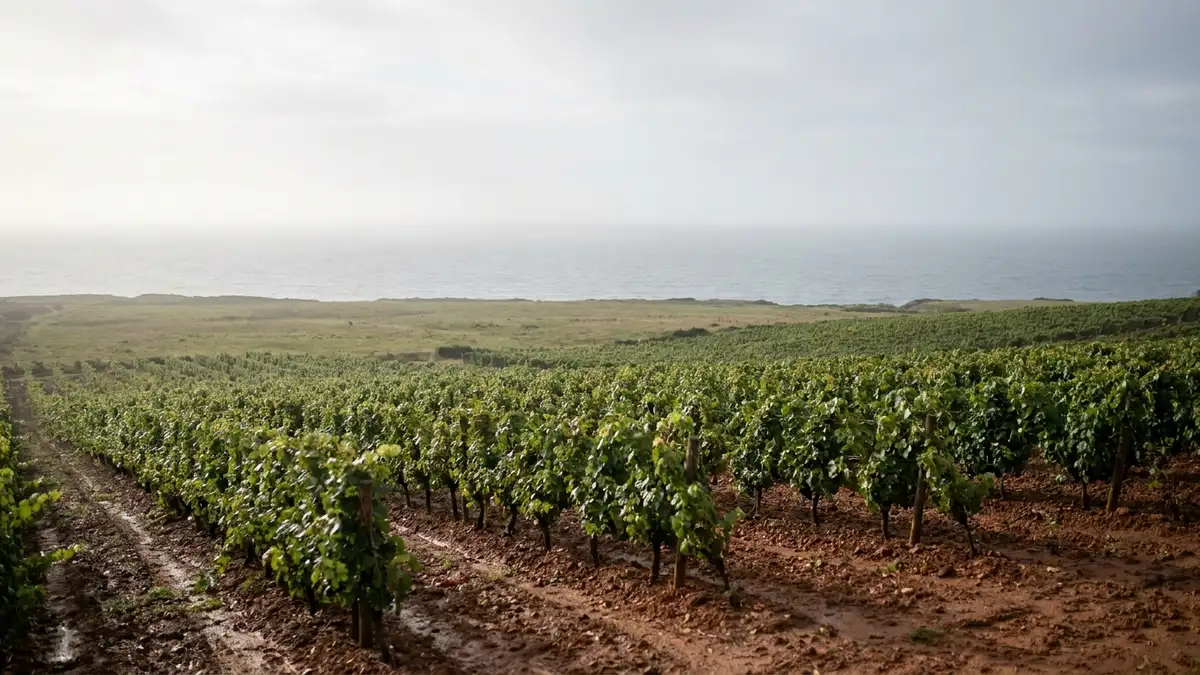
If you remember one idea from this guide, make it this: Uruguay is a maritime wine country — its climate is shaped by the ocean rather than by mountains or desert. The Atlantic and the vast Rio de la Plata estuary wrap around the vineyards, moderating temperatures, raising humidity, and cooling the nights with sea breezes.
That has three big effects in the glass. First, lower alcohol — the cooler, more even ripening keeps sugar from spiking, so the wines rarely feel hot or heavy. Second, higher acidity — the fresh, mouth-watering tartness that the sea air protects, which makes the wines vibrant and food-friendly. Third, a savory, restrained character that many tasters describe as more Old World than New.
The soils reinforce it. Uruguay's core vineyards grow on clay-loam and calcareous soils that hold water and drain slowly — a good match for a humid climate. The trade-off is real, though: that same humidity brings disease pressure, so Uruguayan growers farm carefully, opening canopies and managing yields to keep the grapes healthy.
This is terroir (the environment where grapes grow — soil, climate, and the hand of the grower) working differently from the rest of South America. To see how climate signatures read on the palate, our guide to what terroir actually is breaks down the concept, and the Old World versus New World explainer shows exactly the fresh-versus-ripe divide Uruguay straddles.
The Uruguay Wine Guide to Its National Grape, Tannat
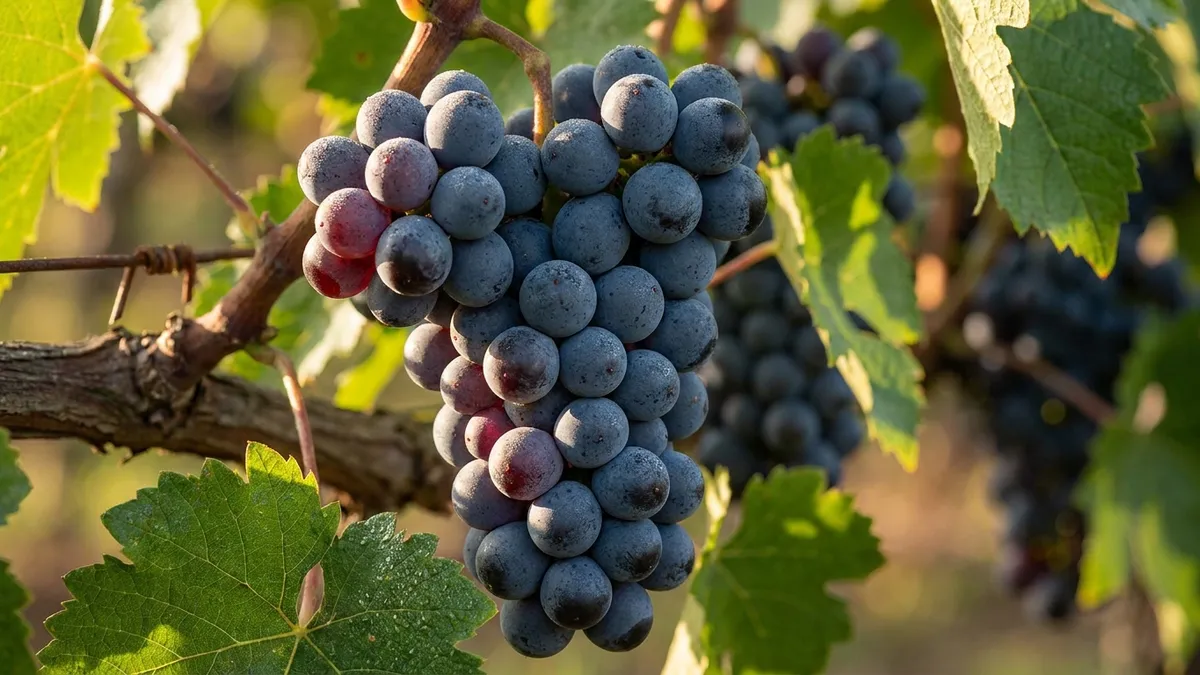
No grape is more bound to a country than Tannat is to Uruguay. Its name comes from the French word for tannin, and it lives up to it: Tannat is widely considered the most tannic of the major wine grapes, pouring an almost opaque ink-purple and delivering a firm, mouth-coating grip.
Tannin is the drying, gripping sensation you feel on your gums and cheeks in a red wine, caused by compounds in grape skins and seeds. Tannat's thick skins give it that in abundance, along with deep color and flavors of black plum, blackberry, dried fig, leather, and tobacco.
The grape arrived in 1870, when a Basque immigrant named Pascual Harriague planted cuttings from southwest France near Montevideo. It thrived, and for decades locals even called it "Harriague." Today Tannat makes up roughly a quarter of Uruguay's vineyard area, and the country grows more of it than anywhere else on earth.
What makes Uruguayan Tannat worth knowing is how the maritime climate reshapes it. The rustic French original from Madiran can need a decade to soften; Uruguay's gentler ripening and modern winemaking produce a rounder, plusher, earlier-drinking style that is often approachable at three to five years. Because Tannat has its own full profile — aging, food, the famous resveratrol story — we cover the grape end to end in the dedicated Tannat wine guide. If you want to understand the grip itself, tannins, acidity, and body explained shows how that structure works on the palate.
Beyond Tannat: Uruguay's Other Grapes
Tannat is the headline, but Uruguay is quietly building a much broader roster — and this is where the maritime climate really shows off.
- Albariño — The rising white star. This Iberian grape has found a remarkable second home along Uruguay's cool Atlantic coast, where sea air keeps it bright, saline, and citrus-driven. Uruguayan Albariño has become a genuine international talking point; our Albariño wine guide covers the grape's crisp, seafood-loving character in full.
- Merlot — Widely planted and often blended with Tannat to soften its grip, but increasingly bottled on its own as a plush, food-friendly red. See the Merlot wine guide for the grape's rounder side.
- Cabernet Franc — One of Uruguay's most exciting reds, offering perfumed red fruit, herbs, and a savory, medium-bodied elegance that suits the cool climate. The Cabernet Franc wine guide explains why it thrives where the weather is cooler.
- Marselan — A modern French crossing of Cabernet Sauvignon and Grenache that Uruguay has embraced for its deep color, soft tannin, and juicy dark fruit.
- Sauvignon Blanc and Chardonnay — Both benefit from the cool nights, giving crisp, aromatic whites and increasingly serious, mineral Chardonnay.
Many of these belong to the small family of noble grapes every learner meets first, and telling their signatures apart — Cabernet Franc's leafy lift from Merlot's plush plum — is exactly the kind of comparison the Sommy app turns into a short guided exercise.
The Wine Regions of Uruguay
Uruguay is compact, so its regions are less about dramatic terroir contrasts and more about degrees of coastal influence. From the volume heartland to the premium frontier:
- Canelones — The historic heartland, just north of Montevideo, and the source of the majority of Uruguay's wine. Its clay-loam soils and river-and-estuary influence make it the classic home of Tannat and Merlot.
- Montevideo and San Jose — The zones around and west of the capital, sharing Canelones's maritime, clay-driven character and supplying much of the country's everyday wine.
- Maldonado — The exciting Atlantic frontier, on the coast near Punta del Este and the hills around Jose Ignacio. Granite and ballast soils, strong sea breezes, and cooler temperatures make this Uruguay's premium zone for structured Tannat and, above all, coastal Albariño.
- Colonia — In the southwest along the Rio de la Plata, a historic area facing Buenos Aires across the water, producing balanced reds and whites.
- Rivera — Far to the north on the Brazilian border, warmer and more continental, on sandstone soils that give riper, fuller-bodied reds — the counterpoint to the cool south.
Sommelier tip: if you only ever try one contrast in Uruguayan wine, taste a warm-north Tannat from Rivera beside a cool-coast Tannat from Maldonado. Same grape, two climates, and a clear lesson in how the sea reshapes a wine.
How Uruguayan Wine Compares to Argentina and Chile
Uruguay is the third name in South American wine, and understanding where it sits next to its famous neighbors is the fastest way to place it. The difference comes down to what cools the vineyard: altitude, ocean, or the Andes rain shadow.
| Feature | Uruguay | Argentina | Chile |
|---|---|---|---|
| What cools the vines | Atlantic Ocean, humidity | High altitude, dry air | Pacific Ocean, Andes air |
| Flagship grape | Tannat | Malbec | Cabernet Sauvignon, Carmenere |
| Typical elevation | Below 300m | 800–3,000m | 100–1,000m |
| Red wine style | Fresh, savory, firm-tannined | Ripe, plush, concentrated | Structured, varied by valley |
| White specialty | Albariño | Torrontes | Sauvignon Blanc |
| Overall feel | Old World restraint | New World generosity | Balanced middle ground |
Neither approach is better — they are different answers to the same question of how to keep grapes fresh in a sunny hemisphere. Argentina reaches for the mountains; Chile leans on the Pacific and the Andes; Uruguay simply sits by the sea. That maritime freshness is why a Uruguayan red often feels lighter on its feet than an Argentine Malbec of the same weight, even when the grape is just as dark in the glass.
Uruguayan Wine and Food
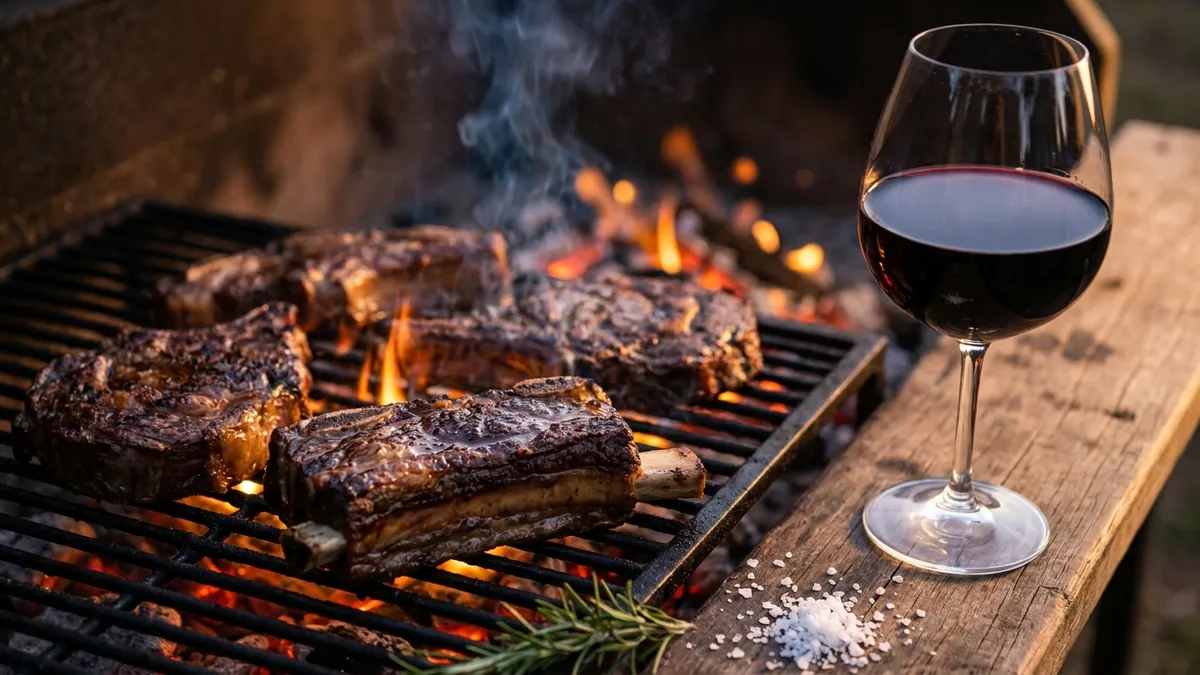
Uruguay is an asado country — the national ritual of grilling meat slowly over wood or coals — and its wines were effectively built for the grill. Tannat's high tannin needs fat and protein to feel balanced: drink it alone and the grip can feel severe; drink it with charred beef and it turns seamless, because the tannin binds to the fat and protein on your palate.
Classic pairings lean into that meat culture:
- Grilled beef and short ribs — The textbook Tannat match, and the heart of any asado.
- Chivito — Uruguay's beloved steak sandwich, piled with beef, ham, cheese, and egg, stands up to a firm Tannat with ease.
- Lamb and aged hard cheeses — Both echo Tannat's savory, dried-fruit side.
- Grilled fish and shellfish — Where coastal Albariño and Sauvignon Blanc shine, their bright acidity cutting through the sea's richness.
For the underlying logic of matching weight and structure to a dish, the wine and food pairing guide lays out the rules, and the wine with steak guide goes deeper on the grilled-meat side that Uruguay does so well.
How a Beginner Should Start with Uruguayan Wine
You do not need to visit Montevideo to understand Uruguayan wine. The smart path is to taste deliberately and pay attention to what the maritime climate is doing to every glass. Here is a practical order:
- Start with one Uruguayan Tannat. Look first at the deep, near-opaque color, then find the dark plum and blackberry fruit and the firm but polished grip. That combination of power and freshness is Uruguay in a glass.
- Compare it with an Argentine Malbec. Side by side, the Malbec will feel riper and plusher, the Tannat firmer and more savory — a clean lesson in how climate reshapes a bold red.
- Meet the white side with a coastal Albariño. Focus on its bright acidity and citrus-saline lift. It is the clearest window into what the Atlantic gives Uruguay.
- Try a cool-north versus warm-coast contrast if you can. A Rivera red beside a Maldonado one shows how even a small country holds real diversity.
- Build the tasting habit. Note the color, the acidity, and that fresher, lower-alcohol feel. Our step-by-step guide to how to taste wine gives you the method, and the wine regions hub collects deep-dives like this one.
Sommy turns these comparisons into guided exercises — naming the aromas, scoring the structure, and building the vocabulary to describe what you sense. You can start practicing free at sommy.wine, then bring the method to your next bottle from South America's quietest wine country.
Why Uruguay Is Worth Learning
Uruguay rewards curiosity out of proportion to its size. It gives you a bold, distinctive red grape in Tannat, a genuinely exciting rising white in Albariño, and — most valuable of all — the single clearest case study in the New World of what a maritime climate does to wine. Learn Uruguay, and you learn to taste the difference between ripe and fresh, between mountain and sea.
Start with one Tannat, taste it against a warmer-climate cousin, and let the Atlantic reveal itself glass by glass. The Sommy app is built to make that habit stick, turning each bottle into a short, guided lesson so the next wine — wherever it comes from — is a little clearer than the last.
Sources
Frequently Asked Questions
What is Uruguayan wine known for?
Uruguay is known above all for Tannat, a dark, deeply tannic red that became the national grape. The country's real signature, though, is a style: because it is small, coastal, and humid rather than high and dry, its wines feel fresher and more restrained than the bold reds of Argentina and Chile. Rising Albariño and food-friendly Merlot round out the picture.
What grape is Uruguay famous for?
Tannat. A Basque immigrant brought the grape from southwest France in 1870, and it thrived in Uruguay's mild, Atlantic-influenced climate. Today Tannat makes up roughly a quarter of the country's vineyards, and Uruguay grows more of it than any other nation. Uruguayan Tannat is generally rounder and earlier-drinking than the rustic French original from Madiran.
How is Uruguayan wine different from Argentine wine?
Climate is the whole story. Argentina grows grapes high in the dry Andes, where altitude and intense sun build powerful, concentrated reds. Uruguay is low and coastal, cooled and dampened by the Atlantic and the Rio de la Plata estuary. That maritime influence gives its wines lower alcohol, higher acidity, and a fresher, more European feel than Argentine Malbec.
What are the main wine regions of Uruguay?
Canelones, just north of Montevideo, is the heartland and makes the majority of Uruguay's wine. Montevideo and San Jose surround it. Maldonado, on the Atlantic coast near Punta del Este, is the exciting premium frontier with granite soils and sea breezes. Colonia in the southwest and Rivera on the Brazilian border round out the map.
What white wine does Uruguay make?
Albariño is Uruguay's rising white star, especially along the cool Atlantic coast of Maldonado, where sea air keeps it bright and saline. The country also makes crisp Sauvignon Blanc, richer Chardonnay, and small amounts of aromatic whites. These fresh, food-friendly whites are one of the clearest signs of Uruguay's cool, maritime character.
How should a beginner start with Uruguayan wine?
Start with one Uruguayan Tannat and notice its deep color, firm grip, and dark-fruit flavor, then compare it with an Argentine Malbec to feel how climate changes a red. Next, try a coastal Albariño for the country's fresh white side. Focus on the fresher, lower-alcohol feel that the maritime climate gives almost everything Uruguay bottles.
What food pairs well with Uruguayan wine?
Uruguay is an asado (barbecue) culture, and its wines are built for the grill. Tannat is the classic partner for grilled beef, short ribs, lamb, and the chivito steak sandwich, because fat and protein soften its tannin. Coastal Albariño and Sauvignon Blanc pair beautifully with the country's fresh seafood, from grilled fish to shellfish.
Sommy Team
LinkedInFounder & Wine Educator
The Sommy Team is building the world's most approachable wine education app, helping beginners develop real tasting skills through structured courses and AI-guided practice.