Swartland Wine Guide: South Africa's Revolutionary Wine Region

By the Sommy Team — AI-assisted, human-edited.
Updated Jun 17, 2026
Contents (9)
- What Is Swartland Wine?
- The Swartland Revolution: How a Bulk Region Became a Beacon
- Where Swartland Is and Why the Climate Shapes the Wine
- The Signature Grapes and Wine Styles of Swartland
- Minimal-Intervention Winemaking: What "Natural" Means Here
- What Makes Swartland Distinctive
- How Swartland Compares to Other Warm-Climate Regions
- How a Beginner Should Start with Swartland
- Why Swartland Belongs on Your Tasting List
TL;DR
Swartland is a warm, dry-farmed region north of Cape Town known for old-vine bush-vine Chenin Blanc, Syrah, and Rhône-style blends grown on granite, schist, and shale. A new-wave movement built it into South Africa's most exciting region. This swartland wine guide shows beginners exactly where to start.
What Is Swartland Wine?
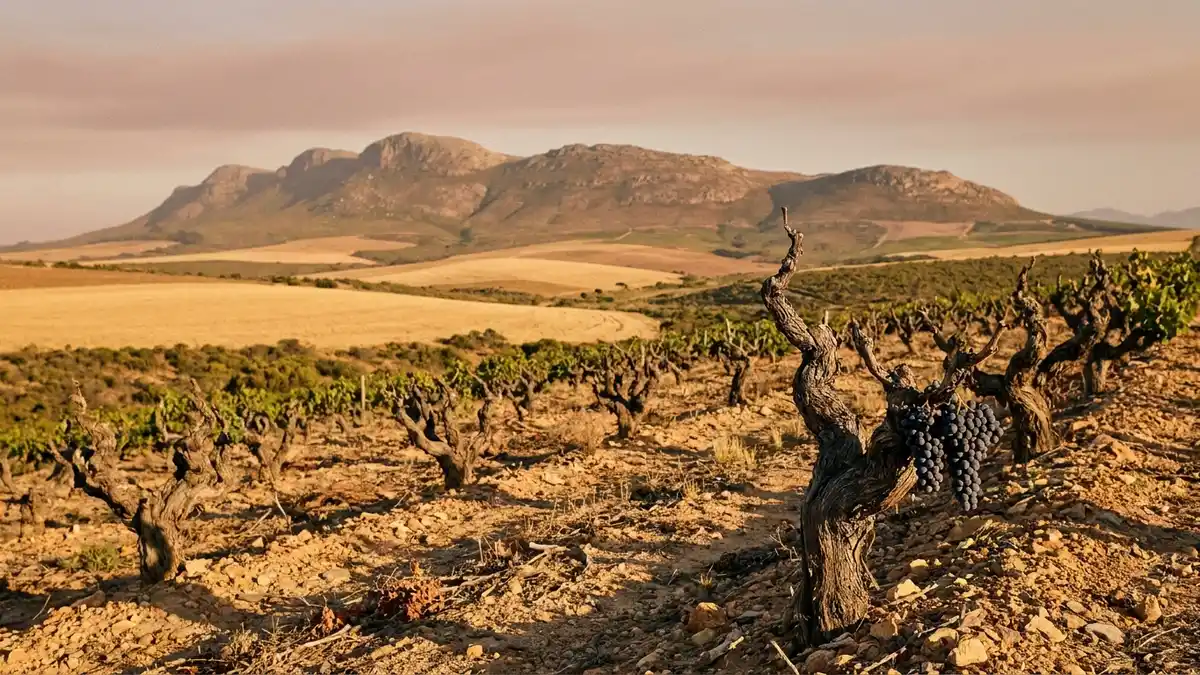
This swartland wine guide opens with the region that rewired how the world sees South African wine. Swartland is a warm, dry-farmed stretch of the Western Cape about an hour north of Cape Town, where rolling wheat fields are broken by gnarled old vineyards on granite, schist, and shale. Its signature white is Chenin Blanc from old dry-farmed bush vines, and its leading red is Syrah, often in Rhône-style blends with Grenache, Mourvèdre, and Carignan. A wave of minimal-intervention producers — the so-called Swartland Revolution — turned a former bulk-wine area into the country's most exciting region. Learn the grapes, the dry-farming, and the new-wave philosophy, and Swartland clicks into focus fast.
The Swartland Revolution: How a Bulk Region Became a Beacon
For most of the twentieth century, Swartland was farm country that sold grapes to co-operatives for cheap, anonymous wine. The land was cheap too, and so were the old vineyards nobody bothered to replant. That neglect turned out to be a gift.
From the mid-2000s, a small group of new-wave winemakers looked at those forgotten old vines — many of them decades old, dry-farmed, and trained as low bush vines — and saw treasure rather than waste. They began making serious wine from grapes the establishment had ignored, and the Swartland Revolution was born.
The movement's beliefs are clear and worth knowing, because they show up in nearly every bottle worth seeking out:
- Old vines over young plantings. Older vines yield less fruit but pack more concentration and character into each grape.
- Dry-farming over irrigation. Vines that hunt for their own water grow deep roots and small, intense berries.
- Rhône grapes over Bordeaux grapes. Syrah, Grenache, Mourvèdre, and Chenin Blanc suit the warm, dry climate far better than thirsty Cabernet.
- Minimal intervention in the cellar. Wild-yeast fermentation, older oak rather than new, and as little manipulation as possible, so the vineyard speaks.
In 2010 the leading figures formed the Swartland Independent Producers (SIP) group, which certifies wines made from old, dry-farmed Swartland vineyards using low-intervention methods. Its seal on a bottle is one of the most reliable quality signals a beginner can use here.
Where Swartland Is and Why the Climate Shapes the Wine
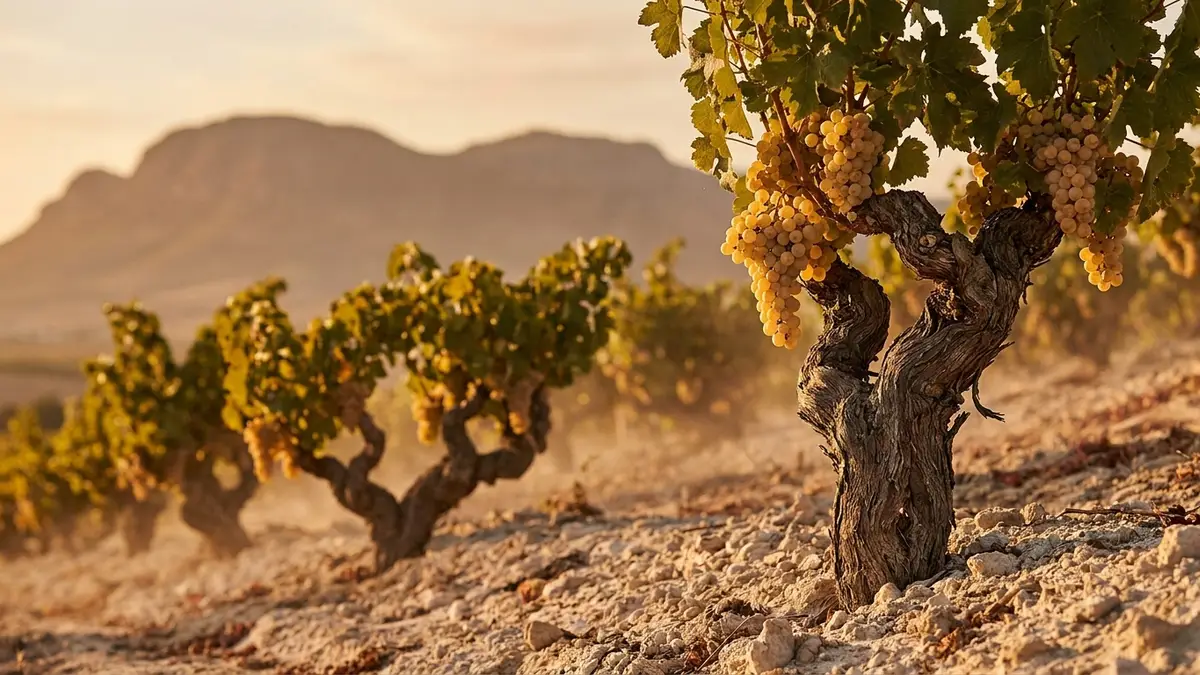
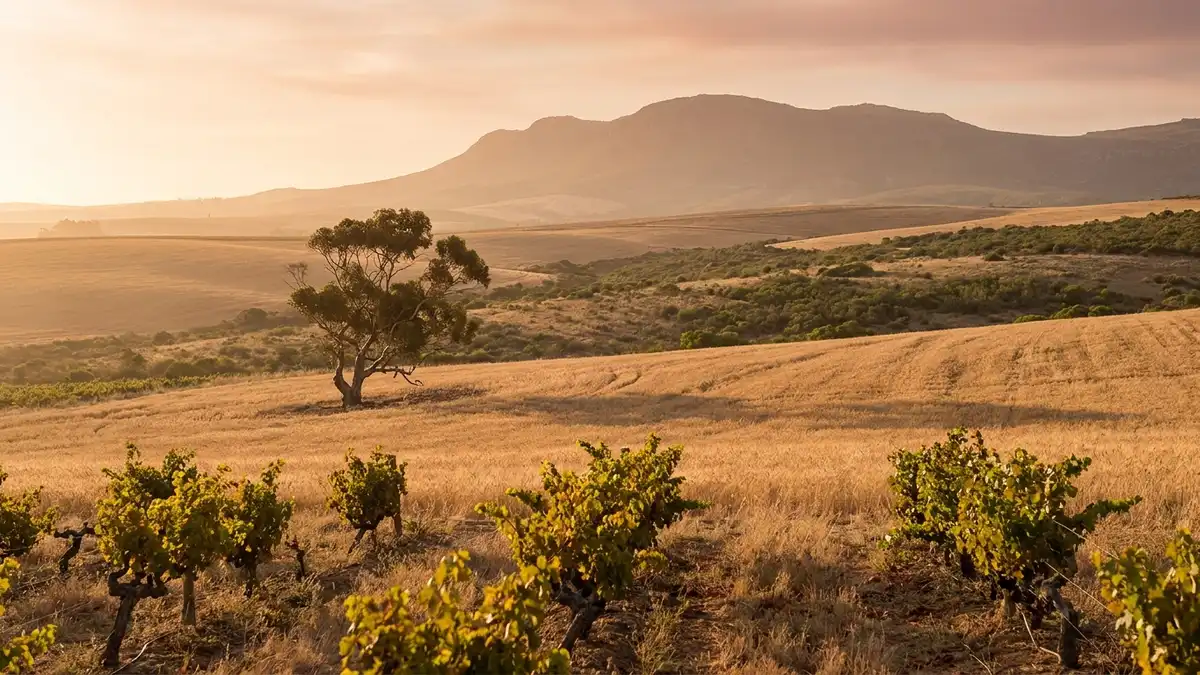
Swartland sits inland and north of Cape Town, centered on the towns of Malmesbury and Riebeek-Kasteel, with the Kasteelberg mountain as its landmark. The name is Afrikaans for "black land," after a dark native shrub called renosterbos that once covered the hills.
The defining fact about Swartland is heat with very little water. Summers are hot and dry, rainfall is low, and the cooling influence of the ocean is gentler than it is in coastal regions closer to the sea. In most warm regions, growers respond by irrigating heavily. Swartland's new wave does the opposite.
Swartland's genius is restraint: dry the land, age the vines, leave the cellar alone, and let the granite do the talking.
Dry-farming — growing vines with no irrigation, relying only on rainfall and the soil's stored moisture — is the heart of it. Deprived of easy water, the vines drive their roots deep and produce fewer, smaller, more concentrated grapes. The reward is wine with real intensity; the risk is lower yields and harder farming. It is a deliberate trade of quantity for character.
The Soils: Granite, Schist, Shale, and Iron
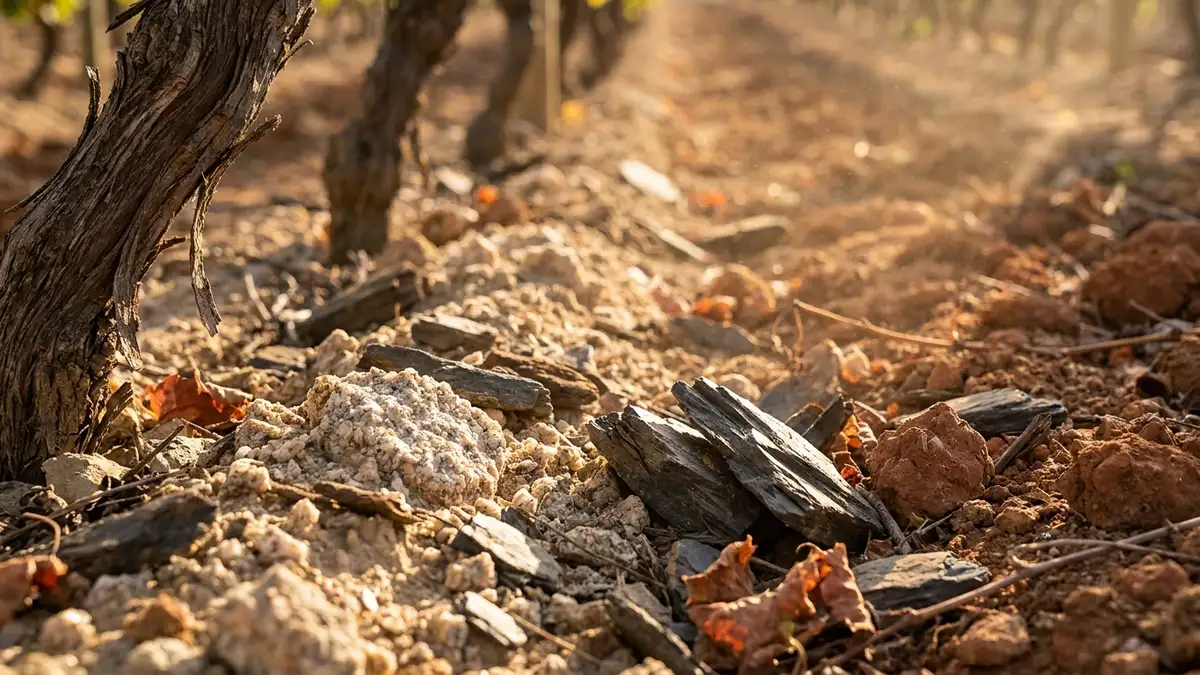
Soil is the other half of the story, and Swartland's variety is a big part of why its wines differ from bottle to bottle. The three soil types worth knowing are:
- Granite (around the Paardeberg and Perdeberg hills): Decomposed granite gives white wines, especially Chenin Blanc, a fine, taut structure and a sense of energy.
- Schist and shale (the Riebeek and Kasteelberg areas): These darker, broken rocks suit Syrah and the other Rhône reds, lending savory depth and grip.
- Iron-rich and clay soils: Found in pockets across the region, holding a little more water and giving rounder, fuller-bodied wines.
The interplay of warm climate, dry-farming, and these granite-and-schist soils is Swartland's version of terroir — the idea that a wine's character comes from the specific place it grows, not just the grape. Few warm regions wear their terroir as plainly as this one.
The Signature Grapes and Wine Styles of Swartland
If Burgundy is a region of two grapes, Swartland is a region of two ideas: textured whites built on Chenin Blanc, and savory reds built on Syrah and its Rhône companions. Everything below flows from those two pillars.
Old-Vine Chenin Blanc: The White Star
Chenin Blanc is South Africa's most planted grape and Swartland's flagship white. The country grows more of it than anywhere on earth, and its oldest, finest parcels sit here on dry-farmed bush vines.
Swartland Chenin is rich and textured rather than sharp. Typical aromas: yellow apple, quince, ripe pear, dried peach, honey, and a savory, waxy, almost saline edge. Body: medium-to-full (4/5) · Acidity: medium-to-high (4/5) · Oak: often older barrels for breadth without obvious vanilla. Bush-vine fruit and dry-farming concentrate the flavor into something far more serious than the cheap, off-dry Chenin many beginners first meet.
For the full picture of this versatile grape across the world, our Chenin Blanc wine guide covers its many faces from South Africa to the Loire Valley.
Syrah and Rhône-Style Red Blends: The Red Heart
Syrah is Swartland's leading red, and it leans toward the savory, perfumed style rather than the jammy, high-alcohol version found in hotter spots. Typical aromas: black plum, blackberry, black pepper, dried herbs, smoked meat, and a stony, mineral note from schist soils. Body: medium-to-full (4/5) · Tannins: medium (3/5), fine-grained rather than harsh · Acidity: medium-to-high, keeping the wine fresh.
Just as often, Syrah appears in a Rhône-style red blend, the signature red format of the region. These blends pull from the classic southern Rhône grapes:
- Grenache for bright red fruit and lift — see our Grenache wine guide for how it behaves on its own.
- Mourvèdre for dark fruit, structure, and a meaty, gamey depth.
- Carignan for color, grip, and old-vine intensity — explored in our Carignan wine guide.
- Cinsault for softness, perfume, and easy drinking.
White blends follow the same Rhône logic, partnering Chenin Blanc with Roussanne, Marsanne, Clairette, and Grenache Blanc for added texture and aromatic lift.
Old-Vine Pinotage and a Few Local Heroes
Swartland also holds old-vine plantings of Pinotage, South Africa's home-grown crossing of Pinot Noir and Cinsault. In skilled new-wave hands, dry-farmed Swartland Pinotage shows red fruit and spice rather than the burnt, tarry style that gave the grape a mixed reputation. Our Pinotage wine guide covers how the grape is being reinvented. A little Tinta Barocca, a Portuguese variety, rounds out the cast.
Minimal-Intervention Winemaking: What "Natural" Means Here
The Swartland Revolution is as much about the cellar as the vineyard. Minimal-intervention winemaking means making wine with as few additions and manipulations as possible, so the character of the grapes and the place comes through unfiltered.
In practice, that looks like a handful of recurring choices:
- Wild-yeast (spontaneous) fermentation: Letting the natural yeasts on the grapes and in the cellar start fermentation, rather than adding commercial yeast, for more complexity.
- Whole-bunch fermentation for reds: Including some whole grape clusters with stems, which adds perfume, freshness, and a savory edge.
- Older oak, not new: Using neutral, well-used barrels or large concrete and clay vessels, so the wine gains texture without a heavy vanilla-and-toast overlay.
- Little to no fining or filtration: Leaving the wine more or less as it settled, which can mean a touch of cloudiness in exchange for more flavor and texture.
- Low added sulfur: Using only modest amounts of the preservative that protects wine from oxidation and spoilage.
The point is not purity for its own sake. It is that Swartland's old dry-farmed fruit is good enough to stand on its own, so the winemaking gets out of the way. The Sommy app's tasting exercises help you spot the markers of this style — the savory, textured, less-polished character — so you can tell a low-intervention wine from a heavily worked one.
What Makes Swartland Distinctive
Plenty of regions grow Chenin Blanc and Syrah. What sets Swartland apart is the combination of factors that rarely line up elsewhere:
- Old, dry-farmed bush vines at scale. Few regions have this many genuinely old, un-irrigated, free-standing vines, and they are the engine of the region's concentration.
- A coherent philosophy, not just a grape. The SIP group ties old vines, dry-farming, and low intervention into a single, certifiable standard you can read off a label.
- Serious quality at fair prices. Because the land and old vines were cheap when the revolution began, Swartland still delivers more character per dollar than most fashionable regions.
- A frontier feel. This is a young, experimental scene where producers try field blends, amphora aging, and grapes the establishment overlooked.
To see how Swartland fits into the wider country, compare it with the polished, Cabernet-driven Stellenbosch wine guide — South Africa's prestige heartland and Swartland's stylistic opposite.
How Swartland Compares to Other Warm-Climate Regions
Swartland sits in a global club of warm, increasingly Rhône-focused regions. Seeing it beside its peers makes its identity clearer. Here is how it lines up:
- Swartland (South Africa): Grapes: Chenin Blanc, Syrah, Rhône reds · Farming: mostly dry-farmed bush vines · Style: textured whites, savory reds · Hallmark: old vines plus minimal intervention.
- Stellenbosch (South Africa): Grapes: Cabernet Sauvignon, Bordeaux blends · Farming: significant irrigation · Style: polished, structured reds · Hallmark: pedigree and ageability.
- Paso Robles (California): Grapes: Zinfandel, Syrah, Rhône blends · Farming: warm with irrigation · Style: ripe, generous reds · Hallmark: bold fruit and power. See the Paso Robles wine guide.
- Santa Barbara (California): Grapes: Pinot Noir, Chardonnay, Syrah · Farming: cooled by coastal fog · Style: bright, restrained · Hallmark: cool-climate elegance. See the Santa Barbara wine guide.
The pattern: Swartland trades the irrigation and polish of its New World peers for dry-farmed old vines and a hands-off cellar, landing on savory, textured wines rather than big, fruit-forward ones.
How a Beginner Should Start with Swartland
You do not need an expensive bottle or a trip to South Africa to understand Swartland. The smartest path is to taste the two signature styles deliberately and pay attention to what dry-farming and old vines actually do. Here is a practical order:
- Begin with a dry old-vine Chenin Blanc. This is the cleanest introduction to the region's white signature — textured, savory, and a world away from cheap off-dry Chenin. Notice the waxy, honeyed weight balanced by fresh acidity.
- Move to a Swartland Syrah. Look for the peppery, savory, medium-bodied style rather than a jammy fruit bomb. This is your benchmark for what cooler-handled, dry-farmed Syrah tastes like.
- Try a Rhône-style red blend next. A Syrah-Grenache-Mourvèdre blend shows how the region layers savory depth, bright fruit, and structure in one glass.
- Look for the SIP seal. The Swartland Independent Producers logo is a shortcut to old vines, dry-farming, and low intervention — a reliable quality marker while you build your bearings.
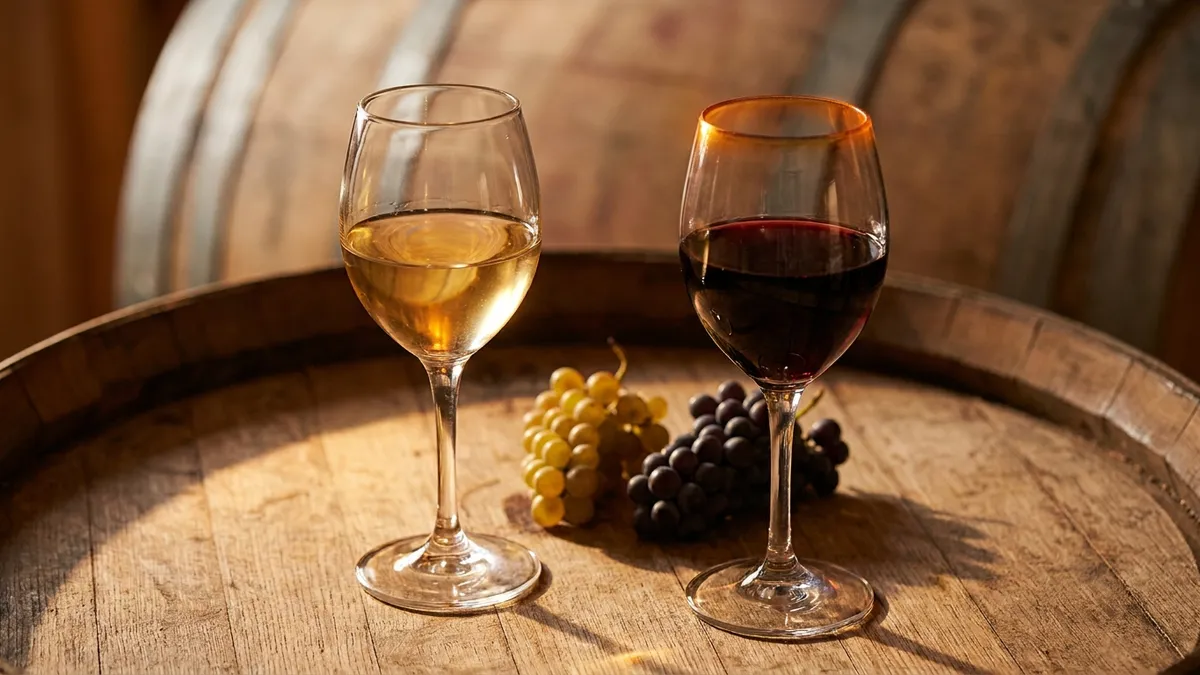
- Taste a Chenin and a Syrah side by side. Drinking the white and the red together is the fastest way to feel the full range of a single region in one sitting.
As you taste, build the habit of naming what you sense. Our guide to how to taste wine gives you the step-by-step method, and understanding tannins, acidity, and body explains the structure that makes Swartland's reds feel savory rather than heavy. Because the region is built on a small set of varieties, our overview of the noble grapes every learner should know first gives useful context for where Syrah and Chenin sit in the bigger picture.
Sommy turns these comparisons into guided exercises — naming the aromas, scoring the structure, and building the vocabulary to describe what you sense. You can start practicing free at sommy.wine, then bring the method to your next bottle of Swartland Chenin or Syrah.
Why Swartland Belongs on Your Tasting List
Swartland is the rare region that tells a clear story in the glass. The heat and the lack of water force the vines to work, the old bush vines concentrate the fruit, the granite and schist shape the structure, and the minimal-intervention cellar leaves it all intact. Every choice points the same way: toward texture, savor, and a strong sense of place.
For a beginner, that coherence is a gift. Few regions let you taste cause and effect so directly — dry-farming here, old vines there, a savory edge from the soil. Start with a Chenin and a Syrah, taste them with attention, and Swartland becomes one of the most rewarding lessons in modern wine. The Sommy app is built to make that habit stick, turning each bottle into a short, guided lesson so the next Swartland you open is a little clearer than the last.
Sources
Frequently Asked Questions
What grapes is Swartland wine known for?
Swartland's signature white is Chenin Blanc, often from old dry-farmed bush vines, giving textured, concentrated wines. Its leading red is Syrah, frequently bottled in Rhône-style blends with Grenache, Mourvèdre, Carignan, and Cinsault. White blends pair Chenin with Roussanne, Marsanne, and Clairette. The region also grows old-vine Pinotage and a little Tinta Barocca.
Where is the Swartland wine region?
Swartland lies about an hour north of Cape Town in South Africa's Western Cape, inland from the cooler coast around the towns of Malmesbury and Riebeek-Kasteel. The name means 'black land' in Afrikaans, after a dark native shrub. It is warm, dry, and largely dry-farmed, with rolling wheat fields broken by old vineyards.
What is the Swartland Revolution?
The Swartland Revolution describes a wave of new-wave winemakers who, from the mid-2000s, championed old dry-farmed vineyards, minimal-intervention winemaking, and Rhône grapes over the bulk-wine reputation the area once had. They formed the Swartland Independent Producers group, which sets standards for old vines, dry-farming, and low-intervention cellar practices.
What does Swartland Chenin Blanc taste like?
Old-vine Swartland Chenin Blanc is rich and textured rather than sharp, showing yellow apple, quince, ripe pear, dried peach, and honey, often with a savory, waxy, almost saline edge. Bush-vine fruit and dry-farming concentrate the flavor. Many bottles see older oak that adds breadth without obvious vanilla. Body is medium to full with bright underlying acidity.
What are bush vines and why do they matter in Swartland?
Bush vines, or goblet-trained vines, grow as low, free-standing shrubs without trellis wires. Their canopy shades the fruit from harsh sun, and their deep roots find water in dry soils, which suits Swartland's hot, low-rainfall climate. Many Swartland bush vines are decades old, with low yields that give unusually concentrated, characterful wine.
Is Swartland wine good for beginners?
Yes. Swartland offers serious quality at fair prices, and its flagship styles are easy to enjoy. A dry old-vine Chenin Blanc is approachable yet distinctive, and a medium-bodied Swartland Syrah or red blend is gentler and more savory than many big New World reds. Tasting them teaches dry-farming, old vines, and Rhône grapes in one region.
How is Swartland different from Stellenbosch?
Stellenbosch is South Africa's prestigious, Bordeaux-leaning heartland, focused on Cabernet Sauvignon and structured red blends with significant irrigation. Swartland is warmer, drier, mostly dry-farmed, and built on Chenin Blanc and Rhône varieties with a minimal-intervention philosophy. Stellenbosch sells polish and pedigree; Swartland sells old vines, texture, and a frontier spirit.
Where should a beginner start with Swartland?
Start with a dry old-vine Chenin Blanc to meet the region's white signature, then try a Swartland Syrah or a Rhône-style red blend for the savory red side. Look for the Swartland Independent Producers seal as a marker of old vines and low intervention. Taste a Chenin and a Syrah side by side to feel the region's range.
Sommy Team
LinkedInFounder & Wine Educator
The Sommy Team is building the world's most approachable wine education app, helping beginners develop real tasting skills through structured courses and AI-guided practice.