Santa Barbara Wine Guide: Sideways Country and Beyond

By the Sommy Team — AI-assisted, human-edited.
Updated Jun 17, 2026
Contents (9)
- What Is Santa Barbara Wine?
- The Transverse Valleys That Define Santa Barbara
- The Cool Coast: Sta. Rita Hills and Santa Maria Valley
- The Warm Inland Canyons: Ballard Canyon and Happy Canyon
- Cool Coast vs Warm Inland: A Quick Comparison
- The "Sideways" Effect on Santa Barbara
- How Santa Barbara Compares to Other California Regions
- How a Beginner Should Start with Santa Barbara
- The Reward of Learning Santa Barbara
TL;DR
Santa Barbara County sits on California's Central Coast, where rare east-west valleys funnel cold Pacific fog inland. That fog makes cool zones like the Sta. Rita Hills and Santa Maria Valley ideal for Pinot Noir and Chardonnay, while warmer inland canyons grow Syrah and Bordeaux grapes. This santa barbara wine guide shows beginners where to start.
What Is Santa Barbara Wine?
This santa barbara wine guide begins with the single fact that explains everything else: geography here runs the wrong way. Most coastal mountain ranges run north to south, blocking the ocean. In Santa Barbara County, on California's Central Coast, the valleys run east to west, opening like funnels straight onto the Pacific. Cold sea air and fog pour inland through those gaps, cooling the land closest to the coast and warming as it travels. The result is a county that grows cool-climate Pinot Noir and Chardonnay in foggy western valleys like the Sta. Rita Hills and Santa Maria Valley, then switches to warm-climate Syrah and Bordeaux varieties in sun-baked inland canyons. Learn that one geographic quirk and the whole region makes sense.
The Transverse Valleys That Define Santa Barbara
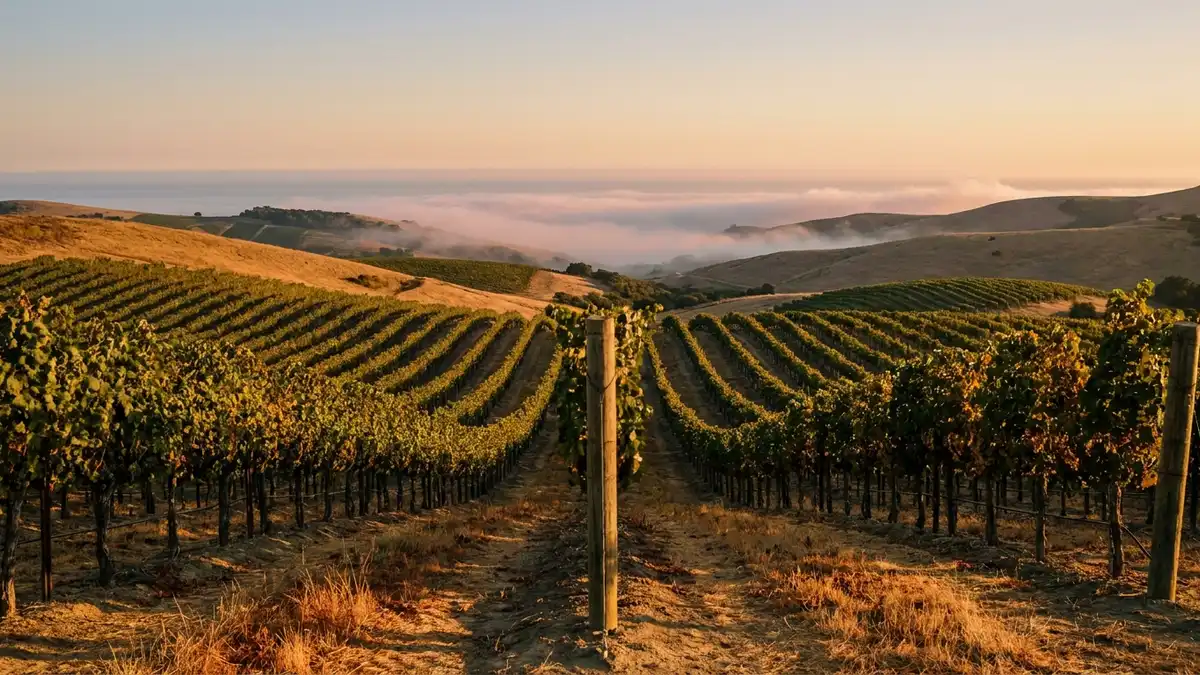
Most of California's coast is guarded by mountains that run parallel to the shore, holding the ocean's chill at bay. Santa Barbara is the rare exception. Its transverse ranges — the only major east-west mountains on the West Coast — leave wide valleys facing directly out to sea.
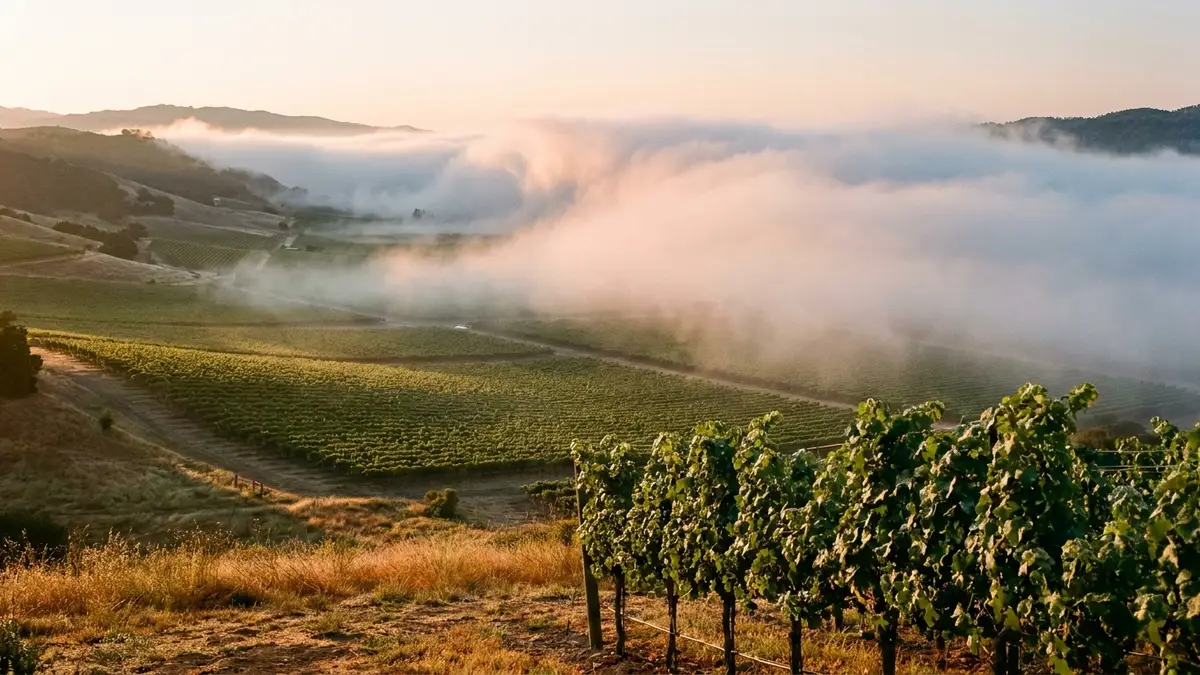
Those valleys behave like wind tunnels. Each afternoon, cold Pacific air and a thick marine fog get sucked eastward through the gaps, dragging the temperature down. The land nearest the coast stays genuinely cold; sites a few miles inland feel that cooling less, and the farthest inland canyons bake in California sun.
This single feature creates an unusually steep climate gradient over a short distance. A vineyard near the ocean and one twenty miles inland can differ by more than fifteen degrees on a summer afternoon. That spread is why one county can do justice to grapes as different as delicate Pinot Noir and brawny Cabernet Sauvignon.
The fog is the engine of quality. It slows ripening, letting grapes hold onto their natural acidity while flavors develop. Slow, cool ripening is exactly what cool-climate grapes want — and it gives Santa Barbara wines their hallmark freshness and energy.
The Cool Coast: Sta. Rita Hills and Santa Maria Valley
The two coolest appellations sit closest to the fog, and they are the heart of Santa Barbara's fame. Both specialize in the two grapes that love a long, cool growing season.
Sta. Rita Hills
The Sta. Rita Hills (often shortened to SRH) is the county's most celebrated cool-climate AVA (American Viticultural Area — a legally defined U.S. wine appellation). It occupies a tight east-west corridor west of the town of Buellton, where the fog and wind are at their fiercest.
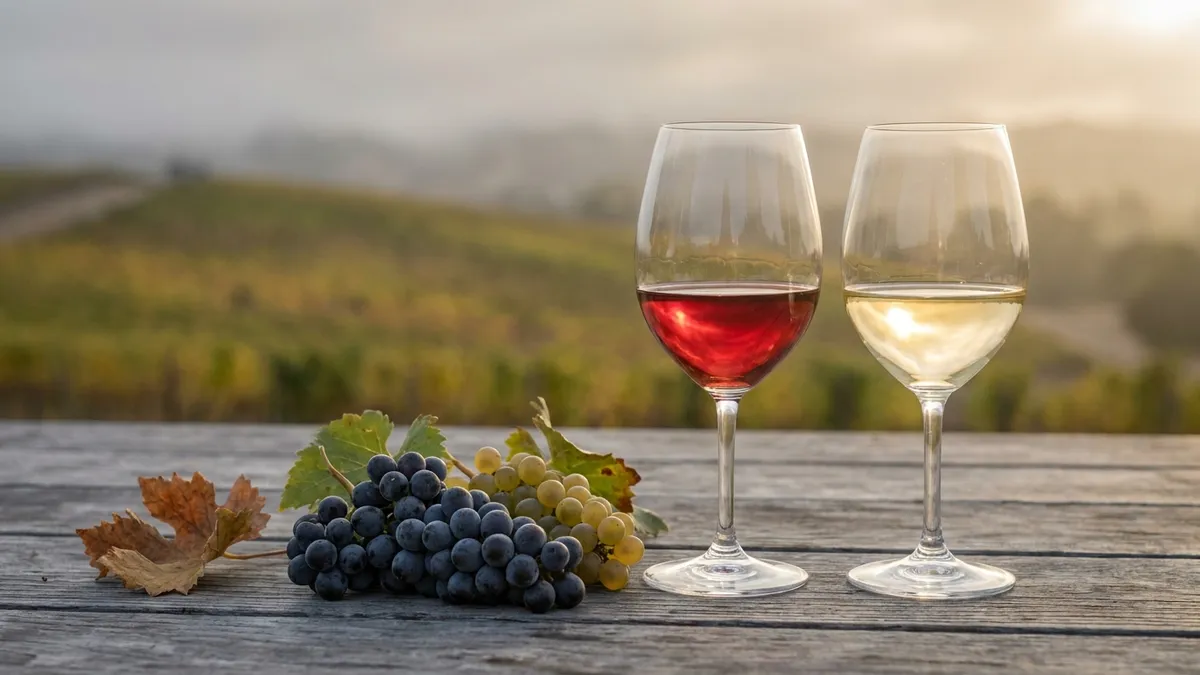
Pinot Noir from here is vivid and structured, with bright red-cherry and cranberry fruit, firm acidity, and a savory, spiced edge that sets it apart from softer, riper California Pinot. The Chardonnay is taut and mineral, leaning toward citrus and green apple rather than tropical richness. If you want the grape's full story beyond this corner of California, our Pinot Noir guide covers how it behaves around the world, and the Chardonnay wine guide does the same for whites.
Santa Maria Valley
Just to the north, the Santa Maria Valley is one of California's oldest and largest cool-climate AVAs. It is slightly warmer and broader than the Sta. Rita Hills but still firmly fog-cooled.
The Pinot Noir here tends to be a touch rounder and more red-fruited, while the Chardonnay shows ripe orchard fruit balanced by lively acidity. Both valleys prove the same point Burgundy makes in France: cool climates and a long hang time give Pinot Noir and Chardonnay their elegance. Sommy's tasting exercises help you name that bright acidity and savory edge the first time you meet it.
The Warm Inland Canyons: Ballard Canyon and Happy Canyon
Travel east, away from the fog, and Santa Barbara changes character completely. The Santa Ynez Valley is the large appellation that holds these warmer inland zones, and within it two small canyons show what the county can do when the sun takes over.
Ballard Canyon: Syrah Country
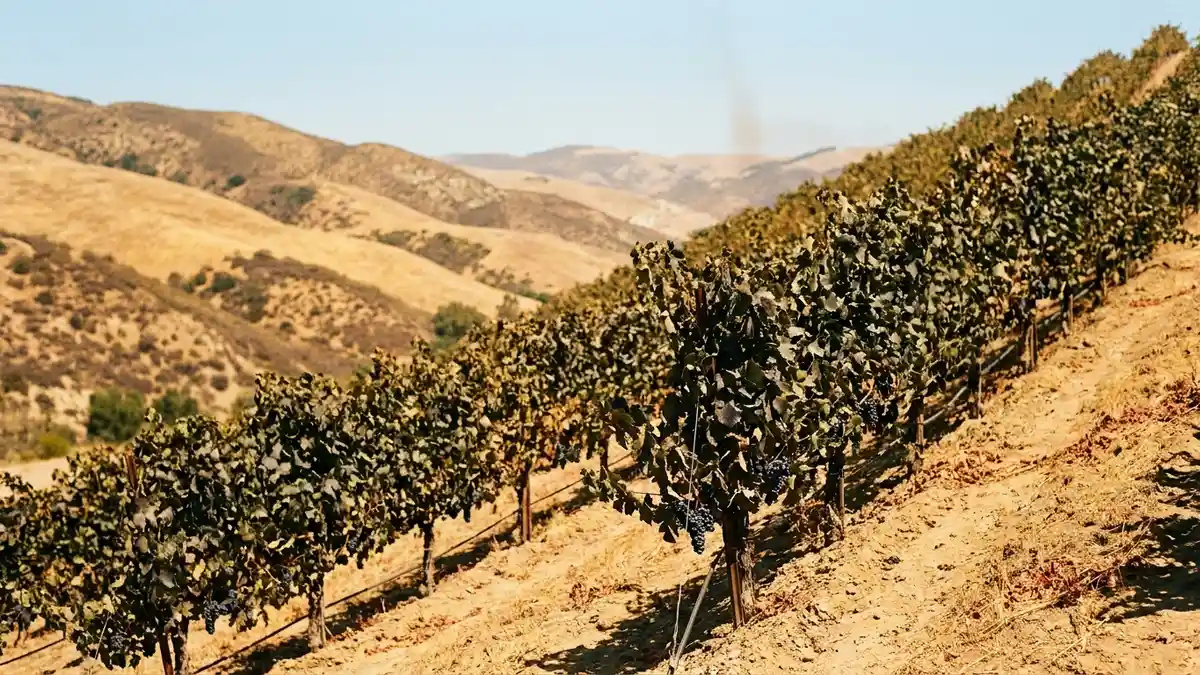
Ballard Canyon is the county's dedicated home for Syrah, the dark, structured red grape of France's northern Rhône. Warm days and the canyon's cooler nights give Syrah here a distinctive shape:
- Ballard Canyon Syrah — Color: deep purple-black · Typical aromas: blackberry, black pepper, cured meat, violet · Body: full (4-5/5) · Tannins: firm (4/5) · Acidity: medium-plus, keeping the wine fresh despite its depth.
This is one of the few American appellations defined around a single grape, and it has become a reference point for serious New World Syrah. The peppery, savory style is a world away from the jammy reds many beginners expect from California.
Happy Canyon: Bordeaux Varieties
Farthest from the ocean and warmest of all sits Happy Canyon, where the climate finally gets hot enough to ripen Bordeaux varieties. The focus here is on the classic Bordeaux grapes:
- Cabernet Sauvignon — full-bodied, firmly tannic, with blackcurrant and cedar.
- Sauvignon Blanc — crisp and herbaceous, with citrus and fresh-cut grass.
- Merlot and the other Bordeaux blending grapes, used to soften and round out the reds.
Happy Canyon shows that Santa Barbara is not a one-style region. Within an hour's drive you can taste a delicate coastal Pinot Noir and a powerful inland Cabernet, both grown in the same county.
Cool Coast vs Warm Inland: A Quick Comparison
The fastest way to understand Santa Barbara is to hold the two ends of its climate gradient side by side. Each of these contrasts comes down to one thing: distance from the fog.
- Sta. Rita Hills — Position: cool, fog-soaked west · Signature grapes: Pinot Noir, Chardonnay · Style: bright, structured, savory, high acidity.
- Santa Maria Valley — Position: cool, broad northern coast · Signature grapes: Pinot Noir, Chardonnay · Style: round red fruit, ripe orchard whites, lively freshness.
- Ballard Canyon — Position: warm inland Santa Ynez · Signature grape: Syrah · Style: dark, peppery, full-bodied, firm tannins.
- Happy Canyon — Position: warmest inland corner · Signature grapes: Cabernet Sauvignon, Sauvignon Blanc, Merlot · Style: powerful tannic reds, crisp herbal whites.
The pattern to remember: the closer to the Pacific, the cooler the wine and the more it favors Pinot Noir and Chardonnay; the farther inland, the warmer the wine and the more it favors Syrah and the Bordeaux grapes.
The "Sideways" Effect on Santa Barbara
No santa barbara wine guide is complete without the film that changed the county's fortunes. The 2004 movie Sideways was set among these vineyards and built its story around a love of Pinot Noir — and a loud distaste for Merlot.
The cultural ripple was real and measurable. After the film, visitor numbers to Santa Barbara wine country jumped, Pinot Noir sales rose sharply across the United States, and demand for Merlot dipped for several years, an effect researchers later nicknamed the "Sideways effect."
The lasting legacy was reputation. Before the film, the county was a quiet, underrated growing area. Afterward, it became a recognized name for serious cool-climate Pinot Noir, drawing growers and attention that accelerated its rise.
One character's monologue about Pinot Noir's fragile, hard-to-grow nature did more for Santa Barbara's image than any marketing campaign could.
It is worth noting the film was a little unfair to Merlot. The grape makes plush, approachable reds and is a noble Bordeaux variety in its own right — exactly the kind grown over in Happy Canyon. Our Merlot wine guide sets the record straight on a grape that deserves better than its movie reputation.
How Santa Barbara Compares to Other California Regions
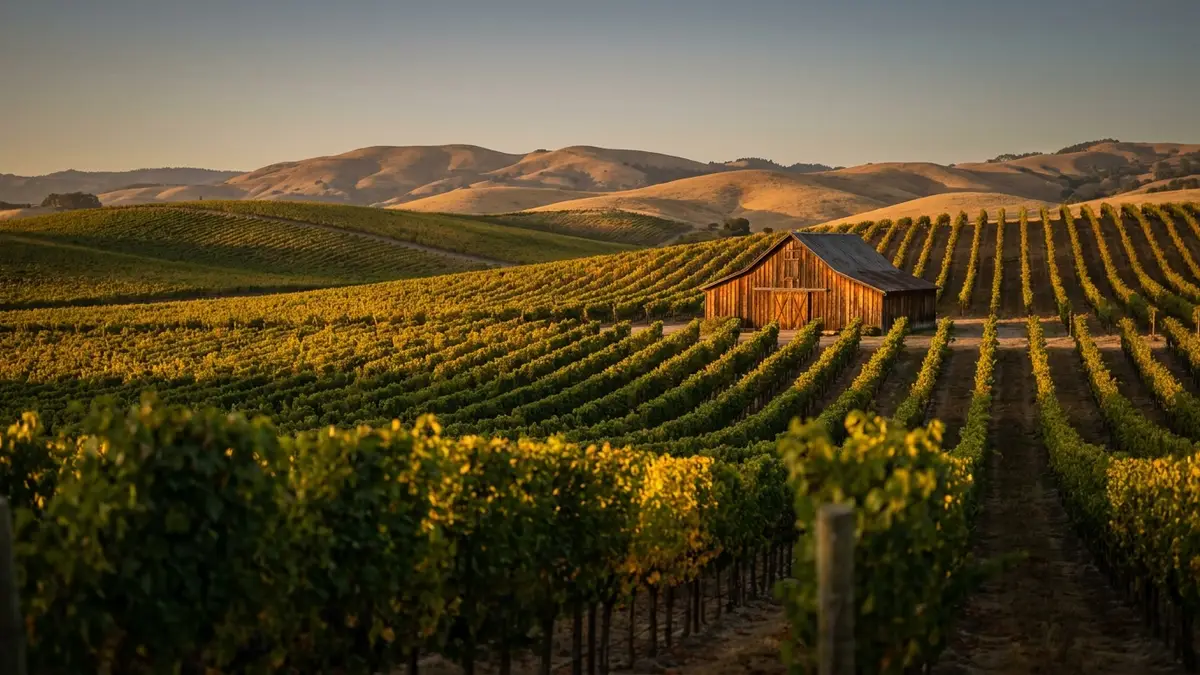
Santa Barbara sits within California's broader Central Coast, but its style is distinct from the better-known northern regions. Two comparisons help place it:
- Versus Napa — Napa is warmer and built on Cabernet Sauvignon and rich reds. Santa Barbara's coastal heart is far cooler and built on Pinot Noir and Chardonnay, with its Cabernet confined to the warm Happy Canyon pocket.
- Versus Sonoma — Sonoma also has fog-cooled coastal zones for Pinot Noir, making it Santa Barbara's closest cousin in style. The difference is the transverse valleys: Santa Barbara's east-west geography funnels fog more dramatically over a shorter distance. Our Sonoma wine guide covers that region's own patchwork of climates for a useful side-by-side.
These comparisons matter because the same grape behaves differently depending on where it grows — a core idea in wine. Our piece on why grapes that look the same can taste different carries that thread across regions, and the broader noble grapes overview shows where Pinot Noir, Chardonnay, Syrah, and Cabernet fit in the wider family every learner should know first.
How a Beginner Should Start with Santa Barbara
You do not need a rare single-vineyard bottle to understand this county. The smartest path is to taste across its climate gradient and pay attention to what changes. Here is a practical order:
- Begin with a cool-coast Pinot Noir. A Sta. Rita Hills or Santa Maria Valley Pinot is the clearest introduction to the region's signature style — bright, savory, and fresh rather than heavy. This is what the Sideways crowd came for.
- Add a Santa Ynez Valley Chardonnay. A fog-cooled Chardonnay from the county shows the white side of the cool-climate story, with citrus and orchard fruit kept lively by acidity.
- Taste a Ballard Canyon Syrah alongside. Open it next to the Pinot and the contrast is instant: dark, peppery, and full-bodied versus light and red-fruited. Same county, opposite ends of the fog gradient.
- Stay at the county or valley level first. A wine labeled simply Santa Barbara County or Santa Ynez Valley gives authentic character at a fair price. Move to single-vineyard Sta. Rita Hills bottles once your palate has a baseline.
- Build the tasting habit. Note the color, the high acidity, and the savory edge that sets cool-climate California wine apart from riper, fruit-driven styles. Our guide to how to taste wine gives you the step-by-step method to make those notes stick.
Sommy turns these comparisons into guided exercises — naming the aromas, scoring the structure, and building the vocabulary to describe what you sense. You can start practicing free at sommy.wine, then bring the method to your next bottle from the Central Coast.
The Reward of Learning Santa Barbara
Santa Barbara packs an unusual amount of variety into a single county, and that variety is its gift to a learner. Within a short drive you can taste a delicate, fog-grown Pinot Noir and a powerful, sun-grown Cabernet, both true to their place. The east-west valleys make the lesson concrete: climate shapes the grape, and the grape shapes the glass.
Start small, taste in pairs, and let the fog gradient reveal itself one bottle at a time. The Sommy app is built to make that habit stick — turning each bottle into a short, guided lesson so the next Central Coast wine you open is a little clearer than the last.
Sources
Frequently Asked Questions
What wine is Santa Barbara known for?
Santa Barbara is best known for cool-climate Pinot Noir and Chardonnay grown in fog-cooled valleys like the Sta. Rita Hills and Santa Maria Valley. Inland, where it warms up, the county also makes excellent Syrah in Ballard Canyon and Bordeaux varieties such as Cabernet Sauvignon in Happy Canyon. The mix of cool and warm zones is its signature.
Why does Santa Barbara grow such cool-climate wine in California?
The county has rare east-west transverse valleys that open directly to the Pacific. These valleys act like funnels, pulling cold ocean air and fog far inland. The deepest, fog-soaked spots stay cool enough for Pinot Noir and Chardonnay, while sites farther from the coast warm up for Syrah and Cabernet. Geography, not latitude, drives the climate here.
What is the Sta. Rita Hills known for?
The Sta. Rita Hills is Santa Barbara's most celebrated cool-climate appellation, prized for vivid, structured Pinot Noir and taut, mineral Chardonnay. It sits in a tight east-west corridor that channels heavy ocean fog and wind, giving wines bright acidity, red-fruit intensity, and a savory edge. It became its own AVA in 2001 and helped define the region's reputation.
How did the movie Sideways affect Santa Barbara wine?
The 2004 film Sideways was set in Santa Barbara's wine country and championed Pinot Noir while mocking Merlot. It drove a surge of visitors and a documented spike in Pinot Noir sales, while Merlot demand briefly dipped. The lasting effect was putting the county on the map as a serious cool-climate Pinot destination, not just a weekend escape.
What is the difference between Ballard Canyon and Happy Canyon?
Both are warmer inland appellations within the larger Santa Ynez Valley, but they specialize differently. Ballard Canyon is Syrah country, making dark, peppery, structured reds from this Rhône grape. Happy Canyon, the warmest corner farthest from the coast, focuses on Bordeaux varieties like Cabernet Sauvignon and Sauvignon Blanc. Both contrast sharply with the cool coastal zones.
Is Santa Barbara wine expensive?
Prices range widely. Single-vineyard Pinot Noir from the Sta. Rita Hills can be pricey because yields are low and demand is high, but the broader Santa Ynez Valley offers approachable, fairly priced bottles across Syrah, Chardonnay, and blends. Starting with a county-level or Santa Ynez Valley wine gives authentic character without the top-tier price.
Where should a beginner start with Santa Barbara wine?
Start with a cool-climate Sta. Rita Hills or Santa Maria Valley Pinot Noir to meet the region's signature style, then taste a Ballard Canyon Syrah alongside it to feel the warm-versus-cool contrast. A Santa Ynez Valley Chardonnay rounds out the picture. Tasting these side by side makes the county's geography click quickly.
Sommy Team
LinkedInFounder & Wine Educator
The Sommy Team is building the world's most approachable wine education app, helping beginners develop real tasting skills through structured courses and AI-guided practice.