Counterfeit Wine: How to Spot a Fake Bottle Before You Buy

By the Sommy Team — AI-assisted, human-edited.
Updated Sep 24, 2026
Contents (11)
- Counterfeit Wine, in One Paragraph
- What Counts as Counterfeit Wine?
- Who Is Actually at Risk From Fake Wine?
- What Are the Warning Signs on a Counterfeit Wine Bottle?
- How Common Is Counterfeit Wine?
- How Did the Biggest Wine Fraud Work?
- Can Fake Wine Hurt You?
- Do Appellation Laws Protect You From Fakes?
- How Is Wine Fraud Caught Today?
- What Should You Do If You Suspect a Fake?
- How Do You Buy Wine Without Worrying About Fakes?
TL;DR
Counterfeit wine is real but concentrated in rare, old bottles resold through auctions and private sales, where one fraudster sold fakes worth millions. Everyday bottles from licensed shops carry little forgery risk. Check the seller first, then the capsule, label, cork and fill level, and treat an appellation seal as proof of origin rules, not of this bottle.
Counterfeit wine is a real crime, but it clusters in rare, old bottles sold second hand, far from the shelf where most people shop. For an everyday bottle, the seller tells you more than anything printed on the glass. The famous cases involve legendary estates with prices to match, resold through auctions and private cellars. The dangerous cases are rarer and involve wine that was chemically altered.
Counterfeit Wine, in One Paragraph
Counterfeit wine is wine sold as something it is not: a cheap wine relabeled as a famous one, a weak vintage wearing a great year's label, or a genuine bottle refilled. Most proven cases target rare bottles on the secondary market (resale through auctions, brokers and private sellers). The best-known fraudster, Rudy Kurniawan, sold relabeled Burgundy through two auctions that raised $10.6 million and $24.7 million. A widely quoted Wine Spectator estimate puts fakes at up to 5% of secondary-market wine. Shop bottles carry little risk. Buy from sellers you can trace, inspect the capsule, label, cork and fill level, and ask for storage history on anything rare.
What Counts as Counterfeit Wine?
Counterfeit wine is wine sold as something it is not, and the trade splits the problem into three kinds: counterfeit, adulterated and mislabeled. Each one threatens something different. A fake label costs money, a mislabeled grape breaks a legal promise, and an adulterated wine can put the drinker in danger.
- Counterfeit: a false label or false provenance (the documented history of who owned a bottle and where it was stored). A cheaper wine goes into a famous bottle, or a lesser vintage gets a better year's label.
- Adulterated: the wine itself was chemically altered, usually to fake sweetness or alcohol. This is the only kind that has killed people.
- Mislabeled: the grapes or origin break the rules the label promises. In the 2008 "Brunellopoli" scandal, some Brunello di Montalcino producers were accused of blending other grapes into a wine required by law to be 100% Sangiovese.
Mislabeling is the kind an ordinary buyer is most likely to meet, and the hardest to taste.
Who Is Actually at Risk From Fake Wine?
Collectors buying old, famous bottles at auction or in private sales carry almost all of the forgery risk. Faking a label, a capsule and a cork takes work, so fraudsters pick wines where one sale pays for the effort. A $15 bottle is rarely worth forging. A bottle from a legendary estate and year is.
Price and sales channel set the risk together. A supermarket bottle reaches the shelf through a traceable chain from the winery, via an importer and a distributor. A rare bottle from a stranger's cellar has only the seller's word behind it. The table below matches each kind of purchase to the one thing worth checking.
| What you buy | Where you buy it | Main risk | What to check |
|---|---|---|---|
| Everyday bottle, about $15 to $60 | Licensed shop, supermarket, restaurant | Low: a mislabeled or badly stored bottle | Fill level, capsule, a receipt |
| Famous wine far below shop price | Online marketplace, unknown seller | Moderate: a fake or refilled bottle | Who the seller is, their return policy, the capsule |
| Rare or old bottle, $500 and up | Auction house or broker | Higher: a relabeled bottle in the lot | Storage history, condition report, written guarantee |
| Rare or old bottle, $500 and up | Private sale, stranger's cellar | Highest: no paper trail at all | Provenance papers and an independent inspection, or walk away |
If a bottle costs several hundred dollars and comes from an auction or private seller, ask for its storage history and the seller's return policy before you pay. If it costs $15 and sits on a licensed shop's shelf, forgery is the least likely problem. Check the fill level and capsule for signs of heat damage instead.
What Are the Warning Signs on a Counterfeit Wine Bottle?
The strongest warning sign is a mismatch between the bottle, the price and the seller. One odd detail rarely proves a fake, but several together should stop the sale. Work from the outside of the bottle in: label, capsule, cork and fill level first, then the seals, codes and paperwork that come with it.
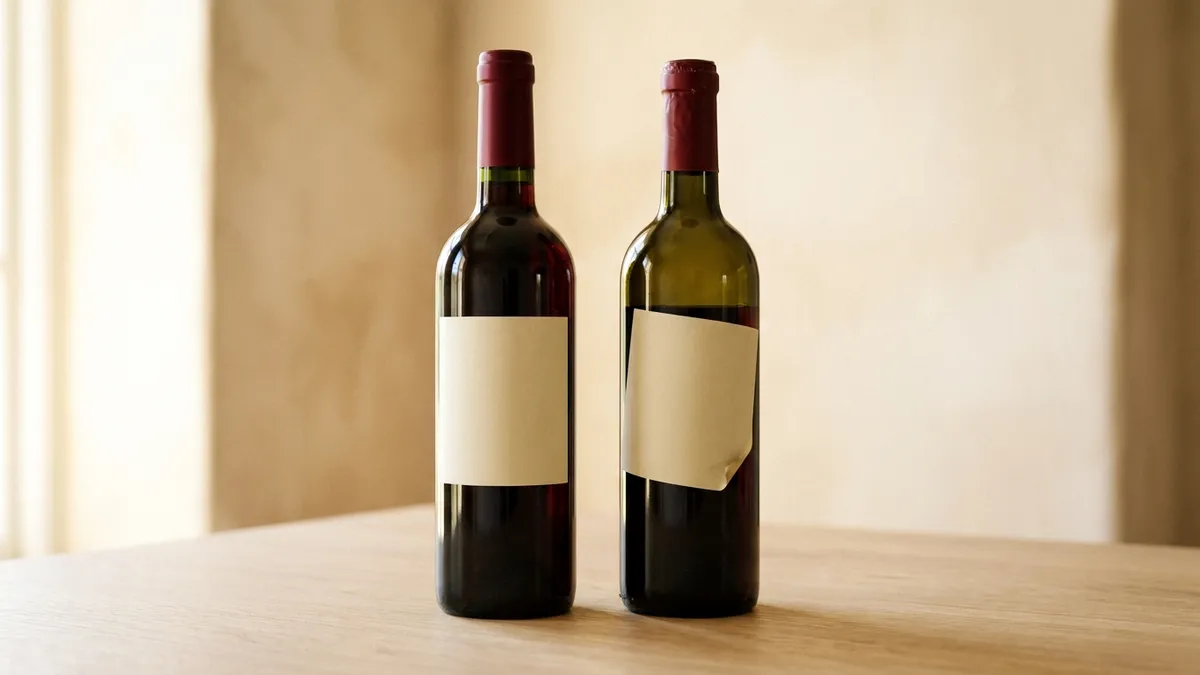
- Label: blurry print, spelling errors, or paper that looks newer or older than the vintage (the harvest year) it shows. Compare it with the producer's own photos of that year's label, using the basics in how to read a wine label.
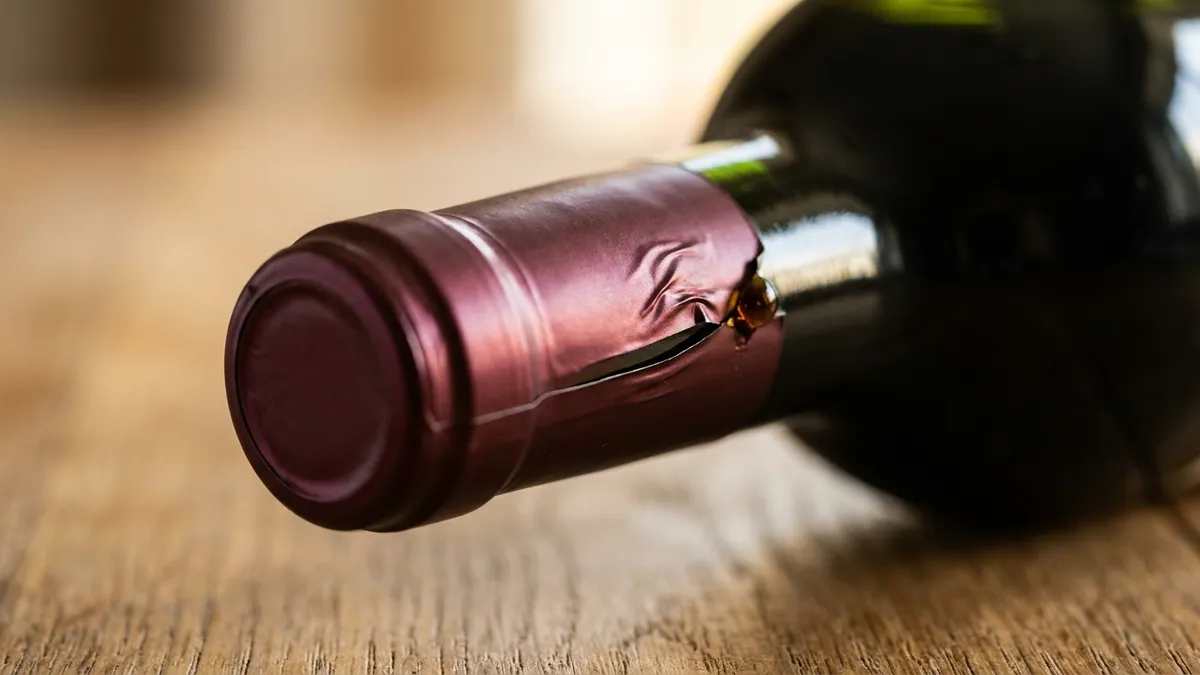
- Capsule: the foil or wax capsule over the cork should sit tight and even. Glue marks, cuts or a capsule that spins freely suggest someone opened the bottle.
- Cork: if the estate brands its corks, the name and year on the cork should match the label.
- Fill level: wine sitting low in the shoulder of a young bottle points to leakage or a refill. Old bottles lose some wine through the cork over decades, so judge the level against age.
- Seals and codes: Spain and Portugal guarantee authenticity with a seal on the label or a paper band over the cork. Some producers now add a QR code with vintage-specific information.
- Price and seller: a famous wine priced far below licensed shops, sold by someone you cannot trace.
A perfect-looking bottle is triage, not proof. Kurniawan's fakes passed through major auctions and experienced collectors' cellars for years. If the price is far below what licensed shops charge for the same wine and vintage, and you cannot verify the seller, walk away. A cheap price alone proves nothing, since closeouts and weaker vintages sell at a discount; see wine price vs quality.
How Common Is Counterfeit Wine?
Nobody has measured it, and the most quoted figure covers only resale wine. Wine Spectator has estimated that as much as 5% of wine sold on the secondary market could be counterfeit. That number reaches most readers secondhand, and we could find no published method behind it. It is an informed guess about resale wine that says nothing about supermarket bottles.
The documented record is a string of dated cases:
- 1980s and 1990s: a German collector, Hardy Rodenstock, presented 125 vintages of one famous Sauternes estate, including a supposed 1784 bottle. The authenticity of his rare wines was later disputed.
- The "Jefferson bottles": four bottles said to have belonged to Thomas Jefferson were shown to be fake. Their engravings were made with a high-speed electric drill, a tool that did not exist in the 18th century.
- 2000: Italian authorities uncovered nearly 20,000 fake bottles of one famous 1995 Super Tuscan.
- 2002: bottles of a top Bordeaux estate's 1991 vintage were relabeled as its acclaimed 1982 and sold in China.
The 2002 case shows the cheapest form of the trick. The glass, the estate and the grapes were all real, and only the vintage on the label was false.
How Did the Biggest Wine Fraud Work?
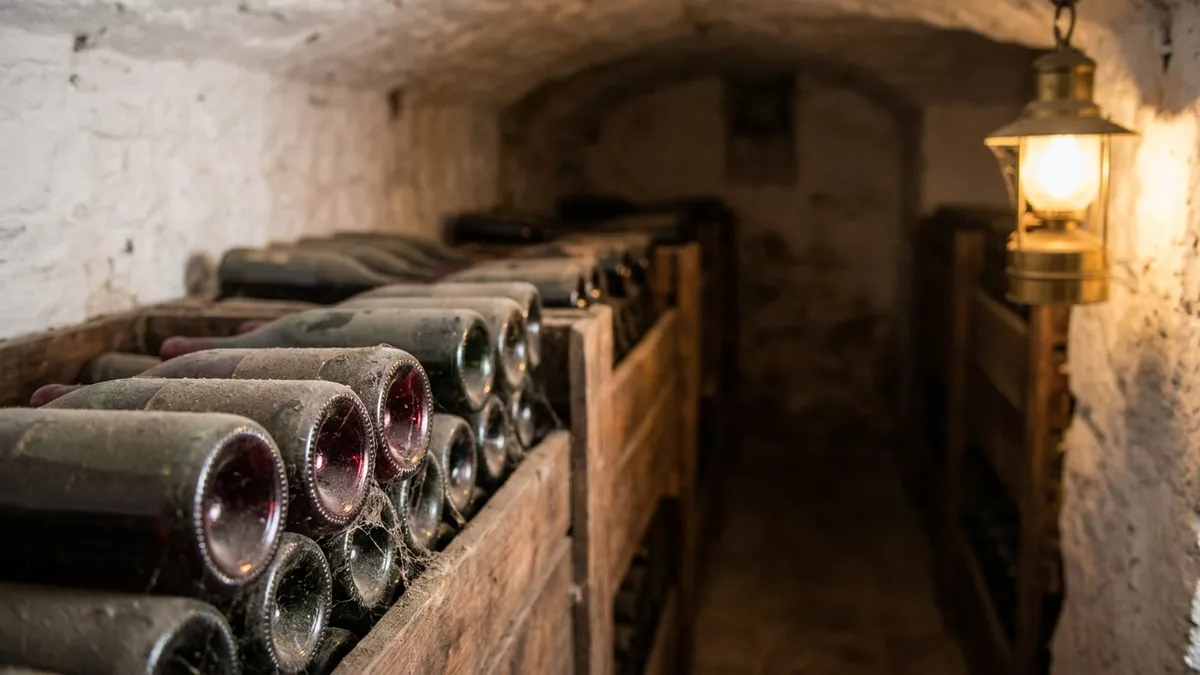
Rudy Kurniawan bought inexpensive Burgundy and relabeled it with the names and vintages of far more prestigious estates, then sold it through auctions and private deals. The grape and the region were right, so the glass held real Burgundy, only a far cheaper one. The estate name, the vintage and the price were false.
Two auctions of his wines brought in $10.6 million and $24.7 million. The FBI arrested him on March 8, 2012, and he was indicted the next day. On August 7, 2014, he was sentenced to 10 years in federal prison. He was released on November 7, 2020, and deported on April 8, 2021.
The fakes outlived the case. The 2016 documentary Sour Grapes estimated that as many as 10,000 of his counterfeit bottles may still sit in private cellars, able to resurface at any sale. If you ever buy old Burgundy second hand, ask where the bottle has been since 2012 and who owned it before.
Can Fake Wine Hurt You?
A relabeled bottle usually holds a cheaper but ordinary wine, but adulterated wine has killed people. The two worst wine cases both involved chemicals added to fake a quality the wine lacked, such as sweetness or strength. Both came out of established European wine countries.
In 1985, diethylene glycol, a compound used in antifreeze, was illegally added to Austrian white wines to make them taste sweeter. In 1986, methanol blended into low-alcohol Italian wine killed 23 people and left 15 blind.
Methanol is the poison behind most deadly counterfeit alcohol. As little as 4 to 15 mL has been reported to cause permanent damage to the optic nerve. Poisoning comes in two phases. First come confusion, poor coordination, vomiting and stomach pain. Then, 10 to 30 hours after drinking, vision loss and acidosis (a dangerous build-up of acid in the blood) can follow.
The pattern keeps repeating outside wine. In 2016, a counterfeit bath lotion that people drank as cheap vodka killed 78 people in Irkutsk, Russia. In 2025, tainted alcoholic drinks in Jordan poisoned 57 people and killed 9. If a bottle has no label, no seal and no seller you can trace, do not drink it. Treat blurred vision after suspect alcohol as an emergency, even if the drinker felt fine at first.
Do Appellation Laws Protect You From Fakes?
They protect the name and they are enforced, but a seal proves the wine met origin rules when it was approved, not that the bottle in your hand is untouched. An appellation is a protected place name with rules about grapes and methods; what an appellation is compares the main systems.
France passed its first law defining wine origin names on August 1, 1905. On July 30, 1935, it created the committee that became today's INAO, the body that runs the AOC system. Making or selling a product under a protected name without meeting its rules is illegal.
The gap sits after bottling. Checks on finished wine are less strict, with little verification that a bottled wine still matches the sample that earned approval. So the appellation words on a label describe where the wine came from. The capsule, the cork and the seller are what show the bottle is still as it left the estate.
How Is Wine Fraud Caught Today?
Fraud is now caught with engraved glass, traceable codes and lab tests that read where a wine came from. Some producers engrave a serial number directly into the bottle, which a forger cannot copy with a printer. The QR codes mentioned above let a buyer check a bottle against the producer's own records.
In the lab, stable isotope analysis (measuring the natural chemical signature that local water and climate leave in a crop) can trace a food to its region of origin. France also set up one of the earliest enforcement bodies against wine fraud, the Service de la Répression des Fraudes, now part of the DGCCRF.
What Should You Do If You Suspect a Fake?
Stop, keep the bottle closed if possible, and document everything before contacting the seller. An unopened bottle is evidence, and an empty one is only a story. Photos, codes and a receipt are things a seller, auction house or producer can check against their own records.
- Photograph the front and back labels, the capsule, the fill level and any codes or serial numbers.
- Keep the receipt, the listing and every message with the seller.
- Contact the seller or auction house and ask for their authenticity guarantee in writing.
- If they refuse, contact the producer or its importer, who can often confirm whether a label, code or serial number is real.
If the wine is already open and tastes wrong but the bottle looks right, rule out a fault first. A smell of wet cardboard points to cork taint, and a stewed, jammy smell points to heat damage. Both happen to genuine bottles.
How Do You Buy Wine Without Worrying About Fakes?
Buy from a licensed shop, restaurant or the winery, and save the scrutiny for rare bottles sold second hand. A licensed seller answers for where its stock came from and can trace it back through the importer. If a bottle is bought privately, the buyer carries that risk alone.
For anything rare, three questions settle most doubts: where has the bottle been stored, can the seller prove it, and will they take it back if it turns out to be fake. Anyone buying old bottles for a cellar should read how to build a wine collection before bidding, and anyone buying to resell should start with the wine investment guide. The beginner's buying hub collects the everyday shopping basics.
Log a rare bottle's label in the Sommy app before it goes back in the rack, so its photo and notes wait for the day it is opened. Take the most expensive bottle in your rack tonight and give it the ten-second check: turn the capsule, read the label print under a lamp, and note where the wine sits in the neck.
Sources
Frequently Asked Questions
How common is counterfeit wine?
Nobody has measured it. The most quoted figure is a Wine Spectator estimate that as much as 5% of wine sold on the secondary market, meaning auctions, brokers and private resale, could be counterfeit. That estimate covers resale wine only, and we could find no published method behind it. Documented cases cluster in rare, old and expensive bottles, so an everyday bottle from a licensed shop carries little forgery risk.
How can you tell if a bottle of wine is fake?
Look for a mismatch between the bottle, the price and the seller. Check for blurry label print or spelling errors, a capsule that spins loose or shows glue, a cork that does not match the label, and a fill level too low for the wine's age. Compare the label with the producer's own photos. No single check proves a bottle genuine, so the seller's track record matters most.
Is counterfeit wine dangerous to drink?
A relabeled bottle usually holds a cheaper but ordinary wine. Adulterated wine is different: in 1985 diethylene glycol was added to Austrian white wines to fake sweetness, and in 1986 methanol in Italian wine killed 23 people. Methanol causes most deaths from counterfeit alcohol. Never drink alcohol with no label, no seal and no traceable seller, and treat blurred vision after suspect alcohol as an emergency.
What is the most famous wine fraud case?
The case of Rudy Kurniawan, who bought inexpensive Burgundy and relabeled it with the names and vintages of far more prestigious estates. Two auctions of his wines raised $10.6 million and $24.7 million. The FBI arrested him in March 2012, and in 2014 he was sentenced to 10 years in federal prison. An estimated 10,000 of his fake bottles may still be in circulation.
Can you buy counterfeit wine at a regular store?
It is unlikely. A bottle in a licensed shop or supermarket reaches the shelf through a traceable chain from the winery, and forgers target bottles where one sale pays for the work of faking a label, capsule and cork. The realistic risk in a normal shop is a mislabeled or badly stored wine. The forgery risk rises when a famous wine is sold far below shop prices by an unknown seller.
What should you do if you think you bought a fake bottle?
Keep the bottle closed if you can and document everything. Photograph the front and back labels, the capsule, the fill level and any codes, and keep the receipt and the listing. Contact the seller or auction house first and ask for their authenticity guarantee in writing. If they refuse, the producer or its importer can often confirm whether a label, code or serial number is genuine.
Sommy Team
LinkedInFounder & Wine Educator
The Sommy Team is building the world's most approachable wine education app, helping beginners develop real tasting skills through structured courses and AI-guided practice.