Constantia Wine Guide: South Africa's Oldest Wine Region

By the Sommy Team — AI-assisted, human-edited.
Updated Sep 24, 2026
Contents (9)
- Constantia Wine Guide in 100 Words
- What Does Constantia Wine Taste Like Today?
- Which Constantia Wine Should You Buy?
- Is Constantia Sweet Wine Made With Noble Rot?
- Why Is Constantia So Cool for South Africa?
- Is Constantia Part of Stellenbosch?
- How Did Constantia Become Europe's Favourite Sweet Wine?
- Why Did Constantia Wine Disappear, and When Did It Come Back?
- How Do You Start Tasting Constantia Tonight?
TL;DR
Constantia is a small, cool wine ward in Cape Town's southern suburbs, founded as a wine estate in 1685. Its sweet Muscat wine, made from grapes raisined on the vine, was drunk by Napoleon. Today about 45% of its 415 hectares is Sauvignon Blanc, with Bordeaux-style reds on the warmer slopes.
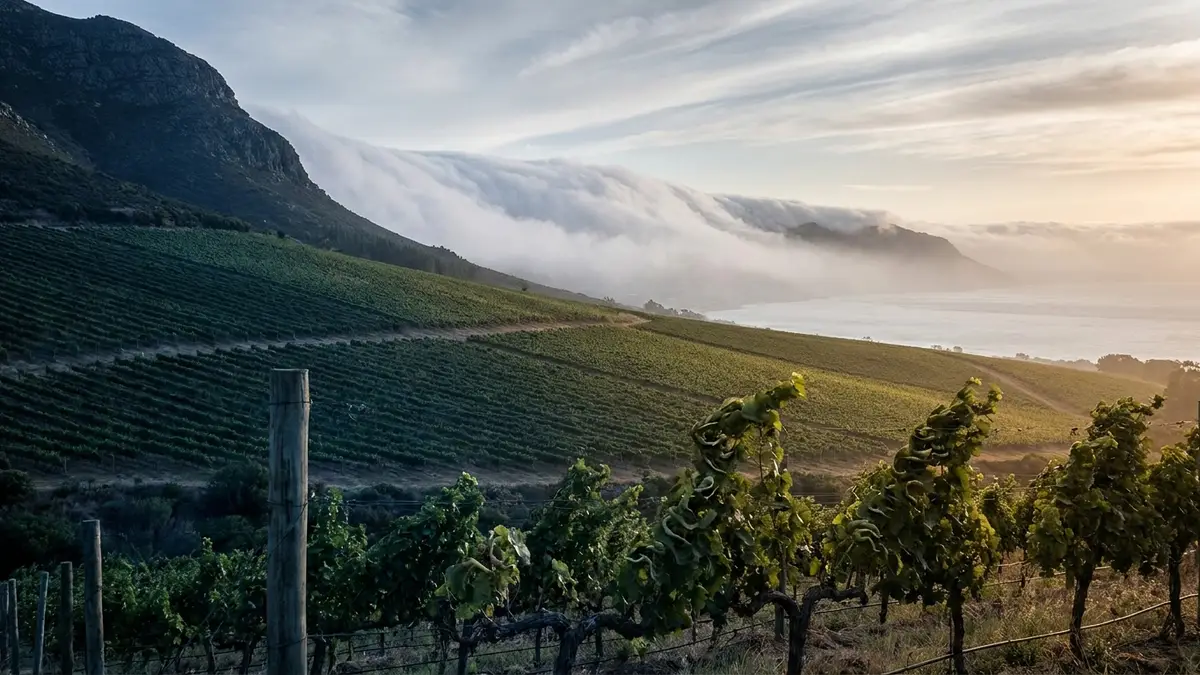
Any Constantia wine guide starts with a surprise: South Africa's oldest wine estate sits inside a city. Constantia is a small valley in Cape Town's southern suburbs that made one of Europe's most famous sweet wines in the 1700s. Today almost half its vines are Sauvignon Blanc, grown for dry, tart whites that owe their freshness to mountain shade and sea wind.
Constantia Wine Guide in 100 Words
Constantia is a ward (the smallest geographical unit in South Africa's Wine of Origin system) on the Cape Peninsula, founded as a wine estate by Simon van der Stel, the Cape's Dutch commander and later governor, in 1685. Its sweet wine, made from Muscat de Frontignan grapes raisined on the vine, was drunk by Napoleon on St Helena and by Frederick the Great. Trade tariffs and phylloxera ended it, and no sweet wine was made in the 1940s and 1950s. Today the ward has about 415 hectares of vines and nine or ten producers. Sauvignon Blanc covers 186 hectares, and Bordeaux-style reds grow on the warmer northern slopes.
What Does Constantia Wine Taste Like Today?
Mostly dry, tart white wine: Sauvignon Blanc covers 186.29 of the ward's 414.65 hectares, close to half the vineyard, according to Wines of South Africa. Around nine or ten producers farm the valley. The sweet wine that made the name famous is a small, specialised part of the output.
Constantia Sauvignon Blanc is built on acidity (the tartness that makes your mouth water). You feel it along the sides of the tongue, and it keeps the wine light-bodied even when the fruit is ripe. Expect lime and green apple, because cool afternoons hold on to the grape's natural acids. A green-pepper or cut-grass smell is common too, because grapes shaded from hard sun keep more of those leafy aromas. For how the grape changes from place to place, the Sauvignon Blanc wine guide compares the main styles.
The reds grow where the sun lasts longer. On the northern side of the valley, vineyards get far more afternoon warmth than the shaded south, and that is where Shiraz, Merlot, Petit Verdot, Malbec, Cabernet Sauvignon and Cabernet Franc ripen. Many are blended as a Bordeaux-style blend (a red mixing Cabernet, Merlot and their relatives, as in Bordeaux). These reds are medium- to full-bodied with firm tannin, and they taste of fresh blackcurrant and plum rather than jam. The Bordeaux blend grapes explainer shows what each grape adds.
Which Constantia Wine Should You Buy?
Buy by colour and sweetness: a Constantia Sauvignon Blanc for a crisp dry white, a Bordeaux-style red for a firm dinner wine, and the sweet Muscat only when you want dessert in a glass. If the label says Constantia and shows no sweetness word, expect a dry wine. If it names Muscat de Frontignan, it is the sweet one.
| Style | Main grapes | What you taste | Pour it with | Serve at |
|---|---|---|---|---|
| Dry white | Sauvignon Blanc | Lime, green apple, cut grass; light body, high acidity | Goat cheese, oysters, green salads, grilled white fish | 8–10°C, fridge-cold then 10 minutes out |
| Red blend | Cabernet Sauvignon, Merlot, Cabernet Franc, Petit Verdot, Malbec | Fresh blackcurrant and plum; firm tannin, medium to full body | Grilled lamb, beef, mushroom dishes | 16–18°C, cool room |
| Shiraz | Shiraz | Black pepper and blackberry; medium body | Sausages off the grill, peppered steak | 16–18°C |
| Sweet Muscat | Muscat de Frontignan | Dried apricot, orange peel, honey; sweet with bright acidity | Blue cheese, fruit tarts, or on its own | 10–12°C, small pour |
With the dry Sauvignon Blanc, match acid with acid. A squeeze of lemon on fish or the tang of fresh goat cheese makes the wine taste rounder, because the food's sourness cancels some of the wine's. With the sweet Muscat, the wine must be sweeter than the dessert, or it tastes thin. The dessert wine guide covers that rule across every sweet style.
Is Constantia Sweet Wine Made With Noble Rot?
No. The historic and modern sweet wines come from Muscat de Frontignan grapes left on the vine until they shrivel into raisins, which concentrates sugar without any fungus. The modern revival skips botrytis on purpose, for historical accuracy, as Jamie Goode of Wine Anorak explains.
This is the most common mix-up about Constantia. Noble rot (Botrytis cinerea, a mould that pierces grape skins and dries the berries) is behind Sauternes and Tokaji, and it adds smells of saffron, honey and mushroom. Raisining is simpler: the grapes hang in the sun and wind past normal harvest, lose water and gain sugar. The result smells of the grape itself, dried apricot and orange peel, because nothing but time and air has changed the fruit. To compare the two routes side by side, see the Sauternes wine guide.
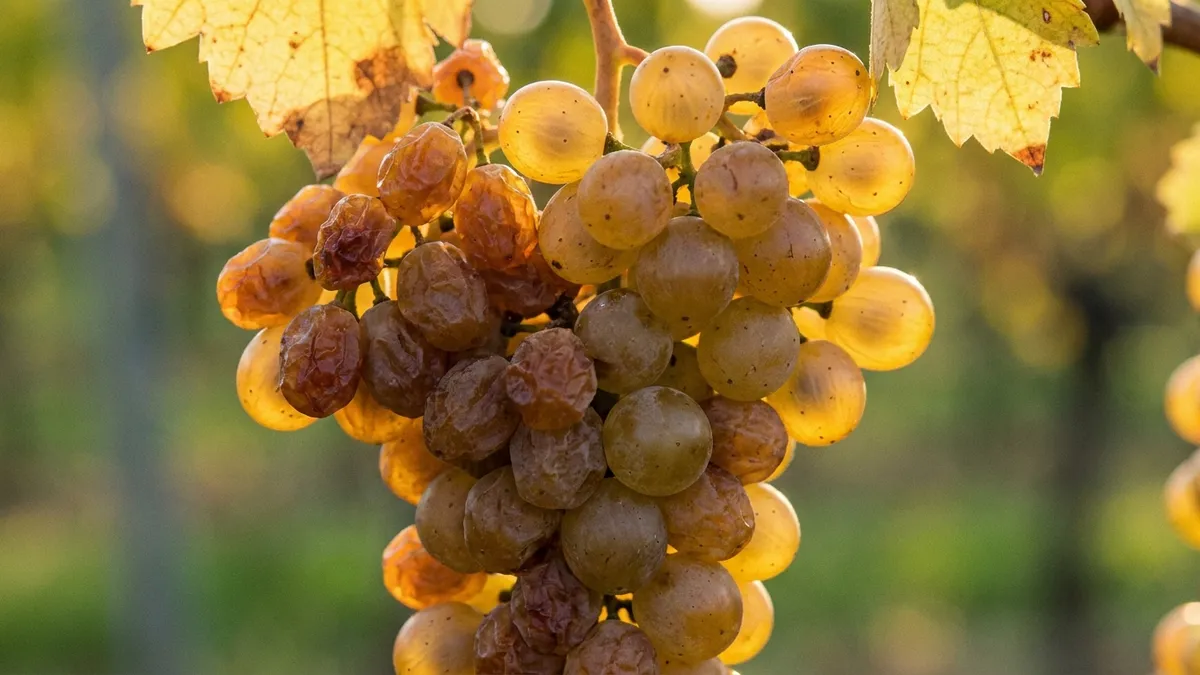
Muscat was always the core grape. Hendrik Cloete's famous blend of the late 1700s was mostly Muscat de Frontignan, with some Pontac, red and white Muscadelle and a little Chenin Blanc. At the height of its fame the wine may have come in two versions, a winemaker quoted by Wines of South Africa suggests. A fortified one (spirit added; one 1791 bottle tested at 22.3% alcohol) went to overseas buyers, and an unfortified one stayed with local drinkers. The modern revivals are unfortified, natural sweet wines. The Muscat wine guide follows the grape through its other sweet styles.
Why Is Constantia So Cool for South Africa?
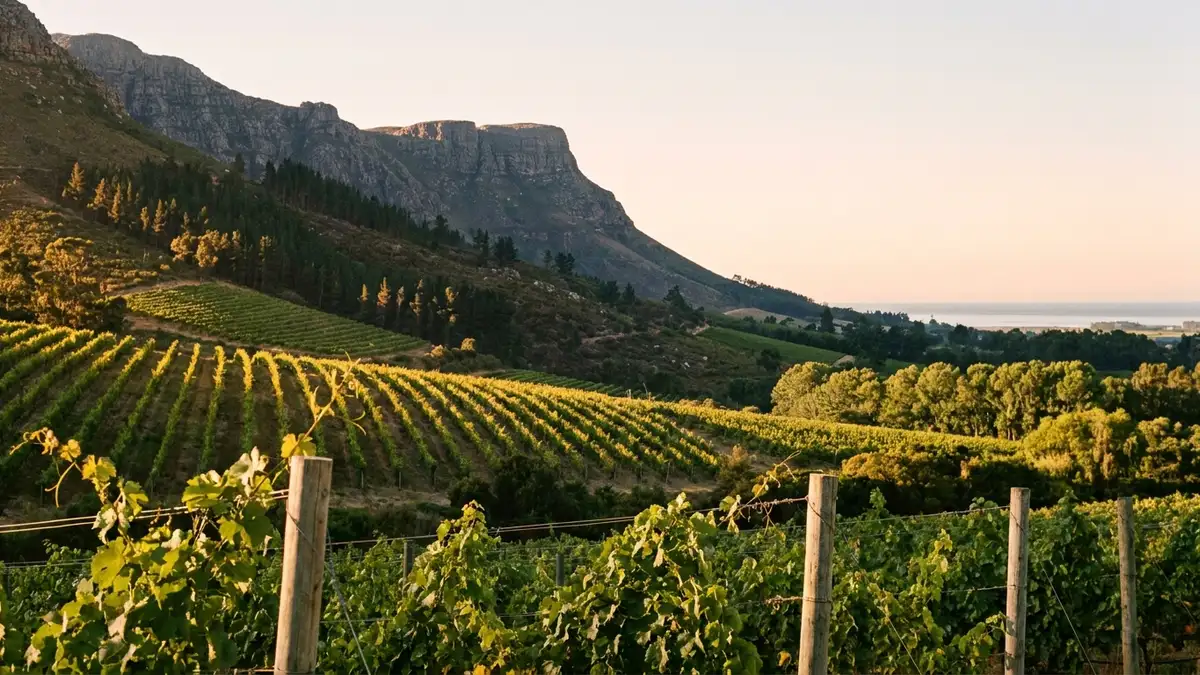
Mountain shade and sea air. On the southern slopes the sun disappears behind the Constantiaberg early in the afternoon, and in summer the south-easter wind blows in off False Bay. Both cut the heat in the hours when inland vineyards bake, which makes Constantia one of the Cape's coolest wine areas.
A cool climate makes tarter, lighter wine than a warm one, and Constantia shows it plainly. Grapes that lose the afternoon sun ripen slowly, keeping acidity high and alcohol moderate. The south-easter does a second job that Wines of South Africa points to: steady summer wind dries the leaves and helps keep the vines free of disease. The climate and wine flavour explainer shows the same effect in other regions.
Height adds more cooling. At one estate the Sauvignon Blanc vineyards run from 122 to 304 metres above sea level, split into 40 blocks facing different ways. Growers pick the cooler, higher blocks for the sharpest whites and the lower, sun-facing ones for riper fruit. The valley's layout follows the same logic: whites on the shaded south, reds on the sunnier north.
Is Constantia Part of Stellenbosch?
No. Constantia is its own ward inside the Cape Town district of South Africa's Coastal Region, on the Cape Peninsula. Stellenbosch is a separate, larger district further inland. A label reading "Wine of Origin Constantia" means the grapes grew in this one valley.
Wine of Origin is South Africa's system of protected place names. It works like a set of nested boxes: the Western Cape holds regions, regions hold districts, and districts hold wards. A ward is the smallest box and the most specific promise on a label. Constantia shares its district with other wards such as Durbanville, while Stellenbosch has its own. The Stellenbosch wine guide covers that district, and the label rules for all of it are in what is an appellation.
The difference shows in the glass. Stellenbosch's warmer inland slopes are best known for ripe Cabernet Sauvignon and Pinotage, while Constantia's sea-cooled valley leans towards white wine.
How Did Constantia Become Europe's Favourite Sweet Wine?
Through one governor's farm and one family's sweet wine. Simon van der Stel founded the Constantia estate in 1685 in a valley facing False Bay, and after 1778 Hendrik Cloete turned its Muscat wine into a luxury that European royalty paid for.
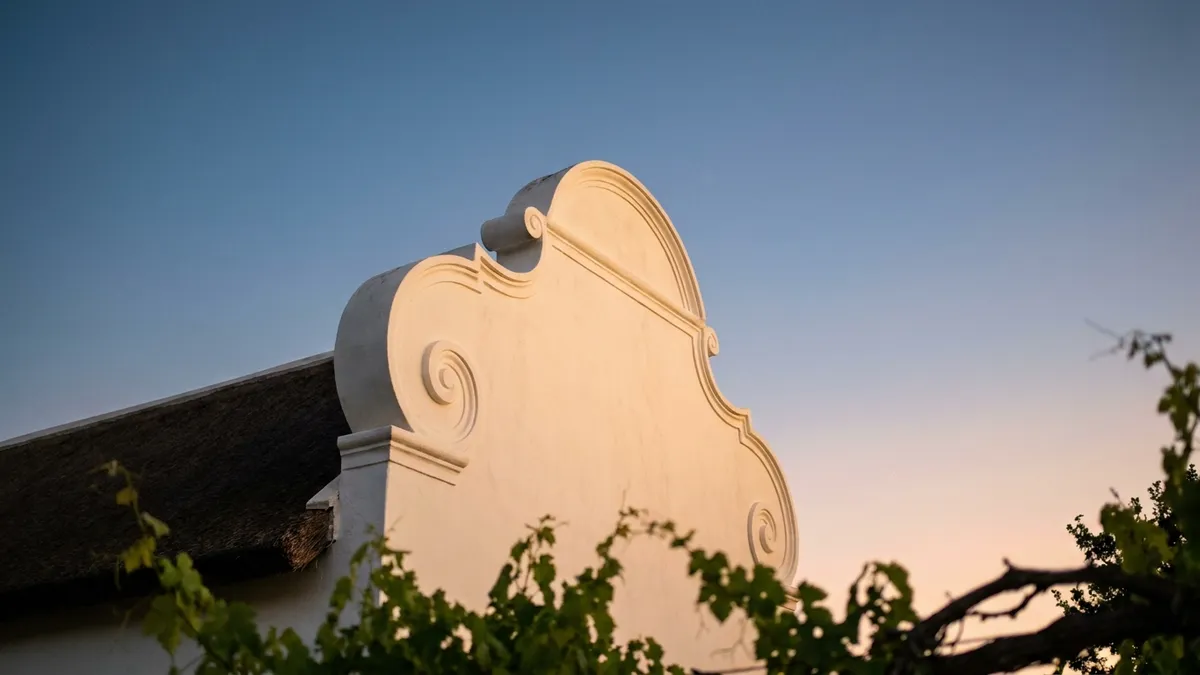
After van der Stel died in 1712, the original farm was split into three estates: Groot Constantia, Klein Constantia and Bergvliet. Two of those names still appear on labels today, so a bottle marked Groot or Klein Constantia comes from one piece of the first 1685 farm. Both are estates inside the ward, which on a label is simply Constantia.
Cloete bought the Groot Constantia homestead in 1778 and built the sweet wine's reputation. Over the next decades it was drunk by Frederick the Great of Prussia, King Louis Philippe of France and Otto von Bismarck. Napoleon had it shipped to him by the barrel during his exile on St Helena, which lay on the sea route from the Cape. Jane Austen gave it a scene in Sense and Sensibility (1811): Mrs Jennings brings a glass of "the finest old Constantia wine" for the jilted Marianne. For the wider story of how the Cape's wine began, see the South African wine guide.
Why Did Constantia Wine Disappear, and When Did It Come Back?
Trade policy and a vine pest killed it. Britain dropped its tariff preference for empire wines in 1861, and exports nearly dried up. Phylloxera reached Constantia in 1898, and no sweet wine was made at all in the 1940s and 1950s.
Phylloxera is a tiny aphid-like insect that feeds on vine roots and kills the plant. It reached the Cape at Mowbray in early 1886, but, as the wine writer Tim James records, it was only found in Constantia on 26 November 1898. That was twelve years later, and less than 10 kilometres away. Across the Cape during the 1890s, about a quarter of all vines were destroyed.
| Year | What happened | What it means for the glass today |
|---|---|---|
| 1685 | Simon van der Stel founds the Constantia estate | The start of the Cape's oldest wine estate |
| 1712 | The farm splits into Groot Constantia, Klein Constantia and Bergvliet | Two estate names you still see on labels |
| 1778 | Hendrik Cloete buys Groot Constantia and builds the sweet wine's fame | The Muscat de Frontignan style the revivals copy |
| 1861 | Britain removes the empire tariff preference | Exports collapse; the sweet wine starts to fade |
| 1886 / 1898 | Phylloxera reaches the Cape, then Constantia 12 years later | Old vineyards replanted on new rootstocks |
| 1940s–1950s | No sweet Constantia wine is made | A gap of two decades in the style |
| 1982 / 1986 | Muscat de Frontignan replanted; first modern vintage made | The sweet wine returns |
| 2003 and mid-2000s | Groot Constantia and a third estate revive their own sweet wines | More than one sweet Constantia to choose from |
The return came from old records. In 1982 growers studied early documents and replanted Muscat de Frontignan, and the first modern vintage was made in 1986. Groot Constantia revived its own sweet wine in 2003, and a third estate followed in the mid-2000s. The valley meanwhile had become a Sauvignon Blanc specialist, which is why most bottles now carry a dry white rather than the wine Napoleon drank.
How Do You Start Tasting Constantia Tonight?
Start with a Constantia Sauvignon Blanc, because it is the wine the ward grows most and the easiest to find. Chill it in the fridge, then take it out 10 minutes before pouring. If it is too cold, the lime and cut-grass smells stay muted and only the acidity comes through.
Then taste it next to a Sauvignon Blanc from a warmer place. The cooler wine should feel sharper along the sides of your tongue and smell greener, while the warmer one leans towards ripe melon and lower acidity. The wine serving temperature chart gives the right range for each style in the table above, and the wine regions hub maps the regions to explore next.
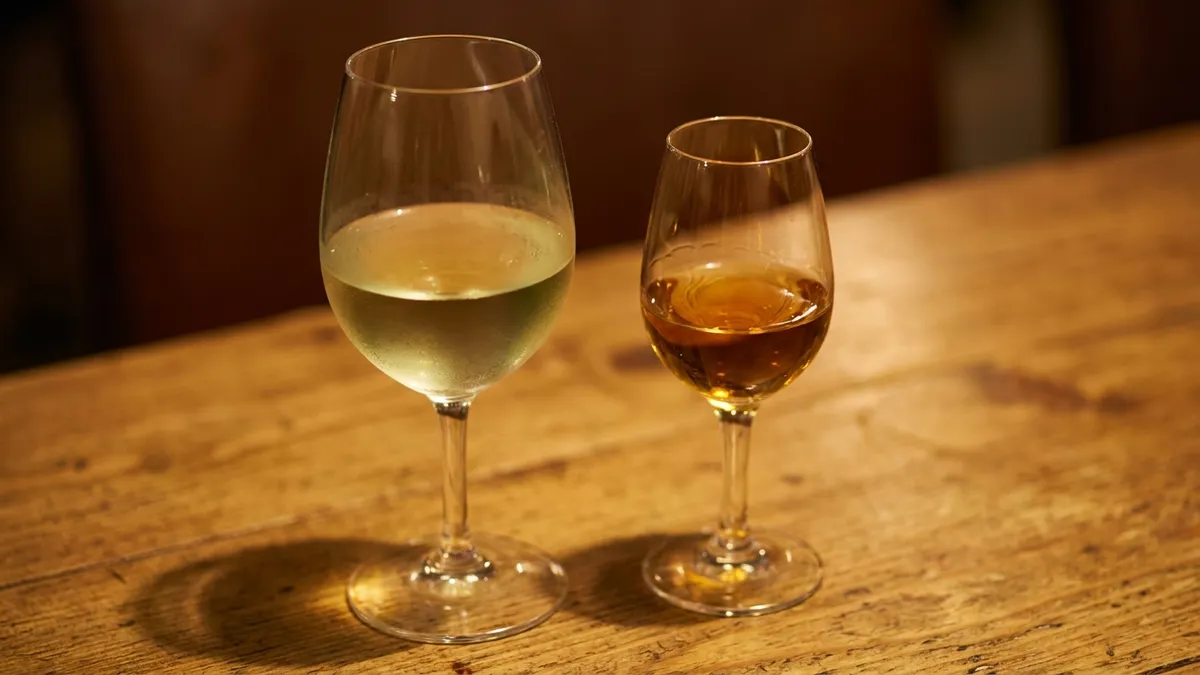
If the valley catches your interest, the Sommy app has bite-sized courses, including Wine 101, that teach you to name acidity and body in any glass. Pour the two Sauvignon Blancs side by side tonight and note which one makes your mouth water first.
Sources
- Wines of South Africa: Cool climate Constantia (hectares, producers, altitude, climate)
- Wines of South Africa: The iconic sweet wines of Constantia
- Wikipedia: Constantia (wine)
- Winemag (Tim James): 120 years since the pest phylloxera came to Constantia
- Wine Anorak (Jamie Goode): Vin de Constance, no botrytis, only raisining
Frequently Asked Questions
Is Constantia wine sweet or dry?
Most Constantia wine today is dry. Sauvignon Blanc covers 186 of the ward's roughly 415 hectares, and Bordeaux-style reds fill much of the rest. The famous sweet wine still exists, made from Muscat de Frontignan grapes shrivelled on the vine, but only a handful of estates make it. A label with no sweetness word and no Muscat on it is almost always a dry wine.
What is Vin de Constance?
Vin de Constance is the name tied to Constantia's historic sweet wine, made mainly from Muscat de Frontignan grapes. In the late 1700s and 1800s it was served to European royalty and shipped to Napoleon in exile on St Helena. Production stopped in the 20th century. Muscat was replanted in 1982 and the first modern vintage followed in 1986.
Is Vin de Constance a noble rot wine?
No. The grapes are left on the vine until they shrivel into raisins, which concentrates their sugar without any fungus. Noble rot, the Botrytis cinerea mould behind Sauternes and Tokaji, plays no part, and the modern revival avoids it on purpose to match the historic wine. So Constantia sweet wine smells of dried apricot and orange peel, with none of the saffron and mushroom edge that botrytis adds.
Is Constantia part of Stellenbosch?
No. Constantia is a separate ward, the smallest geographical unit in South Africa's Wine of Origin system, inside the Cape Town district of the Coastal Region. It sits in the southern suburbs of Cape Town on the Cape Peninsula. Stellenbosch is a different, much larger district further inland. A label reading Wine of Origin Constantia means the grapes grew in this one valley.
Why is Constantia so cool compared with the rest of South Africa?
Two things cool it. The Constantiaberg mountain hides the southern slopes from the sun early in the afternoon, and the summer south-easter wind blows in off False Bay. Vineyards also climb the slopes, with some Sauvignon Blanc planted up to 304 metres. The result is tarter, lighter white wine than the warmer inland districts produce.
Why did Napoleon drink Constantia wine?
By the time Napoleon was exiled to St Helena in 1815, Constantia's sweet wine was among the most fashionable wines in Europe. Kings and statesmen, from Frederick the Great to Louis Philippe of France, drank it. St Helena sat on the shipping route from the Cape, so the wine could reach him by the barrel. Exact shipping volumes vary between retellings.
Sommy Team
LinkedInFounder & Wine Educator
The Sommy Team is building the world's most approachable wine education app, helping beginners develop real tasting skills through structured courses and AI-guided practice.