Chardonnay vs Pinot Grigio: Side by Side (Taste, Body, Food)

By the Sommy Team — AI-assisted, human-edited.
Updated Oct 29, 2026
Contents (8)
- Chardonnay vs Pinot Grigio, in One Paragraph
- Chardonnay vs Pinot Grigio Side by Side
- Which Is Sweeter, Chardonnay or Pinot Grigio?
- Why Does Chardonnay Change So Much From Bottle to Bottle?
- Why Is Pinot Grigio Light and Crisp?
- Which Food Goes With Which?
- How Cold Should You Serve Each?
- Which Should You Pick Tonight?
TL;DR
Italian Pinot Grigio is light and tart, 11.5 to 13.5% alcohol, with lemon zest and green almond. Chardonnay is a neutral grape shaped by climate and cellar: lean and appley unoaked, creamy with vanilla and butter when oaked, up to 15%. Both are normally dry. Pinot Grigio suits lemony seafood; oaked Chardonnay suits butter and cream.
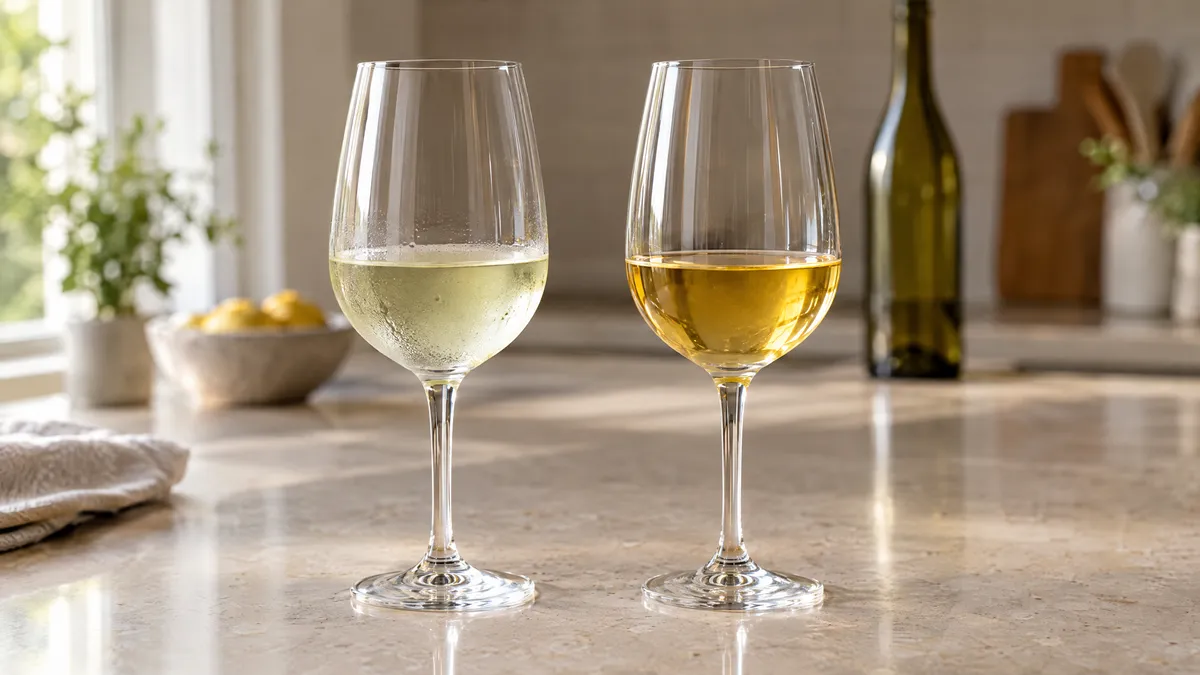
Chardonnay vs Pinot Grigio is mostly a choice of weight. Italian Pinot Grigio is light, tart and quiet; oaked Chardonnay is fuller, creamier and smells of vanilla. The style on the label matters more than the grape: a Chablis drinks closer to Pinot Grigio, and an Alsace Pinot Gris closer to a rich Chardonnay.
Chardonnay vs Pinot Grigio, in One Paragraph
Italian Pinot Grigio is the lighter, tarter wine, and oaked Chardonnay the fuller and creamier one. Pinot Grigio has medium-high acidity (the tartness that makes your mouth water) and a medium-light body (weight in the mouth, like skimmed versus whole milk). It runs 11.5 to 13.5% alcohol. Chardonnay is a neutral grape, so the winemaker sets its style. Unoaked, it tastes of green apple and citrus with high acidity, at 12 to 13.5%. Oaked, it turns creamy, smells of vanilla and butter, and can reach 14.5 to 15%. Both are normally dry.
Chardonnay vs Pinot Grigio Side by Side
| Italian Pinot Grigio | Alsace Pinot Gris | Unoaked Chardonnay (Chablis) | Oaked Chardonnay | |
|---|---|---|---|---|
| Body | Medium-light, lean | Medium to full | Medium, lean | Full, creamy |
| Acidity | Medium-high | Softer than Italian | High | Moderate |
| Smells of | Lemon zest, white peach, green almond | Ripe fruit, flowers, a touch of spice | Green apple, pear, citrus, chalk | Peach, mango, lemon, vanilla, butter |
| Alcohol | 11.5 to 13.5% | Can run high when fermented fully dry | 12 to 13.5% | Up to 14.5 to 15% |
| Sweetness | Dry | Dry to sweet: check the label | Dry | Dry, though ripe fruit and vanilla can taste sweet |
| Serve at | 7 to 12°C, colder on a hot day | Top of the 7 to 12°C range | About 7°C | About 12°C |
| Goes with | Grilled prawns, mussels, white fish with lemon | Roast pork, creamy mushroom dishes | Oysters, sushi, goat cheese | Roast chicken, creamy pasta, lobster with butter |
| Pick it if | You want the lightest, coldest glass | You like Pinot Grigio but want more weight | You want crisp and dry, with apple instead of almond | You want a round, golden white for rich food |
Read the label word before the grape. If it says Chablis or unoaked, expect a lean, tart white close to Pinot Grigio. If it says oaked or barrel-fermented (made or aged in wooden barrels that add vanilla and toast), expect the golden end of the table. If it says Pinot Gris from Alsace, expect the weight of a rich Chardonnay from the other grape. A Chablis tastes closer to an Italian Pinot Grigio than to an oaked Chardonnay.

Quick check
One question on what you just read
An unoaked Chablis is made from Chardonnay. Which wine does it taste closest to?
Tap an answer to see how you did.
Which Is Sweeter, Chardonnay or Pinot Grigio?
Neither, as a rule: both grapes are normally made dry (no sugar you can taste). Oaked Chardonnay often tastes sweeter anyway, because ripe peach, vanilla from the barrel and alcohol near 14.5% all read as sweetness. Pinot Grigio's higher acidity pushes the other way. The sweet vs dry wine guide shows how fruit and alcohol fool the palate.
Of the four styles, the one most likely to hold real sugar is an Alsace Pinot Gris, not a Chardonnay. Cool Alsace autumns can leave the grape either sweeter or, when it is fermented fully dry, high in alcohol. If you need an Alsace Pinot Gris dry, check the back label or ask the shop; an Italian Pinot Grigio rarely needs one.
Why Does Chardonnay Change So Much From Bottle to Bottle?
Because the grape itself is neutral, so climate and the cellar write most of the flavour. Chardonnay is a cross of Pinot Noir and Gouais Blanc, and on its own it brings mild apple, lemon or peach. Three choices do the rest:
- Climate. Cool vineyards give leaner, tarter wine. Warm ones give riper peach and mango and more alcohol.
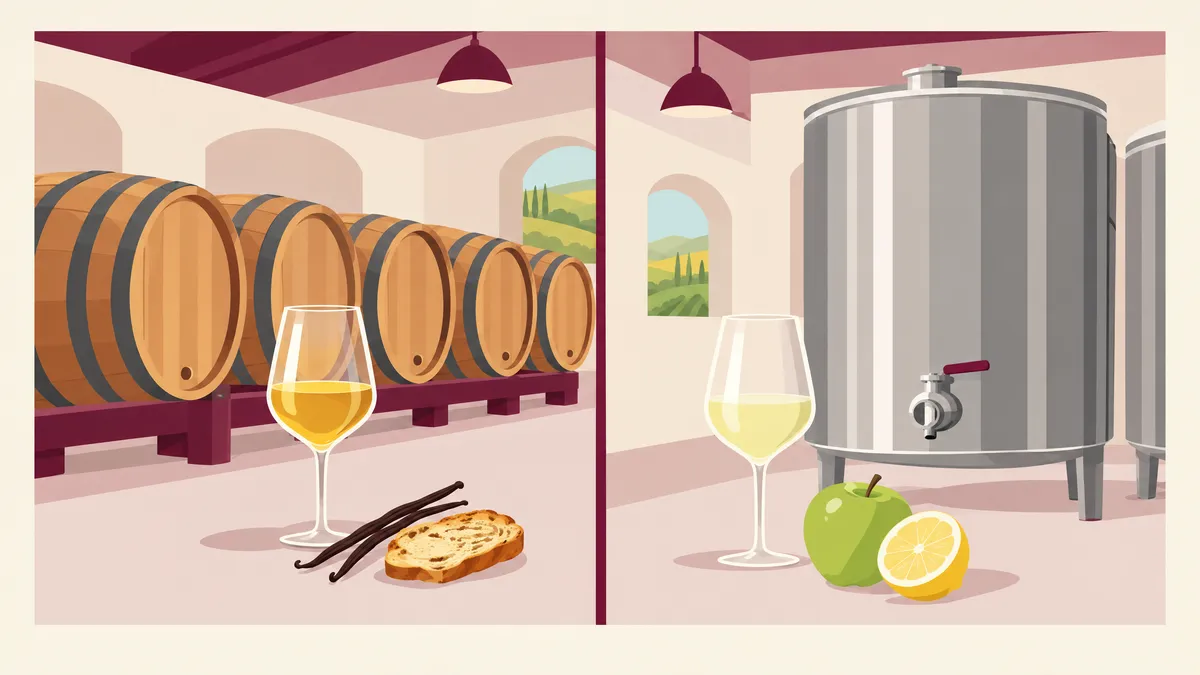
- Oak. Barrels add vanilla, toast and a fuller feel. Chablis, where Chardonnay is the only grape the appellation allows, is the classic unoaked style.
- Malolactic fermentation. In this second fermentation, bacteria turn the harder malic acid, the acid of green apples, into softer lactic acid. A by-product called diacetyl smells of butter.
Buttery Chardonnay owes its butter to malolactic fermentation, not to the barrel, though many rich ones get both. The malolactic fermentation explainer covers the bacteria, and what oaked means covers the barrels. Region by region, the styles are mapped in the Chardonnay grape guide and the Chablis guide.
Why Is Pinot Grigio Light and Crisp?
Because Italian growers pick it early to keep its acidity, and the grape is mild to begin with. Pinot Grigio is the Italian name for Pinot Gris, a mutation of Pinot Noir whose ripe berries have pinkish-grey skins. Germany calls the same grape Grauburgunder, and Italy makes the most of it.
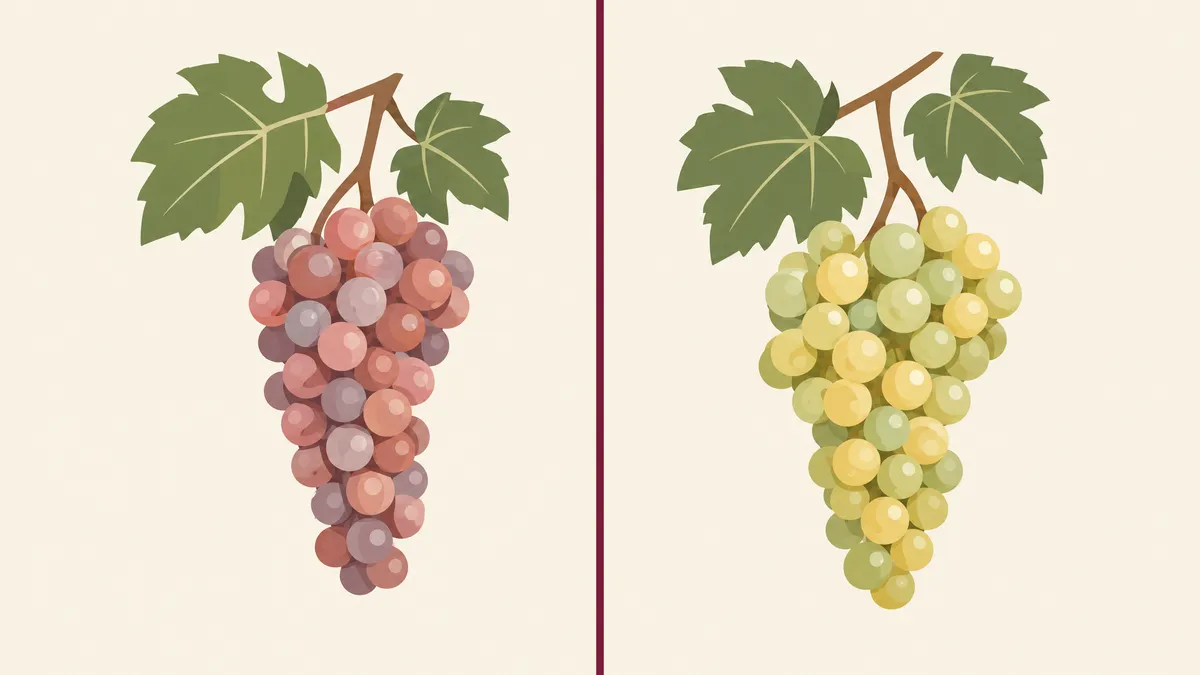
Most Italian Pinot Grigio grows in the north-east, in regions such as Friuli-Venezia Giulia, Trentino and Alto Adige. Picked early, it makes a light-bodied, lean wine, pale in the glass, with a slightly bitter almond finish.
In Alsace the same grape is left to ripen. The wine turns medium to full-bodied, with a richer, floral and spicy smell, which is why its column in the table sits next to oaked Chardonnay. If a label says Pinot Gris, expect the riper style; if it says Pinot Grigio, expect the lean one (Pinot Grigio vs Pinot Gris compares the two labels).
Which Food Goes With Which?
Match weight: Pinot Grigio for light, lemony and salty food, oaked Chardonnay for butter and cream. If the sauce is built on butter or cream, open the Chardonnay; if the dish gets a squeeze of lemon, open the Pinot Grigio.
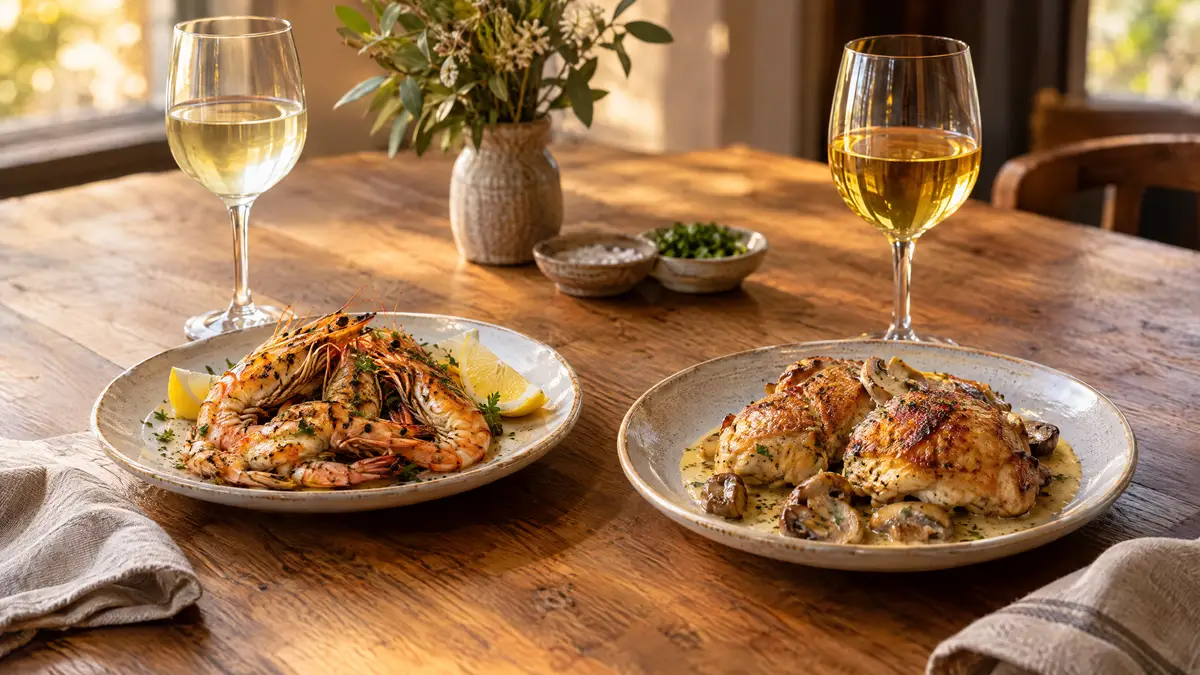
- Grilled prawns, mussels, white fish with lemon: Italian Pinot Grigio. Its acidity matches the lemon, and its light body leaves delicate fish alone.
- Oysters and sushi: Chablis. Salt and raw fish want a lean, tart white with no oak to cover them.
- Roast pork, creamy mushroom dishes: Alsace Pinot Gris. Its weight meets the pork fat without the vanilla of a barrel.
- Roast chicken with butter, creamy pasta, lobster: oaked Chardonnay. Its full body stands up to fat and cream.
More matches are in wine with seafood and wine with chicken.
How Cold Should You Serve Each?
Pinot Grigio and unoaked Chardonnay go in cold, around 7°C; oaked Chardonnay a little warmer, around 12°C. Wine Folly gives Pinot Grigio a range of 7 to 12°C, so a fuller Alsace Pinot Gris can sit at the warm end. The wine serving temperature chart gives the range for every other white.
If an oaked Chardonnay has been in the fridge all day, take it out while you cook. If a Pinot Grigio has stood on the table through the starter, put it back in an ice bucket.
Which Should You Pick Tonight?
Pick Pinot Grigio for a cold, crisp glass on a warm evening, and oaked Chardonnay for a round, golden glass sipped slowly at about 12°C. If you like Pinot Grigio but want more body, step to an Alsace Pinot Gris before jumping to oaked Chardonnay. For crisp with apple instead of almond, pick a Chablis.
The grape varieties hub lines up the next pair, such as Chardonnay vs Sauvignon Blanc. In the Sommy app, the AI-guided tasting walks you through look, smell and taste and logs each glass to your tasting journal. Buy one Italian Pinot Grigio and one oaked Chardonnay tonight, photograph both labels, then pour them side by side and note which makes your mouth water longer.
Sources
Frequently Asked Questions
Is Chardonnay or Pinot Grigio sweeter?
Neither, as a rule. Both grapes are normally fermented dry. Oaked Chardonnay often tastes sweeter because ripe peach, vanilla from the barrel and higher alcohol read as sweetness, while Pinot Grigio's higher acidity makes it taste leaner. The style most likely to carry real sugar is Alsace Pinot Gris, the same grape as Pinot Grigio, which can be made sweet in cool Alsace autumns.
Which has more alcohol, Chardonnay or Pinot Grigio?
Chardonnay, at the rich end. Pinot Grigio usually sits between 11.5 and 13.5% alcohol. Lean, unoaked Chardonnay sits between 12 and 13.5%, so the two overlap. Richer, riper Chardonnay can reach 14.5 to 15%, which adds weight and warmth. The number on the label tells you more than the grape name: near 12% means light, near 14% means full.
Is Pinot Grigio the same as Pinot Gris?
Yes, it is one grape with two names. Pinot Grigio is the Italian name and Pinot Gris the French one; Germany calls it Grauburgunder. The grape is a mutation of Pinot Noir with pinkish-grey skins. The name usually signals the style: Pinot Grigio is light and lean, while Pinot Gris from Alsace is medium to full-bodied, floral and spicy.
Why does some Chardonnay taste buttery?
Because of malolactic fermentation, a second fermentation in which bacteria turn the harder malic acid into softer lactic acid. One of its by-products, diacetyl, smells of butter. Oak barrels add vanilla and toast rather than butter, though many rich Chardonnays get both treatments. Chablis and other unoaked styles taste of green apple and citrus instead.
Which is better with seafood, Chardonnay or Pinot Grigio?
Pick by the sauce. With grilled prawns, mussels or white fish dressed with lemon, pour Italian Pinot Grigio: its acidity matches the lemon and its light body leaves delicate fish alone. With oysters or sushi, a lean Chablis works too. With lobster in butter or fish in a cream sauce, pour oaked Chardonnay, whose fuller body stands up to the fat.
What should I drink if I like Pinot Grigio but want more body?
Try a Pinot Gris from Alsace first. It is the same grape, left to ripen further, and it makes a medium to full-bodied wine with a floral, spicy smell. If you want more weight again, move to an oaked Chardonnay, which adds vanilla and a creamy feel. An unoaked Chardonnay or Chablis is the gentler step, close to Pinot Grigio.
Should Chardonnay and Pinot Grigio be served at the same temperature?
Not quite. Pinot Grigio and unoaked Chardonnay taste best cold, around 7°C, just above fridge temperature. Oaked Chardonnay is better a little warmer, around 12°C, so its vanilla and ripe fruit come through. Wine Folly gives Pinot Grigio a range of 7 to 12°C, so a fuller Alsace Pinot Gris can sit at the warm end.
Sommy Team
LinkedInFounder & Wine Educator
The Sommy Team is building the world's most approachable wine education app, helping beginners develop real tasting skills through structured courses and AI-guided practice.