Wine with Dim Sum: Dumplings, Bao, and Small Plates

By the Sommy Team — AI-assisted, human-edited.
Updated Oct 1, 2026
Contents (8)
- What Wine Goes With Dim Sum, in One Paragraph?
- What Wine Goes With Each Dim Sum Dish?
- Why Do Some Wines Work With Dim Sum and Others Clash?
- Is Champagne Good With Dim Sum?
- Does Riesling Go With Dim Sum?
- What Wine Goes With Fried Dim Sum and Chili Oil?
- Can You Drink Red Wine With Dim Sum?
- How Do You Order Wine for a Mixed Dim Sum Table?
TL;DR
Dim sum wants one chilled bottle with high acidity, almost no tannin, and either bubbles or a touch of sugar. Dry sparkling or dry Riesling suits steamed shrimp and fried items. Off-dry Riesling or Extra Dry sparkling suits sweet pork buns and chili oil. Tannic reds turn shrimp metallic.
The best wine with dim sum is one chilled bottle with high acidity, almost no tannin, and either bubbles or a touch of sugar. That profile cuts the pork fat in dumplings, lifts the oil from spring rolls and leaves shrimp tasting clean. The chili oil dip decides the last detail: the more of it you use, the more sugar the wine should carry.
What Wine Goes With Dim Sum, in One Paragraph?
Pour a dry sparkling wine or a dry Riesling if the table is mostly steamed shrimp dumplings and fried items. Pour an off-dry wine (one with a little sugar you can taste) if it holds sweet barbecue pork buns or plenty of chili oil: a Kabinett Riesling or an Extra Dry sparkling wine. Brut sparkling carries up to 12 grams of sugar per litre, Extra Dry 12 to 17. Serve sparkling at 6 to 10 °C. Skip tannic, oaky reds, because tannin and seafood together can taste metallic. Peking duck, stir-fry and Sichuan heat are covered in our guide to wine with Chinese food.
What Wine Goes With Each Dim Sum Dish?
Read each basket for its main driver: shrimp and steam want acidity, sweet pork wants a touch of sugar, and frying wants bubbles. If the basket is steamed seafood, pour dry. If it is glazed or baked pork, pour off-dry.
| Dish | What drives it | Wine trait | Pour this | Skip |
|---|---|---|---|---|
| Har gow (shrimp dumpling) | Delicate shrimp, a little pork fat, soy salt | High acidity, light body, dry | Brut sparkling, dry Riesling, Grüner Veltliner | Tannic or oaky reds |
| Siu mai (pork and shrimp) | Pork fat, mushroom, ginger | High acidity, dry or barely off-dry | Dry Riesling, Brut sparkling | Heavy, oaky whites |
| Steamed char siu bao | Sweet roast pork in hoisin and oyster sauce | A touch of sugar, high acidity | Kabinett Riesling, Extra Dry sparkling | Bone-dry Extra Brut |
| Baked char siu bao | Sweet glazed bun plus sweet filling | Clearly off-dry | Kabinett Riesling, Demi-sec sparkling | Brut and dry whites |
| Spring rolls, turnip cake | Frying oil, salt | Bubbles, high acidity | Brut sparkling, Cava, Prosecco | Soft, low-acid whites |
| Dumplings in chili oil | Chili heat, Sichuan pepper | Some sugar, alcohol near 12% or below | Kabinett Riesling, Extra Dry sparkling | Reds and whites over 14% |
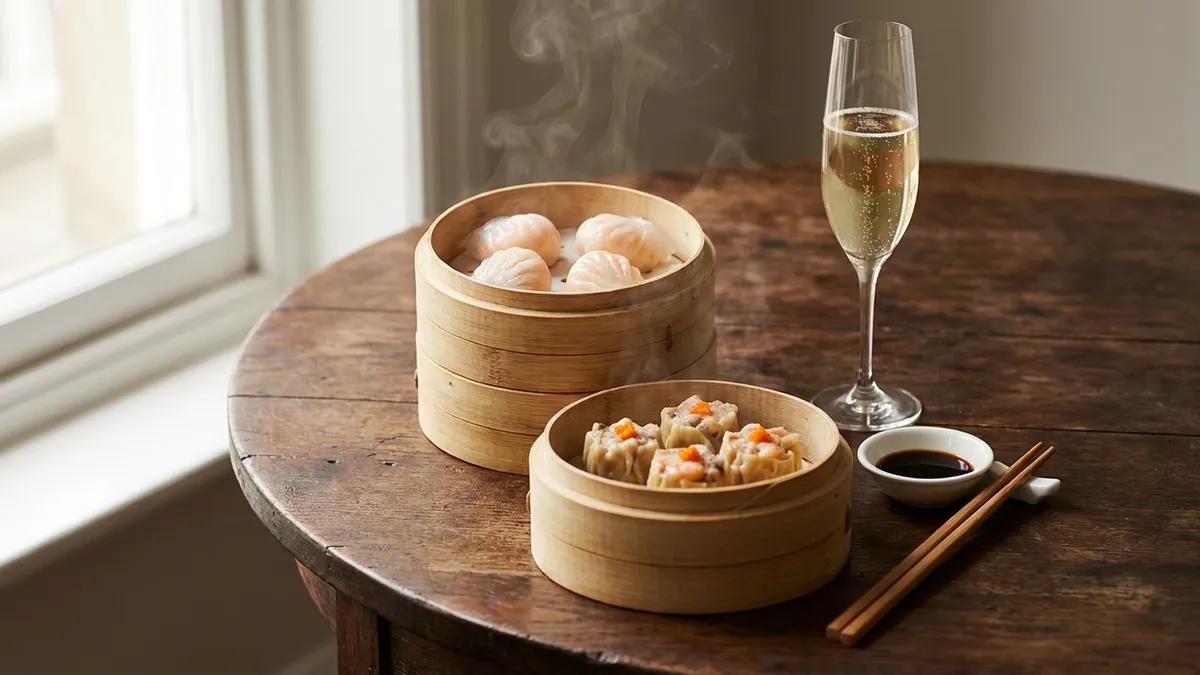
Har gow wrap shrimp, a little pork fat and bamboo shoot in a thin, translucent dough of wheat and tapioca starch. The flavour is mild until the dumpling meets soy sauce, so the wine needs acidity more than fruit. A Brut sparkling or a dry Grüner Veltliner keeps the shrimp sweet and clean.
Siu mai are open-topped dumplings of ground pork, shrimp, black mushroom, green onion and ginger. The orange dot on top is crab roe or diced carrot. More pork means more fat, which a dry Riesling's acidity cuts.
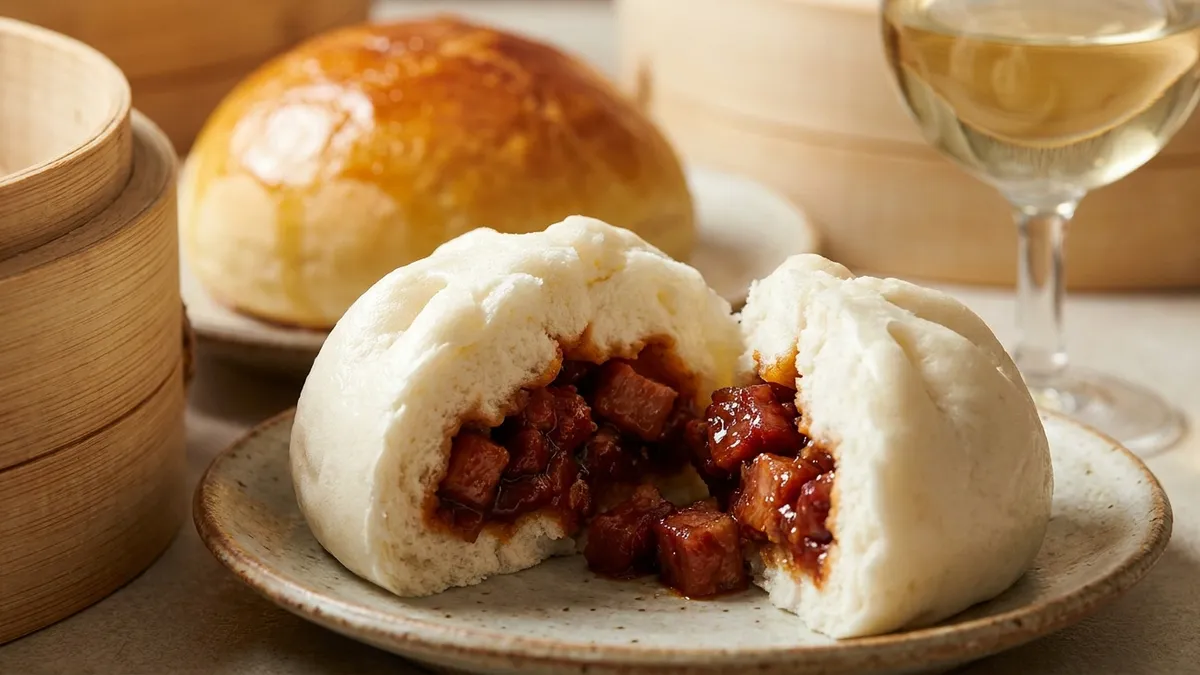
Char siu bao change the rule. The roast pork filling is bound with oyster sauce, hoisin, sesame oil, rice vinegar, Shaoxing rice wine, soy and sugar. Sugar in food makes a dry wine taste thin and sour, so the glass needs a little sugar of its own. The steamed bun is white and soft; the baked bun gets an egg-and-sugar wash, which makes it sweeter, so it wants the sweeter wines in the table.
Why Do Some Wines Work With Dim Sum and Others Clash?
Three things on a dim sum table decide the wine: fat and salt, sugar and heat, and seafood. Acidity (the tartness that makes your mouth water) cuts through fat, oil and salt, which is why it is the one trait every dim sum wine needs. Sugar in the wine balances sugar in the food and softens chili heat.
Seafood rules out most reds. Tannin (the drying grip on your gums) comes mainly from grape skins and seeds, and fish oils can make tannic wines taste metallic. A basket of har gow beside a young Cabernet can taste like tin foil. Our explainer on what tannins are shows where that grip comes from.
Alcohol matters with chili. Heat makes alcohol burn more, and the burn makes the chili taste hotter, so a 15% wine turns a mild dip into a fire. Our guide to wine with spicy food covers that loop for any cuisine.
Is Champagne Good With Dim Sum?
Yes, as long as you read the sweetness word on the label. Champagne and other traditional-method sparkling wines have high acidity and bubbles, which lift oil from fried dumplings, and no tannin to fight the shrimp. The sugar added just before corking, called dosage, decides which baskets it suits.
The label words follow fixed sugar limits, in grams of residual sugar (sugar left in the finished wine) per litre:
- Brut Nature or Brut Zero: under 3 g/L. Best with plain steamed shrimp.
- Extra Brut: under 6 g/L. Har gow, siu mai, fried turnip cake.
- Brut: under 12 g/L. The all-rounder for steamed and fried baskets.
- Extra Dry: 12 to 17 g/L. Steamed char siu bao and chili oil.
- Sec: 17 to 32 g/L. Baked bao and sweet sauces.
- Demi-sec: 32 to 50 g/L. Sweet custard tarts and very sweet glazes.
Brut means dry by law, not sugar-free: a Brut can carry up to 12 grams per litre. The naming is also backwards for beginners, because Extra Dry is sweeter than Brut. If the table has chili oil, pick Extra Dry or Sec. If it is mostly steamed shrimp, pick Brut or Extra Brut. The same ladder appears on Cava and Prosecco, which our sparkling wine types guide compares.
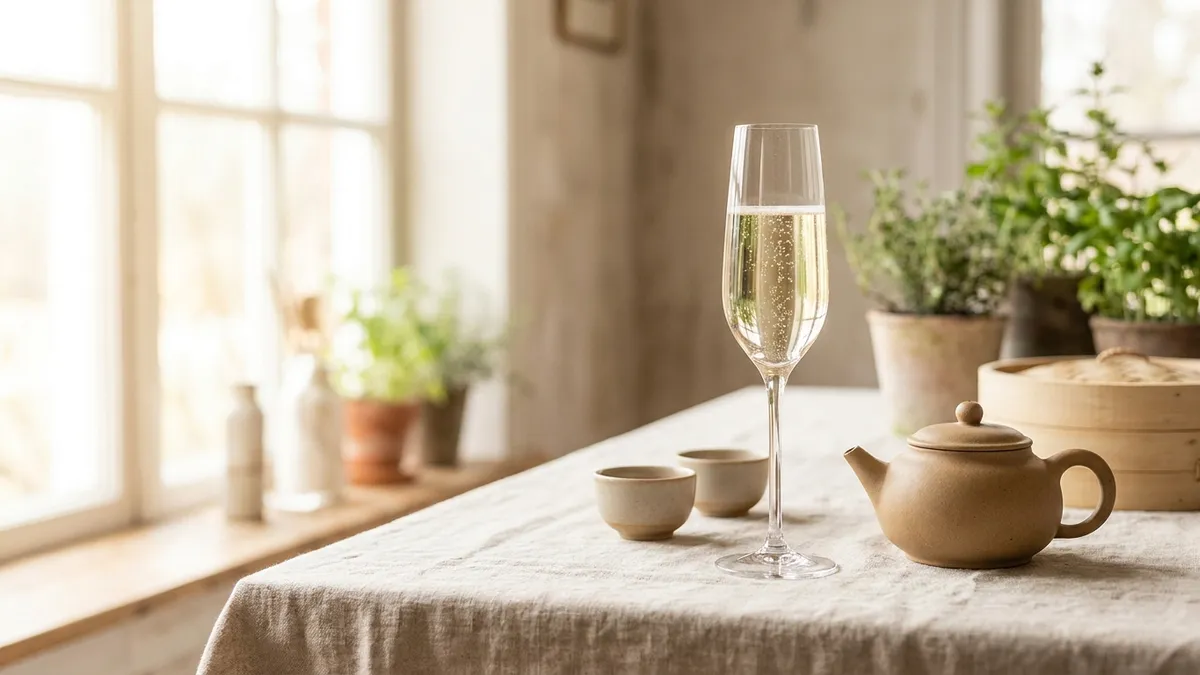
Serve sparkling wine at 6 to 10 °C, the range the WSET teaches. A bottle straight from the fridge sits at the low end, which suits fried food because cold bubbles feel sharper against oil.
Does Riesling Go With Dim Sum?
Yes, and it is the most flexible grape for dim sum because it is made at every sweetness level, from bone dry to sweet, with high acidity throughout. It smells of flowers, lime and green apple rather than oak, so it does not bury delicate shrimp.
The label word tells you which Riesling you have. Trocken on a German bottle means dry. Kabinett is the lightest of Germany's ripeness grades and is often off-dry and light in body. If the label says Trocken, keep it for plain steamed dishes. If it says Kabinett or off-dry, bring it for chili oil and char siu bao. Our Riesling wine guide maps the full range, and the wine sweetness scale shows where each word sits.
Serve Riesling at 7 to 10 °C, the WSET range for light whites, so the acidity stays sharp against fat.
What Wine Goes With Fried Dim Sum and Chili Oil?
Fried dim sum wants bubbles, and chili oil wants a little sugar with moderate alcohol. Spring rolls, turnip cake and pan-fried dumplings coat the mouth with oil. Carbonation and acidity scrub it away between bites, so a Brut sparkling or a crisp Prosecco suits a fried plate.
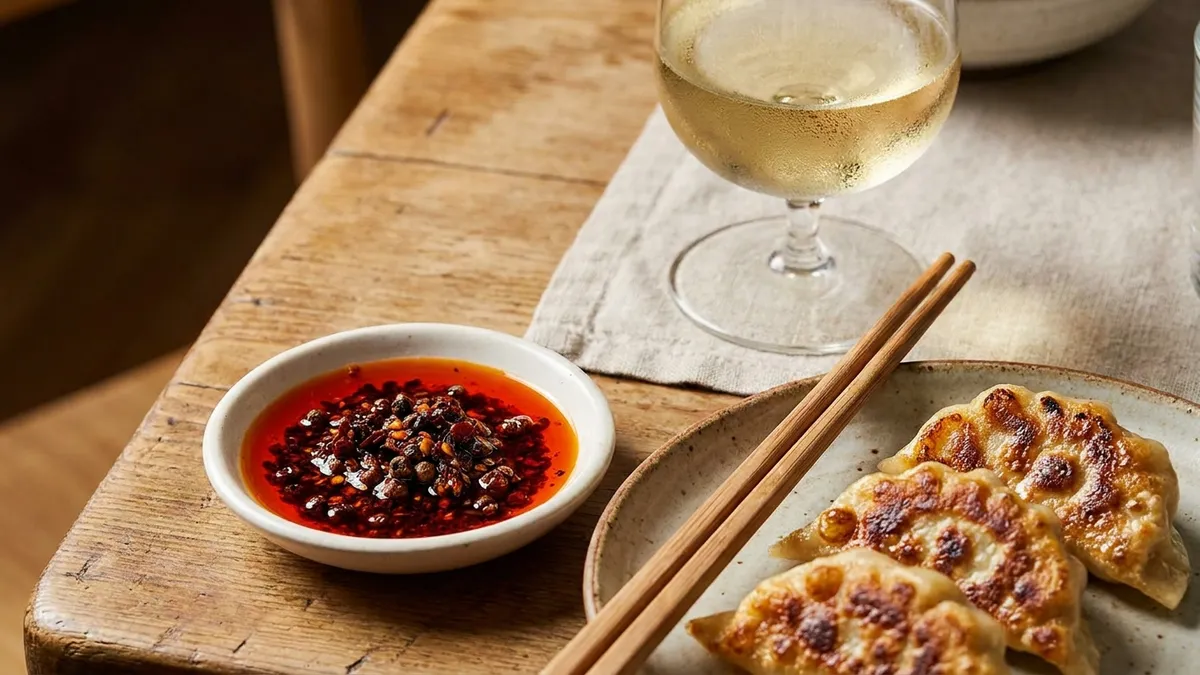
Chili oil is the variable you control. It is served as a dip, and it often carries Sichuan pepper, which numbs and tingles rather than burns. A cold, off-dry wine handles both: sugar softens the heat and acidity resets the tongue. If you add chili oil to every bite, keep the wine near 12% alcohol or below and choose off-dry. A Kabinett Riesling or an Extra Dry sparkling wine fits that rule. Steamed Cantonese dumplings are mild on their own, so a table that skips the chili oil can stay dry.
Can You Drink Red Wine With Dim Sum?
Usually not, but a light, chilled, low-tannin red can work with roast pork. Red is a bad default, not a ban. Tannin and fish oil rule out tannic reds for most baskets, but sweet, fatty char siu has no fish oil to clash with.
If you want red, pick Gamay or Pinot Noir, chill it in the fridge for about 20 minutes, and keep it for the pork buns and roast meats. Both are light in body and low in tannin, with fresh cherry and raspberry fruit. Avoid oaky, full-bodied reds over 14%, which taste hot beside chili and heavy beside steamed food.
How Do You Order Wine for a Mixed Dim Sum Table?
Order one versatile bottle rather than a sequence, because dim sum does not arrive in courses. Push-cart service began in the early 1960s, and baskets still reach the table whenever they are ready, whether from a cart or a paper order sheet. A wine has to cope with shrimp, pork and fried food in any order.
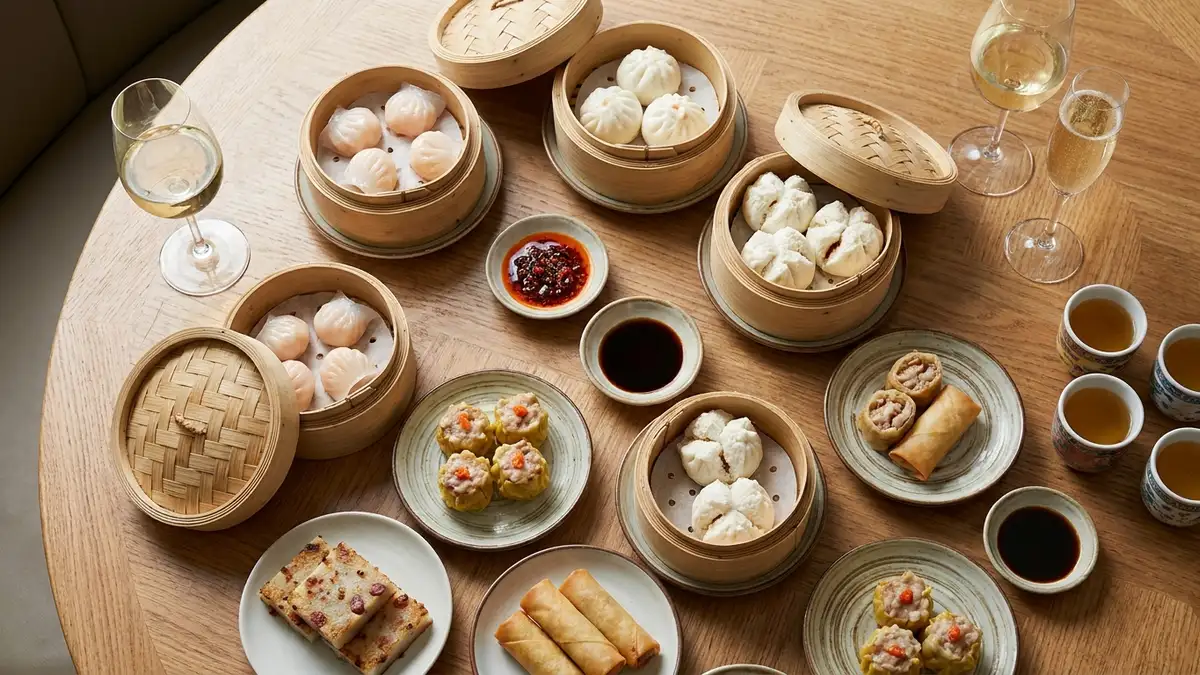
The hour matters too. Dim sum is a range of small dishes traditionally eaten as brunch, and the outing is called yum cha, "drink tea", after the Guangzhou teahouses where it began in the tenth century. Tea stays on the table. A late-morning meal suits a lighter wine, which is one more reason to stay near 12% alcohol.
Use this checklist:
- High acidity, for fat, oil and soy salt.
- Low or no tannin, for shrimp.
- Bubbles or a touch of sugar, for fried food or sweet pork.
- Alcohol near 12% or below, for chili and the hour.
- Served cold, at 6 to 10 °C.
If the group orders more than five dishes, open one Brut sparkling and one off-dry Riesling and let each person reach for the glass that suits the basket. If the restaurant lets you bring your own bottle, ask about corkage when you book. Pairing logic for other dishes sits in the food pairing hub and in our wine with seafood guide.
Next time you go for dim sum, order one basket of har gow and one char siu bao, and pour a dry and an off-dry glass side by side. Taste each wine with each dish and note which one keeps the shrimp sweet and which one handles the pork. The Sommy app's AI tasting mode lets you photograph the label, walk through look, smell and taste, and save both notes to your tasting journal.
Sources
- Dim sum — Wikipedia
- Yum cha — Wikipedia
- Wine serving temperature — Wikipedia
- Champagne (sweetness levels) — Wikipedia
- Food and wine pairing — Wikipedia
Frequently Asked Questions
What wine goes best with dim sum?
A chilled dry sparkling wine or an off-dry Riesling covers the most dishes. Both have high acidity, which cuts the pork fat in dumplings and the salt of soy sauce, and neither has the tannin that clashes with shrimp. Choose the sparkling if the table is mostly steamed and fried, and the off-dry Riesling if it has sweet pork buns or a lot of chili oil.
Is Champagne good with dim sum?
Yes. Its high acidity and bubbles cut through fried items and pork fat, and it has no tannin to fight the shrimp. Read the sweetness word: Brut allows up to 12 grams of sugar per litre and suits steamed dumplings, while Extra Dry (12 to 17 grams) handles sweet barbecue pork and chili oil better. Serve it at 6 to 10 °C.
Does Riesling go with dim sum?
Yes, and it is the most flexible grape for dim sum because it is made at every sweetness level with high acidity throughout. A dry Riesling, labelled Trocken in Germany, suits plain shrimp har gow and siu mai. An off-dry style such as many German Kabinett bottles suits sweet char siu bao and dumplings dipped in chili oil.
Can you drink red wine with dim sum?
Usually red is the wrong default, because tannin and fish oils together can taste metallic, and most dim sum baskets hold shrimp. A light, low-tannin red such as Gamay or Pinot Noir, chilled for about 20 minutes, can work with roast pork dishes like char siu bao. Keep big, oaky, high-alcohol reds away from the table.
What wine goes with har gow shrimp dumplings?
A dry, crisp white or a Brut sparkling wine. Har gow are steamed shrimp dumplings in a thin starch wrapper, with a little pork fat and bamboo shoot in the filling. They are delicate and salty once dipped in soy, so high acidity and light body suit them. Dry Riesling, Grüner Veltliner or Brut sparkling all work. Skip tannic reds.
What wine goes with chili oil dumplings?
An off-dry white with moderate alcohol, such as a Kabinett Riesling, or an Extra Dry sparkling wine. A little sugar in the wine softens the burn of chili, while high alcohol makes it hotter. Chili oil can also carry Sichuan pepper, which numbs the tongue, so a cold, fresh wine with high acidity resets the mouth between bites.
Is tea or wine more traditional with dim sum?
Tea. Dim sum grew out of tenth-century teahouses in Guangzhou, and going for dim sum is still called yum cha, which means drink tea. The meal is traditionally a late-morning brunch. Wine is a modern addition, which is why a light, lower-alcohol bottle fits the hour and the food better than a heavy red.
Sommy Team
LinkedInFounder & Wine Educator
The Sommy Team is building the world's most approachable wine education app, helping beginners develop real tasting skills through structured courses and AI-guided practice.