Wine and Sleep: How Alcohol Affects Your Rest

By the Sommy Team — AI-assisted, human-edited.
Updated Jul 24, 2026
Contents (11)
- The Nightcap Paradox
- Wine and Sleep, in 90 Seconds
- Why a Glass of Wine Makes You Drowsy
- What Happens in the Second Half of the Night
- The Numbers: How Much Alcohol Costs Your Sleep
- Four Ways Wine Sabotages Sleep
- How Long Before Bed Should You Stop Drinking?
- Does the Type of Wine Matter?
- Practical Habits That Protect Your Sleep
- When Wine and Sleep Problems Need a Doctor
- The Honest Takeaway
TL;DR
Wine and sleep have a deceptive relationship: alcohol is a sedative, so a nightcap helps you drift off faster, but it fragments the second half of the night. It suppresses REM sleep, triggers a wakeful rebound as it wears off, dehydrates you, and relaxes airway muscles. Finishing your last glass three to four hours before bed protects your rest.
The Nightcap Paradox
A glass of wine feels like the perfect off-switch. The day loosens, your eyelids get heavy, and bed sounds wonderful. So it is genuinely surprising to learn that wine and sleep are working against each other, not together. The nightcap that helps you fall asleep is quietly wrecking the quality of the sleep you get.
This is one of the most reliable findings in sleep science, and it is not a fringe or fear-based claim. Alcohol changes the architecture of your night — the pattern of light sleep, deep sleep, and dream sleep your body cycles through. It front-loads the comfort and back-loads the cost.
This is a beginner-friendly guide, not medical advice. If you have a diagnosed sleep disorder or drink to fall asleep most nights, talk to your doctor before changing anything.
Wine and Sleep, in 90 Seconds
Wine and sleep have a two-act relationship, and only the first act feels good. In act one, alcohol acts as a sedative — it slows brain activity, shortens the time it takes to fall asleep, and deepens the first hour or two. In act two, as your liver clears the alcohol at about one drink per hour, the effect reverses. REM sleep (the dream-rich, memory-consolidating stage) rebounds hard, your nervous system tilts toward wakefulness, and you wake more often. A large 2018 study of nearly 4,000 people found even low amounts of alcohol cut the restorative quality of early sleep by roughly 9 percent, with moderate and high amounts cutting it by 24 and 39 percent. The fix is timing, not abstinence: stop drinking three to four hours before bed.
Why a Glass of Wine Makes You Drowsy
The drowsiness is real, and there is a clean mechanism behind it. Alcohol is a central nervous system depressant — it boosts the calming neurotransmitter GABA and dampens the stimulating one, glutamate. The result is exactly the sedated, heavy-limbed feeling that makes bed so appealing.
Alcohol also builds pressure to sleep. Throughout the day a molecule called adenosine accumulates in the brain and creates "sleep pressure" — the growing urge to nod off. Alcohol pushes adenosine up quickly, which is why one glass on a tired evening can feel like a sledgehammer. You fall asleep fast because your brain is chemically overwhelmed, not because it is well-prepared to rest.
That fast onset is the entire appeal, and it is genuine. Researchers measure it as reduced sleep onset latency — the minutes between lights-out and sleep. Alcohol reliably shortens it. The problem is that the same chemistry that buys you those quick minutes charges compound interest later in the night.
What Happens in the Second Half of the Night
Here is where the nightcap turns on you. Your body treats alcohol as a toxin and clears it steadily, at roughly one standard drink per hour. As blood alcohol falls back toward zero, the sedative effect does not simply fade — it overshoots into the opposite state.
A landmark 2013 review in Alcoholism: Clinical and Experimental Research pooled dozens of sleep-lab studies and found a consistent pattern at every dose: alcohol produces a more consolidated first half of sleep and markedly more disruption in the second half. The back half of your night fills with brief awakenings you may not even remember, plus a surge of dream sleep.
That surge is REM rebound. Alcohol suppresses REM sleep early in the night, and once it clears, your brain scrambles to make up the deficit — cramming intense, sometimes vivid or unsettling dreams into the pre-dawn hours. REM rebound arrives bundled with lighter, more fragile sleep, which is why so many wine evenings end with a wide-awake spell around 3am.
If you have ever felt that a "good night's sleep" after wine somehow left you groggy, this is why. You slept, but you skated across the surface of it. The deep, restorative stages that make you feel genuinely rested got crowded out.
The Numbers: How Much Alcohol Costs Your Sleep
The most striking evidence comes from the real world, not a lab. A 2018 study published in JMIR Mental Health tracked continuous heart-rate data from 4,098 Finnish adults across nights with and without drinking. Because a relaxed, recovering body shows a distinct heart-rate-variability signature during sleep, the researchers could measure how much physiological restoration each person actually got.
The disruption was dose-dependent and, frankly, larger than most people expect for a couple of glasses.
| Amount | Roughly | Early-sleep recovery lost |
|---|---|---|
| Low | 1-2 drinks | ~9% |
| Moderate | 2-6 drinks | ~24% |
| High | 6+ drinks | ~39% |
Read the top row again: even a single glass or two — the amount most people consider harmless — measurably cut restorative sleep quality by nearly a tenth. There is no "safe" dose that leaves your sleep untouched, only doses that hurt it more or less. Understanding the strength of what you are pouring helps here, and our guide to alcohol content by wine type breaks down how many standard drinks are actually hiding in a generous glass.
Four Ways Wine Sabotages Sleep
REM disruption is the headline, but wine attacks rest on several fronts at once. Recognising all four makes it easier to blunt them.
- REM suppression and rebound. As covered above, alcohol robs REM early and forces a fragmented catch-up late — the single biggest hit to sleep quality.
- Dehydration and night-time trips to the bathroom. Alcohol suppresses vasopressin, the hormone that tells your kidneys to conserve water. You produce more urine, so you wake to use the bathroom and drift back to bed a little dehydrated. That same fluid loss drives much of the next-day headache — our wine headache causes guide unpacks the overlap.
- Relaxed airway muscles, more snoring. Alcohol relaxes the muscles of the throat and upper airway, narrowing the passage and increasing snoring. For anyone with obstructive sleep apnea — where the airway repeatedly collapses during sleep — a nightcap can lengthen and deepen those breathing pauses.
- Blood-sugar swings. Wine nudges blood sugar up and then, hours later, down. That late dip is another nudge toward the pre-dawn wake-up, especially after sweeter styles or drinking on an empty stomach.
How Long Before Bed Should You Stop Drinking?
The single most useful lever is timing, because your body needs the alcohol gone before the fragile second half of the night begins. The Sleep Foundation recommends leaving at least three to four hours between your last drink and bedtime.
The math is straightforward. Your liver clears alcohol at a fixed rate of roughly one standard drink per hour, and nothing speeds it up — not coffee, not water, not a cold shower. A single large restaurant pour of wine can count as one and a half standard drinks, so two generous glasses need roughly three hours to clear.
Shift the ritual earlier and the whole equation improves. A glass with dinner at 7pm is metabolized well before an 11pm bedtime; the same glass at 10:30pm is still peaking in your bloodstream as you lie down. If you want the wine, the trick is to move it toward the start of the evening rather than the finish line. For the broader picture on drinking in a way that supports how you feel, our responsible wine drinking guide covers pacing, food, and weekly patterns.
Does the Type of Wine Matter?
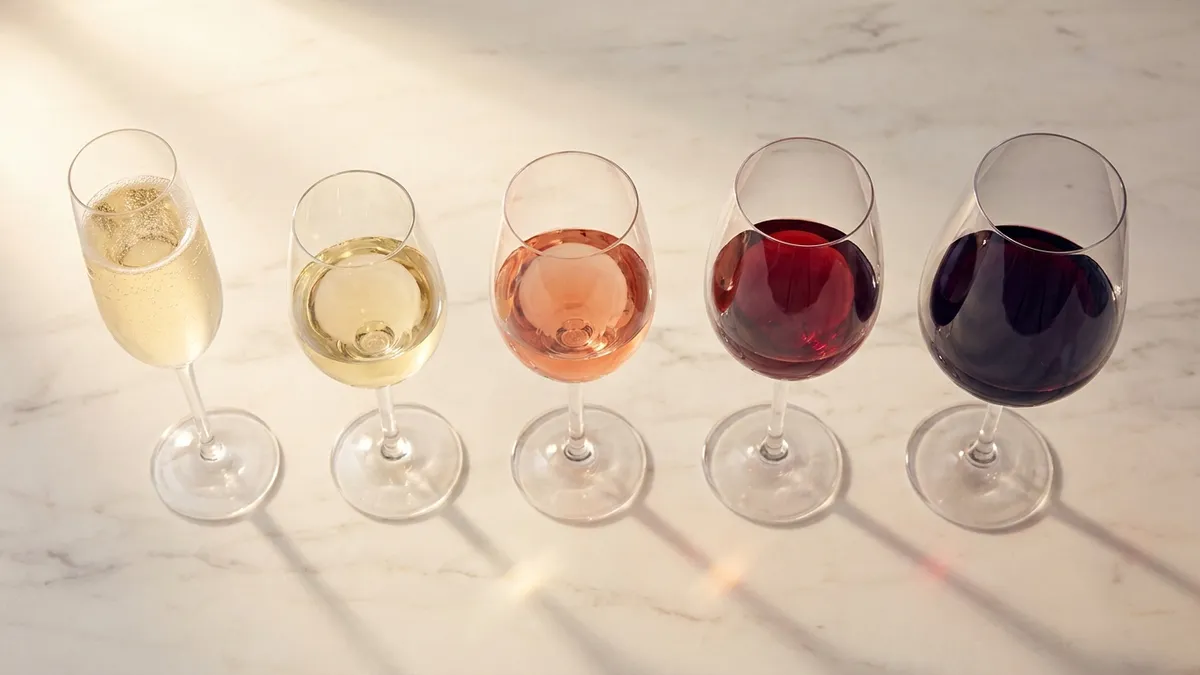
Mostly it is the alcohol, not the color or the grape, that disrupts sleep — but strength genuinely varies, and that gives you a real lever. A 15% Zinfandel delivers meaningfully more alcohol per glass than an 11% Vinho Verde or a delicate Mosel Riesling, and more alcohol means more disruption.
Lighter, lower-alcohol styles are the sleeper-friendly choice when you do want a glass in the evening:
- Crisp low-alcohol whites — Vinho Verde, dry German Riesling, Muscadet, often 9 to 11.5%
- Fresh sparkling wines — many sit around 11 to 12%, and the small pour of a flute helps
- Light, cool-climate reds — Beaujolais and lighter Pinot Noir, usually gentler than powerful warm-climate reds
Sweeter wines carry a second penalty: the sugar sharpens that late blood-sugar dip. If sleep is the priority, a dry, lighter, lower-alcohol wine earlier in the evening beats a rich, high-octane red right before bed. Sugar and alcohol also drive the calorie count — our calories in wine guide shows how the two add up.
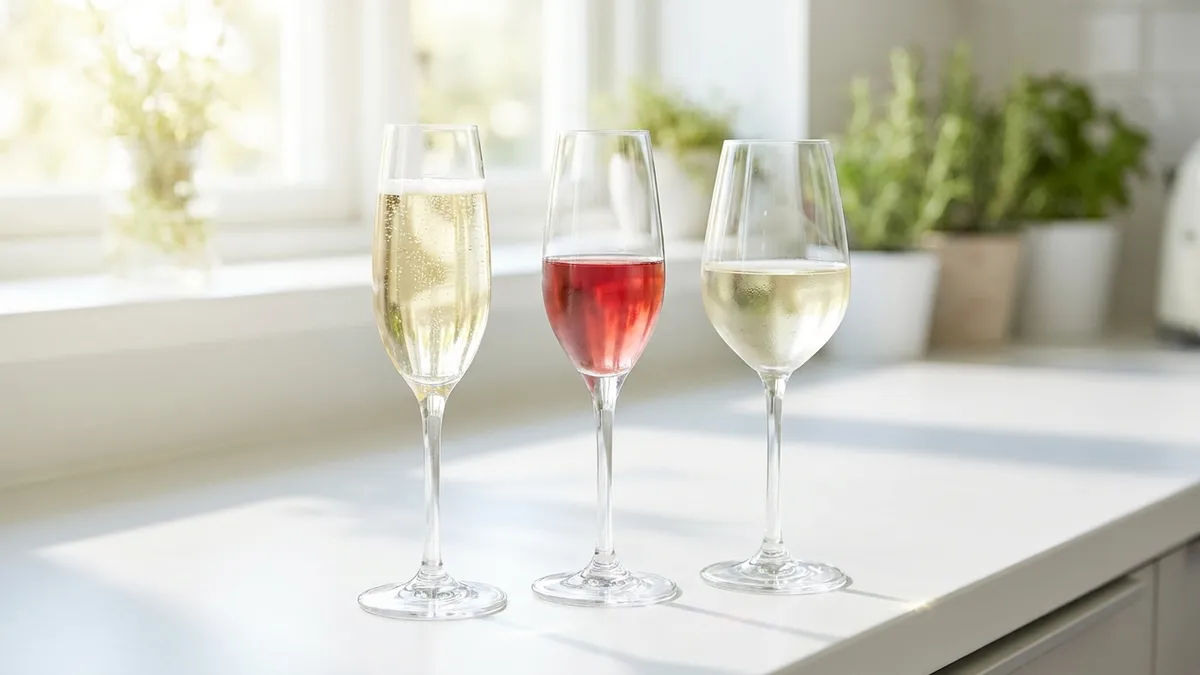
Building the skill to recognise a lighter style by sight, smell, and first sip is genuinely useful here, and it is exactly what the Sommy app's deductive tasting flow teaches over a few short sessions.
Practical Habits That Protect Your Sleep
You do not have to give up wine to sleep well. A handful of habits neutralise most of the damage.
Move the last glass earlier. The three-to-four-hour buffer is the highest-leverage change you can make. Everything else is secondary to it.
Eat while you drink. Food slows alcohol absorption, softening the peak and the crash. A wine paired with a real meal disrupts sleep less than the same wine on an empty stomach.
Match wine with water. A glass of water between glasses of wine offsets the diuretic effect and cuts both the 3am bathroom trip and the morning headache. Our wine hangover prevention guide leans hard on this one.
Pour a smaller measure. A standard drink is about 150ml at 12% — far less than the brimming glass most of us pour. A modest measure metabolizes faster and disrupts less.
Keep the bedroom cool and dark. Alcohol nudges your body temperature and makes second-half sleep more fragile; a cool, dark room gives that fragile sleep the best possible conditions.
Track the pattern. Keeping a short log of what you drank, when, and how you slept turns vague suspicion into a clear signal within a couple of weeks. The Sommy tasting journal doubles as exactly this kind of record — you note what you tasted, and the same entry quietly captures how the night went.
When Wine and Sleep Problems Need a Doctor
Occasional grogginess after a big night is normal. Some patterns are worth a conversation with a professional.
See a doctor if you find you need a drink to fall asleep most nights, if you are increasing the amount over time to get the same effect, or if you wake gasping, choking, or with a partner reporting long pauses in your breathing — possible signs of sleep apnea that alcohol makes worse. Chronic insomnia that persists even on alcohol-free nights also deserves proper evaluation rather than self-medication.
Using wine as a sleep tool is a common trap precisely because act one feels so effective. But the tolerance builds, the sleep quality keeps sliding, and the habit can be genuinely hard to unwind. A doctor or sleep specialist can help far more than another glass.
The Honest Takeaway
Wine and sleep can coexist — they just cannot share the last hour before bed. Alcohol is a sedative that trades a fast, comfortable start for a fragmented, REM-disrupted, dehydrated second half of the night. The science is consistent, and even a glass or two shows up in the data.
The good news is how much control you have. You do not have to choose between enjoying wine and sleeping well. Move the last glass earlier, pour a smaller measure, drink water alongside, favour lighter styles, and eat while you drink. Do those things and a glass of wine goes back to being one of the small pleasures of the evening instead of a thief in the night.
Wine deserves your attention while you are awake to enjoy it. To build grounded, practical wine knowledge — including how to read a wine's strength and style from the glass — visit sommy.wine, and browse the full wine health pillar for every Sommy guide on drinking in a way that respects how you feel. For the related question of why different wines hit your body differently, the wine and histamine intolerance and resveratrol in red wine guides pick up where this one leaves off.
Sources
- Alcohol and Sleep I: Effects on Normal Sleep — Ebrahim IO, et al., Alcoholism: Clinical and Experimental Research, 2013
- Acute Effect of Alcohol Intake on Cardiovascular Autonomic Regulation During the First Hours of Sleep — Pietilä J, et al., JMIR Mental Health, 2018
- Alcohol and Sleep — Sleep Foundation
- The Link Between Alcohol and Sleep Apnea — Sleep Foundation
Frequently Asked Questions
Does wine actually help you sleep?
It helps you fall asleep, not sleep well. Alcohol is a sedative, so a glass of wine shortens the time it takes to drift off. The trade is severe: once your body starts clearing the alcohol, sleep fragments, REM rebounds, and you wake more in the second half of the night. You get to bed faster and rest worse.
Why do I wake up at 3am after drinking wine?
As your body metabolizes the alcohol, its sedative grip fades and swings the other way. Blood sugar dips, REM sleep rebounds intensely, and your nervous system shifts toward wakefulness. That combination — usually three to five hours after your last glass — is why a wine-heavy evening so often ends with a wide-awake 3am stare at the ceiling.
How long before bed should I stop drinking wine?
Aim for at least three to four hours between your last glass and lights out, which the Sleep Foundation recommends. Your body clears roughly one standard drink per hour, so two glasses need about two to three hours to metabolize. Finishing earlier lets the alcohol leave your system before the fragile second half of the night begins.
Does red or white wine affect sleep differently?
The alcohol matters far more than the color. A 15% red and a 15% white disrupt sleep almost identically. What varies is strength: many whites, rosés, and sparkling wines sit at 11 to 12.5%, while big reds reach 14 to 15%. Choosing a lower-alcohol style and pouring a smaller measure does more for your sleep than picking red over white.
Does wine cause snoring?
Yes. Alcohol relaxes the muscles of the upper airway and throat, which narrows the passage and makes the soft tissue vibrate more — the mechanics of snoring. For people with obstructive sleep apnea, a nightcap can deepen and lengthen the pauses in breathing. If you snore only after drinking, alcohol is very likely the trigger.
How many hours does it take for wine to leave your system?
Your liver clears alcohol at a steady rate of about one standard drink per hour, and you cannot speed it up with coffee, water, or a cold shower. A single large glass of wine can count as roughly one and a half standard drinks, so three glasses may take four to five hours to fully clear — often past the point you fall asleep.
Sommy Team
LinkedInFounder & Wine Educator
The Sommy Team is building the world's most approachable wine education app, helping beginners develop real tasting skills through structured courses and AI-guided practice.