Wine and Meditation: A Mindful Tasting Practice
By the Sommy Team — AI-assisted, human-edited.
Updated Apr 29, 2026
Contents (16)
- TLDR
- Mindful Wine Tasting, in 90 Seconds
- Why Most Wine Drinking Is Not Mindful
- What Meditation and Tasting Have in Common
- Three Reasons Mindful Tasting Matters
- The Seven-Step Mindful Tasting Protocol
- The Science of Attention in Tasting
- Setup Essentials
- The Settling Minute Before You Pour
- Mindful Exercises That Train Specific Skills
- Adding Formal Meditation to the Practice
- Common Obstacles and How to Work With Them
- How Sommy Builds the Habit for You
- Mindful Tasting and the Slow Living Conversation
- Mini-Rituals to Start This Week
- A Closing Reflection on Quality of Attention
TL;DR
Mindful wine tasting borrows from meditation to slow a single glass down to eight or ten minutes. A seven-step ritual — pause, look, swirl and smell, first sip, reflect, second sip, journal — pulls attention onto the wine and trains palate memory faster than passive drinking. One mindful pour beats four distracted ones for both pleasure and learning.
TLDR
Mindful wine tasting blends meditation with structured tasting. A seven-step ritual — pause, look, swirl and smell, first sip, reflect, second sip, journal — slows one glass down to eight or ten minutes of sensory attention. The result is deeper pleasure, faster palate development, and a quieter mind. One mindful pour beats four distracted ones.
Mindful Wine Tasting, in 90 Seconds
Mindful wine tasting is a practice that borrows from meditation to turn one glass of wine into a complete sensory ritual rather than background liquid. You sit somewhere quiet, settle the breath for a minute, and run the wine through a fixed sequence — look, swirl, smell, sip, reflect, sip again, journal. The total time runs about eight to ten minutes per glass. The procedure is the meditation. You do not need to clear the mind or sit a particular way. Sustained attention on color, aroma, and mouthfeel does the work of any short meditation, with the bonus of training the palate. Most people who try it report two surprises: how different the wine reads under attention, and how much less they want to pour after one full mindful glass.
Why Most Wine Drinking Is Not Mindful
Walk through any restaurant on a Friday night. The first sip lands during a conversation, the second during a glance at the menu, the third while the glass drifts to the edge of the table — and the drinker has not actually noticed what they are drinking.
This is the default. Wine accompanies food, conversation, music, screens, decompression after work. The glass functions as a social prop, and the sensory content of the wine — color, aroma, structure, finish — sails past unnoticed.
There is nothing wrong with that mode. Wine has been a social lubricant for thousands of years. The point is only that distracted drinking and mindful drinking are two different practices, and treating one glass as the whole event opens up an experience hurried sipping does not.
What Meditation and Tasting Have in Common
The convergence is closer than it sounds. Both are sensory practices that train attention (the deliberate direction of awareness onto a chosen object). Both reward consistent short sessions over long sporadic ones. Both share a basic structure: sit, breathe, observe, notice, return.
A traditional meditation keeps the breath as the object of attention. A mindful tasting keeps the wine as the object. The mechanism is the same — sustained, gentle, non-judgmental focus. The output is similar too: a calmer nervous system, sharper sensory discrimination, and a deeper connection to the moment.
Sommeliers who also meditate often describe the two as feeding each other. The breath training improves the nose. The tasting training improves attention.
Three Reasons Mindful Tasting Matters
1. Better palate development. Memory follows attention. If you taste while distracted, the wine does not encode. If you taste while paying full attention and then write a few sentences after, the brain stores the experience as a retrievable memory. Six weeks of mindful sessions build a working aroma library faster than years of passive drinking. Our guide on how to develop your wine palate covers the underlying skill stack in more depth.
2. Less drinking, more pleasure. One mindfully tasted glass delivers more sensory information and more enjoyment than three or four sipped while doing other things. Tasters who adopt the practice often drift toward fewer, better pours without any willpower involved. The pleasure becomes complete in one glass rather than chased across several.
3. Stress reduction. A structured sensory ritual is functionally a short meditation. Heart rate slows, breath deepens, the mind drops out of work mode. The brain treats deliberate sensory attention as a form of rest, regardless of whether you call it meditation or not.
The Seven-Step Mindful Tasting Protocol
Here is the full sequence. Total time runs eight to ten minutes per glass. The order matters — each step prepares the next.
Step 1: Pause (60 seconds)
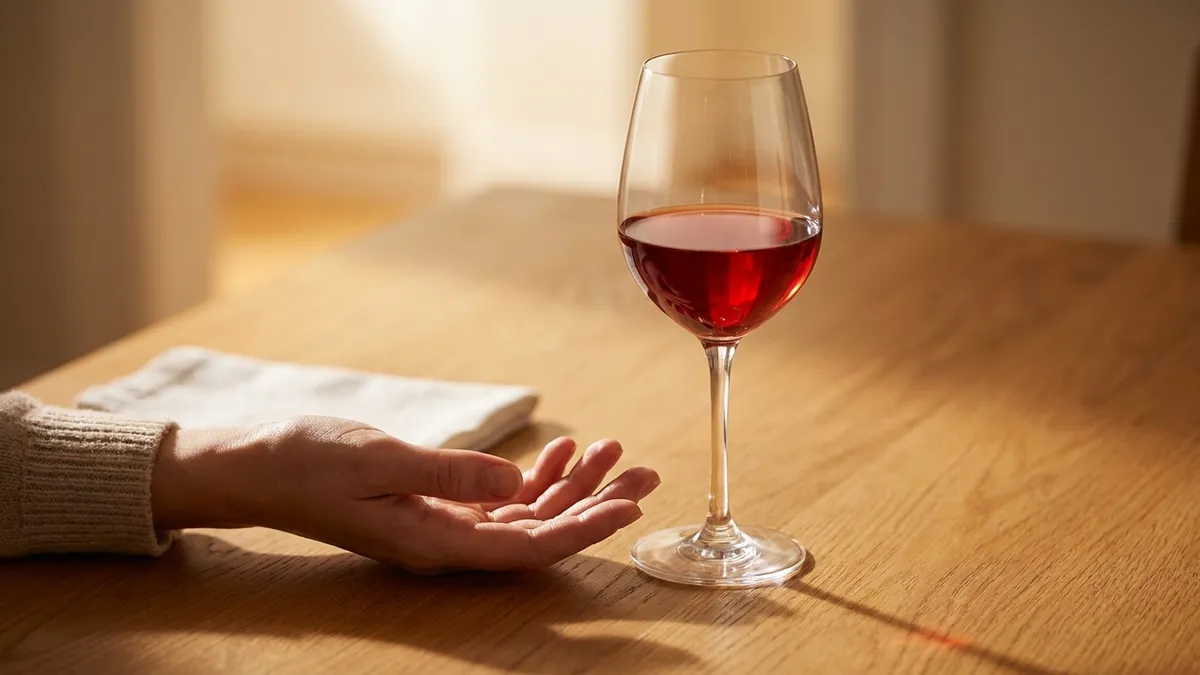
Sit with the glass in front of you, not yet in your hand. Take five slow deep breaths. Set a quiet intention — I will pay attention to this wine for ten minutes. Notice your current state — hungry or full, tense or calm, tired or alert. These all affect taste, and naming them up front accounts for the bias.
Step 2: Look (30 seconds)
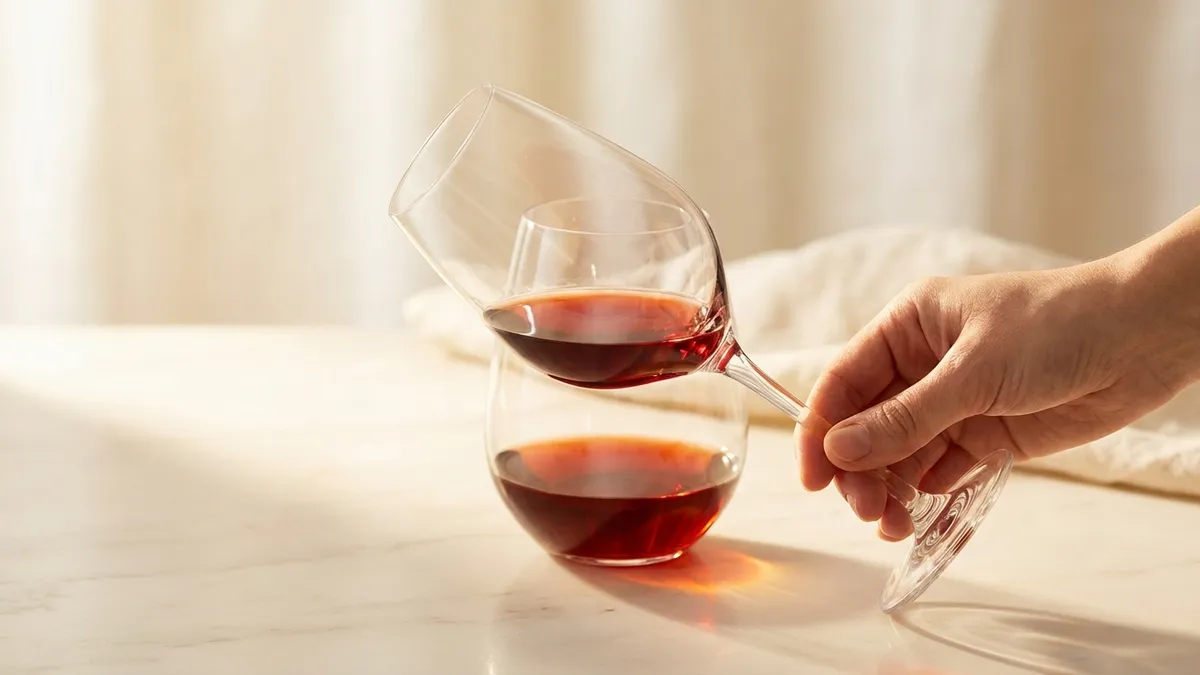
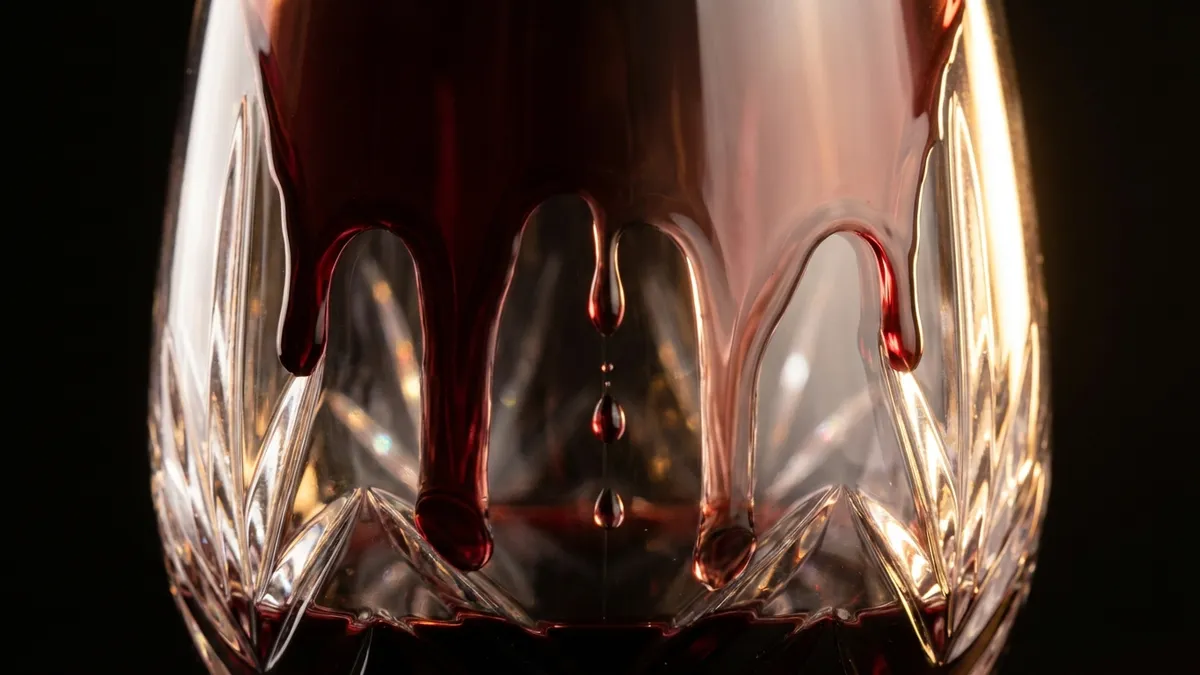
Lift the glass to a light source. Tilt it gently against a white background. Notice color, intensity, clarity, and how the legs run down the inside of the bowl. Do not name what you see yet; just see it.
Step 3: Swirl and Smell (90 seconds)
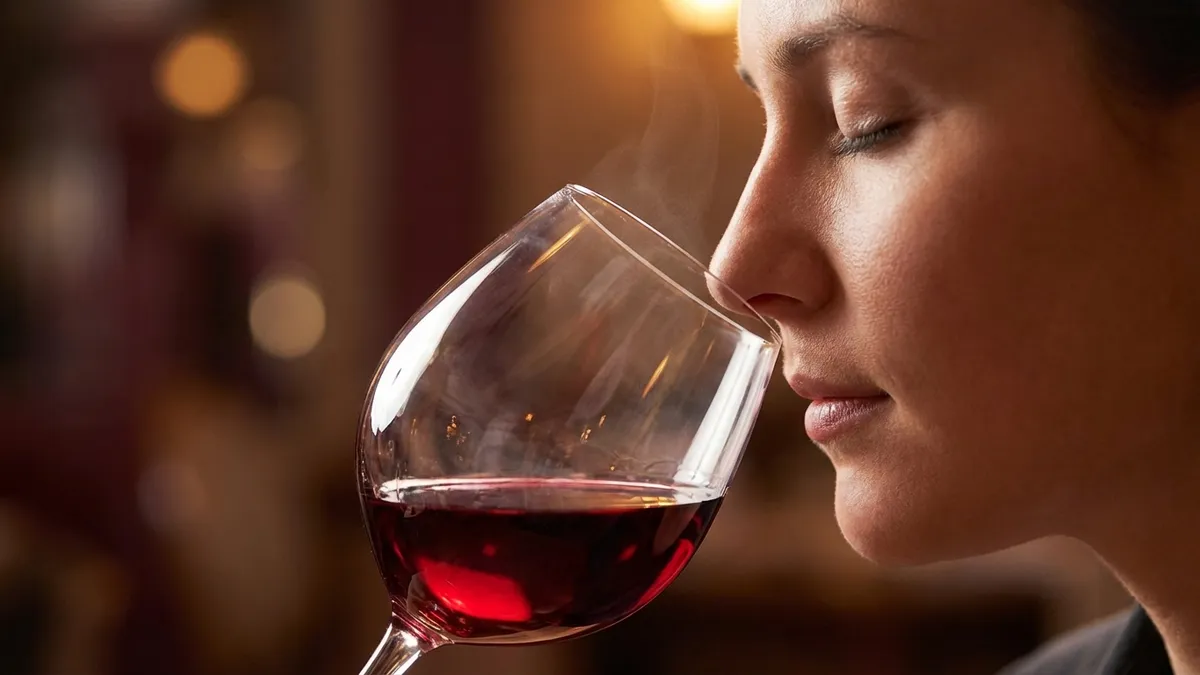
Swirl three to five times with the base on the table. Bring the glass about five centimeters from your nose and inhale gently. Note one to three aromas. Pause for ten seconds. Now nose deeper, rim closer. Note one to three more.
The pause matters. Sensory adaptation (the way smell receptors temporarily fatigue on a constant odor) drops your sensitivity within ninety seconds of continuous nosing. A short break resets the receptors and lets the second pass pick up notes the first missed.
Step 4: First Sip (15 seconds)
Take a small mouthful — about half a tablespoon. Hold it on the tongue. Roll it gently across the front, sides, and back. Breathe in lightly through the lips to lift aromas to the retronasal receptors (the olfactory pathway that connects the back of the mouth to the nose). Swallow.
Step 5: Reflect (60 seconds)
Sit with what just happened. Where on the tongue did acidity show up? Did tannin grip the gums? Was there alcohol heat? How long did the flavor last after you swallowed? No need to write yet. Just notice.
Step 6: Second Sip (15 seconds)
Take another small sip. Now compare. What surprised you? What softened? What sharpened? The second sip almost always reads differently — partly the palate has acclimatized, partly attention has had time to settle.
Step 7: Journal (3 to 5 minutes)
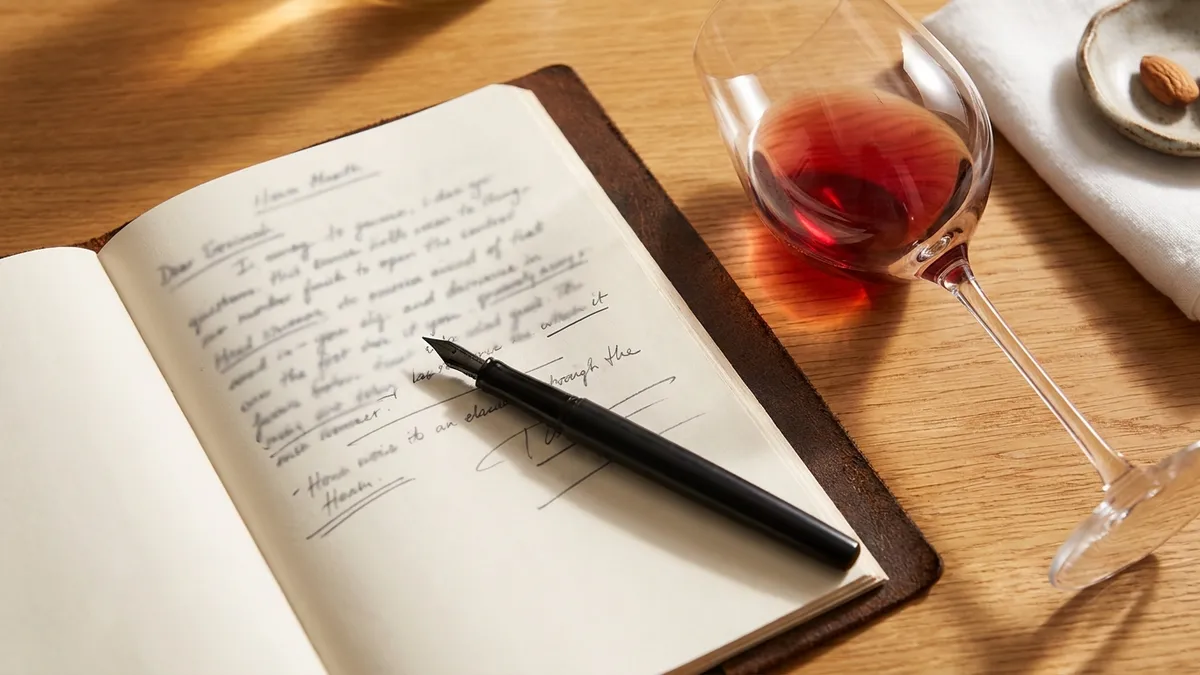
Write three to five sentences by hand. Capture what you saw, what you smelled, what the wine felt like, and how long the finish lasted. Skip generic words like good or smooth. Reach for specific images — cherry skin and damp earth, grapefruit pith and wet stone, dried sage and warm leather.
Handwriting matters. Writing by hand stores sensory memory more durably than typing — the slower physical act of forming letters slows the recall enough to fix it.
The Science of Attention in Tasting
Three pieces of research are worth knowing.
Sensory adaptation. Smell receptors tune for change rather than constant exposure. If you nose a glass continuously, sensitivity drops sharply within ninety seconds. The pause — break, breathe, return — recovers most of the lost sensitivity and almost always reveals notes that were not obvious on the first pass.
Memory consolidation. Writing by hand activates motor pathways that store memory more durably than typing or saying notes aloud. Four short handwritten sentences after a tasting outperform a fifteen-minute mental review without any written record.
Label bias. Expectations bias perception. If you know a wine is expensive, you rate it higher; if you know the vintage was difficult, you find faults. Mindful tasting with a notebook gives you a record of the wine as it actually showed up — independent of price, story, and reputation. Our piece on common wine tasting mistakes covers how label bias trips up beginners and pros alike.
Setup Essentials
The room is part of the practice. A few small choices stack up.
- Quiet space. Closed door or empty house. No television, no podcast.
- Dim warm light. Bright overhead lighting flattens color perception. A single lamp or candle works.
- One glass. A tulip-shaped stemmed glass, not a tumbler. Hold by the stem to avoid warming the wine.
- Water within reach. Sip between rounds to reset the palate.
- Notebook and pen. Real paper, real pen. The friction is the feature.
- Phone in another room. Notifications collapse attention faster than anything else in modern life.
- Soft instrumental music optional. Low volume only. No lyrics. Music shifts perception in measurable ways — for the deep version, see does music change how wine tastes.
- Thirty to sixty minutes uninterrupted. Block the calendar.
The Settling Minute Before You Pour
Before the bottle opens, sit for sixty seconds. Five slow breaths. Notice the body — shoulders dropped, jaw soft. Notice the mood and the time since the last meal.
These are not abstract. A stressed taster reads the same wine as more austere. A hungry taster reads it as fruitier. A taster who just brushed their teeth reads any wine as bitter for about thirty minutes. Naming the starting state lets you separate what is yours from what is the wine's.
This minute is the bridge from ordinary attention to tasting attention. Skipping it is the most common reason a session feels rushed even when the rest of the protocol runs.

Mindful Exercises That Train Specific Skills
Once the basic protocol is comfortable, narrow exercises sharpen specific senses.
Single-aroma focus. Pick one aroma in advance — cherry, vanilla, green pepper, wet stone — and run the whole session looking for it. Either you find it, or you learn that this wine does not have it. Both are useful outcomes.
Texture meditation. Ignore flavor entirely. Focus only on mouthfeel (the physical sensation of the wine — viscosity, tannin grip, prickle of acidity). Most beginners name flavors before they describe texture, and a session devoted to one rebalances the skill.
Length test. Take a sip, swallow, then count. How many seconds does the flavor persist? Three seconds is short, ten medium, twenty and beyond is fine-wine territory. The discipline of counting forces attention to stay on the wine after it leaves the mouth.
Comparative awareness with eyes closed. Pour two wines into identical glasses. Have a friend hand them to you out of order. Identify what differs. Closing the eyes strips out visual bias. Our guide on tasting wine blind versus sighted covers why this works.
The wine tasting vocabulary cheat sheet is a useful reference to keep nearby during the journaling step.
Adding Formal Meditation to the Practice
A five-minute seated meditation before the first pour amplifies the rest of the session noticeably. Sit upright, eyes soft or closed, attention on the breath. When the mind wanders, return without judgment. After five minutes, pour.
Tasters who run this combined version describe the wine reading more vividly afterwards. The meditation drops the noise floor of the nervous system, so the signal from the wine has more contrast. Even two minutes of breath focus before the glass meaningfully shifts the session.
Common Obstacles and How to Work With Them
Time pressure. The protocol takes eight to ten minutes per glass, which most people do not have on a busy weeknight. Pick one or two evenings a week as ritual evenings. On other nights, a thirty-second pause-and-smell before the first sip captures most of the value.
Social context. Mindful tasting does not work at parties. Save the full ritual for the bottle you bring home afterward and let the social wine be social.
Habit. Mindful tasting reframes some pours as solo practice rather than social glue. Most practitioners keep both modes — social wine for company, mindful wine for development.
How Sommy Builds the Habit for You
The seven-step protocol only takes hold with structure. Open the Sommy Wine Coach app, pour a glass, and the tasting flow walks through a guided version of the sequence — settling pause, color, swirl, smell, sip, reflect, journal. The structure does the discipline so you do not have to.
The app records sensory observations across sessions, so over a few weeks the journaling step becomes a tracked dataset of palate growth rather than scattered notes. You see which aromas you reach for most, which structural traits you read accurately, and where to practice next. The pillar guide on how to taste wine walks through the full sensory framework.
The piece on how to taste wine like a sommelier covers the six-step systematic method the mindful protocol borrows from. For the smell side specifically, how to smell wine is the natural next step.
Mindful Tasting and the Slow Living Conversation
The practice fits inside a broader cultural shift. The slow food movement, the return of analog notebooks, the resistance to constant scrolling — all point in the same direction. More has stopped being the answer, and more attentive has started replacing it.
Wine appreciation is one of the easier anchors for this kind of attention. The bottle is a defined object, the procedure is repeatable, the time commitment is bounded. You do not need to retreat from modern life — just ten minutes a couple of evenings a week.
Drinking less but better also aligns with health and environmental concerns. The piece on responsible wine drinking covers the practical math on this in more detail.
Mini-Rituals to Start This Week
If the full protocol feels like too much, start with one of these.
- Friday evening one-glass ritual. Block thirty minutes. Run the full seven steps. One bottle lasts several Fridays — the practice is about a single glass.
- Pre-dinner thirty-second pause. Before the first sip of any meal, settle the breath, lift the glass, smell, then taste.
- Travel tasting practice. On any trip, pick one regional wine and run the full protocol once. The wine becomes part of the memory of the place.
- Weekly journal review. Re-read your entries from the previous month. Vague fruity becoming specific sour cherry and dried thyme is the visible signal of palate growth.
A Closing Reflection on Quality of Attention
Mindful wine tasting is not about drinking less, although less often follows. It is about getting more from each glass. The wine is doing the same things in your mouth either way — the variable is how much of it your brain catches.
End each session with a thirty-second pause. One question: what did I notice today that I have not noticed before? Write the answer down. A few months of those entries become the most useful tasting reference you will ever own — a personal record of what your palate is learning, in your own words.
The wine becomes more interesting because you become more present to it. Quality of attention, not quantity of consumption.
Frequently Asked Questions
What is mindful wine tasting?
Mindful wine tasting is a practice that borrows from meditation to slow the act of drinking down to a deliberate sensory ritual. Instead of sipping a glass while talking, scrolling, or eating, you sit quietly, follow a fixed sequence of attention — sight, smell, sip, reflection, journaling — and treat the wine as the entire object of focus for eight to ten minutes. The result is deeper pleasure, sharper palate training, and a calmer nervous system in the same session.
How long does a mindful tasting session take?
About eight to ten minutes per glass for the full seven-step protocol. A shorter version — pause, smell, sip, reflect — can be done in three minutes and still beats distracted drinking. The total time matters less than the consistency of attention. Five focused minutes outpace thirty distracted minutes for both enjoyment and skill building over a few weeks.
Do I have to meditate to do this?
No. The practice does not require any prior meditation experience. The structure of the seven steps does the work — you do not need to clear your mind, sit cross-legged, or chant. The benefits of meditation arrive through the act of sustained sensory attention, which the protocol provides. Tasters who already meditate often report sharper sensory discrimination and may want to add a five-minute seated session before pouring.
Can mindful tasting actually train my palate?
Yes, and faster than passive drinking. Sustained attention plus written reflection consolidates sensory memory in ways that sipping while distracted cannot. Beginners who run a mindful tasting two or three times a week typically build a working library of fifty or more recognized aromas in about ninety days. The mechanism is simple — the brain stores what it pays attention to and writes down.
Will mindful tasting make me drink less wine?
Often, yes — and that is a feature rather than a side effect. One glass tasted mindfully delivers more pleasure than three or four glasses sipped on autopilot. Many people who adopt the practice naturally shift toward fewer, better pours because the experience becomes complete in itself. The point is not abstinence; the point is that quality of attention beats quantity of consumption.
Where should I do a mindful tasting?
Somewhere quiet, with dim warm light, where you will not be interrupted for thirty to sixty minutes. A kitchen table after dinner cleanup, a balcony at sunset, a reading chair with a small side table all work. Phone in another room. A glass of water within reach. A notebook and pen. The setup is simple — what matters is that the room supports attention rather than pulling against it.
Can I do mindful tasting at a restaurant or party?
Not the full version. The seven-step protocol asks for solitude or one trusted partner and a quiet space. At restaurants, a thirty-second pre-sip pause — settle, breathe, smell, then taste — captures most of the value in a social setting. At parties, the practice tends to break down. Save the full ritual for solo evenings or small focused tastings with one or two people.
How does this differ from regular wine tasting technique?
Regular tasting technique focuses on the wine — color, swirl, smell, sip, structure. Mindful tasting adds the dimension of the taster — your breath, posture, mood, hunger, attention. Both share the steps, but mindful tasting frames them as a meditation rather than an evaluation. The wine note becomes a journal entry. The procedure becomes a ritual. The goal shifts from rating the wine to fully experiencing it.
Sommy Team
LinkedInFounder & Wine Educator
The Sommy Team is building the world's most approachable wine education app, helping beginners develop real tasting skills through structured courses and AI-guided practice.