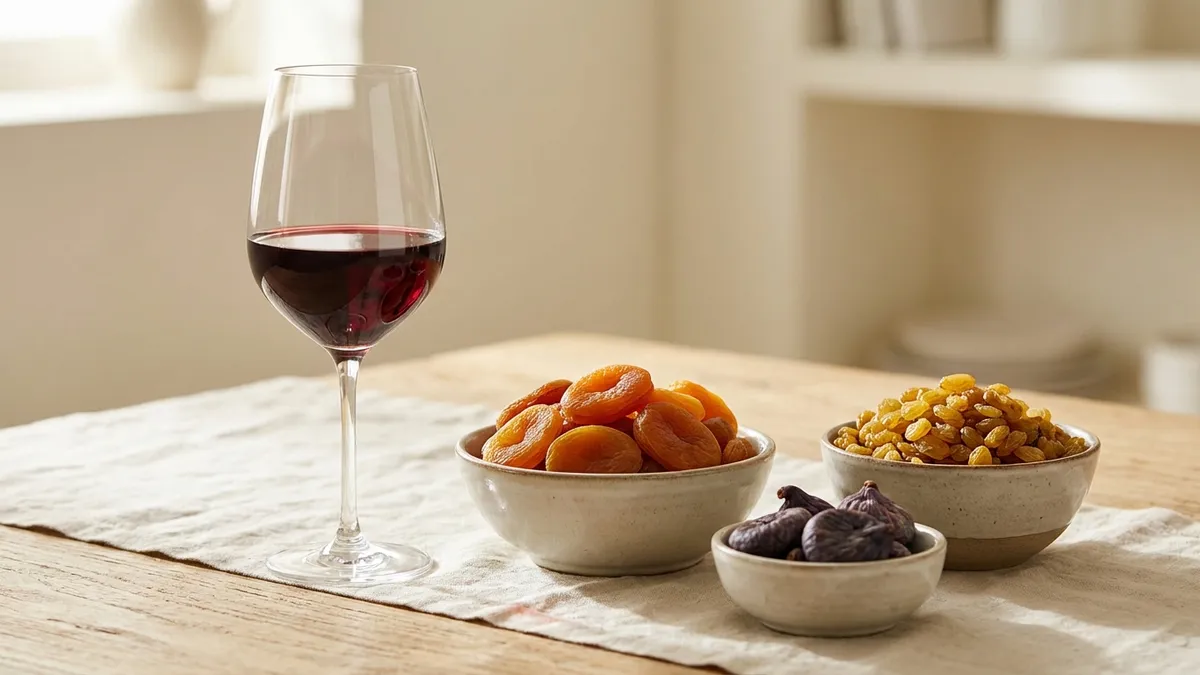
Wine and Gut Health: What the Research Shows

By the Sommy Team — AI-assisted, human-edited.
Updated Jul 25, 2026

Contents (9)
- Wine and Gut Health, in 80 Words
- What the Gut Microbiome Actually Is
- Wine Gut Health: What the Research Actually Shows
- Why Polyphenols Are the Real Story
- Red Wine vs White Wine for the Gut
- The Alcohol Problem You Cannot Ignore
- Is It the Wine or the Polyphenols?
- Foods That Beat Wine for Your Gut
- Where Wine Fits — and Where It Does Not
TL;DR
Wine and gut health has one real signal: a 2020 King's College London study found red wine drinkers had more diverse gut bacteria, driven by polyphenols rather than alcohol. The effect is modest, needs only occasional glasses, and disappears with heavy drinking, which damages the gut lining. Eat the grapes too.
The idea that wine is good for you has survived a lot of bad science, but the topic of wine gut health has quietly moved from wellness blogs into peer-reviewed journals. Researchers now have real data on how red wine interacts with the trillions of bacteria living in your intestines — and the picture is more interesting, and more limited, than the headlines suggest.
The short version is that red wine carries plant compounds your gut bacteria genuinely like, while the alcohol in the same glass works in the opposite direction. Understanding both halves of that trade-off is the difference between a useful fact and a marketing myth.
Wine and Gut Health, in 80 Words
The link between wine gut health and your microbiome runs almost entirely through polyphenols — plant antioxidants concentrated in grape skins. Around 90 to 95 percent of dietary polyphenols reach the colon undigested, where bacteria ferment them and multiply. A 2020 King's College London study of three separate cohorts found red wine drinkers had a more diverse gut microbiome than non-drinkers, an effect visible even with occasional glasses. White wine, beer, and spirits showed nothing. But alcohol damages the gut lining at higher doses, so the benefit is narrow and easily erased.
What the Gut Microbiome Actually Is
Your gut microbiome is the community of microorganisms — mostly bacteria — living in your digestive tract, concentrated in the large intestine. Estimates put the number at roughly 38 trillion bacterial cells, comparable to the number of human cells in your body.
This community does real work: it ferments dietary fiber, produces short-chain fatty acids that feed your intestinal lining, trains your immune system, and synthesizes certain vitamins. A diverse microbiome — one with many different species rather than a few dominant ones — is one of the most consistent markers of gut health in the research.
That word, diversity, is the key to the whole wine story. When scientists talk about a drink being "good for the gut," they usually mean it is associated with higher microbial diversity. Red wine is one of the few alcoholic drinks that shows up on the right side of that measure.

Wine Gut Health: What the Research Actually Shows
The most cited piece of evidence is a 2020 study from King's College London, published in the journal Gastroenterology and drawn from the TwinsUK cohort. The team analyzed the gut microbiomes of nearly 916 female twins and then replicated the finding in two more groups — an American cohort and a Belgian and Dutch cohort.
The result was consistent across all three: people who drank red wine had a more diverse gut microbiome than those who did not. Critically, the same relationship did not hold for white wine, beer, cider, or spirits. Whatever was driving the effect was specific to red wine.
The researchers linked the effect directly to polyphenol content, and they found it did not require regular drinking. The association showed up even in people who drank red wine only occasionally — roughly once every two weeks — with no added benefit from drinking more. That last detail matters enormously, and we will come back to it.
An earlier 2012 crossover study in the American Journal of Clinical Nutrition had already pointed the same direction. When healthy men drank red wine daily for four weeks, their levels of beneficial bacteria — including Bifidobacterium, Lactobacillus, and Prevotella — rose measurably, while some less desirable groups declined. Blood markers of inflammation and blood pressure improved slightly too.
The signal in the research is not "wine is healthy." It is "red wine polyphenols feed gut bacteria." Those are very different claims, and only one of them holds up.
Why Polyphenols Are the Real Story
Polyphenols are a large family of plant compounds — including tannins, anthocyanins, flavonols, and resveratrol — that grapes produce mostly in their skins and seeds as a natural defense. Red wine is rich in them because it ferments in contact with the skins, seeds, and often stems for days or weeks. White wine is pressed off the skins early, so it extracts far less.
Here is the part that connects wine to the gut. When you swallow polyphenols, your small intestine absorbs only a small fraction — roughly 5 to 10 percent. The remaining 90 to 95 percent travel to the colon undigested, and that is exactly where your densest bacterial population lives.
In the colon, gut bacteria metabolize these polyphenols, and the relationship runs both ways. The bacteria break the compounds into smaller, more absorbable molecules, and in turn the polyphenols act as prebiotics — food that favors beneficial species while suppressing potentially harmful ones. It is the same mechanism by which dietary fiber feeds your microbiome.
If you want to understand the compound most people associate with wine and health, our deep dive on resveratrol in red wine walks through what that single molecule does and, just as importantly, what it does not.
Red Wine vs White Wine for the Gut
Because the benefit tracks polyphenol content, red and white wine are not remotely equal here. Red wine carries roughly five to ten times more total polyphenols than white made from the same fruit, purely because of that extended skin contact during fermentation. If you want the full contrast in how the two are made and taste, see our guide to red versus white wine.
| Factor | Red wine | White wine |
|---|---|---|
| Skin contact during fermentation | Days to weeks — full extraction | Minimal — juice pressed off skins early |
| Total polyphenol content | Roughly 1,000–1,800 mg/L | Roughly 200–300 mg/L |
| Linked to higher gut diversity | Yes, across three cohorts | No association found |
| Main gut-relevant compounds | Tannins, anthocyanins, flavonols, resveratrol | Small amounts of flavonols and phenolic acids |
This is also why the tannins in red wine are not the villain some people assume. Tannins — the drying, grippy sensation on your gums — are themselves polyphenols, and they are part of the very compound family the research credits for the gut effect. If tannins make your mouth pucker, our explainer on what tannins are unpacks the sensation and where it comes from.
The Alcohol Problem You Cannot Ignore
Every glass that delivers those polyphenols also delivers ethanol, and alcohol has a well-documented, and opposite, effect on the gut.
Studies of people with alcohol use disorder show clear dysbiosis — a loss of beneficial bacteria and a shift toward a less diverse, less healthy microbiome. Heavy alcohol intake also increases intestinal permeability, commonly called "leaky gut," where the tight junctions of the gut lining loosen and allow bacterial toxins to slip into the bloodstream, driving inflammation.
This is the counterweight that gets left out of the cheerful headlines. The polyphenol benefit is real but modest, and it appears at low, occasional intake. The alcohol harm scales with volume and frequency. Somewhere as you drink more, the second effect overtakes the first.

The World Health Organization stated in 2023 that there is no safe level of alcohol consumption from a population-health perspective. That does not erase the polyphenol finding, but it does frame it correctly: wine is not medicine, and the gut research does not make it one. For a practical, non-preachy look at where sensible limits actually sit, our guide to responsible wine drinking lays out the standard-drink math and current guidelines.
Is It the Wine or the Polyphenols?
This is the question that reframes everything. If the gut benefit comes from polyphenols rather than alcohol, could you get it without drinking at all?
The 2012 crossover study built in a clever test to answer exactly this. Alongside full-strength red wine, it included a de-alcoholized red wine arm — same polyphenols, ethanol removed. That arm produced similar increases in beneficial gut bacteria as the full-strength wine.
The implication is clean: the plant compounds do the work, not the ethanol. And once you accept that, the case for drinking wine specifically for your gut collapses, because the exact same polyphenols live in foods that carry no alcohol at all.
Foods That Beat Wine for Your Gut
The polyphenols concentrated in red wine are not exotic. They show up across a normal, colorful diet:
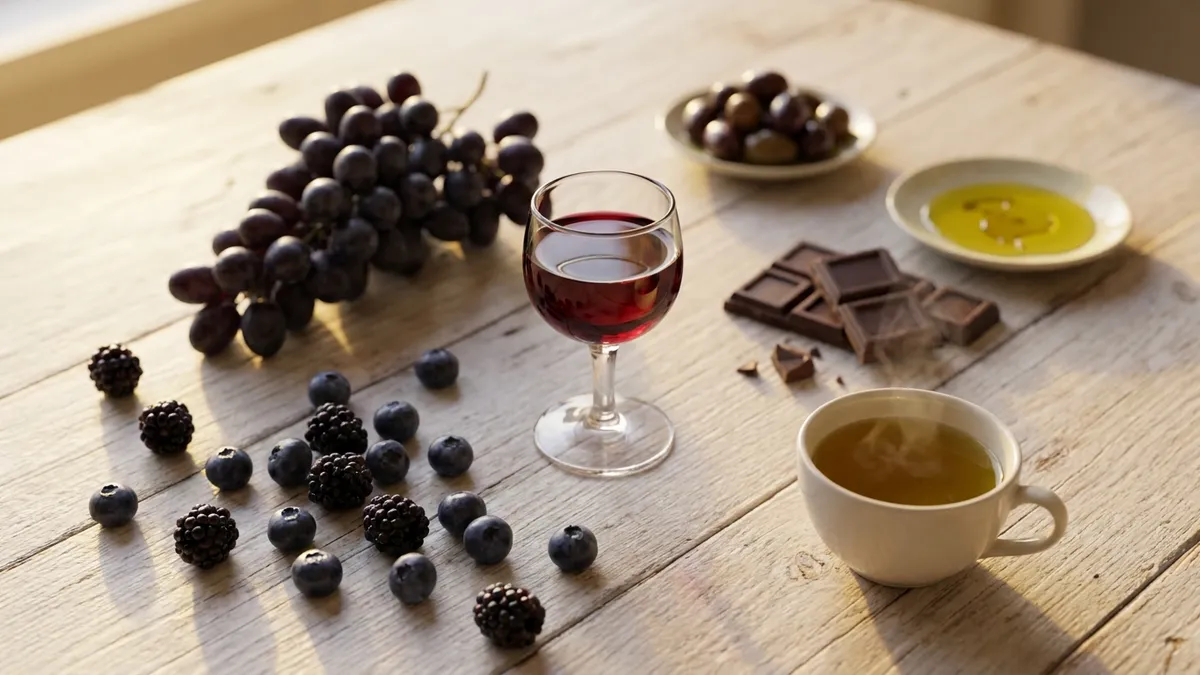
- Grapes and berries — blueberries, blackberries, and dark grapes carry the same anthocyanins as red wine, with the skins intact.
- Green and black tea — among the richest everyday polyphenol sources, and unlimited.
- Dark chocolate — cocoa flavanols are close cousins of wine's compounds.
- Olives and extra-virgin olive oil — cornerstones of the Mediterranean diet, loaded with phenolic compounds.
- Coffee, nuts, and legumes — all contribute to a polyphenol-rich pattern.
Every one of these delivers the compounds without alcohol, and most add something wine cannot: fiber. Fiber is the single most powerful lever for a diverse microbiome, feeding bacteria that produce the short-chain fatty acids your gut lining depends on. Wine contains essentially none.
This is the practical takeaway. If you genuinely care about your gut, a plate of varied, fiber-rich, polyphenol-heavy food does far more than any glass of wine, and it does it every day rather than occasionally. Wine can be part of a gut-friendly life, but it earns its place at the table for flavor and ritual, not for a health claim.
Where Wine Fits — and Where It Does Not
The evidence supports a narrow, specific statement: occasional red wine is associated with a slightly more diverse gut microbiome because of its polyphenols. It does not support the idea that drinking more wine builds a healthier gut, and it does not override the well-established harms of alcohol at volume.
If you drink red wine, you can enjoy the polyphenols as a genuine, if minor, feature. If you do not drink, you lose almost nothing on the gut front — the foods above cover the same ground better. And if gut discomfort is your actual concern, the cause is more often alcohol, acidity, or histamines than tannins or sulfites, as our piece on histamine intolerance and wine explains.
Learning to taste wine slowly and attentively has a quiet side effect that no supplement can match: it naturally cuts how much you drink. Structured tasting turns a bottle into something you study rather than something you finish, which is the most gut-friendly habit of all. The Sommy app is built around exactly that kind of deliberate, one-glass-at-a-time practice — and if you are curious how understanding a wine's makeup deepens the experience, our guide on reading a wine label is a good next step.
Sources
- Red Wine Consumption Associated With Increased Gut Microbiota α-Diversity in 3 Independent Cohorts — Le Roy et al., Gastroenterology (King's College London, TwinsUK), 2020
- Influence of red wine polyphenols and ethanol on the gut microbiota ecology and biochemical biomarkers — Queipo-Ortuño et al., American Journal of Clinical Nutrition, 2012
- Benefits of polyphenols on gut microbiota and implications in human health — Cardona et al., The Journal of Nutritional Biochemistry, 2013
- No level of alcohol consumption is safe for our health — World Health Organization Europe / The Lancet Public Health, 2023
Frequently Asked Questions
Is wine good for gut health?
Red wine shows a small, real association with a more diverse gut microbiome, but the benefit comes from polyphenols, not alcohol. A 2020 King's College London study across three cohorts found red wine drinkers had greater bacterial diversity than non-drinkers, and even occasional glasses showed the effect. White wine, beer, and spirits did not. The alcohol itself is a net negative, so wine is not a health tonic — the polyphenols are a minor bonus, not a reason to pour.
How do wine polyphenols affect the gut microbiome?
Roughly 90 to 95 percent of the polyphenols you eat or drink pass through the small intestine undigested and reach the colon, where gut bacteria break them down. There they act like prebiotics, feeding beneficial groups such as Bifidobacterium and Lactobacillus while suppressing less desirable species. A 2012 crossover study found that daily red wine polyphenols measurably increased these helpful bacteria over four weeks.
Does red wine have more gut benefits than white wine?
Yes, because the benefit tracks polyphenol content and red wine has far more. Red wine ferments in contact with grape skins, seeds, and stems for days or weeks, extracting roughly five to ten times more polyphenols than white wine, which is pressed off the skins early. In the King's College research, only red wine — not white, beer, cider, or spirits — was linked to higher microbial diversity.
Can wine damage your gut?
Yes, in quantity. Heavy and chronic alcohol intake causes gut dysbiosis — a loss of beneficial bacteria — and increases intestinal permeability, often called leaky gut, which lets bacterial toxins pass into the bloodstream. Studies of people with alcohol use disorder show clearly altered, less diverse microbiomes. The polyphenol benefit seen with occasional red wine is quickly overwhelmed once drinking becomes frequent or heavy.
Is it the alcohol or the polyphenols that help the gut?
The evidence points to polyphenols. In the 2012 crossover study, a de-alcoholized red wine arm produced similar increases in beneficial gut bacteria as the full-strength wine, which suggests the plant compounds — not the ethanol — drive the effect. That matters because it means you can get the same or better microbiome benefit from grapes, berries, tea, and dark chocolate without any of the downsides of alcohol.
How much red wine is good for gut health?
Less than you might hope. The King's College study saw its association with occasional consumption — as little as once every two weeks — with no extra benefit from drinking more. Because alcohol harms the gut at higher volumes, there is no dose where more wine means a healthier gut. If gut health is the goal, occasional small pours plus polyphenol-rich foods beat any amount of regular drinking.
Do sulfites or tannins in wine hurt the gut?
For most people, no. Tannins are themselves polyphenols and are part of what feeds gut bacteria. Sulfites are a preservative that a small minority react to, but there is no strong evidence they harm a healthy gut microbiome at wine-level concentrations. Dried fruit and processed foods often contain more sulfites than wine. Genuine gut discomfort from wine is more often about alcohol, acidity, or histamines than sulfites or tannins.
What foods give the same gut benefits as red wine without alcohol?
The polyphenols in red wine also appear in grapes, blueberries, blackberries, green and black tea, dark chocolate, olives, and extra-virgin olive oil. These deliver the same class of gut-feeding compounds along with fiber, which wine lacks entirely. Fiber is the single most important thing you can feed your microbiome, so a polyphenol-rich, high-fiber diet does far more for gut health than any glass of wine can.
Sommy Team
LinkedInFounder & Wine Educator
The Sommy Team is building the world's most approachable wine education app, helping beginners develop real tasting skills through structured courses and AI-guided practice.