Willamette Valley Sub-AVAs: Dundee Hills to Eola-Amity

By the Sommy Team — AI-assisted, human-edited.
Updated Sep 24, 2026
Contents (9)
- Willamette Valley Sub-AVAs, in One Paragraph
- What Is a Sub-AVA, and Why Does the Willamette Valley Have 11?
- Which Willamette Valley Sub-AVAs Matter Most on a Label?
- How Do Dundee Hills and Eola-Amity Hills Differ?
- What Makes Yamhill-Carlton and McMinnville Different?
- Is Ribbon Ridge Part of the Chehalem Mountains?
- Which Willamette Valley Sub-AVA Should You Try First?
- Do Sub-AVA Wines Really Taste Different?
- What Does a Sub-AVA Name on the Label Guarantee?
TL;DR
The Willamette Valley holds 11 sub-AVAs, approved between 2004 and 2022. Six carry most bottles: Dundee Hills, Eola-Amity Hills, Yamhill-Carlton, McMinnville, Ribbon Ridge and Chehalem Mountains. Soil type and Pacific wind separate them, and Oregon law requires 95% of the grapes to come from the named area.
Willamette Valley Sub-AVAs, in One Paragraph
The Willamette Valley sub-AVAs are 11 smaller wine areas drawn inside Oregon's biggest appellation, and the name tells you what soil and how much Pacific wind shaped the Pinot Noir. Six were approved between 2004 and 2006 and carry most labels: Dundee Hills, Yamhill-Carlton, McMinnville, Ribbon Ridge, Eola-Amity Hills and Chehalem Mountains. Five followed between 2018 and 2022. Three soil families split them: red clay weathered from basalt, old seabed sediment, and windblown silt. A gap in the Coast Range pours cold air onto the southern hills and keeps those grapes tart. In Oregon, a sub-AVA on the label means at least 95% of the grapes grew inside it.
What Is a Sub-AVA, and Why Does the Willamette Valley Have 11?
A sub-AVA is a smaller wine area drawn inside a bigger one, and the Willamette Valley holds 11 because its hills differ more in soil and wind than one name can show. An AVA (American Viticultural Area) is a protected place name for grapes, approved by the federal government.
The Willamette Valley AVA came first. It was approved on December 1, 1983, as the nation's 55th AVA and Oregon's first. It is huge on paper: about 3.43 million acres. Only 27,202 of those acres grow grapes, spread across 931 vineyards.
That gap is the reason sub-AVAs exist. A wine labelled plain "Willamette Valley" could come from a cool hilltop or a warm river flat far down the valley. Growers on distinct hills petitioned to draw tighter lines around their ground. Each petition had to prove that the soil, elevation or climate inside the line differs from the land outside it.
The result is nesting: one AVA sitting wholly inside another. Every sub-AVA here also counts as Willamette Valley, so a producer can print either name. Most cluster in the northern half of the valley, and Lower Long Tom lies in the south.
The same logic built California's patchwork, covered in the Napa Valley sub-AVAs guide. For the state as a whole, start with the Oregon wine guide.
Which Willamette Valley Sub-AVAs Matter Most on a Label?
Six of the 11 carry most of the weight on shelves: Dundee Hills, Yamhill-Carlton, McMinnville, Ribbon Ridge, Eola-Amity Hills and Chehalem Mountains, all approved between 2004 and 2006. The later five are real AVAs too, but they are newer and turn up on far fewer labels.
The table puts all 11 side by side. "Planted" is acres under vine, which says more about how often a name reaches a shop than total size does. McMinnville covers 40,500 acres but plants only about 750.
| Sub-AVA | Approved | Planted acres | Main soil or signature | Pick it when |
|---|---|---|---|---|
| Dundee Hills | 2004 | About 1,300 | Red Jory clay from basalt, about 80% | You want the classic red-soil hillside benchmark |
| Yamhill-Carlton | 2004 | 2,844 | Old seabed silt-loam in a south-facing bowl | You want rounder Pinot with lower acidity |
| McMinnville | 2005 | About 750 | Marine sandstone with basalt intrusions, shallow | You want a rarer, firm hillside wine |
| Ribbon Ridge | 2005 | 620 | Willakenzie seabed soil, drier than its neighbours | You want a tiny, almost all-Pinot area |
| Eola-Amity Hills | 2006 | About 2,850 | Thin basalt, cooled by Pacific wind | You want tart, lifted Pinot |
| Chehalem Mountains | 2006 | 2,685 | Three soils: basalt, seabed and loess | You want to compare sites inside one AVA |
| Van Duzer Corridor | 2018 | About 1,000 | Wind gap; seabed loam over siltstone | You want the windiest, firmest style |
| Laurelwood District | 2020 | 975 | Inside Chehalem Mountains | You already know Chehalem and want a closer look |
| Tualatin Hills | 2020 | About 860 | Newer; 144,000 acres, lightly planted | You collect every sub-AVA |
| Lower Long Tom | 2021 | 575 | In the southern valley | You want a southern-valley contrast |
| Mount Pisgah, Polk County | 2022 | 648 | Newest; 5,850 acres in total | You want the latest addition |
If a label names one of the original six, match it against the table and you know the soil it grew in. If it says only "Willamette Valley", the grapes may come from anywhere in those 27,202 planted acres.
How Do Dundee Hills and Eola-Amity Hills Differ?
Dundee Hills grows its vines in deep red volcanic clay on sheltered slopes, while Eola-Amity Hills sits on thin basalt soils swept by cold afternoon wind, which keeps the grapes tarter. Comparing them shows soil and wind changing at once.
Dundee Hills: the red clay hills
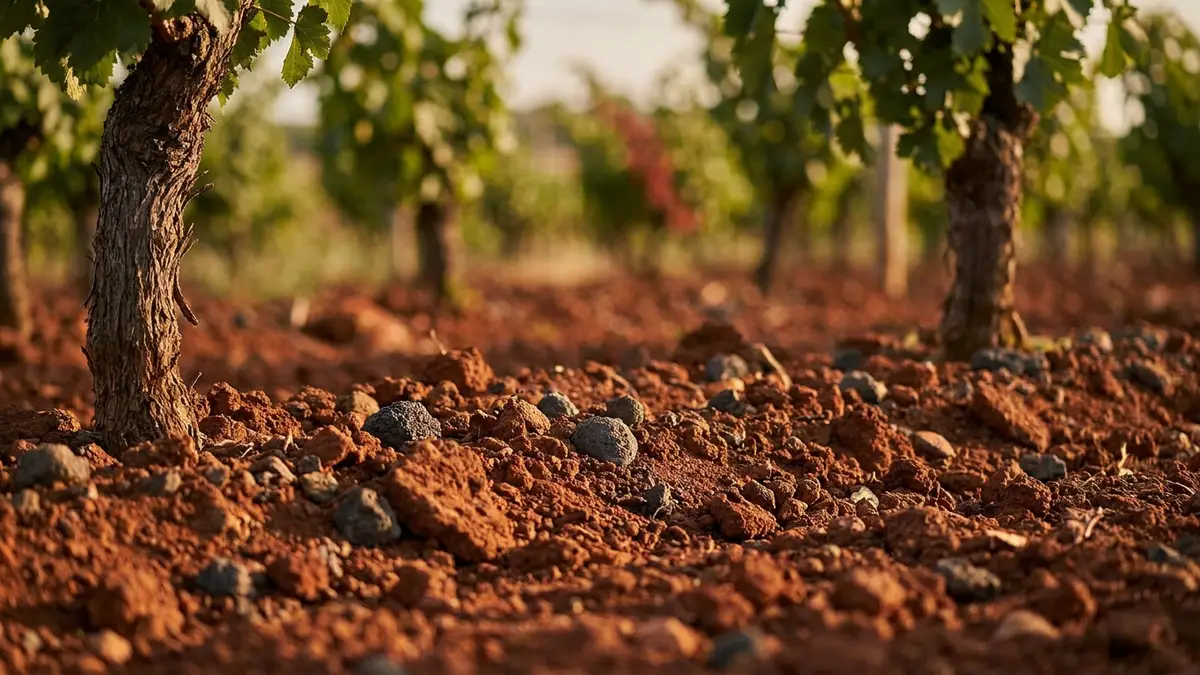
Dundee Hills was approved on November 30, 2004, the valley's second appellation. About 80% of it is Jory soil: reddish silt, clay and loam weathered from Columbia River basalt. Jory is moderately fertile and drains well. The hills rise from 200 feet to 1,067 feet, with a growing season of 223 days. About 1,300 acres are planted across 28 vineyards. This is where the valley's Pinot Noir story began: the first Pinot Noir and Pinot Gris vines went into these hills in 1966.
Eola-Amity Hills: basalt and wind
Eola-Amity Hills followed on July 17, 2006. Its soils are mostly shallow, stony basalt of the Nekia series, now reclassified as Gelderman. Vineyards sit mostly between 250 and 700 feet. Of 37,900 acres, about 2,850 are planted.
Its climate rates Region I, the coolest band, at 2,300 to 2,500 growing degree days (a running total of warmth over the season; lower means cooler). Only about 15% of its 40 to 45 inches of yearly rain falls during the growing season.
Van Duzer Corridor: the wind gap itself
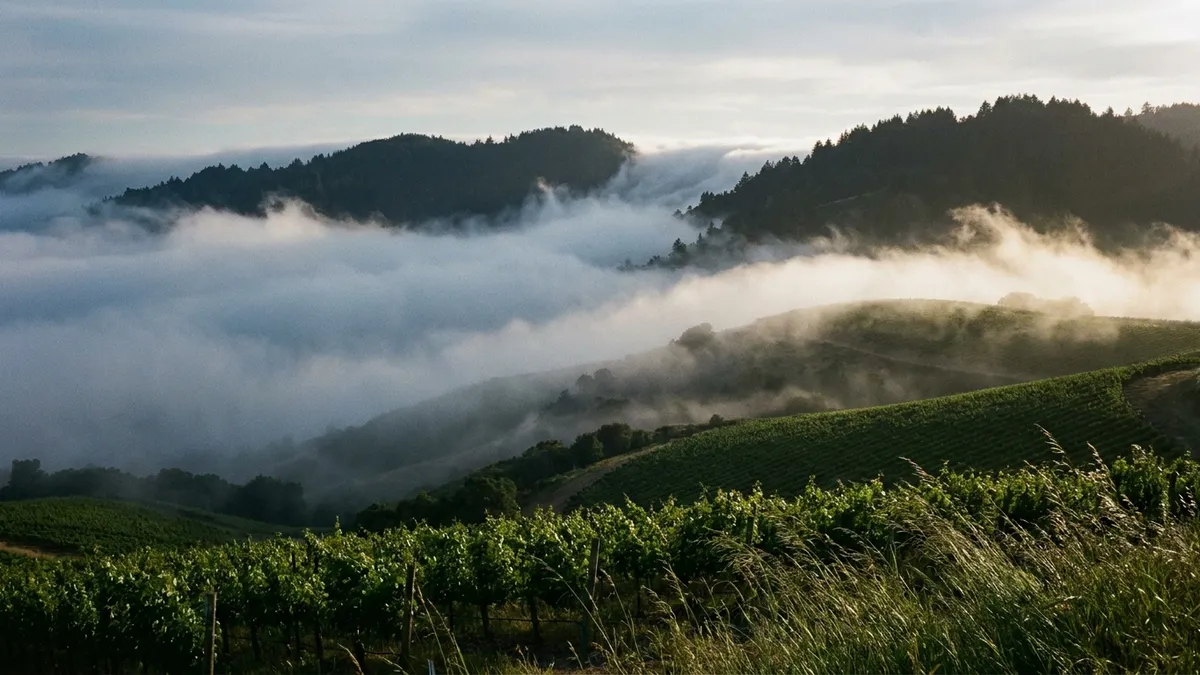
The wind comes through a gap in the Oregon Coast Range. Cold Pacific air funnels through it on summer afternoons and cools the grapes, which helps them keep more acidity (the tartness that makes your mouth water). The gap became its own AVA, Van Duzer Corridor, on December 14, 2018. It covers about 59,871 acres, with roughly 1,000 planted across 18 vineyards and six resident wineries. The AVA's backers say the steady wind grows grapes with thicker skins. Thicker skins give more colour and more tannin (the drying grip on your gums).
The wine acidity explainer shows how to feel that tartness on your tongue, and climate and wine flavor explains how growing degree days shape ripeness.
What Makes Yamhill-Carlton and McMinnville Different?
Both sit mostly on old seabed rather than volcanic rock, and the Yamhill-Carlton petition describes Pinot Noir with lower acidity and darker aromas than the basalt hills produce. The seabed soils are fine silts and sandstones laid down under an ancient ocean, then lifted into hills.
Yamhill-Carlton: the sheltered bowl
Yamhill-Carlton was approved on December 9, 2004. It is a south-facing bowl of horseshoe-shaped hills in the rain shadow of the Coast Range (the drier side of a mountain range, where clouds have already dropped their rain). Vineyards sit between 200 and 1,000 feet. The season runs 197 days, with 2,300 growing degree days and 42 inches of rain a year. About 2,844 acres are planted across 127 vineyards.
The petition claims its wines are lower in acid than those from basalt or windblown soils. It lists aromas of coffee, cocoa, anise, cedar and tobacco.
McMinnville: thin soils and odd water
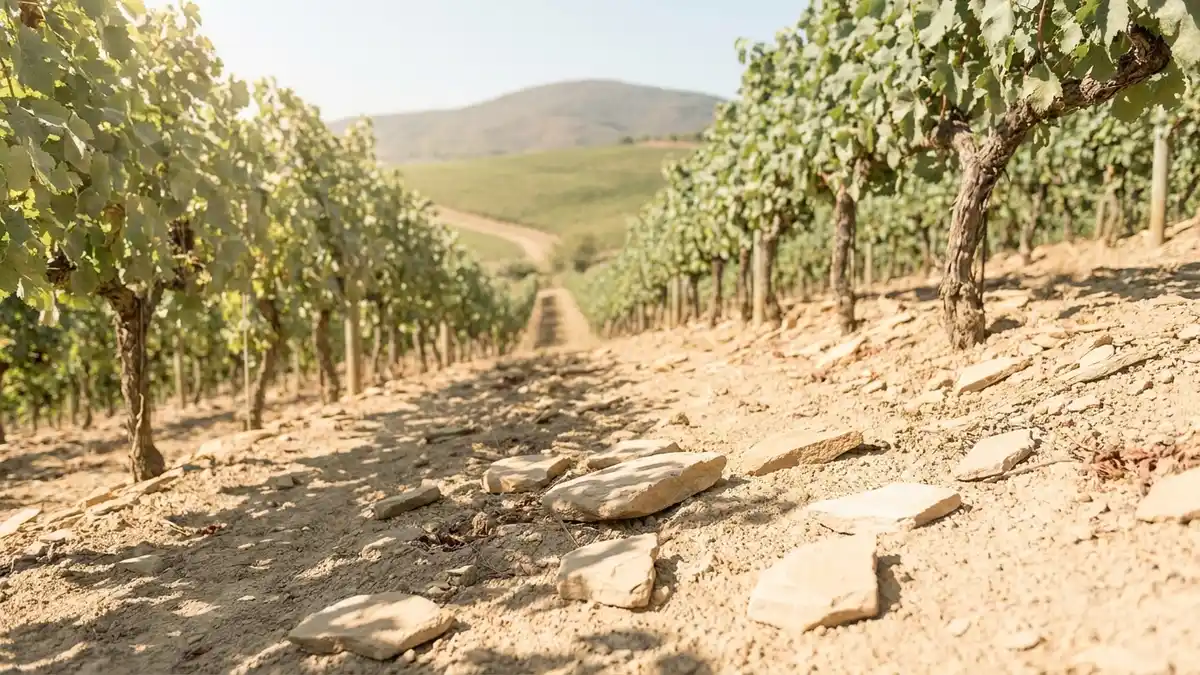
McMinnville was approved on January 18, 2005. Its rock is marine sandstone and mudstone, cut through with seams of basalt from undersea eruptions. The soils on top are shallow, only 20 to 40 inches deep, and hold little water. The basalt seams show up in the groundwater: it carries 66 mg/L of sodium, against 16 mg/L in nearby areas. Only about 750 of its 40,500 acres are planted, so bottles are scarce.
The guide to how soil affects wine taste explains how drainage and water-holding shape what a vine can ripen.
Is Ribbon Ridge Part of the Chehalem Mountains?
Yes. Ribbon Ridge is a small ridge at the northwest end of the Chehalem Mountains, and its whole AVA lies inside the larger one. People often file it under neighbouring Yamhill-Carlton, yet the boundary lines put it inside Chehalem Mountains.
Ribbon Ridge: small, dry and nearly all Pinot
Ribbon Ridge came first, on June 1, 2005, as the smallest sub-AVA of its time. It covers 3,350 acres, with 620 planted across 36 vineyards. About 90% of those vineyards grow Pinot Noir. Its soil is Willakenzie, a seabed sediment tilted up from the Eocene era. The ridge gets about 29 inches of rain a year, up to 10 inches less than exposed valley sites nearby.
Chehalem Mountains: three soils in one AVA
Chehalem Mountains was approved on November 27, 2006. It covers 68,265 acres, with 2,685 planted across 36 vineyards, and it holds all three soil families. Willakenzie seabed soil covers Ribbon Ridge. Red Jory basalt covers the centre and south. Loess (fine silt carried by wind and dropped in thick layers), here called Laurelwood, covers the central slopes.
Height makes the spread even wider. The valley floor sits under 200 feet, and Bald Peak reaches 1,633 feet. Rain climbs from 37 inches low down to almost 60 at the summit. Pinot Noir at the base ripens about three weeks before Pinot Noir on the cold north faces of the peaks.
Laurelwood District, approved in 2020, sits inside both Chehalem Mountains and the Willamette Valley. That makes it three layers deep, and all three names are legal on its labels.
Which Willamette Valley Sub-AVA Should You Try First?
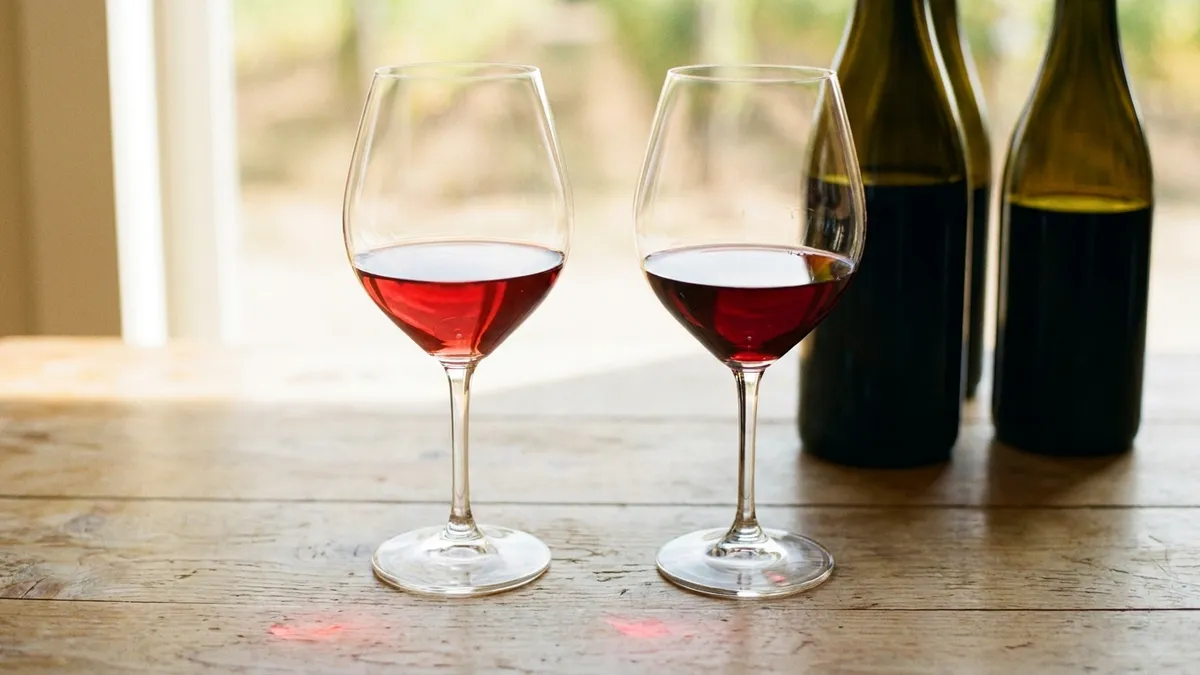
Start with a pair: one Dundee Hills and one Eola-Amity Hills Pinot Noir from the same vintage (the harvest year), opened side by side. Matching the year removes that season's weather from the comparison, so what differs in the two glasses is mostly soil and wind.
Then use the style you prefer to pick the next bottle:
- Tart and lifted: if you like a Pinot that keeps your mouth watering, pick Eola-Amity Hills or Van Duzer Corridor.
- Rounder and darker: if you like softer acidity and roasted aromas, pick Yamhill-Carlton.
- Classic red-soil style: if you want a reference point for everything else, pick Dundee Hills.
- A study in contrasts: if you enjoy comparing, buy two Chehalem Mountains bottles from different parts of the AVA.
On the plate, acidity decides the choice. If the dish is oily, such as grilled salmon, pick the wind-cooled Eola-Amity side, because tartness cuts through fat. If the dish is earthy and soft, such as roast mushrooms, pick the rounder Yamhill-Carlton side, because low acidity will not taste sharp beside gentle flavours. The wine with seafood guide has more fish matches. Serve both a little below room temperature; the serving temperature chart shows why.
For the grape itself, the Pinot Noir guide covers thin skins and ageing. Oregon's second grape gets its own page in Pinot Grigio vs Pinot Gris.
Do Sub-AVA Wines Really Taste Different?
On structure, yes; on specific flavour words, treat the claims as sales copy until you taste them. Wind, height and thin soils change acidity, skin thickness and ripening dates by days or weeks. Those changes show up in the glass as tartness, grip and colour.
The flavour lists are another matter. They are advocacy, not tasting-panel science. The coffee and cocoa in the Yamhill-Carlton petition, or the groundwater sodium in McMinnville's, come from AVA petitions, documents written to win a boundary.
The safest reading is mechanical. Cooler, windier sites keep more acidity. Shallower, drier soils give smaller crops. Winemaking choices, such as oak or whole clusters, can outweigh either. The what is terroir guide sorts the parts of place that reach the glass from the parts that stay in the marketing. For the region Oregon is most often compared with, see the Burgundy wine guide.
What Does a Sub-AVA Name on the Label Guarantee?
In Oregon, a sub-AVA on the label means at least 95% of the grapes grew inside that boundary, stricter than the 85% federal rule. The wine must also be fully finished in the state where the AVA sits. The same 95% rule covers a bottle that names only the Willamette Valley.
Oregon tightens the grape name too. A bottle labelled Pinot Noir must hold at least 90% Pinot Noir, against a federal floor of 75%. A few grapes, such as Tempranillo and Zinfandel, follow the 75% rule instead.
So the label reads like a map. If a bottle says only "Oregon" or "Willamette Valley", it is likely a blend of many sites. If it names Dundee Hills or Ribbon Ridge, almost every grape came from that one patch. The how to read a wine label guide covers the other lines on the back, and the wine regions hub links the other region guides.
Tonight, pick up any Oregon Pinot Noir and find its AVA line. Match the name to the table above and taste for acidity first. Then log what you notice with the tasting mode in the Sommy app, which walks you through look, smell and taste and saves the note to your journal.
Sources
Frequently Asked Questions
How many sub-AVAs are in the Willamette Valley?
There are 11: Dundee Hills, Yamhill-Carlton, McMinnville, Ribbon Ridge, Eola-Amity Hills, Chehalem Mountains, Van Duzer Corridor, Laurelwood District, Tualatin Hills, Lower Long Tom and Mount Pisgah, Polk County. They were approved between 2004 and 2022. Most sit in the northern half of the valley, and Lower Long Tom lies in the south.
What is the difference between Dundee Hills and Eola-Amity Hills Pinot Noir?
Dundee Hills vines grow mostly in deep red Jory clay weathered from basalt, on slopes sheltered from the strongest wind. Eola-Amity Hills vines grow in thin, stony basalt soils, and cold afternoon air from the Van Duzer Corridor cools them. That wind helps the grapes keep more acidity, so Eola-Amity Pinot Noir tends to taste tarter and firmer side by side.
Is Ribbon Ridge part of Chehalem Mountains?
Yes. Ribbon Ridge is a small ridge at the northwest end of the Chehalem Mountains, and its whole AVA lies inside the Chehalem Mountains AVA. It was approved first, in 2005, and has about 620 planted acres. Its soil is old marine sediment, and roughly 90% of its vineyards grow Pinot Noir.
What does a sub-AVA name on an Oregon wine label mean?
It means at least 95% of the grapes grew inside that sub-AVA's legal boundary. That is Oregon's rule, and it is stricter than the federal minimum of 85%. The wine must also be finished in Oregon. A bottle that says only Willamette Valley can blend grapes from anywhere in the valley's 3.43 million acres.
What soil is Willamette Valley Pinot Noir grown in?
Three main soil families. Red volcanic clay weathered from basalt, called Jory, covers about 80% of the Dundee Hills. Old seabed soils such as Willakenzie fill Yamhill-Carlton, McMinnville and Ribbon Ridge. Windblown silt called Laurelwood loess sits in the Chehalem Mountains. Alluvial soils washed down by rivers cover the lowest ground.
What is the newest AVA in the Willamette Valley?
Mount Pisgah, Polk County, approved in June 2022, is the newest. It covers about 5,850 acres with roughly 648 acres planted. It joined a wave of newer sub-AVAs: Van Duzer Corridor in 2018, Laurelwood District and Tualatin Hills in 2020, and Lower Long Tom in 2021. All of them are smaller on shelves than the original six.
Sommy Team
LinkedInFounder & Wine Educator
The Sommy Team is building the world's most approachable wine education app, helping beginners develop real tasting skills through structured courses and AI-guided practice.