Patagonia Wine Guide: Desert Vineyards of the Far South

By the Sommy Team — AI-assisted, human-edited.
Updated Sep 24, 2026
Contents (11)
- Patagonia Wine Guide in One Paragraph: What Is It?
- Where Is Patagonia's Wine Country?
- How Is Patagonia Wine Different From Mendoza?
- Which Grapes Grow Best in Patagonia?
- What Does Patagonian Pinot Noir Taste Like?
- How Should You Serve and Pair Patagonia Wine?
- Why Can Vines Grow in a Desert Steppe?
- What Does Phylloxera-Free Mean Here?
- Is Chubut the Southernmost Wine Region?
- How Did Patagonia Become a Wine Region?
- How to Start Tasting Patagonia Wine Tonight
TL;DR
Patagonia is Argentina's southern wine country: Río Negro and Neuquén, plus the young Chubut frontier. The vineyards sit in a dry rain shadow and live on Andean river water. Freshness comes from latitude, not altitude, so expect tart, lighter Pinot Noir, Merlot and whites, plus base wine for Argentine sparkling.
The first fact in a patagonia wine guide is a surprise: Argentina's southernmost wine country is a desert. Río Negro and Neuquén get about as much rain as a dry scrubland, so every vine drinks water brought down from the Andes. What keeps the wine fresh is the far-south position on the map, which slows ripening and holds on to tartness.
Patagonia Wine Guide in One Paragraph: What Is It?
Patagonia wine comes from southern Argentina, mainly the provinces of Río Negro and Neuquén, with Chubut as a young frontier further south. The core valleys sit near 39°S in the Andean rain shadow, with roughly 206 to 244 mm of rain a year, so all vineyards are irrigated from snow-fed rivers. The region counts as cool climate (tarter and lighter wine than a warm region makes) because it lies so far south. Malbec and Merlot are the most planted grapes, Pinot Noir is the best known abroad, and the region supplies many grapes for Argentine sparkling wine. As of 2003 the two core provinces had 3,800 hectares of vines, a small, growing area.
Where Is Patagonia's Wine Country?
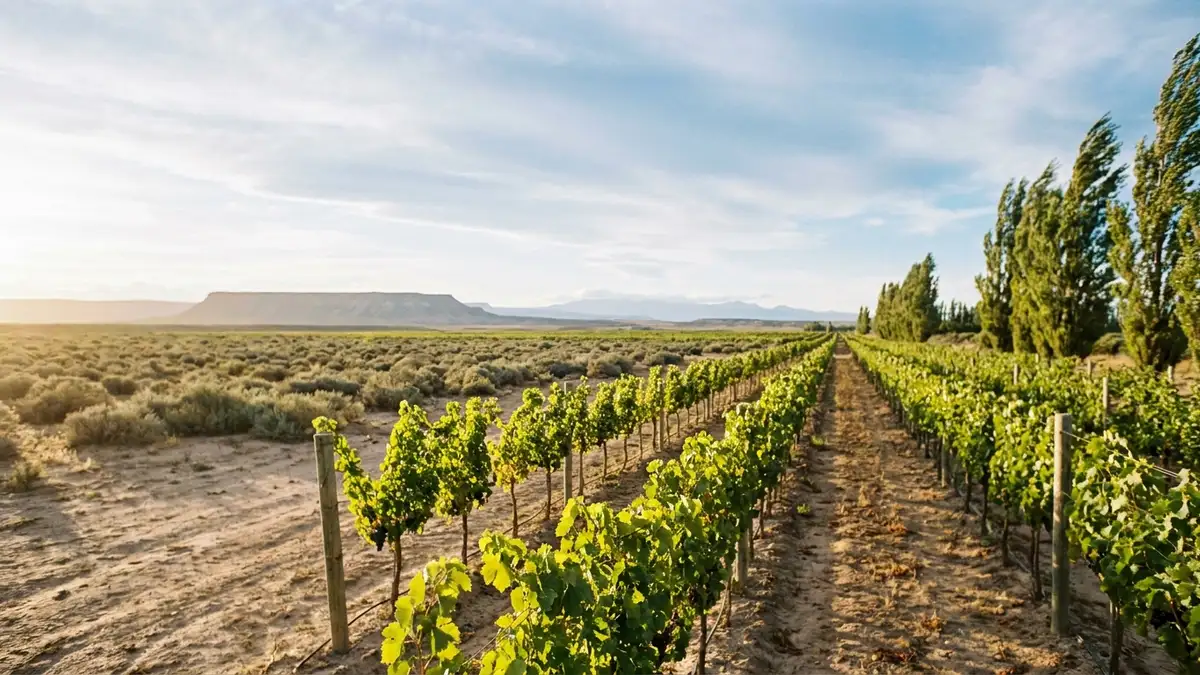
Patagonia's wine country sits in three provinces of southern Argentina: Río Negro and Neuquén, the established core, and Chubut, the frontier further south. All three lie east of the Andes on open, windswept steppe, far below the famous vineyards of Mendoza.
The core is the upper valley of the Río Negro and its neighbour Neuquén. The key town is General Roca, at 39°2′S. Latitude (how far a place sits from the equator) matters here more than anything else. Further from the equator, the sun sits lower and the season runs cooler.
Chubut is a different world, covered in its own section below. It stretches from the 42nd to the 46th parallel, and wine there is still new.
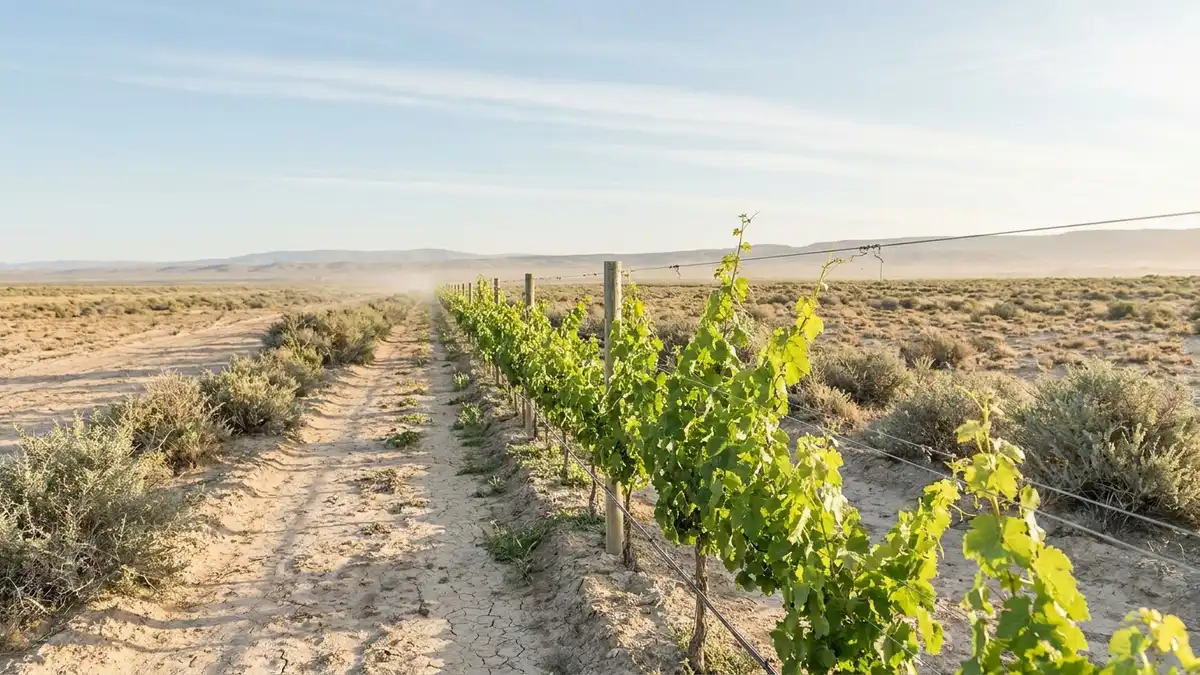
If you know Argentina only through Malbec, the Argentina wine guide shows where Patagonia sits in the wider country.
How Is Patagonia Wine Different From Mendoza?
Mendoza gets its cool nights from height; Patagonia gets its freshness from sitting much further south. Mendoza's vineyards mostly sit at 600 to 1,100 metres above sea level. Patagonia's cooling comes from latitude, not altitude, so the same grape ripens more slowly and keeps more tartness.
That is why a Patagonian Merlot and a Mendoza Merlot can taste like cousins rather than twins. The table below puts the three areas side by side, with what to look for when you shop.
| Area | Where | What cools the vines | Wine history | What to look for on the shelf |
|---|---|---|---|---|
| Río Negro and Neuquén | Near 39°S, river valleys | Latitude and a long, slow season | Over a century, since the early 1900s | Pinot Noir, Merlot, Semillon and Chardonnay with high acidity |
| Chubut | 42°S to 46°S | Latitude, short summers, cold nights | Wine route only since 2017 | Rare, small-batch bottles; treat each as an experiment |
| Mendoza | Much further north | Altitude, 600 to 1,100 m | The country's main wine region | Riper Malbec and Cabernet for contrast |
If a bottle says Río Negro or Neuquén, expect a lighter, tarter wine than the same grape from Mendoza. If it says only "Patagonia", the grapes can come from anywhere in the south, so check the back label for a province. A named province tells you more about the style than the word Patagonia alone. Our guide to how to read a wine label shows where that detail usually sits. For more on why cooler places make tarter wine, see how climate changes wine flavour.
Which Grapes Grow Best in Patagonia?
Malbec, Argentina's signature red, is the most planted grape here, at about 30 percent of vineyards, followed by Merlot, Cabernet Sauvignon and Pinot Noir. Chardonnay, Semillon and Torrontés Riojano also grow here, and Chubut's young vineyards add Sauvignon Blanc, Gewürztraminer and Riesling, all grapes that like a cool season.
- Pinot Noir is the grape the region is known for abroad. It needs cool weather to stay fresh, and it is the subject of the next section.
- Merlot from Patagonia is leaner than in warm regions, with plum and cherry instead of jam.
- Semillon makes dry whites with lemon and waxy texture. Our Semillon guide covers the grape in full.
- Chardonnay keeps its green-apple tartness, which is one reason it goes into sparkling wine.
- Torrontés comes in three Argentine types. The rarest, Torrontés Mendocino, is mostly found in Río Negro. The Torrontés guide explains the family.
Many of the grapes for Argentina's sparkling wine are sourced from this area. Sparkling wine needs grapes picked with plenty of acidity, and a cool southern valley delivers exactly that. The sparkling wine grapes guide shows which varieties do that job worldwide.
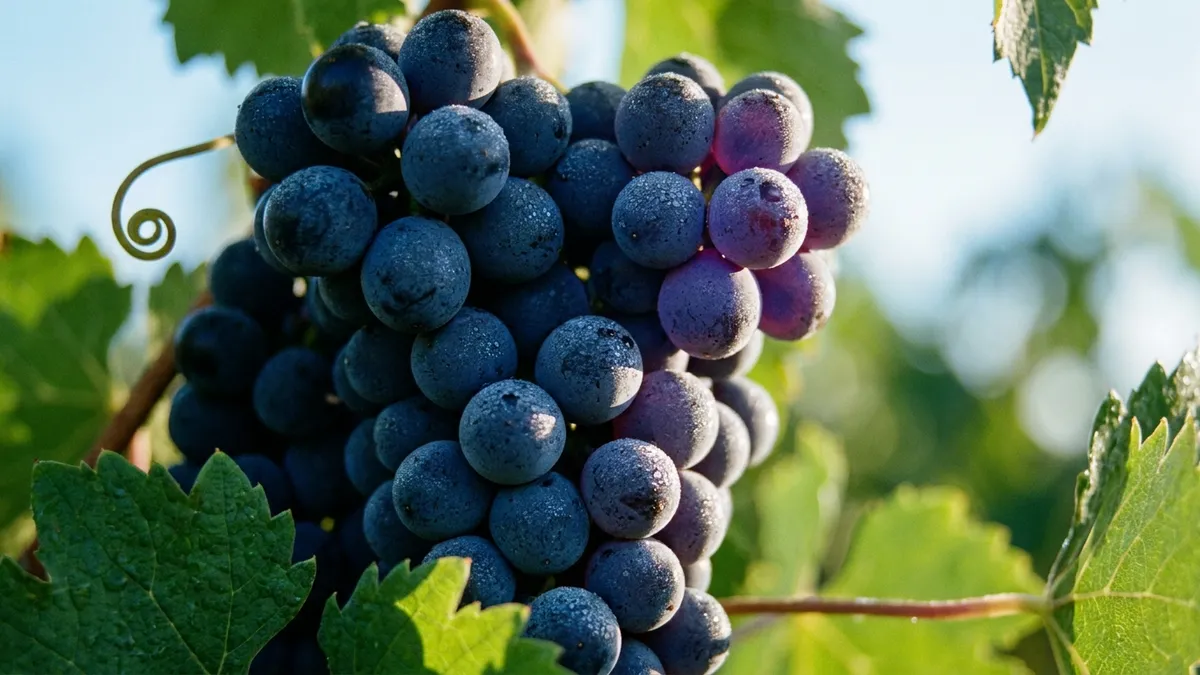
If you want the Patagonian style at its clearest, buy Pinot Noir or Merlot. If you want a white, pick Semillon or Chardonnay from Río Negro.
What Does Patagonian Pinot Noir Taste Like?
Patagonian Pinot Noir is light to medium in body, with high acidity and cherry fruit that stays fresh rather than jammy. The region's cooler climate gives a long, drawn-out growing season, so the grapes gain flavour slowly without piling up sugar.
Start with structure. Acidity (the tartness that makes your mouth water) is the first thing you feel, along the sides of the tongue. Body (the weight of the wine, like skimmed versus whole milk) sits on the lighter side.
Tannin (the drying grip on your gums) is soft, because Pinot Noir's thin skins carry little of it. Then come the smells. Expect fresh red cherry, because slow ripening keeps fruit tart rather than cooked. Raspberry often sits alongside it, for the same reason. With time in oak barrels, a toasty vanilla edge can appear. For the grape's full range across the world, read the Pinot Noir guide, and compare with another far-south region in the Central Otago wine guide.
How Should You Serve and Pair Patagonia Wine?
Serve the reds cool and the whites cold, and pair by acidity. A Patagonian Pinot Noir or Merlot tastes best with a short spell in the fridge before pouring; at warm room temperature the alcohol stands out and the fruit goes flat. The wine serving temperature chart gives the exact numbers.
High acidity cuts through fat and salt. That makes these wines easy with food:
- With roast chicken or grilled salmon, choose Pinot Noir, because its acidity cuts the fat while its soft tannin will not clash with fish.
- With mushroom dishes, choose Pinot Noir or Merlot, because their earthy cherry matches the savoury depth.
- With fried snacks or salty cheese, choose a sparkling wine made from Patagonian grapes, because bubbles and acid scrub the salt and oil.
- With a lightly spiced stir-fry, choose Torrontés or Gewürztraminer, because their floral smell stands up to the spice.
If the dish is rich and fatty, reach for the red. If it is salty and fried, reach for the bubbles.
The whites follow the same logic. A Río Negro Semillon or Chardonnay goes with grilled white fish, creamy pasta or goat cheese, because its tartness cuts the cream and matches the tang. Serve it colder than the reds, straight from the fridge, and let it warm a little in the glass as the meal goes on.
Why Can Vines Grow in a Desert Steppe?
Because every vineyard is irrigated with water from rivers fed by Andean snowmelt. The area sits in a rain shadow (the dry side of a mountain range, where clouds have already dropped their rain). Around General Roca, rainfall runs at only about 206 to 244 mm a year, and most of Río Negro province gets around 200 mm.
That is far too little for a vine. So the water comes from the mountains instead. Argentina's irrigation system carries melted snow from the Andes through ditches and canals, then stores it in reservoirs. Around General Roca alone, 100,000 hectares of land are irrigated, mostly for pears and apples, with vineyards alongside.
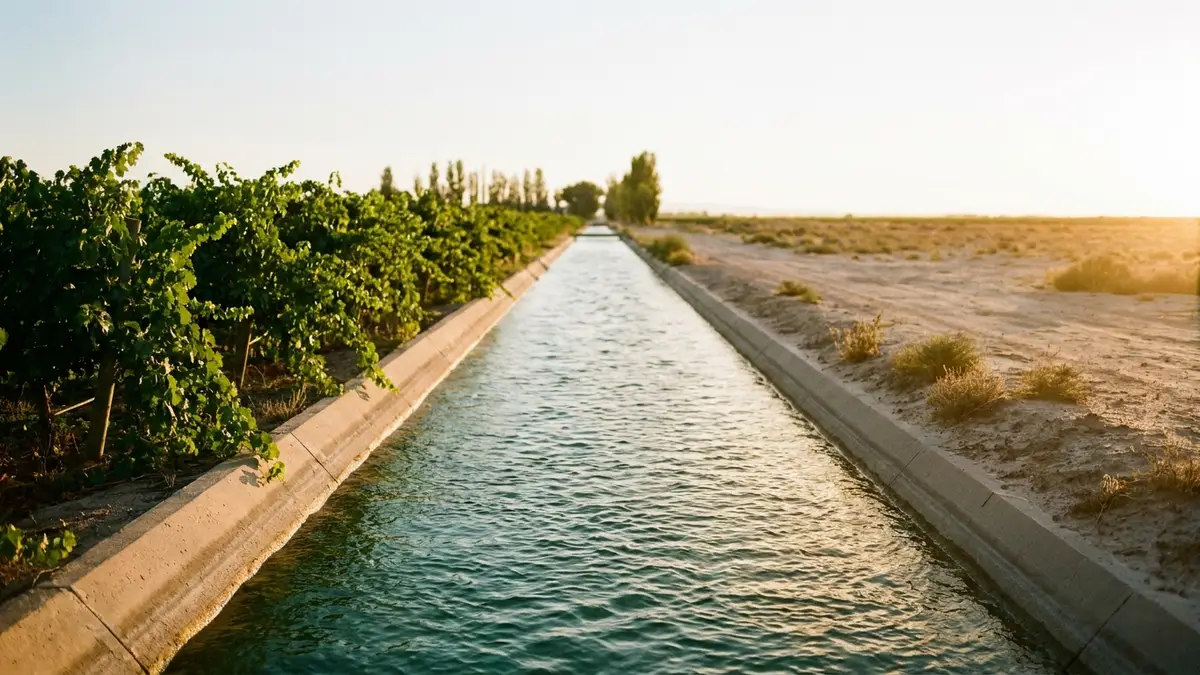
This matters for the glass. Irrigation in Patagonia is a need, not a style choice made to stress the vines. Growers can steer how much water each block gets, which shapes how big the berries grow. The dry air also leaves little room for rot. Río Negro province is also known for strong winds, which blow across much of the province.
What Does Phylloxera-Free Mean Here?
Most Argentine vines grow on their own roots, because the local phylloxera is a weak strain that does not survive long in the soil. Phylloxera is a tiny root louse that wiped out most of Europe's vineyards in the late 1800s.
Elsewhere, growers protect vines by grafting (joining the fruiting vine onto a pest-resistant root from another species). In Argentina, most vineyards skip that step and plant own-rooted vines instead, and Patagonia follows the same pattern.
Read "phylloxera-free" as a description of low risk today. The louse is present in Argentina in a weak form. It is not biologically impossible for it to spread, so the phrase describes today's conditions rather than a permanent immunity.
Is Chubut the Southernmost Wine Region?
Not as a settled record, but its vineyards are described as among the southernmost planted in the Americas. They lie more than 1,000 km south of Mendoza, on land where grapes were almost unknown a generation ago. Chubut runs from the 42nd parallel, its border with Río Negro, to the 46th, its border with Santa Cruz.
Growing grapes there is harder. Chubut is markedly colder than Río Negro and Neuquén, with a short growing season, longer summer days, very cold nights and a risk of frost even in summer. Long summer days help the grapes ripen in a short season, while frost can cut a vintage short.
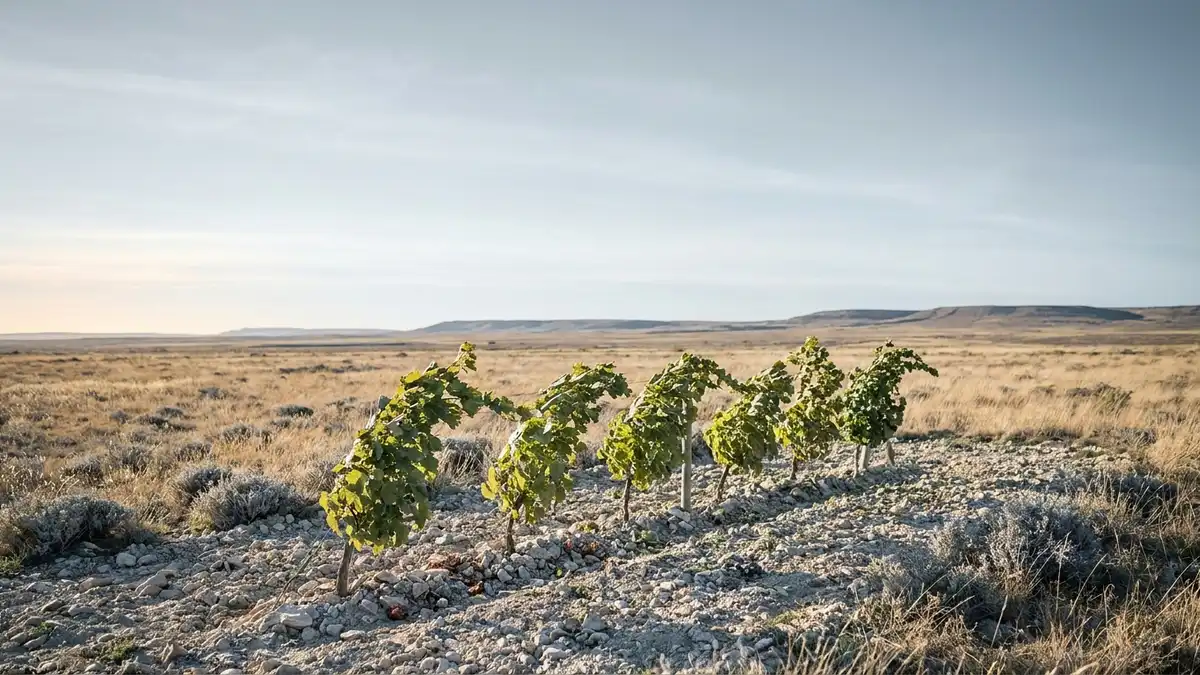
Chubut's Wine Route was only set up in 2017, and the province is still described as a mostly uncharted wine frontier. If you see a Chubut bottle, expect a small-batch wine from a place still testing which grapes ripen there.
How Did Patagonia Become a Wine Region?
It began as irrigated fruit country and added wine early in the 1900s, and that order still shapes what you drink. General Roca was founded on 1 September 1879, during Argentina's Conquest of the Desert. The canals that followed turned the dry valley into pear and apple orchards, and vines took root in the same watered ground.
In the early 20th century, the region's first commercial winery was set up with vine cuttings imported from Bordeaux. That French start may help explain why Bordeaux grapes such as Merlot and Semillon still grow here today. By 2003, Río Negro and Neuquén had 3,800 hectares of vines, and planting has grown since as more cool-climate grapes go in.
How to Start Tasting Patagonia Wine Tonight
Buy one Río Negro or Neuquén Pinot Noir and one Mendoza Malbec. Chill the Pinot lightly, pour both side by side, and look first: the Pinot will be paler and more see-through. Then smell for fresh cherry in the Pinot and riper plum in the Malbec. Finally, sip and compare how long each makes your mouth water. The Malbec guide explains the second glass, and the wine regions hub maps where else to go next.
The Sommy app also has short courses, including Wine 101, if you want the tasting basics behind this comparison. Open both bottles tonight and taste the far south next to the high Andes.
Sources
- Wikipedia: Argentine wine (Patagonia, irrigation, phylloxera)
- Wikipedia: General Roca, Río Negro (climate, irrigated land, founding)
- Wikipedia: Río Negro Province (rainfall and wind)
- Wikipedia: Chubut Province (latitude)
- Wikipedia: Torrontés (Torrontés Mendocino in Río Negro)
- Social Vignerons: Patagonia wine region (planted varieties)
Frequently Asked Questions
Where is the Patagonia wine region?
Patagonia's wine country is in southern Argentina. The established core is the provinces of Río Negro and Neuquén, around the irrigated river valleys near the town of General Roca at about 39°S. Chubut, between the 42nd and 46th parallels, is a newer frontier with a wine route created in 2017. All of it sits east of the Andes, in dry steppe country.
What wine is Patagonia known for?
Patagonia is best known for Pinot Noir, a grape that needs a cool climate to keep its fresh cherry fruit and high acidity. Malbec is actually the most planted grape, followed by Merlot, and Chardonnay, Semillon and Torrontés Riojano also grow here. Many grapes for Argentina's sparkling wine come from here. Chubut's young vineyards add Sauvignon Blanc, Gewürztraminer and Riesling.
How is Patagonia wine different from Mendoza wine?
Mendoza cools its vines with height, with vineyards mostly between 600 and 1,100 metres. Patagonia cools them with latitude, because it sits hundreds of kilometres further south. The result is lighter-bodied wines with higher acidity. A Patagonian Merlot or Pinot Noir tastes tarter and less jammy than the same grape grown in Mendoza, and the same holds for Patagonian Malbec.
Do Patagonian vineyards need irrigation?
Yes. The vineyards sit in the rain shadow of the Andes, and the area around General Roca gets only about 206 to 244 mm of rain a year. That is far too little for vines. Water comes from rivers fed by Andean snowmelt, carried to the vineyards by canals and ditches. Without that irrigation, the valleys would be dry scrub.
Is Chubut the southernmost wine region in the world?
Chubut's vineyards are described as among the southernmost planted vineyards in the Americas, more than 1,000 km south of Mendoza. That is a regional claim, not a settled world record. Chubut is markedly colder than Río Negro, with a short season, long summer days and a risk of summer frost, and its wine route only dates from 2017, so its styles are still taking shape.
Are Patagonian vines grafted?
Most are not. Argentina's local phylloxera, the root louse that destroyed Europe's vineyards in the 1800s, is a weak strain that does not survive long in the soil. So most Argentine vineyards, Patagonia included, are planted on their own roots rather than grafted onto resistant rootstock. That is a low-risk situation, not a guarantee that the pest can never cause harm.
Sommy Team
LinkedInFounder & Wine Educator
The Sommy Team is building the world's most approachable wine education app, helping beginners develop real tasting skills through structured courses and AI-guided practice.