Central Otago Wine Guide: The World's Southernmost Pinot Noir

By the Sommy Team — AI-assisted, human-edited.
Updated Jun 17, 2026
Contents (9)
- What Is Central Otago Wine?
- Where Central Otago Is and Why Its Climate Is Unique
- The Central Otago Wine Guide to Its Signature Grape: Pinot Noir
- The Aromatic Whites of Central Otago
- The Sub-Areas of Central Otago
- What Makes Central Otago Distinctive
- How a Beginner Should Start with Central Otago
- How Central Otago Fits the Wider Wine World
- The Reward of Learning Central Otago
TL;DR
Central Otago is New Zealand's high-country region near Queenstown and the world's southernmost commercial wine area. Its rare continental climate — hot days, cold nights, huge diurnal swing — produces concentrated, perfumed Pinot Noir as the star, alongside aromatic Riesling and Pinot Gris. This central otago wine guide shows beginners where to start.
What Is Central Otago Wine?
This central otago wine guide begins with a record: Central Otago is the southernmost commercial wine region on Earth, tucked into the high country of New Zealand's South Island around Queenstown. At roughly 45 degrees south, it grows grapes closer to the pole than almost anywhere else. Its signature is Pinot Noir — deeply colored, perfumed, and concentrated — which accounts for about three-quarters of all plantings. What makes the region unique is its climate: alone among New Zealand's wine areas, Central Otago is continental rather than maritime, with hot summer days, cold nights, and a dramatic daily temperature swing. Alongside the Pinot it makes some of the country's finest aromatic whites, chiefly Riesling and Pinot Gris.
Where Central Otago Is and Why Its Climate Is Unique
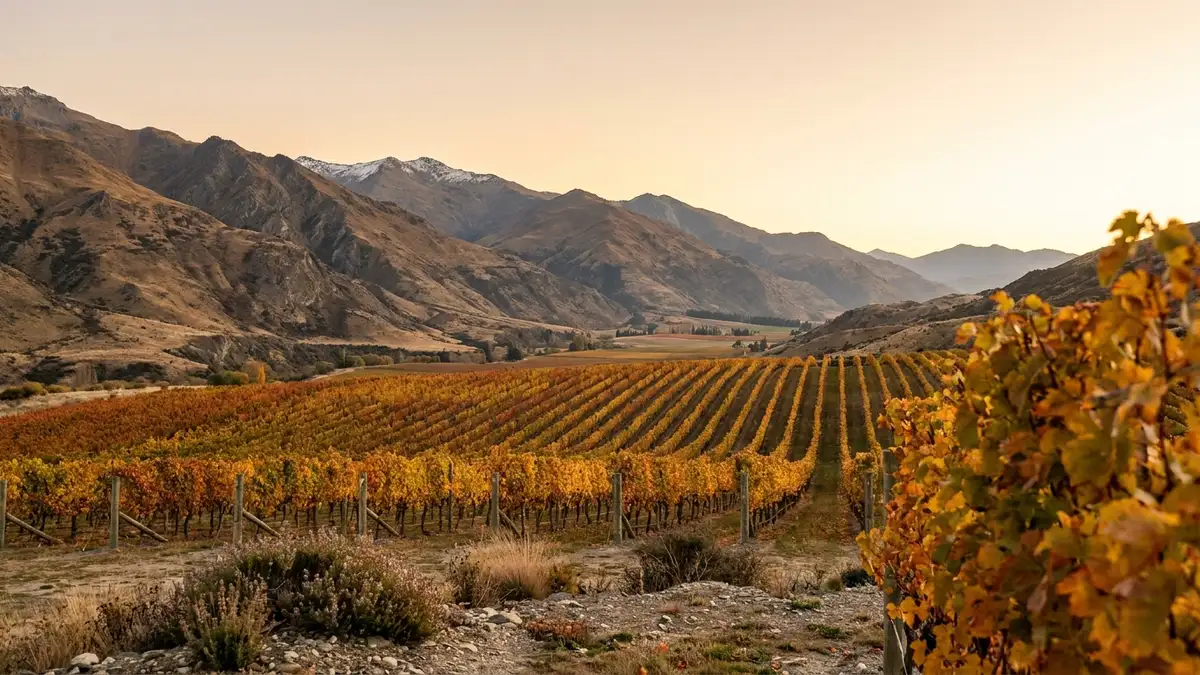
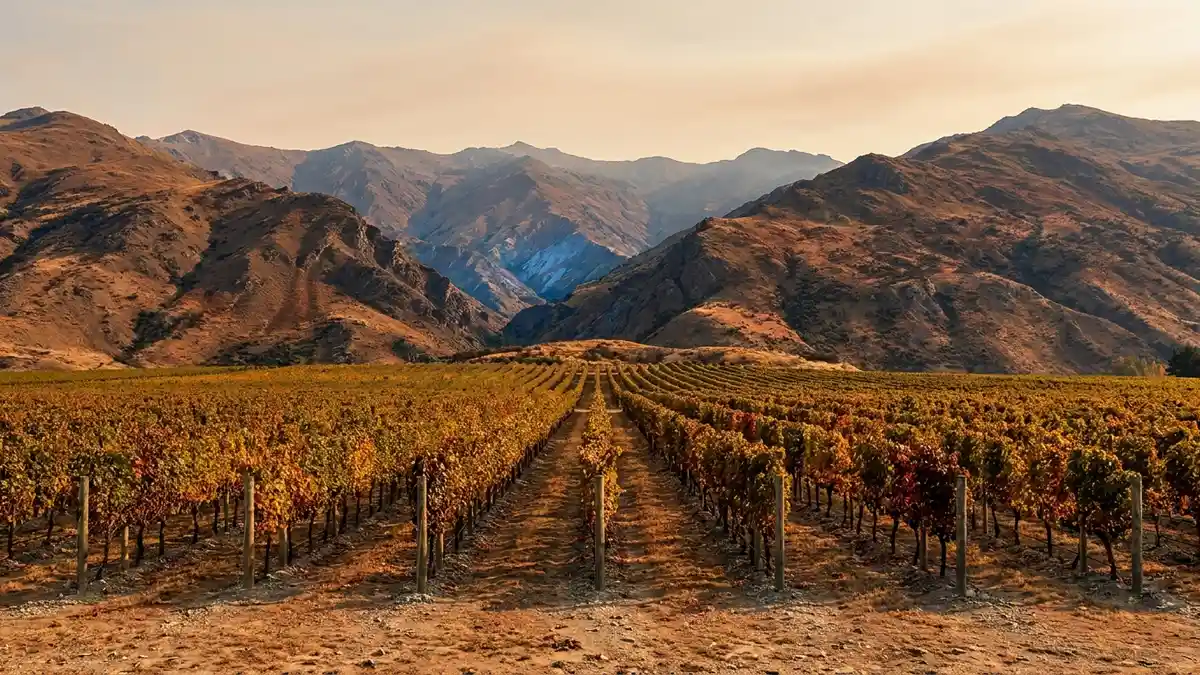
Most of New Zealand's vineyards sit near the coast, cooled and dampened by the surrounding ocean. Central Otago breaks that rule completely. It lies deep inland, ringed by the Southern Alps and lower ranges that block the wet maritime weather, leaving a dry, sheltered pocket of mountain valleys.
That shelter creates the one thing no other New Zealand region has: a continental climate — a climate shaped by land rather than sea, with greater extremes between hot and cold. Summer days here are hot and intensely sunny; the nights turn sharply cold as heat escapes the thin high-altitude air.
The gap between those daytime and nighttime temperatures is called diurnal variation (the daily swing between high and low temperatures). Central Otago has one of the widest of any wine region. This swing is the secret behind its wines. Warm days ripen the grapes fully and build rich color and flavor, while cold nights slow the loss of natural acid and preserve the bright, perfumed aromatics that define the style.
Add high altitude — most vineyards sit between roughly 200 and 400 meters — plus intense ultraviolet light at this latitude, and the grapes develop thick skins. Thick skins mean more color, more tannin (the drying, gripping sensation in red wine), and more concentration in the glass.
The Central Otago Wine Guide to Its Signature Grape: Pinot Noir
If Central Otago has a calling card, it is Pinot Noir, the same grape that makes red Burgundy. But the continental sun and altitude give it a voice all its own. Where cooler, cloudier regions make pale, delicate Pinot, Central Otago turns out a wine that is darker, riper, and more boldly fruited while still keeping the freshness the grape is loved for.
A typical Central Otago Pinot Noir is medium-bodied and deeply colored for the variety. Typical aromas: dark cherry, ripe plum, blackberry, wild thyme, dried herbs, and a hint of spice. On the palate it is generous but lifted, with high acidity and fine, ripe tannins. Body: medium (3/5) · Acidity: high (4/5) · Tannins: medium (3/5).
That combination of ripe fruit and savory herb is the region's fingerprint. The wild thyme that grows across the dry hillsides seems to echo in the glass, giving the wines a distinctive scrubby, herbal edge that sets them apart from Pinot grown anywhere else.
To understand how this grape behaves around the world — and why place changes it so much — our Pinot Noir guide covers the full range, and our Burgundy wine guide shows the cooler, earthier benchmark that Central Otago is so often measured against.
Central Otago vs Burgundy Pinot Noir
Beginners often ask how the two greatest homes of Pinot Noir compare. The grape is identical; the climate writes the difference.
- Central Otago Pinot Noir: Climate: continental, sunny, high-altitude · Color: deep ruby · Fruit: dark cherry, plum, blackberry · Savory note: wild thyme, dried herbs · Feel: ripe, generous, approachable young.
- Burgundy Pinot Noir: Climate: cool, marginal, maritime-influenced · Color: pale-to-medium ruby · Fruit: red cherry, raspberry · Savory note: forest floor, mushroom · Feel: lighter, more earthy, often built to age.
Neither is better. Central Otago offers a riper, more immediate pleasure; Burgundy offers a more delicate, savory restraint. Tasting one of each side by side is one of the fastest ways to feel what climate does to a single grape — a lesson explored further in our piece on why grapes that look the same can taste different.

The Aromatic Whites of Central Otago
Pinot Noir may be the star, but the cold nights that flatter it do the same for white grapes, and Central Otago makes some of New Zealand's most striking aromatic whites. These are the wines insiders chase.
- Riesling: The region's white showpiece. Central Otago Riesling ranges from bone-dry and racy to off-dry, always with piercing acidity and aromas of lime, green apple, and white flowers, sometimes a honeyed note of stone fruit. The cold nights keep it electric and precise. Our Riesling wine guide explains how to read its sweetness and why it ages so gracefully.
- Pinot Gris: Richer and rounder than Riesling, with pear, baked apple, ginger, and a gentle spice. It ranges from crisp and dry to fuller and off-dry, offering a softer, more textural white than the racy Riesling.
- Chardonnay: Made in smaller amounts but increasingly serious, leaning toward citrus and white peach with restrained oak, shaped by the same fresh acidity that runs through everything here.
- Sparkling wine: The cold climate and high acidity are ideal for traditional-method sparkling wine made from Pinot Noir and Chardonnay, a small but high-quality niche.
The thread linking all of them is acidity — the fresh, mouth-watering tartness that the cold nights protect. It is what makes these whites taste vivid rather than flabby, and it is the single most useful thing to notice when you taste them.
Many of these grapes belong to the small family of noble grapes every learner meets first, and the Sommy app's tasting exercises help you tell Riesling's lime-zest snap from Pinot Gris's softer pear in a few guided sessions.
The Sub-Areas of Central Otago
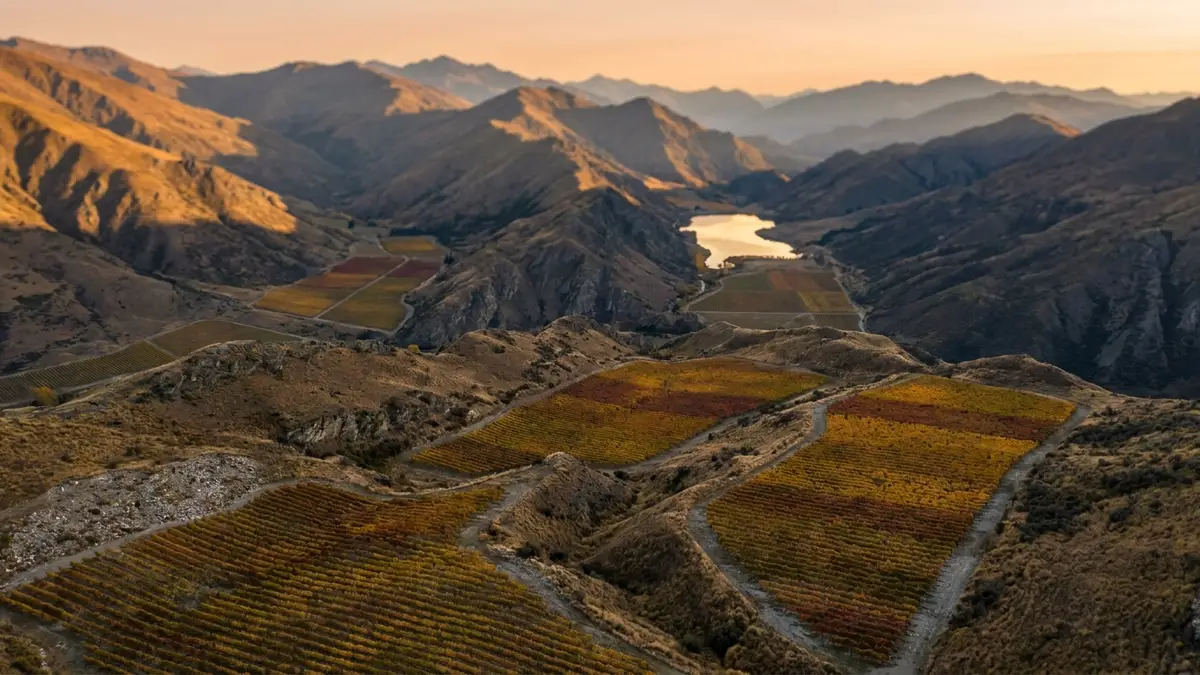
Central Otago is not one valley but a scatter of separate basins, each with its own altitude, soils, and sun exposure. Knowing the main ones turns a vague region into a map you can taste your way through. From the famous to the up-and-coming:
- Bannockburn: Often called the region's heart. Warm, north-facing, and sheltered, with free-draining soils that stress the vines. The Pinot Noir here is powerful, dark, and concentrated — many of Central Otago's most prized reds come from this small area.
- Gibbston: The coolest and highest sub-area, closest to Queenstown. Its altitude makes for a longer, slower ripening season, producing the most perfumed, elegant, and lifted Pinot Noir in the region — lighter in body but intensely aromatic.
- Bendigo: The warmest sub-area, on sun-soaked, schist-rich slopes facing north. It ripens the fullest, ripest, most structured Pinot Noir of all, with deep color and firm tannins built for aging.
- Cromwell Basin (Lowburn and Pisa): The broad, flat heart of plantings around Lake Dunstan, where much of the region's volume grows. Styles vary by site, but the wines tend to be generous and fruit-forward.
- Alexandra: The southernmost and one of the driest pockets, with the widest diurnal swing of all. Its Pinot Noir is fragrant and finely structured, with a particular floral, herbal lift.
- Wanaka: A small, scenic, cool sub-area by the lake of the same name. Tiny in output but capable of delicate, aromatic wines from its high, cold sites.
The takeaway echoes Burgundy's great lesson: the same grape, grown a few valleys apart, can taste meaningfully different. A warm Bendigo Pinot and a cool Gibbston Pinot are recognizably cousins, not twins.
What Makes Central Otago Distinctive
Plenty of regions grow Pinot Noir. A few things make Central Otago genuinely one of a kind, and they are worth holding in mind as you taste.
Schist, Thyme, and a Gold-Rush Past
The region's soils are dominated by schist — a layered, free-draining metamorphic rock that forces vines to dig deep and yield small, concentrated berries. This is terroir (the environment where grapes grow — soil, climate, altitude) at its most legible: the rock, the sun, and the altitude all push toward intensity.
Central Otago was a gold-rush region in the 1860s, and the same dry, rocky hillsides that drew miners now grow vines. The wild thyme that escaped early settlers' gardens still blankets the slopes, and many tasters swear they can find that herb in the wine — a poetic but genuinely useful tasting marker for the region.
A Young Region That Punches Above Its Weight
Central Otago is also one of the wine world's youngest serious regions. Commercial planting only took off in the 1980s and 1990s, yet within a generation it earned a global reputation for Pinot Noir. There is no centuries-old classification system here, no cru ladder or DOCG rules — quality is expressed through sub-area and producer rather than a legal hierarchy. For a beginner that is freeing: you learn the basins and the styles, not a rulebook. To see how that contrasts with Europe's layered systems, our guide to French wine regions lays out the appellation logic Central Otago deliberately skips.
A region this young, making wine this distinctive, is a rare thing. Central Otago shows how fast a sense of place can form when the land speaks loudly enough.
How a Beginner Should Start with Central Otago
You do not need a rare bottle or a trip to Queenstown to understand Central Otago. The smartest path is to taste deliberately and pay attention to what the climate is doing. Here is a practical order:
- Start with one entry-level Pinot Noir. Pour a single Central Otago Pinot and look first at the color — notice how deep it is for the grape. Then find the dark cherry fruit and the savory thyme edge underneath. That contrast of ripe fruit and herb is the region in a glass.
- Compare it with a cooler-climate Pinot. Open a Central Otago red beside a Burgundy or another cool-climate Pinot. The Central Otago wine will feel riper, darker, and fruitier; the other lighter and earthier. Same grape, different climate — concentration made obvious.
- Meet the white side with Riesling. Try a dry Central Otago Riesling and focus on its racy acidity and lime-and-green-apple lift. It is the clearest window into what the cold nights give the region.
- Taste two sub-areas if you can. A powerful Bannockburn or Bendigo Pinot next to a perfumed Gibbston one shows how a few valleys reshape the same grape.
- Build the tasting habit. Note the color, the high acidity, and the herbal-savory character that marks these wines. Our guide to how to taste wine gives you the step-by-step method, and understanding tannins, acidity, and body explains the structure behind that bright, concentrated feel.
Sommy turns these comparisons into guided exercises — naming the aromas, scoring the structure, and building the vocabulary to describe what you sense. You can start practicing free at sommy.wine, then bring the method to your next bottle from the bottom of the world. For more regional deep-dives, the wine regions hub collects guides like this one.
How Central Otago Fits the Wider Wine World
Central Otago is a small region — a rounding error next to giants like Bordeaux — yet it has outsized teaching value. It is the clearest case study in how a single grape, Pinot Noir, transforms when you move it from a cool maritime climate to a sunny continental one. The grape stays the same; the color deepens, the fruit ripens, the herbs creep in.
It also widens what New Zealand means in a glass. Most people meet the country through the zesty Sauvignon Blanc of the maritime north. Central Otago is the counterweight: serious, structured reds and racy aromatic whites grown in the cold, sunny mountains of the deep south. Knowing both gives you a far fuller picture of one of the wine world's most exciting young countries.
The Reward of Learning Central Otago
Central Otago asks little of a beginner and gives a lot back. There is no centuries-old classification to memorize, no maze of overlapping plots — just a handful of mountain basins, one great red grape, and a couple of brilliant whites. Learn the climate, learn the sub-areas, and the wines start to make sense in a single tasting.
Start with one Pinot Noir, taste it against a cooler-climate cousin, and let the continental sun reveal itself glass by glass. The Sommy app is built to make that habit stick — turning each bottle into a short, guided lesson so the next wine from the bottom of the world is a little clearer than the last.
Sources
Frequently Asked Questions
What is Central Otago wine known for?
Central Otago is known above all for Pinot Noir, which makes up roughly three-quarters of plantings. The wines are deeply colored, perfumed, and concentrated, with dark cherry and wild-thyme character. The region also makes excellent aromatic whites — Riesling and Pinot Gris — and small amounts of sparkling wine and Chardonnay.
Why is Central Otago's climate so unusual?
Central Otago is the only continental wine climate in New Zealand. Sheltered by mountains from the maritime weather that defines the rest of the country, it has hot, dry summer days and sharply cold nights. That wide daily temperature swing, called diurnal variation, ripens grapes fully while locking in fresh acidity and intense aromatics.
Where is Central Otago located?
Central Otago sits inland on New Zealand's South Island, in the high country around the resort town of Queenstown. Vineyards cluster in valleys and basins between roughly 200 and 400 meters of altitude. At about 45 degrees south, it is the southernmost commercial wine region on Earth, closer to the South Pole than almost any other vineyard.
What are the main sub-regions of Central Otago?
The best-known sub-areas are Bannockburn, Gibbston, Bendigo, the Cromwell Basin, Alexandra, and Wanaka. Bannockburn is warm and powerful, Gibbston is the coolest and most perfumed, and Bendigo is the warmest with the ripest, fullest Pinot Noir. Each basin has its own soils and exposure, so the same grape tastes different across them.
How should a beginner start exploring Central Otago wine?
Start with a single entry-level Central Otago Pinot Noir and notice its bright color, dark cherry fruit, and savory herb edge. Compare it side by side with a cooler-climate Pinot from elsewhere to feel the difference. Then try a dry Central Otago Riesling or Pinot Gris to meet the region's aromatic white side.
Is Central Otago Pinot Noir different from Burgundy?
Yes. Both regions prize Pinot Noir, but Central Otago's continental sun makes a riper, fruitier, more deeply colored style, with dark cherry and wild herbs. Burgundy tends toward lighter color, red fruit, and an earthy, savory profile. Central Otago is younger and warmer, so its wines often feel bolder and more immediately approachable.
What white wines does Central Otago make?
Central Otago is best known for aromatic whites that thrive in its cold nights. Riesling ranges from bone-dry and limey to off-dry with honeyed stone fruit, always with racy acidity. Pinot Gris is richer, with pear and spice. Smaller amounts of Chardonnay, Gewürztraminer, and traditional-method sparkling wine round out the white offering.
Sommy Team
LinkedInFounder & Wine Educator
The Sommy Team is building the world's most approachable wine education app, helping beginners develop real tasting skills through structured courses and AI-guided practice.