Hawke's Bay Wine Guide: New Zealand Red Wine Region

By the Sommy Team — AI-assisted, human-edited.
Updated Sep 24, 2026
Contents (10)
- What Is Hawke's Bay Wine Known For?
- Where Is Hawke's Bay, and Why Does the Climate Suit Red Wine?
- What Makes Hawke's Bay New Zealand's Oldest Wine Region?
- What Grapes Does Hawke's Bay Grow?
- What Is Gimblett Gravels, and How Did the Soil Get There?
- Gimblett Gravels vs. Bridge Pa Triangle: What's the Difference?
- Is Hawke's Bay Syrah the Same as Australian Shiraz?
- What Does a Hawke's Bay Bordeaux-Style Red Taste Like?
- Why Is Hawke's Bay Chardonnay Considered One of New Zealand's Best Whites?
- How Does Hawke's Bay Compare to Marlborough and Bordeaux?
TL;DR
Hawke's Bay is New Zealand's oldest and second-largest wine region, planted since 1851, known for Bordeaux-style reds and cool-climate Syrah. Its Gimblett Gravels district is defined by soil, Chardonnay is its most-planted grape, and its peppery Syrah is cooler in style than Australian Shiraz. It is warmer than Marlborough and riper than Bordeaux.
What Is Hawke's Bay Wine Known For?
Hawke's Bay is known for red wine: Bordeaux-style blends of Merlot, Cabernet Sauvignon and Cabernet Franc, and cool-climate Syrah, one of New Zealand's most distinctive wines. It is the country's oldest and second-largest wine region, on the east coast of the North Island, with vines since 1851. Warm, dry summers and long autumns ripen red grapes fully, which cooler Marlborough and Central Otago cannot match.
Two named gravel districts, Gimblett Gravels and Bridge Pa Triangle, carry much of that reputation. The region also makes rich, barrel-aged Chardonnay that regularly ranks among New Zealand's best whites.
Where Is Hawke's Bay, and Why Does the Climate Suit Red Wine?
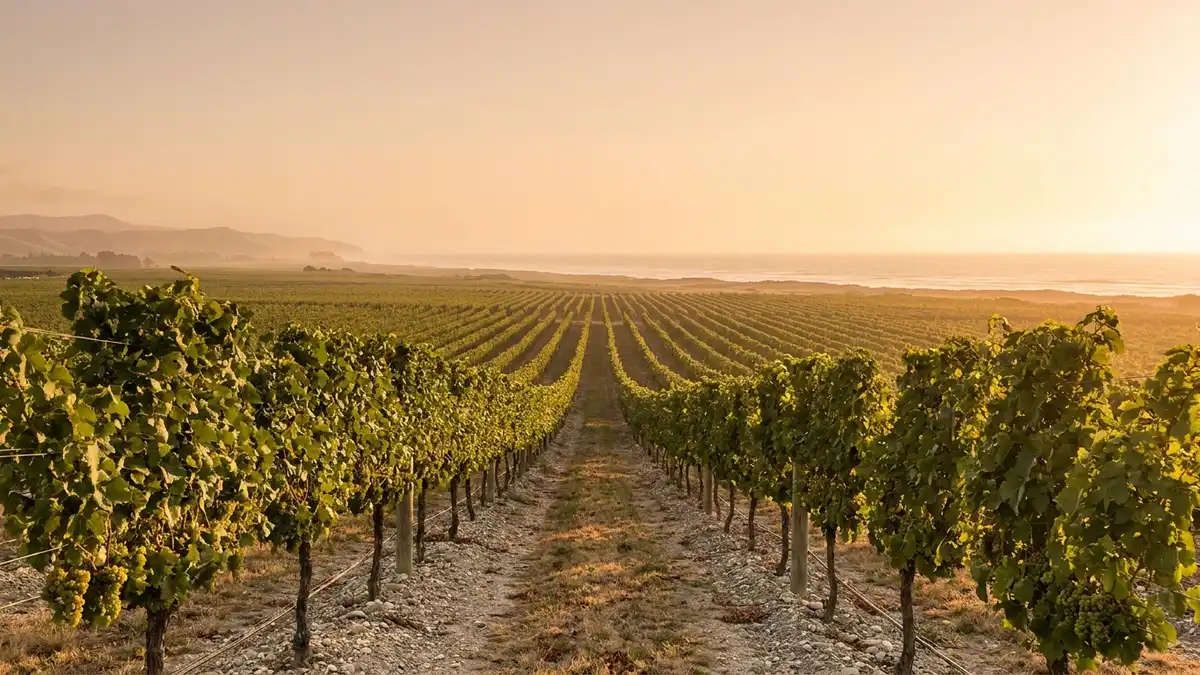
Hawke's Bay sits on the east coast of New Zealand's North Island, sheltered by inland hills from the wet westerly weather off the Tasman Sea. That rain shadow, plus long sunshine hours and warm, dry autumns, gives red grapes the ripening window they need.
Napier, the region's main city, averages daytime highs of roughly 14 to 25°C across the year. Monthly rainfall is a modest 47 to 108mm. That mild, dry pattern favors late-ripening reds over the more marginal climates further south.
By world standards Hawke's Bay is still a cool-to-moderate climate, closer to a warm Bordeaux vintage than to Australia's Barossa Valley. The line between "warm" and "hot" decides how a red wine tastes, as the climate and wine flavor guide explains. It is the reason Hawke's Bay reds taste structured and savory instead of jammy.
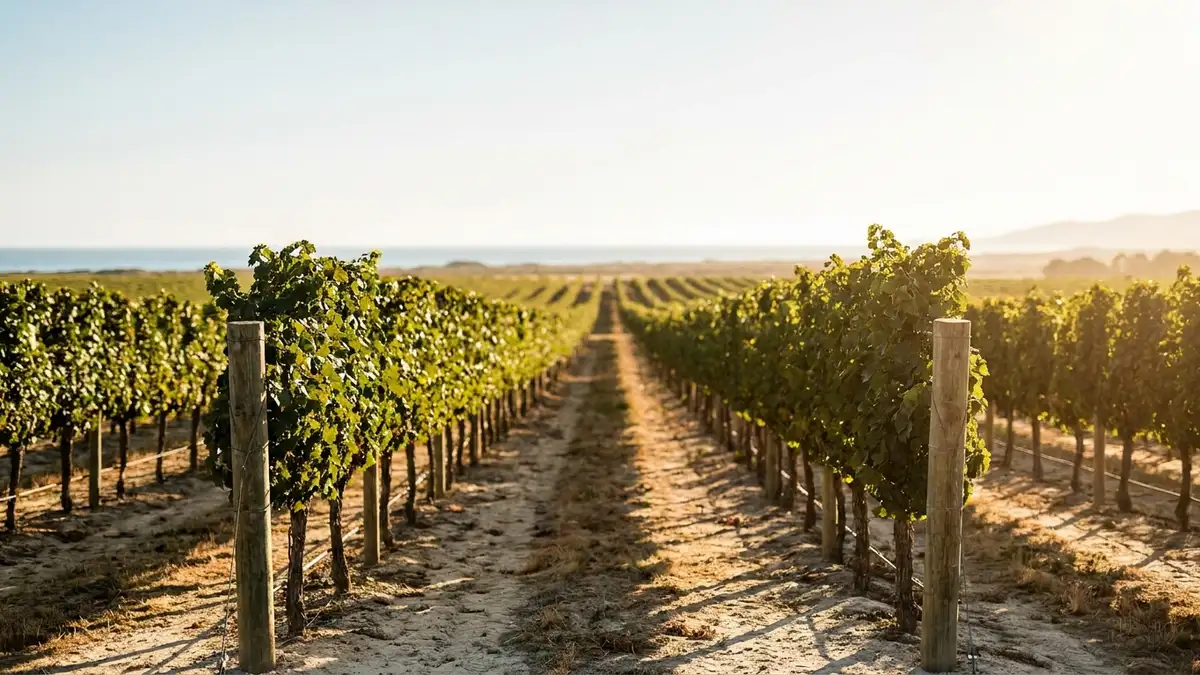
Hawke's Bay holds several climates. New Zealand Winegrowers, the industry's official body, divides the region into five broad areas:
- Coastal Areas, cooled by sea breezes off the Pacific.
- Hillsides, higher sites with better drainage and slower ripening.
- Alluvial Plains, the flat, free-draining river-deposited land where many of the region's vineyards sit.
- River Valleys, following the inland waterways.
- Central Hawke's Bay, the cooler southern end, where vineyards climb to around 300 meters of altitude.
Gimblett Gravels and Bridge Pa Triangle are smaller districts, and both sit inside the Alluvial Plains. The most common confusion is treating one small, famous district as if it stood for all of Hawke's Bay.
What Makes Hawke's Bay New Zealand's Oldest Wine Region?
Hawke's Bay is generally described as New Zealand's oldest continuously wine-producing region. Vines were first planted here in 1851 by Marist missionaries, more than a century before Marlborough's first commercial vines went into the ground in 1973. Today it is the country's second-largest wine region by planted area, behind Marlborough, which now dwarfs every other region by volume.
That history shows up on the region's map. In 1996, the Te Mata area's Special Character Zone became New Zealand's first legally protected wine-growing area. The regional council set it aside to keep vineyard land from being swallowed by housing and other development.
The New Zealand wine guide sets Hawke's Bay alongside the country's other major regions. The two facts get blurred often: Hawke's Bay is the oldest region, and Marlborough is the biggest. Marlborough's Sauvignon Blanc still makes up the majority of New Zealand's wine by volume.
What Grapes Does Hawke's Bay Grow?
Hawke's Bay's grape mix surprises people who assume it is mostly red. As of 2020, Chardonnay was the region's single most-planted grape by vineyard area, just ahead of Merlot, with Sauvignon Blanc close behind. Syrah, the grape behind the region's most acclaimed reds, makes up a modest share of the total.
| Grape | Share of Hawke's Bay vineyard area (2020) |
|---|---|
| Chardonnay | 22.8% |
| Merlot | 21.6% |
| Sauvignon Blanc | 19.8% |
| Pinot Gris | 12.4% |
| Syrah | 7.4% |
| Pinot Noir | 4.9% |
| Cabernet Sauvignon | 4.2% |
| Other varieties | 6.9% |
Those numbers break a myth: Hawke's Bay is not one giant red-wine estate. White grapes hold a real majority of the land. The reputation for serious reds comes from a smaller, concentrated set of districts.
What Is Gimblett Gravels, and How Did the Soil Get There?
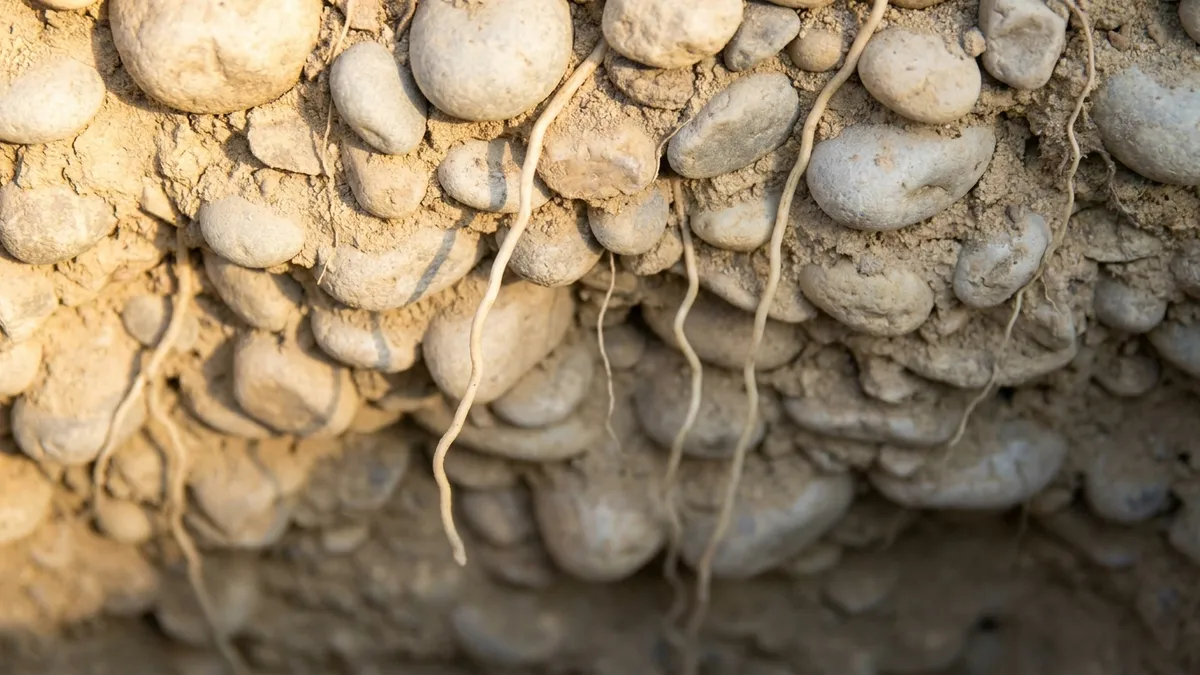
Gimblett Gravels is a roughly 800-hectare district inside Hawke's Bay, and its soil is river shingle left by a flood in the 1860s. That flood rerouted the Ngaruroro River and left a deep bed of stony, free-draining gravel where the old riverbed used to run.
For decades that gravel was considered wasteland, too poor and stony for farming. In the late twentieth century winegrowers realized that its fast drainage and low fertility, the traits that made it bad farmland, made it excellent for concentrated, structured red wine.
The Gimblett Gravels name is policed by its own growers, not by government regulation. The Gimblett Gravels Winegrowers Association, formed in 2001, now has more than 20 wine-producing members and 4 winegrower members.
If a wine uses the Gimblett Gravels name or logo, at least 95% of its fruit comes from the district. A member vineyard must have 95% of its soil scientifically classified as one of three named gravel series: Omahu, Flaxmere or Omarunui. All three are remnants of that same old riverbed. The rule is stricter than a standard New Zealand geographical indication, which sets an 85% minimum.
By the association's own account, Gimblett Gravels is one of the few wine districts in the world defined by soil type instead of a political or geographic boundary. For the general mechanism behind soil-driven flavor, see how soil affects wine taste and what is terroir.
Gimblett Gravels vs. Bridge Pa Triangle: What's the Difference?
Gimblett Gravels is a private trademark defined purely by soil composition. Bridge Pa Triangle is a larger geographic wine district, traced by three roads, with more clay in its soil profile. The two sit close together and grow similar grapes, so they are easy to confuse. Bridge Pa Triangle covers about 2,100 hectares; it was first planted in 1981 and incorporated as a wine district in 2015.
| Gimblett Gravels | Bridge Pa Triangle | |
|---|---|---|
| Approximate size | 800 hectares | 2,100 hectares |
| Defined by | Trademarked soil-composition rule (95% fruit + 95% soil series) | Incorporated geographic wine district |
| Soil origin | Free-draining shingle from an 1860s river flood | Alluvial gravels plus shallow clay-loam |
| Signature grapes | Merlot, Cabernet Sauvignon, Syrah | Merlot, Cabernet Sauvignon, Syrah |
| Established | Association formed 2001 | First planted 1981; incorporated 2015 |
Neither district stands for Hawke's Bay as a whole. Together they account for a meaningful slice of the region's red-wine plantings. Plenty of Hawke's Bay's vineyard land, including much of its Chardonnay and Sauvignon Blanc, sits outside both. If a label says only Hawke's Bay, check the back label for a district name before you assume gravel-grown fruit.
Is Hawke's Bay Syrah the Same as Australian Shiraz?
No, though it is the identical grape. The name tracks style as much as botany. Syrah usually signals a cooler-climate, more restrained wine; Shiraz usually signals a warmer-climate, richer one. Hawke's Bay firmly uses the Syrah name and style. Grown in the region's moderate maritime climate, it tends to smell of black pepper, dark olive, dried herbs and flowers.
That puts Hawke's Bay Syrah closer in character to France's Northern Rhone than to a big, jammy Barossa Shiraz. If a label says Syrah, expect that cooler, peppery style; if it says Shiraz, expect riper, richer fruit.
Syrah was first planted in Gimblett Gravels in 1984, a few years after the district's first Bordeaux varieties. The full Syrah versus Shiraz guide breaks down the naming convention and style differences region by region, including Hawke's Bay against Rhone Syrah and Australian Shiraz. That cooler-climate profile is why Syrah has become one of Hawke's Bay's most internationally acclaimed wines.
What Does a Hawke's Bay Bordeaux-Style Red Taste Like?
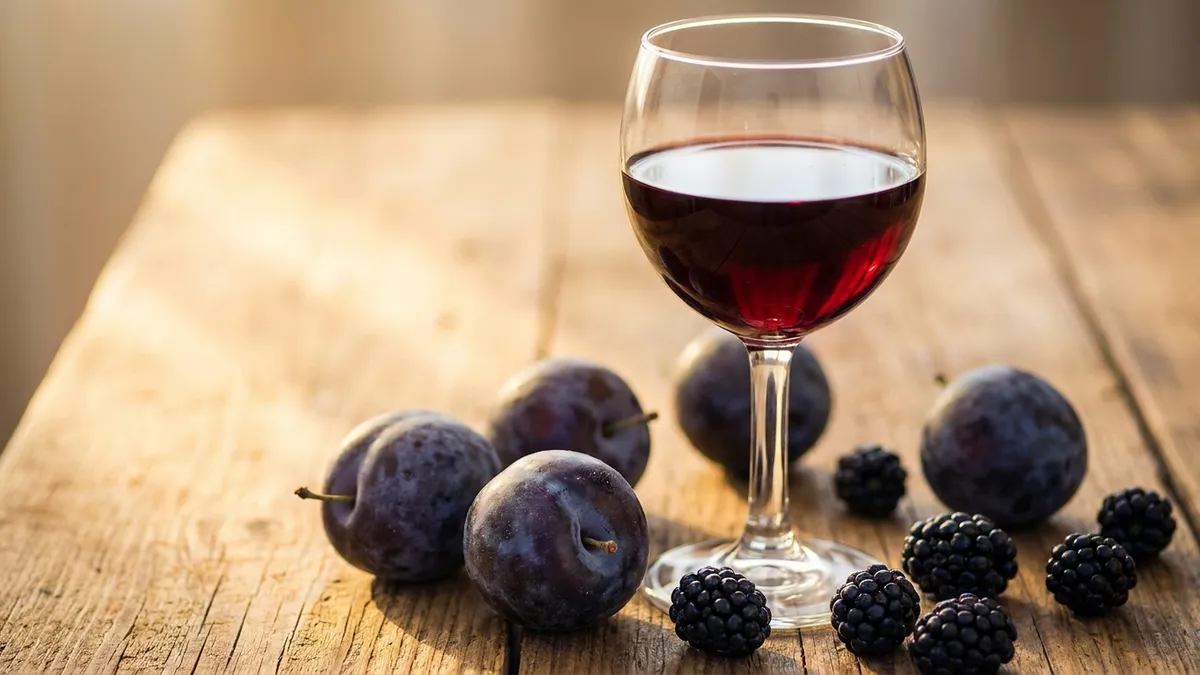
A typical Hawke's Bay red blend leans on Merlot for its plush core of plum and cherry. Cabernet Sauvignon adds structure, dark fruit and firmer tannin, the drying grip you feel on your gums. Cabernet Franc brings a lifted, herbal edge. Proportions vary by producer and vintage. The model is Bordeaux: the same three grapes, blended for balance so that no single grape dominates.
Pour a glass and taste in that order: plum and cherry first, then the grip on your gums, then the herbal edge at the finish.
The main difference from a classic Bordeaux is ripeness. Hawke's Bay's more reliable sunshine tends to push these blends toward riper, more generous fruit and a rounder texture. Grown on Gimblett Gravels or Bridge Pa Triangle soils, they keep real tannic grip. The Bordeaux wine guide covers the grapes and blending logic that Hawke's Bay borrowed and warmed up.
Why Is Hawke's Bay Chardonnay Considered One of New Zealand's Best Whites?
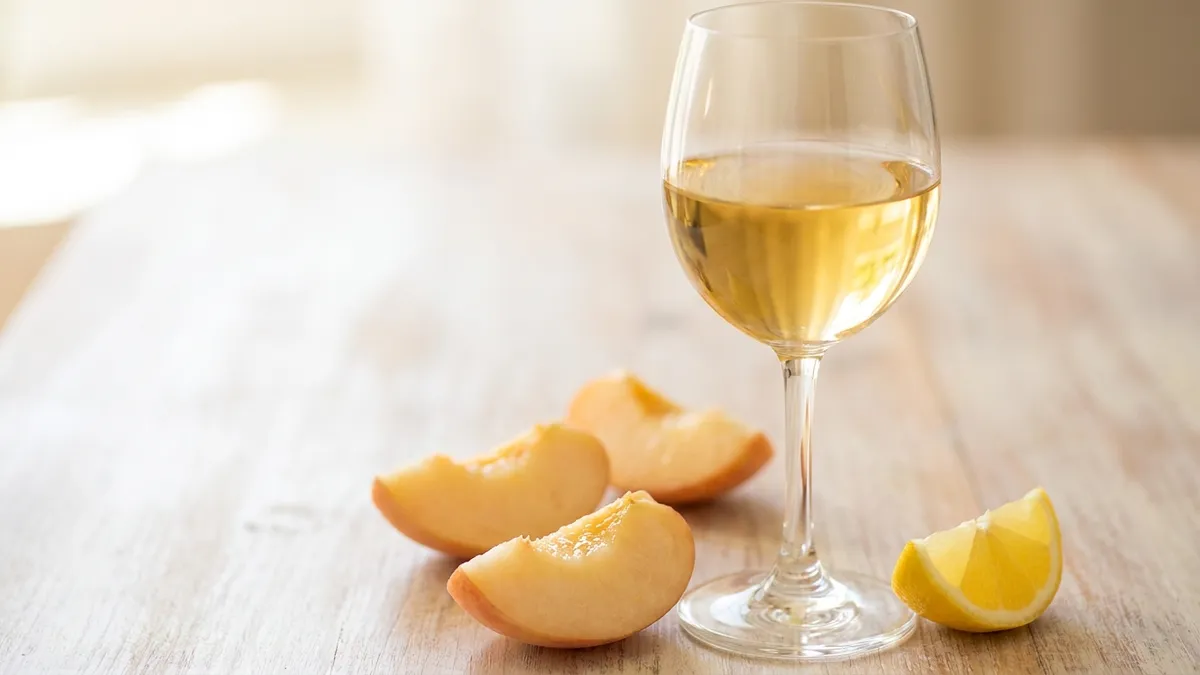
Chardonnay is Hawke's Bay's single most-planted grape, and the region's warmth and stony soils give it real weight and concentration. Most serious examples spend time in oak barrels. The oak adds texture and a touch of toast and spice around a core of stone fruit and citrus. The result sits closer to a rich white Burgundy than to a lean, unoaked Chardonnay.
Ripe fruit plus structured oak handling is a large part of why Hawke's Bay Chardonnay is frequently named among New Zealand's finest whites. It stands apart from Marlborough's brighter, more acid-driven style. If you like a full, toasty Chardonnay, look for Hawke's Bay on the label; if you want it lean and bright, look to Marlborough. The Chardonnay wine guide covers how the grape moves from a lean, unoaked style to this fuller, barrel-aged one, depending on where and how it is made.
How Does Hawke's Bay Compare to Marlborough and Bordeaux?
Against Marlborough, the difference is climate and specialty. Marlborough is cooler, further south, and built around zesty, aromatic Sauvignon Blanc grown on flat gravel plains; the Marlborough wine guide covers that style in full. Hawke's Bay is warmer, drier in autumn, and built around structured reds and richer whites. New Zealand's wine map needs both: one region supplies the world's benchmark Sauvignon Blanc, the other New Zealand's most Bordeaux-like reds.
Against Bordeaux itself, the match is closer than most New World regions can claim. Both share the same core grapes, a similar blending logic, and warm summers followed by long autumns. What changes is ripeness and reliability. Bordeaux's more marginal, maritime climate produces more vintage variation. Hawke's Bay's steadier sunshine tends to deliver riper fruit most years, at the cost of some of Bordeaux's savory, leaner edge. If you want riper fruit, pick Hawke's Bay; if you want that savory, leaner edge, pick Bordeaux.
Hawke's Bay rewards side-by-side tasting, because much of what makes it distinctive only becomes obvious next to another wine: the gravel-versus-clay soil split, the Syrah name over Shiraz, and the Chardonnay-first grape mix. The wine regions hub on Sommy has more regional guides built the same way. Buy a Hawke's Bay bottle for your next tasting, pour it next to a wine from another region, and taste for those three things.
Sources
Frequently Asked Questions
What wine is Hawke's Bay known for?
Hawke's Bay is known for Bordeaux-style red blends built from Merlot, Cabernet Sauvignon and Cabernet Franc, plus cool-climate Syrah and rich, barrel-aged Chardonnay. It is one of New Zealand's warmest wine regions and the country's main source of serious red wine, in contrast to Marlborough's Sauvignon Blanc and Central Otago's Pinot Noir.
Is Hawke's Bay good for red wine?
Yes. Hawke's Bay is one of New Zealand's warmest wine regions, with long, dry autumns that let red grapes ripen fully. Its free-draining gravel and clay-loam soils, especially in the Gimblett Gravels and Bridge Pa Triangle districts, produce structured Bordeaux-style blends and peppery Syrah that are widely considered the country's best red wines.
What is Gimblett Gravels and why is it special?
Gimblett Gravels is a roughly 800-hectare district within Hawke's Bay where a flood in the 1860s rerouted the Ngaruroro River and left behind deep, free-draining shingle. A growers' association formed in 2001 trademarked the name: wines must source at least 95 percent of their fruit from the district, and member vineyards need 95 percent of their soil from three named gravel series.
Is Hawke's Bay New Zealand's oldest wine region?
Hawke's Bay is generally described as New Zealand's oldest continuously producing wine region, with vines first planted in 1851 by Marist missionaries. It is not the country's largest by volume, though: Marlborough grows far more grapes today. Hawke's Bay is the second-largest region and the one most associated with age and red-wine pedigree.
What is the difference between Hawke's Bay Syrah and Australian Shiraz?
Both come from the same grape, but the climate changes the wine. Hawke's Bay Syrah grows in a cooler, more maritime climate and leans toward black pepper, dark olive and floral lift, closer to France's Northern Rhone. Australian Shiraz from warmer regions tends toward riper, jammier fruit and a fuller, softer body.
How big is the Hawke's Bay wine region?
Hawke's Bay had about 4,681 hectares of vines planted as of 2018, making it New Zealand's second-largest wine region behind Marlborough. Its two headline red-wine districts are measured by land area rather than vines: the Gimblett Gravels district covers roughly 800 hectares and the Bridge Pa Triangle roughly 2,100 hectares, and not all of that land is planted.
Is Hawke's Bay wine similar to Bordeaux?
Stylistically, yes, more than most New World regions. Hawke's Bay grows the same core grapes as Bordeaux, Merlot, Cabernet Sauvignon and Cabernet Franc, blended in similar proportions, and its warm, dry summers and long autumns suit the same ripening pattern. The wines tend to show riper, more generous fruit than a classic Bordeaux, with a similar structure underneath.
Sommy Team
LinkedInFounder & Wine Educator
The Sommy Team is building the world's most approachable wine education app, helping beginners develop real tasting skills through structured courses and AI-guided practice.