Wine with Brie and Camembert: The Soft Cheese Match

By the Sommy Team — AI-assisted, human-edited.
Updated Oct 1, 2026
Contents (10)
- What Wine Goes With Brie, in One Paragraph?
- Which Wine Fits Your Brie or Camembert?
- Why Do Bubbles Work So Well With Soft Cheese?
- Does Red Wine Go With Brie?
- Which White Wines Work With Brie and Camembert?
- How Does Ripeness Change the Match?
- Is Camembert Different From Brie When Picking Wine?
- What Wine Goes With Baked Brie?
- Should You Eat the Rind?
- What If Brie Is One Cheese on a Board?
TL;DR
Brie and Camembert coat the tongue in fat, so they need a wine with high acidity, ideally a dry traditional-method sparkling such as Champagne, Crémant or Cava. Unoaked Chardonnay suits young wedges, off-dry Chenin Blanc ripe ones, and only light reds like Gamay work. Tannic reds turn bitter against the rind.
The best wine with Brie is one with high acidity, and bubbles make it better. Brie and Camembert coat the tongue in butterfat, and a sharp, sparkling wine washes that coat away so each bite tastes fresh. The riper the cheese gets, the more acid and fruit the wine needs. Tannic red wine is the classic mistake.
What Wine Goes With Brie, in One Paragraph?
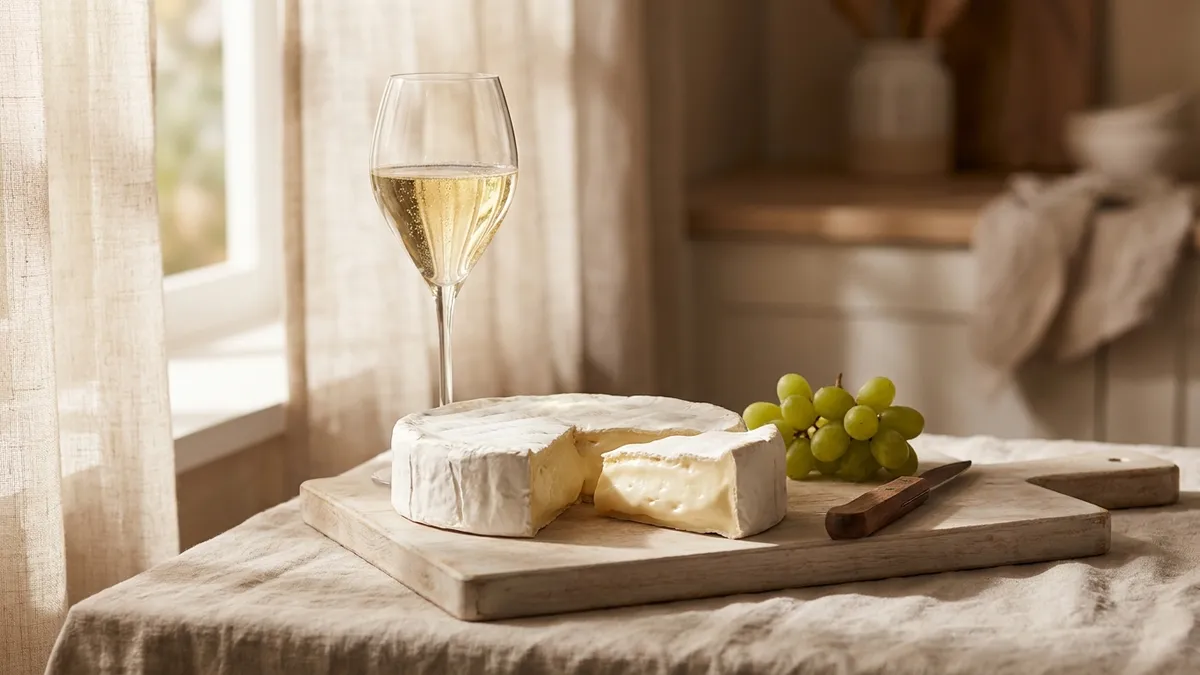
The best wine with Brie is a dry sparkling wine made by the traditional method (the second fermentation happens inside each bottle, as in Champagne). Champagne, French Crémant and Spanish Cava all qualify. Their acidity (the tartness that makes your mouth water) cuts through the fat, and their bubbles scrub the palate. For still wine, choose unoaked Chardonnay with a young, firm Brie and off-dry Chenin Blanc or Riesling with a ripe, runny one. If you want red, keep it light and low in tannin: Gamay from Beaujolais or a light Pinot Noir, served cool. Camembert follows the same rules but tastes stronger, so lean towards the fuller choice.
Which Wine Fits Your Brie or Camembert?
Match the wine to how ripe the cheese is. Cut the wedge and look at the centre. If a chalky white band runs through the middle, the cheese is young and mild, and a crisp, light wine is enough. If the paste bulges out of the cut, the wine needs more acid and fruit.
| Cheese on the plate | What you taste | Pour this | Why it works |
|---|---|---|---|
| Young Brie, chalky centre | Milk, butter, mild salt | Prosecco, unoaked Chardonnay or Chablis | Light, crisp wine does not bury a gentle cheese |
| Ripe, runny Brie | Cream, mushroom, a whiff of ammonia | Crémant, Champagne or Cava | More acid for more fat; bready notes meet the rind |
| Ripe Camembert | Earthy, mushroomy, stronger rind | Traditional-method sparkling or off-dry Chenin Blanc | Extra fruit and acid stand up to more rind per bite |
| Raw-milk Brie de Meaux or Camembert de Normandie | Deeper, nutty, barnyard edge | Champagne or a vintage Crémant | The strongest cheese gets the most flavour and acid |
| Baked Brie with honey or jam | Molten fat plus sugar | Off-dry Riesling or demi-sec Chenin Blanc | Wine sweeter than the topping stays fresh |
| Brie with a light red craving | Fat with savoury rind | Gamay or light Pinot Noir, served cool | Low tannin, high acid, red fruit |
Why Do Bubbles Work So Well With Soft Cheese?
Brie coats your tongue in fat, and a sparkling wine's acidity and bubbles wash that coat away before the next bite. Acidity cuts through the heaviness of rich food. Carbonation adds a physical scrub, so the second bite tastes as clean as the first.
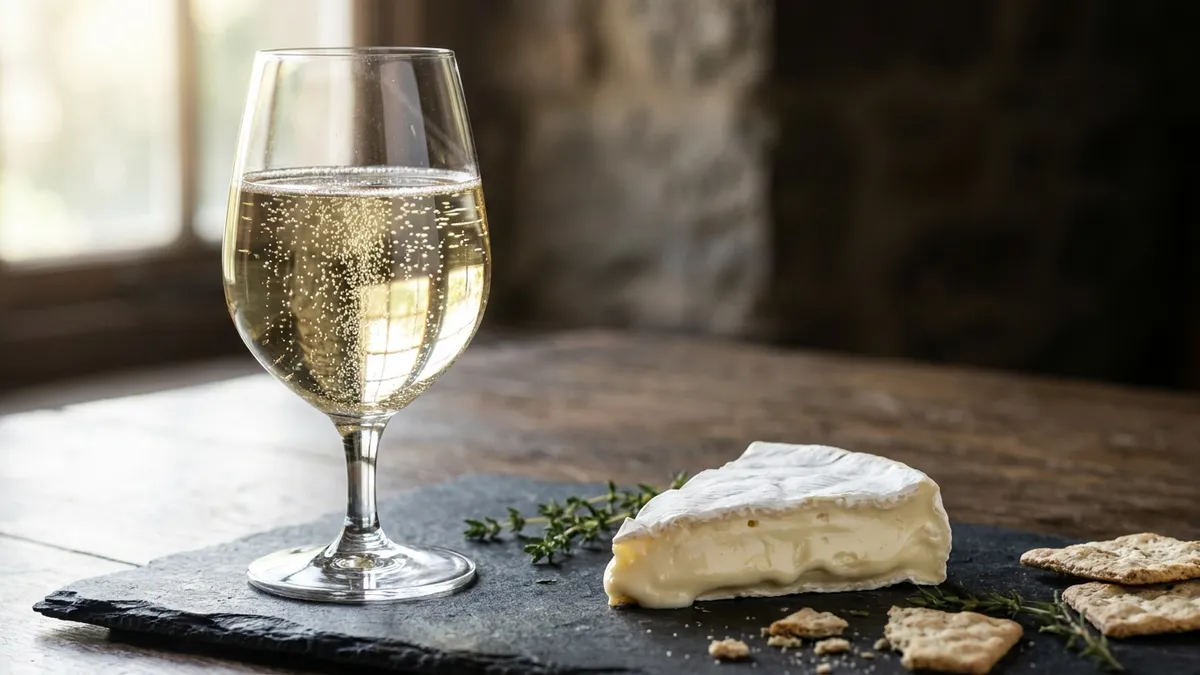
Traditional-method sparkling wine brings a second advantage. It ages on its lees (the spent yeast left after fermentation), which gives it smells of bread, brioche and toasted nuts. Those yeasty notes sit right beside the creamy paste and the mushroom smell of the rind. Food-pairing references name this exact match: creamy bloomy-rind cheeses like Brie and Camembert with traditional-method sparkling such as Champagne or Cava.
The price on the label does not decide it. A Crémant from the Loire or Burgundy, or a Spanish Cava, uses the same bottle-fermentation method as Champagne for much less money; the Crémant guide lists the regions. Prosecco is made in large tanks instead, so it tastes of fresh pear and apple with little bread. The Champagne vs Prosecco vs Cava comparison sets the three side by side.
If the Brie is young and mild, Prosecco is enough. If it is ripe, runny or made from raw milk, buy a traditional-method wine.
Does Red Wine Go With Brie?
Only light, low-tannin reds, such as Gamay or Pinot Noir. Tannin (the drying grip on your gums, from grape skins and seeds) is the problem. The fat and protein in cheese can soften how tannin feels, which is why a hard aged cheese copes with a big red. A soft, creamy paste does far less of that work.
Red wine as the default cheese wine is a myth from the hard-cheese end of the board. Against a bloomy rind, a tannic Cabernet Sauvignon or Syrah often tastes bitter, and some tasters find a metallic edge where the wine meets the ammonia in the rind. The fruit disappears and the grip stays.
A light red avoids this because it has high acidity, red-cherry fruit and very little tannin. Gamay from Beaujolais is the easiest find; its villages and styles are mapped in the Beaujolais guide. A cool-climate Pinot Noir works too. Serve either a little below room temperature, after a short spell in the fridge; the serving temperature chart gives the range for light reds.
If you want red with Brie, pick a label that says Gamay, Beaujolais or Pinot Noir and chill it briefly. If it says Cabernet, Syrah or Malbec, save it for the hard cheese.
Which White Wines Work With Brie and Camembert?
Crisp unoaked Chardonnay suits young Brie, and off-dry (with a little sugar you can taste) Chenin Blanc or Riesling suits ripe, runny wedges. All three keep high acidity when grown in cool places such as Chablis, the Loire and Germany, and that acid lifts the fat without adding more of it.
Unoaked Chardonnay tastes of green apple and lemon with a chalky finish, so it lifts a mild, milky Brie without hiding it. Chablis is the classic label; the Chablis guide explains why it rarely sees new barrels. Oak (barrels that add vanilla, toast and butter) is the risk here: a buttery, oaked Chardonnay adds fat to fat, and the pair feels heavy after two bites.
Ripe Brie and Camembert are saltier and more pungent, and a little sweetness balances salt. Demi-sec Vouvray from the Loire is Chenin Blanc with honey and quince over sharp acid. Off-dry German Riesling, often labelled Kabinett or feinherb, does the same with lime and peach; the Riesling guide decodes those label words.
If the label mentions barrel fermentation or oak, skip it for Brie. If it says Chablis or unoaked, pour it with a young wedge. If it says demi-sec, Kabinett or off-dry, save it for a ripe one.
How Does Ripeness Change the Match?
A ripe Brie is a stronger cheese than a young one, so it needs more acid and fruit. Ripening is done by a mould. Makers spray the cheese with Penicillium camemberti, which grows into the white bloomy rind (a soft, velvety crust of edible mould) and gives Brie and Camembert their soft, buttery texture.
That mould keeps working from the outside in. It breaks down proteins and fats into free fatty acids and aroma compounds, ammonia among them. That is why a young wedge has a firm, chalky centre and tastes of fresh milk, while a ripe one runs, smells of mushroom and carries a sharp whiff at the rind. Brie de Meaux typically takes six to eight weeks to reach full maturity.
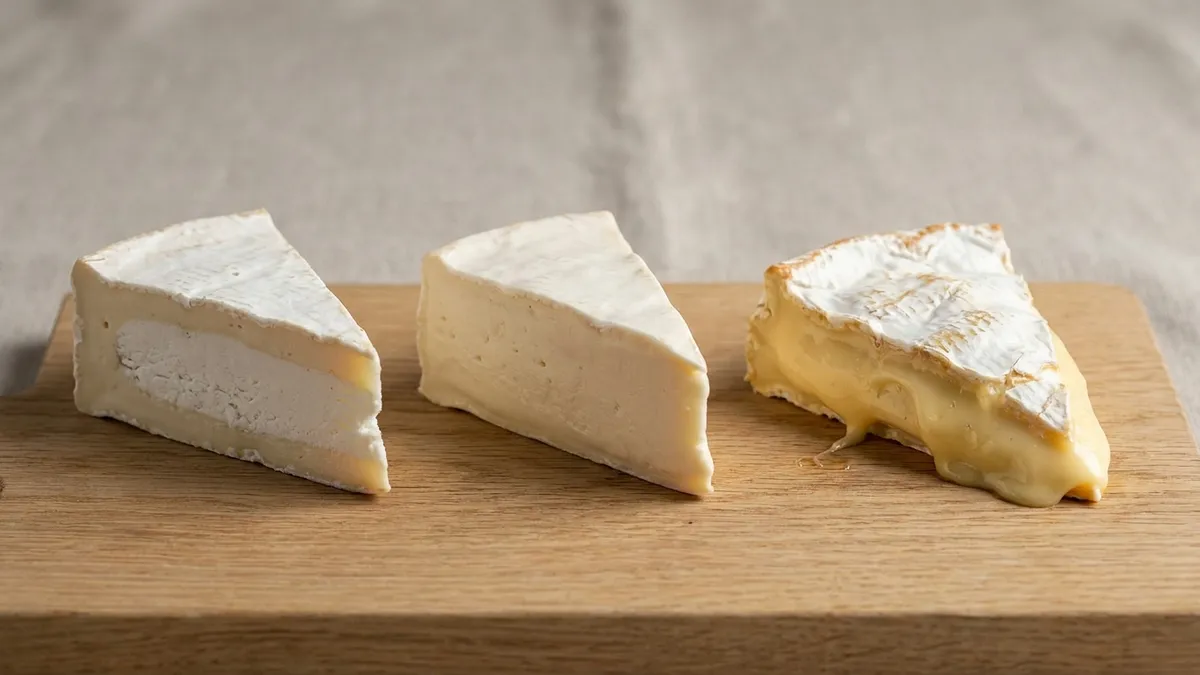
The wine follows the same curve. A young wedge wants Prosecco or Chablis. A creamy, fully ripe one wants Crémant, Champagne or off-dry Chenin Blanc. A wedge that smells strongly of ammonia is past its best; trim the rind and pour the sharpest sparkling wine you have.
Is Camembert Different From Brie When Picking Wine?
Slightly, because Camembert is smaller and usually tastes stronger per bite. It is a small round, so every bite carries more rind, and the rind is where the mushroom and ammonia sit. It also has slightly less butterfat than Brie.
Brie itself comes in more than one size. A Brie de Meaux wheel measures 36 to 37 cm across and weighs about 2.8 kg. Brie de Melun is smaller, about 27 cm and 1.5 kg, with a stronger flavour and smell.
The label tells you how strong the cheese will be. Camembert de Normandie AOP (a protected name with production rules) must be made from raw milk (milk that has not been pasteurised, labelled lait cru) from herds that are at least half Normande cows, and ripened about three weeks before sale. Brie de Meaux is a raw-milk cheese too. Many Camemberts made outside Normandy use pasteurised milk, and they taste milder.
If the label says lait cru, AOP, Brie de Meaux or Camembert de Normandie, open a traditional-method sparkling or a fruit-forward off-dry Chenin Blanc. If it is a pasteurised supermarket wheel, any crisp option from the table works.
What Wine Goes With Baked Brie?
Pick by the topping. Baking melts the paste, so the fat hits harder, but honey or jam changes the wine more than the heat does. Honey, fig jam and cranberry add sugar, and a sweet dish needs a wine that is sweeter than the dish. A dry wine next to honey tastes thin and sour.
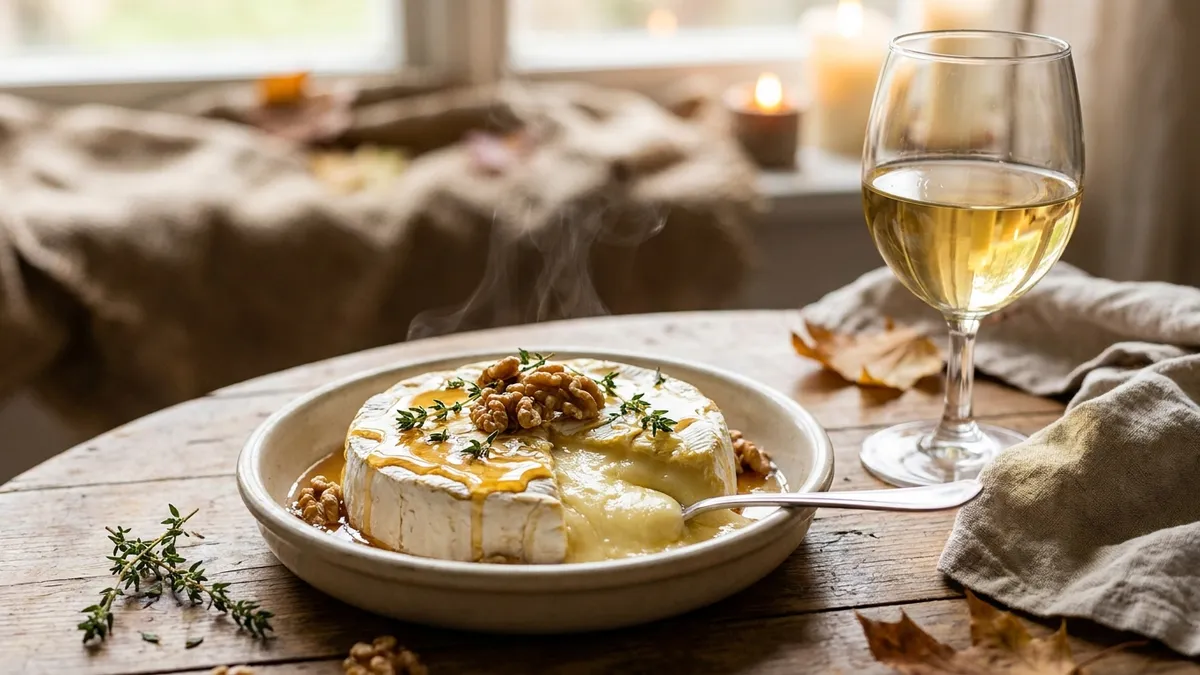
Off-dry Riesling or demi-sec Chenin Blanc covers a light drizzle. With a thick layer of jam, a dessert wine such as Sauternes is safer; the sweet vs dry wine guide shows where each style sits.
If the topping is sweet, choose the wine by its sweetness. If it is garlic, herbs or nothing at all, pour a dry sparkling wine to cut the melted fat.
Should You Eat the Rind?
Yes, the white rind is edible, and it is the part most likely to clash with the wine. It is the mould itself, and it holds most of the earthy, mushroomy and ammonia flavour. The paste underneath is milder and fattier.
That split gives you a quick test. If a pairing tastes bitter, eat a piece of paste with no rind, then a piece with rind, sipping the wine after each. If only the rind bite turns bitter, the wine has too much tannin or oak for this cheese.
What If Brie Is One Cheese on a Board?
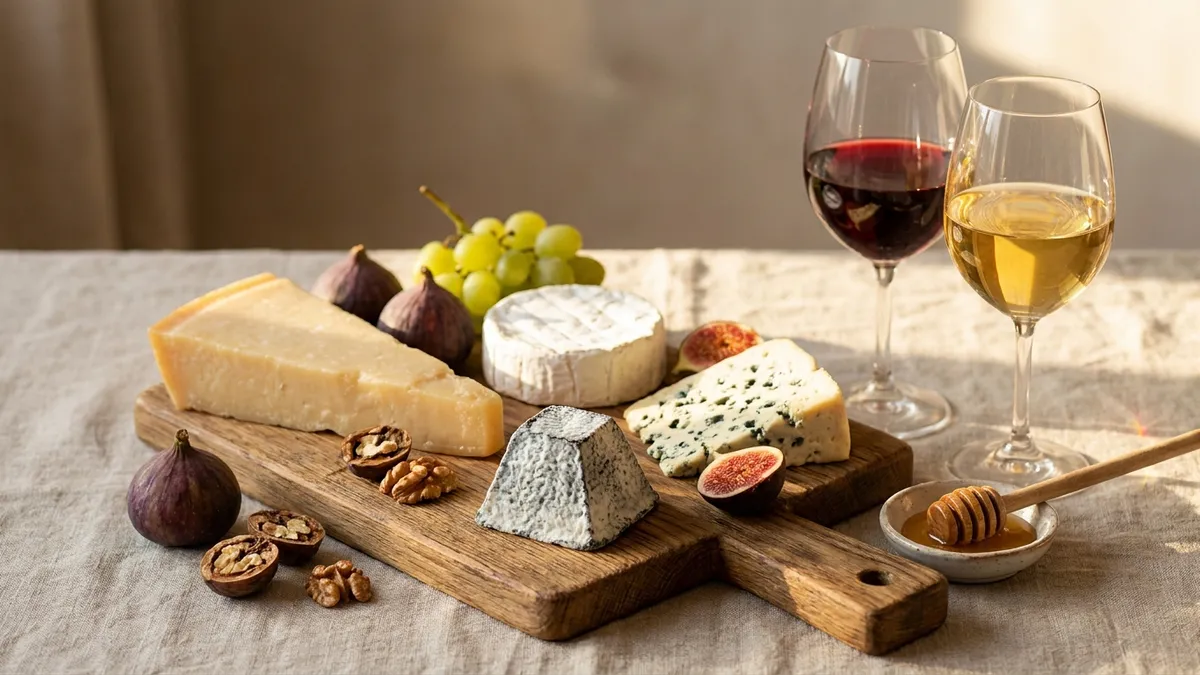
Open one traditional-method sparkling wine and it will cover the Brie and most of the board. Its acidity handles fresh goat cheese, its bubbles handle the soft cheeses, and it stays clean next to aged hard cheese. The wine and cheese pairing guide matches every other style, and more food-and-wine rules sit in the food pairing hub.
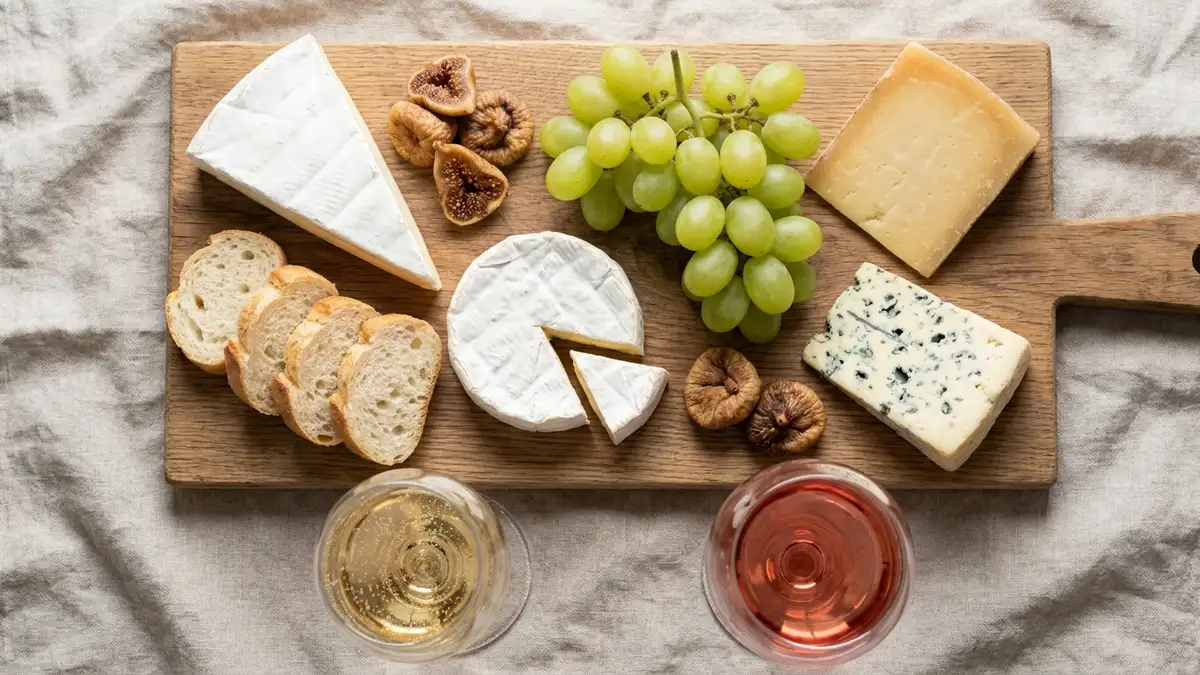
If the board includes a blue cheese, add a small bottle of sweet wine for it; Brie will not need it. If guests want red, a cool Gamay is the one red that suits both the Brie and the hard cheese.
The Sommy app teaches pairing in bite-sized courses, including Wine 101 and a France course. Tonight: buy one wedge of Brie and a bottle of Crémant, and taste the rind and the paste separately with each sip.
Sources
Frequently Asked Questions
What wine goes best with Brie?
A dry sparkling wine made by the traditional method, such as Champagne, Crémant or Cava. Its acidity and bubbles clear the butterfat from your tongue between bites, and its bready notes from ageing on spent yeast sit well beside the creamy paste and mushroomy rind. Unoaked Chardonnay and off-dry Chenin Blanc are strong still alternatives.
Does red wine go with Brie?
Only light, low-tannin reds. Gamay from Beaujolais and a light Pinot Noir, served cool, have enough acidity and fruit to handle the fat. Tannic reds such as Cabernet Sauvignon or Syrah tend to taste bitter or metallic against the white rind, and the soft paste does little to cushion their grip.
What is the difference between Brie and Camembert for wine?
Camembert is a smaller cheese, so each bite carries more rind, and it usually tastes stronger and earthier than a mild supermarket Brie. Pick a slightly fuller or fruitier wine for it, such as a traditional-method sparkling or an off-dry Chenin Blanc. Raw-milk Camembert de Normandie needs the most acid and flavour of all.
What wine goes with baked Brie?
Pick by the topping. With honey, fig jam or cranberry, choose a wine that is sweeter than the topping, such as an off-dry Riesling or a demi-sec Chenin Blanc, or the wine will taste thin and sour. With garlic, herbs or nothing on top, a dry sparkling wine cuts the melted fat best.
Should you eat the rind of Brie?
Yes. The white rind is an edible mould, Penicillium camemberti, sprayed onto the cheese to ripen it. It carries most of the mushroom and ammonia flavour, so it is also the part most likely to clash with a tannic wine. If a pairing tastes bitter, taste the paste without rind to find the culprit.
Is Prosecco good with Brie?
Yes, with a young, mild Brie. Prosecco has the bubbles and acidity that cut the fat, and its fresh pear and apple fruit suits a gentle cheese. With a ripe, runny or raw-milk wedge, a traditional-method sparkling such as Crémant or Champagne is the better choice, because its bready depth matches the stronger rind.
Sommy Team
LinkedInFounder & Wine Educator
The Sommy Team is building the world's most approachable wine education app, helping beginners develop real tasting skills through structured courses and AI-guided practice.