Teaching Kids About Wine Tasting (Using Juice and Snacks)

By the Sommy Team — AI-assisted, human-edited.
Updated Apr 29, 2026
Contents (10)
- Why Teach Kids the Sensory Skills of Wine Tasting
- Wine Tasting for Kids in 100 Words
- What Sensory Training Actually Builds
- The Four-Step Framework: Sight, Smell, Sip, Structure
- Five Specific Tasting Exercises
- Age-Appropriate Adaptations
- Parental Considerations
- Building a Wine-Curious Family Culture
- When Kids Surprise You
- A Realistic First Session
TL;DR
Wine tasting with kids skips the alcohol and teaches the underlying sensory skills using juices, herbal teas, and snacks. A four-step framework — sight, smell, sip, structure — gives children vocabulary for color, aroma, flavor, and texture. Most kids age six and up engage well when training is presented as play, building a foundation that transfers to wine later.
Why Teach Kids the Sensory Skills of Wine Tasting
Wine tasting with kids is not about wine at all — it is about training the senses that wine tasting uses. Children have remarkably acute noses and an open curiosity adults often lose. By age six, most kids can sit through a short structured tasting and engage with sight, smell, taste, and texture as long as the format feels like play. Using non-alcoholic substitutes like fruit juices, infused waters, herbal teas, and small bites of food, you can teach the same skills professional tasters use, without ever opening a bottle.
This guide lays out a four-step framework for sensory training, five specific exercises that work, and how to keep the activity rooted in curiosity rather than imitation of adult drinking. The goal is a wine-curious culture in the home, not early exposure to alcohol.
Wine Tasting for Kids in 100 Words
Wine tasting for kids teaches the sensory skills of tasting — sight, smell, flavor, and texture — using juices, herbal teas, and snacks. The four-step framework runs as a flight: SIGHT (compare colors of grape juice, apple juice, and pomegranate juice in clear glasses against white paper), SMELL (sniff and name fruits, herbs, and spices on small plates), SIP (taste and describe sweet, sour, bitter, and salty using juices), and STRUCTURE (texture — smooth versus grippy, thin versus thick, light versus full). Most kids age six and up engage well when the activity is presented as play, building a vocabulary for aroma and flavor that transfers directly to wine years later.
What Sensory Training Actually Builds
Children who learn to slow down and pay attention to what they smell and taste develop three concrete abilities:
- Aroma recall — the mental library that links a smell to a word.
- Flavor vocabulary — the words to describe sweet, sour, bitter, salty, and umami.
- Texture awareness — noticing whether something feels thin, thick, smooth, grippy, or coating.
These are the same three pillars adults practice when they develop their wine palate. Building them early gives children a head start that lasts a lifetime, regardless of whether they ever choose to drink wine. Cooks, perfumers, and chefs all rely on the same foundation.
The skill is also additive to general life. A child who can name five aromas in an apple grows into an adult who notices nuance everywhere — in food, in nature, and yes, eventually, in a glass of wine.
The Four-Step Framework: Sight, Smell, Sip, Structure
Adapt the classic adult tasting flow into a kid-friendly sequence. Each step takes three to five minutes; the whole session caps at fifteen to twenty minutes before attention fades.
Step 1: Sight
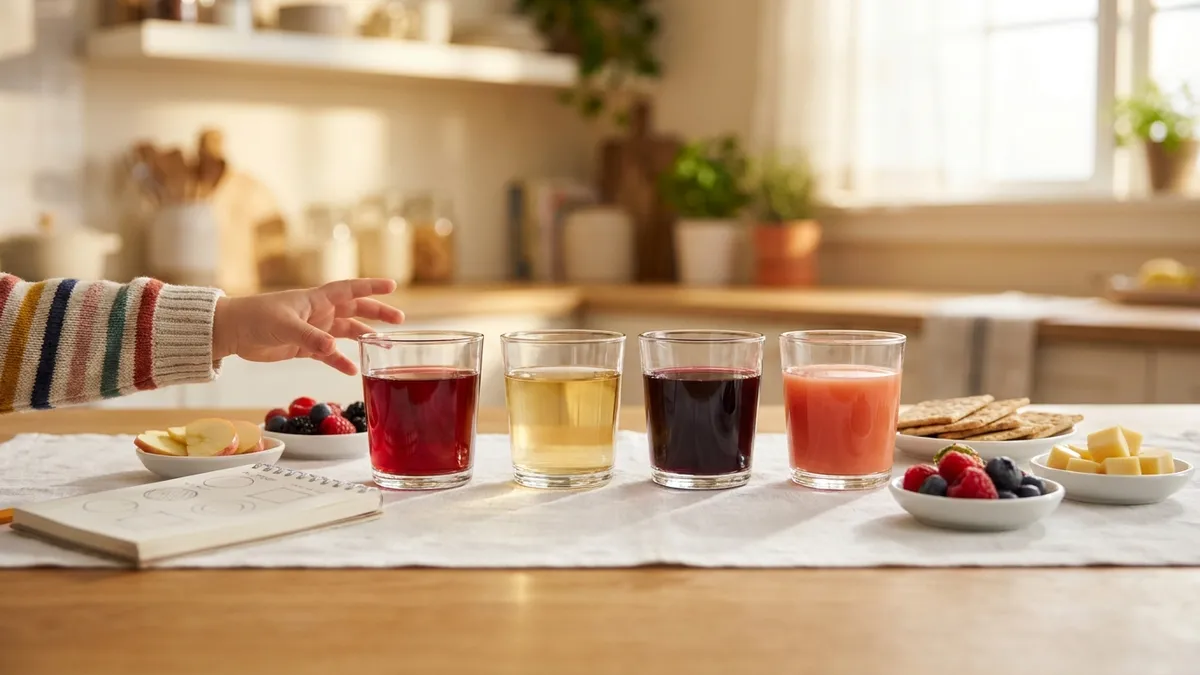
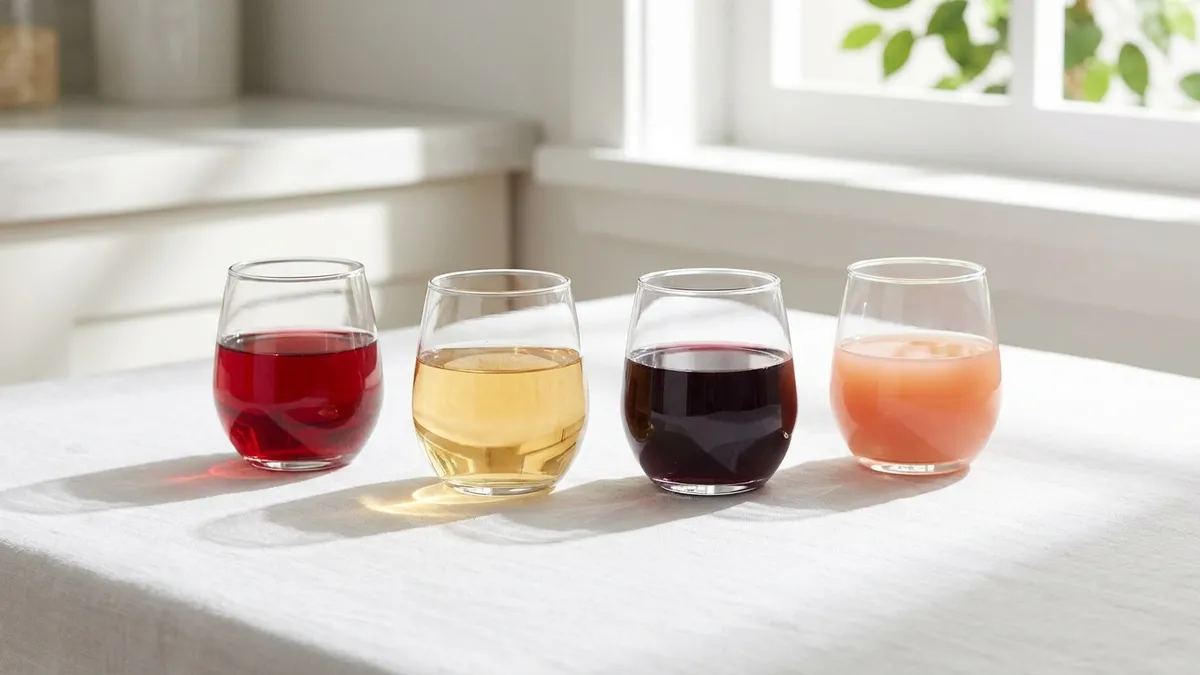
Pour three to five visually distinct juices into matching clear glasses. White grape, apple, pear, red grape, and pomegranate give a useful range of pale-yellow through deep-ruby colors. Place the glasses against a white napkin or sheet of paper.
Ask the child:
- Which is darkest? Lightest?
- Which colors look similar?
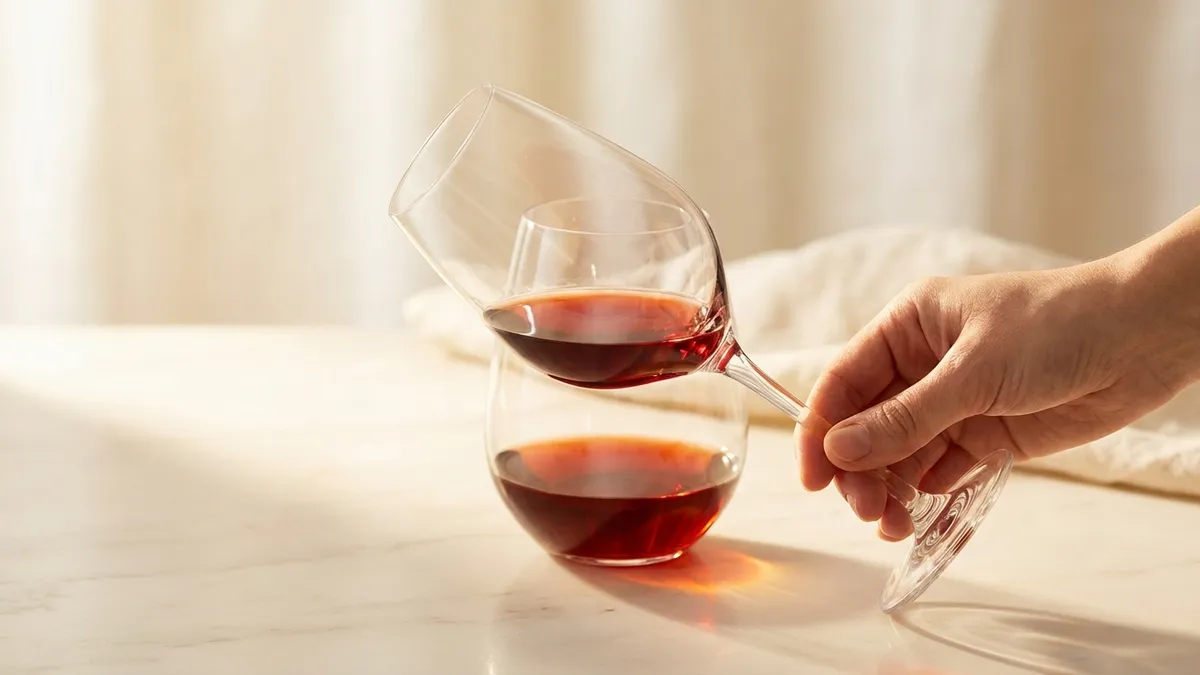
- Tilt the glass — does the color change at the edge?
This is the same exercise adults run when they study wine color and what it means. The mechanic transfers cleanly because color comparison is universal.
Step 2: Smell
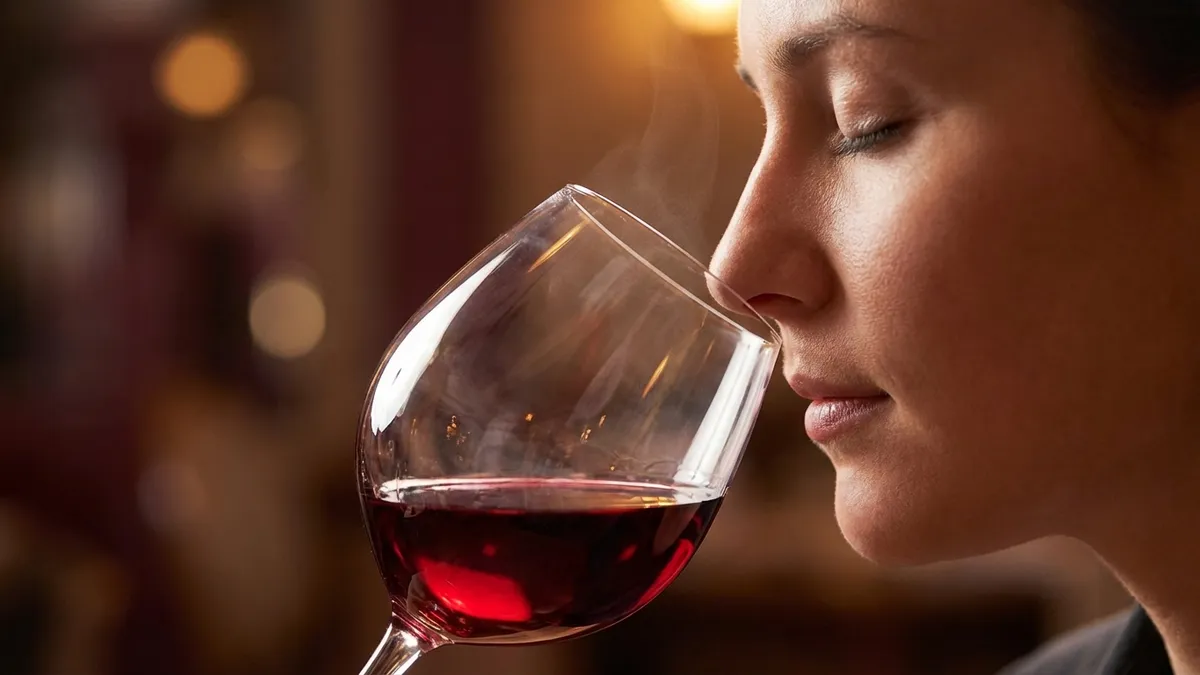
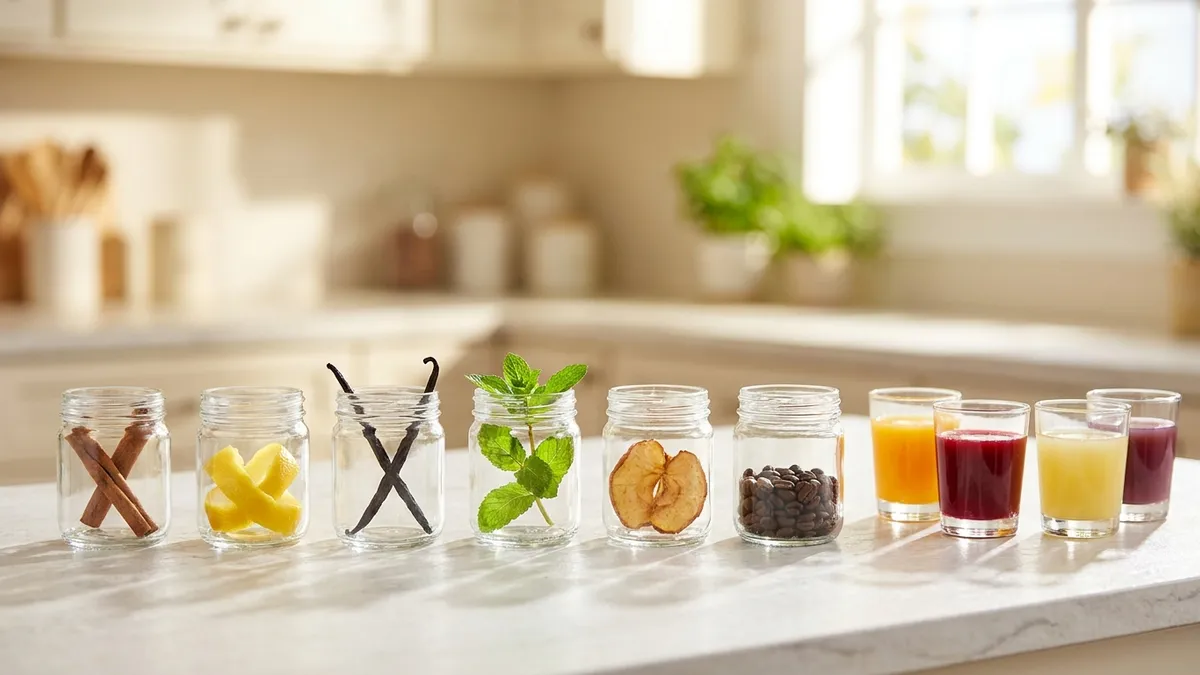
Set out small plates with one aroma each: cut orange peel, fresh mint, a cinnamon stick, a vanilla pod, fresh berries. Have the child smell each plate with eyes closed and name it. Then sniff each juice and ask: does anything in this glass smell like one of the plates?
This builds the same mental library that adults use when learning to smell wine. Children often surprise parents here — their noses tend to be more sensitive than adults', and they have fewer preconceptions clouding identification.
Step 3: Sip
Now taste the juices. Teach the child the four primary tastes by anchoring each to something familiar:
- Sweet — like honey or a strawberry.
- Sour — like a lemon or unripe apple.
- Bitter — like raw kale or unsweetened cocoa.
- Salty — like a cracker or olive.
Have the child sip each juice and decide which of the four it leans toward. Most fruit juices are sweet with a sour edge; herbal teas can be bitter; tomato juice introduces savory and salt. This is the foundation of understanding tannins, acidity, and body later on.
Step 4: Structure
Texture is the hardest concept for adults and surprisingly easy for children. Pour a thin liquid (water) and a thick one (a milk-based smoothie or coconut milk). Have the child sip each and describe how they feel — watery, creamy, coating, light, full.
Add a grippy element: a small piece of dark chocolate, a walnut, or a sip of strong unsweetened black tea. The drying sensation introduces what sommeliers call tannin (the gripping, drying feeling that comes from skins, seeds, and oak in red wine). Children often describe it as "fuzzy mouth" or "the inside of my cheeks went tight."
Five Specific Tasting Exercises
These five exercises slot into the four-step framework and can be rotated week to week.
Exercise 1: The Juice Color Flight
Pour five juices into identical clear glasses. Give the child a piece of paper and crayons or colored pencils. Ask them to draw the color of each glass, label it with one word ("ruby", "pale gold", "pink"), and rank them from lightest to darkest.
This develops the same color-vocabulary skill adults learn when reading a wine appearance guide. It also builds the habit of looking before tasting — a discipline many adults skip.
Exercise 2: The Smell Match Game
Set out six small jars or plates: cinnamon, orange peel, mint, vanilla, dried apricot, fresh berry. Cover them with cloth or use opaque containers with holes. Pour two juices the child has not seen labeled. Ask them to sniff each juice and point to the jar that smells most similar.
This is structured aroma recall — the same drill professional tasters use to build a scent library. It works for solo kids, siblings, or whole birthday parties.
Exercise 3: Taste-Vocabulary Cards
Print or draw cards with single words: sweet, sour, bitter, salty, fruity, fresh, smooth, sharp, light, heavy, fizzy, dry. Pour three samples (juice, herbal tea, sparkling water with a squeeze of lemon) and have the child pick three cards that match each sample.
This builds tasting vocabulary without requiring memorization. The cards do the recall for them; their job is matching.
Exercise 4: Blind Smell Jars
Fill five small opaque jars with strong-smelling items: ground coffee, peanut butter, a slice of apple, a sprig of rosemary, lemon zest. Cover the lid with cheesecloth so air gets through but the contents stay hidden. Have the child smell each and guess. Reveal at the end.
Blind formats teach children the same lesson adults learn from blind wine tasting — that confidence in identification grows with practice, and that being wrong is part of learning. Frame it as a game; never a test.
Exercise 5: The Palate-Fatigue Test
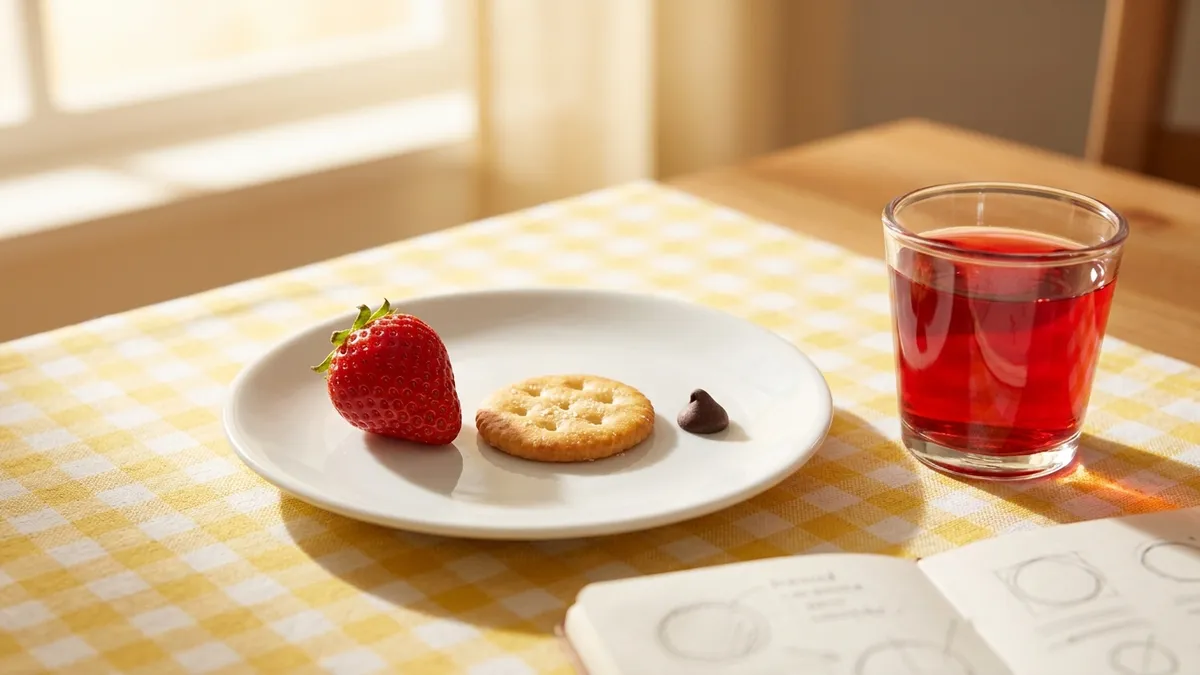
Pour five small samples — two should be similar (apple juice and pear juice). Have the child taste them in order, then again after a full minute of nibbling a plain cracker and sipping water. Ask: did the second pass taste different?
The cracker resets the palate. Children quickly grasp that taste is not stable — it changes with what came before. This is the same insight behind palate fatigue in adult tasting, and it explains why sommeliers spit, pause, and use bread between samples. A practical lesson dressed as a snack break.
Age-Appropriate Adaptations
Not every kid is ready for the full four-step framework on day one. Adapt to the age and attention span you actually have.
Ages 3-5
Stick to one step at a time, and keep sessions under ten minutes. Smell-and-name with three familiar items (orange, apple, mint) is plenty. Color comparison with two contrasting juices is plenty. Praise observation, not accuracy.
Ages 6-9
The full four-step framework works. Most children in this range love the structure of a flight and the vocabulary cards. Introduce the texture exercises gently — some kids find astringency unpleasant at first.
Ages 10-13
Add complexity: blind formats, comparison flights ("which two of these three are most similar?"), and food pairings. This is the age where children can genuinely outperform adults in smell-naming because their references are fresh and their confidence has not been dulled by self-doubt.
Ages 14+
Older teens can work through the same drills adults use. Focus on the cognitive skill — the mental library, the vocabulary, the comparison instinct — without ever needing to touch alcohol. Many of the best young sommeliers started exactly this way.
Parental Considerations
Three principles keep the activity healthy and educational rather than confusing.
Frame it as sensory exploration, not adult imitation. Do not pour juices into wine glasses with stems if that visual reads as "playing wine" to the child. Stemless tumblers, small juice glasses, or even labeled tasting cups work. The activity stands alone; it does not need to look like a dinner party.
Skip the wine vocabulary that has no kid-friendly meaning. Words like "vintage", "appellation", and "terroir" are abstractions that need a foundation first. Stick to the sensory words: color, aroma, flavor, texture, sweet, sour, smooth, sharp. The advanced vocabulary can come later when it has somewhere to land.
Never make it a test. The fastest way to kill curiosity is to grade a child on smell identification. Frame everything as "what do you notice?" rather than "what is right?" There are no wrong answers in sensory training — only observations of varying detail.
Keep alcohol entirely out of the activity. Even a "tiny sip to compare" undermines the framing. The whole point is teaching the skill cleanly. If a curious adolescent asks about wine itself, the answer is "we will revisit this when you are older — the skills you are building now will make wine make sense then."
Building a Wine-Curious Family Culture
A family that talks about smells, flavors, and textures at the dinner table builds a wine-curious culture without ever putting alcohol in front of children. Habits that compound:
- Smell-naming during cooking. "What does the rosemary smell like to you?" "How does this sauce smell different now that it has reduced?"
- Taste-comparison at meals. "How does this tomato taste different from the one we had yesterday?" "Which of the two cheeses is sharper?"
- Texture vocabulary in everyday food. "Is this peach mealy or juicy?" "Does the chocolate coat your tongue?"
Children raised with this kind of language naturally develop the wine memory training habits that sommeliers practice deliberately as adults. The Sommy app's lesson structure mirrors many of these same exercises in adult format — color flights, aroma jars, structure scorecards — so when a child grows into a young adult curious about wine, the pattern feels familiar.
When Kids Surprise You
Parents who run these exercises consistently report the same surprise: children often outperform adults at pure smell identification. Their noses are more sensitive, their references are fresh, and they have not yet learned to second-guess themselves. A six-year-old will confidently say "this smells like the inside of grandma's cookie tin" while an adult will hedge with "it's kind of, maybe, slightly...".
Trust those moments. The point is not training future sommeliers but giving kids a vocabulary for paying attention to the world. If wine becomes part of their adult life later, the foundation is already there — and they get to that foundation through curiosity, not through being handed a glass too early. For families building this habit, Sommy's structured tasting framework shows how the same four-step adult method scales up from juice and snacks to a full wine flight when the time is right.
A Realistic First Session
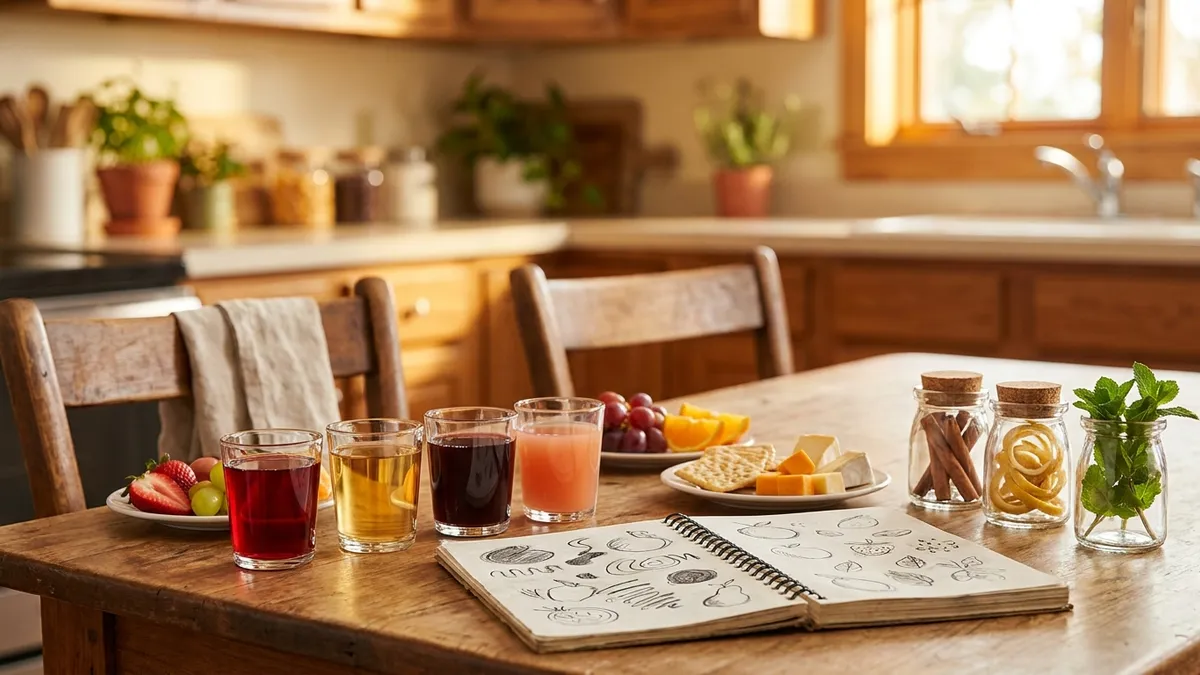
A first sensory session at home does not need elaborate setup. Three glasses, three juices, a few small plates of fruit and herbs, and a quiet fifteen minutes. Walk through sight, smell, sip, structure — even one rotation through the framework is enough to plant the seed.
Run it again a week later with one variation. Try wine and cheese pairing logic translated to juice and cheese. Try a comparison flight using two apple juices from different brands and ask which one tastes more "appley." Each session deepens the library a little, and the child starts to notice things outside the activity — at meals, in the garden, at the grocery store. That is the real win.
Wine tasting with kids using non-alcoholic substitutes is not a trick or a workaround. It is the actual skill, taught using the actual ingredients of the senses. The wine is just a delivery vehicle adults use because they happen to be old enough to drink it. The senses are the same.
Frequently Asked Questions
At what age can kids start wine tasting with non-alcoholic substitutes?
Most children engage well from age six, when vocabulary and patience are strong enough for short structured tastings. Younger kids can join simpler smell-and-name games from age three or four. The activity is sensory training, not wine drinking, so the alcohol question never enters — you are teaching the same skills sommeliers practice using grape juice, infused water, and snacks.
Does teaching sensory skills early actually help kids understand wine later?
Yes. Aroma recall is built from a library of remembered smells, and that library grows fastest in childhood. Kids who practice naming fruits, herbs, and spices build a vocabulary that transfers directly to wine when they are old enough. Studies of perfumers and sommeliers show consistent early sensory exposure correlates with faster identification accuracy in adulthood.
Won't this normalize drinking alcohol for children?
Not when the activity is framed as sensory exploration rather than wine imitation. The juices and snacks stand on their own. No glasses are clinked, no toasts are made, and the word 'wine' can be left out entirely. Many families simply call it a smell-and-taste game. The skills transfer; the drinking culture does not.
What should you put in the glasses for a kids' tasting flight?
Choose three to five visually distinct juices: white grape, red grape, apple, pomegranate, and pear are reliable starters. Add an unsweetened herbal tea like chamomile or hibiscus for color and aroma variety. Use clear stemless glasses or small tumblers so children can compare colors against a white background, just as adults do with wine.
How long should a kids' tasting session run?
Cap it at fifteen to twenty minutes. Children's sensory attention fatigues faster than adults', and pushing past that window produces tired guesses rather than real learning. Two to four samples per session is the sweet spot. Short, frequent sessions outpace long, occasional ones — the same pattern that works for adult palate training.
What snacks work best for teaching texture and balance?
Pair sweet juices with salty crackers, sour juices with mild cheese, and bitter herbal teas with something fatty like a slice of avocado. Walnuts and dark chocolate squares introduce grippy textures that mimic tannin in red wine. The goal is showing how different flavors and textures change each other — the foundation of wine and food pairing.
How do you teach a child to describe what they smell?
Start with familiar references. Hold up a piece of orange peel and say 'this smell is orange.' Then sniff a juice and ask 'do you smell anything like the orange?' Build from concrete objects to abstract comparisons. Vocabulary cards with pictures of fruits, herbs, and spices give shy kids a way to point rather than guess.
Can this work for a single child or do you need a group?
Both work. One-on-one sessions go deeper because there is no peer pressure and the child sets the pace. Group sessions add the social game of disagreeing about a smell or color, which is closer to how adult tastings actually feel. Sibling tastings often surprise parents — kids notice details adults miss.
Sommy Team
LinkedInFounder & Wine Educator
The Sommy Team is building the world's most approachable wine education app, helping beginners develop real tasting skills through structured courses and AI-guided practice.