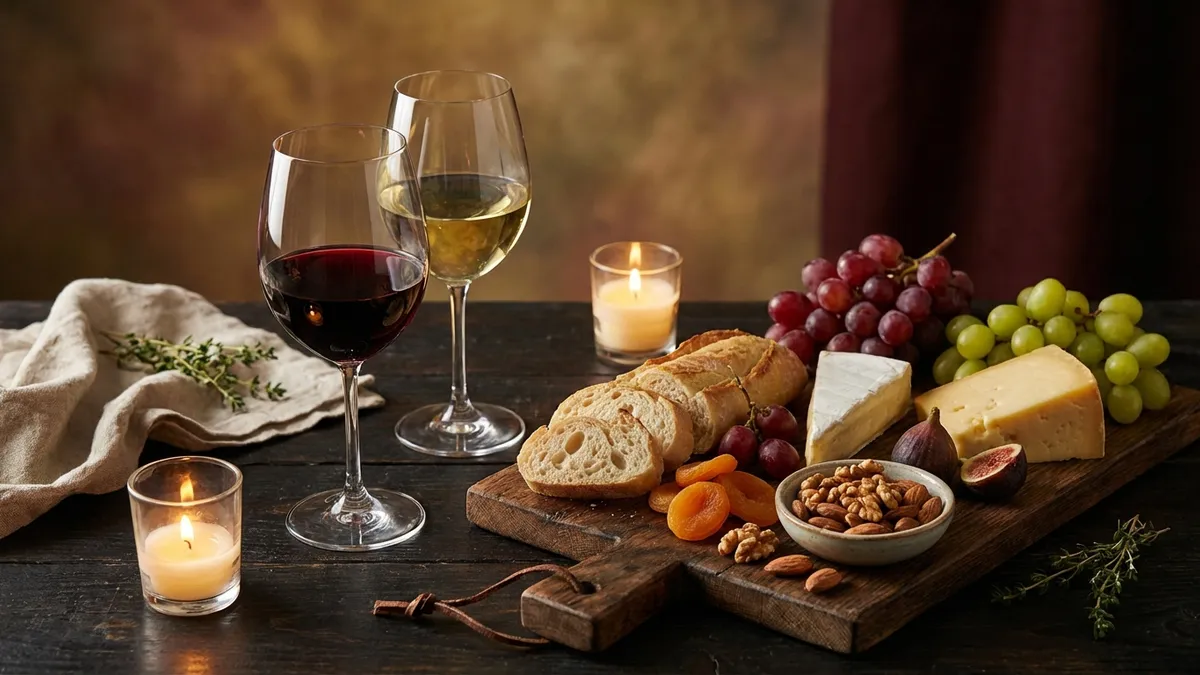
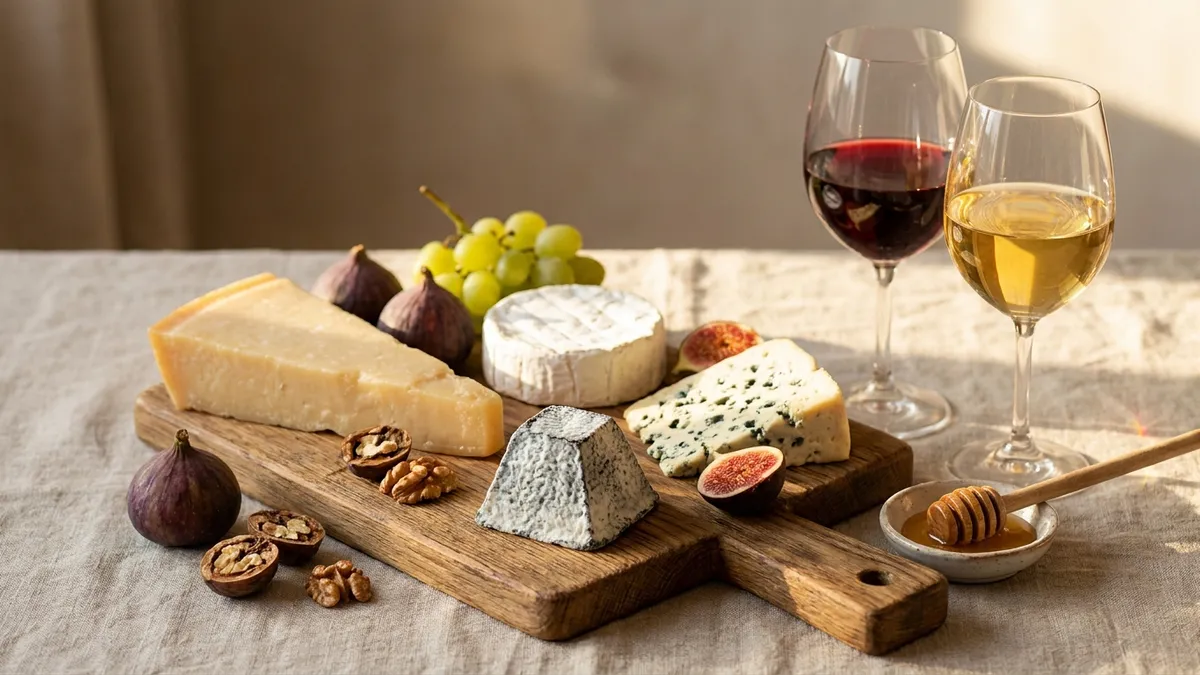
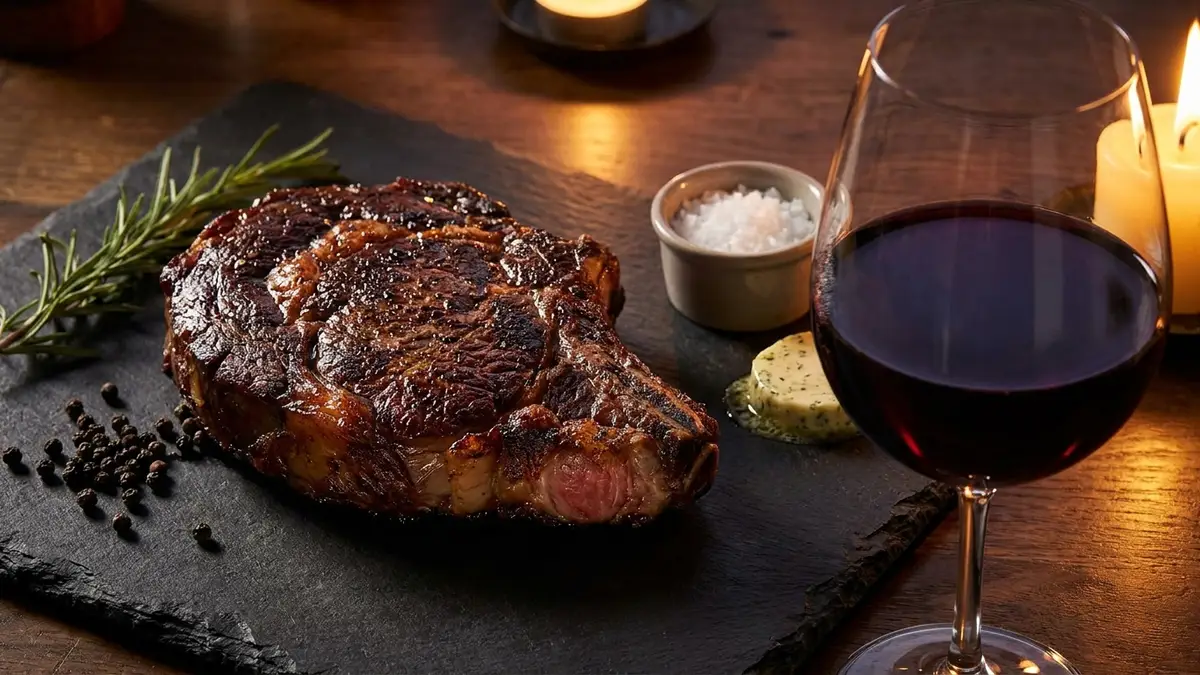
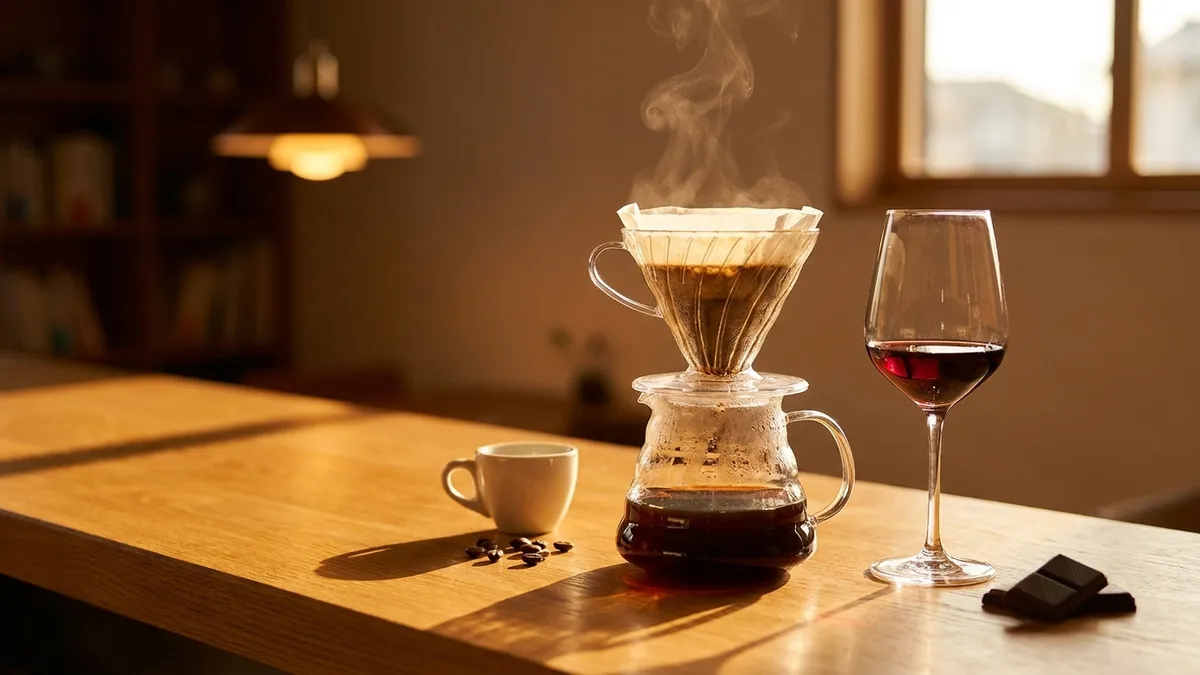
Wine and Coffee: Surprising Pairings and Shared Flavor Notes

By the Sommy Team — AI-assisted, human-edited.
Updated Apr 29, 2026
Contents (13)
- Why Wine and Coffee Pairing Belongs in Your Tasting Toolkit
- Wine and Coffee Pairing, in 90 Seconds
- What Coffee and Wine Have in Common
- The Four Coffee-to-Wine Tasting Parallels
- Pairing Strategies That Genuinely Work
- Combinations to Avoid
- Why Coffee Before Wine Ruins the Tasting
- The Tasting Wheel Overlap
- Sommelier and Barista, Same Skill Set
- Five Cross-Training Exercises
- Building a Coffee-Wine Palate Library
- Coffee in Restaurants and Tasting Menus
- Coffee Is Wine's Spiritual Sibling
TL;DR
Wine and coffee share fermentation, roasting, and aging chemistry — which is why their flavor wheels overlap so heavily. Light coffees echo aromatic whites, dark roasts echo bold reds, and espresso behaves like a fortified wine. Pair them with chocolate desserts, never alongside fine wine, and use coffee tasting as a low-cost way to sharpen your wine palate.
Why Wine and Coffee Pairing Belongs in Your Tasting Toolkit
Wine and coffee pairing sounds like a contradiction — two of the most opinionated drinks in the world, each with its own ritual, rarely served at the same moment. Yet they share more flavor chemistry than almost any other pair of beverages a curious taster will encounter. Once you see the overlap, both drinks become more interesting.
Coffee and wine are both products of fermentation (the conversion of sugars into acids, alcohols, and aromatic compounds by yeast or bacteria). Coffee cherries are dry-fermented around the bean before drying, and grape juice ferments into wine in tank or barrel. The aromatic compounds produced — esters, pyrazines, lactones — overlap considerably between the two.
This guide covers the flavor parallels, the dessert pairings that genuinely work, the timing mistakes that ruin a tasting evening, and the cross-training exercises that turn coffee into a cheap, daily way to sharpen your wine palate.
Wine and Coffee Pairing, in 90 Seconds
Wine and coffee pairing works through a third element — usually a chocolate, caramel, or coffee-flavored dessert — rather than direct sip-by-sip alternation. Match light, floral coffees with aromatic whites and Moscato. Match dark, smoky roasts with bold reds and aged tawny styles. Match espresso with fortified wines like Tawny Port or Pedro Ximenez sherry. Avoid coffee in the hour before fine wine — the acid and caffeine flatten your palate. Use coffee tasting as cross-training: 60 to 70 percent of its flavor wheel overlaps with wine, so every cupping session quietly improves your wine vocabulary.
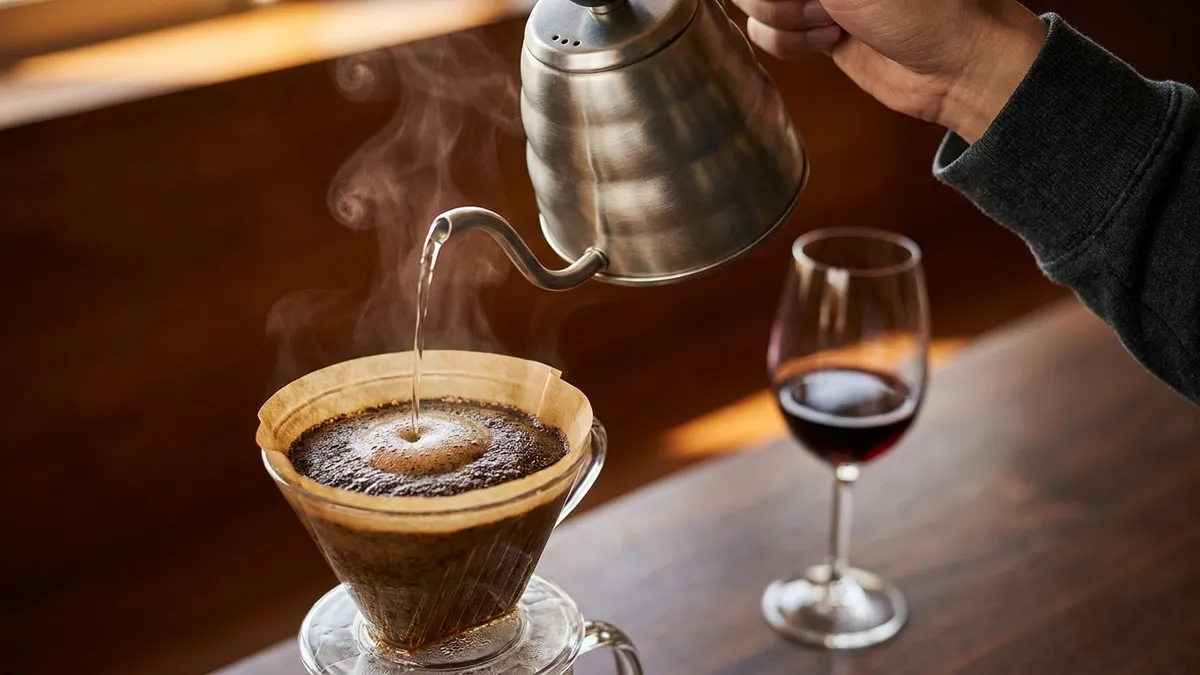
What Coffee and Wine Have in Common
The deeper you look, the closer these drinks become. Both start with a fruit. Both ferment. Both develop layers of aroma through processing and aging. Both reward slow attention.
Both Are Fermented
Coffee fermentation often surprises tasters. Inside the coffee cherry, the bean is coated in mucilage — a sugary layer that yeasts and bacteria break down during processing. The fermentation method (washed, natural, anaerobic, honey) shapes the final aroma profile in the same way that yeast strain and fermentation temperature shape a wine.
A naturally processed Ethiopian coffee can taste explosively fruity — strawberry, blueberry, even raspberry — for the same reason a low-temperature fermentation in a cool-climate Pinot Noir produces vivid fresh-fruit esters. Both are products of yeast working on sugar in the presence of fruit pulp.
Both Develop Through Roast or Age
Roasting transforms green coffee through the Maillard reaction (the browning chemistry that turns toasted bread golden and creates caramelized flavors) and through pyrolysis (the breakdown of organic compounds at high heat). Wine ages through slower oxidative and reductive reactions in barrel or bottle, producing equivalent tertiary notes.
Light coffee and young wine are bright, fruity, and primary. Medium roast and oaked, mid-aged wines move toward caramel, nut, and dried fruit. Dark roast and aged red wines share leather, tobacco, smoke, and chocolate. The pathway is different, but the destination rhymes.
Shared Flavor Compounds
The chemistry is closer than most casual drinkers realize:
- Pyrazines — the green pepper, herbal, and roasted notes in dark coffee also drive the bell pepper character in Cabernet Franc and underripe Merlot.
- Methoxypyrazines — the same compound that makes Sauvignon Blanc smell of grass and gooseberry shows up in some coffees as a green, vegetal edge.
- Esters — fruity aromas in light roasts and young red wines come from the same families of fermentation byproducts.
- Chlorogenic acid — coffee's astringent compound, often called a relative of wine tannin (the drying, gripping sensation that comes from grape skins, seeds, and oak), produces a similar puckering finish.
- Lactones — creamy, coconut, and oak-like notes appear in both barrel-aged whites and naturally processed coffees.
If you have ever described a coffee as "wine-like," this overlap is why.
The Four Coffee-to-Wine Tasting Parallels
Once you accept that coffee and wine occupy the same flavor map, pairing them by intensity becomes intuitive. Use these four bands as a starting framework.
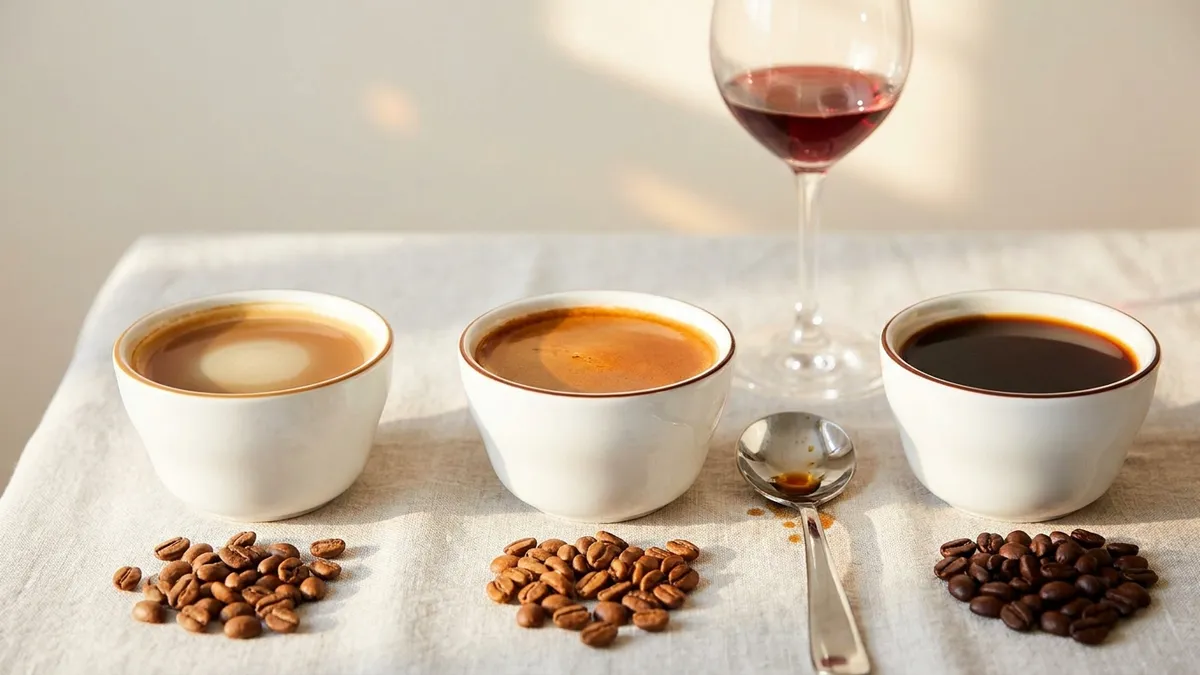
Light Coffee Behaves Like an Aromatic White
Light-roast Ethiopian and Kenyan coffees often show jasmine, bergamot, lemon, and stone fruit. They have piercing acidity, low body, and almost no roast character. Their wine cousins are aromatic whites — Riesling Kabinett, Pinot Grigio, dry Moscato, and unoaked Sauvignon Blanc.
If you train your nose on a delicate Yirgacheffe in the morning, you are also training the parts of your palate that pick out citrus, white flower, and crisp orchard fruit in a Riesling. The vocabulary you build for one drink transfers directly. For more on identifying these notes, our guide to floral notes in wine walks through the same aroma families.
Medium Coffee Behaves Like a Mid-Weight Wine
Medium roasts from Brazil, Colombia, or Costa Rica tend toward almond, hazelnut, milk chocolate, caramel, and red apple. The acidity is moderate and the body is round. The wine equivalents are oaked Chardonnay, mature Sangiovese, and lighter-bodied Tempranillo.
This is the most flexible band. A morning cup that tastes like roasted hazelnut and caramel is sitting in the same flavor zone as a barrel-fermented Chardonnay or a five-year-old Chianti. Compare a Cabernet Sauvignon and Merlot tasting alongside a medium-dark Brazilian coffee and you will notice the bridge between cocoa and ripe red fruit.
Dark Coffee Behaves Like a Bold Red
French roast, Italian roast, and most espresso blends deliver bittersweet chocolate, smoke, leather, charred wood, and dried fig. The acidity is muted and the body is heavy. These map onto Bordeaux blends, Northern Rhone Syrah, Amarone, and aged Malbec.
The chlorogenic acid in dark coffee mimics tannin, which is why a strong dark roast and a tannic red wine feel structurally similar even when one has caffeine and the other has alcohol. Both leave a long, slightly drying finish. Both reward food.
Espresso Behaves Like a Fortified Wine
Espresso is a concentrated, viscous, bittersweet liquid with intense aroma and a long finish — and so is a great Tawny Port or Pedro Ximenez sherry. Both pour with weight. Both layer dried fruit, nut, caramel, and roasted notes. Both shine after dinner with chocolate or cheese.
This is the most useful parallel for hosting. If you want a simple after-dinner ritual that flatters guests, serve espresso, a small glass of Tawny Port, and a square of dark chocolate. The Port will taste deeper, the chocolate will taste cleaner, and the espresso will feel like part of a course rather than a punctuation mark.
Pairing Strategies That Genuinely Work
Pairing wine and coffee through dessert is reliable because the dessert acts as a flavor bridge. The sweetness, fat, and chocolate or caramel notes meet both drinks halfway.
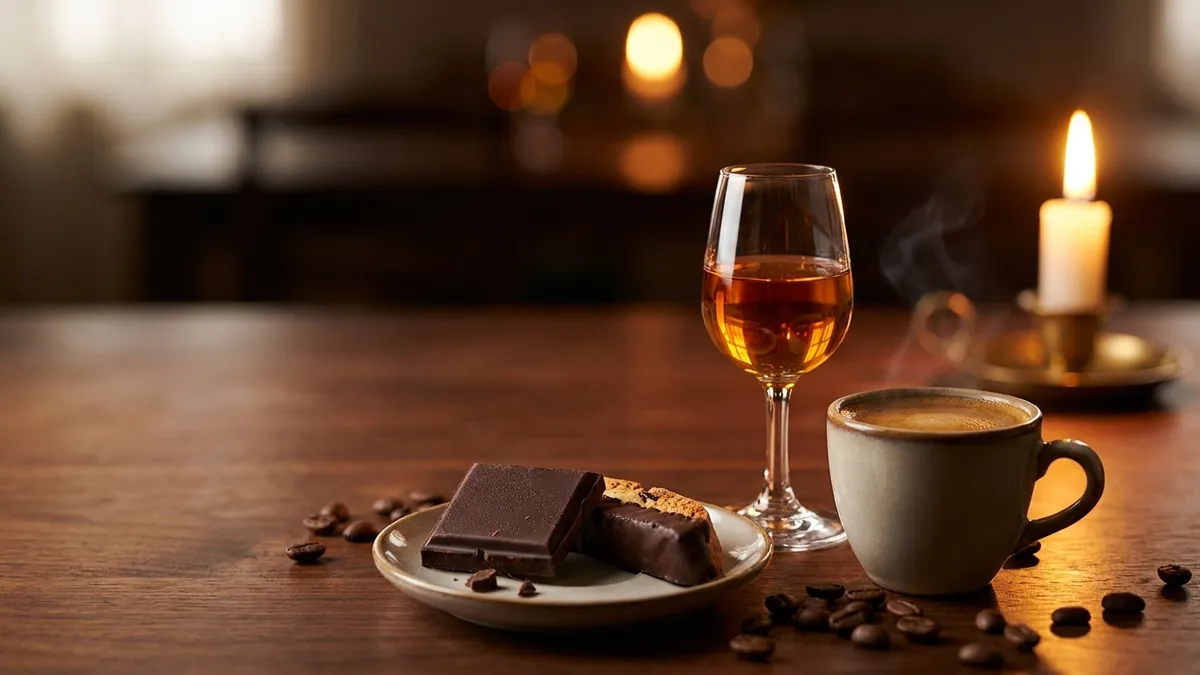
The After-Dinner Trio
A simple, almost foolproof structure: bittersweet chocolate dessert, espresso, and Tawny Port. The chocolate matches the espresso's bitterness. The Port matches the chocolate's sweetness. The espresso shares cocoa and roasted-nut notes with the Port. Three corners of a triangle, each reinforcing the others.
For a deeper look at how this kind of structure works, our dessert wine guide explains why fortified styles dominate post-dinner pairing.
The Brunch-Style Pairing
A lighter daytime version: pour-over coffee from a bright single origin, a fresh stone-fruit tart, and a glass of Moscato d'Asti. The Moscato's gentle fizz and peach-apricot notes echo the coffee's stone fruit and the tart's filling. Nothing is heavy, nothing is bitter, and the meal feels balanced.
Coffee Desserts With Their Wine Twins
Some pairings are essentially native to one cuisine and have been validated for centuries:
- Tiramisu and Vin Santo — espresso, mascarpone, and ladyfingers meet Tuscany's nutty, raisined dessert wine.
- Coffee-glazed cake and Tawny Port — caramel meets caramel, with the Port's nuttiness echoing the cake's roasted-coffee glaze.
- Espresso panna cotta and Pedro Ximenez sherry — fig, raisin, and date in the sherry wrap around the espresso's bitterness.
- Affogato (espresso over vanilla gelato) and Vintage Port — temperature contrast, fat, and dark fruit creating an unbeatable three-second mouthful.
None of these pairings put coffee and wine in alternating sips. They put them on the same plate, where each lifts the other through the dessert in between.
Combinations to Avoid
Some pairings sound clever and consistently disappoint. Understanding why protects you from the most common mistakes.
Coffee Right Before a Wine Tasting
This is the cardinal sin. Coffee floods your palate with acid and bitterness, and caffeine tightens perception in ways that take 30 to 60 minutes to fade. Tannin, oak, and subtle aromatic notes go missing on the first wines you try. If you are tasting seriously, leave a clean hour between your last sip of coffee and the first wine. For more on protecting your palate, see our piece on common wine tasting mistakes.
Coffee in the Same Course as Fine Wine
A bold dry red and a strong dark coffee, served alongside the same dish, will fight. The wine's tannin and the coffee's chlorogenic acid stack on the palate, and both lose their nuance. Coffee belongs after the main course, with dessert or on its own.
Iced Coffee With Most Wines
Iced coffee is cold, often sweetened, and aggressively acidic. Cold drinks dull the palate, sweeteners distort balance, and the acid amplifies wine's rougher edges. There are exceptions for very specific desserts, but as a default, treat iced coffee and wine as separate occasions.
Why Coffee Before Wine Ruins the Tasting
The science is straightforward. Coffee delivers a triple hit your palate is not equipped to recover from quickly:
- Acid saturation — the citric, malic, and chlorogenic acids in coffee linger on the tongue, raising the threshold at which you can perceive wine acidity.
- Bitterness adaptation — once your palate registers strong bitterness, mild bitterness in wine (from tannin or oak) becomes harder to detect, and you read the wine as flatter than it is.
- Caffeine arousal — caffeine raises pulse, sharpens vigilance, and shifts attention away from low-amplitude sensations like delicate aroma. The exact opposite of what you want during a slow, sensory-attentive tasting.
Sixty minutes is the practical minimum. Ninety minutes is safer. Water and a small piece of plain bread or unsalted cracker between the coffee and the first wine help reset the palate.
If palate calibration is something you are working on deliberately, the techniques in our guide to developing your wine palate apply equally to coffee — and the cross-training compounds quickly.
The Tasting Wheel Overlap
Lay the SCA coffee tasting wheel next to a wine aroma wheel and the resemblance is uncanny. Both have a Fruit cluster (citrus, berry, stone fruit, dried fruit, tropical). Both have Floral. Both have Nutty/Cocoa. Both have Spice. Both have Roasted/Smoky. Both have Earthy. Both have Herbal/Vegetal.

The estimated overlap is 60 to 70 percent of the named descriptors. The categories that appear on a wine wheel but not a coffee wheel are mostly minerality and salinity (rare in coffee) and some petroleum-tinged kerosene notes (specific to aged Riesling). The categories that appear on a coffee wheel but not a wine wheel are mostly papery or stale defects from bad storage.
For most working tasters, this means the vocabulary you build through one drink transfers directly to the other. A guide like our wine tasting vocabulary cheat sheet can be read as a coffee vocabulary cheat sheet with almost no edits.
Sommelier and Barista, Same Skill Set
The professional rituals look different on the surface and identical underneath. A barista pulls espresso, evaluates crema, smells the cup, slurps to aerate, and scores intensity, balance, complexity, and finish. A sommelier pours wine, swirls, smells, sips, and scores intensity, balance, complexity, and finish.
Both train palate calibration over years. Both use cupping or tasting flights to compare similar samples side by side. Both keep tasting notes. Both rely on shared, structured vocabulary so that one professional can describe a coffee or a wine in a way another professional can recognize.
This is also why so many sommeliers drink coffee analytically. A tasting flight of three coffees costs less than a single bottle of grand cru Burgundy and takes 20 minutes. The Sommy app helps build the same evaluation framework for wine — intensity, balance, finish, and aroma identification — and the structure transfers to whatever you are tasting next.
Five Cross-Training Exercises
If you want to use coffee to sharpen your wine palate, the following exercises are simple, cheap, and surprisingly fast to show results.
Same-Acid Compare
Brew a high-acid washed Kenyan coffee and pour a glass of crisp Sancerre. Taste each in turn. Notice how acidity feels in different mediums — the coffee's acid is hot and pointed, the wine's is cooler and more linear. Calibrating both trains you to talk about acidity precisely.
Roast and Age Parallel
Pair a light roast with a young, unoaked white. Then a dark roast with an aged red. The roast-versus-age axis behaves the same way: brighter, primary, fruit-driven on one end; deeper, tertiary, savory on the other. After this exercise, the concept of "tertiary aromas" stops being abstract.
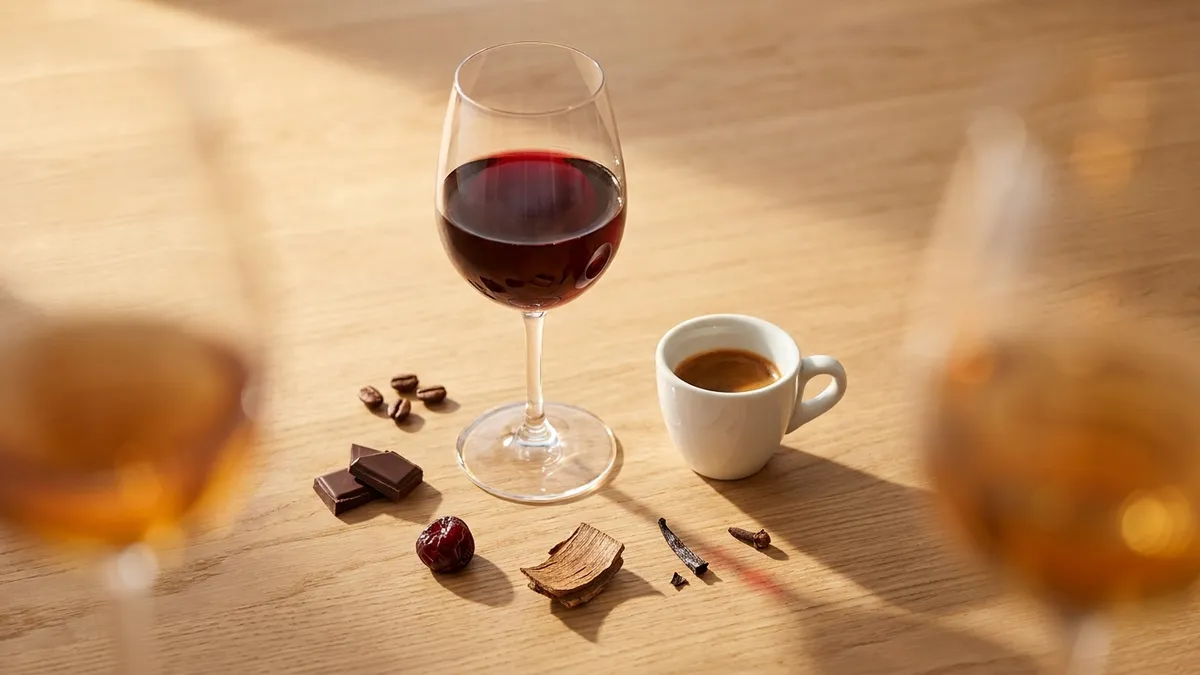
Body Comparison
Source a thin-bodied filter coffee and a heavy-bodied espresso. Compare them to a Pinot Grigio and an Amarone. Body is one of the hardest concepts to teach, and tasting it across two beverage families locks it in faster than tasting wines alone.
Origin Region Parallel
A single-origin Ethiopian coffee shows distinct varietal character — heirloom varieties produce specific floral and citrus notes. A village-level Burgundy shows distinct vineyard character. Tasting both in one sitting drives home what "expressive of origin" actually means in your mouth, not just on paper.
Blind Tasting Mash-Up
Pour four coffees and four wines, blind. Try to pair each coffee to its closest wine cousin by aroma profile. You will get some right, miss others, and learn enormously from the misses. This is the highest-yield exercise in the list.
For an even more structured progression, our piece on how to describe wine gives you the language framework — and that framework is just as useful describing coffee. You can also explore our broader food-pairing learn pillar for adjacent skills.
Building a Coffee-Wine Palate Library
The most efficient way to build cross-trained sensory memory is to taste in pairs, deliberately, over weeks rather than days.
A practical weekly cadence:
- Three coffees from different roast levels and origins
- Three wines spanning a clear intensity range (aromatic white, mid-weight red, fortified)
- One shared note you actively look for in both — caramel one week, red fruit the next, smoke the week after
Keep a running log of which aromas crossed over and which stayed unique to one drink. After a month or two, you will have a shared mental library that makes both wines and coffees feel more legible. The Sommy app's structured tasting practice, designed for wine, applies cleanly to coffee with no modification — same protocol, different liquid. You can explore the full curriculum at Sommy.
Coffee in Restaurants and Tasting Menus
When you are hosting or ordering, the timing rules are simple:
- Save coffee for after the main course, not before or during.
- If the dessert is chocolate, espresso plus a small Tawny Port pour is a no-fail trio.
- If the dessert is fruit-based, a light pour-over and a Moscato or sweet sparkling wine play together gracefully.
- If you have a long wine pairing dinner ahead, decline the pre-meal espresso. The waiter will not be offended, and your palate will reward you for two courses.
For pairings that lean more savory, our notes on a few benchmark grapes — particularly the Pinot Noir guide — give you a sense of which wines have the earthy, slightly roasted quality that bridges into coffee territory most naturally.
Coffee Is Wine's Spiritual Sibling
Treat coffee and wine as two dialects of the same language and your tasting life gets bigger almost immediately. Cheap daily reps with coffee build the same olfactory and analytical muscles you use on a special-occasion bottle. The cost of practice drops, the frequency of practice rises, and your wine notes get sharper as a side effect.
The pairings that work — espresso with Tawny Port, tiramisu with Vin Santo, affogato with Vintage Port — are not just clever combinations. They are recognitions of how much aromatic ground these two drinks share. Once you see the overlap, you stop choosing between them and start using each to understand the other.
For deeper structured practice across both wine vocabulary and tasting protocol, the Sommy app keeps the same evaluative framework whether you are pouring a Burgundy or pulling a shot. Train one, train the other. The vocabulary, the attention, and the satisfaction all carry across.
Frequently Asked Questions
Can wine and coffee actually be paired together?
Yes, but rarely at the same moment. Coffee and wine share a huge amount of flavor chemistry, so they pair beautifully through a third element — usually a chocolate, caramel, or coffee-flavored dessert. Espresso with a Tawny Port and a chocolate tart is a classic. Drinking black coffee and a dry red side by side, however, almost always clashes.
Do coffee and wine share flavor compounds?
They share more than most people expect. Both are products of fermentation and develop pyrazines, esters, and tannin-like compounds during processing. Coffee's chlorogenic acid behaves like a cousin of wine tannin, and roasted coffee shares pyrazine-driven aromas with grapes like Cabernet Franc and Merlot. Their tasting wheels overlap by roughly 60 to 70 percent.
Why does coffee ruin a wine tasting?
Coffee saturates the palate with strong acids, bitterness, and caffeine. The acid clings to the tongue for 10 to 30 minutes, the bitterness dulls the perception of subtle aromas, and caffeine raises heart rate and reduces sensitivity to delicate notes. For serious tasting, leave at least 60 minutes between a coffee and the first wine.
What wine pairs best with a coffee dessert?
Tiramisu is a classic match for Vin Santo. Coffee-glazed cake or affogato pairs beautifully with aged Tawny Port, where caramel and nutty notes echo across both. For an espresso panna cotta or anything chocolate and coffee together, Pedro Ximenez sherry brings fig, raisin, and dried-date flavors that wrap around the bitterness.
Is dark roast coffee like a bold red wine?
Functionally, yes. Dark roast coffee develops smoky, chocolatey, leathery aromas that mirror the tertiary notes in aged Bordeaux blends, Syrah, and Amarone. The body is heavy, the bitterness reads like firm tannin, and the finish is long. Light roasts behave more like aromatic whites — floral, citrusy, and bright.
Can I use coffee tasting to improve my wine tasting?
Absolutely. Coffee is cheaper, easier to source in tasting flights, and shares most of the aroma categories that matter for wine — fruit, floral, nutty, chocolate, smoke, earthy, spice, and herbal. Practicing structured coffee tasting trains the same olfactory skills you need for wine, which is why many sommeliers also drink coffee analytically.
Is iced coffee ever a good wine companion?
Generally no. Iced coffee is cold, highly acidic, and often sweetened, which exaggerates the parts of wine you want to recede — bitterness, alcohol heat, and oak. If you must pair them, choose a low-alcohol off-dry white or a sparkling wine, and only with a fruit-and-cream dessert that bridges between the two.
What is the single biggest mistake people make with wine and coffee?
Drinking espresso right before a wine pairing dinner. The caffeine, acid, and bitterness destroy palate sensitivity for the first course and often the second. Save coffee for after the main course, ideally with a dessert wine instead of a still wine, and your tasting will be sharper and your dessert pairing more memorable.
Sommy Team
LinkedInFounder & Wine Educator
The Sommy Team is building the world's most approachable wine education app, helping beginners develop real tasting skills through structured courses and AI-guided practice.