Rías Baixas Wine Guide: Albariño with Atlantic Mist

By the Sommy Team — AI-assisted, human-edited.
Updated Jun 17, 2026
Contents (9)
- What Is Rías Baixas Wine?
- Where Rías Baixas Is and Why the Climate Matters
- The Rías Baixas Wine Guide to Albariño, the Flagship Grape
- How Pergola Training Fights the Humidity
- The Five Sub-Zones of Rías Baixas
- What Makes Rías Baixas Distinctive
- Pairing Rías Baixas with Seafood
- How a Beginner Should Start with Rías Baixas
- The Reward of Learning Rías Baixas
TL;DR
Rías Baixas is a cool, damp coastal region in Galicia, northwest Spain, famous for Albariño — a high-acid, saline, citrus-driven white. Granite soils and a wet Atlantic climate shape the style, with vines trained high on pergolas to fight humidity. This Rías Baixas wine guide shows beginners where to start.
What Is Rías Baixas Wine?
This Rías Baixas wine guide begins on the rainy Atlantic edge of Spain, a green corner of the country that looks nothing like the sun-baked image most people hold of Spanish wine. Rías Baixas (pronounced REE-as BY-shas) is a coastal region in Galicia, the far northwest, and it is built almost entirely around one white grape: Albariño. The wines are dry, high in acidity, and unmistakably tangy, with citrus, stone fruit, and a salty sea-spray quality that comes straight from the cool, damp maritime climate and the granite soils underfoot. Where much of Spain ripens big reds in heat, Rías Baixas does the opposite — it preserves freshness, and the result is one of the most food-friendly white wines made anywhere.
Where Rías Baixas Is and Why the Climate Matters
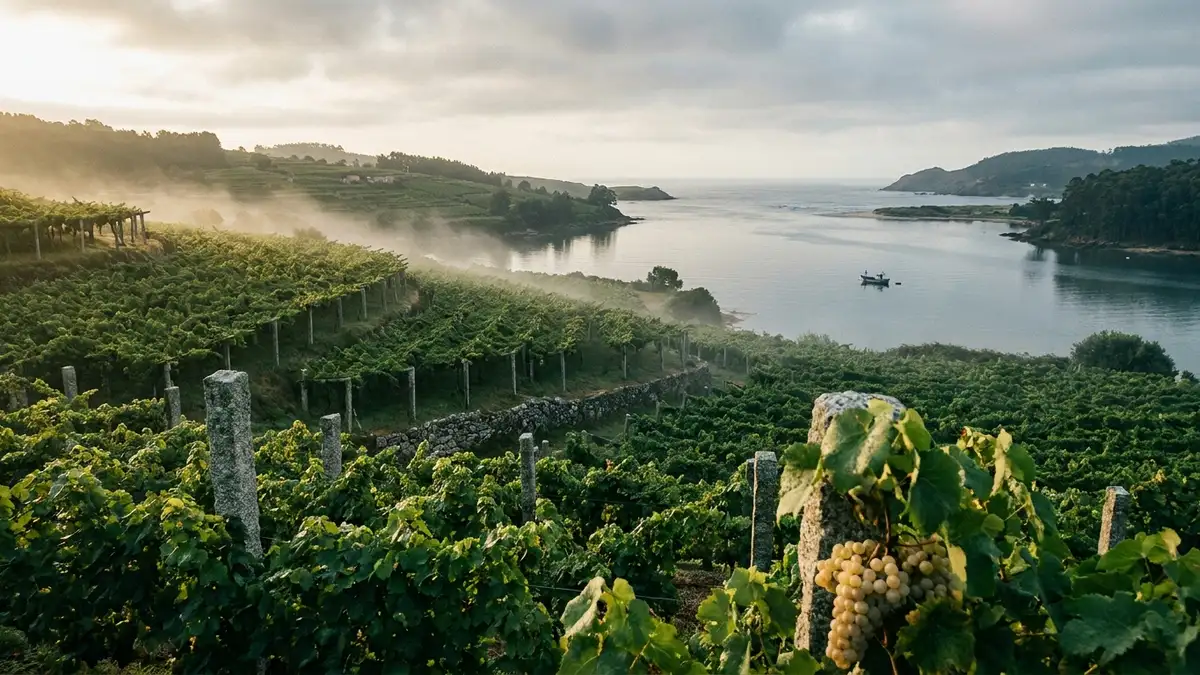
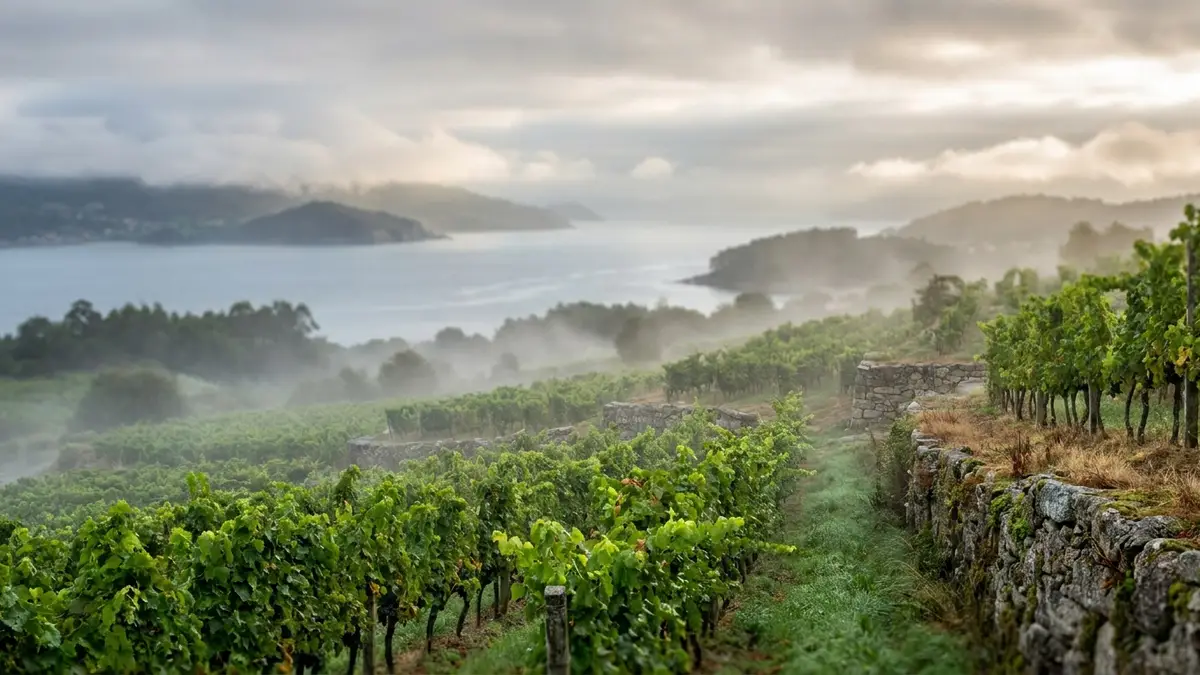
Rías Baixas takes its name from the rías — drowned river valleys that flood inland from the Atlantic, cutting the Galician coast into a series of long, finger-like inlets. The region sits at the northwest tip of Spain, directly above Portugal, and its weather has far more in common with coastal Portugal or even Brittany than with the dry plateaus of central Spain.
The defining feature is rain. This is one of the wettest wine regions in the country, soaked by Atlantic systems that roll in off the ocean. Humidity, fog, and cloud are constant companions through the growing season. That sounds like a problem for grapes, and it is — but it is also the source of the style.
A cool, damp climate ripens grapes slowly and keeps acidity (the tart, mouth-watering freshness in wine) high. It is the reason Rías Baixas whites taste so bright and zesty rather than soft and tropical. The same Albariño grape grown in a hot place would lose that nervy edge. Here, the Atlantic does the work of keeping the wine alive.
Granite Soils and the Sea
Beneath the vines lies granite, the bedrock of Galicia, often broken down into sandy, free-draining topsoil. Granite is poor in nutrients and drains quickly, which matters enormously in such a rainy place — it stops the vines from sitting in waterlogged ground and pushes them to make concentrated, mineral-edged fruit.
Many growers also credit the granite and the ocean proximity for the faint salinity that runs through Rías Baixas Albariño, that lick of sea salt on the finish. Whether it comes from soil, sea air, or both, it is a hallmark of the region and a big part of why these wines partner seafood so naturally.
The Rías Baixas Wine Guide to Albariño, the Flagship Grape
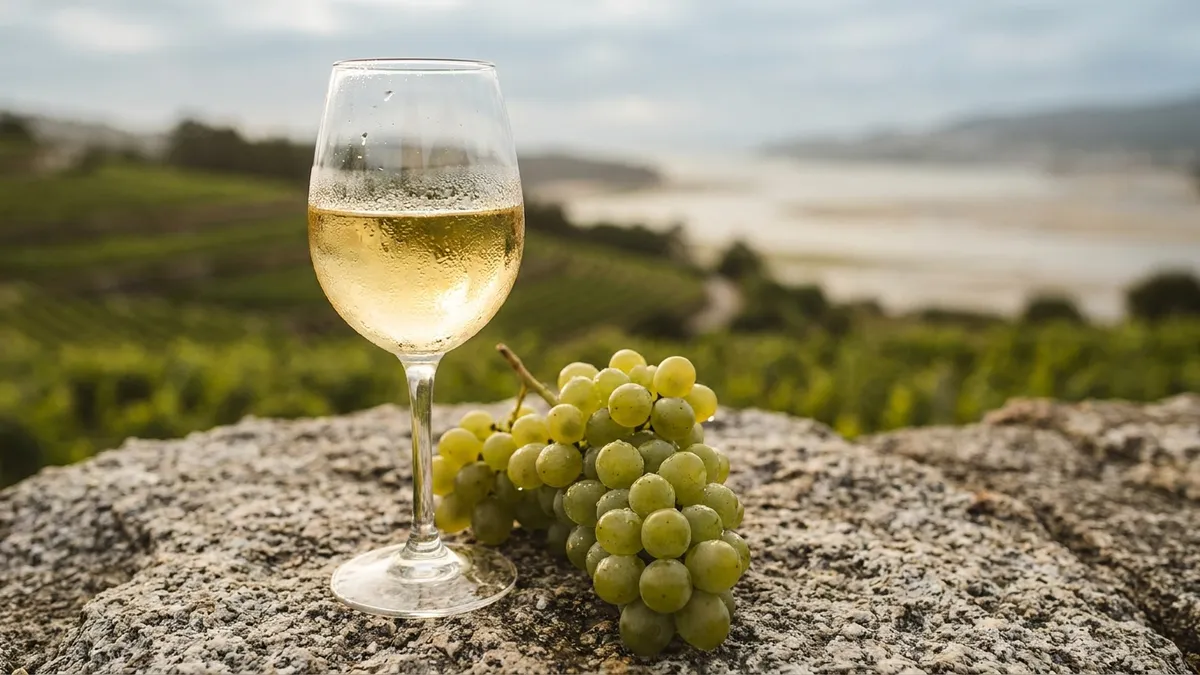
You cannot understand this region without understanding Albariño, because it accounts for roughly 95 percent of the vineyard. It is one of Spain's finest native white grapes — thick-skinned, naturally high in acid, and well suited to a humid climate because those tough skins resist rot better than thin-skinned varieties.
In the glass, Rías Baixas Albariño is pale lemon-gold and intensely aromatic. Typical aromas: lemon, lime, green apple, white peach, apricot, white flowers, and a saline, almost sea-breeze note, sometimes with a faint hint of almond. On the palate it is dry, light to medium bodied, and driven by that bracing acidity, finishing crisp and clean.
Here is how its core structure reads at a glance: Sweetness: dry (1/5) · Acidity: high (4–5/5) · Body: light-to-medium (2–3/5) · Alcohol: moderate (11.5–13%). That combination — bone dry, very fresh, moderate in alcohol — is exactly what makes it such a versatile partner at the table.
Albariño is an aromatic grape, meaning its perfume is loud and easy to spot even for a beginner, which makes it a great training wine. If you want to understand why some grapes shout their aromas while others whisper, our guide to aromatic vs neutral grapes breaks down the difference, and the broader white grapes overview shows where Albariño sits among the world's important whites. The Sommy app uses grapes like Albariño as starting points precisely because their aromas are so easy to name.
The Other Native Grapes
Albariño rules, but a handful of other local whites round out the region and appear in blends. Loureira adds floral lift and a laurel-leaf scent. Treixadura brings body and apple-pear roundness. Caíño Blanco and Godello contribute structure and minerality. These are minor players in Rías Baixas, but Godello in particular is a star elsewhere in Galicia — our Godello wine guide covers the grape that many call the region's most serious white after Albariño.
How Pergola Training Fights the Humidity
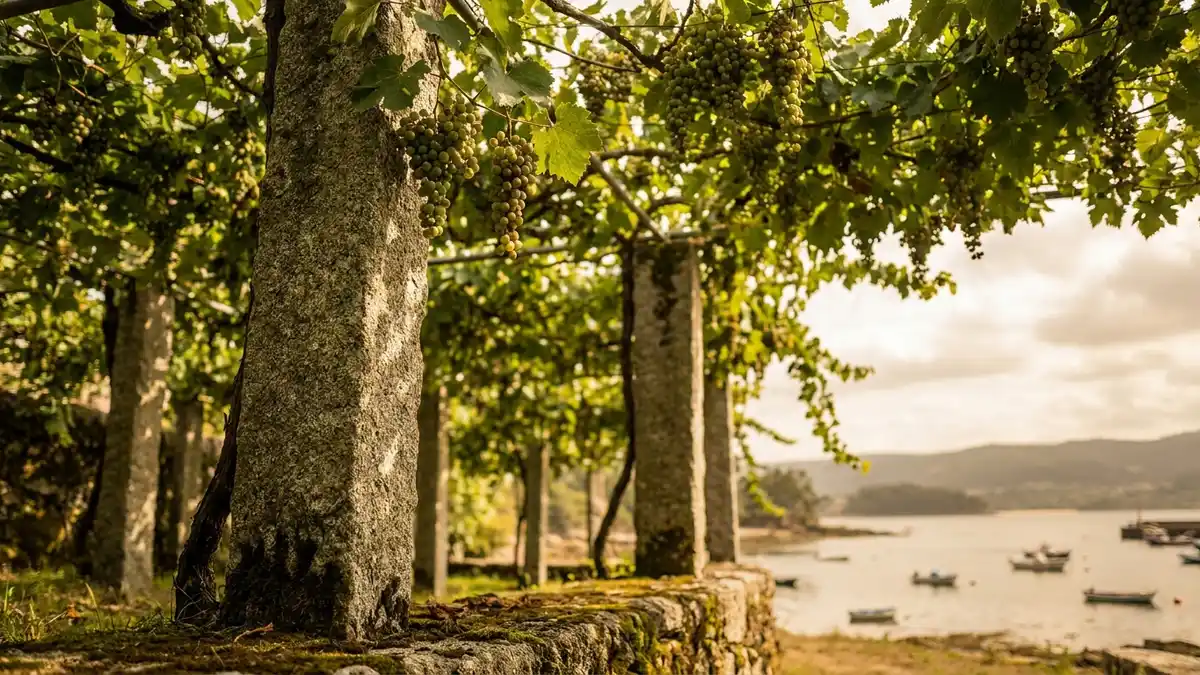
Walk through a Rías Baixas vineyard and the first thing you notice is that the vines grow overhead, not at waist height. They are trained high on pergolas — known locally as parras or emparrado — held aloft by tall granite posts, with the canopy spread out above your head like a leafy roof.
This is a direct response to the damp climate. Lifting the fruit well off the ground does three things at once:
- Improves airflow. Breezes pass freely under and through the canopy, drying the grapes after rain and dew.
- Keeps grapes away from wet soil. Distance from the damp earth reduces the risk of rot and mildew (fungal diseases that thrive in humidity and can ruin a crop).
- Spreads the canopy for ripening. The wide, raised trellis exposes leaves to what sunlight there is, helping grapes ripen in a region short on heat.
The granite posts themselves are a signature image of Galician viticulture, some of them centuries old. They are a reminder that the whole farming system here exists to win a constant battle against water — a battle that, when won, produces wines of remarkable tension and clarity.
The Five Sub-Zones of Rías Baixas
Rías Baixas is a single denominación de origen, but it splits into five sub-zones, each with its own slant on Albariño. Knowing them turns a single region into a more interesting map and helps you predict a bottle's style before you taste it.
- Val do Salnés: The original heartland, hugging the coast around the town of Cambados, and the coolest and dampest of the five. This is where Albariño is most planted and where the style is leanest, saltiest, and most racy — the classic, sea-driven face of the region. Most beginners meet Rías Baixas through a Val do Salnés bottling.
- Condado do Tea: Inland to the southeast, following the Miño river that marks the Portuguese border. Sheltered from the worst of the Atlantic, it is a touch warmer and produces riper, rounder, fuller-bodied Albariño, often with more orchard-fruit weight.
- O Rosal: In the far south along the Miño's mouth, on terraced slopes facing the river. The wines here tend to be aromatic and balanced, frequently blended with Loureira and Caíño Blanco for extra perfume and structure.
- Soutomaior: The smallest sub-zone, a tiny pocket inland near the city of Pontevedra, on light, sandy granite soils. It makes delicate, fragrant Albariño in modest quantities.
- Ribeira do Ulla: The newest and most northerly sub-zone, around the Ulla river toward Santiago de Compostela. A smaller, emerging area producing fresh, lively whites.
The pattern to remember: coastal means cooler, leaner, and saltier; inland means warmer, riper, and rounder. Tasting a Val do Salnés wine next to a Condado do Tea wine is one of the clearest ways to feel how place reshapes the same grape.
What Makes Rías Baixas Distinctive
Plenty of regions make crisp white wine. Rías Baixas stands apart for a specific bundle of traits that come together nowhere else quite the same way.
Atlantic Freshness in a Country of Warmth
Spain is widely associated with powerful reds and warm-climate ripeness. Rías Baixas is the green, rain-soaked exception — its Atlantic identity gives whites a freshness and salinity that feel almost northern European. It is the leading face of what is sometimes called Atlantic Spain, a cooler-climate movement focused on bright, mineral, lower-alcohol wines. To see where it fits in the bigger picture, our Spanish wine regions guide maps Rías Baixas against the hotter, red-driven regions further south and east.
A Single-Grape, Single-Style Region
Unlike multi-grape regions that demand you learn a dozen varieties, Rías Baixas keeps things simple: learn Albariño and you have learned the region. That focus makes it an ideal entry point for anyone new to white wine. The variety even appears among the most important whites worth knowing — our piece on the noble grapes puts grapes like Albariño in the context of the global classics every learner should taste.
A glass of Rías Baixas tastes like the place it comes from — wet granite, cold ocean, and a squeeze of lemon over fresh shellfish.
Pairing Rías Baixas with Seafood
If one rule defines this region at the table, it is seafood. Galicia is one of Europe's great fishing coasts, and its wine evolved hand in hand with what the boats bring in. The match is not a coincidence — it is built into the chemistry of the wine.
Albariño's high acidity cuts through oil and richness the way a squeeze of lemon does, while its saline finish echoes the brine of the sea. That makes it a natural across nearly the whole seafood spectrum:
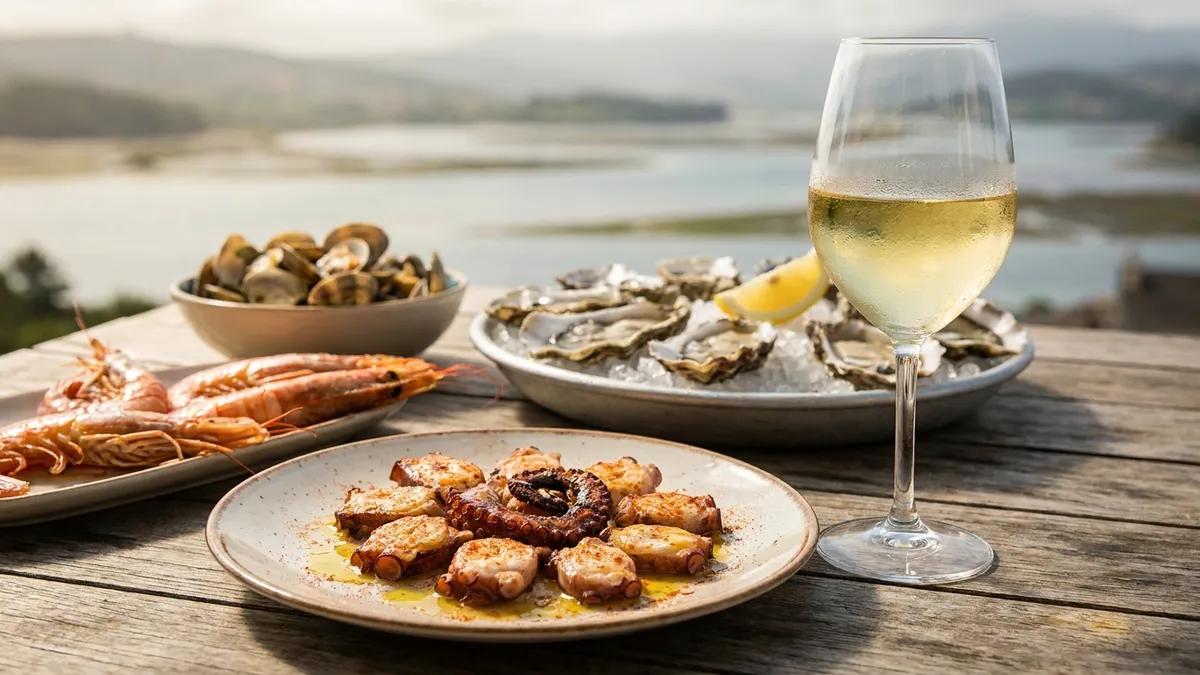
- Oysters and raw shellfish: The salinity and acidity mirror the sea, cleansing the palate between each one.
- Clams, mussels, and prawns: Classic Galician dishes like clams in white-wine sauce practically demand it.
- Grilled sardines and oily fish: High acid slices through the oiliness and keeps each bite fresh.
- Octopus (pulpo a la gallega): The regional signature dish, dressed with paprika and olive oil, sits perfectly against Albariño's freshness.
- Fried seafood and sushi: The crisp, zesty profile resets the palate against batter, salt, and soy.
Beyond fish, the wine handles goat cheese, green salads, and light poultry well, which makes it a dependable house white even when seafood is not on the menu. Understanding why acidity and salt play so well together is exactly the kind of skill the how to taste wine method teaches — and once you feel it with Albariño, you start spotting the same logic in every pairing.
How a Beginner Should Start with Rías Baixas
You do not need to spend much or know much to get Rías Baixas. It is one of the most beginner-friendly fine wines in the world, almost always sold young and ready to drink. Here is a practical path:
- Start with a basic Val do Salnés Albariño. This coastal style is the truest, freshest expression of the region and the easiest reference point. Serve it well chilled, around 8–10°C.
- Drink it young. Most Rías Baixas is made to be enjoyed within a year or two of the vintage, when its citrus brightness is at its peak. There is no need to age it.
- Pair it with seafood the first time. The wine was designed for it, and tasting Albariño beside oysters or grilled fish shows you instantly why the region matters.
- Compare a coastal bottle with an inland one. Open a Val do Salnés wine next to a Condado do Tea wine and feel the shift from lean and salty to riper and rounder — the same grape, two climates.
- Notice the structure as you taste. Pay attention to the high acidity, the moderate alcohol, and that telltale saline finish. Naming what you sense is how a palate gets built.
Sommy turns those comparisons into short, guided exercises — naming the aromas, scoring the acidity, and giving you the vocabulary to describe exactly what you taste. You can start practicing free at sommy.wine, then bring the method to your next bottle of Albariño.
Where to Go After Rías Baixas
Once Albariño clicks, the natural next step is to explore its Atlantic cousins. Just across the border in northern Portugal lies Vinho Verde, made from the same cool, damp corner and often blending the very same grape (spelled Alvarinho there) for a lighter, sometimes lightly fizzy take. Inland in Galicia, Godello offers a fuller, more structured white worth knowing. And for the deeper dive into Albariño itself — clones, styles, and how it shows up beyond Spain — our dedicated Albariño wine guide goes grape-first.
The Reward of Learning Rías Baixas
Rías Baixas is proof that Spain is far more than warm-climate reds. In one rainy, granite-laced corner of Galicia, a single grape captures the cold Atlantic in a glass — bright, saline, and built for the seafood pulled from the inlets below the vines. For a beginner, that focus is a gift: one grape, one clear style, an honest sense of place, and a price that rarely scares anyone off.
Start with a chilled glass of Val do Salnés alongside something from the sea, pay attention to the acidity and that salty finish, and the whole region opens up fast. The Sommy app is built to make that habit stick — turning each bottle into a short, guided lesson so the next Albariño you open is a little clearer than the last.
Sources
Frequently Asked Questions
What grape is Rías Baixas wine made from?
Rías Baixas is overwhelmingly about one white grape, Albariño, which fills roughly 95 percent of the vineyard. The wines are dry, high in acidity, and tangy with citrus, stone fruit, and a salty edge. Small amounts of other native whites like Loureira, Treixadura, and Caíño Blanco appear in blends, but Albariño defines the region.
Where is Rías Baixas located?
Rías Baixas sits on the Atlantic coast of Galicia in the far northwest corner of Spain, just north of Portugal. Its name means lower estuaries and refers to the drowned river valleys, or rías, that cut into the coastline. The cool, wet, maritime climate here is closer to coastal Portugal or Brittany than to sunny inland Spain.
What does Rías Baixas Albariño taste like?
Expect a bright, refreshing dry white with high acidity and a distinct saline or sea-spray quality. Typical aromas are lemon, lime, white peach, apricot, green apple, and white flowers, sometimes with a faint almond note. The body is light to medium and the finish is crisp and zesty, built to partner seafood.
Why are Rías Baixas vines trained on pergolas?
The region is one of the wettest in Spain, so growers train vines high on granite-post pergolas, known as parras or emparrado. Lifting the canopy off the ground improves airflow, keeps grapes away from damp soil, and reduces the rot and mildew that thrive in humidity. The granite posts are a signature sight across Rías Baixas vineyards.
What are the sub-zones of Rías Baixas?
Rías Baixas has five sub-zones. Val do Salnés on the coast is the original heartland and the coolest. Condado do Tea and O Rosal lie inland and south toward the Miño river, where it is slightly warmer. Soutomaior and Ribeira do Ulla are the two smallest. Each shapes Albariño differently, from leaner and saltier to riper and rounder.
What food pairs with Rías Baixas wine?
Seafood is the natural match. The high acidity and saline character of Albariño cut through oily fish, shellfish, and fried seafood, while the citrus echoes a squeeze of lemon. Think oysters, clams, grilled sardines, prawns, octopus, and sushi. It also works with goat cheese, salads, and light poultry, making it a versatile food wine.
Is Rías Baixas wine good for beginners?
Yes. Albariño from Rías Baixas is approachable, dry, and easy to enjoy, with bright fruit and refreshing acidity that needs no special knowledge to appreciate. It is also affordable at the entry level and almost always served young. Start with a basic Val do Salnés bottling alongside seafood and the style explains itself quickly.
How does Rías Baixas compare to Vinho Verde?
Both come from the same cool, damp Atlantic corner on either side of the Spain–Portugal border and share a crisp, low-alcohol, seafood-friendly style. Rías Baixas is built on Albariño and tends to be more concentrated and serious. Vinho Verde, just south in Portugal, is often lighter, sometimes lightly fizzy, and blends several local grapes including Alvarinho, the same grape.
Sommy Team
LinkedInFounder & Wine Educator
The Sommy Team is building the world's most approachable wine education app, helping beginners develop real tasting skills through structured courses and AI-guided practice.